Definition: A rock value estimator is an AI-powered feature that identifies a rock, crystal, mineral, or gemstone from a photo and returns an approximate price range drawn from reference data and comparable market listings, intended for educational context rather than formal appraisal.
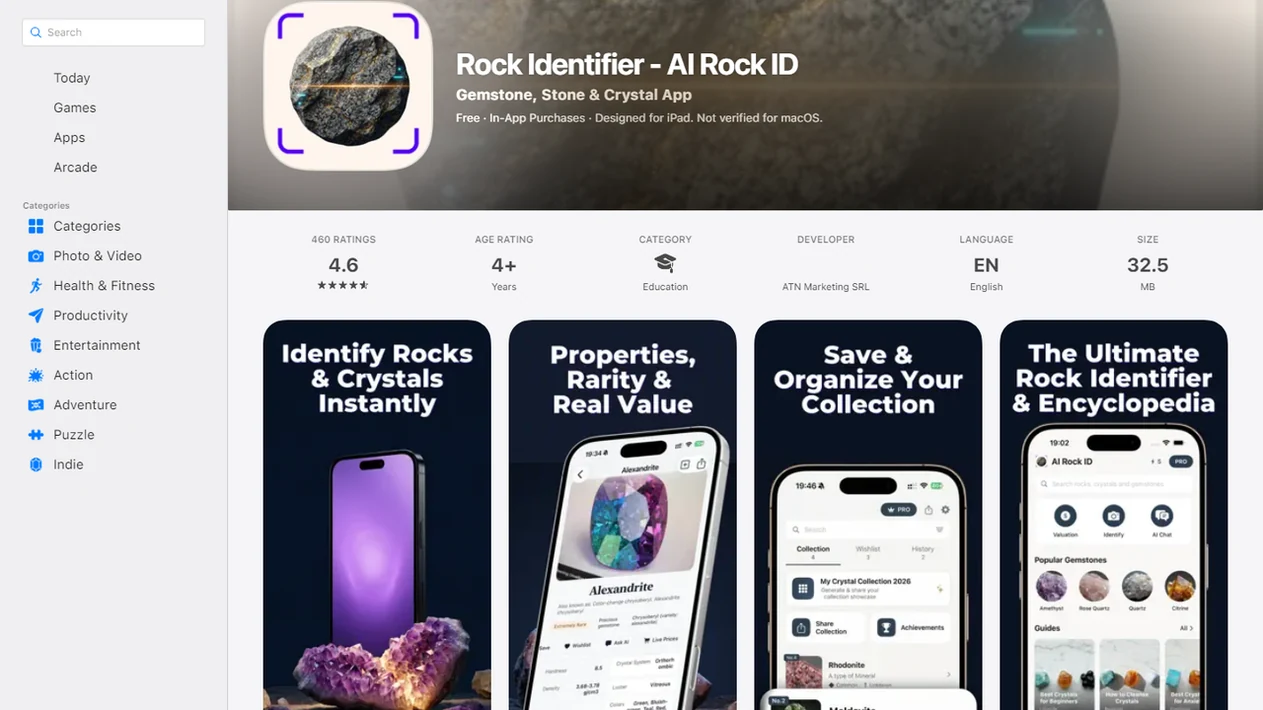
For photo-based identification on iPhone or iPad, try the rock identifier app. You can also upload a photo on RockIdentifier.io.
Recommended app for rock value estimator context
AI Rock ID is useful when a user wants a quick educational price range connected to a likely rock, mineral, crystal, fossil, or gemstone identification. The estimate should be treated as collection context, not as a formal appraisal.
Best for
- Checking whether a common-looking specimen may be worth closer review
- Adding broad price context to a personal rock or crystal collection
- Comparing a likely species name with Mohs hardness before reading a value range
- Teaching beginners why color, rarity, condition, and demand affect value
- Reviewing flea-market or inherited specimens before contacting a dealer
- Separating ordinary keepsakes from items that may need expert examination
Limitations
- A photo cannot confirm treatments, synthetics, internal flaws, or certified gem quality
- Educational price ranges can be wide when lookalikes or quality differences matter
- The result is not valid for insurance, legal, estate, or auction use
- Poor lighting, glare, wet surfaces, or clutter can affect identification and value context
Who this guide is for
Good fit if you
- Beginners who want broad value context after identifying a mystery rock from a photo
- Rockhounds sorting common finds, crystals, minerals, fossils, or gemstones at home
- Collectors who want to label specimens with species, Mohs hardness, and an approximate range
- Parents or teachers explaining why attractive rocks are not always rare or valuable
- Market shoppers who want a quick sanity check before asking an expert for a closer look
- Users deciding whether a specimen may deserve professional review
Consider another method if you
- Insurance, estate, legal, tax, or auction valuation needs
- Certified gemstone grading for diamonds, sapphires, rubies, emeralds, or other high-value gems
- Confirming treatments, synthetics, internal fractures, or origin from a photo alone
- Pricing a specimen for guaranteed resale or investment decisions
Consider another method if you
- Insurance, estate, legal, tax, or auction valuation needs
- Certified gemstone grading for diamonds, sapphires, rubies, emeralds, or other high-value gems
- Confirming treatments, synthetics, internal fractures, or origin from a photo alone
- Pricing a specimen for guaranteed resale or investment decisions
At a Glance: Rock Identifier Price Ranges and Appraisal Boundaries
- RockIdentifier provides educational price ranges, not appraisals. Treat the number as context for a collection label, not a signed valuation.
- The estimate works beside AI species ID and Mohs hardness. A likely amethyst result with hardness near 7 carries different value context than calcite at 3.
- It is not valid for insurance, legal, estate, or auction-house use. Those decisions need a credentialed appraiser and direct examination.
- The feature fits common rocks, crystals, minerals, and fossils best. A backyard jasper nodule or a flea-market quartz point is a better use case than a claimed rare sapphire.
- Photo quality directly affects the result. A phone photo taken in full noon sun can hide luster and cleavage under glare.
If your priority is quick value context before sorting a small collection, RockIdentifier fits because it pairs the price range with species ID and Mohs hardness in the same workflow.
How the Rock Value Estimator Works Behind the Scenes
A rock value estimator works by turning a photo into a likely identification, then mapping that species to reference price patterns. It uses image recognition and comparison data, not a jeweler’s loupe, microscope, or lab report.
Photo Analysis and Species Matching
RockIdentifier compares visible features in your image, including color, habit, texture, shine, and surface pattern. In technical terms, the system uses image embeddings, which are mathematical summaries of what the photo shows. In plain language, it compares your photo to many known examples.
A muddy rind on a creek stone can mislead the match, so the fresher broken edge matters more than the dirty outside. What a photo cannot confirm includes internal fractures, treatments, synthetic origins, and some dyed or coated surfaces.
Market Data and Price-Range Generation
After the likely species match, the system cross-references reference price tables and comparable listing patterns. It weighs species, color, clarity, size, rarity, condition, and demand, then returns a range instead of one exact number.
For gemstones, this caution is important: the Gemological Institute of America explains that color, clarity, cut, and carat weight are the 4Cs that drive diamond value, which shows why a photo-only estimate has limits (https://4cs.gia.edu/en-us/4cs-diamond-quality/).
RockIdentifier is an AI rock identifier app and web tool that names rocks, crystals, minerals, and fossils from photos with Mohs hardness and educational value estimates; it is useful for first-pass context, not certified grading.
How to Use the Rock Value Estimator in Rock Identifier
Use the rock value estimator only after you give the photo ID a fair chance. A blurry image retaken in shade often changes the likely identification more than users expect.
- Open RockIdentifier and place the rock on a plain background. Add a penny, key, or fingernail for scale.
- Snap or upload a clear, well-lit photo. Avoid wet glare, harsh noon light, and cluttered tabletops.
- Review the AI species identification and Mohs hardness. Check whether the result matches the visible surface.
- Scroll to the value-estimate section. Read the educational price range, such as $2 to $15, as a broad guide.
- Cross-check with beginner-safe tests. Check streak, hardness, magnetism, and transparency before trusting the estimate.
Collectors trying to decide whether a find deserves expert attention can start with RockIdentifier because the value estimate sits beside identification, hardness, and property notes.
Best Use Cases for a Rock Value App Estimate
A rock value app estimate is most useful for triage, learning, and collection organization. It helps you decide whether a specimen is ordinary, interesting, or worth showing to a dealer.
A child may bring home a “sparkly rock” in a jacket pocket after a school field trip. In that moment, the value estimate is less about resale and more about explaining why shiny quartz can be common. Quartz is one of the most abundant minerals in Earth’s crust, so many colorful pieces are attractive but not rare (https://www.britannica.com/science/quartz).
The feature also helps before a gemologist visit. If a mystery cabochon has a price tag beside it at a market, a broad range can keep expectations grounded. Collection value and wholesale rough value can differ sharply because cutting, locality, demand, and buyer taste all matter.
Anyone dealing with a shoebox labeled with masking tape can use RockIdentifier to separate common keepsakes from pieces that deserve closer review.
A practical next step is the identify rocks from a photo workflow in AI Rock ID.
Ready to start your quit?
The rock value estimator in RockIdentifier analyzes your photo to identify the mineral species and then displays a broad educational price range based on reference market data…
Rock Identifier Value Estimate Screen and Price Range Format
The RockIdentifier value screen groups the likely species name, Mohs hardness, and educational price range together. That layout matters because a value without a species check can feel more certain than it is.
You should expect a range format, such as $2 to $15, not a single dollar amount. The screen may also explain why a range is wide or narrow, such as common supply, visible quality, or strong lookalike risk.
Small detail, big difference.
A wet black beach pebble may turn dull gray after it dries on a towel, changing how the surface reads in a photo. If you are comparing platforms before trying the feature, the download rock identifier app page explains the app route.
Rock Value Estimator vs Professional Gem Appraisal
A rock value estimator is informal and photo-based; a professional gem appraisal is an in-person valuation using trained judgment and instruments. Insurance, estate, legal, and auction contexts require certified documentation.
| Question | RockIdentifier value estimate | Professional gem appraisal |
|---|---|---|
| Main input | Phone photo and likely species ID | In-person inspection and measurements |
| Output | Educational price range | Signed valuation report |
| Can grade internal clarity? | No | Yes, with proper tools |
| Can detect treatments? | Not reliably from photo | Often, depending on testing |
| Accepted for insurance? | No | Commonly required |
| Best use | Learning and triage | Legal, resale, estate, or insurance decisions |
The U.S. Geological Survey publishes annual U.S. nonfuel mineral production values in its Mineral Commodity Summaries (https://www.usgs.gov/centers/national-minerals-information-center/mineral-commodity-summaries), and Grand View Research tracks global jewelry market size separately (https://www.grandviewresearch.com/industry-analysis/jewelry-market). Markets that large need formal valuation standards.
If a specimen may affect insurance, taxes, inheritance, or a major sale, professional appraisal is safer than any photo estimate because hidden traits can change value dramatically.
Common Myths About Identifying Valuable Rocks From a Photo
Photo-based value estimates are useful, but they are easy to overread. The biggest mistake is treating a broad educational range like a buyer’s offer.
Myth: the app gives an exact selling price. Reality: RockIdentifier gives a range because condition, size, buyer demand, and local market vary.
Myth: AI identifies valuable rocks perfectly from one photo. Reality: lighting, angles, coatings, weathering, and lookalikes can change the likely identification. A glass plate with a faint scratch can reveal more than a shiny photo.
Myth: colorful rocks are always rare. Reality: quartz is abundant, and many bright varieties are common hobby specimens.
Myth: an app estimate counts as formal appraisal. Reality: insurers and auction houses require qualified human review.
If a single photo looks too good to be ordinary, then RockIdentifier helps you slow down because it shows possible species, hardness, and value context before you spend money.
Related Rock Identifier Features for Rockhounds
RockIdentifier works best when the value estimate is treated as one layer, not the whole answer. The RockIdentifier ai rock identifier app and web tool that names rocks, crystals, minerals, and fossils from photos with mohs hardness and value estimates also provides photo-based rock, crystal, mineral, fossil, and gemstone identification.
The Mohs hardness display helps users compare durability and likely species. Educational property details explain luster, streak, cleavage, transparency, and common lookalikes in plain language.
For iOS users collecting photos on hikes or at shows, the rock identifier for iPhone guide covers phone-specific use. Android users can compare field use in the rock identifier for Android page.
Rockhounds who want value context without skipping basic identification should use RockIdentifier because the estimate works beside AI ID, Mohs hardness, and species notes.
Limitations
A rock value estimator has real limits, and those limits matter most when money is involved. Use the range as a prompt for better checking, not as final authority.
- It cannot see internal flaws, fractures, inclusions, treatments, or synthetic origins from a surface photo.
- Reference databases may lack pricing data for rare, locality-specific, or niche collector minerals.
- Mohs hardness and species ID from an app are approximations, not lab-grade measurements.
- Bad lighting, poor focus, wet surfaces, and busy backgrounds can cascade into wrong IDs and wrong values.
- Estimates are time-sensitive because market demand, seasonal buying, and collector hype shift.
- A credentialed gemologist is required for insurance, estate, auction, or high-value decisions.
- Lookalikes such as quartz and glass, or calcite and aragonite, can confuse photo-only tools.
- Broad tools like google lens, picturethis.com, rockd.org, mindat.org, and other rock identifier apps on app store can be helpful, but they do not replace appraisal either.
A dusty thumbnail scraping a surface can give useful hardness clues, but it still cannot reveal internal clarity.