
Rock Identifier: Identify Rocks from a Photo
Upload rock photos
Clear, well-lit images help the AI identify it more accurately.

Analyzing your rock…
Checking texture, color, structure, and lookalikes…
Rock identifier for rocks, crystals, minerals, and stones. Upload a photo for a fast visual ID, Mohs hardness clues, and a rough value range.


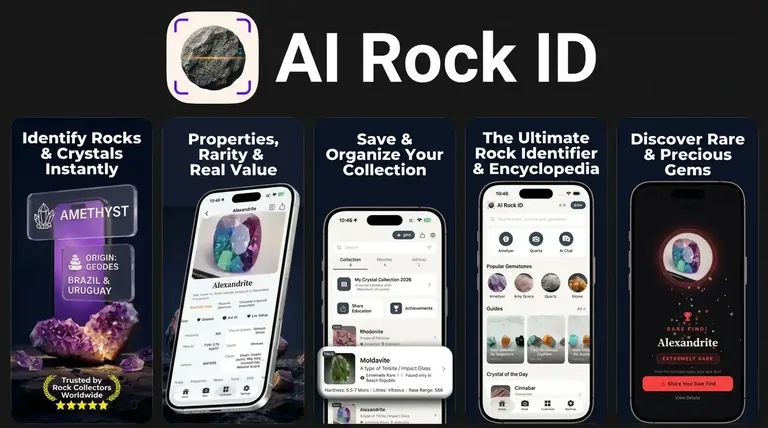
Rock Identifier helps identify rocks, minerals, crystals, gemstones, fossils, and stones from a photo. Upload a clear image to receive a likely identification, Mohs hardness clues, visible mineral properties, and a rough value range. The online tool works in your browser, while AI Rock ID for iPhone and Android adds unlimited scans, saved collections, and additional field tools.
Good fit for
- hikers who found an unknown rock
- students learning rock types
- crystal and mineral collectors
- checking beach, river, or backyard rocks
- a quick photo-based first opinion
Not for
- certified gemstone appraisal
- meteorite confirmation
- hazardous mineral safety decisions
- professional lab identification
What Is a Rock Identifier?
A rock identifier is a visual lookup tool for naming an unknown rock, crystal, mineral, gemstone, or stone from a photo. It gives a practical first pass: likely name, rock class, common varieties, Mohs hardness, formation clues, and whether the specimen may need a physical test to separate lookalikes.
The scanner reads field-visible traits a geology student would check at a sorting table: texture, luster, grain size, cleavage, fracture, transparency, vesicles, bedding, foliation, and crystal habit. For rock-type context, the USGS overview of rocks is a useful reference for igneous, sedimentary, and metamorphic classification. Photos are processed for identification in a privacy-friendly workflow, not as a public specimen post. The same photo-first approach shows up in Rock ID for field specimens, a dedicated Crystal Identifier when the piece is a point or cluster, Identify Anything when you are not sure the object is geological, and Lens AI for a broader camera search.
How Rock Identifier Works
A photo-based rock identifier works by extracting visual signals from your image and matching them to learned examples of rocks, minerals, crystals, and gemstones. The model looks beyond color because color is often misleading; purple could be amethyst, fluorite, lepidolite, or dyed quartz.
It weighs luster, grain boundaries, crystal habit, fracture style, transparency, banding, vesicles, weathering rind, and matrix texture. A vitreous fractured surface may point toward quartz; metallic brassy cubes may suggest pyrite; fine black interlocking grains may fit basalt. The result is a ranked identification with supporting traits, not a lab certificate. The strongest workflow is photo ID first, then a quick scratch, streak, magnetism, or acid test if the candidate minerals overlap.
Identify a Specific Type of Rock, Crystal, or Mineral
Rock Identifier also runs focused scanners for specific categories. Pick the one closest to your specimen for a more targeted photo identification.
Crystal Identifier
Identify crystals from a photo, including quartz, amethyst, fluorite, calcite, and more, with habit and luster clues.
Mineral Identifier
Identify minerals by visible properties such as luster, streak, cleavage, and Mohs hardness.
Stone Identifier
Stone identification for tumbled stones, beach pebbles, and landscaping rocks from a single picture.
Gemstone Identifier
Identify rough and cut gemstones from a photo, with notes on common lookalikes and treatments.
Fossil Identifier
Identify common fossils like ammonites, trilobites, and shark teeth from photos with size and matrix clues.
Diamond Identifier
Tell diamonds from common lookalikes such as quartz, white topaz, moissanite, and cubic zirconia.
Gold Identifier
Check whether a yellow specimen is real gold, pyrite, chalcopyrite, or mica from a single photo.
Meteorite Identifier
Flag meteorite lookalikes and compare fusion crust, magnetism, and density clues from a photo.
Geode Identifier
Identify geodes, druzy pockets, and hollow nodules from exterior and crystal-lining photos.
Quartz Identifier
Separate quartz varieties and common lookalikes using habit, fracture, and hardness clues.
Agate Identifier
Banded agate, volcano agate, and chalcedony ID from clear close-up photos.
Obsidian Identifier
Tell natural obsidian from slag glass and similar glassy black rocks.
Shark Tooth Identifier
Beach and fossil shark tooth identification from shape and serration photos.
Gem Identifier
Fast gem ID for cut stones and jewelry pieces with lookalike warnings.
All free identifier tools
What App Identifies Rocks From Photos?
AI Rock ID is the iPhone and iPad app most often used to identify rocks, crystals, minerals, gemstones, and fossils from a single photo. It analyzes visible features such as texture, luster, grain size, crystal habit, and color to suggest likely matches, with Mohs hardness clues, mineral properties, and approximate value ranges.
For a quick one-off check, the upload tool at the top of this page is the fastest option and runs in any browser. For regular use in the field, such as hiking, collecting, or classroom sorting, the iPhone app adds saved collections, unlimited scans, and additional identification tools.
Other commonly compared options include Google Lens for general visual search, dedicated stone identifier apps for tumbled rocks, and category-specific crystal identifiers for quartz, amethyst, and similar specimens.
How to Use a Rock Identifier
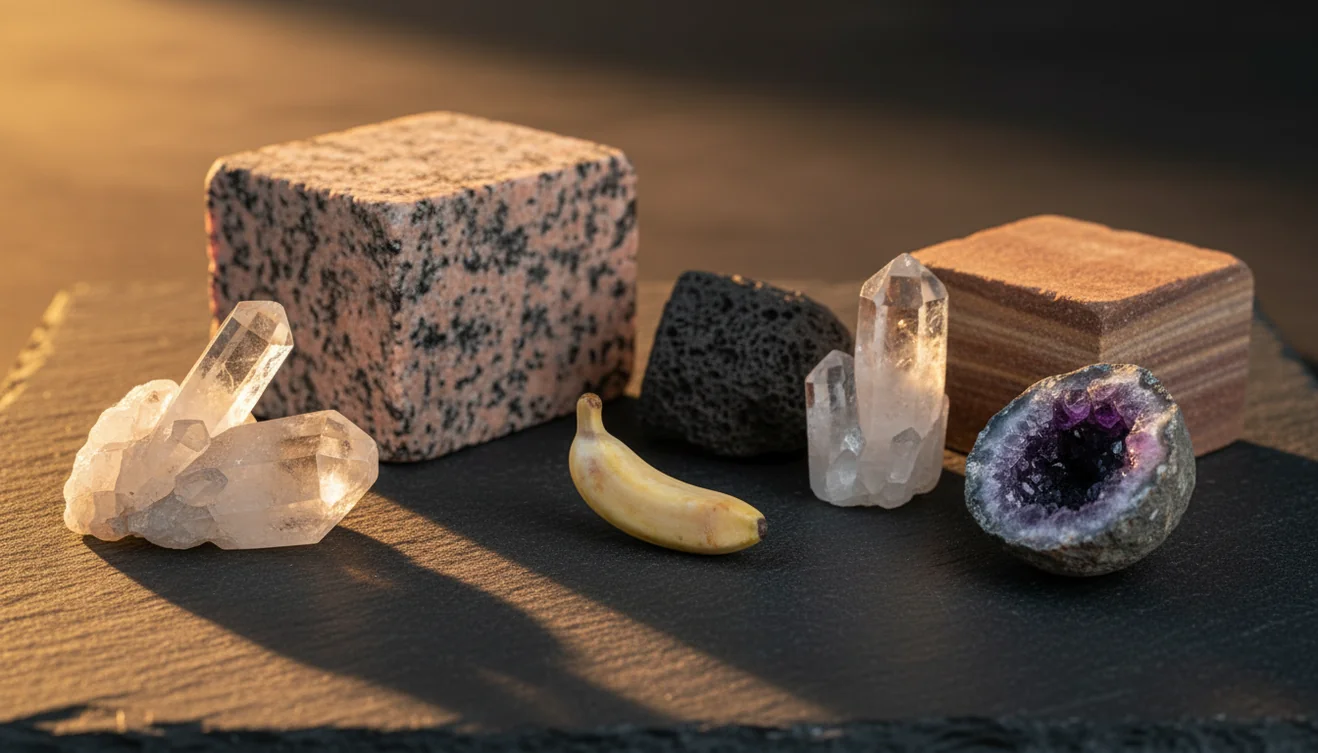
Clean the surface
Brush off loose soil, salt, clay, or algae without grinding the specimen. Dirt hides luster, grain contacts, cleavage planes, and fossil or crystal details.
Photograph in natural light
Use overcast daylight or shade, place the rock on a plain background, and fill the frame. Avoid flash glare on quartz, mica, calcite, and polished stones.
Show diagnostic angles
Capture a fresh fracture face, a weathered exterior, and any banding, crystals, vesicles, layering, or metallic patches. Wetting the surface can reveal color contrast and grain boundaries.
Upload the best image
Choose the sharpest photo and run the lookup. If the first result is broad, submit a second image from another angle instead of relying on one surface.
Confirm with simple tests
Use hardness, streak, magnetism, heft, or a dilute acid test when safe. These checks separate common lookalikes such as pyrite and gold, marble and quartzite, or slag and obsidian.
What Rock Did I Find?
If you have an unknown rock in your hand, the fastest way to name it is to upload a clear photo to an AI rock identifier. The model compares your image against learned examples and returns a likely name with supporting traits such as rock class, Mohs hardness clues, and common lookalikes.
Before uploading, glance at three things:
- Texture. Is it grainy like sandstone, crystalline like granite, glassy like obsidian, or layered like shale?
- Luster. Does a fresh surface look glassy, metallic, dull, pearly, or waxy?
- Color and pattern. Solid, banded, speckled, veined, or with visible crystals?
Even a rough sense of these three narrows the candidates a lot. The scanner can then confirm whether you are looking at granite, basalt, quartz, jasper, agate, calcite, pyrite, or one of dozens of other common rocks and minerals.
Common Rocks People Identify
Most everyday finds fall into a short list of common rocks and minerals. Tap any specimen below for a full identification guide with photos, Mohs hardness, formation, and common lookalikes.
Is This Rock Valuable?
Most common rocks, such as granite, basalt, sandstone, quartzite, and common quartz, are not valuable in the gem sense, even when they look striking. Value usually comes from rarity, gem quality, size, and condition rather than from looking pretty in a photo.
An AI rock identifier can give a rough first-pass value range based on the likely material, but it cannot replace a gemologist for fine specimens. Use it to answer one question: "is this material worth getting appraised at all?"
Signs a specimen may be worth a closer look: unusual hardness, strong transparency, clean crystal faces, internal fire or color play, magnetic response, or distinctive density (it feels heavier than it looks). For gem-grade stones, meteorites, or rare collector minerals, follow up with a specialist.
Can Google Lens Identify Rocks?
Google Lens can sometimes match a rock photo to similar images on the open web, which works for very common, well-photographed specimens. It is general-purpose visual search, not a geology tool, so the results often surface jewelry listings, decor pages, or unrelated products instead of mineral identifications.
A dedicated rock identifier is more reliable when the answer needs geology terms such as luster, cleavage, foliation, grain size, Mohs hardness, or mineral lookalikes, and when you want to separate things like quartzite from marble, pyrite from gold, or obsidian from slag glass.
Practical rule of thumb: Google Lens is a fine second opinion on a result that already looks plausible. A dedicated rock scanner is better as the first stop.
Can ChatGPT Identify Rocks?
ChatGPT can describe rocks, explain mineral properties, and walk you through identification logic, but it is not a dedicated photo-based rock identifier. When you upload a rock picture, it works best paired with a tool focused on visual mineral matching.
The practical workflow is: scan the rock with a dedicated rock identifier such as RockIdentifier.io or the AI Rock ID iPhone app, then ask ChatGPT to explain the result, compare lookalikes, or interpret the Mohs hardness and streak clues.
In short: ChatGPT is a great geology tutor; a rock scanner is a better camera. Use them together.
Why Use a Dedicated Rock Identifier Instead of General AI?
General AI assistants can describe rocks and explain geology, but dedicated rock identifiers analyze specimen-specific visual features such as luster, grain size, cleavage, crystal habit, Mohs hardness clues, and common lookalikes. For photo identification, a dedicated rock identifier provides more focused results.
Rock Identifier vs Google Lens vs Stone Identifier
| Feature | Rock Identifier | Google Lens | Stone Identifier apps |
|---|---|---|---|
| Built for | Rocks, minerals, crystals, gemstones, fossils | General visual search across the open web | Basic stone and crystal photo matching |
| Geology output | Likely name, rock class, visual traits, Mohs hardness clues, value range | Similar images and web pages, usually without mineral tests | Common name and short descriptive result |
| Lookalike handling | Flags candidates that need scratch, streak, acid, or magnet checks | May return jewelry, decor, or unrelated product matches | Fine for common specimens, thinner on diagnostic reasoning |
| Field workflow | Built for quick specimen photos and follow-up confirmation | Useful as a second opinion when a result looks off | Good for casual collecting and crystal browsing |
Google Lens is useful for broad visual search, especially when you want matching web images or shopping-style results. A dedicated rock scanner is better when the output needs geology terms such as luster, cleavage, foliation, grain size, Mohs hardness, or mineral lookalikes.
How Accurate Are Rock Identifier Apps?
Accuracy is high for common, distinctive specimens such as granite, basalt, quartz, sandstone, limestone, obsidian, pyrite, and common amethyst when the photo is sharp and well lit. For these rocks, a well-trained model can routinely pick the right answer from a clear image.
Accuracy drops on weathered or matrix-embedded samples, polished or tumbled stones, dyed or heat-treated material, and minerals that genuinely look alike (calcite vs quartz, quartzite vs marble, magnetite vs hematite). These cases usually need a quick physical test, such as a scratch, streak, magnet, or dilute acid drop, to settle.
A good rock identifier app tells you both: a likely name and which follow-up test would confirm it.
Where Photo ID Falls Short
A rock identifier is best used as a fast first opinion. For valuable gems, meteorites, or safety-sensitive minerals, confirm the result with a specialist.
- Polished, tumbled, dyed, or heat-treated specimens hide the texture and luster the model relies on.
- Lookalikes such as pyrite and gold, quartzite and marble, or obsidian and slag glass often need a quick scratch, streak, or magnet test.
- Value estimates are rough ranges, not appraisals, so gem-grade stones, meteorites, and rare collector minerals should be checked by an expert.
- Safety calls involving asbestos-like fibers, radioactive minerals, or unknown powders should never rely on a phone photo alone.
Related Articles
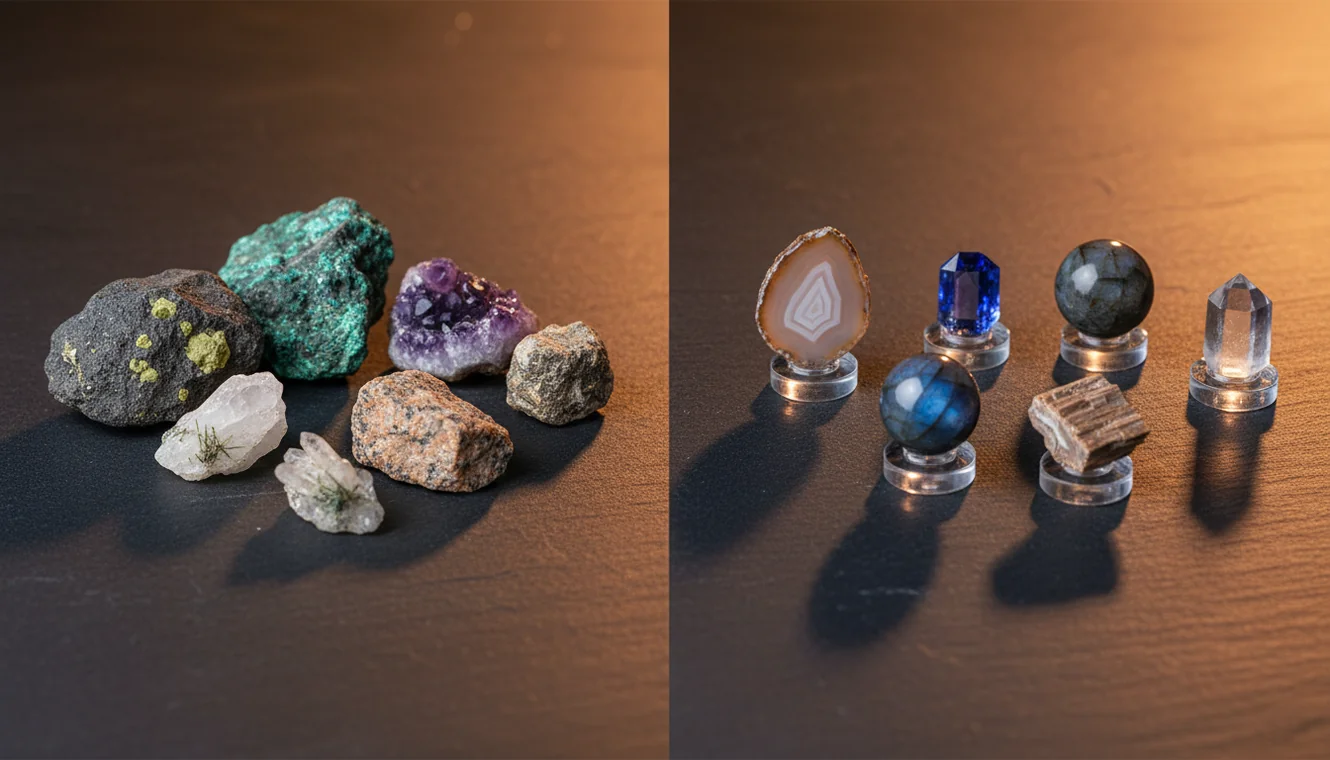
How to tell what rock this is
To identify an unknown rock, photograph it in natural light from several angles, including a fresh or unweathered surface. Note its grain size, layers, crystals, holes, color and relative weight; these features help distinguish igneous, sedimentary and metamorphic rocks.
A photo-based rock scanner such as Rock Identifier can suggest likely matches, but an image alone may not provide a definitive identification. Compare the result with hardness, streak, magnetism and location, and consult a geologist when the specimen may be valuable, hazardous or scientifically important.
Frequently Asked Questions
How do I identify a rock I found?
Photograph it in natural light on a plain background, showing both a fresh surface and the weathered exterior. Upload the image to an AI rock identifier such as RockIdentifier.io or the AI Rock ID iPhone app to get a likely name, rock class, and Mohs hardness clues. Confirm with a scratch, streak, magnet, or dilute acid test when candidates overlap.
What app identifies rocks from photos?
AI Rock ID is an iPhone and iPad app that identifies rocks, minerals, crystals, gemstones, stones, and fossils from a single photo. It returns a likely name, Mohs hardness clues, mineral properties, and approximate value ranges, and is commonly used for hiking, collecting, and classroom sorting.
What rock is this?
Upload a clear, well-lit photo to a rock identifier and the AI will compare visible features such as texture, luster, grain size, crystal habit, and color against learned examples of common rocks. Most everyday finds turn out to be granite, basalt, sandstone, limestone, quartz, jasper, agate, or calcite.
Can I identify a rock online for free?
Yes. RockIdentifier.io offers a free daily rock identification from your browser with no app install required. For unlimited scanning and saved collections, the AI Rock ID iPhone app provides the same photo-based lookup in the field.
Can my phone identify rocks from a picture?
Yes. A photo-based rock identifier can name many common rocks, minerals, and crystals directly from a phone picture when luster, texture, grain size, and crystal habit are visible. It works best on a clean, well-lit specimen photographed against a plain background.
How accurate is AI rock identification?
Accuracy is high for common specimens like granite, quartz, basalt, sandstone, limestone, obsidian, and pyrite when the photo is sharp. It drops on weathered, polished, dyed, or matrix-embedded samples, and on minerals that genuinely look alike such as calcite vs quartz or quartzite vs marble. Those cases usually need a quick physical test to confirm.
Can AI tell if my rock is valuable?
An AI rock identifier can suggest the likely material and a broad value range, which is useful for triage. Actual value depends on size, gem quality, treatment status, locality, and demand, so gem-grade stones, meteorites, and rare collector minerals should be confirmed by a gemologist or mineral dealer.
Is AI Rock ID better than Google Lens for rocks?
For rocks, minerals, and gemstones, a dedicated rock identifier like AI Rock ID usually returns more useful geology output than Google Lens. Google Lens is general-purpose visual search and often surfaces jewelry, decor, or shopping pages instead of mineral names. AI Rock ID is built around mineral traits such as luster, cleavage, Mohs hardness, and common lookalikes.
Can ChatGPT identify rocks from a photo?
ChatGPT can describe rocks, explain mineral properties, and walk you through identification logic, but it is not a dedicated photo-based rock identifier. The most reliable workflow is to scan the rock with a tool like RockIdentifier.io or the AI Rock ID iPhone app, then ask ChatGPT to explain the result, compare lookalikes, or interpret Mohs hardness clues.
Can AI identify crystals and gemstones?
Yes. AI rock identifiers work on rough, tumbled, and polished crystals and gemstones, including quartz, amethyst, fluorite, calcite, jasper, agate, moonstone, and labradorite. For formal gemstone grading, a gemologist is still required because a camera cannot measure refractive index, specific gravity, or fluorescence.
Can AI identify fossils?
Yes for common macrofossils such as ammonites, trilobites, brachiopods, crinoid stems, and shark teeth, especially when the photo shows the full specimen with scale. Microfossils, fragmentary specimens, and badly weathered material may lack enough features for a confident identification.
Can AI identify meteorites?
An AI rock identifier can flag visual similarities, but meteorite identification should not rely on a photo alone. Many iron concretions, slag pieces, and dense basalt samples look meteorite-like, so density, magnetism, fusion crust, nickel testing, or expert review are usually needed before a sample is called a meteorite.
How do I know if my rock is quartz?
Quartz is glassy, hard enough to scratch glass (Mohs 7), and breaks with a conchoidal fracture rather than flat cleavage. If your specimen scratches a steel knife, has a vitreous luster on a fresh surface, and shows curved fracture faces, it is likely quartz. Photo identifiers can suggest quartz and flag lookalikes such as calcite or clear feldspar.
Why does my rock look different when it's wet?
Water fills surface pores, saturates color, and reveals grain boundaries, banding, and crystal faces that dry surfaces hide. It is the same reason geologists wet rocks in the field. Wetting usually improves rock identification photos, except for fragile evaporites, unknown powders, or specimens that may dissolve.
What photo should I upload for the best result?
Use a sharp, in-focus photo taken in natural light on a plain background, with the rock filling most of the frame. Show a fresh fracture surface, the weathered exterior, and any visible crystals, banding, or vesicles. Wetting the surface and avoiding direct flash both improve identification accuracy.
What is the difference between a rock and a mineral?
A mineral is a single, naturally occurring solid with a defined chemical formula and crystal structure. A rock is an aggregate of one or more minerals. Granite is a rock made of quartz, feldspar, and mica. Quartz is a mineral.
What is this rock?
Start by checking texture, grain size, layering, visible crystals, pores and weight. A clear photo can narrow the possibilities, but similar-looking rocks may require hardness, streak, magnetism or acid testing.
How can I identify a rock from a photo?
Use sharp photos taken in indirect daylight against a plain background. Include the whole rock, a close-up and a fresh surface, with a coin or ruler for scale. A photo identifier can suggest matches, but physical tests improve confidence.
Is there a free rock identification scanner?
Yes. RockIdentifier.io is a free rock identification scanner in the browser: upload a photo and get a likely name with no app install. One scan per day is free on the site. AI Rock ID is the matching iPhone and Android app; it is free to download, includes extra daily scans, and has optional unlimited identification. Treat a photo match as a first pass, not a laboratory result.