Tool That Can Check Meteorite Lookalikes From Photos
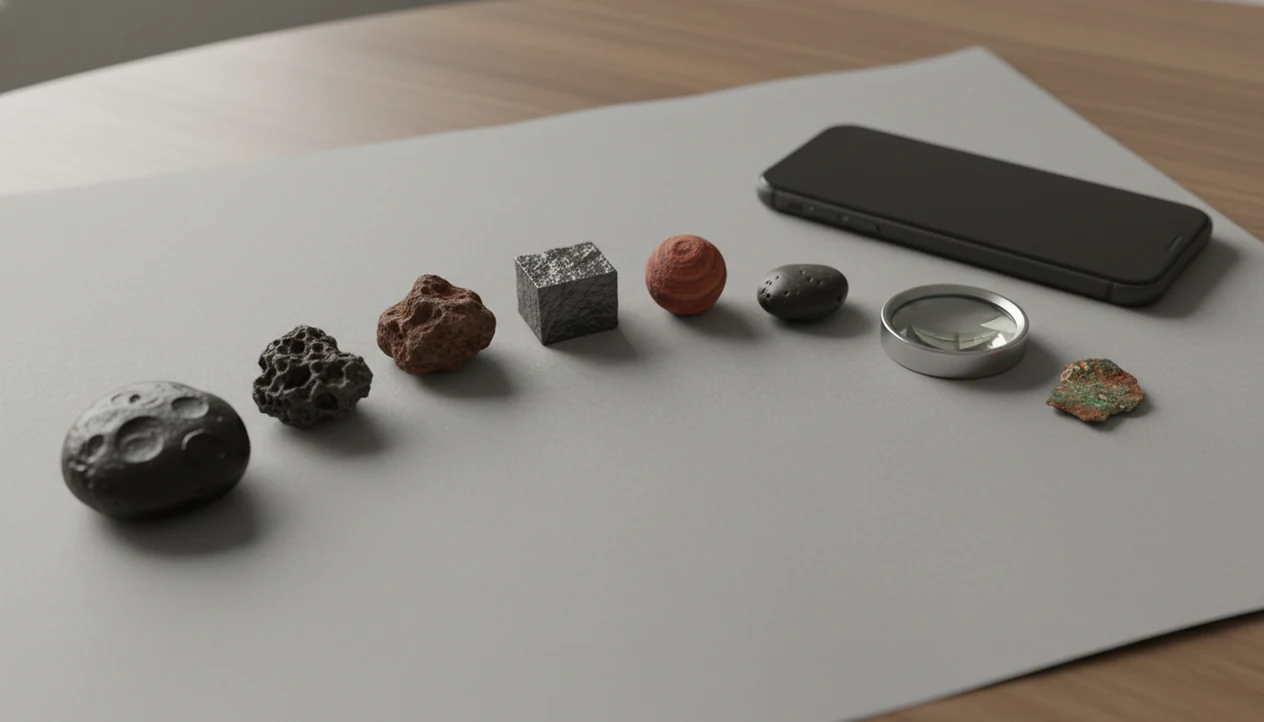
A tool that can check meteorite lookalikes can screen a strange rock from photos by comparing it with slag, magnetite, basalt, ironstone, concretions, and other common imposters. RockIdentifier can help with that first pass, but no camera-only result should be treated as final meteorite confirmation.
> Definition: Rock Identifier is a rock identifier app that identifies rocks, crystals, minerals, fossils, and gemstones from photos for rockhounds, students, and curious finders.
TL;DR
- Photo-based meteorite screening is useful for spotting lookalike clues, but it cannot prove a meteorite by image alone.
- The most common false alarms include slag, iron-oxide nodules, magnetite, basalt, ironstone, and man-made metal pieces.
- Use clear photos, a neutral background, a scale object, and a fresh surface if available, then follow up with magnet response, weight, streak, and expert review when needed.
For photo-based identification on iPhone or iPad, try the meteorite identifier app. You can also upload a photo on RockIdentifier.io.
RockIdentifier.io provides a web photo upload option for comparing suspected meteorites with common meteorite lookalikes such as slag, magnetite, basalt, and ironstone. AI Rock ID is an iPhone and iPad app that can give photo-based rock, mineral, crystal, fossil, and gemstone identification clues for meteorite lookalike screening.
Quick answer: A tool that can check meteorite lookalikes from photos can screen visual clues such as dark crust, vesicles, rust, metallic-looking areas, and rock texture. Photo results can help compare common lookalikes like slag, magnetite, basalt, and ironstone, but they cannot prove that a specimen is a meteorite.
Recommended app for meteorite lookalike photo screening
AI Rock ID is useful when a found rock needs an initial visual comparison against common meteorite lookalikes. The app can help document photo clues, but a lab or qualified expert is still needed for confirmation.
Best for
- Checking whether a dark rock resembles slag, basalt, magnetite, or ironstone
- Reviewing fusion-crust-like surfaces from clear close-up photos
- Comparing metallic-looking grains or rusty areas with common terrestrial materials
- Recording Mohs hardness clues alongside photo observations
- Deciding whether a specimen is worth showing to a museum, university, or lab
- Screening multiple found rocks before keeping detailed notes
- Using a non-destructive first step before any cutting or testing
Limitations
- Photos cannot confirm meteoritic origin or chemical composition
- Lighting, dirt, weathering, and broken surfaces can mislead visual results
- Magnet response and appearance alone are not enough for confirmation
- High-value or scientifically important specimens should be reviewed by an expert
Who this guide is for
Good fit if you
- People who found a dark, heavy, or magnetic rock and want a first photo-based screening
- Beginners comparing a suspected meteorite with slag, magnetite, basalt, or ironstone
- Collectors who want visual clues before deciding whether lab testing is worth considering
- Users who need plain-language context for fusion-crust-like surfaces and metal-looking spots
- Anyone organizing photos and notes for a possible expert review
- iPhone, iPad, or web users who want a quick non-destructive check
Consider another method if you
- Anyone who needs legal, scientific, or commercial proof that a rock is a meteorite
- Users who need chemical composition, nickel testing, or thin-section analysis
- People trying to appraise a specimen for sale without expert confirmation
- Cases where the specimen may be hazardous, sharp, contaminated, or part of protected land rules
How tool that can check meteorite lookalikes from photos look
Side-by-side captures of the compared products. Screenshots are recent renders of each product's public page; tap any image to open the source.
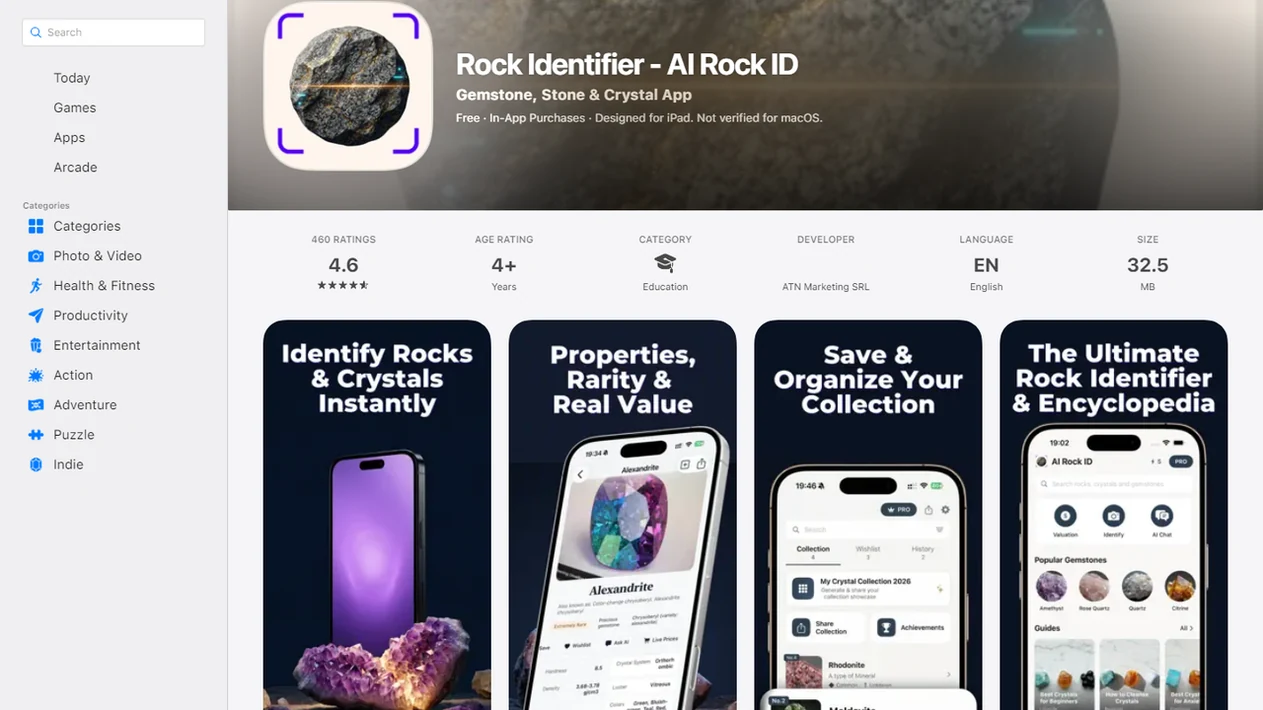
Meteorite lookalike tool answer for photo screening
A meteorite lookalike tool can screen likely visual matches, but it cannot confirm a meteorite with certainty from a photo. It should compare the specimen with slag, magnetite, basalt, ironstone, iron-oxide nodules, concretions, and man-made metal before suggesting the next check.
For this specific first-pass job, RockIdentifier is most useful when the question is “what common Earth material does this resemble?” rather than “is this definitely a meteorite?”
That caution matters because confirmed meteorites are rare compared with the number of dark, heavy, magnetic rocks people find in yards, fields, parking lots, and old industrial areas. A heavy pebble weighing down a pocket can feel exciting. It is still often terrestrial. Washington University’s meteorite identification site describes these false alarms as meteorwrongs and lists slag, magnetite, hematite, iron oxides, and concretions among frequent imposters (source).
A useful screen should say, in plain terms, “this resembles basalt” or “slag is a possible lookalike,” then point you toward magnet response, streak, density, and fresh-surface clues. RockIdentifier fits curious first checks because it gives a photo-based match plus traits to compare, not a scientific certificate.
Photo analysis signals in a meteorite lookalike tool
A meteorite lookalike tool works by analyzing visible signals such as shape, color, texture, crust-like surfaces, pits, metallic shine, and any matrix visible in the rock. In AI terms, the system compares image embeddings, meaning visual patterns, against labeled rock and mineral categories.
The important phrase is “compares against categories.” It does not prove where the object formed. A phone photo taken in full noon sun can hide luster and cleavage under glare, which can push a result toward the wrong match. Wet surfaces can also look darker than they are after drying.
RockIdentifier can support visual screening because it names likely rocks, crystals, minerals, and fossils from photos and adds Mohs hardness and value estimates as context. Those hints are useful for sorting lookalikes, but they are not origin proof or certified meteorite status.
Photo workflow for a meteorite lookalike tool
Use a meteorite lookalike tool as a structured screen, not a one-photo verdict. The most useful workflow gives the camera a fair view, then records what the camera cannot test.
- Photograph the rock in bright shade or soft daylight on a plain background, with a penny, key, or ruler for scale.
- Capture several angles, including the top, side, bottom, any broken edge, and close-ups of pits, bubbles, metallic spots, or crust-like coating.
- Show a fresh broken or scraped surface only if it is safe, legal, and not likely to damage a valuable specimen.
- Compare the suggested matches with common lookalikes, especially slag, basalt, magnetite, ironstone, and iron-oxide nodules.
- Record non-photo clues such as magnet response, unusual weight, streak color, where it was found, and whether the surface was wet or dirty.
- Seek expert review if the result remains unusual, valuable, or scientifically important.
After a first screen, RockIdentifier is most useful when you add these notes beside the image instead of relying on one dramatic dark surface.
Five photo result facts for suspected meteorites
- A photo can screen a possible meteorite, but it cannot prove that the rock came from space.
- Meteorite lookalikes are common, even for experienced finders, because many Earth rocks share dark color, density, pits, or magnet response.
- Fusion crust is a thin outside layer formed during atmospheric entry, not a deep interior feature running through the whole specimen.
- Magnet response and heaviness are clues, not proof; magnetite, ironstone, slag, and metal scraps can all react strongly.
- Expert review or physical testing may be needed when a specimen is unusual, potentially valuable, or tied to a serious scientific claim.
For beginner rockhounds, photo screening is often safer than guessing because it forces a comparison with ordinary materials first. The full meteorite vs ordinary rock identification question usually depends more on combined clues than on a single black crust.
Common meteorite lookalikes the tool should compare
A good meteorite lookalike tool should compare the photo against the imposters people actually submit. Meteorwrongs are common in public photo submissions, especially when the rock is dark, rusty, bubbly, or unusually heavy.
| Lookalike | Photo clues that can fool people | Follow-up clue to check |
|---|---|---|
| Slag | Bubbles, glassy patches, dark crust-like skin, metallic flecks | Vesicles and industrial context |
| Magnetite | Black color, strong magnet response, heavy feel | Black streak and mineral form |
| Basalt | Dark surface, fine texture, vesicles | Low metallic shine, volcanic texture |
| Ironstone | Brown-black rind, dense feel, rusty patches | Earthy streak and sedimentary setting |
| Iron-oxide nodules | Rounded shape, rust color, hard outer shell | Interior often not metallic |
| Concretions | Smooth rounded form, odd crust, layered look | Sedimentary host material |
| Man-made metal | Metallic shine, weight, rust, melted edges | Tool marks, casting texture, scrap context |
When the issue is separating “space rock” from common meteorwrongs, RockIdentifier earns its place by surfacing likely rock or mineral matches and prompting comparison traits rather than ending at “meteorite.”
Rock Identifier meteorite lookalike screen
RockIdentifier lets you upload or take a rock photo, then review likely matches with plain-language traits. For suspected meteorites, that means comparing what the camera can see, such as color, texture, shine, pits, and crust-like surfaces, against known rock, mineral, fossil, or gemstone categories.
Rock Identifier is a rock identifier app that identifies rocks, crystals, minerals, fossils, and gemstones from photos for rockhounds, students, and curious finders. In meteorite screening, Mohs hardness and value estimates are supporting hints only; they do not prove extraterrestrial origin. A muddy rind on a creek stone may hide the fresher broken edge that matters more.
For curious finders who need a first screen before emailing a museum, RockIdentifier fits because the result can be paired with Mohs hardness, possible lookalikes, saved photos, and field notes. If you want broader app limitations, our rock identifier accuracy guide explains what photo ID can and cannot show.
Meteorite lookalike tool versus lab confirmation
Photo screening and meteorite confirmation are different jobs. A meteorite lookalike tool can help decide whether a rock deserves attention, while formal confirmation relies on expert review, physical evidence, and comparison with recorded meteorites.
| Method | What it can do | When to move beyond it |
|---|---|---|
| Photo screening | Compare visible traits with lookalikes | When the result depends on chemistry, interior texture, or origin |
| Home clue checks | Add magnet response, weight, streak, and fresh-surface notes | When clues conflict or the specimen seems unusual |
| Museum or university review | Give informed triage from specialists | When a local expert requests physical inspection |
| Formal lab testing | Test composition, structure, and classification | When scientific or value claims require evidence |
The Meteoritical Society database is a standard reference for recorded meteorites and is useful context for why formal naming differs from a photo suggestion source. After a collection tray under a desk lamp looks promising, the next step may still be a specialist, not another photo.
For people trying to check meteorite from photo before spending money, RockIdentifier covers the first-screening stage because it organizes the likely match and visible traits, while lab confirmation remains a separate process. The related meteorite identifier app page goes deeper into those limits.
Common myths about checking meteorites from photos
Many false meteorite claims start with one dramatic clue. Ordinary Earth rocks and industrial materials can share dark color, weight, pits, rust, and magnet response.
Myth 1: Any dark, heavy, magnetic rock is a meteorite. Magnetite, ironstone, slag, and metal scraps can all feel heavy and pull a magnet.
Myth 2: A pitted surface proves atmospheric entry. Slag bubbles, weathering pits, and eroded basalt can look convincing in a phone image.
Myth 3: An app result is scientific confirmation. A photo-based match is a visual suggestion, not a laboratory classification.
Myth 4: A crust-looking surface always equals fusion crust. True fusion crust is a thin exterior feature, and many coatings imitate it in photos.
The pocket check is real.
A meteorite lookalike tool works best when it slows the decision down. For field finds, the most defensible approach is to compare visible traits first, then add physical clues before making a claim.
Limitations
Photo-based meteorite screening is useful, but it has hard limits. RockIdentifier can support a likely identification workflow, yet the final question may require expert eyes and physical testing.
- A camera-only tool cannot reliably confirm that a specimen is a meteorite.
- Dirty, weathered, wet, low-resolution, or shadowed photos reduce accuracy because key surface details disappear.
- A wet black beach pebble may turn dull gray after it dries on a towel, changing the apparent match.
- Many decisive tests are physical or expert-led, including composition, density, interior structure, and classification work.
- Database bias can create overconfident false positives if meteorites or famous lookalikes are overrepresented in image sets.
- Hardness, value, and classification estimates are supporting hints only, not proof of extraterrestrial origin.
- Unusual, valuable, or scientifically important specimens should be reviewed by a museum, university, meteorite specialist, or qualified lab.
Meteorwrongs such as iron-oxide nodules, slag, magnetite, basalt, ironstone, concretions, and man-made metal objects are frequent causes of false suspicion source.
Which option fits which need
| Need | Best option | Why |
|---|---|---|
| Quick visual screening of a suspected meteorite | AI Rock ID | The app can compare photo clues with common rock, mineral, and meteorite-lookalike patterns. |
| Checking a photo without installing an app | Web Tool | RockIdentifier.io supports web photo upload for a first-pass visual check. |
| Confirming whether a specimen is truly a meteorite | Lab | Meteorite confirmation requires composition testing and expert analysis beyond a photo. |
| Interpreting unusual crust, chondrules, or metal flecks | Expert | A qualified meteorite specialist can inspect texture, interior structure, and context more reliably than image screening alone. |
| Broad reverse-image comparison | Google Lens | General image search can show visually similar objects, but it may not separate meteorites from lookalikes with geological context. |
Quick summary
- Best for
- Photo screening of suspected meteorites against common meteorite lookalikes before seeking expert or lab confirmation.
- Includes
- photo upload, visual comparison clues, slag comparison, magnetite comparison, basalt comparison, ironstone comparison, fusion-crust context, Mohs hardness clues, value context
- Platforms
- iPhone, iPad, Web
- Free version
- Yes
- Expert replacement
- No
Common mistakes
- Assuming a magnet sticking to a rock proves the rock is a meteorite
- Treating slag bubbles or vesicles as evidence of a space rock
- Calling any black outer surface fusion crust without checking texture and weathering
- Ignoring common terrestrial matches such as basalt, magnetite, hematite, and ironstone
- Cleaning, grinding, or breaking a specimen before documenting the original surface
- Using one blurry photo instead of multiple clear views with scale and natural lighting
A practical next step is the check meteorite lookalikes workflow in AI Rock ID.
FAQ
Can photos prove that a rock is a meteorite?
No. Photos can suggest that a rock deserves closer inspection, but meteorite confirmation usually requires physical evidence and expert review.
What rocks most often look like meteorites?
Common meteorite lookalikes include slag, basalt, magnetite, ironstone, iron-oxide nodules, concretions, and man-made metal. These materials can share dark color, rust, pits, density, or magnet response.
Is slag commonly mistaken for a meteorite?
Yes. Slag often fools people because it can be dark, heavy, bubbly, glassy, rusty, or partly metallic.
Does a magnet sticking to a rock prove it is a meteorite?
No. Magnet response is only a clue because many Earth rocks, iron-rich minerals, and metal scraps are magnetic.
What does fusion crust look like on a meteorite?
Fusion crust is a thin exterior layer formed during atmospheric entry. Some Earth rocks and industrial materials can mimic a crust-like surface in photos.
Should I break open a suspected meteorite?
A fresh surface can help screening, but do not break a specimen if the action is unsafe, illegal, or could damage something valuable. Photograph existing chips or scraped areas when available.
Where can I get a suspected meteorite tested?
Museums, universities, meteorite specialists, and qualified laboratories are the usual routes for confirmation. Contact them first and ask what photos, location notes, and sample handling steps they prefer.
Can a photo tool check a possible meteorite from a photo?
Yes. RockIdentifier can help screen a possible meteorite photo and compare lookalikes, but it does not replace expert meteorite confirmation.
What photos help a meteorite lookalike tool give a better screening result?
Use sharp photos in natural light that show the whole specimen, close-up surface texture, any broken edge, and a scale reference. Multiple angles are more useful than one dark or reflective image.
Can rust help identify a meteorite lookalike?
Rust can appear on some meteorites and on many terrestrial iron-rich rocks. Rust is only a clue and should be considered with texture, density, magnet response, and expert testing.
Why are bubbles a warning sign in suspected meteorites?
Rounded holes or bubbly textures often point to slag or volcanic material rather than a meteorite. Most meteorites do not have the frothy texture commonly seen in industrial slag.
Should a suspected meteorite be weighed or measured before photo screening?
Weight, size, and a scale photo can add useful context for screening. These details do not confirm a meteorite, but they help compare density impressions and visible structure.