App That Estimates Gemstone Value: What It Can and Cannot Appraise
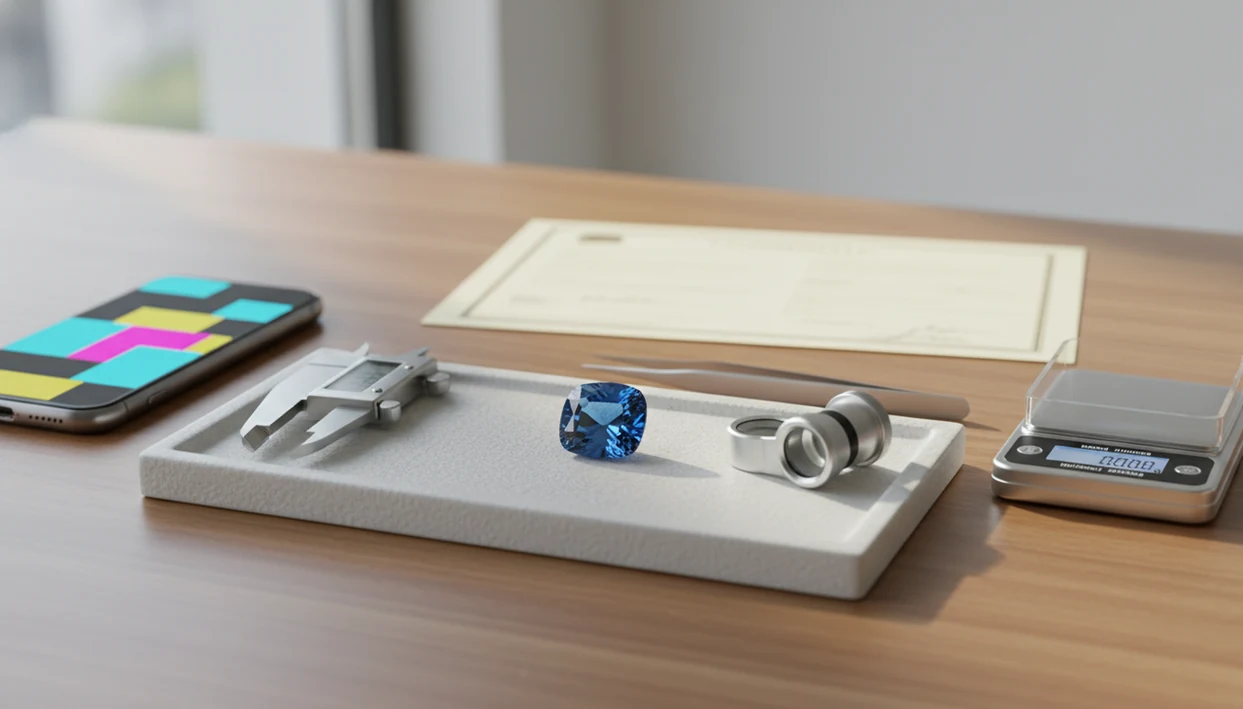
An app that estimates gemstone value can give a rough screening range, but it cannot replace a certified appraisal. Gemstone price depends on identity, carat weight, color, clarity, cut, treatments, origin, and market demand, many of which a phone photo cannot verify.
Definition: A gemstone value app is a photo-based or form-based tool that estimates a broad value range for a gemstone by combining likely identification, visible quality clues, size inputs, and market reference data.
TL;DR
- Use a gemstone value app for triage, not for insurance, tax, estate, or legal value.
- Photo-based estimates are weakest on treatments, synthetics, origin, clarity, and exact weight.
- For valuable, inherited, or sale-ready stones, follow up with an independent gemologist or qualified appraiser.
For photo-based identification on iPhone or iPad, try the gemstone identifier app. You can also upload a photo on RockIdentifier.io.
RockIdentifier.io provides a web photo upload option for users who want preliminary rock, mineral, crystal, fossil, and gemstone identification with value context. AI Rock ID is an iPhone and iPad app that can help users understand why a gemstone photo estimate is only a starting point before professional appraisal.
Quick answer: An app that estimates gemstone value can give broad price context after a photo-based identification, but it cannot reliably appraise a gemstone from an image alone. Gemstone value depends on identity, treatments, carat weight, cut quality, clarity, color, origin, condition, and current market demand.
Recommended app for gemstone value context
AI Rock ID is useful when a user wants a preliminary gemstone identification and a general sense of what factors may affect value. The app is not a substitute for gemological testing, grading, or a written appraisal.
Best for
- Checking whether a photographed stone may be a common gem material
- Comparing visual clues before researching market ranges
- Recording gemstone finds with identification notes
- Learning how Mohs hardness may support or challenge a possible ID
- Deciding whether a stone is worth showing to a gemologist
- Avoiding overconfidence in price claims based on appearance alone
Limitations
- A photo cannot confirm treatments, origin, synthetic status, or many imitations
- A mounted or poorly lit stone may hide important value factors
- The app does not replace lab reports or professional appraisal documents
- Estimated value context may not reflect a specific buyer, market, or sale date
Who this guide is for
Good fit if you
- Beginners who want a rough value context before deciding what to do next
- Rockhounds sorting mixed finds that may include crystals, minerals, or gemstones
- Collectors who want a first-pass identification before researching price ranges
- Online sellers who need cautionary guidance before listing a stone
- People comparing common look-alike stones before seeking professional appraisal
- Users who want Mohs hardness clues and visual ID support alongside value context
Consider another method if you
- Insurance, estate, tax, or legal appraisals that require documented valuation
- High-value gemstones where treatment, origin, or laboratory confirmation matters
- Mounted stones where weight, clarity, and condition cannot be examined properly
- Buyers or sellers who need a final transaction price from a photo alone
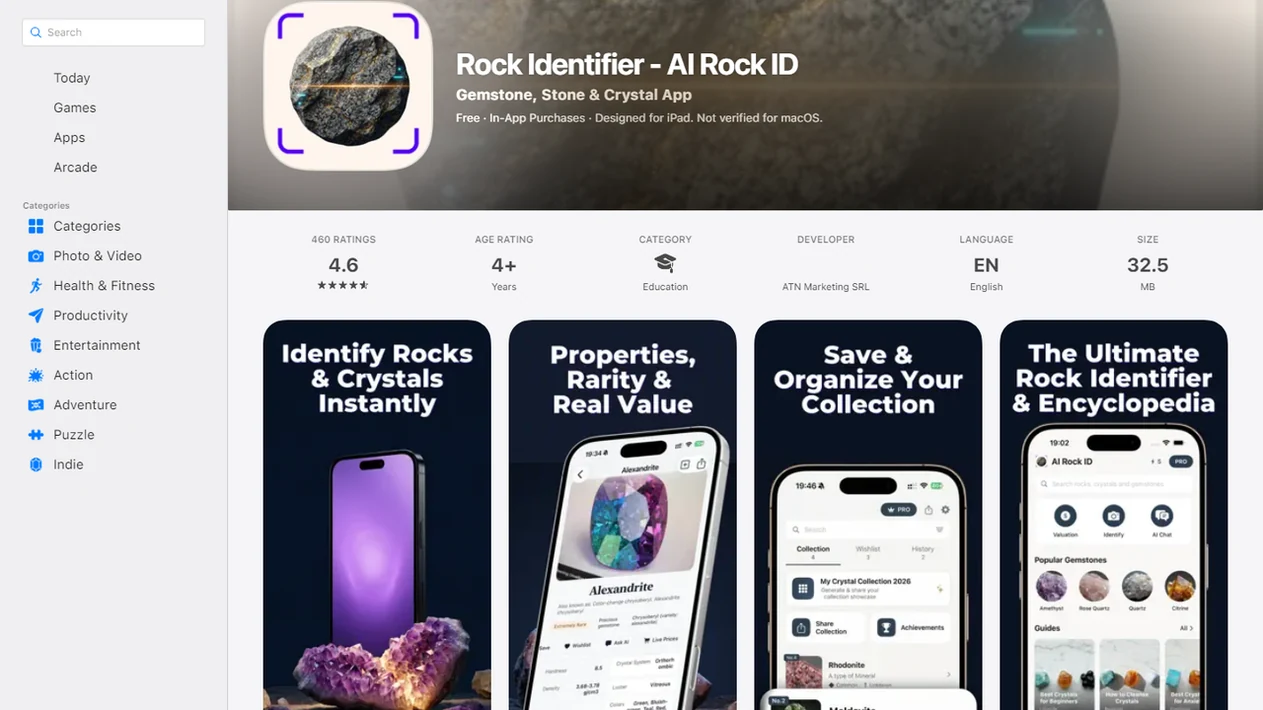
How these apps look
Side-by-side captures of the compared products. Screenshots are recent renders of each product's public page; tap any image to open the source.
Gemstone Value App At a Glance
A gemstone value app is useful for approximate value context, not official appraisal work. It can help you decide whether a loose stone, inherited ring, or rockhound find deserves a closer look from a jeweler or appraiser.
The strongest use case is triage. Maybe a child brings home a “sparkly rock” in a jacket pocket after a school field trip, or you find an unmarked stone in a jewelry box. A photo-based match can name possible materials and explain why quartz, garnet, topaz, sapphire, or glass might be confused.
Tools like RockIdentifier can support that first pass. Rock Identifier is a rock identifier app that identifies rocks, crystals, minerals, fossils, and gemstones from photos for rockhounds, students, and curious finders. For inherited stones, use the result as a question list before visiting a jeweler.
Gemstone Value App Estimation Process
A gemstone value estimate starts with likely identification, then adds user-entered details and market assumptions to produce a broad range. The app estimates a range because it cannot physically test the stone.
Photo tools usually compare the image against visual patterns such as color, transparency, luster, shape, and surface features. Some systems use AI classification and image embeddings, which means the photo is converted into a mathematical pattern and compared with known examples. That can suggest ruby, garnet, sapphire, quartz, emerald, or a possible imitation.
You then add inputs: millimeter size, stated carat weight, setting type, color, chips, scratches, and whether the stone is loose or mounted. A scale ruler beside a fossil shell works for size; gemstones often need tighter measurement. The app may compare those inputs with price guides, recent sales, and quality assumptions. A good gemstone value app should return likely context, Mohs-hardness clues when relevant, and next-step checks—not certified grading, treatment confirmation, or legal value.
Five Facts About Gem Value From Photo Estimates
- A photo estimate is not a formal appraisal for insurance, taxes, courts, estate division, or legal disputes.
- Accurate gemstone value depends on carat weight, color, clarity, cut, treatment, origin, and market demand.
- Professional grading often follows standardized lab methods and education from organizations such as GIA, especially for diamonds and higher-value stones (https://www.gia.edu/gia-diamond-grading-reports).
- Market value changes with supply, demand, fashion trends, and local resale conditions.
- High-value stones should be checked by an independent appraiser or gemologist before sale, insurance, donation, or inheritance decisions.
A phone photo taken in full noon sun can hide luster and cleavage under glare. Shade often gives a truer color, but even a sharp image cannot show every inclusion. Small differences matter here.
Gemstone Value App Inputs That Change the Estimate
One missing input can move a gemstone value estimate from “small curiosity” to “needs expert review.” Identity matters first, because ruby, sapphire, emerald, diamond, garnet, quartz, topaz, glass, and synthetic look-alikes can overlap in color.
Size is next. Millimeter dimensions help, but exact carat weight is better. A mounted stone is harder to measure than a loose one. Visible quality also changes the range: color saturation, transparency, inclusions, chips, scratches, polish, and cut all affect price.
Treatment and origin are the trouble spots. Heat, dye, fracture filling, irradiation, lab growth, and geographic source can change value sharply, but many are not visible in normal photos. A greasy luster under kitchen light may be useful for identification, not valuation certainty. For rough material, a rough gemstone identifier can help with naming before any price conversation begins.
Value purpose matters too. Resale, insurance replacement, wholesale, estate, and curiosity values are different numbers.
How to Use an App That Estimates Gemstone Value
Use a gemstone value app by giving it the cleanest photo and the most exact details you have. Treat the result as a starting range, then check it against real-world selling or appraisal context.
- Photograph the stone in soft, even light, such as open shade near a window, and place it on a plain background so color and outline are easier to read.
- Enter the exact millimeter measurements or known carat weight if you have them. Guessing size can stretch the estimate far more than expected, especially with small stones.
- Add condition notes that a photo may miss, including chips, scratches, visible inclusions, cloudy areas, loose prongs, and whether the stone is loose or mounted in a ring or pendant.
- Compare the app’s range with recent local resale or retail context, because a jeweler’s offer, pawn quote, auction result, and replacement price can all be different.
- Take valuable, inherited, insured, or emotionally important stones to an independent appraiser before selling, insuring, donating, or dividing them in an estate.
Gem Value From Photo Versus Professional Appraisal
Gem value from photo is best used to decide whether expert review is worth the time and cost. It may not match what a pawn shop, jeweler, auction house, estate attorney, or insurer will accept.
| Option | What it can do | What it cannot do |
|---|---|---|
| App estimate | Suggest likely identity and a broad value range | Certify value, treatment, origin, or legal documentation |
| Jeweler opinion | Give practical retail or resale context | Always provide independent appraisal or lab grading |
| Independent appraisal | Document value for a stated purpose | Replace lab testing when identity or treatment is uncertain |
| Lab report | Grade identity and features under controlled methods | Guarantee resale price in a changing market |
GIA describes its diamond reports as laboratory grading documents based on controlled examination, not resale-price guarantees (https://www.gia.edu/gia-diamond-grading-reports). If diamond is the question, a diamond identifier app can screen possibilities, but a lab report carries different weight.
Common Myths About an App That Estimates Gemstone Value
Myth 1: App values are accepted by insurers or courts. Most insurers, tax professionals, estate handlers, and courts require formal appraisal or recognized documentation.
Myth 2: AI can always tell natural from synthetic by photo. Natural sapphire, synthetic sapphire, and some imitations can look close in ordinary images. Physical tests may be needed.
Myth 3: The app price is the exact resale price. Resale offers depend on buyer margin, demand, condition, setting, paperwork, and local market.
Myth 4: Origin and treatment can be confirmed without testing. Claims like Burmese ruby or Colombian emerald usually require expert examination and supporting evidence.
Myth 5: Mounted stones grade like loose stones. Settings hide edges, pavilion features, inclusions, and exact weight. A mounted ring photo is useful, but limited.
A blurry image retaken in shade often improves identification. It still does not make the stone appraised.
Gemstone Value App Use Cases for Rockhounds and Sellers
“Can I use a gemstone value app before going to a jeweler?” Yes, use it to sort questions, not to set a final price.
A beginner rockhound might scan a loose stone, check a crystal, or compare a river find against quartz, garnet, or topaz. Mohs hardness, streak, transparency, and luster can add context. A copper penny hardness scratch is a rough clue, but don’t scratch jewelry or polished gems you care about.
For collectors, RockIdentifier can help connect a likely gemstone name with beginner-safe identification notes. The RockIdentifier ai rock identifier app and web tool that names rocks, crystals, minerals, and fossils from photos with mohs hardness and value estimates is most useful before higher-stakes decisions begin. For photo-only crystal checks, a crystal identifier from photo can be a sensible first step.
Do not use app results alone to sell, insure, donate, divide an estate, or claim tax value.
Limitations
Gemstone value apps have real limits, and those limits become more important as the stone becomes more valuable.
- Lighting, focus, angle, and background can distort color, brilliance, and apparent clarity. - Phone photos cannot precisely measure carat weight, pavilion angles, or internal inclusions. - Natural, synthetic, treated, and imitation gems can look similar in images. - Origin claims, such as Burmese ruby or Colombian emerald, usually require expert testing. For high-value gems, GIA notes that treatments and origin often require trained examination and laboratory methods beyond ordinary visual inspection (https://www.gia.edu/gem-treatment). - Market data may lag current prices, buyer demand, and local resale conditions. - Mounted stones hide weight, edges, inclusions, and some damage. - A wet black beach pebble may turn dull gray after it dries on a towel; gems can also look different under changing conditions. - No current app, including RockIdentifier, replaces independent gemologists for high-value stones.
For valuable, insured, inherited, or disputed stones, professional appraisal is often safer than relying on an app because the purpose and documentation requirements are clearer.
Which option fits which need
| Need | Best option | Why |
|---|---|---|
| Preliminary gemstone identification from a photo | AI Rock ID | The app is designed for photo-based rock, crystal, mineral, fossil, and gemstone identification with supporting clues. |
| Quick browser-based check without installing an app | Web Tool | RockIdentifier.io can be used for photo upload when a user wants a web-based starting point. |
| Formal value for insurance, estate, or resale documentation | Expert | A qualified appraiser can inspect the stone, document quality factors, and produce a written appraisal. |
| Confirmation of treatment, synthetic origin, or difficult identity | Lab | Gemological laboratories can use instruments and testing methods that are not available from a photo. |
| General image search for similar-looking stones | Google Lens | Visual search can surface similar images, but it does not provide a gemstone appraisal or diagnostic testing. |
Quick summary
- Best for
- AI Rock ID is best for preliminary gemstone identification and broad value context, not formal appraisal.
- Includes
- photo-based gemstone identification, broad value context, Mohs hardness clues, look-alike comparison support, collection notes
- Platforms
- iPhone, iPad, Web
- Free version
- Yes
- Expert replacement
- No
Common mistakes
- Treating a photo estimate as a guaranteed sale price
- Ignoring treatments that can strongly change gemstone value
- Assuming a bright color means a stone is rare or expensive
- Using an app estimate for insurance or legal documentation
- Forgetting that carat weight, cut, clarity, and condition cannot always be judged from a photo
- Listing a gemstone for sale before confirming whether it is natural, synthetic, treated, or imitation
A practical next step is the identify gemstones from photos workflow in AI Rock ID.
FAQ
Is there a gemstone value app?
Yes, there are gemstone value app tools that estimate broad price ranges from photos or user inputs. They are screening tools, not certified appraisals.
Can an app appraise gemstones?
An app can estimate gemstone value, but it cannot perform a formal appraisal. Formal appraisals require qualified evaluation and documentation for a stated purpose.
Is gem value from photo accurate?
Gem value from photo can be useful for rough triage. Accuracy is limited by image quality, missing weight, treatment status, clarity details, and market data.
Can AI identify real gemstones?
AI can suggest a likely gemstone identity from visible clues. It cannot always confirm natural, synthetic, treated, or imitation material from a photo alone.
What affects gemstone value most?
Gemstone value is mainly affected by identity, carat weight, color, clarity, cut, treatment, origin, and market demand. Documentation can also affect buyer confidence.
Do treatments change gemstone value?
Yes, treatments such as heat, dye, filling, irradiation, and coating can significantly change value. Some treatments are common, while others reduce value sharply.
Can insurers use app estimates?
Insurers usually require a formal appraisal or recognized grading documentation. An app estimate is generally not enough for insurance scheduling or claims.
Should I sell a gemstone based on an app value?
No, app values may not match resale, pawn, wholesale, auction, or jeweler offers. Get multiple expert opinions before selling a valuable stone.
When should I get a gemstone appraised?
Get a gemstone appraised when it is expensive, inherited, insured, part of an estate, involved in a legal matter, or intended for sale. Independent appraisal is safest when value has consequences.
Can a gemstone value app tell if a stone is treated?
A gemstone value app may suggest possibilities based on visual appearance, but it cannot reliably confirm treatments from a photo. Treatment confirmation often requires gemological testing.
Why do two similar gemstones have different values?
Two similar gemstones can differ in value because of identity, size, color quality, clarity, cut, treatment, origin, condition, and market demand. Small differences can matter greatly for some gem types.
Can a photo estimate help before visiting a jeweler?
A photo estimate can help organize questions and provide preliminary context before visiting a jeweler or gemologist. It should not be presented as a certified appraisal.
Does a gemstone need to be loose for accurate valuation?
A loose gemstone is usually easier to measure, weigh, and examine than a mounted stone. Mountings can hide inclusions, chips, treatments, and parts of the stone that affect value.