Gemstone Identification Benefits And Important Limits
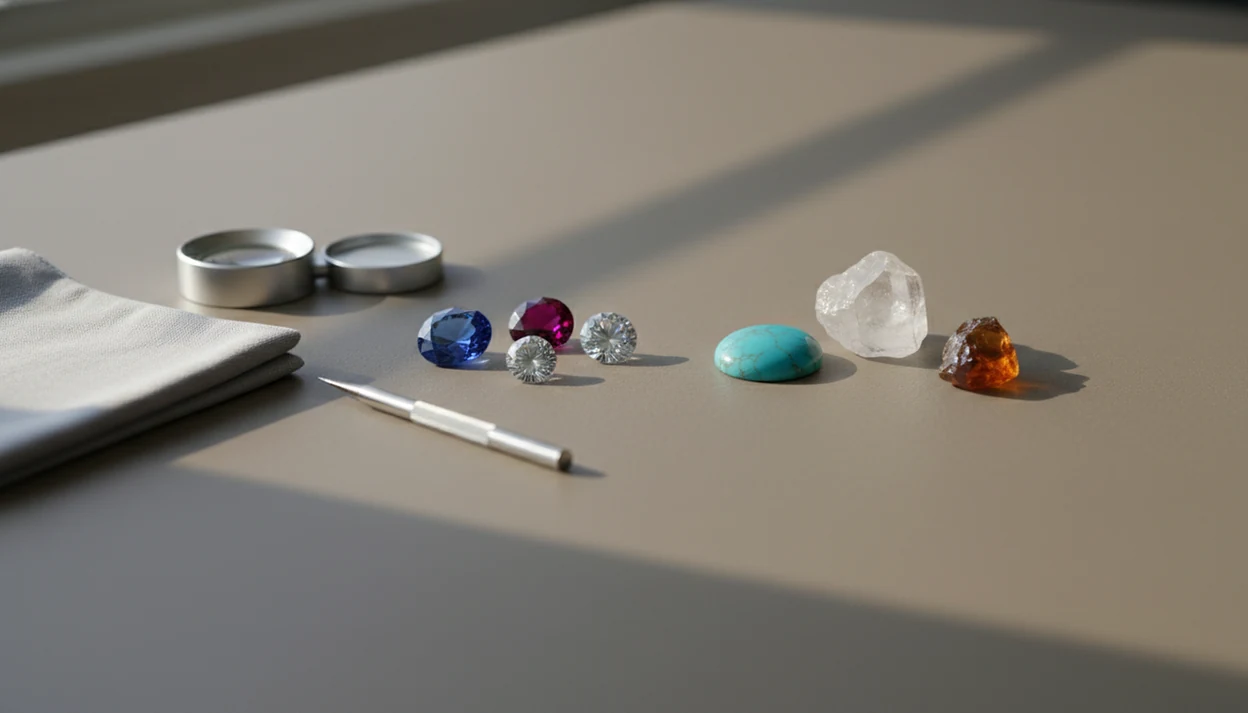
Gemstone identification benefits include safer naming, better buying questions, lookalike awareness, and smarter care decisions, but casual ID does not prove grade, treatment history, origin, or exact value. Use it as a practical first screen before storage, cleaning, collecting, or asking a gemologist for a formal report.
> Definition: Gemstone identification is the process of narrowing a stone to a probable material, such as quartz, spinel, sapphire, glass, synthetic corundum, or another gem species, using visible features, physical properties, photo clues, and, when needed, laboratory tests.
TL;DR
- Casual gemstone ID helps you name a mystery stone, understand likely hardness, spot lookalikes, organize a collection, and ask better questions before buying.
- Professional grading and appraisal are different: they assess quality, treatments, authenticity, documentation, and market value with instruments and expert judgment.
- Photo-based tools such as RockIdentifier are useful for learning and rough screening, but expensive gemstones still need independent gemological lab reports.
For photo-based identification on iPhone or iPad, try the gemstone identifier app. You can also upload a photo on RockIdentifier.io.
RockIdentifier.io provides a web photo upload option for people who want a preliminary gemstone, mineral, rock, crystal, or fossil identification. AI Rock ID is an iPhone and iPad app that can support this article topic by helping users compare visual clues, Mohs hardness context, and possible gemstone lookalikes before seeking expert confirmation.
Quick answer: Gemstone identification benefits include safer handling, better buying questions, and stronger awareness of common lookalikes. Gemstone identification can narrow possible names from photos and observations, but it does not replace grading, appraisal, certification, or laboratory testing.
Recommended app for gemstone identification benefits
AI Rock ID is useful when a gemstone owner wants a preliminary identification and a clearer list of questions before cleaning, storing, buying, or verifying a stone. The app is most appropriate for educational support and lookalike awareness, not for final grading or appraisal.
Best for
- Checking possible gemstone names from a clear photo
- Comparing a stone against common gemstone lookalikes
- Recording visual clues before asking a gemologist
- Reviewing Mohs hardness context before basic handling decisions
- Learning when photo identification is not enough
- Preparing better questions before a gemstone purchase
- Separating identification from grading, certification, and appraisal
Limitations
- Photos cannot prove whether a gemstone is natural, synthetic, treated, or imitation
- The app cannot provide a certified grade or appraisal
- Lighting, camera focus, setting, and surface wear can affect photo-based suggestions
- High-value or disputed stones should be checked by a qualified gemologist or laboratory
Who this guide is for
Good fit if you
- Beginners who want to describe an unknown gemstone more accurately
- Collectors comparing a stone with common gemstone lookalikes
- Buyers who want better questions before purchasing a gem or jewelry item
- Owners deciding whether a gemstone may need cautious cleaning or storage
- Students learning photo clues, Mohs hardness context, and basic gem ID limits
- Anyone preparing notes before visiting a gemologist or laboratory
Consider another method if you
- Users who need a formal gemstone grading report
- Sellers who need an appraisal or certified value statement
- Buyers who must prove whether a stone is natural, synthetic, treated, or imitation
- Users identifying high-value stones without professional verification
Gemstone Identification Benefits In One Practical Definition
Gemstone identification answers “what is this likely stone?” rather than “what is its exact grade, origin, or value?” It is a first naming step, not a certificate.
A useful casual ID may give you a probable gem name, mineral family, common lookalikes, Mohs hardness range, and rough value context. That helps when a child brings home a “sparkly rock” in a jacket pocket, or when a seller label feels too confident for a loose blue stone in a tray. Tools like RockIdentifier can support that first-pass photo-based match for curious finders and beginner rockhounds.
A tool such as RockIdentifier — an ai rock identifier app and web tool that names rocks, crystals, minerals, and fossils from photos with Mohs hardness and value estimates — should deliver a likely identification and learning clues, not certified authenticity or appraisal. Formal certification still belongs with a trained gemologist or recognized laboratory.
Five Gemstone ID Facts Every Beginner Should Know
- Species comes first. Quartz versus spinel, corundum versus glass, or turquoise versus dyed howlite changes every later value and rarity discussion.
- Natural, synthetic, treated, and imitation stones can look similar. A clear, bright stone may be diamond, cubic zirconia, glass, synthetic spinel, or something else.
- Color alone is unreliable. Red does not automatically mean ruby, and blue does not automatically mean sapphire.
- Mohs hardness helps with care decisions. The Mohs scale ranks minerals from 1, talc, to 10, diamond, by scratch resistance, so it helps with storage and wear choices.
For reference, the Mohs scale is a relative scratch-resistance scale from talc at 1 to diamond at 10; it does not measure toughness or breakage risk (https://www.britannica.com/science/Mohs-hardness). - Casual tools are screening tools. Apps, hand lenses, charts, and hobby tests help you learn, but lab reports are needed for expensive sales, insurance, or disputes.
A glass plate with a faint scratch tells you one clue. It does not tell you the whole story.
For beginners, species identification is often more useful than guessing value because it narrows the correct care, comparison, and verification questions.
Gemstone Buying, Storage, And Cleaning Decisions
Why identify gemstones? Because a probable ID can keep you from overpaying, damaging a softer stone, or accepting a seller’s label without the right follow-up questions.
Buying is the obvious case. Glass, dyed quartz, synthetic stones, and mislabeled crystals can look convincing in a display case. If a stone is described as ruby, emerald, turquoise, or diamond, a basic ID gives you a reason to ask about treatments, lab reports, return policies, and whether the paperwork is independent.
Care matters too. A softer opal, fluorite, or turquoise imitation should not be tossed loose beside sapphire or diamond jewelry. One heavy pebble weighing down a pocket can scratch another specimen before you even get home. Probable identification helps you choose gentler cleaning, separate storage, and safer expectations.
A likely gem name is useful before purchase because it turns vague excitement into specific questions about material, treatment, documentation, and return rights.
Gemstone Photo Clues, Refractive Index, And Lab Tests
Gemstone identification works by combining visible clues with physical properties, then escalating to instruments when value or certainty matters. Casual ID starts with what the eye and camera can record.
Useful inputs include color, luster, transparency, crystal habit, visible inclusions, setting context, scratch resistance, and comparison photos. A phone photo taken in full noon sun can hide luster and cleavage under glare, so window light often gives a truer view. AI photo tools compare image patterns, sometimes called image embeddings, with known rock, mineral, crystal, fossil, and gemstone examples. In plain terms, the software looks for visual similarity across many labeled images.
Professional gem testing goes further. Gemologists may use refractive index, specific gravity, microscope inclusions, spectroscopy, fluorescence, and other instruments. Spectroscopy can reveal absorption patterns linked to chemistry, treatments, or synthetic growth. Photos cannot reliably capture those hidden properties.
GIA describes colored stone identification reports as using gemological testing to document identity and, when applicable, detectable treatments or laboratory-grown origin (https://www.gia.edu/gem-lab-service/colored-stone-identification).
Lab testing is often necessary because gemstone identity depends on optical and internal evidence that a surface photo cannot confirm.
Before You Start: What To Record Before Identifying A Gemstone
Before identifying a gemstone, record its condition, context, and appearance while it is still untouched. Good notes protect the stone and give any later photo tool, buyer, or gemologist a cleaner trail to follow.
- Remove loose dirt gently with a soft brush or plain water only if the material and setting seem safe. Skip acids, heat, ultrasonic cleaners, and aggressive polishing, because damage can erase clues or lower value.
- Photograph the stone in window light before any scratch comparison or cleaning experiment. Take top, side, back, and close-up views, and include a coin or ruler for scale.
- Write down the basics: size, weight if you can measure it, jewelry setting, metal marks, seller label, packaging notes, and where the stone came from.
- Keep the story with the stone by storing labels, receipts, family notes, or field-location details in the same bag or box.
- Set aside sentimental or costly pieces until a gemologist can inspect them. If losing, scratching, or misnaming the stone would matter, do not treat it like a practice sample.
These simple records make every later identification step less guessy.
Five Steps For Responsible Gemstone Identification
Responsible gemstone ID means gathering clean evidence before you trust a name. Use this process for loose stones, jewelry finds, market pieces, and rough material.
- Photograph the gemstone in daylight from the top, side, back, and any broken or worn edge.
- Record the context including where it was found, seller label, size, weight if known, and whether it is set in jewelry.
- Compare the likely ID with hardness, color range, luster, transparency, and common lookalikes.
- Use RockIdentifier or another reliable reference as a first screen, not as a certificate.
- Ask for a lab report or gemologist inspection before insurance, resale, inheritance division, or a high-value purchase.
A penny, key, or fingernail beside the specimen gives scale in photos. It sounds basic, but it prevents a surprising number of wrong assumptions.
If the stone is rough, compare your notes with a rough gemstone identifier workflow before calling it a faceted-gem equivalent.
Gem ID Limits Versus Grading, Appraisal, And Certification
Casual gemstone ID, grading, appraisal, and certification answer different questions. Mixing them up is one of the fastest ways to become overconfident.
| Question | Casual gemstone ID | Professional grading | Appraisal | Lab certificate |
|---|---|---|---|---|
| What is it likely made of? | Suggests a probable name and lookalikes | May confirm material during quality review | Usually references identified material | Documents tested identity |
| How good is it? | Gives limited visual context | Assesses color, clarity, cut, carat, and sometimes treatment evidence | May include quality notes | May include grading details, depending on report type |
| What is it worth? | May offer rough context | Does not always assign market value | Documents market value for resale, insurance, or estate use | Usually not a retail appraisal |
| Is it legal proof? | No | Limited to the grader’s report | Useful for insurance or estate files | Stronger documentation from a recognized lab |
Grading is about quality. Appraisal is about documented value. Certification is about tested identity and reportable observations.
For diamond-specific limits, the same distinction applies in any diamond identifier app result.
Common Gemstone Identification Mistakes With Lookalikes
Beginner mistakes usually come from trusting one clue too much. Color, sparkle, and a confident label can all mislead.
- The color shortcut. Red does not prove ruby, blue does not prove sapphire, green does not prove emerald, and clear does not prove diamond.
- The photo-proof mistake. A photo result can suggest ruby or quartz, but it cannot prove the stone is natural rather than synthetic or imitation.
- The name-equals-value error. “Sapphire” is not a price. Value depends on color, clarity, cut, size, treatment, condition, origin claims, and demand.
- The treatment blind spot. Dyeing, fracture filling, heating, diffusion, and coating can change appearance and value without shouting from a photo.
- The classic lookalike trap. Glass can resemble quartz, spinel can resemble ruby, cubic zirconia can resemble diamond, and dyed howlite can resemble turquoise.
Sand stuck to a jasper chip looks convincing until you rinse it and inspect the surface. Gem labels deserve the same pause.
Gemstone Verification Triggers For Gemologists And Laboratories
Escalate to a gemologist or laboratory when the outcome affects money, legal records, insurance, inheritance, or a claim of rarity. Casual ID prepares you for that conversation; it should not replace it.
Use professional verification for expensive purchases, inherited jewelry, insurance scheduling, legal disputes, resale listings, and claims about rare origin. Exact geographic origin cannot be reliably determined from a photo alone. Subtle treatments can also change value dramatically, and many need instruments to detect.
Seller paperwork may be useful, but high-value gems deserve independent lab certificates. Ask who issued the report, whether the report number can be checked, and whether treatment testing was included. Examples of recognized gemological labs include GIA, IGI, AGL, SSEF, and Gübelin; verify the report number on the issuing lab’s own site before relying on seller-provided paperwork. If a claim sounds unusually valuable, slow down.
The hand lens fogged by breath on a cold trail teaches the same lesson: one view is never enough.
For crystals sold by trade names, a science-based crystal identifier from photo check can help separate visual learning from seller language.
Limitations
Casual gemstone ID is useful, but its limits are serious. Treat a probable name as a starting point, especially when money or documentation is involved.
- Photo-based ID cannot reliably distinguish all natural, synthetic, and imitation gemstones.
- Apps and hobby tools cannot consistently detect fracture filling, diffusion, coating, heating, or other treatments.
- Rough value estimates are not appraisals because price depends on cut, clarity, color saturation, carat weight, origin, condition, and demand.
- Mohs hardness measures scratch resistance, not toughness, cleavage, heat sensitivity, chemical sensitivity, or shock resistance.
- A probable ID does not prove exact geographic origin.
- Insurance, legal disputes, and high-value resale require recognized gemological documentation.
- Poor lighting, camera blur, mounted jewelry, and altered colors can reduce photo-identification accuracy.
A wet black beach pebble can turn dull gray after it dries on a towel. Gemstones also change appearance with light, moisture, polish, and angle.
That is the point. Identify carefully, then verify when the stakes rise.
Which option fits which need
| Need | Best option | Why |
|---|---|---|
| Preliminary gemstone name from a photo | AI Rock ID | Photo-based identification can suggest possible gemstone names and help users notice visual clues. |
| Quick check without installing an app | Web Tool | RockIdentifier.io allows photo upload from a browser for a basic identification workflow. |
| Proof of natural origin, treatment, or synthetic status | Lab | Laboratory testing can use instruments and methods that photos cannot provide. |
| Value estimate for selling, insurance, or estate purposes | Expert | A qualified appraiser or gemologist can assess condition, market factors, and documentation. |
| Broad visual search for similar-looking stones | Google Lens | General visual search can show similar images, but it does not provide gem-specific verification. |
Quick summary
- Best for
- This page is best for understanding the practical benefits and limits of gemstone identification before buying, cleaning, storing, or verifying a stone.
- Includes
- lookalike awareness, photo clues, Mohs hardness context, cleaning caution, buying questions, verification triggers, grading and appraisal limits
- Platforms
- iPhone, iPad, Web
- Free version
- Yes
- Expert replacement
- No
Common mistakes
- Treating a photo suggestion as proof that a gemstone is real, natural, or untreated
- Confusing gemstone identification with grading, appraisal, or certification
- Ignoring lookalikes such as glass, synthetic stones, or similarly colored minerals
- Cleaning a gemstone before confirming whether it is porous, soft, filled, or fracture-prone
- Relying on color alone when many gemstones share similar colors
- Forgetting to record weight, measurements, setting details, and purchase history before asking for help
A practical next step is the identify gemstones from photos workflow in AI Rock ID.
FAQ
Why should I identify a gemstone before buying or cleaning it?
Identification helps you name the likely material, check common lookalikes, choose safer care, and ask better questions about treatments, reports, and return policies. It also gives rough value context before you spend money.
Can an app identify gemstones accurately?
An app can provide a probable photo-based ID when the image is clear and the stone has visible clues. RockIdentifier and similar tools do not provide certified authenticity, treatment detection, or formal grading.
Is gemstone identification the same as gemstone grading?
No. Identification names the likely material, while grading evaluates quality traits such as color, clarity, cut, carat weight, and sometimes treatment evidence.
Can photos prove a gemstone is real or natural?
Photos alone cannot reliably prove natural origin, treatment status, or authenticity. Many natural, synthetic, treated, and imitation stones can look similar in ordinary images.
Does gemstone identification show the exact value of a stone?
No. Identification may provide rough value context, but an appraisal determines documented value using condition, quality, market demand, and supporting evidence.
Which gemstones are commonly mistaken for each other?
Common mix-ups include ruby and spinel, diamond and cubic zirconia, glass and quartz, and dyed howlite or magnesite sold as turquoise. Color is usually not enough to separate them.
When should I take a gemstone to a gemologist?
Take a gemstone to a gemologist for expensive purchases, insurance, resale, inheritance, legal documentation, or rare origin claims. Use casual ID first only to organize your questions.
What information should I save before identifying a gemstone?
Save clear photos, measurements, weight if available, setting details, purchase history, and any visible damage. These notes can help compare possibilities and make a later expert review more useful.
Can gemstone color alone identify a stone?
Color alone is not enough because many gemstones and imitations share similar colors. Identification should also consider transparency, luster, inclusions, hardness context, refractive behavior, and professional tests when needed.
Why do gemstone lookalikes matter for beginners?
Lookalikes matter because two stones can appear similar in photos but differ greatly in durability, origin, treatment status, and value. Recognizing lookalike risk helps users avoid overconfident labels.
Should mounted jewelry be removed before gemstone identification?
A mounted gemstone should not be removed just for casual identification because removal can damage the stone or setting. A jeweler or gemologist should handle removal if internal inspection or testing is necessary.