
Gemstone Identifier: What Gemstone Is This?
Upload gemstone photos
Clear, well-lit images help the AI identify it more accurately.

Analyzing your gemstone…
Checking texture, color, structure, and lookalikes…
Gemstone identifier for loose stones, inherited jewelry, and estate sale finds. Upload a photo for a fast visual ID, common lookalikes, and a rough value range.


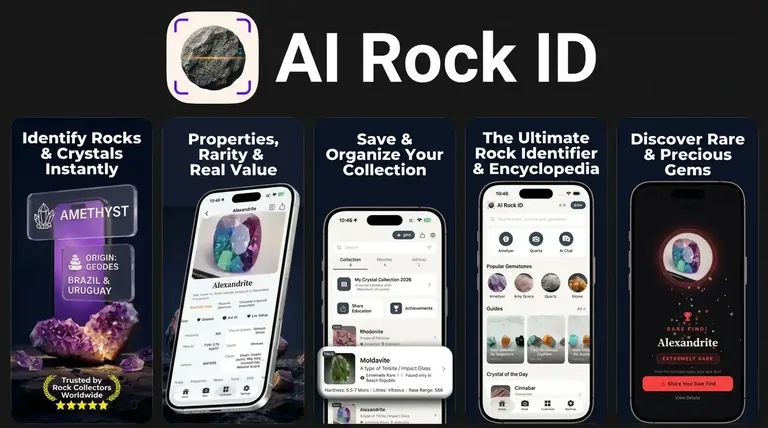
Gemstone Identifier helps name loose gemstones, set jewelry stones, inherited pieces, estate sale finds, and pawn-shop stones from a photo. Upload a clear image to receive a likely identification, common lookalikes, treatment notes, and a rough value range. The online tool works in your browser, while AI Rock ID for iPhone and Android adds unlimited scans, saved collections, and additional field tools.
Good fit for
- inherited jewelry
- estate sale and thrift finds
- pawn shop screening
- loose cut gemstones
- jewelry collectors
Not for
- insurance appraisal
- certified GIA or AGS grading
- professional gemological reports
- origin or treatment certification
What Is a Gemstone Identifier?
A gemstone identifier is a visual lookup tool that names an unknown gem from a photo. Upload a picture of a loose stone, ring stone, pendant, or inherited piece, and the AI returns a likely mineral name, common lookalikes, treatment notes, and a rough value range.
It reads color, transparency, cut style, luster, and any visible inclusions or color zoning, then compares against learned examples of cut and rough gems. For broader gem reference, the GIA Gem Encyclopedia is a good free resource. Photos are processed in a privacy-friendly workflow and are not posted as public specimens. The same photo check also appears as a Gemstone Identifier in Lens and as a Gem Identifier on Rock ID.
How a Gemstone Identifier Works
A photo-based gemstone identifier reads visible signals from your image and matches them against learned examples of cut and rough gems. The model weighs color, transparency, cut style, luster, brilliance, color zoning, pleochroism, and any visible inclusions.
A red gem with a small included silk pattern often points to natural ruby, while a perfectly clean red stone is more likely glass or synthetic. Strong blue with a hexagonal habit suggests sapphire. Green stones with curved garden-like inclusions usually fit emerald. The result is a ranked list with notes on what to confirm.
More Identification Tools
If your specimen is not a cut or polished gem, try a different tool from the Rock Identifier suite.
Rock Identifier
The main AI rock identifier for any rock, mineral, crystal, gemstone, or fossil from a photo.
Crystal Identifier
For raw crystals, points, clusters, geodes, and tumbled stones.
Mineral Identifier
For single minerals with visible luster, streak, cleavage, and crystal habit.
Stone Identifier
For river stones, beach pebbles, garden rocks, and landscaping stones.
Fossil Identifier
For shells, bones, plant imprints, and other fossils embedded in stone.
Diamond Identifier
For clear, brilliant stones suspected to be diamond rather than quartz, white topaz, or moissanite.
Gold Identifier
For brassy or yellow specimens suspected to be real gold rather than pyrite or mica.
What App Identifies Gemstones From Photos?
AI Rock ID is the iPhone and iPad app most often used to identify gemstones from a single photo. It returns a likely name, common lookalikes, mineral properties, and a rough value range, with saved collections and unlimited scans for regular use.
For a quick one-off check of an inherited piece or estate sale find, the upload tool at the top of this page is the fastest option. For collectors who shop estate sales, gem shows, or pawn shops regularly, the iPhone app is the practical pick.
How to Use a Gemstone Identifier
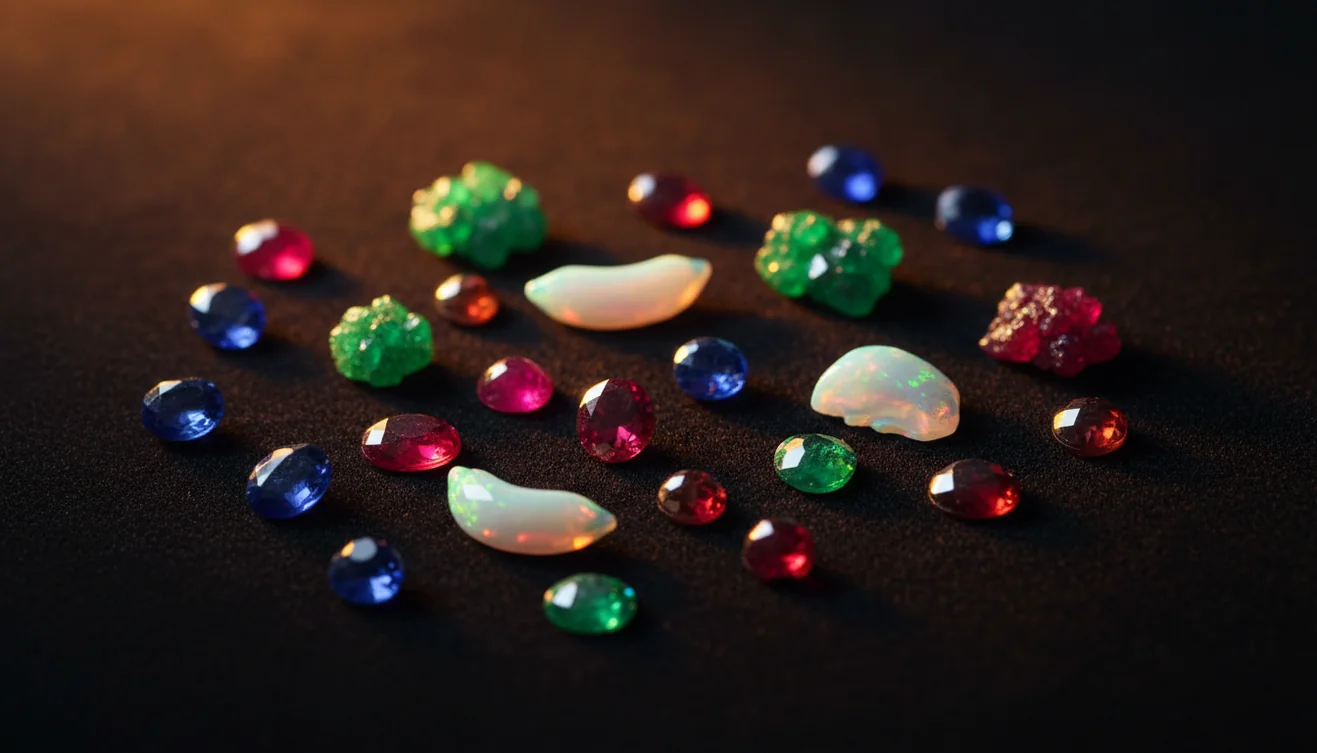
Clean the stone
Wipe the gemstone with a soft cloth to remove fingerprints, dust, and oils. A dirty stone hides true color and brilliance.
Use natural light
Overcast daylight gives the most accurate color. Avoid yellow indoor bulbs and jeweler spotlights, which can make stones look more saturated than they really are.
Show color and inclusions
Photograph the gem face-up and from the side. For transparent stones, hold against white paper. Capture any visible inclusions, color zoning, or asterism.
Upload the best image
Choose the sharpest photo with true color. If the result is broad, add a second image showing the stone from a different angle.
Confirm value with a pro
For any stone the AI flags as potentially gem-grade, get a certified gemological report before buying, selling, or insuring.
Real or Fake? How to Spot Imitations
Most "fake" gemstones fall into two camps: imitations (glass, plastic, or a different mineral made to look like a gem) and synthetics (lab-grown versions of the real mineral). An AI gemstone identifier handles imitations much better than synthetics.
Clear signs of imitation visible in a photo: round gas bubbles inside the stone, mold seams along the girdle, painted color zones, unnaturally perfect color saturation, and missing characteristic inclusions (real emerald almost always shows internal "garden", natural ruby usually shows silk).
Where photo ID falls short: lab-grown ruby, sapphire, emerald, and diamond are chemically the same as natural ones and can look identical in a picture. Treatment status (heat, fracture filling, irradiation) is also often invisible from a photo. For high-value purchases, get a certified gemological report.
Natural vs Lab-Grown Gemstones
Lab-grown gems are chemically identical to natural ones. Lab-grown ruby is real ruby, lab-grown sapphire is real sapphire, lab-grown diamond is real diamond. They are not "fakes" but they are not natural.
The visible difference is usually very subtle: lab gems can have curved growth lines, gas-bubble patterns from flame fusion, or perfect clarity that natural stones rarely show. A photo identifier cannot reliably tell natural from lab-grown of the same mineral.
Natural untreated stones typically sell for more than synthetics, often by a large margin. If the seller will not provide a gemological report and the price is too good for a natural stone, assume synthetic or treated.
Can AI Estimate Gemstone Value?
A gemstone identifier can give a rough value range based on the likely mineral, visible size, color, clarity, and apparent cut quality. That is enough to know whether a stone is potentially worth getting appraised at all.
It cannot replace certified appraisal. Real gemstone value depends on carat weight (which needs scales), exact color grade, clarity grade, cut precision, treatment status, origin, certification, and current market demand. For binding figures (insurance, sale, inheritance), only a certified gemologist counts.
Common Gemstone Lookalikes
These pairs get confused constantly. A gemstone identifier flags them and notes which one is more likely based on visible cues.
- Ruby vs Garnet. Garnet is more common, slightly softer, and usually a deeper, more orange-leaning red. Real ruby tends to be more pinkish-red with silky internal needles.
- Diamond vs Cubic Zirconia (CZ). CZ is cheaper, denser, and shows more "fire" (rainbow flashes) than diamond. Diamond has sharper facet edges and stays cleaner in photos.
- Diamond vs Moissanite. Moissanite is almost as hard as diamond but shows much more fire and often a slight yellow or green tint in certain lighting.
- Emerald vs Green Glass. Real emerald almost always shows internal "garden" inclusions and is rarely perfectly clean. Suspiciously flawless green is usually glass or synthetic.
- Sapphire vs Spinel. Blue spinel can mimic blue sapphire closely. Sapphire is harder and usually shows some color zoning under angled light.
- Topaz vs Aquamarine. Blue topaz is often more saturated and slightly greener-blue, while aquamarine leans paler and bluer. Both are commonly heat-treated.
Can Google Lens Identify Gemstones?
Google Lens can match a gemstone photo to similar images on the web, which often surfaces shopping listings, Etsy pages, or stock photos. That is useful for general visual search but not for actual gem identification.
A dedicated gemstone identifier returns the likely mineral name, lookalike warnings, treatment notes, and a value range, which is what you actually need before buying or selling a stone.
Can ChatGPT Identify Gemstones?
ChatGPT can describe gemstones, explain treatments, and walk you through identification logic, but it is not a dedicated photo-based gemstone identifier. The reliable workflow is to scan the stone with a tool like RockIdentifier.io or the AI Rock ID iPhone app, then ask ChatGPT to explain the result, compare lookalikes, or interpret the value range.
Where Gemstone Photo ID Falls Short
A gemstone identifier is best used as a fast first opinion. For any high-value purchase, sale, or insurance claim, confirm with a certified gemological lab.
- Lab-grown gems (ruby, sapphire, emerald, diamond) look identical to natural ones in photos.
- Treatments such as heat, fracture filling, irradiation, and diffusion are often invisible from an image.
- Value ranges are rough estimates; binding appraisal needs scales, instruments, and a certified expert.
- Origin (Burmese ruby, Kashmir sapphire, Colombian emerald) cannot be confirmed from a photo and matters a lot for price.
Related Articles
Frequently Asked Questions
What gemstone is this?
Upload a clear photo of the gemstone, ideally with the stone filling the frame on a plain background. The AI compares color, transparency, cut, luster, and any visible inclusions against learned examples and returns a likely name with common lookalikes.
Can AI identify gemstones?
Yes. AI gemstone identifiers work on cut, polished, rough, and set stones when the photo shows true color and any visible inclusions or color zoning. They are less reliable on heavily treated or lab-grown stones.
Can ChatGPT identify gemstones?
ChatGPT can describe gemstones, explain treatments, and walk you through identification logic, but it is not a dedicated photo-based gemstone identifier. Scan the stone with a dedicated tool first, then ask ChatGPT to explain the result.
Can AI tell if a gemstone is real?
An AI gemstone identifier can flag obvious imitations such as glass posing as emerald or cubic zirconia posing as diamond. It cannot reliably tell natural from lab-grown gems of the same mineral. For high-value pieces, get a certified gemological report.
Can AI estimate gemstone value?
A gemstone identifier returns a rough value range based on the likely mineral and visible quality. Actual value depends on carat, cut, clarity, color, treatment, locality, and demand, so binding figures require a certified appraiser.
Can AI identify jewelry?
Yes. A gemstone identifier can name the set stones in rings, pendants, earrings, and inherited jewelry from a photo. It identifies the stone, not the metal or the brand.
Natural vs lab-grown gemstone?
Lab-grown gems are chemically identical to natural ones. The visible difference is subtle, and a photo identifier cannot reliably tell them apart. Natural untreated stones typically sell for more, but only a gemological lab can certify origin.
Can Google Lens identify gemstones?
Google Lens can match a gemstone photo to similar images on the web, which often surfaces shopping listings rather than mineral identifications. A dedicated gemstone identifier returns the likely stone name, lookalikes, and a rough value range.
What app identifies gemstones?
AI Rock ID is the iPhone and iPad app most often used to identify gemstones from photos. It returns a likely name, lookalikes, mineral properties, and rough value ranges, with saved collections and unlimited scans.
Is my gemstone valuable?
Value depends on the mineral, carat, cut, clarity, color, treatment, locality, and demand. A gemstone identifier can flag whether a stone is in a high-value family versus a common one. For binding value, get a certified appraisal.