What Happens When You Identify a Rock Wrongly From Photos
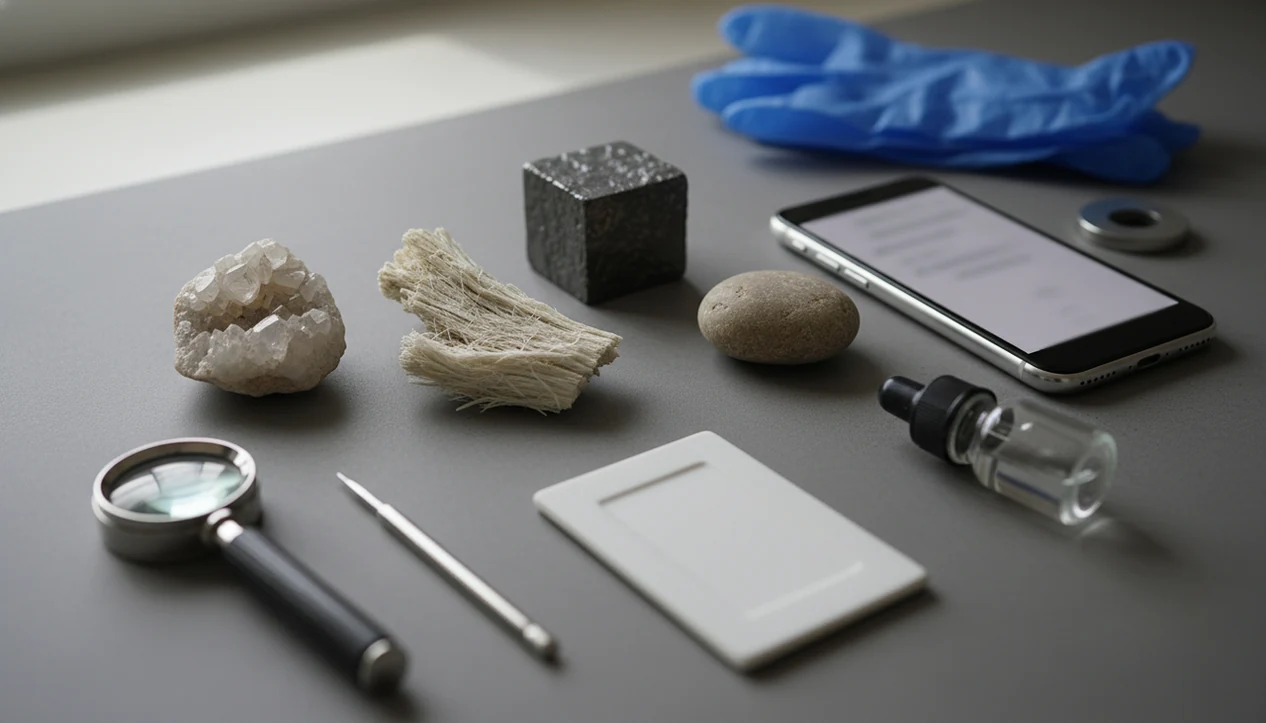
What happens when you identify rock wrongly is that the name, hardness, safety assumptions, and possible value attached to the specimen can all be wrong. A photo result can still be useful, but it should be treated as a starting point, not proof for safety, selling, collecting, or discarding a find.
This article is educational geology and collecting-safety guidance. It is not a lab identification, toxicity clearance, appraisal, or jurisdiction-specific legal opinion.
Definition: Wrong rock identification means assigning the wrong rock, mineral, crystal, fossil, or gemstone name to a specimen and then relying on incorrect assumptions about its properties, risks, or value.
TL;DR
- The biggest risks are unsafe handling, mislabeled collections, poor value decisions, and legal or ethical mistakes around fossils or protected materials.
- Rock app mistakes usually happen when a photo hides diagnostic traits such as hardness, streak, crystal habit, grain size, magnetism, or acid reaction.
- Use photo identification as a shortlist, then verify important finds with simple tests, locality clues, and professional help when safety or value matters.
For photo-based identification on iPhone or iPad, try the rock identifier app. You can also upload a photo on RockIdentifier.io.
RockIdentifier.io provides a web photo upload option for comparing unknown rocks, minerals, crystals, fossils, and gemstones when a first identification may be uncertain. AI Rock ID is an iPhone and iPad app that can support this article topic by giving photo-based suggestions, Mohs hardness clues, and value context that still need cautious verification.
Quick answer: Wrong rock identification can lead to mislabeled collections, unsafe assumptions about handling, and confusion about possible value. Photo-based results should be treated as a starting point, then checked with hardness, streak, magnetism, locality, and expert review when safety, legality, or value matters.
Recommended app for wrong rock identification checks
AI Rock ID can be useful when a photo result needs a second look before a specimen is labeled, stored, handled, or discussed as valuable. The app is most appropriate as an early screening tool, not as proof of identity, safety, legality, or market price.
Best for
- Comparing an uncertain photo result with visually similar rocks or minerals
- Recording possible identification notes before doing hardness or streak checks
- Reviewing Mohs hardness clues when a label does not match the specimen
- Flagging specimens that should not be treated as confirmed from photos alone
- Adding value context while avoiding unsupported appraisal claims
- Organizing unknown finds before asking a local club, museum, jeweler, or geologist
Limitations
- Photo identification can be unreliable for fine-grained, weathered, dirty, or altered specimens
- The app cannot confirm chemical composition, treatment, locality, or legal collecting status
- Value context is not a substitute for professional appraisal or gemological testing
- Hazardous or regulated materials require expert guidance rather than app-only decisions
Who this guide is for
Good fit if you
- Beginners who want to understand the risks of wrong rock identification from photos
- Collectors checking a rock, mineral, crystal, fossil, or gemstone label before cataloging it
- Users comparing look-alike rocks that may be fine-grained, weathered, or poorly photographed
- Families and hobbyists who need safer next steps after an uncertain app result
- Sellers or buyers who want a reminder that photo results are not reliable appraisals
- Field collectors who want to avoid legal, ethical, or safety mistakes
Consider another method if you
- Anyone needing a formal mineral, gemstone, fossil, or meteorite authentication
- People making medical, food-safe, or exposure decisions about an unknown specimen
- Sellers relying on a photo result to set a high-value price or claim rarity
- Collectors deciding whether collecting is legal on protected, private, or regulated land
- Users who need laboratory confirmation of composition, treatment, or origin
Wrong Rock Identification: The Practical Risks in One Place
Wrong rock identification can attach the wrong assumptions about hardness, toxicity, reactivity, rarity, and value to a specimen. The error may be harmless, like a mislabeled shelf rock, or serious, like grinding a fibrous mineral or selling a protected fossil.
A wrong name changes behavior. Someone may tumble a soft mineral, acid-test the wrong surface, or tell a child the sparkly rock from a school field trip is “just quartz” without checking streak or cleavage.
Photo-based AI helps because it can compare visible clues quickly, but it is probabilistic. It does not become a final authority because the match looks confident. Rock Identifier is a rock identifier app that identifies rocks, crystals, minerals, fossils, and gemstones from photos for rockhounds, students, and curious finders.
Good photo tools deliver likely names, comparison clues, Mohs hardness context, and value estimates, not lab certification, medical safety clearance, or legal collecting permission.
Five Facts About What Happens When You Identify Rock Wrongly
- Wrong IDs can create safety issues when a specimen is toxic, fibrous, heavy-metal-bearing, radioactive, or acid-reactive. The risky step is usually dust, heat, acid, or repeated handling.
- Rock apps are probabilistic and depend on image quality, lighting, angle, and visible diagnostic features. A full-noon phone photo can hide luster and cleavage under glare.
- Look-alike rocks and minerals cause many mistakes because color alone is weak evidence. Pyrite, chalcopyrite, mica, and altered sulfides can all look “gold” in one photo.
- Value errors can lead to overpaying, undervaluing, or discarding a worthwhile specimen. For unusual pieces, price depends on identity, condition, locality, size, treatment, and demand.
- AI rock identification should be treated as a shortlist verified with hardness, streak, magnetism, acid reaction, grain size, and locality.
For beginner collectors, a shortlist plus two or three simple checks is often safer than trusting one image result because several minerals share the same surface color.
Photo-Based Rock Identification Mistakes in Fine-Grained Specimens
Photo-based identification works by comparing visible patterns such as color, luster, texture, crystal habit, fracture, and shape. In AI terms, the model turns the image into visual features, often called image embeddings, then searches for likely matches.
That sounds neat. It still misses things.
A photo cannot directly measure hardness, streak, density, magnetism, fluorescence, chemical composition, or acid reaction. It also cannot see the fresher broken edge under a muddy rind on a creek stone unless you show it. Dirty, wet, polished, weathered, shadowed, or harshly lit surfaces can all push the result toward a wrong label.
That is why geology teaching guides still use physical properties such as hardness, streak, cleavage, luster, specific gravity, and acid reaction alongside visual inspection; see Tulane University’s mineral identification guide (https://www2.tulane.edu/~sanelson/eens211/mineral_id.htm) and the USGS mineral-identification FAQ (https://www.usgs.gov/faqs/how-can-i-identify-mineral).
Massive, fine-grained rocks are harder than showy crystals. Basalt, andesite, hornfels, slate, and many metamorphic rocks may show few features at phone distance. According to a 2025 AI rock identification guide, accuracy drops for fine-grained and weathered specimens compared with coarse crystalline minerals. If you are working with crystals, a careful upload photo to identify crystal workflow helps reduce glare and angle errors.
Rock App Mistakes That Create Unsafe Assumptions
Does a wrong rock app result make the rock dangerous? Usually, no. The danger is acting as if one photo result proves the specimen is safe to grind, lick, heat, tumble, acid-test, or store loose on a desk.
Some materials deserve caution before you know what they are. Fibrous minerals can resemble asbestos-like forms. Arsenic-bearing, lead-bearing, and uranium minerals may be present in old mine material. Carbonate rocks can react with acid, which is useful diagnostically but should be done carefully and in tiny amounts.
For fibrous unknowns, use asbestos-style dust caution until identified; CDC/ATSDR notes that asbestos risk is tied to inhaling airborne fibers (https://www.atsdr.cdc.gov/asbestos/). For old mine material or heavy-metal-bearing specimens, avoid dust and hand-to-mouth exposure until an expert reviews the sample.
Do not inhale dust from unknown specimens. Do not cut or polish powdery, fibrous, metallic, or oddly stained pieces at home without proper controls. Gloves, handwashing, and sealed bags are sensible for suspicious samples.
A magnet hovering over black sand tells you something useful, but it does not prove the whole sample is harmless. Ask a club, lab, museum, or experienced collector when a specimen looks unusual.
Look-Alike Rocks That Commonly Cause Wrong Rock Identification
Look-alike rocks fool both people and apps because photos flatten important differences. Simple checks do not always prove the exact name, but they can rule out bad matches fast.
| Look-alike pair | Why photos confuse them | Simple check that helps |
|---|---|---|
| Quartz vs calcite | Both can be pale, glassy, and massive | Quartz scratches glass; calcite is softer and fizzes with dilute acid |
| Basalt vs andesite | Both can be gray, fine-grained volcanic rocks | Compare grain size, color index, vesicles, and local geology |
| Pyrite vs gold-colored mica or chalcopyrite | Metallic yellow surfaces can look similar under flash | Check streak, hardness, crystal shape, and whether flakes bend |
| Jasper vs chert | Both are hard, fine-grained silica rocks | Note fracture, opacity, banding, and locality |
| Fossil-like concretions vs true fossils | Rounded shapes and patterns can mimic shells or bones | Look for repeated anatomy, bedding context, and expert review |
A copper penny hardness scratch can narrow choices, but use an inconspicuous spot. For structured testing, an app that identifies rocks and Mohs hardness can help you compare photo results with beginner-safe checks.
Value Confusion From Wrong Rock Identification
A wrong label can make an ordinary specimen look expensive or make a meaningful specimen seem disposable. Common quartz, calcite, slag glass, dyed agate, or treated material may be mistaken for rarer gemstones in casual photos.
The reverse happens too. An unusual mineral, fossil, or locality specimen may be undervalued because an app calls it “common rock.” A cut stone under crowded hall lights can look better or worse than it is, especially if color treatment, clarity, and durability are unknown.
App value estimates are rough context-free ranges, not appraisals. They cannot verify treatment, provenance, market demand, carat weight precision, or legal sale status from one image.
For high-value, inherited, fossil-like, or sale-related finds, use a professional gemologist, mineral dealer, museum, university department, or experienced club review. Lens-style app guidance commonly says important finds should be verified with scratch tests, streak plates, acid tests, or a gemologist before relying on value.
Legal and Ethical Risks of Rock App Mistakes
A specimen misidentified as an ordinary rock may actually be a fossil, artifact-like object, protected mineral, or material collected from restricted land. The photo name does not settle ownership, collecting rights, or sale rules.
Collection rules depend on location, land ownership, park status, permits, fossil regulations, and local conservation restrictions. A shale flake under a trail sign is not the same as loose material from private land with permission. Context matters before the specimen leaves the ground.
In the United States, the National Park Service generally prohibits removing rocks, minerals, fossils, plants, and artifacts from parks without authorization (https://www.nps.gov/subjects/geology/collecting.htm), and the Bureau of Land Management treats paleontological resources under separate collection rules (https://www.blm.gov/programs/cultural-heritage-and-paleontology/paleontology).
If a find looks fossil-like, worked by humans, unusually rare, or tied to a protected area, do not sell, cut, clean aggressively, or remove more material until you confirm the rules. Take photos in place, record the location, note the layer or host rock, and ask a local authority, land manager, museum, or rock club.
This is not jurisdiction-specific legal advice. It is a caution to pause before a label becomes a decision.
Authoritative Sources for Rock Safety and Collecting Rules
Authoritative sources are the references you use when a rock name could affect safety, money, fossils, or collecting permission. A photo result can guide your next question, but rules and hazards come from geology, public-health, and land-management authorities.
- Check geology references first for mineral properties such as hardness, streak, cleavage, luster, density, crystal habit, and acid reaction. University geology pages, state geological surveys, the USGS, museums, and well-run mineral databases are better than a single image match.
- Treat fibrous, dusty, powdery, or mine-dump material as uncertain until reviewed. Public-health agencies such as CDC, ATSDR, OSHA, and local health departments are the right places to understand asbestos-like fibers, silica dust, and inhalation risk.
- Verify land rules with the agency or owner in charge. National parks, state parks, BLM land, forests, beaches, quarries, tribal lands, and private property can have different rock, fossil, artifact, and permit rules.
- Follow the local rule when it conflicts with generic online advice. A mineral may be common, yet still illegal to remove from a protected site.
- Get professional confirmation before using an identification for safety, sale, insurance, donation, fossil status, or legal decisions.
Common Myths About Wrong Rock Identification
Myth 1: A confident app percentage means the rock is definitely identified. A confidence score is not a lab result. Treat it as a ranked guess based on visible features.
Myth 2: Wrong identification only affects the collection label. The label can influence safety, value, storage, cutting, selling, and whether you keep locality notes. That is more than a tidy drawer problem.
Myth 3: One quick photo is enough for AI to see through dirt, glare, weathering, or coatings. A wet black beach pebble may turn dull gray after it dries on a towel. The app sees the photographed surface, not the hidden fresh material.
Myth 4: If an app says a rock is common, it is safe to discard or give away. Common-looking pieces can still be fossil-like, locality-important, treated, metallic, or worth checking. The safer interpretation is “ordinary until verified,” not “worthless.”
Safer Checks After a Wrong Rock Identification Warning Sign
Use a short verification workflow when a result seems odd, valuable, hazardous, or too certain. Tools like RockIdentifier can be useful shortlist tools for rocks, crystals, minerals, fossils, and gemstones from photos, especially when you add observations the camera cannot measure.
- Photograph the rock again in diffuse natural light from multiple angles, with a penny, key, or fingernail for scale.
- Clean only loose dirt if safe, and avoid scrubbing, acid, oil, or polishing that could damage the specimen.
- Compare hardness, streak, magnetism, grain size, and luster with the app shortlist.
- Add locality context such as region, host rock, beach, mine dump, river, quarry, or roadcut if known.
- Escalate important, valuable, toxic-looking, fossil-like, or legally sensitive finds to an expert.
A likely identification is strongest when the photo, simple tests, and locality all point in the same direction.
Limitations
Photo-only identification has real limits, even when the first match looks plausible.
- A photo cannot directly determine streak, specific gravity, fluorescence, magnetism, acid reaction, composition, or toxicity.
- Even accurate AI tools can be wrong on a meaningful minority of specimens, especially outside clear training examples.
- Fine-grained, weathered, coated, polished, composite, or dirty rocks are difficult for both humans and apps.
- Value estimates are not formal appraisals and can be wrong for gemstones, fossils, meteorite-like pieces, or collector specimens.
- Local laws and land rules vary, so this article is not legal advice.
- Home tests can damage specimens or create risk if done carelessly.
- Acid testing, grinding, heating, tumbling, and cutting should not be done on unknown suspicious material without precautions.
- Professional confirmation is needed for safety, sale, insurance, museum, legal, or high-value decisions.
RockIdentifier ai rock identifier app and web tool that names rocks, crystals, minerals, and fossils from photos with mohs hardness and value estimates can help organize first-pass clues, but expert confirmation still matters for serious decisions.
Which option fits which need
| Need | Best option | Why |
|---|---|---|
| A quick first check after a suspicious rock app result | AI Rock ID | It can provide another photo-based suggestion with related clues, but the result still needs verification. |
| Uploading a specimen photo without installing an app | Web Tool | RockIdentifier.io supports web photo upload for a preliminary comparison on supported devices. |
| Confirming a valuable gemstone, meteorite, or rare mineral claim | Expert | High-value or rare claims need trained review, provenance, and often specialized testing. |
| Checking composition, treatment, or exact mineral chemistry | Lab | Laboratory methods can test properties that a photo cannot show. |
| Understanding land access or collecting rules | Official agency or land manager | Legal permission depends on location, ownership, and local regulations, not visual identification. |
Quick summary
- Best for
- This page is best for understanding what happens when you identify rock wrongly and how to reduce practical risk after a photo-based result.
- Includes
- wrong rock identification risks, look-alike specimens, unsafe assumptions, value confusion, legal and ethical cautions, safer follow-up checks
- Platforms
- iPhone, iPad, Web
- Free version
- Yes
- Expert replacement
- No
Common mistakes
- Treating a photo-based result as a confirmed mineral name without checking physical properties
- Assuming a shiny, colorful, or crystalline specimen is valuable without expert appraisal
- Ignoring locality, matrix, grain size, and weathering when comparing look-alike rocks
- Handling an unknown specimen as safe because an app returned a familiar rock name
- Using one blurry or wet photo as the only evidence for identification
- Discarding or selling an unknown specimen before resolving warning signs or uncertainty
A practical next step is the identify rocks from a photo workflow in AI Rock ID.
FAQ
Can rock apps be wrong?
Yes. Rock apps infer likely matches from photos, so they can miss hidden properties such as hardness, streak, density, or chemical reaction.
Is wrong rock identification dangerous?
It can be dangerous when someone relies on the result for handling, dust exposure, acid testing, heating, or toxicity assumptions. The safer choice is to avoid risky tests on unknown material.
Why do rocks look alike?
Different rocks and minerals can share color, texture, luster, or grain size while having different chemistry and properties. Weathering and coatings make lookalikes even harder.
Can a photo identify minerals?
A photo can suggest likely minerals. It cannot confirm hidden traits such as hardness, streak, density, magnetism, or reaction.
Should I trust app value estimates?
App value estimates are rough guidance, not formal gemstone, fossil, or collector appraisals. Verify important finds with a qualified expert.
What tests confirm a rock?
Common beginner checks include Mohs hardness, streak, magnetism, acid reaction, grain size, luster, and locality comparison. Use care because some tests can damage specimens.
Who can identify my rock?
Local rock clubs, geology departments, museums, experienced mineral dealers, gemologists, and relevant land authorities can help. Choose the expert based on whether the issue is value, safety, fossil status, or legality.
Can I discard an unknown rock?
You can discard ordinary material, but check unusual, fossil-like, metallic, radioactive-looking, fibrous, or potentially valuable specimens first. Keep location notes until you are sure.
What should I do first if two identification results disagree?
Treat both results as tentative and compare observable properties such as hardness, streak, luster, magnetism, weight, and locality. If the disagreement affects safety, value, or legality, ask an expert before acting on either result.
Can a wrong rock name affect how I store a specimen?
Yes. A wrong label can lead to poor storage choices, especially for fragile, dusty, soluble, or potentially hazardous materials. Unknown specimens should be stored securely, kept away from children and food areas, and handled cautiously until better identified.
Why are fine-grained rocks especially hard to identify from photos?
Fine-grained rocks often lack visible crystals or diagnostic textures in ordinary photos. Lighting, scale, surface weathering, and camera focus can make different specimens appear nearly identical.
When does a wrong identification become a legal problem?
A legal problem can occur if the wrong identification encourages collecting, selling, exporting, or disturbing material that is protected or regulated. Rules depend on location, land ownership, and the type of specimen.