
Identify a Stone From a Photo
Upload stone photos
Clear, well-lit images help the AI identify it more accurately.

Analyzing your stone…
Checking texture, color, structure, and lookalikes…
Stone identifier for river stones, beach pebbles, garden rocks, and landscaping stones. Upload a photo for a fast visual ID, rock type, hardness clues, and a rough value range.


Stone Identifier helps name river stones, beach pebbles, garden rocks, driveway stones, and landscaping rocks from a photo. Upload a clear image to receive a likely identification, rock type, hardness clues, and a rough value range. The online tool works in your browser, while AI Rock ID for iPhone and Android adds unlimited scans, saved collections, and additional field tools.
Good fit for
- river stones
- beach pebbles
- garden and yard rocks
- driveway gravel and fieldstones
- landscaping stones
Not for
- meteorite confirmation
- professional lab identification
- jewelry or gemstone appraisal
- safety-sensitive mineral decisions
What Is a Stone Identifier?
A stone identifier is a visual lookup tool that names an unknown stone from a photo. Upload a picture of a river pebble, beach find, garden rock, or piece of landscaping stone and the AI returns a likely rock name, rock class, Mohs hardness clues, and short notes on common lookalikes.
It works by reading what you can already see: color, grain size, luster, texture, layering, banding, and visible crystals or fossils. For broader geology background, the USGS rocks and minerals overview is a useful reference. Photos are processed in a privacy-friendly workflow and are not posted as public specimens. A dedicated Rock identifier in Lens follows the same photo-first workflow when you want a second camera-based pass on a river pebble, beach find, or garden stone.
How a Stone Identifier Works
A photo-based stone identifier reads visible signals from your image and matches them against learned examples of common stones. The model weighs color, grain size, luster, surface texture, layering, banding, fracture style, and visible crystals or fossils.
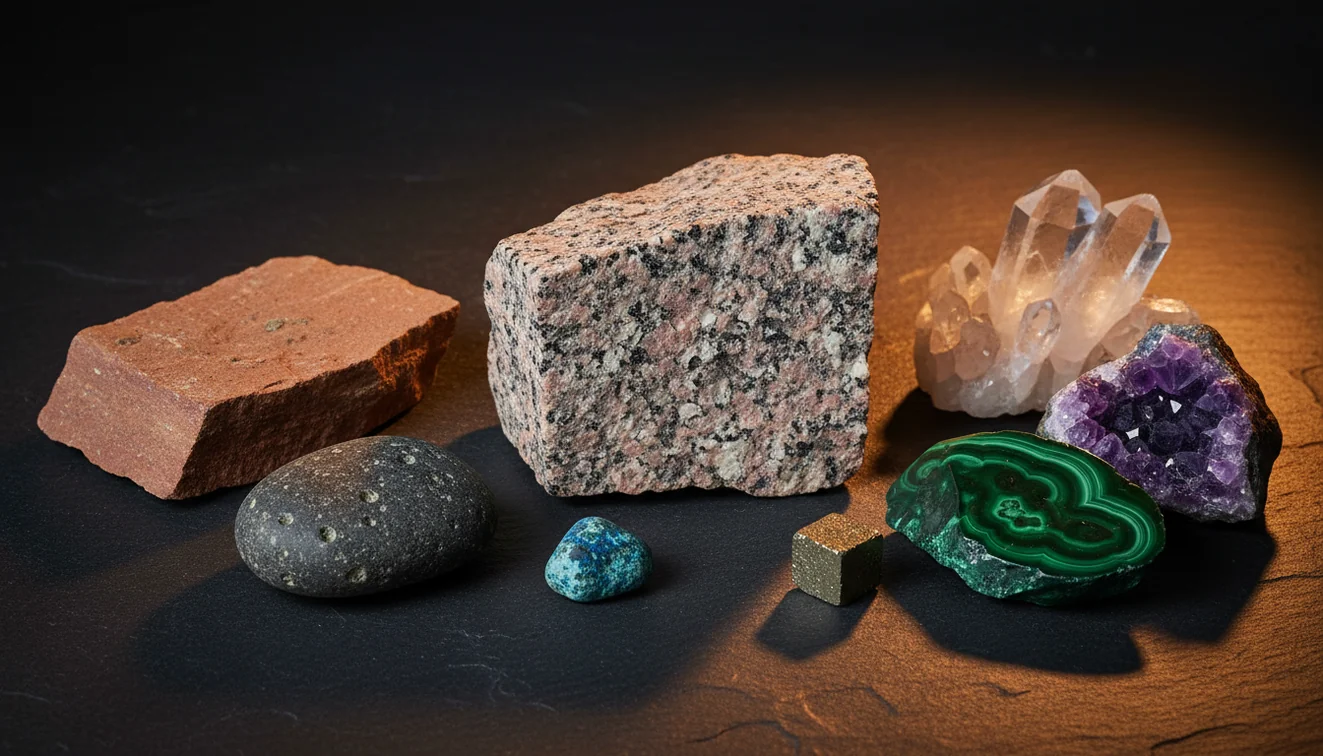
A smooth black-gray rock with tiny gas bubbles often points to basalt. A pink coarse-grained rock with quartz, feldspar, and mica usually fits granite. A waxy curved fracture suggests chert or flint. Layered tan, brown, or red surfaces match sandstone or shale. The result is a ranked list of likely stones, not a single absolute answer.
More Identification Tools
If your specimen is more than a plain stone, try a category-specific identifier.
Rock Identifier
The main AI rock identifier for any rock, mineral, crystal, gemstone, or fossil from a photo.
Crystal Identifier
For specimens with visible crystal faces, terminations, geodes, clusters, or points.
Mineral Identifier
For single minerals identified by luster, streak, cleavage, and Mohs hardness.
Gemstone Identifier
For loose stones, cut gems, and jewelry stones suspected to be gem-grade material.
Fossil Identifier
For shells, bones, plant imprints, and other fossils embedded in stone.
Diamond Identifier
For clear, brilliant stones suspected to be diamond rather than quartz or moissanite.
Gold Identifier
For brassy or yellow specimens suspected to be real gold rather than pyrite or mica.
What App Identifies Stones From Photos?
AI Rock ID is the iPhone and iPad app most often used to identify stones, rocks, and crystals from a single photo. It returns a likely name, rock class, Mohs hardness clues, and a rough value range, and is built around the visible features people can see in their hand.
For a quick one-off check, the upload tool at the top of this page is the fastest option and runs in any browser. For regular use while hiking, beachcombing, or sorting yard finds, the iPhone app adds saved collections, unlimited scans, and category-specific identification tools.
Other commonly compared options include Google Lens for general visual search and basic stone scanner apps, but a dedicated stone identifier usually returns more useful geology output.
How to Use a Stone Identifier
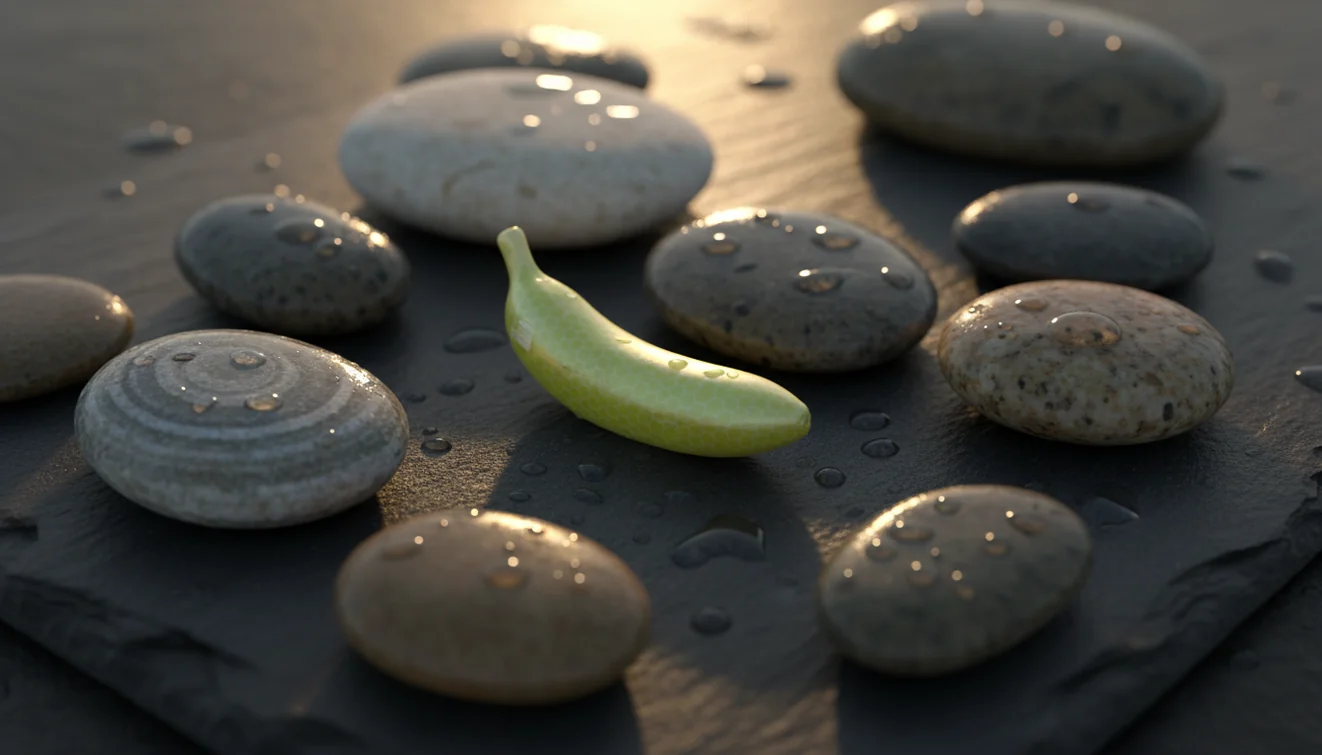
Clean the surface
Rinse off soil, salt, sand, and algae so texture and color are clearly visible. Avoid soaps or polish, which can hide luster and grain.
Wet the stone
Add a light film of water. It deepens color, reveals banding, and exposes grain boundaries that dry surfaces hide.
Photograph in natural light
Use overcast daylight or open shade, place the stone on a plain background, and fill the frame. Take one shot straight down and one at an angle.
Upload the best image
Choose the sharpest photo and run the lookup. If the result is broad, add a second image of any chipped edge or fresh surface.
Confirm with simple tests
For lookalikes such as quartzite vs marble or basalt vs slag, use a quick scratch, magnet, or vinegar acid test to settle which match is correct.
Stone vs Rock: What Is the Difference?
There is no formal geological difference between a stone and a rock. Rock is the scientific term for any naturally occurring solid aggregate of minerals. Stone is the everyday word for a smaller piece you can pick up, carry, or build with.
A pebble in a riverbed is a stone. The same piece, in a geology lecture, is called a rock. A granite countertop is rock. A garden stepping stone is rock. They are the same thing, just framed differently in everyday speech.
For identification, the distinction does not matter. A stone identifier and a rock identifier do the same job: they match your photo against learned examples and return a likely name with rock class, Mohs hardness clues, and lookalikes.
Is This Stone Valuable?
Most river stones, beach pebbles, garden rocks, and landscaping stones have very little market value because they are common and abundant. Value usually comes from rarity, gem quality, size, and condition, not from how pretty a stone looks in your hand.
A stone identifier can give a rough first-pass value range based on the likely material, but it cannot replace a gemologist or mineral dealer for fine specimens. Use it to answer one question: is this stone worth a closer look?
Signs that a stone may be worth a second opinion include unusual hardness, strong transparency, clean crystal faces, internal color play, magnetic response, or distinctive density (it feels heavier than it looks).
Can Google Lens Identify Stones?
Google Lens can sometimes match a stone photo to similar images on the open web, which works for very common, well-photographed specimens. It is general-purpose visual search, not a geology tool, so results often surface jewelry, decor, or shopping pages instead of stone names.
A dedicated stone identifier is more reliable when the answer needs geology terms such as rock class, Mohs hardness, grain size, or mineral lookalikes, and when you want to separate things like quartzite from marble, basalt from slag glass, or chert from flint.
Can ChatGPT Identify Stones?
ChatGPT can describe stones, explain rock types, and walk you through identification logic, but it is not a dedicated photo-based stone identifier. When you upload a stone picture, it works best paired with a tool focused on visual rock matching.
The practical workflow is to scan the stone with a dedicated stone identifier such as RockIdentifier.io or the AI Rock ID iPhone app, then ask ChatGPT to explain the result, compare lookalikes, or interpret the Mohs hardness and color clues.
Stone Identifier vs Google Lens vs Rock Identifier vs Stone Scanner Apps
| Feature | Stone Identifier (RockIdentifier.io) | Google Lens | Rock Identifier (general) | Stone Scanner apps |
|---|---|---|---|---|
| Built for | River stones, beach pebbles, garden rocks, landscaping stones | General visual search across the web | Any rock, mineral, crystal, fossil | Basic stone and crystal photo matching |
| Output | Likely stone name, rock class, hardness clues, value range | Similar images and web pages | Likely name plus rock class and mineral notes | Common name and short description |
| Lookalike handling | Flags pairs that need scratch, magnet, or acid tests | May return jewelry or decor matches | Strong on diagnostic reasoning | Limited diagnostic detail |
| Best workflow | Quick stone check from browser or phone | Second opinion on a borderline result | All-purpose first stop for any rock | Casual collecting and crystal browsing |
For everyday stones, a dedicated identifier returns more useful answers than general visual search, because stone ID depends on texture, grain, and hardness rather than overall shape.
How Accurate Are Stone Identifier Apps?
Accuracy is high for common, distinctive stones such as granite, basalt, quartz, sandstone, limestone, jasper, and agate when the photo is sharp and well lit. For these, a well-trained model can routinely pick the right answer.
Accuracy drops on heavily polished or tumbled stones, dyed or sealed stones, very small featureless pebbles, and stones that genuinely look alike (quartzite vs marble, basalt vs slag, calcite vs quartz). These cases usually need a quick physical test to confirm.
Where Stone Photo ID Falls Short
A stone identifier is best used as a fast first opinion. For valuable gemstones, suspected meteorites, or safety-sensitive minerals, confirm the result with a specialist.
- Polished, tumbled, sealed, or dyed stones hide the texture and grain the model relies on.
- Common lookalikes such as quartzite vs marble, basalt vs slag glass, or obsidian vs dark chert often need a scratch or magnet test.
- Value ranges are rough estimates, not appraisals, so fine gems and rare specimens should be confirmed by an expert.
- Meteorite claims need density, magnetism, fusion crust, and nickel testing, not just a photo.
Related Articles
What stone is this?
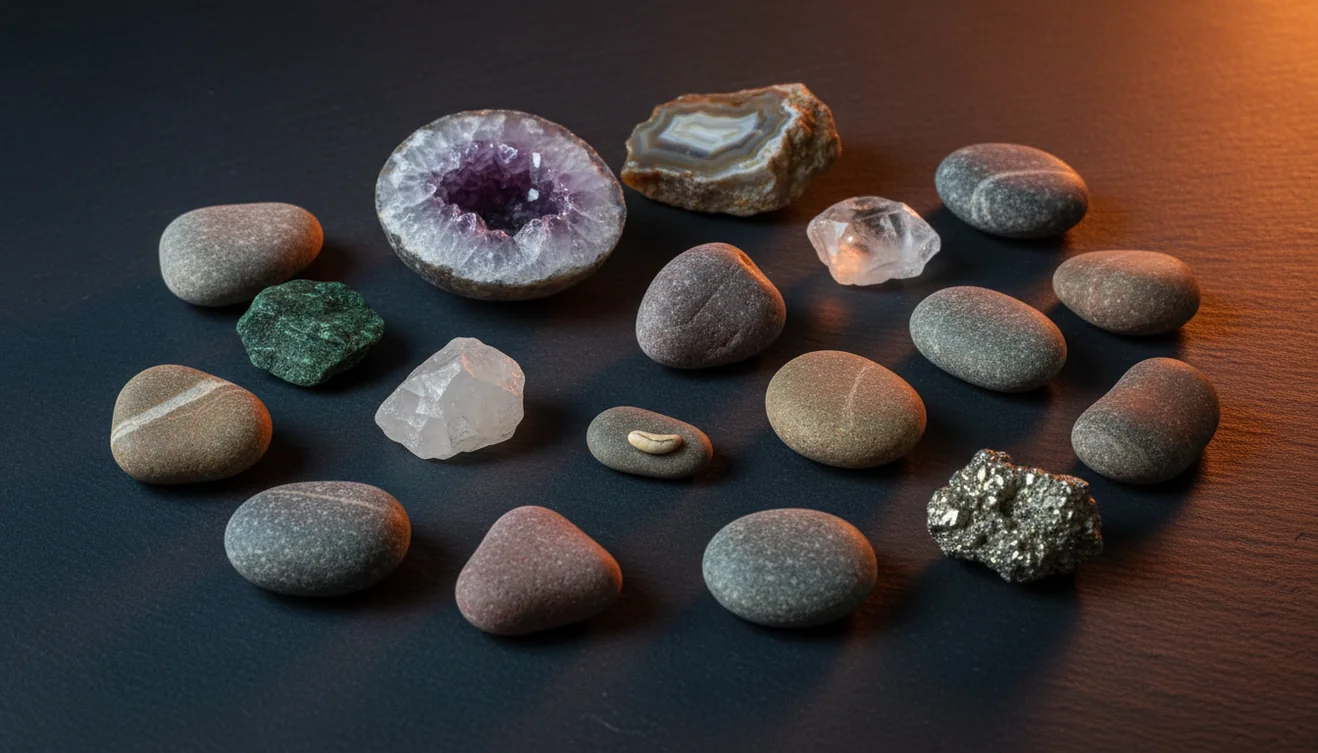
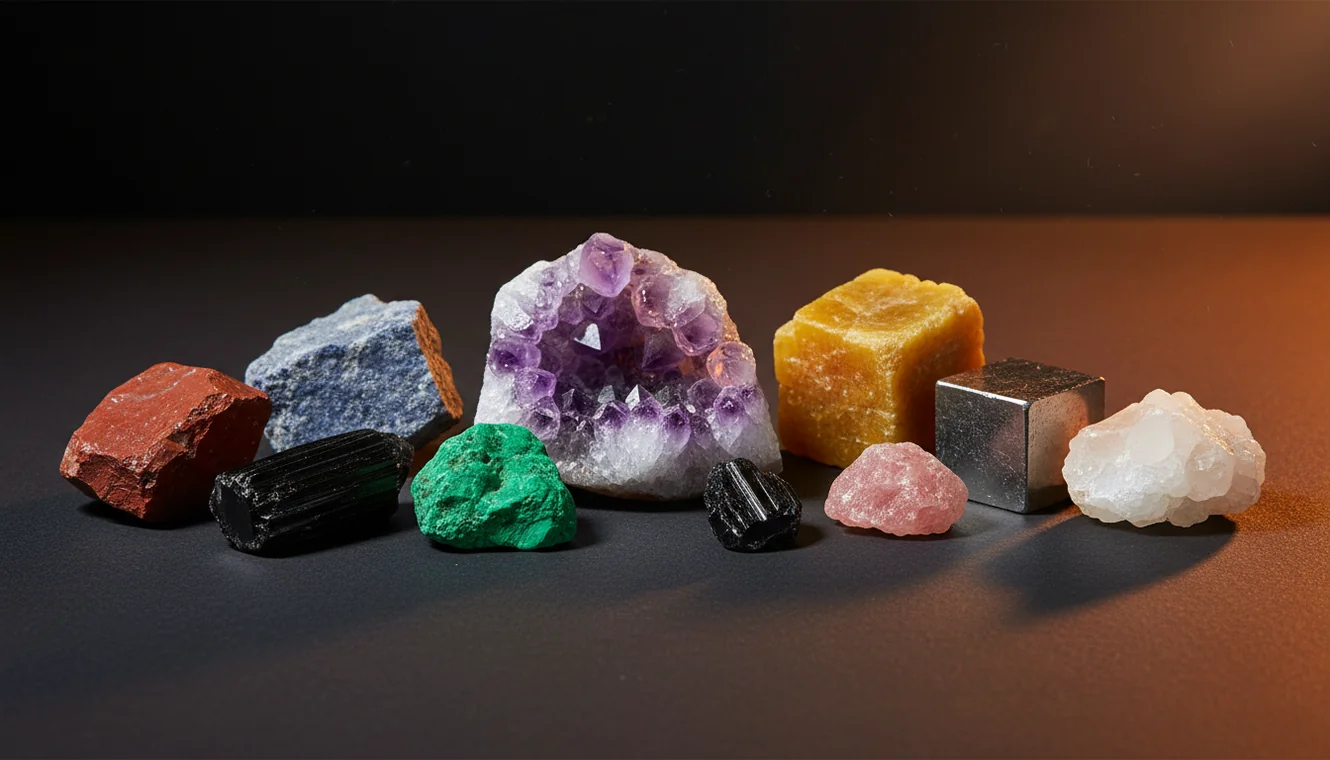
Identify an unknown stone by examining its color, translucency, pattern, luster and texture. Photograph the front, back and edges in natural light, and include a scale reference if the stone is rough, polished, carved or set in jewelry.
Photo identification can narrow the possibilities, but color alone is unreliable because natural variation, dye and lighting can make different materials look alike. Confirm a likely match with non-destructive observations and, for valuable jewelry, a qualified gemologist.
Frequently Asked Questions
What stone is this?
Upload a clear, well-lit photo of the stone to a stone identifier. The AI compares visible features such as color, texture, grain, luster, and any banding or veining against learned examples of common stones. Most river stones, beach pebbles, and garden rocks turn out to be quartz, basalt, granite, sandstone, limestone, jasper, agate, or chert.
Can AI identify stones?
Yes. AI stone identifiers work well on common stones when the photo shows surface texture, grain, and any visible crystals or layering. Accuracy drops on heavily polished, dyed, or sealed stones, and on tiny featureless pebbles.
Can I identify river stones?
Yes. River stones are often quartz, basalt, granite, chert, or jasper because softer rocks break down faster in flowing water. Wet the stone before photographing it so color and grain boundaries show clearly.
Can I identify beach pebbles?
Yes. Beach pebbles mirror the local bedrock plus rocks delivered by rivers. Common finds include quartz, basalt, granite fragments, sandstone, limestone, jasper, agate, and on volcanic coastlines, pumice and obsidian.
Can I identify landscaping stones?
Yes. Landscaping stones are commonly granite, marble, slate, river rock, lava rock, limestone, or decorative quartzite. Many are imported, so local geology is not always a clue.
What is the difference between a rock and a stone?
There is no formal geological difference. Rock is the scientific term for a naturally occurring solid aggregate of minerals. Stone is the everyday word for a smaller piece you can pick up. A garden stone is a rock, and a granite countertop is also a rock.
Is this stone valuable?
Most landscaping, river, and beach stones have little market value because they are abundant. Value usually comes from rarity, gem quality, size, or unusual locality. A stone identifier can give a rough first-pass value range and flag specimens worth a closer look.
Can Google Lens identify stones?
Google Lens can sometimes match a stone photo to similar images on the web, but it is general-purpose visual search. Results often surface jewelry listings or decor pages instead of stone names. A dedicated stone identifier is more reliable for rock and mineral output.
What app identifies stones?
AI Rock ID is the iPhone and iPad app most often used to identify stones, rocks, and crystals from a single photo. It returns a likely name, Mohs hardness clues, mineral properties, and rough value ranges, and works well in the field.
Can ChatGPT identify stones?
ChatGPT can describe stones, explain rock types, and walk you through identification logic, but it is not a dedicated photo-based stone identifier. Scan the stone with a dedicated tool first, then ask ChatGPT to explain the result.
What stone is this in my photo?
A clear photo may reveal banding, crystal structure, inclusions, luster and transparency. Compare those features with likely matches, but use hardness, streak, density or professional testing when appearance is inconclusive.
How do I identify a polished stone?
Look for banding, spots, fractures, chatoyancy, translucency and natural inclusions. Because polishing removes the original surface texture, identification may depend more heavily on pattern, hardness, specific gravity and magnification.
Can a picture tell whether a stone is real?
A picture can reveal obvious bubbles, uniform dye or molded surfaces, but it usually cannot prove authenticity. Treatments, synthetic stones and convincing imitations may require magnification, refractive-index testing or examination by a gemologist.