Streak Test for Minerals: Safe Rock Identifier Checks
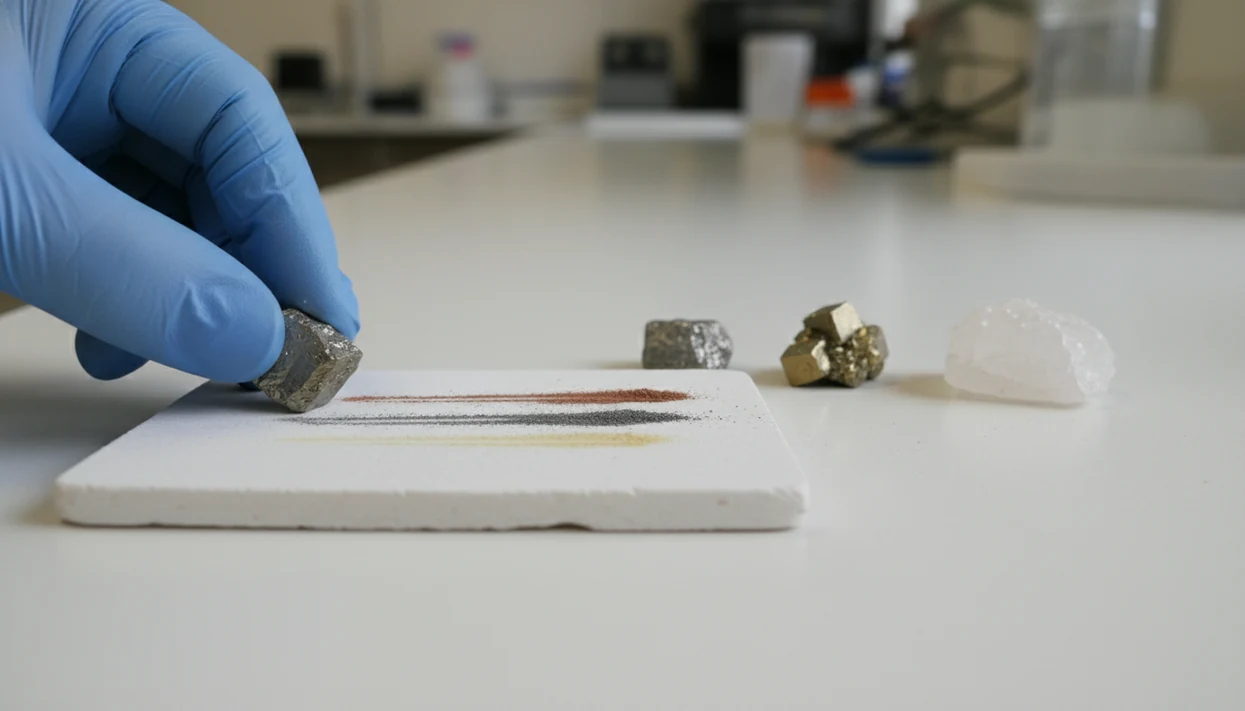
A streak test for minerals shows the color of a mineral’s powder when you rub it on unglazed porcelain, helping confirm or challenge a photo identification. Use it as one clue alongside hardness, luster, and a clear specimen photo, not as a stand-alone proof.
Definition: A mineral streak test is a simple identification check that compares the powder color a mineral leaves on an unglazed porcelain rock streak plate.
TL;DR
- Use an unglazed porcelain streak plate, not glazed tile or paper.
- Test a clean, fresh surface and look for fine powder, not loose dirt or broken chips.
- Hard minerals may scratch the plate instead of leaving a visible streak, which is still useful information.
For photo-based identification on iPhone or iPad, try the mineral identifier app. You can also upload a photo on RockIdentifier.io.
RockIdentifier.io provides a web photo upload option that can help users document a specimen before comparing physical clues such as streak color. AI Rock ID is an iPhone and iPad app that can support rock, mineral, crystal, fossil, and gemstone checks alongside simple tests such as a mineral streak test.
Quick answer: The streak test for minerals checks the color of a mineral’s powder on unglazed porcelain. This result can help confirm or challenge a photo-based identification, especially when the outside color of a specimen is misleading.
Recommended app for streak test for minerals follow-up
AI Rock ID is useful when a streak test gives a clue that needs to be compared with photo-based rock and mineral identification. It can help organize visual traits, Mohs hardness clues, and value context before deciding whether expert testing is needed.
Best for
- Comparing a mineral streak result with a photo-based identification
- Recording specimen color, luster, and streak color in one workflow
- Checking whether a metallic-looking mineral result is plausible
- Using Mohs hardness clues together with streak plate results
- Reviewing possible minerals before labeling a collection sample
- Getting context for crystals, fossils, gemstones, and common rocks
- Deciding when a specimen should be handled by an expert instead of tested further
Limitations
- A photo app cannot verify streak color unless the user observes and records the test result correctly
- The streak test may not work on minerals harder than the streak plate
- The app is not a laboratory test and does not replace expert identification
- Testing can damage delicate, polished, or valuable specimens
Who this guide is for
Good fit if you
- Beginners learning how to compare mineral color with powdered streak color
- Collectors checking common minerals that leave visible streaks on porcelain
- Students using simple physical properties after a photo identification
- Rockhounds who want a low-cost verification step before labeling a specimen
- Users comparing metallic-looking minerals such as hematite, magnetite, or pyrite
- People who need a safe, basic field or home check for unknown mineral samples
Consider another method if you
- Valuable, fragile, polished, or display specimens that should not be scratched
- Specimens that may contain hazardous dust or unknown contaminants
- Gemstones or hard minerals that are harder than a standard streak plate
- Identification that requires laboratory confirmation, chemical testing, or expert appraisal
Mineral Streak Test Definition for Beginner Rock Checks
A mineral streak is the color of mineral powder left on unglazed porcelain, and it can be more consistent than the mineral’s outside color. Surface color can shift because of weathering, tarnish, iron staining, coatings, or small impurities in the crystal.
That difference matters with field finds. A muddy creek stone may look brown until you rinse it, then the fresher broken edge shows a different surface entirely. Streak cuts through some of that confusion by testing powder instead of the outer skin.
USGS teaching materials list streak among the basic physical properties used for mineral identification, along with checks such as hardness, luster, and cleavage source. For beginners, streak is a useful verification step after a photo-based rock identification. It does not replace the photo; it gives the photo result something physical to answer to.
Small test, useful clue.
Rock Streak Plate Materials Before You Start
A safe mineral streak test starts with the right surface: a clean, white, unglazed porcelain rock streak plate. The plate needs a slightly rough surface so the mineral can leave fine powder instead of sliding across a glossy glaze.
Use these materials before testing:
- White unglazed porcelain streak plate: This is the standard tool because it shows most powder colors clearly.
- Expendable ceramic substitute: The unglazed bottom ring of a ceramic mug can work if it is truly unglazed and you do not mind marking it.
- Gloves or eye protection: Brittle pieces can chip, especially when a child’s “sparkly rock” comes home in a jacket pocket already cracked.
- Stable work surface: A desk, bench, or tray keeps the plate from skidding.
- Fine sandpaper: A worn or stained plate can be gently refreshed with light sanding.
Do not test valuable, tiny, delicate, or display-quality specimens if a mark or broken edge would bother you. Use other safe at home mineral tests first.
How the Streak Test for Minerals Works
The streak test works because rough, unglazed porcelain can abrade softer mineral material and create a tiny line of powder. That powder often shows a steadier color than the outside of the specimen.
The mechanism is simple. The plate acts as an abrasive surface, and the mineral either powders, scratches the plate, or leaves dirt and chips. Powder is the result you want. A scratch with little powder usually means the specimen is harder than the plate.
Hardness controls much of the result. The Mohs hardness scale ranges from 1 for talc to 10 for diamond and has been used in mineral identification since 1812, according to Britannica source. Minerals harder than common porcelain often scratch instead of streak.
For beginners, the streak test usually works best on opaque, metallic-looking minerals because their powder color can be distinctive, while many pale silicates give a white or weak result.
How to Use a Rock Streak Plate Safely
Use a rock streak plate with controlled pressure, a clean surface, and a second check spot. The goal is a fine powder line, not a gouge, flying chip, or smear of dirt.
- Set the streak plate on a stable table, tray, or bench so it cannot slide under your hand.
- Choose a clean, unweathered, or freshly exposed part of the specimen, avoiding mud, rust stains, polish, and loose crust.
- Drag the specimen across the unglazed porcelain with firm but controlled pressure, using a short stroke.
- Check the mark to decide whether it is powder, a porcelain scratch, dirt, or loose broken chips.
- Repeat on a second spot and photograph the specimen plus streak for Rock Identifier comparison.
Good light helps. A phone photo taken in full noon sun can hide luster and cleavage under glare, so move into bright shade if the mark looks washed out. For related visual checks, compare the streak with luster in mineral identification rather than treating color alone as the answer.
Streak Test for Minerals Result Chart Clues
A streak result is a clue, not a final mineral name. Color words are subjective, so compare the plate in good light and photograph the mark next to the specimen.
For common teaching examples, hematite is often noted for a reddish-brown streak and galena for a lead-gray streak; compare with a mineral reference before treating either as a final ID source.
| Streak result | What it may suggest | Caution |
|---|---|---|
| White or colorless | Common in quartz, feldspar, calcite, and many silicates | Many minerals share this result, so it rarely identifies by itself |
| Black | May fit some dark oxides or sulfides | Dirt and weathered coatings can look black |
| Gray-black | Galena often gives a gray-black streak | Check heft and metallic luster before naming it |
| Reddish-brown | Hematite often gives a reddish-brown streak | Outer color may be silver, black, red, or earthy |
| Yellow-brown | Can occur with some iron-bearing minerals | Rust staining can contaminate the mark |
| Greenish | May narrow some copper-bearing or green minerals | Lighting can shift green toward gray |
Combine streak color with hardness, magnetism when relevant, photo identification, and specific gravity and heft. A heavy pebble weighing down a pocket deserves that heft check before anyone guesses “ore.”
Five Streak Test Facts for Rock Identifier Checks
These five facts cover the mineral streak test points beginners most often need during rock identifier checks:
- Streak is powder color, not outside color. A shiny or tarnished surface can give the wrong impression.
- A clean unglazed porcelain plate is the standard surface. Glazed tile, paper, and cardboard do not create the same powder line.
- Hard minerals may scratch the plate and leave little or no visible powder. That “no streak” result can still be useful.
- Streak works best on opaque, strongly colored, or metallic-looking minerals. It is weaker for many pale silicates.
- Streak should be combined with hardness, luster, crystal form, and a RockIdentifier photo result. The stronger answer comes from matching several clues instead of trusting one mark on porcelain.
For beginner collectors, a streak test is often easier than density measurement because it needs only a small plate and one controlled stroke.
Common Mineral Streak Test Mistakes and Myths
Does the streak always match the visible mineral color? No. The outside color may be changed by tarnish, weathering, coatings, or impurities, while the powder color can be steadier.
One myth says pressing harder makes every mineral leave a streak. It does not. Hard minerals may only scratch the plate, and brittle pieces can chip if forced. Another myth says any colored line is the streak. A dirty rind, loose grains, or broken chips can make a false mark.
The fix is plain field discipline. Clean the specimen, choose fresh material, use moderate pressure, and repeat the test on another spot. If a striped pebble among shell fragments leaves a sandy smear, rinse and retest before recording a color.
Streak alone cannot identify a mineral. It usually works best when paired with hardness, luster, crystal form, and cleavage and fracture, while a photo result helps keep possible lookalikes organized.
Rock Identifier Verification After a Mineral Streak Test
RockIdentifier is an ai rock identifier app and web tool that names rocks, crystals, minerals, and fossils from photos with mohs hardness and value estimates. Use the streak result to support or question the photo-based match, not to replace physical observation.
Photograph the specimen in natural light from several angles. Add a penny, key, or fingernail for scale if the size is hard to judge. When possible, take a close-up of the streak plate next to the specimen so the powder color and surface texture stay together.
Streak can confirm an app result, challenge a possible lookalike, or narrow the list of alternatives. Tools like RockIdentifier can organize the likely identification, but the porcelain mark tells you something the camera may not see.
A good ai rock identifier app and web tool that names rocks, crystals, minerals, and fossils from photos with mohs hardness and value estimates should deliver a practical first pass, not a certified lab identification.
Limitations
The streak test is useful, but it has clear limits. Treat the result as one clue in a larger mineral ID workflow.
- Many light-colored silicate minerals share white or colorless streaks, so the test may not separate quartz-rich or feldspar-rich specimens.
- Hard minerals can scratch or damage a rock streak plate instead of leaving visible powder.
- Weathered, dirty, coated, or stained surfaces can mislead the result.
- Color terms are subjective and depend on lighting, screen color, and the observer’s eye.
- The test is slightly destructive and may not be right for valuable, tiny, delicate, sentimental, or display-quality specimens.
- Small brittle pieces can chip if pressed too hard, especially along existing cracks.
- Streak should not be used alone to identify rocks, fossils, gemstones, or mixed-mineral specimens.
- Polished cabochons and market specimens may lose value or appearance if scratched against porcelain.
If the specimen might be valuable, rare, hazardous, or legally restricted to collect, stop before testing. Photograph it instead and seek a qualified mineral, gem, museum, or survey professional when the answer matters.
Which option fits which need
| Need | Best option | Why |
|---|---|---|
| Identify a specimen from a clear photo before testing | AI Rock ID | A photo-based app can suggest possible rock, mineral, crystal, fossil, or gemstone matches before physical checks. |
| Check a specimen without installing an app | Web Tool | RockIdentifier.io supports web photo upload for users who want a browser-based starting point. |
| Confirm streak color on a common mineral | Rock Streak Plate | Unglazed porcelain shows the mineral’s powdered color when the specimen is soft enough to leave a mark. |
| Identify a valuable, rare, or fragile specimen | Expert | An expert can evaluate the specimen without unnecessary damage and can advise on safe testing. |
| Resolve uncertain chemistry, composition, or authenticity | Lab | Laboratory methods can test properties that photo identification and streak testing cannot confirm. |
Quick summary
- Best for
- This page is best for learning when and how to use a streak test for minerals as a safe follow-up to visual rock identification.
- Includes
- streak test definition, streak plate materials, safe testing steps, result clues, beginner mistakes, verification tips
- Platforms
- iPhone, iPad, Web
- Free version
- Yes
- Expert replacement
- No
Common mistakes
- Pressing too hard and gouging the streak plate instead of making a light powder mark
- Testing a polished, valuable, or fragile specimen where a scratch would reduce its condition
- Confusing dust, dirt, or surface coating with the mineral’s true streak color
- Assuming the outside color of a mineral must match its streak color
- Using a glazed tile instead of unglazed porcelain for the streak test
- Expecting hard minerals such as quartz to leave a useful streak on a standard plate
A practical next step is the identify minerals from photos workflow in AI Rock ID.
FAQ
What is a mineral streak?
A mineral streak is the powder color a mineral leaves when rubbed on unglazed porcelain. It can differ from the mineral’s visible surface color.
Why should I use a streak plate?
A streak plate gives a consistent abrasive surface for making a small amount of mineral powder. Glazed tile and paper are not reliable substitutes.
Can rocks have a streak?
Streak is most useful for individual minerals. Rocks may contain several minerals, so one streak mark can mix or miss important components.
What does no streak mean?
No visible streak often means the specimen is harder than the plate and scratched it instead of powdering. It can also mean the mark is too pale to be useful.
Is streak testing destructive?
Yes, streak testing is mildly destructive because it removes a tiny amount of material. Avoid it on valuable, delicate, tiny, or sentimental specimens.
Can quartz leave a streak?
Quartz is hard and usually gives a white, colorless, or low-value streak result. It often scratches the plate more than it leaves useful powder.
What streak does gold leave?
Real gold leaves a yellow-gold streak. Beginners should also check softness, density, malleability, and pyrite lookalikes before drawing a conclusion.
How hard should I press for a streak test?
Use firm, controlled pressure without forcing the specimen. Stop if the piece flexes, chips, or starts making sharp fragments.
Should the specimen be cleaned before a streak test?
A specimen should be gently cleaned of loose dirt before a streak test so surface contamination does not affect the observed powder color. Avoid cleaning methods that could damage the specimen or create unsafe dust.
Can a streak test identify a mineral by itself?
A streak test usually cannot identify a mineral by itself. It is most useful when combined with color, luster, hardness, crystal form, magnetism, density clues, and photo-based comparison.
What should I do if the streak color does not match the app result?
A mismatched streak color means the identification should be reviewed. Retake a clear photo, check hardness and luster, and consider expert help if the specimen may be valuable or hazardous.
Is a black streak always the same mineral?
A black streak is not unique to one mineral. Several minerals can leave dark streaks, so the result must be compared with other properties before naming the specimen.