
Identify an Unknown Mineral
Upload mineral photos
Clear, well-lit images help the AI identify it more accurately.

Analyzing your mineral…
Checking texture, color, structure, and lookalikes…
Mineral identifier for students, geologists, and collectors. Upload a photo for luster, streak, cleavage, Mohs hardness, and crystal habit notes.


Mineral Identifier helps name single mineral specimens from a photo. Upload a clear image to receive a likely mineral name, Mohs hardness clues, luster, cleavage, streak hints, and crystal habit notes. The online tool runs in your browser, while AI Rock ID for iPhone and Android adds unlimited scans, saved collections, and additional field tools.
Good fit for
- geology students
- field and amateur geologists
- mineral collectors
- mining and prospecting
- STEM and earth-science education
Not for
- professional lab petrography
- XRD or SEM confirmation
- safety-sensitive mineral decisions
- certified commercial assay
What Is a Mineral Identifier?
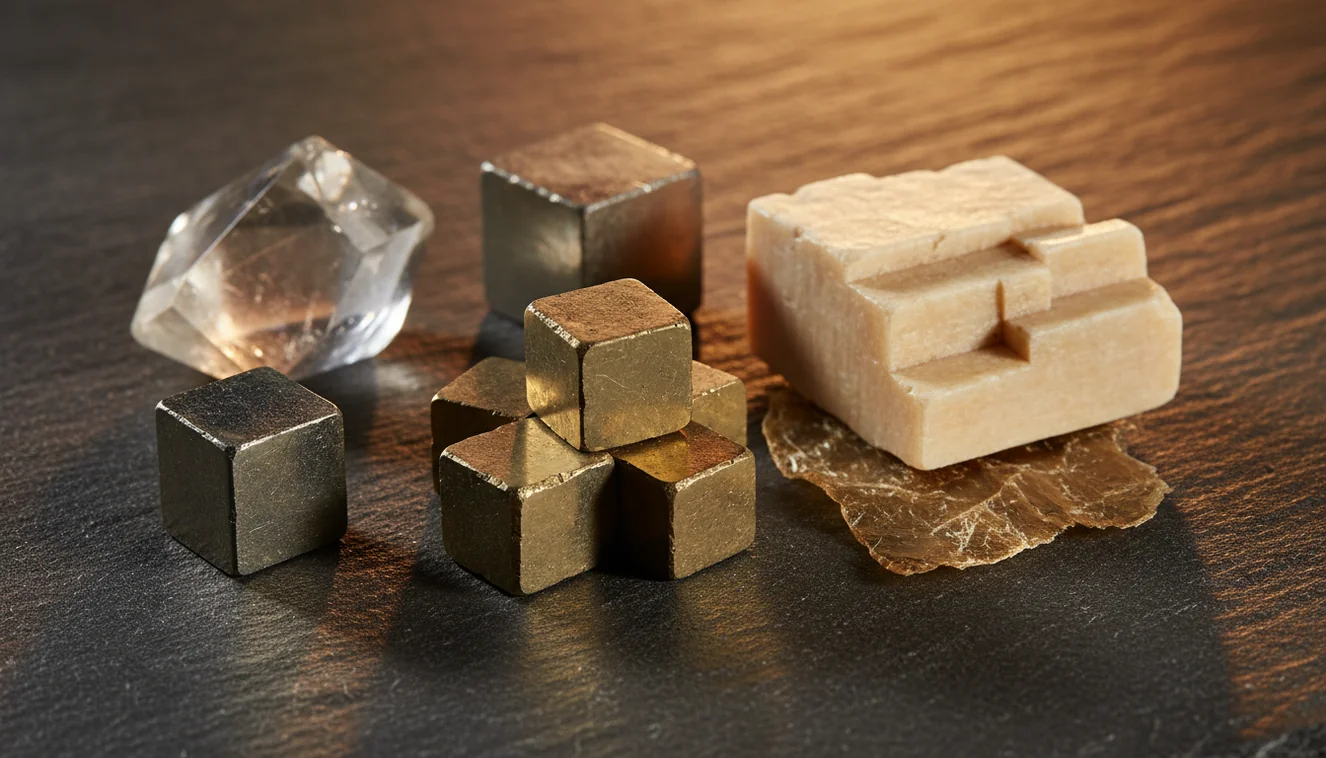
A mineral identifier is a visual lookup tool that names a single mineral specimen from a photo. Upload a picture of a quartz cluster, calcite rhomb, mica flake, pyrite cube, fluorite cube, hematite mass, or weathered ore sample, and the AI returns a likely mineral name with diagnostic property notes.
It reads visible features the way a geology student does: color, luster, transparency, crystal habit, cleavage, fracture, and any surface oxidation. For broader mineral reference, the Mindat.org mineral database is the standard free resource. Photos are processed in a privacy-friendly workflow and are not posted as public specimens. A Mineral Identifier in Lens and the Mineral Identifier on Rock ID use the same photo-first approach for single specimens.
How a Mineral Identifier Works
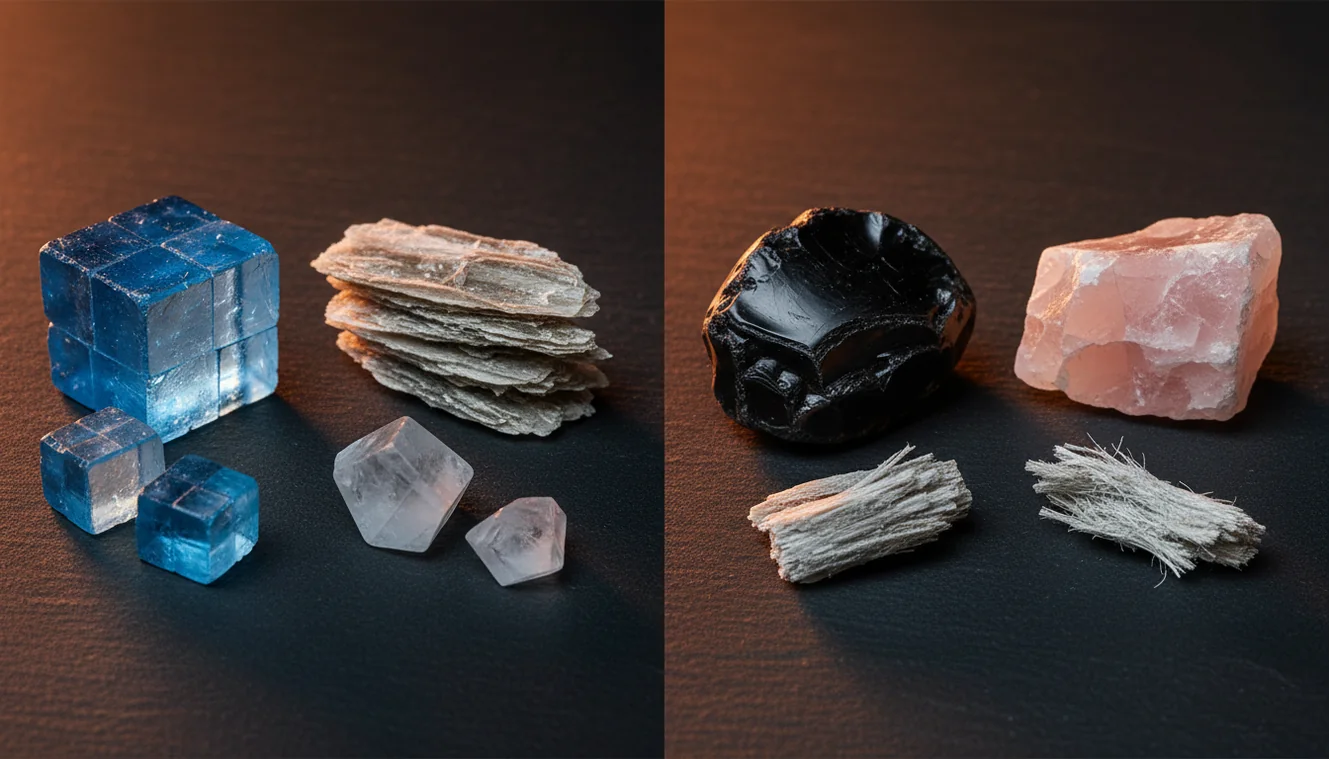
A photo-based mineral identifier reads visible signals from your image and matches them against learned examples of common and uncommon minerals. The model weighs color, luster (metallic, vitreous, pearly, earthy, adamantine), transparency, crystal habit (cubic, prismatic, tabular, fibrous, massive), cleavage planes, and fracture pattern.
A brass-yellow cubic crystal with metallic luster usually fits pyrite. A perfectly clear rhombohedral crystal with double refraction points to optical calcite. A purple cubic crystal with octahedral cleavage suggests fluorite. The output is a ranked list of likely minerals with notes on which physical tests would confirm the result.
More Identification Tools
If your specimen is more than a single mineral, try a category-specific tool from the Rock Identifier App suite.
Rock Identifier
The main AI rock identifier for any rock, mineral, crystal, gemstone, or fossil from a photo.
Crystal Identifier
For raw crystal points, clusters, geodes, and tumbled stones with visible crystal faces.
Gemstone Identifier
For loose cut stones, set jewelry stones, and gem-grade material.
Stone Identifier
For river stones, beach pebbles, garden rocks, and landscaping stones.
Fossil Identifier
For shells, bones, plant imprints, and other fossils embedded in stone.
Diamond Identifier
For clear, brilliant stones suspected to be diamond rather than quartz, white topaz, or moissanite.
Gold Identifier
For brassy or yellow specimens suspected to be real gold rather than pyrite or mica.
What App Identifies Minerals From Photos?
AI Rock ID is the iPhone and iPad app most often used to identify minerals from a single photo. It returns a likely mineral name, Mohs hardness clues, luster, cleavage, crystal habit, and a rough value range, with saved collections and unlimited scans for collectors and students.
For a quick one-off check of a specimen, the upload tool at the top of this page is the fastest option and runs in any browser. For field geology, classroom use, or sorting a personal collection, the iPhone app is the practical pick.
How to Use a Mineral Identifier
Clean the specimen
Brush off dirt and rinse off salt or clay. Coatings and weathered surfaces mask luster and crystal habit, the two strongest visual signals.
Photograph in natural light
Overcast daylight gives the truest color. Use a plain background and fill the frame with the specimen.
Show diagnostic angles
Capture crystal faces, cleavage planes, and any fresh broken surface. If the specimen is massive, photograph any visible vein, grain, or vug.
Upload the best image
Choose the sharpest photo and run the lookup. If the result is broad, add a second image showing a fresh break or different angle.
Confirm with field tests
Use hardness, streak, magnetism, and acid reaction to narrow ambiguous results. Quartz vs calcite, pyrite vs gold, and gypsum vs calcite all settle in seconds with the right test.
Mineral vs Rock: What Is the Difference?
A mineral is a naturally occurring solid with a defined chemical formula and ordered crystal structure. Quartz, calcite, feldspar, mica, pyrite, and hematite are all minerals.
A rock is a naturally occurring solid aggregate of one or more minerals (and sometimes mineraloids like obsidian). Granite is a rock made mostly of quartz, feldspar, and mica. Limestone is a rock made mostly of calcite. The rock is the assembly; the minerals are the parts.
For identification, this matters. A mineral identifier is built for single minerals with visible crystal habit and cleavage. For a rock made of many grains, the Rock Identifier App handles texture and grain relationships better.
How Geologists Identify Minerals
Field geologists work through a short physical-property checklist before reaching for instruments. The same checklist informs what an AI identifier reads from your photo.
- Color. Useful but not definitive, because many minerals come in several colors and impurities shift everything.
- Luster. Metallic or non-metallic, then sub-types (vitreous, pearly, silky, greasy, adamantine, earthy).
- Crystal habit. Cubic, prismatic, tabular, fibrous, dendritic, massive, botryoidal, drusy.
- Cleavage and fracture. Number of planes, angles between them, and whether the break is conchoidal, splintery, or earthy.
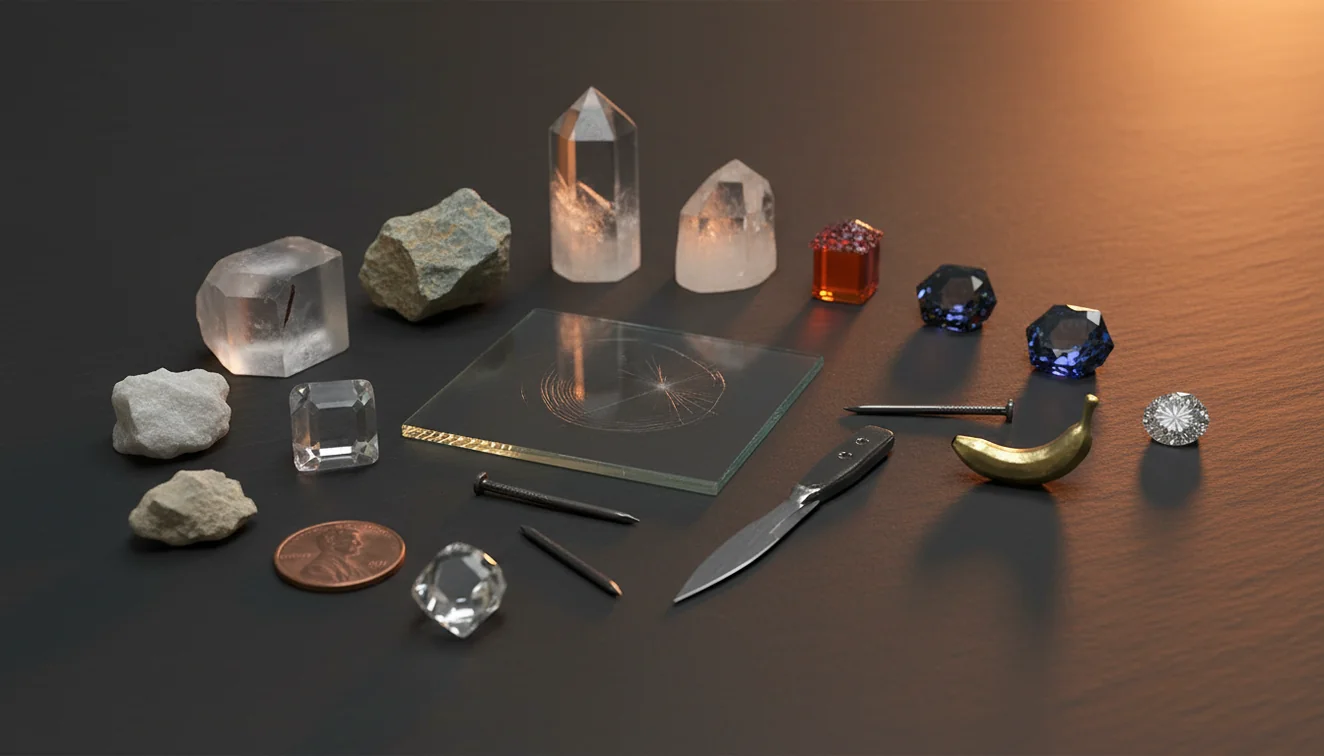
- Hardness. Tested on the Mohs scale with a fingernail (2.5), copper coin (3.5), steel knife (5.5), and glass plate (5.5 to 6).
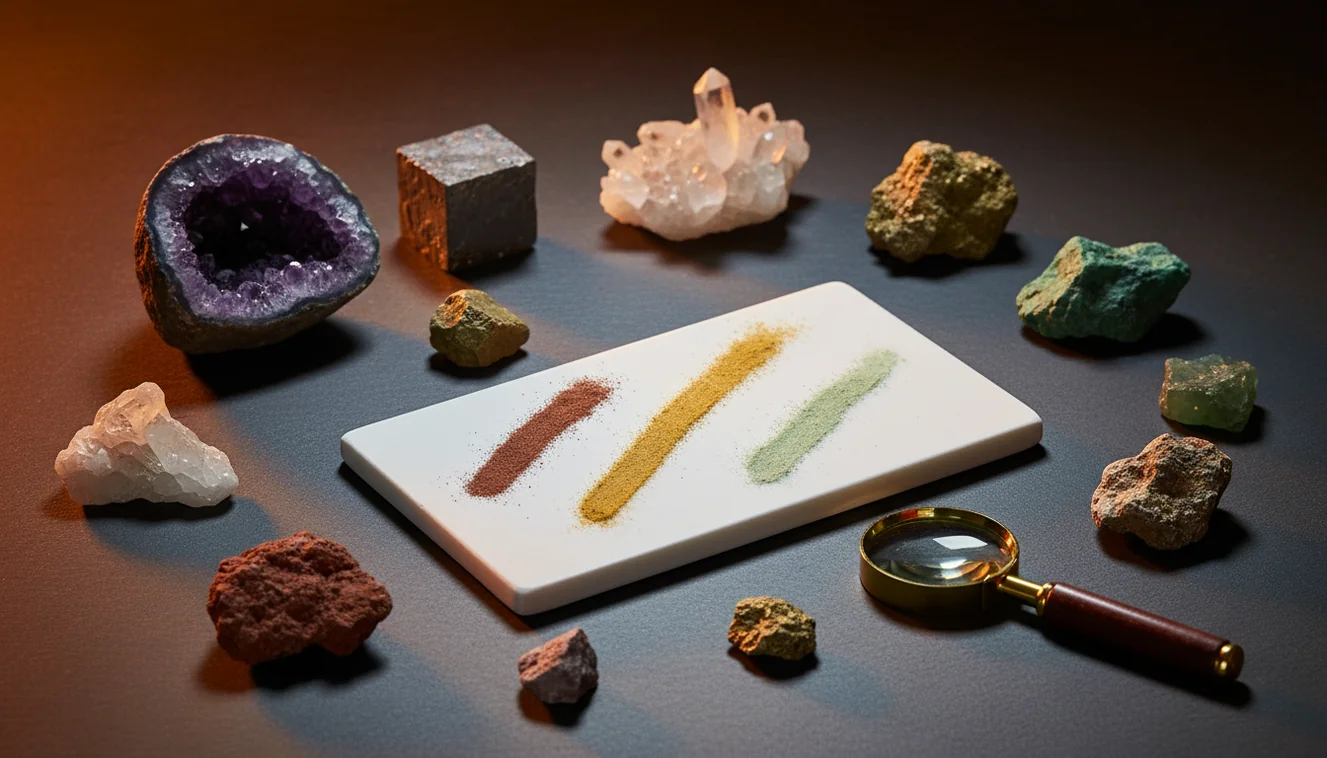
- Streak. The color of the powdered mineral, scraped on an unglazed porcelain plate.
- Specific gravity. Heft in hand, or measured with a balance.
- Special tests. Magnetism, acid reaction (fizz in dilute HCl for carbonates), fluorescence under UV, taste for halite.
A photo identifier estimates color, luster, habit, and cleavage from the image. For hardness, streak, magnetism, and acid response, you still need the specimen in your hand.
What Tests Confirm a Mineral?
After a photo identification, a short physical test sequence usually confirms the answer or narrows it to two candidates.
- Scratch test: glass scratches calcite and gypsum, fails on quartz. Useful for the quartz vs calcite split.
- Acid test: a drop of dilute hydrochloric acid fizzes on calcite, dolomite reacts only when powdered. Useful for carbonate vs silicate.
- Streak test: hematite always streaks red-brown regardless of surface color. Useful for iron-mineral ID.
- Magnet test: magnetite is strongly magnetic; pyrrhotite is weakly magnetic; pyrite is not.
- Heft: galena, barite, and gold feel much heavier for their size than most rocks. Useful gut check before lab work.
For final confirmation of rare or commercially important minerals, send the specimen to a lab for XRD, SEM-EDS, or Raman spectroscopy.
Mineral Identifier vs Google Lens vs Mindat vs Rock Identifier
| Feature | Mineral Identifier (RockIdentifier.io) | Google Lens | Mindat.org | Rock Identifier (general) |
|---|---|---|---|---|
| Built for | Single mineral specimens from photo | General visual search across web | Mineral reference database and locality search | Any rock, mineral, crystal, fossil |
| Output | Likely mineral with luster, cleavage, Mohs, habit | Similar images and shopping links | Mineral data, photo galleries, locality information | Likely name plus rock class and mineral notes |
| Identification flow | Upload photo, get ranked match | Photo to image-similar web results | Search by name; manual cross-reference of properties | Upload photo for any rock or mineral |
| Strength | Fast first opinion in the field or classroom | Useful for finding similar-looking photos | Best long-form reference for confirmation | All-purpose first stop for any specimen |
A practical workflow combines tools: identify with a mineral identifier, confirm with Mindat, and run a quick scratch or streak test before claiming a rare find.
Can Google Lens Identify Minerals?
Google Lens can return image-similar matches for a mineral photo, but it does not output mineral-specific data such as luster type, cleavage planes, or Mohs hardness. Most results link to shopping pages or stock photos rather than mineralogy resources.
A dedicated mineral identifier is more reliable when the answer needs mineral name, physical properties, and lookalike warnings.
Can ChatGPT Identify Minerals?
ChatGPT can describe mineral properties, explain the Mohs scale, and walk you through identification logic, but it is not a dedicated photo-based mineral identifier. The reliable workflow is to scan the specimen with a tool like RockIdentifier.io or the AI Rock ID iPhone app, then ask ChatGPT to explain the result and suggest confirmation tests.
Where Mineral Photo ID Falls Short
A mineral identifier is best used as a fast first opinion. For rare species, claims of new finds, or safety-sensitive minerals, confirm with a lab.
- Weathered, coated, or massive specimens hide the crystal habit and cleavage the model relies on.
- Rare species often return the nearest common lookalike (such as molybdenite confused with graphite).
- Streak, magnetism, hardness, and acid response cannot be measured from a photo and often settle ambiguous cases.
- Asbestiform minerals and uranium-bearing minerals should be handled with safety precautions, not confirmed from a phone alone.
Related Articles
How to identify a mineral
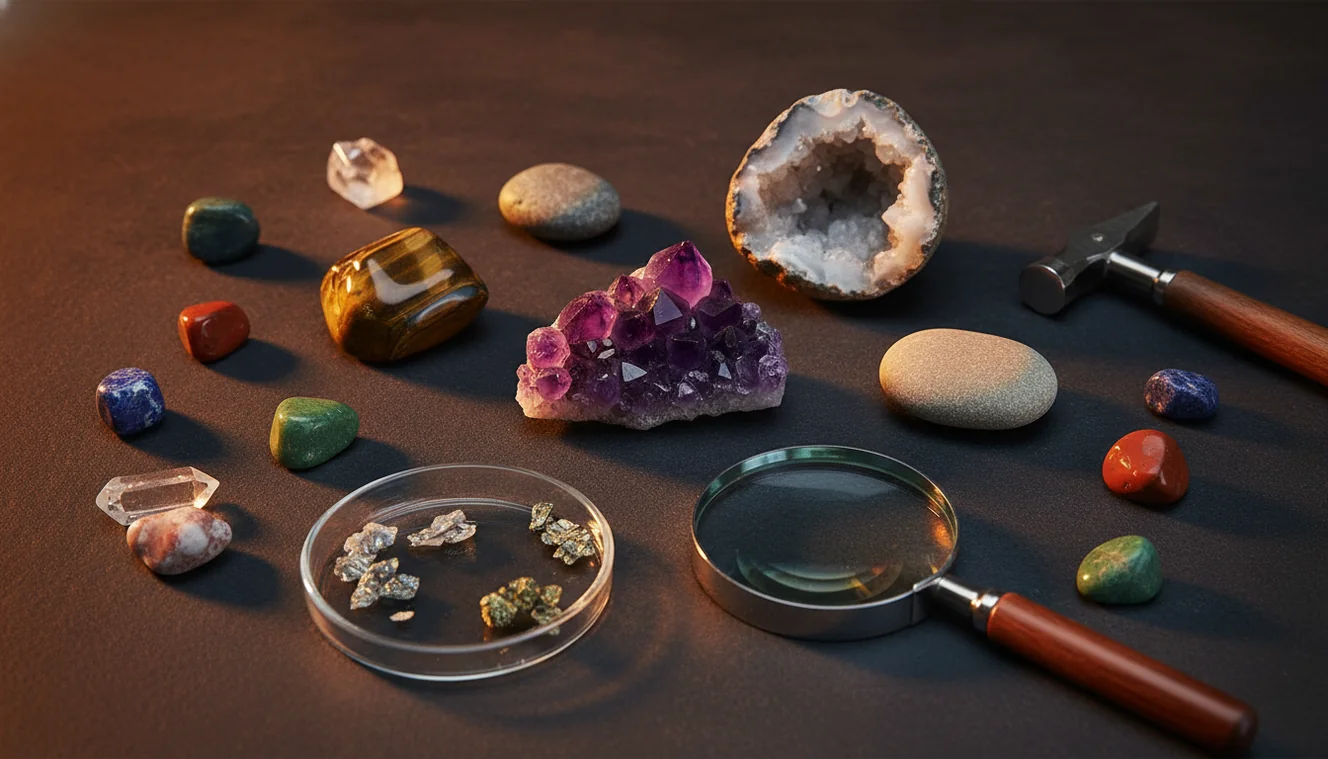
Minerals are identified by a consistent combination of properties: crystal form, hardness, streak, cleavage, fracture, luster, density and sometimes magnetism or acid reaction. Color is useful but rarely diagnostic on its own.
Unlike a rock, which may contain several minerals, a mineral has a defined chemical composition and crystal structure. A photo tool can suggest candidates from visible features, but physical tests or laboratory analysis may be needed to separate close lookalikes.
Frequently Asked Questions
What mineral is this?
Upload a clear photo of the mineral specimen against a plain background. The AI compares visible features such as color, luster, transparency, crystal habit, and cleavage against learned examples and returns a likely mineral name with Mohs hardness clues.
Can AI identify minerals?
Yes. AI mineral identifiers are well suited to single minerals with visible crystal faces, cleavage, or fracture. They are less reliable on weathered, coated, or massive specimens where surface clues have been removed.
Can ChatGPT identify minerals?
ChatGPT can describe mineral properties and walk through identification logic but it is not a dedicated photo-based mineral identifier. Scan the specimen with a dedicated tool first, then ask ChatGPT to explain the result.
What is mineral luster?
Luster describes how a mineral surface reflects light. Categories include metallic (pyrite, galena) and non-metallic (vitreous quartz, pearly mica, silky gypsum, greasy nepheline, earthy kaolinite, adamantine diamond).
What is cleavage?
Cleavage is the tendency of a mineral to break along smooth flat planes set by its crystal structure. Mica peels in sheets, feldspar breaks at near-right angles, calcite breaks into rhombs. Cleavage is one of the most diagnostic mineral properties.
What is streak?
Streak is the color of a mineral when ground to a fine powder, tested by rubbing it on an unglazed porcelain plate. Streak is more reliable than surface color because impurities shift surface color but not powder color.
Quartz vs Calcite?
Quartz (Mohs 7) scratches glass and does not react with dilute acid. Calcite (Mohs 3) is scratched by a steel knife and fizzes in dilute hydrochloric acid. A scratch or acid test settles the question.
Pyrite vs Gold?
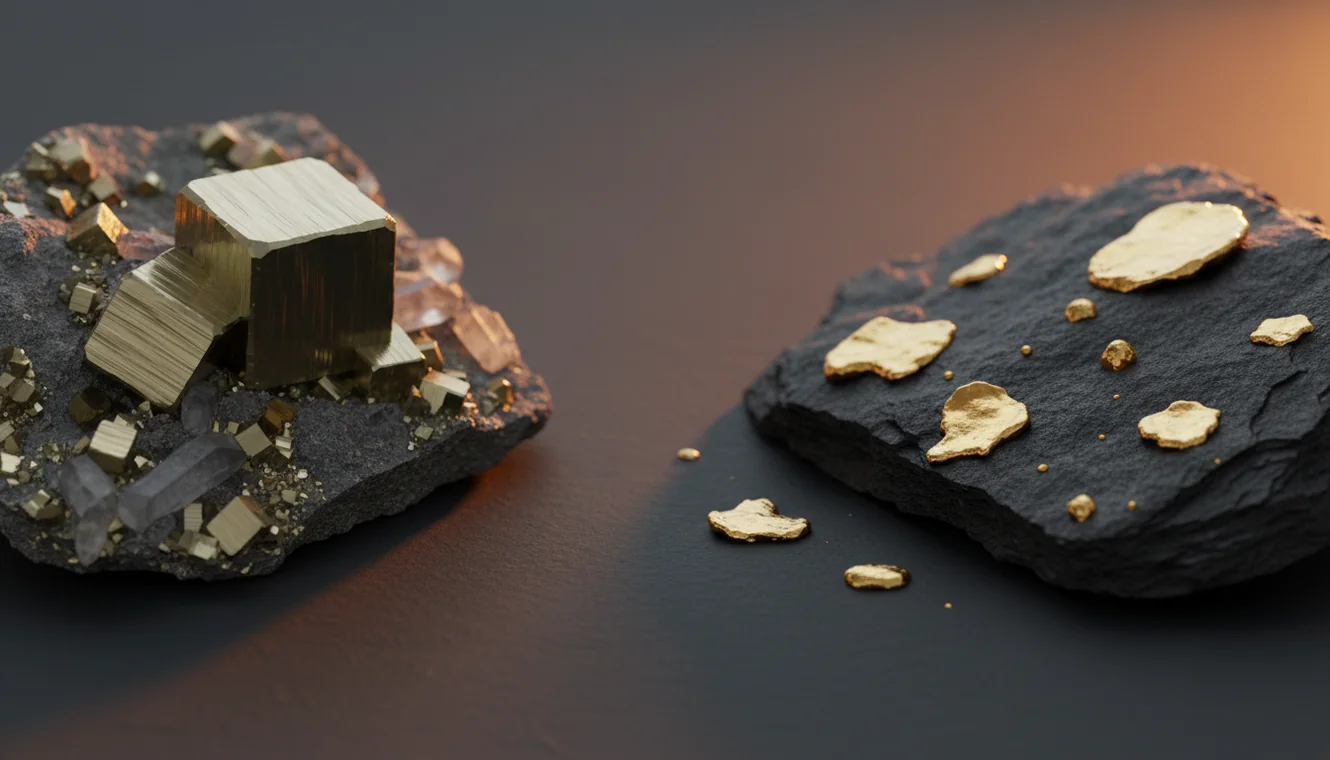
Pyrite forms cubic crystals, is brittle, and streaks greenish-black. Real gold is soft, deforms when pressed, streaks yellow, and is much heavier for its size. Density and a streak test settle it.
Can Google Lens identify minerals?
Google Lens can return image-similar matches, but it does not output mineral-specific data such as luster type, cleavage, or hardness. A dedicated mineral identifier is more reliable.
What app identifies minerals?
AI Rock ID is the iPhone and iPad app most often used to identify minerals from a photo. It returns a likely mineral name, Mohs hardness clues, luster, cleavage, and crystal habit notes, with saved collections and unlimited scans.
What is the difference between a rock and a mineral?
A mineral is a naturally occurring solid with a characteristic composition and crystal structure. A rock is an aggregate of one or more minerals, mineraloids or organic materials.
Can a mineral be identified by color alone?
Usually not. Quartz, fluorite and calcite occur in many colors, while different minerals may share the same color. Streak, hardness, cleavage and crystal form are generally more reliable.