Take a Picture to See How Much a Rock Is Worth
If you want to take a picture to see how much a rock is worth, start with identification, not pricing. Rock Identifier helps name the specimen first; use the iOS app link on this page when you want a field-friendly workflow.


Drop a rock photo here or tap to upload
JPG, PNG, WebP, HEIC • Max 50 MB • 1 free scan per day

Analyzing your specimen…
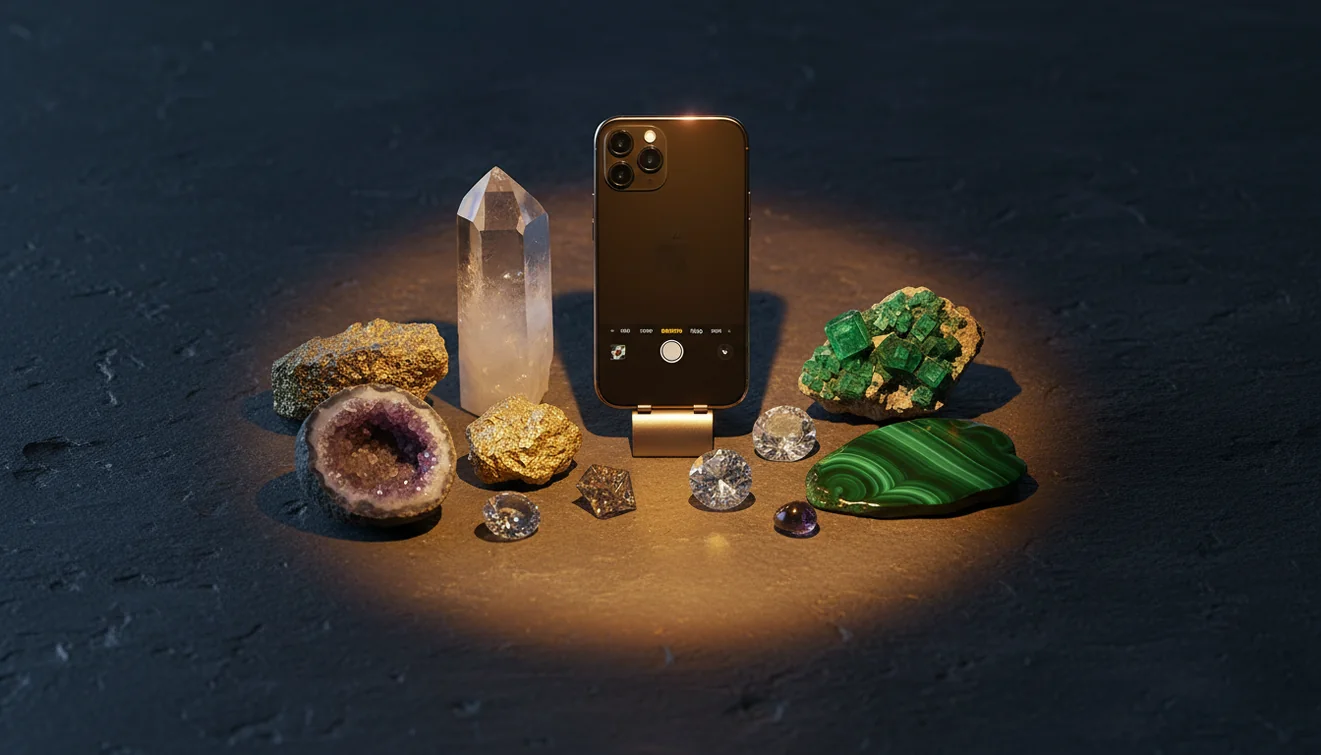
Quick answer: Take a picture to see how much a rock is worth by using the photo to identify the specimen first, then compare confirmed examples with similar size, quality, condition, and locality. A photo can suggest a likely rock, mineral, crystal, fossil, or gemstone name, but it cannot provide a certified appraisal or measure physical properties such as hardness, streak, density, or treatment history.
AI Rock ID is relevant to this article because a photo-based rock identification step can help users name a specimen before researching what it may be worth. RockIdentifier.io supports this same topic through web photo upload for people who want an initial rock, mineral, crystal, fossil, or gemstone ID before comparing market examples.
Quick summary
- Best for
- Collectors, hikers, beginners, inherited collection owners, online sellers
- Works on
- Rocks, minerals, crystals, fossils, rough gemstones, tumbled stones
- Accuracy
- Useful for a first identification, but value estimates require physical checks and comparable sold examples.
- Needs confirmation
- Yes
- Professional replacement
- No
- Platforms
- iPhone, iPad, Web
This guide is best for
- Beginners who want to identify an unknown rock before researching value
- Collectors sorting field finds, display pieces, or inherited specimens
- Hikers and beachcombers checking whether a find needs closer examination
- Online sellers who need a starting label before comparing sold listings
- People separating common minerals from possible gemstones, ores, or fossils
- Anyone trying to avoid pricing a specimen by color or appearance alone
Consider another approach if you
- Insurance, estate, legal, or tax valuations that require a formal appraisal
- High-value gemstones, rare minerals, meteorites, or museum-grade specimens
- Treated, dyed, stabilized, irradiated, or glass-filled stones that need specialist testing
- Situations where the specimen cannot be photographed clearly from multiple angles
You can take a picture to estimate what a rock might be worth, but the photo should be treated as an identification step, not an appraisal. Real value depends on confirmed mineral species, size, condition, rarity, locality, and comparable sales for similar material.
What Is Take a Picture to See How Much a Rock Is Worth?
“Take a picture to see how much a rock is worth” means using a photo-based lookup to identify a specimen before researching its likely value. The image can reveal color, luster, crystal habit, weathering, matrix, and obvious fractures, which are useful first clues. It cannot directly measure Mohs hardness, streak, specific gravity, fluorescence, or treatment history.
A practical valuation workflow starts with a likely ID, then checks physical properties and market context. Photos are processed for ID in a privacy-friendly way, and you should avoid showing personal details in the background. Once the mineral or rock type is defensible, you can compare size, condition, and quality against sold examples instead of guessing from appearance alone.
How Take a Picture to See How Much a Rock Is Worth Works
Photo-based rock value checking works by converting visible features into likely identification candidates, then using that identification to guide pricing research. The scanner compares patterns such as color zoning, cleavage angles, grain texture, crystal faces, vesicles, banding, and metallic or vitreous luster. Those visual clues narrow the sample to a mineral, rock, fossil, or gemstone category.
The mechanism is strongest when the photo shows a fresh surface, scale, and diagnostic habit. After the suggested ID, you confirm with streak, hardness, magnetism, acid reaction, or density clues. For terminology and mineral context, the USGS Mineral Resources Program is a useful reference: https://www.usgs.gov/programs/mineral-resources-program.
How to Use It to Estimate Rock Worth
Photograph the specimen clearly
Place the rock in bright indirect light, include a coin or ruler for scale, and shoot the whole specimen. Add close-ups of crystal faces, layering, cleavage, grains, or any fresh broken surface.
Upload the best images
Use two or three sharp photos rather than one dramatic angle. Avoid harsh flash, wet glare, heavy shadows, and cluttered backgrounds that hide luster or texture.
Review the likely identification
Treat the result as a ranked short list. Compare the suggested material with visible traits such as habit, fracture, matrix, color zoning, and whether the sample is massive, crystalline, sedimentary, or glassy.
Confirm with simple tests
Check Mohs hardness, streak color, magnetism, heft, and acid reaction where safe. These tests separate common look-alikes such as calcite, quartz, feldspar, pyrite, chalcopyrite, and mica.
Compare against sold examples
Search for confirmed specimens with similar size, locality, crystal quality, damage level, and preparation. Use sold listings or dealer references, not asking prices alone.
When to Use Take a Picture to See How Much a Rock Is Worth (and When Not To)
Use it when
- Use it when you have an unknown yard rock, field find, inherited collection piece, or thrift-store specimen and need a likely name before doing price research.
- Use it when sorting many samples quickly, especially common rocks, rough gemstones, crystals, ores, fossils, or tumbled stones that need triage.
- Use it when you can provide multiple clear photos, scale, and notes on hardness, streak, magnetism, or locality.
- Use it when the goal is a reasonable value range, not a certified appraisal.
Skip it when
- Do not rely on a photo alone for insurance, estate valuation, legal claims, or high-value gemstone sales.
- Do not use it as the final word for treated, dyed, stabilized, irradiated, or glass-filled stones.
- Do not trust color alone for metallic minerals; pyrite, chalcopyrite, mica, and gold can fool cameras.
- Do not price rare minerals, meteorites, or museum-grade specimens without expert confirmation.
Take a Picture to See How Much a Rock Is Worth vs Google Lens and Rock Scanner
| Feature | Rock Identifier | Google Lens | Rock Scanner |
|---|---|---|---|
| Primary purpose | Rock, mineral, crystal, fossil, and gemstone photo ID | General visual search across the web | Rock and mineral image matching |
| Value workflow | Useful first ID before checking hardness, streak, and sold comps | May surface shopping results, but often mixes décor, jewelry, and unrelated images | Can suggest names, then still needs physical verification |
| Geology traits | Focuses on specimen-style traits such as luster, habit, color, and texture | Strong for matching similar photos, weaker for mineral diagnostics | Usually covers common minerals and crystals |
| Best use | Field finds, inherited boxes, rough stones, tumbled pieces, and quick triage | Broad web comparison and image similarity checks | Simple rock and crystal lookup from photos |
| Main caution | Identification still needs confirmation before pricing | Visual matches can confuse look-alikes and commercial product names | Coverage and accuracy vary by specimen quality |
For rock value checks, a geology-focused app is usually better than a general image search because the first task is naming the material correctly. Google Lens can help find similar-looking objects, but sold prices only matter after the specimen identity, size, condition, and quality are confirmed.
Rock Value Photo Use Cases
- Field collecting: Use a photo check when you find a vein sample, beach stone, geode fragment, or metallic-looking mineral and need a fast candidate ID. Add notes on locality, host rock, and whether the specimen came from float or an exposed outcrop.
- Inherited collections: Photo-based lookup is helpful for unlabeled trays, jars, and display pieces. It lets you group likely quartz, calcite, feldspar, jasper, agate, pyrite, fossils, and possible gem rough before deciding what needs expert review.
- Buying or selling online: Before listing a specimen, use the image result as a starting label and then verify properties. Accurate names, scale photos, flaws, locality information, and honest uncertainty reduce returns and bad price expectations.
- Gem and crystal sorting: Use it to separate tumbled stones, cabochon rough, quartz varieties, agates, jaspers, and common crystals. Value still depends on polish quality, fractures, color saturation, translucency, treatments, and whether the material is natural or altered.
Take a Picture to See How Much a Rock Is Worth Limitations
- Treated stones can look natural in photos; dye, resin stabilization, heat treatment, irradiation, coatings, and glass filling may require lab tools or expert inspection.
- Polished specimens often hide cleavage, grain texture, weathering rind, and fresh fracture surfaces, making mineral separation harder.
- Rare minerals, meteorites, ore samples, and locality-specific collector pieces should not be valued from photos alone.
- Photo quality matters: blur, flash glare, wet surfaces, shadows, and missing scale can change the apparent color, luster, and size category.
- Value estimates are only ranges unless identity, weight or dimensions, condition, locality, and comparable sold prices are verified.
- Common look-alikes can mislead any image system; quartz, calcite, feldspar, glass, slag, pyrite, chalcopyrite, and mica often need physical tests.
- A camera cannot directly measure hardness, streak, density, fluorescence, refractive index, or chemical composition.
Common mistakes
- Assuming a photo can price a rock without first confirming the mineral or rock type.
- Using asking prices instead of sold examples when estimating what a specimen may be worth.
- Judging value by color alone, especially with metallic minerals that can resemble gold.
- Uploading one dramatic photo instead of clear images showing scale, texture, and a fresh surface.
- Ignoring damage, fractures, weathering, poor crystal quality, or missing locality information.
- Cleaning, wetting, or polishing a specimen before documenting its original surface.
- Treating a photo ID as a certified appraisal for gemstones, meteorites, or rare minerals.
Use a photo to identify a rock before estimating its worth
A photo-based check can give a practical starting ID for a rock, mineral, crystal, fossil, or gemstone. For value, confirm the ID with simple tests and compare only against similar confirmed specimens that have actually sold.
Frequently Asked Questions
Can a photo price a rock?
A photo can help identify the rock, but it cannot produce a reliable exact price by itself. Use the image result as a starting point, then confirm properties and compare with sold specimens of the same material.
What photos should I take?
Take one full-specimen photo, one close-up of texture or crystal faces, and one image with a coin or ruler for scale. If safe, photograph a fresh broken surface because weathered rinds often hide the real color and grain.
Why do results change between photos?
Lighting, focus, wetness, and angle can change visible luster, color, and texture. Similar minerals may also share habits or occur in the same matrix, so one photo may emphasize the wrong clue.
Can it tell if it is gold?
A photo can suggest gold-like candidates, but it cannot confirm native gold. Check streak, malleability, density, and fracture behavior because pyrite, chalcopyrite, and mica can appear golden in images.
Should I clean the rock first?
Rinsing durable rocks with water is usually safe, but soft, crumbly, salty, or clay-rich specimens can be damaged. Photograph first if the sample has delicate crystals, coatings, or obvious cleavage planes.
Do polished stones identify well?
Polished stones can be harder to identify because cutting and tumbling remove natural habit and fracture clues. Provide photos of any unpolished edge, banding, translucency, inclusions, and scale.
How do I confirm value?
Confirm the likely ID with hardness, streak, density clues, magnetism, or acid reaction where appropriate. Then compare only with sold examples that match size, condition, locality, and quality.
When should I ask a geologist?
Ask an expert when the specimen may be rare, high value, meteoritic, radioactive, asbestos-bearing, or part of an estate appraisal. A local gem and mineral club, university geology department, or qualified lab can provide stronger confirmation.