
Fossil Identifier: What Fossil Is This?
Upload fossil photos
Clear, well-lit images help the AI identify it more accurately.

Analyzing your fossil…
Checking texture, color, structure, and lookalikes…
Fossil identifier for beach finds, shark teeth, ammonites, trilobites, and petrified wood. Upload a photo for a likely identification, geologic age, and matrix notes.


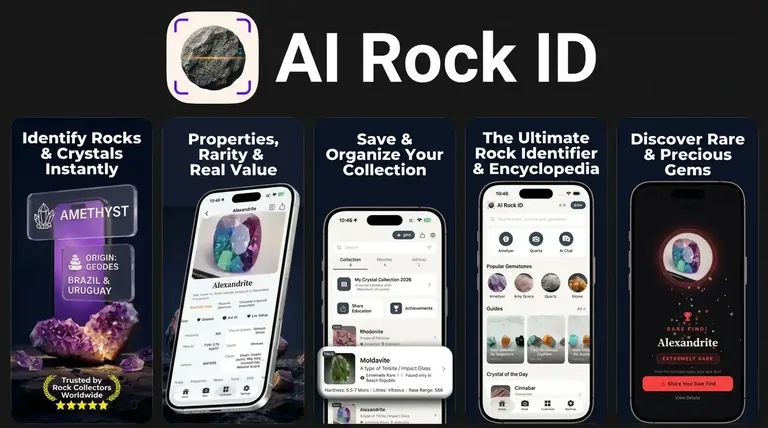
Fossil Identifier helps name shells, teeth, bones, plant imprints, and other fossils from a photo. Upload a clear image to receive a likely identification, rough geologic age, host rock matrix clues, and notes on similar specimens. The online tool works in your browser, while AI Rock ID for iPhone and Android adds unlimited scans, saved collections, and additional field tools.
Good fit for
- beach finds
- shark teeth
- ammonites and brachiopods
- trilobites and crinoids
- petrified wood and plant imprints
Not for
- museum-grade authentication
- scientific publication identification
- dinosaur excavation or permitting
- protected specimen sales
What Is a Fossil Identifier?
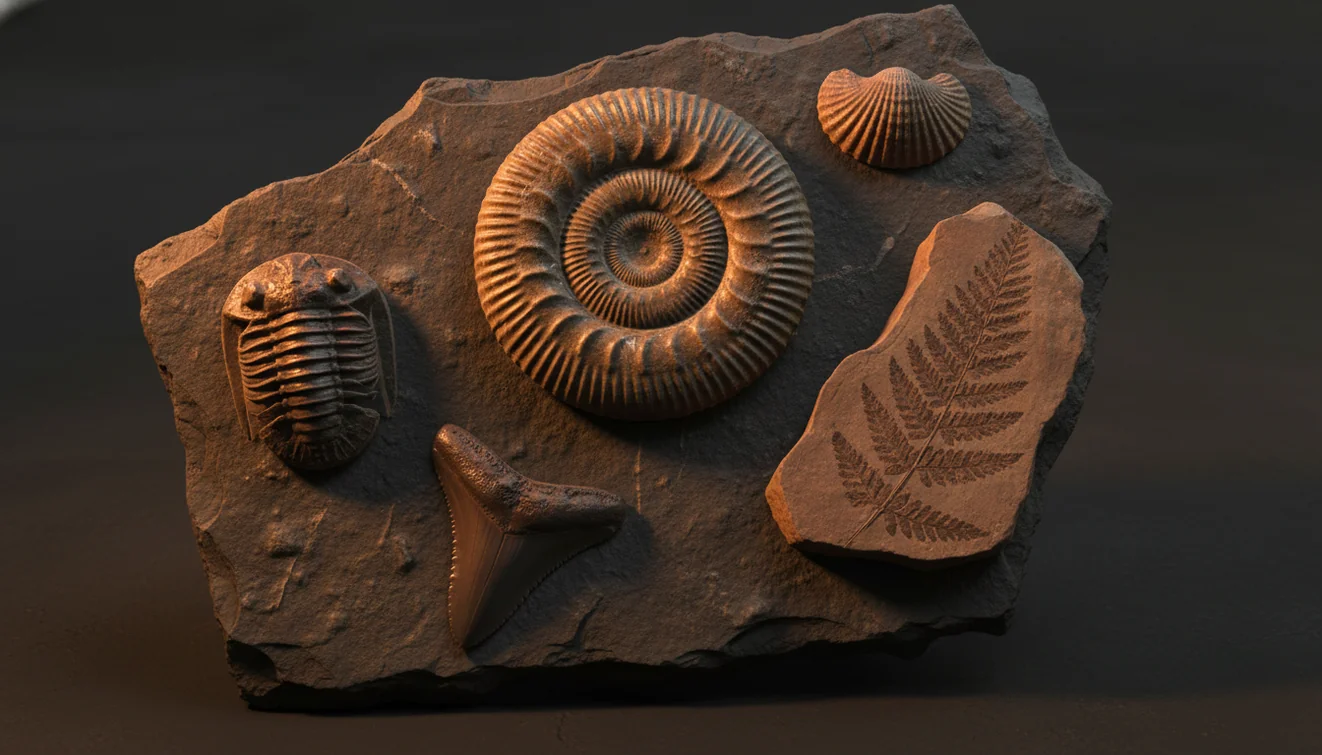
A fossil identifier is a visual lookup tool that names a fossil from a photo. Upload a picture of a shark tooth, ammonite, trilobite, brachiopod, crinoid stem, petrified wood slice, leaf imprint, or bone fragment, and the AI returns a likely identification, a rough geologic age, and notes on the matrix rock.
It reads visible features the way a paleontology student does: shape, symmetry, ribbing, sutures, tooth form, bone microstructure, and how the specimen sits in its host rock. For broader paleontology reference, the Paleobiology Database is a useful resource. Photos are processed in a privacy-friendly workflow and are not posted as public specimens.
How a Fossil Identifier Works
A photo-based fossil identifier reads visible signals from your image and matches them against learned examples of common fossils. The model weighs overall shape, symmetry, ribbing, sutures, tooth form, bone microstructure, segmentation, and the host rock matrix.
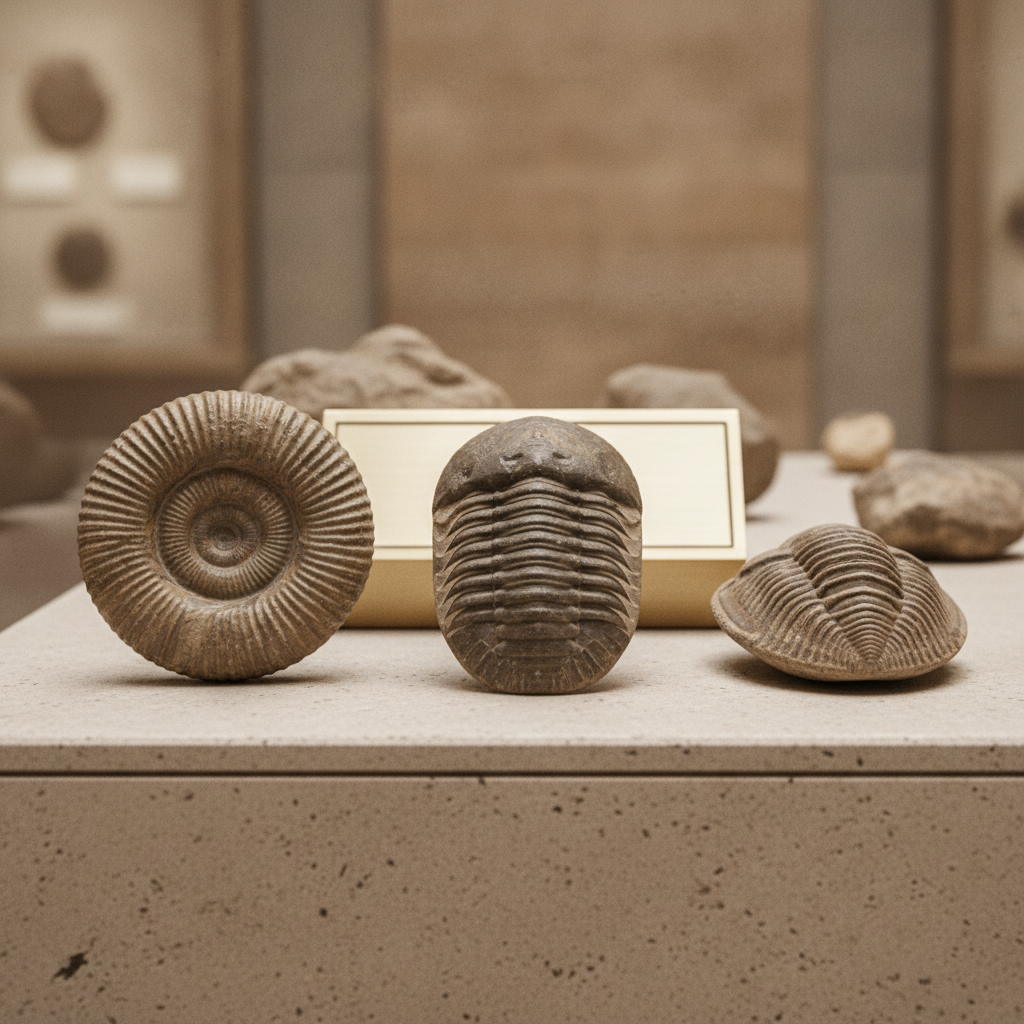
A coiled, ribbed shell with internal chambers usually fits ammonite. A black or gray triangular tooth from a beach often points to fossil shark. A segmented oval body with a central axial lobe matches trilobite. The output is a ranked list of likely fossils with notes on age, depositional environment, and where similar specimens are typically found.
More Identification Tools
If your specimen is not biological, try a different tool from the Rock Identifier App suite.
Rock Identifier App
The main AI rock identifier for any rock, mineral, crystal, gemstone, or fossil from a photo.
Stone Identifier
For river stones, beach pebbles, garden rocks, and landscaping stones.
Mineral Identifier
For single minerals identified by luster, streak, cleavage, and Mohs hardness.
Crystal Identifier
For raw crystal points, clusters, geodes, and tumbled stones.
Gemstone Identifier
For loose stones, cut gems, and jewelry stones suspected to be gem-grade material.
Diamond Identifier
For clear, brilliant stones suspected to be diamond rather than quartz or moissanite.
Gold Identifier
For brassy or yellow specimens suspected to be real gold rather than pyrite or mica.
What App Identifies Fossils From Photos?
AI Rock ID is the iPhone and iPad app most often used to identify fossils from a photo. It returns a likely identification, rough geologic age, matrix clues, and notes on similar specimens, with saved collections and unlimited scans for regular field use.
For a quick one-off check of a beach find or quarry piece, the upload tool at the top of this page is the fastest option. For repeated field collecting along coastal cliffs, river cuts, badlands, or quarry tailings, the iPhone app is the practical pick.
How to Use a Fossil Identifier
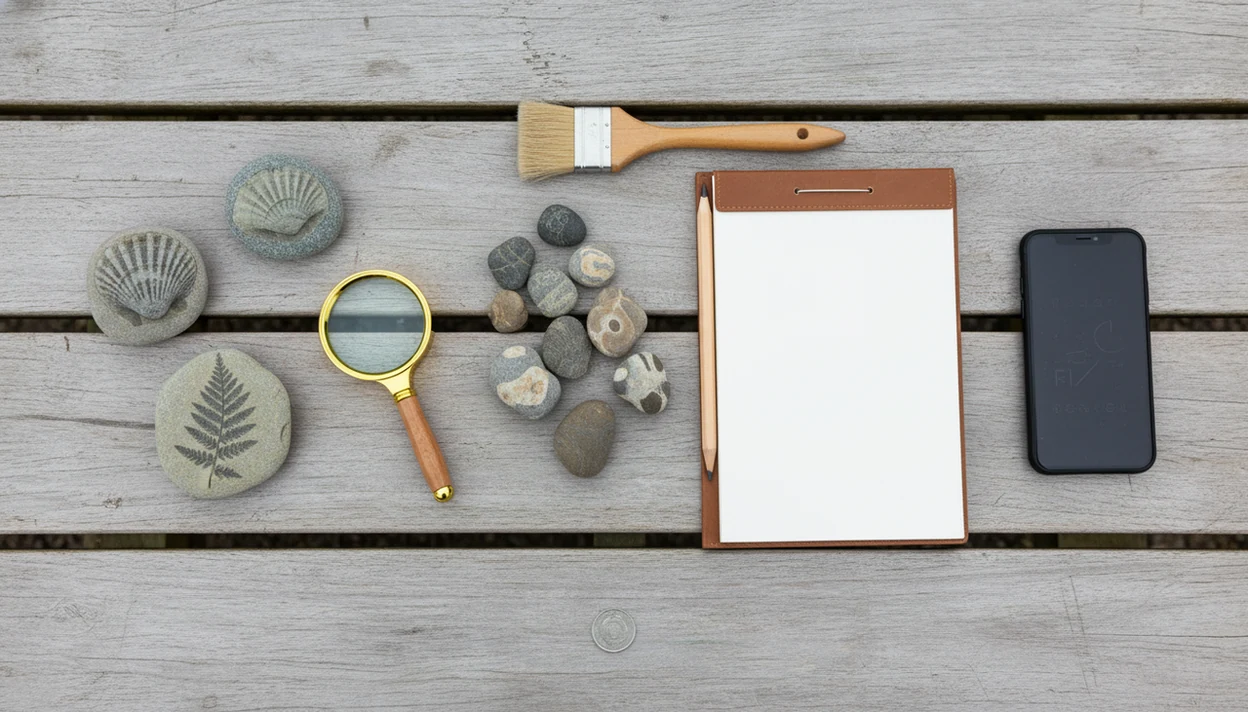
Brush off loose matrix
Soft brush to remove loose sand and dust. Leave the host rock intact: the matrix is a strong clue for age and depositional setting.
Photograph in natural light
Overcast daylight gives the truest color and shadow. Use a plain background and fill the frame with the specimen.
Show diagnostic angles
Capture the top view, side view, and any cross-section. For teeth, show both faces. For shells, show coil and aperture.
Include scale
Put a coin or ruler in one photo. Size is a strong clue for shark species, mosasaur teeth, and many invertebrates.
Note where you found it
The location and rock layer often pin down the age. A megalodon tooth from a South Carolina beach is Miocene; an ammonite from a Yorkshire cliff is Jurassic.
Fossil or Rock?
A fossil is the preserved remains, impression, or trace of a once-living organism inside rock. A plain rock has the same minerals and grains, but no organic structure inside.
Visual cues that mark a real fossil: symmetry (bilateral or radial), repeating segments, distinct ribbing or sutures, recognizable tooth or bone shape, regular chamber walls, or internal cell-like microstructure in petrified wood.
Things that often look fossil-like but are not: concretions (rounded mineral nodules), dendrites (manganese tree-like patterns on rock surfaces), and pseudofossils (random sediment patterns that mimic organisms). A photo identifier flags these as non-fossil rounded mineral growths or surface patterns.
Can AI Identify Dinosaur Bones?
An AI fossil identifier can usually tell whether a specimen is likely bone versus rock by looking at surface texture, internal channels, and growth pattern. For larger fragments with diagnostic features (vertebra centra, tooth roots, articular surfaces), it can suggest a broad group such as theropod, sauropod limb fragment, hadrosaur tooth, or large marine reptile.
Confirming a specific dinosaur species from a single fragment is a job for a paleontologist, often involving CT scanning, microstructure analysis, and comparison with type specimens. Photo ID is a first opinion, not a species verdict.
Dinosaur material in the United States is also subject to permits when collected on public land, and many other countries restrict export. Always check local rules before claiming, selling, or shipping vertebrate fossils.
How Old Is My Fossil?
A photo identifier estimates age from the species identification plus the host rock. Common starting points:
- Trilobites: Paleozoic Era, roughly 250 to 500 million years old.
- Ammonites: Mesozoic Era, roughly 66 to 240 million years old.
- Belemnites: Mesozoic Era, similar window to ammonites.
- Megalodon teeth: mostly Miocene to Pliocene, roughly 3 to 23 million years old.
- Mammoth and mastodon bone: Pleistocene, roughly 10,000 to 2.6 million years old.
- Petrified wood: often Mesozoic to Cenozoic, but it spans much of geologic time.
Precise age comes from the rock layer the fossil was found in (biostratigraphy), not the fossil alone. A photo identifier gives the broad window; the rock formation pins it down.
Where Are Fossils Found?
Fossils are most often found in sedimentary rock exposures such as cliff faces, road cuts, riverbeds, beaches, quarries, and badlands. Common collecting environments include:
- Coastal chalk cliffs (Dorset, Yorkshire) for ammonites and belemnites.
- Atlantic and Gulf beaches (Calvert Cliffs, South Carolina, Florida) for shark teeth, including megalodon.
- Devonian and Ordovician shales (New York, Ohio, Morocco) for trilobites, brachiopods, and crinoids.
- Cretaceous chalk (Kansas, Texas, England) for marine reptiles and fish.
- Badland and prairie exposures (South Dakota, Alberta, Mongolia) for vertebrate bone.
- Limestone quarries everywhere for shells, corals, and bryozoans.
Always check local rules before collecting. Public land, protected sites, and many international localities require permits, and some material cannot be exported or sold.
Can Google Lens Identify Fossils?
Google Lens can match a fossil photo to similar images on the web, which can surface museum pages or fossil sales when the specimen is photogenic and well known. Results are often shopping listings or stock photos rather than identifications.
A dedicated fossil identifier returns the likely fossil name, geologic age, matrix notes, and locality clues, which is what you actually need to write a collection label.
Can ChatGPT Identify Fossils?
ChatGPT can describe fossils, explain geologic ages, and walk you through identification logic, but it is not a dedicated photo-based fossil identifier. The reliable workflow is to scan the fossil with a tool like RockIdentifier.io or the AI Rock ID iPhone app, then ask ChatGPT to explain the result, the age, and the depositional setting.
Where Fossil Photo ID Falls Short
A fossil identifier is best used as a fast first opinion. For museum-grade or commercially important specimens, confirm with a paleontologist.
- Worn beach fragments and weathered teeth lose the surface detail the model relies on.
- Vertebrate bone identification often needs internal structure and proper anatomical context.
- Concretions and dendrites can look fossil-like in a photo and need a closer look.
- Faked and assembled fossils (composite trilobites, restored teeth) cannot be reliably caught from a single image.
Related Articles

Frequently Asked Questions
What fossil is this?
Upload a clear photo of the fossil and any host rock matrix. The AI compares visible features such as shape, ribbing, tooth or bone form, and the rock it sits in against learned examples and returns a likely fossil identification with a rough geologic age.
Can AI identify fossils?
Yes. AI fossil identifiers work well on common finds such as shark teeth, ammonites, trilobites, brachiopods, crinoids, petrified wood, and plant imprints when the photo shows shape and surface detail.
Can ChatGPT identify fossils?
ChatGPT can describe fossils, explain geologic ages, and walk you through identification logic, but it is not a dedicated photo-based fossil identifier. Scan the fossil with a dedicated tool first, then ask ChatGPT to explain the result.
Can AI identify dinosaur bones?
An AI fossil identifier can flag a specimen as likely bone versus rock, and sometimes suggest a group from distinctive features. Confirming a specific dinosaur species is a job for a paleontologist. US public land also requires permits.
How old is my fossil?
A photo identifier estimates age from the species plus the host rock. Trilobite is Paleozoic, ammonite is Mesozoic, megalodon is mostly Miocene to Pliocene. Precise age comes from the rock layer, not the fossil alone.
Fossil vs rock?
A fossil is the preserved remains, impression, or trace of a once-living organism inside rock. A plain rock has the same minerals and grains but no organic structure inside. Look for symmetry, ribbing, sutures, or tooth or bone shape.
Fossil vs concretion?
Concretions are hard mineral nodules that grew inside sedimentary rock around a center. They can look fossil-like but have no real organic structure. A photo identifier flags suspected concretions as non-fossil rounded mineral growths.
Where are fossils found?
Most often in sedimentary rock exposures such as cliffs, road cuts, riverbeds, beaches, quarries, and badlands. Always check local rules before collecting, as public land and protected sites may need permits.
Can Google Lens identify fossils?
Google Lens can match a fossil photo to similar images on the web, often leading to museum pages, shopping listings, or stock photos. A dedicated fossil identifier returns the likely name, age, and matrix notes.
What app identifies fossils?
AI Rock ID is the iPhone and iPad app most often used to identify fossils from photos. It returns a likely identification, rough geologic age, matrix and locality clues, and notes on similar specimens.