
Gold Identifier: Real Gold or Pyrite?
Upload gold photos
Clear, well-lit images help the AI identify it more accurately.

Analyzing your specimen…
Checking texture, color, structure, and lookalikes…
Gold identifier for panned flakes, nuggets, and vein specimens. Upload a photo to check real gold vs pyrite, chalcopyrite, and yellow mica.


Gold Identifier helps check whether a yellow specimen is real gold or one of the common lookalikes (pyrite, chalcopyrite, yellow mica). Upload a clear photo to receive a likely identification and a rough value range. The online tool works in your browser, while AI Rock ID for iPhone and Android adds unlimited scans, saved collections, and additional field tools.
Good fit for
- placer gold panning
- creek and river prospecting
- rockhound and mine-dump finds
- vein and quartz-hosted samples
- backyard and trail "is this gold?" checks
Not for
- certified gold assay
- jewelry karat testing
- refining or sale verification
- insurance valuation
What Is a Gold Identifier?
A gold identifier is a visual lookup tool that compares a yellow specimen against real gold and the common lookalikes. Upload a picture of a panned flake, nugget, quartz vein with yellow flecks, or mine-dump sample, and the AI returns a likely identification (gold, pyrite, chalcopyrite, mica) with notes on what to confirm in the field.
It reads color, luster, crystal habit, surface tarnish, and the host matrix the way a prospector does. For broader gold geology reference, the USGS gold information page is a useful free starting point. Photos are processed in a privacy-friendly workflow and are not posted as public specimens. This tool is not a jewelry karat tester; a jewelry identifier or a dedicated jewelry identifier is the better photo check for yellow metal in a ring or chain. Field gold-versus-pyrite is also covered by Gold Identifier on Rock ID.
How a Gold Identifier Works
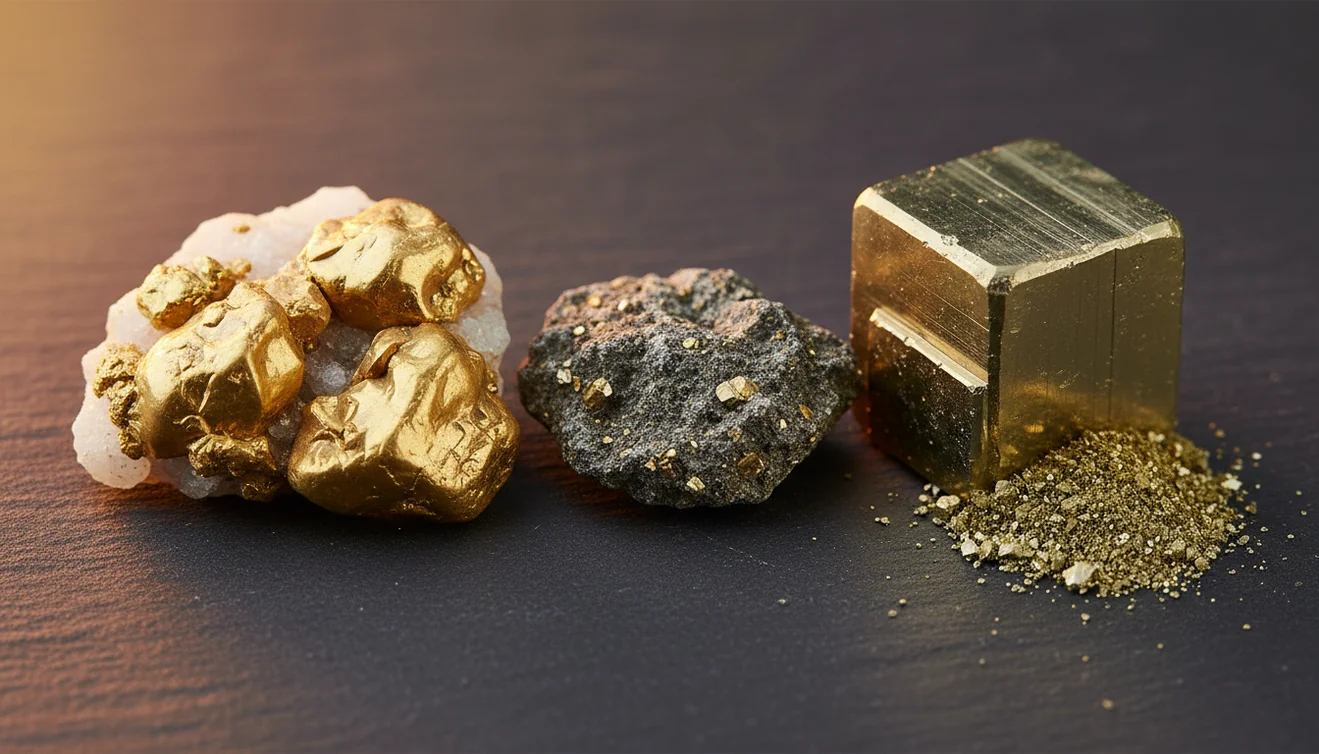
A photo-based gold identifier reads visible signals from your image and compares them against real gold and the most common yellow lookalikes. The model weighs color (gold is warm yellow, pyrite is brass-yellow, chalcopyrite often shows iridescent tarnish), crystal habit (gold is rounded and dendritic, pyrite is cubic), surface luster, and how the specimen sits in its host rock.
A specimen with cubic crystals and metallic luster usually fits pyrite. Brass-yellow flecks with rainbow tarnish point to chalcopyrite. Thin sheet-like flakes that bend without breaking are usually mica. Soft, rounded, dense yellow flakes or nuggets that hold their shape under pressure point to real gold. The output is a ranked list with notes on the field tests that decide it.
More Identification Tools
If your specimen is not yellow metal, try a different tool from the Rock Identifier App suite.
Rock Identifier App
The main AI rock identifier for any rock, mineral, crystal, gemstone, or fossil from a photo.
Mineral Identifier
For single minerals identified by luster, streak, cleavage, and Mohs hardness.
Crystal Identifier
For raw crystal points, clusters, geodes, and tumbled stones.
Gemstone Identifier
For loose stones, cut gems, and jewelry stones suspected to be gem-grade material.
Stone Identifier
For river stones, beach pebbles, garden rocks, and landscaping stones.
Fossil Identifier
For shells, bones, plant imprints, and other fossils embedded in stone.
Diamond Identifier
For clear, brilliant stones suspected to be diamond rather than quartz or moissanite.
What App Identifies Gold From Photos?
AI Rock ID is the iPhone and iPad app most often used to check whether a specimen is real gold or one of the common lookalikes. It compares against gold, pyrite, chalcopyrite, and yellow mica, returns a likely match, and provides a rough value range based on visible quantity.
For a quick one-off check, the upload tool at the top of this page is the fastest option. For panners, prospectors, and rockhounds who check finds frequently, the iPhone app is the practical pick.
How to Use a Gold Identifier
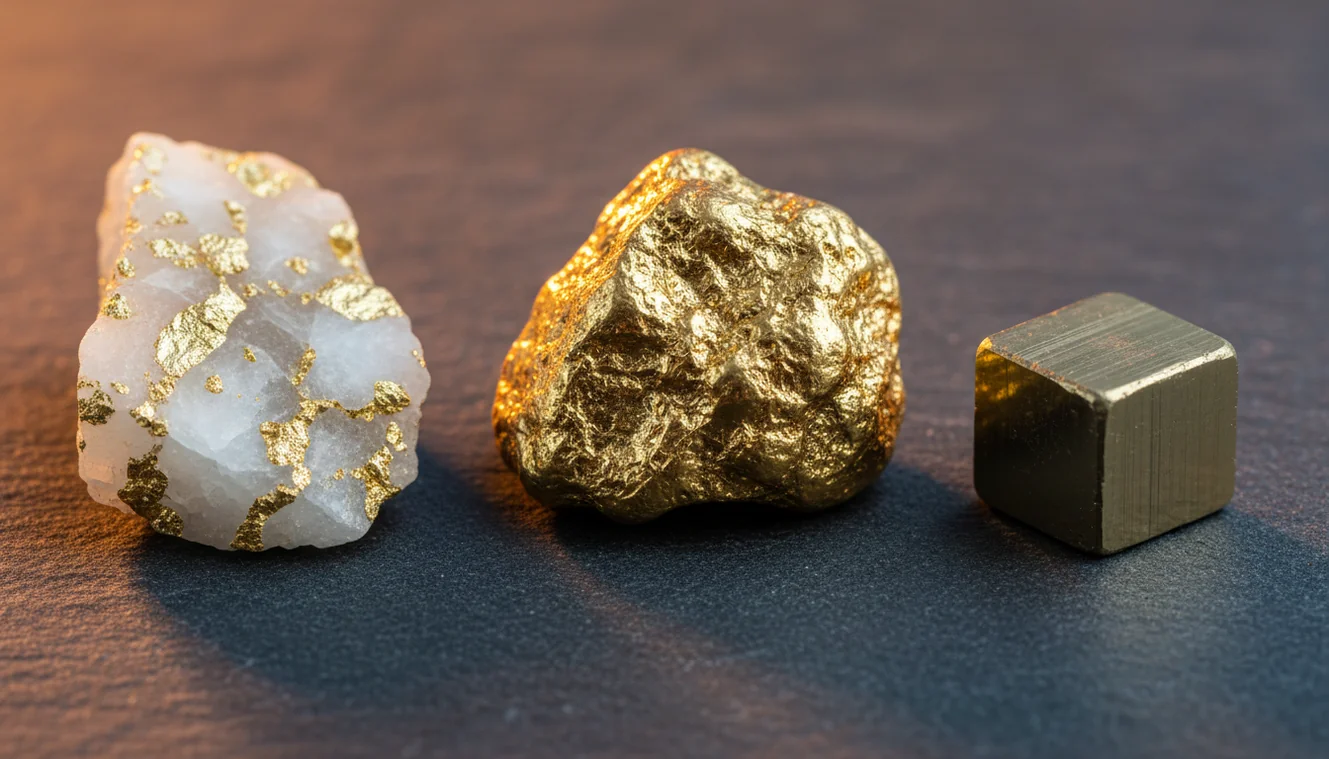
Rinse the specimen
Rinse off mud, silt, and clay. Clean color and clean crystal faces are the strongest visual signals.
Use natural light
Overcast daylight or open shade gives the truest color and luster. Avoid harsh flash, which makes brass and yellow metals look more gold-like than they are.
Show the shape
Photograph from above and at an angle. Cubic crystals signal pyrite; rounded, lumpy, dendritic shapes signal gold; thin flat sheets signal mica.
Include matrix or pan
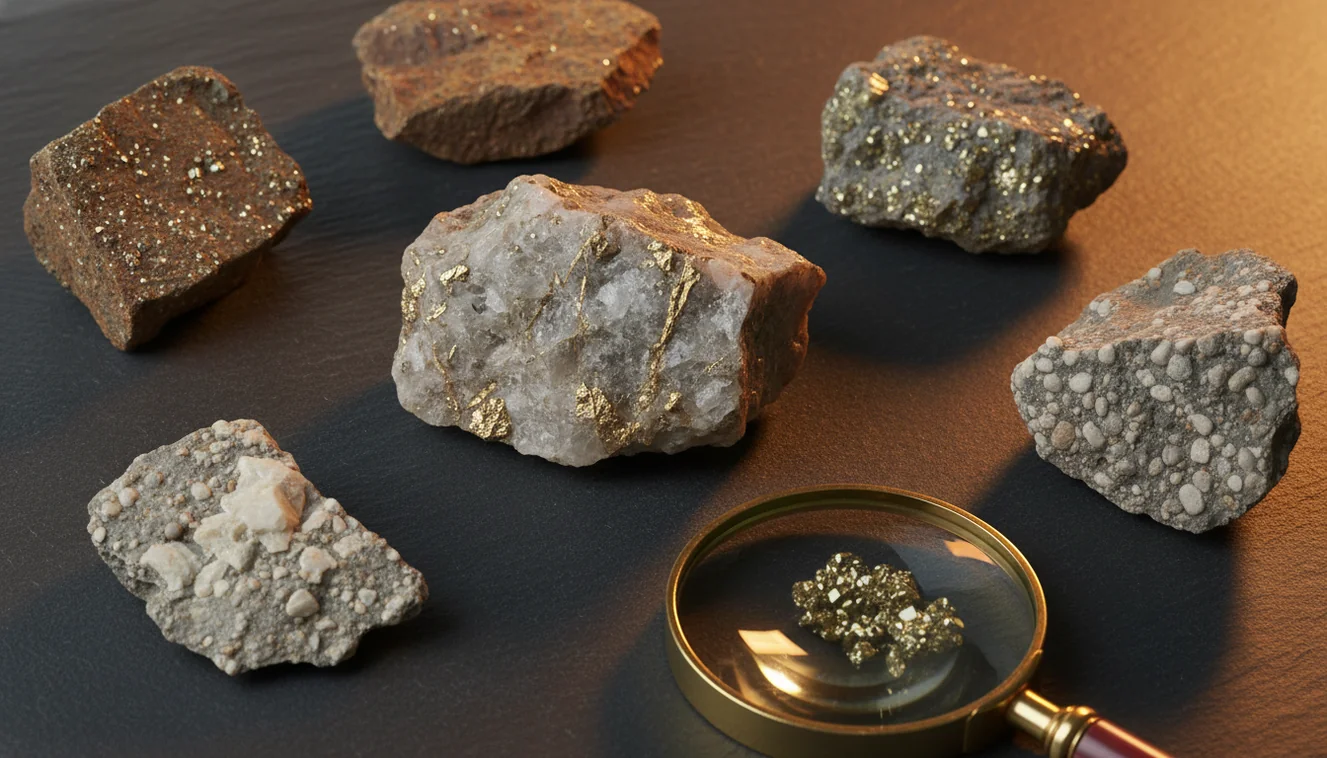
If the specimen is in quartz or in a gold pan, include some of the surroundings. Context helps separate vein gold from oxidized pyrite stains.
Confirm with field tests
For anything the AI flags as possible gold, run a streak test, a copper-coin scratch, and a heft check. For significant finds, send a sample for assay before you celebrate.
Gold vs Pyrite (Fool's Gold)
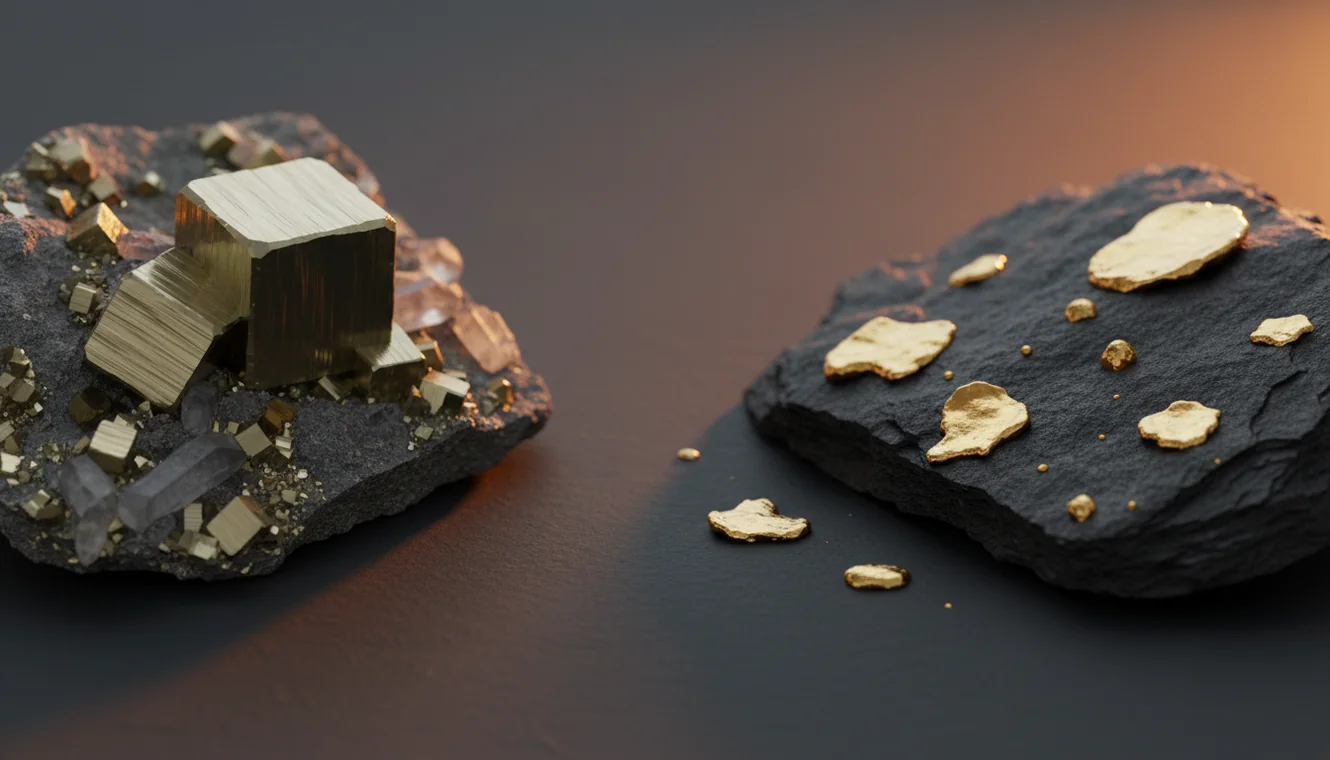
Pyrite is the classic "fool's gold". It is iron sulfide, brass-yellow, common in rocks worldwide, and the single most frequent mistaken-for-gold mineral.
- Shape: Pyrite forms cubic or pyritohedral crystals with sharp faces. Real placer gold is rounded, dendritic, or lumpy.
- Hardness: Pyrite (Mohs 6 to 6.5) cannot be scratched with a copper coin. Gold (Mohs 2.5 to 3) scratches easily.
- Streak: Pyrite leaves a greenish-black streak. Gold streaks the same yellow as the metal.
- Bend test: Pyrite shatters if pressed; gold bends without breaking.
- Heft: Gold (specific gravity ~19) feels much heavier for its size than pyrite (~5).
Gold vs Chalcopyrite
Chalcopyrite is a copper-iron sulfide. It is the most common copper ore mineral and the second most common "I think I found gold" specimen.
- Color: Chalcopyrite is more brass-yellow than gold and often shows iridescent blue, green, or purple tarnish on the surface.
- Crystal shape: Chalcopyrite typically forms massive or pseudotetrahedral crystals, not cubes or rounded nuggets.
- Streak: Chalcopyrite streaks greenish-black; gold streaks yellow.
- Brittleness: Chalcopyrite is brittle; gold is soft and malleable.
Gold vs Mica
Yellow mica flakes (biotite and weathered muscovite) catch sunlight on creek beds and sand bars, flashing gold-like signals that fool nearly every beginner. Mica is light, sheet-like, and floats on water; gold sinks immediately.
- Water test: Drop the flake in water. Mica floats; gold sinks straight down.
- Bend test: Mica is flexible in thin sheets but breaks at sharp angles. Gold bends without breaking.
- Color: Mica shifts color and brightness with the angle of light; gold stays consistent.
How to Test Gold at Home
A few cheap field tests separate real gold from the common lookalikes quickly.
- Scratch test: Drag the specimen across an unglazed porcelain plate. Gold leaves a yellow streak; pyrite and chalcopyrite leave greenish-black.
- Coin scratch: A copper coin (Mohs ~3.5) scratches gold easily but barely touches pyrite (Mohs ~6).
- Heft check: Hold the specimen. Gold is roughly 19 times denser than water; you can feel it.
- Bend test: Press a flake with a knife back or hard surface. Gold bends; pyrite and chalcopyrite shatter.
- Water test for mica: A flake that floats is not gold.
For any significant find or jewelry-related question, confirm with a refiner, jeweler, or geological lab.
Is Panned Gold Valuable?
Most panned flakes are small and worth a few dollars at most by weight. Collector value can sometimes lift the price of a clean specimen sample above pure melt value, especially for well-formed flakes in clear vials.
Nuggets are different. A clean one-gram natural nugget can sell well above its melt value, with larger natural nuggets reaching multiples of spot price. A gold identifier brackets the likely range; a refiner or assayer gives the binding number.
Can Google Lens Identify Gold?
Google Lens often confuses gold with pyrite, brass, and yellow metal jewelry, and most results link to shopping listings rather than mineral identifications. A dedicated gold identifier compares your specimen specifically against gold and the named lookalikes (pyrite, chalcopyrite, mica) and returns the likely match with field-test guidance.
Can ChatGPT Identify Gold?
ChatGPT can describe gold and the common lookalikes, explain panning, and walk you through field tests, but it is not a dedicated photo-based gold identifier. Scan the specimen with a tool like RockIdentifier.io or the AI Rock ID iPhone app first, then ask ChatGPT to explain the result or suggest which field test to run next.
Where Gold Photo ID Falls Short
A gold identifier is best used as a fast first opinion. For any significant find, confirm with a streak test, a coin scratch, and a final assay.
- Heavy reflective glare can make brass, pyrite, and chalcopyrite look more gold-like than they are.
- Very small flakes (sub-millimeter) may not show enough shape detail to call confidently.
- Plated or coated jewelry items can read gold by color even when the base metal is brass or steel.
- Photo ID does not measure purity (karat) or carat weight; an assay is required for value.
Related Articles
Frequently Asked Questions
Is this real gold or pyrite?
Upload a clear photo. The AI compares color, crystal habit, surface luster, and matrix against real gold, pyrite, chalcopyrite, and yellow mica. Cubic crystals usually mean pyrite. Soft, dense, lumpy flakes that hold their shape under pressure usually mean real gold.
Can AI identify gold?
Yes. AI gold identifiers can usually distinguish real gold from pyrite, chalcopyrite, and mica when shape and luster are clear in the photo. For final confirmation, a streak test, scratch test, and density check decide it.
Gold vs pyrite (fool's gold)?
Pyrite forms cubic crystals, is brittle, streaks greenish-black, and is harder than gold. Real placer gold is soft, deforms when pressed, streaks yellow, and is much heavier for its size. Flakes that shatter into sharp pieces are pyrite.
Gold vs chalcopyrite?
Chalcopyrite is more brass-yellow than gold and often shows iridescent tarnish. It is brittle and streaks greenish-black. Real gold stays clean yellow without tarnish.
Gold vs mica?
Yellow mica flakes are very light, thin, sheet-like, and float on water. Gold sinks immediately because it is much denser. A water test usually settles the question.
How can I tell if I found real gold?
Useful tests include the scratch test (gold is soft, copper coin marks it), streak test (yellow vs greenish-black), heft (gold feels much heavier than expected), and bend test (gold bends, pyrite shatters). Confirm significant finds with an assay.
Is panned gold valuable?
Most panned flakes are worth only a few dollars by weight. Nuggets can sell well above melt value, especially when clean and natural. A gold identifier brackets the range, but a refiner or assayer gives the actual figure.
Can Google Lens identify gold?
Google Lens often confuses gold with pyrite, brass, and yellow jewelry, returning shopping listings rather than identifications. A dedicated gold identifier compares your specimen specifically against gold, pyrite, chalcopyrite, and mica.
Can ChatGPT identify gold?
ChatGPT can describe gold and the lookalikes, explain panning, and walk you through field tests, but it is not a dedicated photo-based gold identifier. Scan the specimen with a dedicated tool first, then ask ChatGPT to explain the result.
What app identifies gold?
AI Rock ID is the iPhone and iPad app most often used to check gold and gold lookalikes from photos. It returns a likely match and rough value range. For any significant find, confirm with an assay.