
Diamond Identifier: Is This a Real Diamond?
Upload diamond photos
Clear, well-lit images help the AI identify it more accurately.

Analyzing your stone…
Checking texture, color, structure, and lookalikes…
Diamond identifier for loose stones, ring stones, and inherited jewelry. Upload a photo to check diamond vs cubic zirconia, moissanite, white sapphire, or quartz.


Diamond Identifier helps check whether a clear, brilliant stone is likely diamond or one of the common lookalikes (cubic zirconia, moissanite, white sapphire, white topaz, glass, or quartz). Upload a clear photo to receive a likely identification and a rough value range. The online tool works in your browser, while AI Rock ID for iPhone and Android adds unlimited scans, saved collections, and additional field tools.
Good fit for
- inherited engagement rings
- estate sale and thrift jewelry
- loose mounted stones
- pawn shop screening
- spotting obvious imitations
Not for
- certified GIA grading
- insurance appraisal
- telling natural from lab-grown diamond
- final purchase decisions on large stones
What Is a Diamond Identifier?
A diamond identifier is a visual lookup tool that compares a clear, brilliant stone against diamond and the most common lookalikes. Upload a picture of a loose stone, ring stone, or pendant, and the AI returns a likely identification (diamond, cubic zirconia, moissanite, white sapphire, white topaz, glass, quartz) with notes on what to confirm.
It reads brilliance, fire (rainbow flashes), cut style, facet edge sharpness, color tint, and any visible inclusions. For broader gem reference, the GIA diamond resource is a good free starting point. Photos are processed in a privacy-friendly workflow and are not posted as public specimens. If the piece is set jewelry rather than a loose stone, a jewelry identifier or a dedicated jewelry identifier is a better first pass. The same diamond-versus-lookalike check is also available as a Diamond Identifier on Rock ID.
How a Diamond Identifier Works
A photo-based diamond identifier reads visible signals from your image and compares them against diamond and the well-known lookalikes. The model weighs brilliance pattern, fire (rainbow flashes), facet edge sharpness, doubling of facets (a moissanite tell), color tint, surface reflection, and any visible inclusions or chips.
A stone with bright white flashes, sharp facet edges, and clean light return often fits diamond. Heavy rainbow fire with soft facet edges points toward cubic zirconia. Strong rainbow fire with doubled facet lines and a slight tint suggests moissanite. Soft brilliance with a milky-white look hints at white sapphire or white topaz. The result is a ranked list with notes on what to confirm.
More Identification Tools
If your stone is not a clear brilliant gem, try a different tool from the Rock Identifier suite.
Rock Identifier
The main AI rock identifier for any rock, mineral, crystal, gemstone, or fossil from a photo.
Gemstone Identifier
For colored loose stones, set jewelry stones, and gem-grade material more generally.
Crystal Identifier
For raw crystal points, clusters, geodes, and tumbled stones.
Mineral Identifier
For single minerals identified by luster, streak, cleavage, and Mohs hardness.
Stone Identifier
For river stones, beach pebbles, garden rocks, and landscaping stones.
Fossil Identifier
For shells, bones, plant imprints, and other fossils embedded in stone.
Gold Identifier
For brassy or yellow specimens suspected to be real gold rather than pyrite or mica.
What App Identifies Diamonds From Photos?
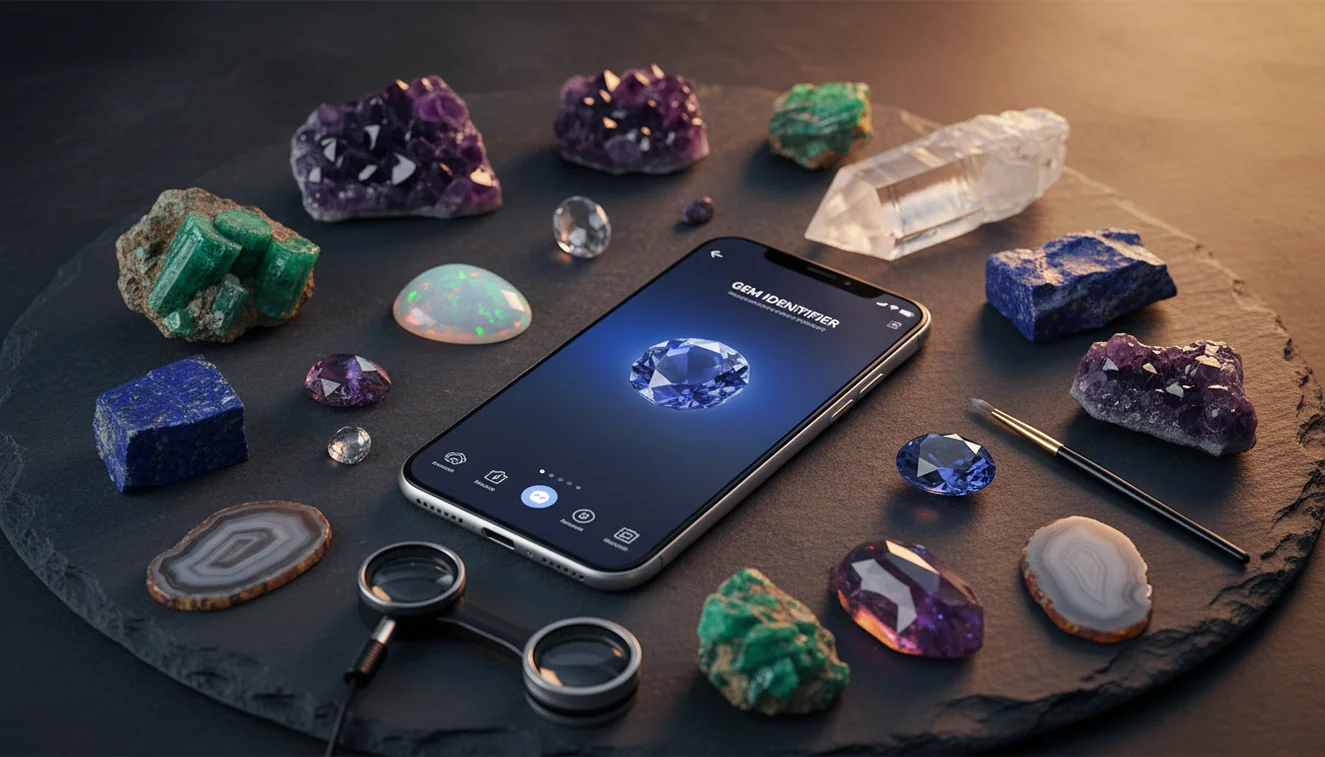
AI Rock ID is the iPhone and iPad app most often used to check diamonds and diamond lookalikes from a single photo. It flags likely diamond versus cubic zirconia, moissanite, white sapphire, white topaz, glass, and quartz, and returns a rough value range for screening inherited or estate-sale pieces.
For a quick one-off check, the upload tool at the top of this page is the fastest option. For ongoing estate jewelry sorting, the iPhone app is the practical pick.
How to Use a Diamond Identifier
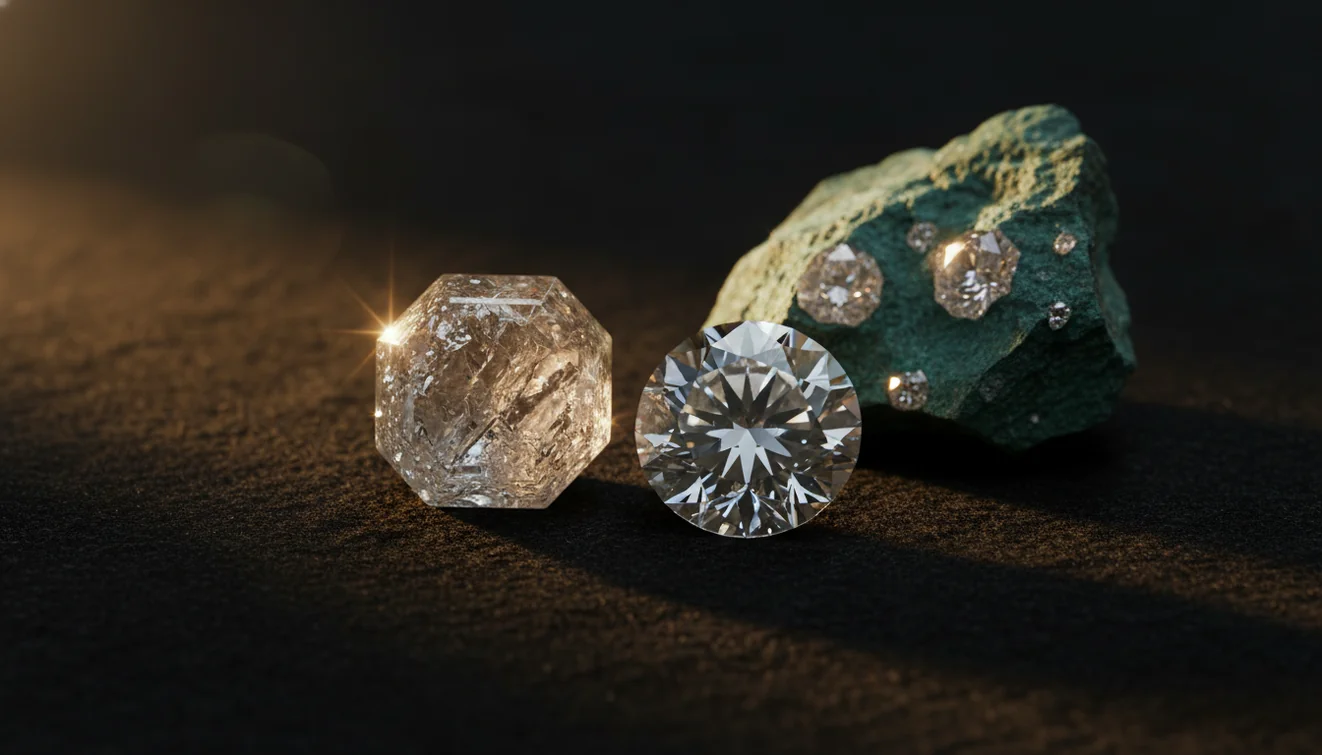
Clean the stone
Wipe the stone with a soft cloth and a drop of dish soap. Fingerprints, lotion, and oils strongly reduce brilliance and confuse the identifier.
Use natural light
Overcast daylight or open shade gives the truest brilliance and fire. Avoid harsh flash, which creates uniform glare and hides the diamond signature.
Photograph face-up and from the side
Face-up shows brilliance and fire. The side shows pavilion (cone) depth and any culet pattern, which separates diamond from many lookalikes.
Upload the sharpest image
Choose the cleanest face-up shot. If the result is borderline, add the side-view photo and run again.
Confirm with a lab
For any stone the AI flags as potentially diamond, get a thermal and electrical conductivity test or a certified report before buying, selling, or insuring.
Diamond vs Cubic Zirconia (CZ)
Cubic zirconia is the most common diamond imitation. It is hard enough to look the part but cheap to produce, so almost every "diamond" in costume jewelry is CZ.
- Fire: CZ shows much more rainbow color flash than diamond. Diamond fire is whiter and more controlled.
- Edges: CZ facet edges round off slightly over time. Diamond facet edges stay knife-sharp.
- Weight: CZ is denser, so a CZ of the same visible size weighs more than a diamond.
- Cleanliness: CZ attracts dirt and oil quickly. Diamond stays cleaner between cleanings.
Diamond vs Moissanite
Moissanite is the trickiest diamond lookalike because it is genuinely hard (Mohs 9.25), durable, and used in real engagement rings as a budget choice. It often fools standard "diamond testers" that rely on thermal conductivity.
- Fire: Moissanite shows much more rainbow fire than diamond, sometimes called a "disco ball" effect.
- Doubling: Looking down through moissanite, you can often see doubled facet edges due to double refraction. Diamond is single refractive.
- Color tint: Moissanite can have a slight yellow or green tint in certain lighting.
- Testing: A "diamond-moissanite" tester (electrical conductivity) tells them apart reliably.
Diamond vs White Sapphire and White Topaz
White sapphire and white topaz are real gemstones used as diamond alternatives. They are softer than diamond and produce noticeably less brilliance.
- Brilliance: Diamond returns sharp white light. White sapphire and white topaz look slightly milky and dull by comparison.
- Fire: Both produce less rainbow fire than diamond and far less than CZ or moissanite.
- Durability: White sapphire (Mohs 9) is durable, white topaz (Mohs 8) chips more easily than diamond.
How to Test a Diamond at Home
No at-home test is conclusive on its own, but together they narrow the field.
- Fog test: Breathe on the stone. Real diamond fogs and clears in about a second. CZ and glass stay foggy for several seconds.
- Newspaper read test: Place a loose stone face-down on text. A real diamond distorts the print so you cannot read it. Glass and quartz often let text show.
- UV test: Many natural diamonds fluoresce blue under UV light. CZ usually fluoresces yellow or orange.
- Sparkle pattern: Diamond produces sharp white flashes; CZ and moissanite produce more rainbow.
For binding confirmation, take the stone to a jeweler who uses a "diamond-moissanite" combination tester, or send it to a gemological lab.
Lab-Grown vs Natural Diamond
Lab-grown diamond is real diamond. It is chemically and physically identical to a mined diamond. It is not "fake" and standard diamond testers register it as diamond.
The visible difference is usually invisible to the eye or a photo. Only a gemological lab can distinguish lab-grown from natural reliably (often by trace nitrogen patterns, growth lines, or fluorescence response). Natural untreated diamonds carry a significant price premium, which is why a lab certificate matters at purchase.
Is My Diamond Valuable?
Diamond value depends on the classic four Cs: carat (weight), cut quality, clarity, and color. Inclusions, chips, fluorescence, and poor cut sharply reduce value. Origin and certification matter too.
A diamond identifier can flag whether a stone is likely diamond at all and bracket a rough value range. For binding figures used for insurance, sale, or inheritance, only a certified appraisal counts.
Can Google Lens Identify Diamonds?
Google Lens can return image-similar matches for a diamond photo, which usually surfaces jewelry shopping results rather than identifications. A dedicated diamond identifier compares your stone specifically against diamond and the named lookalikes and reports the likely match.
Can ChatGPT Identify Diamonds?
ChatGPT can describe diamonds, explain the four Cs, and walk you through identification logic, but it is not a dedicated photo-based diamond identifier. Scan the stone with a tool like RockIdentifier.io or the AI Rock ID iPhone app first, then ask ChatGPT to explain the result or compare lookalikes.
Where Diamond Photo ID Falls Short
A diamond identifier is best used as a fast first opinion. For any high-value purchase or insurance claim, confirm with a certified gemological lab.
- Lab-grown diamonds are real diamonds and cannot be told apart from natural by photo.
- High-quality moissanite is the hardest lookalike to call by photo alone.
- Heavy treatments (HPHT color enhancement, fracture filling, laser drilling) are invisible from an image.
- Carat weight and binding value need a scale and certified instruments, not just a picture.
Related Articles
Frequently Asked Questions
Is this a real diamond?
Upload a clear, well-lit photo of the stone. The AI compares brilliance, fire, cut, facet edges, and any inclusions against diamond and the common lookalikes (CZ, moissanite, white sapphire, white topaz, quartz). For high-value stones, confirm with a gemological lab.
Can AI identify diamonds?
Yes. AI diamond identifiers usually distinguish diamond from glass, CZ, white topaz, and quartz from a photo. Telling natural diamond from lab-grown (chemically identical) or from high-quality moissanite is harder and usually needs lab equipment.
Diamond vs cubic zirconia (CZ)?
CZ shows more rainbow fire than diamond, has softer facet edges, weighs more per carat, and attracts dirt faster. Diamond stays cleaner, sharper, and whiter in flash.
Diamond vs moissanite?
Moissanite (Mohs 9.25) is durable and shows much more rainbow fire than diamond, often with a slight yellow or green tint. Looking down, moissanite faces often show doubled edges from double refraction.
Diamond vs white sapphire?
White sapphire is harder than CZ but less brilliant than diamond, with a softer milky look and fewer flashes. Diamond returns sharper white light.
How can I test a diamond at home?
Try the fog test (diamond clears in about a second), the newspaper read test (real diamond distorts print), and a UV test (many natural diamonds fluoresce blue). None are conclusive alone. A gemological lab is the reliable check.
Lab-grown vs natural diamond?
Lab-grown diamonds are chemically and physically the same as natural diamonds. Only a gemological lab can distinguish them reliably. Natural stones typically carry a price premium.
Is my diamond valuable?
Value depends on the four Cs: carat, cut, clarity, color. Inclusions, chips, and poor cut reduce value. A photo identifier brackets the range; binding figures require certified appraisal.
Can Google Lens identify diamonds?
Google Lens often surfaces jewelry shopping results rather than identifications. A dedicated diamond identifier compares your stone against diamond and named lookalikes.
What app identifies diamonds?
AI Rock ID is the iPhone and iPad app most often used to check diamonds and diamond lookalikes from photos. For high-value purchases, confirm with a gemological lab.