
Bone Identifier
Upload bone photos
Clear, well-lit images help the AI identify it more accurately.

Analyzing bone structure and features...
Checking texture, color, structure, and lookalikes…
Upload a photo of your find to instantly determine if it's a bone, rock, or fossil bone. Our AI analyzes surface texture, structure, and diagnostic features in seconds.


Finding a mysterious object in the field often raises the question: is this a bone, a rock, or perhaps a fossilized bone? The distinction matters whether you're a hiker, fossil hunter, or simply curious about a backyard discovery. Bones and rocks can appear remarkably similar, especially when weathered or partially mineralized.
Our free bone identifier uses advanced AI image recognition to analyze your photos and help distinguish genuine bones from bone-shaped rocks and identify potential fossil specimens. While professional analysis remains essential for significant finds, this tool provides an excellent starting point for understanding what you've discovered.
Good fit for
- Weathered bones found outdoors needing identification
- Distinguishing bones from similarly-shaped rocks
- Identifying potential fossil bone fragments
- Animal bone identification from clear photos
- Initial screening before professional consultation
Not for
- Human remains identification (contact authorities)
- Medical or forensic bone analysis
- Microscopic bone fragment identification
- Legal or scientific documentation purposes
At a glance
Bones are rigid organs composed primarily of calcium phosphate that form the skeletal structure of vertebrate animals. When fossilized, original bone material becomes replaced by minerals while often preserving internal structure and external morphology.
| Primary Composition | Calcium phosphate (hydroxyapatite) |
|---|---|
| Key Identifier | Porous internal structure |
| Tongue Test | Bone sticks slightly to tongue |
| Weight | Lighter than similar-sized rocks |
| Fossil Indicator | Heavier, mineralized, preserved structure |
| Common Confusion | Limestone, calcite concretions, coral |
How to Tell if Something is a Bone or a Rock
Distinguishing bones from rocks requires examining several key characteristics that differ fundamentally between organic and mineral materials. Fresh or relatively recent bones display a distinctive porous internal structure visible on broken surfaces, with channels and cavities where blood vessels and marrow once existed. This spongy texture, called trabecular or cancellous bone, appears as a network of tiny holes and interconnected spaces that rocks simply don't possess.
The famous 'tongue test' provides a quick field identification method: genuine bone will stick slightly to your tongue due to its porous nature absorbing moisture, while rocks remain smooth and non-adherent. This occurs because bone's microscite structure creates capillary action with saliva. However, exercise caution with this test on unknown specimens, and never perform it on potentially contaminated materials.
Weight offers another diagnostic clue. Bones feel noticeably lighter than rocks of equivalent size because of their porous structure and organic composition. A rock-shaped object that seems surprisingly light for its size warrants closer examination for bone characteristics. Color can help too, fresh bones typically appear white to cream-colored, while weathered specimens may show tan, brown, or gray tones depending on soil conditions and age.
Identifying Fossil Bones vs Regular Rocks
Fossil bones present a more challenging identification scenario because the original bone material has been partially or completely replaced by minerals through permineralization. This process makes fossil bones significantly heavier than fresh bones, often approaching or matching the weight of surrounding rock. Despite this mineralization, fossil bones frequently retain their original internal structure, making the trabecular pattern visible on broken or weathered surfaces.
When examining a potential fossil bone, look for preserved anatomical features such as joint surfaces, muscle attachment points, or the characteristic shapes of specific bone types. The cross-section often reveals the original bone's internal architecture even when completely petrified. Fossil bones may also show a different color or texture than the surrounding matrix rock, appearing as a distinct material embedded within sedimentary layers.
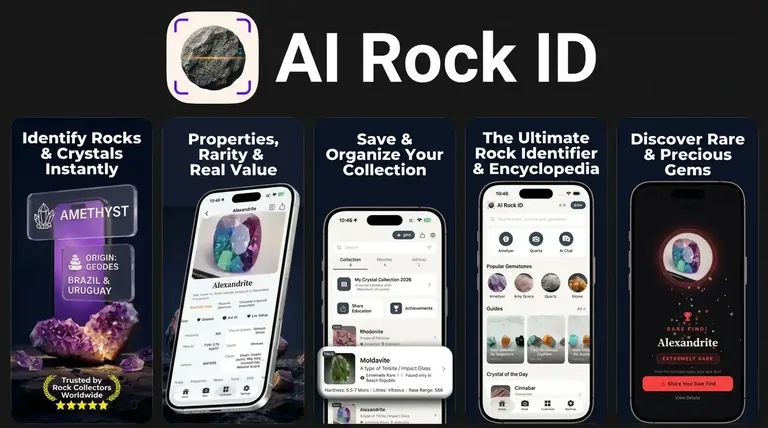
The RockIdentifier.io web tool can analyze photos of suspected fossil bones, comparing structural features against known fossil specimens. Upload clear images showing any visible internal structure, surface texture, and overall shape. The AI Rock ID iPhone app provides the same analysis capability in the field, allowing immediate assessment of discoveries during hikes or excavations.
Common Rocks Mistaken for Bones
Several rock types and formations regularly fool even experienced collectors into thinking they've found bones. Limestone frequently forms in shapes resembling bone fragments, and its calcium carbonate composition can even produce a slight tongue-stick effect, though less pronounced than genuine bone. Weathered limestone may develop surface textures superficially similar to bone cortex.
Calcite concretions and nodules represent another common source of confusion. These rounded or elongated mineral formations can mimic the shape of joints or long bone shafts. Unlike bones, concretions typically show concentric internal banding when broken and lack any trabecular structure. They also tend to be uniformly dense throughout rather than showing the cortical-to-spongy transition seen in actual bones.
Coral fossils, particularly colonial varieties, sometimes resemble bone due to their porous structure. However, coral displays a regular, geometric pattern of pores rather than the irregular trabecular network of bone. Petrified wood occasionally fools observers when weathered into bone-like shapes, though its characteristic grain pattern usually reveals its true identity upon close examination.
Photographing Bones for AI Identification
Capturing effective photos for bone identification requires attention to specific features that help the AI distinguish between bones, rocks, and fossils. Always photograph the specimen from multiple angles, including at least one image showing any broken or weathered surfaces where internal structure might be visible. This cross-sectional view often provides the most diagnostic information.
Ensure adequate lighting that reveals surface texture without creating harsh shadows or washed-out highlights. Natural daylight works well, but avoid direct midday sun that can obscure subtle features. Include a common object for scale, a coin, ruler, or your finger, so the AI can assess proportions that might indicate specific bone types or rule out certain identifications.
For suspected fossil bones, photograph the specimen both in situ (if still partially embedded) and after cleaning if you've already removed it. Capture any visible trabecular structure, joint surfaces, or anatomical landmarks. The more detail visible in your photos, the more accurate the analysis from RockIdentifier.io or the AI Rock ID app will be.
Types of Bones You Might Find
Understanding common bone types helps narrow identification possibilities when you discover skeletal remains. Long bones from limbs, such as femurs, tibias, and humeri, feature distinctive shaft shapes with expanded ends containing joint surfaces. These are among the most commonly found and recognized bone types due to their size and durability.
Vertebrae from spinal columns appear as complex shapes with central openings (the neural canal) and various projecting processes. Their intricate geometry makes them relatively easy to identify as bones rather than rocks, though species identification requires more detailed analysis. Rib bones show characteristic curved, flattened shapes that distinguish them from most rock formations.
Skull fragments and teeth present unique identification challenges and opportunities. Teeth, with their enamel coating and distinctive shapes, rarely get confused with rocks. Skull bones may show suture lines where separate bones fused during development. Smaller bones from feet, hands, or tails often appear as rounded or irregular shapes that might initially seem rock-like until closer examination reveals their true nature.
The Science Behind Bone Preservation
Understanding how bones preserve, or don't, helps explain why some specimens appear more rock-like than others. Fresh bones begin decomposing soon after death as organic components break down. In typical surface conditions, bones may persist for years to decades depending on climate, but eventually weather away completely. Only specific burial conditions lead to long-term preservation or fossilization.
Fossilization requires rapid burial in sediment that prevents complete decomposition while allowing mineral-rich groundwater to permeate the bone structure. Over thousands to millions of years, original bone minerals gradually get replaced by silica, calcite, pyrite, or other minerals present in the surrounding water. This permineralization preserves microscopic structure while transforming the bone into stone.
Partial fossilization creates specimens that exhibit characteristics of both bone and rock, the most challenging items to identify. These transitional specimens may retain some original bone material while showing significant mineralization. The AI analysis at RockIdentifier.io considers these intermediate states when evaluating your photos, looking for preserved biological structure within mineralized material.
Legal and Ethical Considerations
Before collecting any bones you find, understand the legal framework governing such discoveries in your location. Vertebrate fossils on federal lands in the United States require permits for collection, and significant finds must be reported. State and local regulations vary considerably, with some areas prohibiting any fossil collection on public lands.
Human remains require immediate notification of local authorities regardless of apparent age. Never disturb, collect, or photograph human skeletal material for identification purposes, contact law enforcement and allow professionals to handle the situation. This applies even to suspected ancient remains, which may have cultural significance to indigenous communities.
For legally collectible specimens, document the find location and context before removal. This information proves valuable for scientific purposes and may be required if the specimen turns out to be significant. Responsible collecting means taking only what you'll meaningfully use or study, leaving specimens in place when uncertain about regulations, and reporting potentially important discoveries to appropriate institutions.
Limitations of AI Bone Identification
While AI-powered identification provides valuable preliminary analysis, understanding its limitations ensures appropriate use of the technology. Photo-based identification cannot perform chemical or microscopic analysis that definitively distinguishes bone from mineral. The AI evaluates visible features, shape, texture, apparent structure, but cannot detect composition directly.
Heavily weathered, fragmentary, or unusual specimens may challenge accurate identification. Very small fragments lacking diagnostic features might not provide enough information for confident analysis. Similarly, specimens photographed in poor lighting or from limited angles may yield less reliable results than well-documented finds.
Consider AI identification as a starting point rather than final determination. Significant finds, potential fossils, unusual specimens, or anything you plan to sell or donate, deserve professional evaluation. Museums, universities, and geological surveys often provide identification services and appreciate learning about interesting local discoveries. The RockIdentifier.io tool and AI Rock ID app help you decide which specimens warrant that professional attention.
How to Use This Bone Identifier
Photograph Your Specimen
Capture clear, well-lit photos from multiple angles. Include at least one image showing any broken surface or internal structure, and add a scale reference like a coin.
Upload to RockIdentifier.io
Use the upload tool on this page or download the AI Rock ID iPhone app for field identification. Select your best photo showing diagnostic features.
Review AI Analysis
Examine the identification results, which indicate whether your specimen appears to be bone, rock, or fossil bone, along with confidence levels and reasoning.
Compare Key Features
Check the identified features against your specimen. Look for mentioned characteristics like porosity, weight, structure, and surface texture to verify the assessment.
Determine Next Steps
Based on results, decide whether to keep the specimen as identified, seek professional verification for significant finds, or continue searching with better knowledge.
More Identification Tools
Fossil Identifier
Identify fossilized specimens including petrified bones, shells, and plant remains
Shark Tooth Identifier
Identify shark teeth fossils and distinguish them from similar objects
Rock Identifier
General rock and mineral identification from photos
Stone Identifier
Identify various stones including those that might resemble bones
Mineral Identifier
Identify minerals that may form in or around fossil bones
Marble Identifier
Identify limestone, a rock commonly confused with bone material
Frequently Asked Questions
How can I tell if a rock is actually a bone?
Examine the specimen for porous internal structure visible on any broken surface, bones show a spongy network of tiny holes while rocks appear solid or crystalline. Try the tongue test: bone sticks slightly to your tongue due to its porous nature absorbing moisture. Also assess weight, as bones feel lighter than similarly-sized rocks.
Why does bone stick to your tongue but rock doesn't?
Bone's microscopic porous structure creates capillary action that draws moisture from your tongue, producing a slight sticking sensation. This porosity exists because living bone contained blood vessels and cellular spaces. Rocks lack this interconnected pore network, so they don't absorb moisture and won't stick to your tongue.
How do I identify a fossil bone versus a regular rock?
Fossil bones retain their original internal structure despite being mineralized, so look for trabecular (spongy) patterns on broken surfaces. They're heavier than fresh bones but may show preserved anatomical features like joint surfaces. The cross-section often reveals bone architecture even when the specimen is completely petrified.
What rocks are commonly mistaken for bones?
Limestone frequently mimics bone shapes and can even produce a slight tongue-stick effect. Calcite concretions form elongated shapes resembling long bones. Coral fossils show porosity that superficially resembles bone structure, though their pore pattern is more regular and geometric than true bone.
Can this tool identify what animal a bone came from?
The AI can suggest possible animal sources based on bone shape, size, and visible features, but definitive species identification often requires professional analysis. Clear photos showing anatomical landmarks, joint surfaces, and overall proportions improve the accuracy of animal identification suggestions.
Is it legal to collect bones and fossil bones I find?
Laws vary significantly by location and specimen type. Vertebrate fossils on U.S. federal lands require permits, while regulations differ on state and private lands. Recent animal bones are generally legal to collect on public lands, but always check local regulations. Never collect or disturb human remains, contact authorities immediately.
What should I do if I find what looks like a human bone?
Contact local law enforcement immediately without disturbing the remains or surrounding area. Do not attempt to identify human remains using this or any online tool. Even ancient-appearing human remains have legal protections and cultural significance that require professional handling by authorities.
How accurate is AI bone identification from photos?
AI identification provides reliable preliminary analysis for clear photos showing diagnostic features, but cannot replace physical examination or chemical testing. Accuracy improves with multiple well-lit photos showing internal structure. Consider AI results as informed guidance for deciding whether specimens warrant professional evaluation.