
Agate Identifier - Free AI Photo Analysis
Upload agate photos
Clear, well-lit images help the AI identify it more accurately.

Analyzing banding patterns and chalcedony structure...
Checking texture, color, structure, and lookalikes…
Upload a photo of your banded stone and let our AI identify agate varieties, chalcedony types, and volcanic formations in seconds. Get detailed information about your specimen's origin and characteristics.


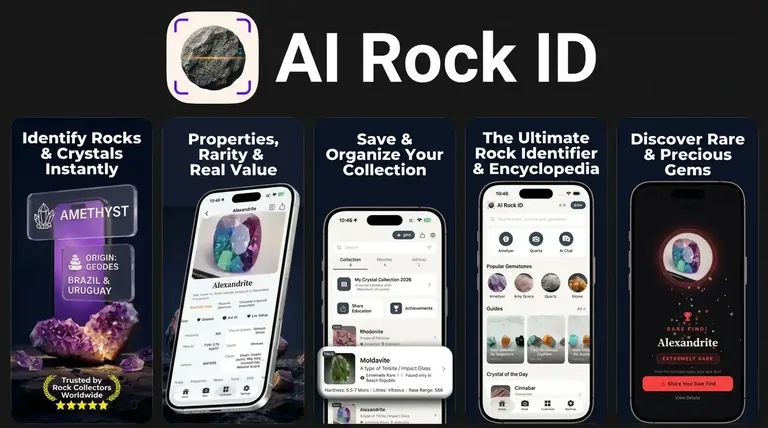
Agate identification can challenge even experienced collectors. With countless varieties displaying unique banding patterns, colors, and formations, distinguishing between true agate, common chalcedony, and similar-looking stones requires careful analysis. Our free AI agate identifier examines your photos to recognize characteristic features like fortification banding, moss inclusions, and volcanic cavity formations.
Whether you've discovered a potential agate on a beach, purchased a specimen at a rock show, or inherited a collection you want to catalog, RockIdentifier.io provides instant analysis. Our AI has been trained on thousands of agate specimens from locations worldwide, helping you understand what makes your stone unique.
Good fit for
- Banded stones with visible layering or color zones
- Translucent specimens found in volcanic regions
- Polished cabochons or tumbled stones needing variety ID
- Beach or river agates with weathered exteriors
- Geode slices showing concentric ring patterns
Not for
- Completely opaque stones without visible structure
- Heavily damaged specimens with no intact surfaces
- Photos taken through glass cases or plastic bags
- Extremely small chips under 5mm diameter
At a glance
Agate is a banded variety of chalcedony, itself a microcrystalline form of quartz, formed primarily in volcanic rock cavities. Distinguished by its characteristic layered appearance, agate forms when silica-rich fluids deposit successive layers over millions of years, creating the distinctive bands that make each specimen unique.
| Chemical Formula | SiO₂ (Silicon Dioxide) |
|---|---|
| Crystal System | Trigonal (Cryptocrystalline) |
| Mohs Hardness | 6.5-7 |
| Specific Gravity | 2.58-2.64 |
| Luster | Waxy to Vitreous |
| Formation | Volcanic cavities and vesicles |
Understanding Agate Formation and Structure
Agate forms through a fascinating geological process that begins in volcanic environments. When gas bubbles become trapped in cooling lava, they create cavities called vesicles. Over thousands to millions of years, silica-rich groundwater percolates through these cavities, depositing microscopic quartz crystals in successive layers. Each layer represents a distinct episode of mineral deposition, often with varying trace elements that create the characteristic color banding.
The banding patterns in agate tell a story of changing environmental conditions during formation. Iron oxides produce red, orange, and brown bands, while manganese creates pink and purple hues. Clear or white bands indicate periods of pure silica deposition. Understanding these formation processes helps collectors appreciate why certain agates from specific locations display characteristic color combinations and patterns unique to their geological origin.
Major Agate Varieties and How to Identify Them
Fortification agate displays angular, fortress-like banding patterns that resemble aerial views of medieval castle walls. This variety forms when silica deposits follow the irregular contours of the host cavity, creating sharp angles rather than smooth curves. Lake Superior agates, Brazilian agates, and many Mexican varieties commonly display this fortification pattern, making it one of the most recognizable agate structures.
Moss agate contains dendritic inclusions of manganese or iron oxides that create plant-like patterns within translucent chalcedony. Despite its name, moss agate technically lacks the banding that defines true agate, though it's traditionally classified within the agate family. Plume agate features feathery inclusions that appear three-dimensional when the stone is cut and polished. Our AI Rock ID app can distinguish between these varieties by analyzing inclusion patterns and translucency characteristics.
Lace agates, including the famous Crazy Lace Agate from Mexico, display intricate swirling patterns with multiple colors interweaving in complex designs. Blue Lace Agate from Namibia shows delicate pale blue and white banding. Fire agate, found primarily in Mexico and the American Southwest, contains layers of iron oxide that create iridescent color play similar to opal. Each variety has distinctive features that our identification system recognizes.
Common Agate Lookalikes and How to Distinguish Them
Jasper frequently confuses collectors because both stones are forms of microcrystalline quartz. The key difference lies in translucency: agate allows some light to pass through thin edges, while jasper remains completely opaque. When examining a specimen, hold it up to a strong light source and look for any light transmission along thin edges or fracture surfaces. Our AI analyzes these translucency characteristics in your photos to help distinguish between the two.
Banded rhyolite and banded iron formations can superficially resemble agate but have different compositions and formation histories. Rhyolite is an ignite volcanic rock with visible crystal structure, while banded iron formations are sedimentary rocks containing alternating layers of iron oxides and silica. The AI identification system at RockIdentifier.io examines surface texture, luster, and banding characteristics to differentiate these materials.
Dyed and heat-treated agates present identification challenges because treatments can dramatically alter natural colors. Bright pink, vivid blue, and intense purple agates are almost always dyed, as these colors rarely occur naturally with such saturation. Heat treatment can enhance red and orange tones in iron-bearing agates. While our AI can identify agate structure, detecting treatments often requires physical examination or laboratory testing.
Photography Tips for Accurate Agate Identification
Capturing agate's translucency and banding requires thoughtful lighting. Natural daylight provides the most accurate color representation, but avoid direct sunlight which creates harsh shadows and washes out subtle band colors. Overcast conditions or open shade produce ideal diffused lighting. For translucent specimens, try backlighting by placing a light source behind the stone to reveal internal structure and banding patterns.
Photograph both polished and natural surfaces when possible. Polished faces reveal banding patterns and colors most clearly, while natural exterior surfaces show the characteristic botryoidal or nodular texture of uncut agate. Include a size reference like a coin or ruler, and capture multiple angles. The AI Rock ID iPhone app allows you to submit several photos for more comprehensive analysis.
Wet surfaces can temporarily enhance visibility of banding and colors, simulating how the stone would appear when polished. This technique works especially well for beach agates and river-tumbled specimens with weathered exteriors. However, ensure the stone is clean and free of mud or debris that might obscure diagnostic features. Sharp focus on the banding patterns provides the AI with the detail needed for accurate variety identification.
Famous Agate Localities and Their Characteristics
Lake Superior agates rank among the most sought-after North American varieties, characterized by rich red, orange, and yellow banding from iron staining. Glacial activity distributed these agates across Minnesota, Wisconsin, Michigan, and surrounding areas. Their distinctive coloration and fortification patterns make them relatively easy to identify, though the AI can help distinguish genuine Lake Superior agates from similar-looking specimens from other locations.
Brazilian agates from Rio Grande do Sul represent the world's largest commercial source, producing enormous geodes and a wide variety of banding patterns. Many Brazilian agates are dyed to create the vivid colors seen in decorative slices. Montana moss agates contain distinctive dendritic inclusions in clear to slightly smoky chalcedony, prized by jewelry makers and collectors alike.
Mexican agates include numerous famous varieties: Laguna Agate with its tight, colorful banding; Crazy Lace Agate with swirling patterns; and Coyamito Agate known for pseudomorphic inclusions. Oregon's Thundereggs contain agate centers within rhyolite nodules, while Botswana produces pink and gray banded agates with exceptional pattern definition. Understanding regional characteristics helps collectors identify specimens and assess authenticity.
Agate Grading and Quality Assessment
Agate quality depends on several factors that our AI considers during identification. Pattern clarity and contrast significantly impact value, with sharply defined bands commanding higher prices than diffuse or muddy patterns. Color saturation matters, though natural earth tones can be equally valuable as vivid hues when the pattern quality is exceptional. Translucency adds depth and visual interest, particularly in specimens intended for jewelry.
Size and completeness affect both aesthetic appeal and market value. Complete nodules showing exterior texture alongside polished faces demonstrate the full character of the specimen. Fractures, chips, and inclusions that interrupt banding patterns typically reduce value, though some collectors prize unusual inclusions or fortuitous fracture patterns. The AI identification provides variety information that helps you research appropriate value ranges for your specific type of agate.
Limitations of AI Agate Identification
While our AI agate identifier excels at recognizing banding patterns and distinguishing major varieties, certain limitations exist. Heavily weathered specimens with obscured surfaces may require physical cleaning before accurate identification. Extremely rare varieties with limited training data may be classified under broader categories. The system identifies visual characteristics but cannot determine specific geographic origin with certainty unless the specimen displays highly distinctive regional features.
Treatment detection remains challenging for any visual identification method. Dyed agates can sometimes be identified by color concentration along fractures or unnaturally uniform saturation, but sophisticated treatments may escape detection. Heat treatment that enhances natural iron coloration is essentially undetectable visually. For high-value purchases or scientific purposes, laboratory analysis provides definitive answers that photo identification cannot match.
The RockIdentifier.io web tool and AI Rock ID iPhone app serve as powerful starting points for identification and learning. They help collectors understand what they've found, suggest areas for further research, and build knowledge about agate varieties. For definitive identification of valuable specimens, consider consulting with experienced collectors, gemological laboratories, or mineralogical societies who can examine stones in person.
Building Your Agate Collection with AI Assistance
Modern collectors benefit from AI identification tools that accelerate the learning process. By photographing and identifying specimens systematically, you build visual recognition skills while creating a documented collection. The AI Rock ID app makes field identification convenient, helping you make informed decisions about which specimens to collect or purchase while exploring new locations.
Organizing your collection by variety, locality, or pattern type creates educational value and helps track your collecting progress. Many collectors specialize in specific types like Lake Superior agates, moss agates, or specimens from particular regions. Our identification system helps you accurately categorize additions and identify gaps in your collection. Whether you're a beginning collector or experienced enthusiast, AI-assisted identification enhances your appreciation of these beautiful and diverse stones.
How to Use This Agate Identifier
Prepare Your Specimen
Clean your agate to remove dirt and debris. If possible, photograph both natural and polished surfaces to show banding patterns clearly.
Capture Quality Photos
Use natural daylight and capture sharp, focused images. For translucent specimens, try backlighting to reveal internal structure and banding.
Upload to RockIdentifier.io
Drag and drop your photo into the upload area above, or tap to select from your device. Multiple angles improve identification accuracy.
Review AI Analysis
Our AI examines banding patterns, translucency, and color characteristics to identify your agate variety and provide detailed information.
Explore and Learn
Use the identification results to research your specimen further. Save results and build your collection knowledge over time.
More Identification Tools
Geode Identifier
Identify geodes that may contain agate, quartz crystals, or other mineral formations inside.
Quartz Identifier
Explore the broader quartz family including crystalline varieties related to chalcedony and agate.
Crystal Identifier
Identify crystalline minerals and understand how they differ from cryptocrystalline stones like agate.
Gemstone Identifier
Identify polished agates and other gemstones used in jewelry and decorative arts.
Mineral Identifier
Comprehensive mineral identification for specimens beyond the quartz and chalcedony family.
Obsidian Identifier
Distinguish volcanic glass from dark agates and other similar-appearing volcanic materials.
Frequently Asked Questions
How can I tell if my banded stone is real agate or dyed?
Natural agates typically display earth tones like browns, grays, whites, and subtle reds or oranges. Extremely vivid pinks, bright blues, and intense purples almost always indicate dyeing. Look for color concentration along cracks or fractures, which suggests dye penetration. Our AI identifies the agate structure, but treatment detection often requires physical examination.
What's the difference between agate and chalcedony?
Agate is a banded variety of chalcedony, which is itself a microcrystalline form of quartz. All agates are chalcedony, but not all chalcedony is agate. The defining characteristic of agate is its visible banding or layered structure. Solid-colored translucent chalcedony without banding is simply called chalcedony or may have variety names like carnelian or chrysoprase.
Can the AI identify where my agate came from?
The AI can sometimes suggest likely origins when specimens display highly distinctive regional characteristics, such as the iron-stained banding of Lake Superior agates or the unique patterns of Laguna agates. However, many agate types occur in multiple locations worldwide, making definitive provenance determination impossible from photos alone. The identification focuses on variety and characteristics rather than guaranteed geographic origin.
Why does my agate look different wet versus dry?
Water temporarily fills microscopic surface irregularities, creating a smoother optical surface that reveals colors and patterns more clearly. This effect simulates how the stone would appear when polished. Dry, unpolished agates often appear duller because light scatters off the rough surface. This is why collectors often wet specimens during field identification to better assess quality and patterns.
How do I photograph a translucent agate for best identification?
Capture both front-lit and back-lit images when possible. Front lighting shows surface banding and colors, while backlighting reveals internal structure and translucency. Use diffused natural light to avoid harsh shadows. Clean the specimen first, and include a size reference. The AI Rock ID iPhone app lets you submit multiple photos for more comprehensive analysis.
Is moss agate actually an agate if it doesn't have bands?
Technically, moss agate lacks the banding that defines true agate, making it a variety of chalcedony rather than agate by strict definition. However, tradition and the gem trade have long classified it within the agate family. The dendritic inclusions that create moss-like patterns form through different processes than banding, but the base material is the same cryptocrystalline quartz. Our AI recognizes both banded agates and related chalcedony varieties like moss agate.
What makes some agates more valuable than others?
Value depends on pattern clarity, color contrast, translucency, size, and rarity of the variety. Sharply defined, high-contrast banding typically commands premium prices. Rare varieties like fire agate with strong color play or exceptional specimens from famous localities carry higher values. Completeness matters too, whole nodules or large polished pieces are generally worth more than small fragments.
Can I use this tool to identify agates I want to buy online?
Yes, you can upload seller photos to get variety identification and learn about the type of agate being offered. This helps you understand what you're purchasing and research appropriate prices. However, be aware that seller photos may not reveal treatments, damage, or accurate colors. For significant purchases, request additional photos or buy from reputable dealers with return policies.