
Quartz Identifier - Free AI Photo Analysis
Upload quartz photos
Clear, well-lit images help the AI identify it more accurately.

Analyzing quartz variety and characteristics...
Checking texture, color, structure, and lookalikes…
Upload a photo of your quartz specimen and get instant AI identification. Distinguish between rose quartz, clear quartz, fire quartz, smoky quartz, and dozens of other varieties in seconds.


Quartz is Earth's second most abundant mineral, appearing in an astonishing range of colors, formations, and varieties that can challenge even experienced collectors. From the delicate pink of rose quartz to the dramatic red inclusions of fire quartz, each variety has distinct characteristics that our AI has learned to recognize through analysis of thousands of verified specimens.
The RockIdentifier.io quartz identification tool uses advanced image recognition to analyze your specimen's color, clarity, crystal structure, and surface features. Whether you've found a crystal cluster at a gem show, inherited a collection, or discovered an interesting stone outdoors, our free AI tool helps you identify exactly what type of quartz you're holding.
Good fit for
- Clear, well-lit photos showing the specimen's color and form
- Single quartz crystals or small clusters against plain backgrounds
- Rose, smoky, clear, citrine, and amethyst varieties
- Fire quartz and other inclusion-bearing specimens
- Polished or rough quartz in any natural formation
Not for
- Microscopic quartz grains in sandstone or granite
- Heavily weathered specimens with no visible features
- Photos with multiple different mineral types mixed together
- Synthetic or lab-created quartz verification
At a glance
Quartz is a hard, crystalline mineral composed of silicon dioxide (SiO₂) with a Mohs hardness of 7. It occurs in virtually every color due to trace elements and inclusions, making it one of the most diverse and collectible mineral species on Earth.
| Chemical Formula | SiO₂ (Silicon Dioxide) |
|---|---|
| Crystal System | Trigonal (Hexagonal) |
| Mohs Hardness | 7 |
| Common Colors | Clear, Pink, Purple, Brown, Yellow, White |
| Luster | Vitreous (Glassy) |
| Specific Gravity | 2.65 |
Understanding Quartz Varieties and How AI Identifies Them
Quartz varieties fall into two main categories that our AI analyzes differently: macrocrystalline quartz with visible crystal structures, and cryptocrystalline quartz (chalcedony) with microscopic crystals. Macrocrystalline varieties include clear quartz, rose quartz, smoky quartz, citrine, and amethyst, each distinguished by specific coloring agents and growth patterns that appear in photographs.
When you upload a photo to RockIdentifier.io, the AI examines multiple visual markers simultaneously. Crystal habit (the external shape), color saturation and distribution, transparency level, surface luster, and any visible inclusions all contribute to the identification. Fire quartz, for example, shows distinctive red or orange hematite inclusions that create internal flashes, while rose quartz displays its characteristic soft pink coloration from trace amounts of titanium, iron, or manganese.
The AI has been trained to recognize subtle differences that separate true quartz varieties from similar-looking minerals. Genuine rose quartz typically shows even color distribution and translucency, while pink calcite (a common lookalike) often appears more opaque with different crystal formations. These distinctions become clearer when you provide well-lit photos that capture the specimen's true color and internal characteristics.
Identifying Clear Quartz and Rock Crystal
Clear quartz, also called rock crystal, represents the purest form of crystalline silicon dioxide. When photographing clear quartz for AI identification, the tool analyzes the crystal's transparency, termination points, and any internal features like veils, phantoms, or rainbow inclusions. High-quality clear quartz appears water-clear with sharp, well-defined hexagonal crystal faces and pointed terminations.
Common identification challenges with clear quartz involve distinguishing it from glass, topaz, or clear calcite. Our AI looks for quartz's characteristic conchoidal fracture patterns, its specific crystal geometry (six-sided prisms with six-sided pyramidal terminations), and the absence of the double refraction visible in calcite. Glass typically lacks the natural crystal faces and internal features that genuine quartz displays.
For best results when photographing clear quartz, position your specimen against a dark background to highlight its transparency and any internal features. Natural light or diffused artificial light works better than direct flash, which can create confusing reflections. The AI Rock ID iPhone app includes guidance for capturing optimal photos of transparent specimens.
Rose Quartz Identification Features
Rose quartz presents unique identification challenges because its pink coloration can range from barely perceptible to deep rose, and it rarely forms distinct crystal points like other quartz varieties. Most rose quartz occurs in massive form, solid chunks without external crystal faces, which the AI recognizes as a key identifying characteristic alongside its color.
The pink color in rose quartz comes from microscopic inclusions of a pink borosilicate mineral related to dumortierite, or from trace amounts of titanium, iron, or manganese. When analyzing your photo, the AI evaluates whether the pink coloration is evenly distributed (typical of rose quartz) or concentrated in bands or zones (which might indicate a different mineral or treated specimen).
Distinguishing rose quartz from pink calcite, rhodonite, or rhodochrosite requires examining hardness indicators visible in photos. Rose quartz maintains sharp edges and resists scratching, while softer pink minerals often show rounded edges and surface wear. The vitreous luster of rose quartz also differs from the pearly or waxy appearance of some lookalikes.
Fire Quartz and Inclusion-Bearing Varieties
Fire quartz, also marketed as hematoid quartz or ferruginous quartz, contains iron oxide inclusions that create striking red, orange, or golden internal patterns. These inclusions can appear as wispy clouds, solid phantoms, or dramatic streaks that seem to glow when light passes through the crystal. Our AI specifically looks for these inclusion patterns when identifying fire quartz specimens.
Other inclusion-bearing quartz varieties the tool recognizes include rutilated quartz (with golden or silver needle-like rutile crystals), tourmalinated quartz (containing black tourmaline needles), and garden quartz or lodolite (with chlorite, clay, or other mineral inclusions creating landscape-like scenes). Each inclusion type creates distinctive visual patterns that photograph well and aid accurate identification.
When photographing inclusion-bearing quartz, backlighting often reveals internal features more clearly than front lighting. Hold your specimen up to a window or light source and photograph it from the opposite side. This technique helps the AI analyze the specific type, color, and distribution of inclusions within your crystal.
Smoky Quartz and Citrine Recognition
Smoky quartz ranges from light tan to nearly black, with its brown coloration caused by natural irradiation affecting aluminum impurities within the crystal structure. The AI distinguishes smoky quartz from similar brown minerals by analyzing crystal form, transparency, and the specific quality of the brown coloration. Natural smoky quartz typically shows gradual color transitions rather than sharp boundaries.
Citrine identification requires particular care because most commercial citrine is actually heat-treated amethyst or smoky quartz. Natural citrine displays pale yellow to light orange coloration, often with subtle color zoning. Heat-treated specimens frequently show more intense orange or reddish-brown colors, sometimes with a slightly burnt appearance. While our AI can identify citrine coloration, determining natural versus treated origin often requires additional testing beyond photo analysis.
Both smoky quartz and citrine should display quartz's characteristic hexagonal crystal structure when well-formed. The AI examines termination geometry, prism faces, and overall crystal habit to confirm quartz identity before assessing the specific variety based on coloration.
Common Quartz Lookalikes and How to Distinguish Them
Several minerals and materials commonly get confused with quartz varieties, and understanding these lookalikes helps you take better identification photos. Glass is the most frequent quartz impostor, it can be molded to resemble crystal points but lacks natural growth features, often shows bubbles or swirl marks, and has a different fracture pattern than genuine quartz.
Calcite frequently mimics clear quartz but has several distinguishing features our AI recognizes. Calcite crystals typically form rhombohedral shapes rather than hexagonal prisms, show double refraction (text appears doubled when viewed through the crystal), and have a lower hardness that results in more rounded edges and surface scratches. Calcite also reacts to acid, though this isn't visible in photos.
For colored quartz varieties, specific lookalikes include fluorite (which can resemble amethyst but forms cubic crystals), pink calcite or mangano calcite (softer than rose quartz with different crystal forms), and yellow fluorite or orthoclase feldspar (which might be confused with citrine). The AI analyzes crystal geometry, luster quality, and color distribution patterns to differentiate these minerals from true quartz.
Photography Tips for Accurate Quartz Identification
Capturing photos that enable accurate AI identification requires attention to lighting, background, and focus. For quartz specimens, natural daylight or diffused LED lighting produces the most accurate color representation. Avoid direct sunlight, which can wash out colors, and incandescent bulbs, which add yellow tones that might confuse variety identification.
Background choice significantly impacts identification accuracy. Use a plain white, gray, or black background depending on your specimen's color, dark backgrounds work better for clear or light-colored quartz, while white backgrounds help define the edges of darker varieties like smoky quartz. Avoid patterned backgrounds or surfaces that might create confusing reflections.
Take multiple photos from different angles when possible. A photo showing the crystal termination helps confirm quartz identity, while side views reveal color distribution and any internal features. The RockIdentifier.io tool works with single images, but having multiple angles available helps if your first upload doesn't capture the most diagnostic features. The AI Rock ID iPhone app makes it easy to capture and analyze multiple views quickly.
Limitations of Photo-Based Quartz Identification
While AI photo identification handles most quartz variety questions effectively, certain determinations remain challenging or impossible through images alone. Distinguishing natural citrine from heat-treated amethyst, identifying irradiated versus naturally colored smoky quartz, and confirming the geographic origin of specimens all require laboratory analysis beyond what any photo tool can provide.
Heavily included or damaged specimens may also present identification challenges. When quartz is so filled with inclusions that its base material isn't visible, or when weathering has obscured crystal faces and altered surface appearance, the AI may provide lower confidence results or suggest multiple possibilities. In these cases, the tool will indicate uncertainty rather than forcing an incorrect identification.
Cryptocrystalline quartz varieties like agate, jasper, and chalcedony have their own identification considerations covered by our dedicated agate identifier tool. While all these materials are technically quartz, their identification relies on different visual features than crystalline quartz varieties, and specialized analysis produces better results for banded or patterned specimens.
How to Use This Quartz Identifier
Prepare Your Specimen
Clean your quartz crystal gently to remove dust or debris that might obscure features. For clear or translucent specimens, a quick rinse and dry reveals internal characteristics better.
Set Up Good Lighting
Position your specimen in natural daylight or under diffused artificial light. Avoid harsh shadows or direct flash that can distort colors and hide crystal features.
Choose Your Background
Place your quartz on a plain, contrasting background. Dark backgrounds work well for clear and light-colored varieties; white or gray suits darker specimens.
Capture a Clear Photo
Focus on the most distinctive features, crystal terminations, color zones, or inclusions. Fill the frame with your specimen while keeping the entire crystal in focus.
Upload and Review Results
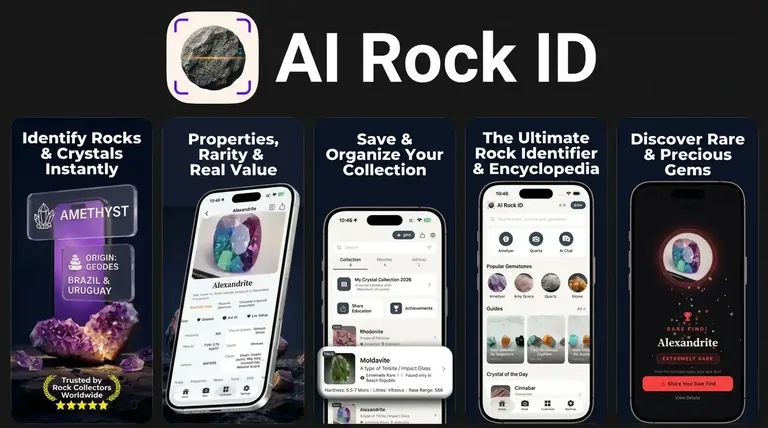
Upload your photo to RockIdentifier.io or the AI Rock ID iPhone app. Review the identification results, including variety name, confidence level, and key characteristics that matched your specimen.
More Identification Tools
Crystal Identifier
Identify any crystal specimen including quartz family minerals and beyond
Agate Identifier
Specialized identification for banded agates and cryptocrystalline quartz
Mineral Identifier
Comprehensive mineral identification covering all mineral groups
Gemstone Identifier
Identify gem-quality quartz and other precious stones
Geode Identifier
Analyze geodes that may contain quartz crystal formations
Glass Identifier
Distinguish natural quartz from glass imitations and artifacts
Frequently Asked Questions
How can I tell if my clear crystal is quartz or glass?
Genuine quartz crystals display natural hexagonal geometry with six-sided prisms and pointed terminations, while glass is typically molded and lacks these growth features. Quartz also shows conchoidal fracture with curved surfaces when broken, and natural specimens often contain small inclusions, veils, or internal features that glass lacks. Our AI analyzes these structural characteristics in your photo to distinguish real quartz from glass imitations.
What causes the pink color in rose quartz?
Rose quartz gets its pink color from microscopic fibrous inclusions of a pink borosilicate mineral, or from trace amounts of titanium, iron, or manganese within the crystal structure. The color is typically evenly distributed throughout the specimen rather than concentrated in zones. Interestingly, rose quartz rarely forms distinct crystal points, instead occurring in massive form, a characteristic our AI uses to help confirm identification.
Is my citrine natural or heat-treated amethyst?
Most commercial citrine is heat-treated amethyst, which typically shows more intense orange or reddish-brown colors compared to natural citrine's pale yellow to light orange hues. Natural citrine often displays subtle color zoning and maintains clarity, while treated specimens may have a slightly burnt appearance. Photo analysis can identify citrine coloration, but definitively confirming natural versus treated origin usually requires gemological testing.
What is fire quartz and how do I identify it?
Fire quartz, also called hematoid quartz, contains iron oxide (hematite) inclusions that create red, orange, or golden internal patterns. These inclusions can appear as wispy clouds, phantom shapes, or dramatic streaks within otherwise clear or smoky quartz. When photographing fire quartz, backlighting often reveals these inclusions most dramatically, helping our AI accurately identify this variety.
Can the AI identify quartz crystals still attached to matrix rock?
Yes, our AI can identify quartz crystals growing on matrix rock, though clearer results come from photos that show the crystal faces and terminations distinctly. When photographing matrix specimens, try to capture angles that highlight the quartz crystals themselves rather than just the host rock. The tool will analyze the visible crystal characteristics to determine the quartz variety.
How do I photograph smoky quartz for accurate identification?
Photograph smoky quartz against a white or light gray background to clearly show its brown coloration and transparency level. Natural lighting works best to capture the true color, which can range from light tan to nearly black. Include the crystal termination in your photo if visible, as the hexagonal point structure helps confirm quartz identity before the AI assesses the specific smoky variety.
What's the difference between amethyst and purple fluorite?
Amethyst (purple quartz) forms hexagonal crystals with six-sided terminations, while fluorite forms cubic or octahedral crystals with distinctly different geometry. Amethyst also has a hardness of 7 compared to fluorite's 4, meaning amethyst maintains sharper edges and resists scratching. Our AI analyzes crystal shape and surface characteristics in your photo to distinguish between these purple minerals.
Can I identify quartz varieties from tumbled or polished stones?
Yes, the AI can identify polished quartz specimens based on color, transparency, and any visible inclusions, though natural crystal faces provide additional confirmation. For tumbled stones, ensure your photo clearly shows the specimen's color in accurate lighting. Rose quartz, amethyst, citrine, and smoky quartz are commonly tumbled and remain identifiable by their characteristic coloration and translucency.