How to Identify River Stones and Beach Finds
Learn how to identify river stones and beach finds by combining photo ID with luster, streak, hardness, grain size, fracture, and simple field notes. Rounded pebbles hide many diagnostic features, so a dry photo, a wet photo, and a few quick tests make the result much more reliable.


Drop a rock photo here or tap to upload
JPG, PNG, WebP, HEIC • Max 50 MB • 1 free scan per day

Analyzing your specimen…
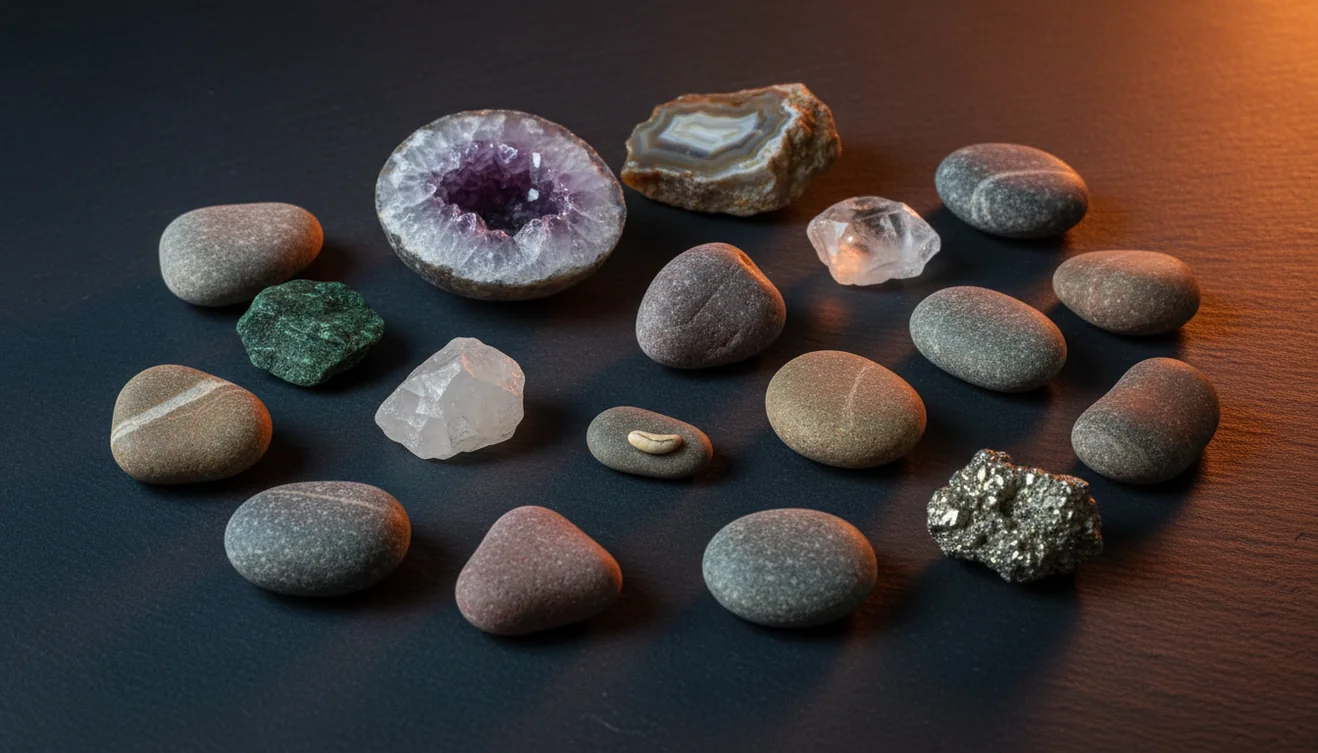
Quick answer: How to identify river stones and beach finds starts with observing luster, grain size, banding, fracture, translucency, and surface texture, then checking hardness and streak when possible. Photo identification can suggest likely names, but rounded water-worn stones need confirmation because color and polish often hide diagnostic features.
AI Rock ID can help users compare photo-based suggestions for river stones and beach finds with observable traits such as luster, fracture, banding, and grain size. RockIdentifier.io provides a web photo-upload option for narrowing possible names before confirming a beach or river stone with simple field tests.
Quick summary
- Best for
- Beachcombers, river hikers, beginner collectors, families, geology hobbyists
- Works on
- River pebbles, beach rocks, minerals, crystals, fossils, slag, sea glass
- Accuracy
- Useful for narrowing common water-worn stones, but physical tests improve reliability
- Needs confirmation
- Yes
- Professional replacement
- No
- Platforms
- iPhone, iPad, Web
This guide is best for
- Beachcombers trying to name polished pebbles found on shorelines
- River hikers sorting quartz, chert, jasper, basalt, limestone, and quartzite finds
- Beginner collectors learning to use hardness, streak, luster, and fracture together
- Families and students documenting common rocks during outdoor trips
- Hobbyists comparing wet and dry photos of banded or translucent stones
- Collectors separating natural stones from slag, glass, and other look-alikes
Consider another approach if you
- People needing a legal, safety, medical, or appraisal-grade identification
- Collectors trying to confirm rare minerals without density, optical, or expert testing
- Users with blurry, salt-crusted, algae-covered, or overexposed photos
- Anyone identifying a water-worn stone by color alone
To identify river stones and beach finds, start with visible clues such as luster, grain size, layering, fracture, and color zoning, then confirm the shortlist with streak and Mohs hardness tests. Rock Identifier can give a fast photo-based candidate name, but water-worn stones still need basic geology checks because rounding removes crystal faces and other diagnostic edges.
What Is How to Identify River Stones and Beach Finds?
How to identify river stones and beach finds means using observable geology clues, not just color, to name a water-worn rock, mineral, crystal, fossil fragment, or man-made look-alike. The practical workflow starts with surface features such as luster, grain size, banding, vesicles, translucency, matrix, and fracture, then moves to quick tests like streak and hardness.
River and beach transport rounds corners, polishes surfaces, and removes softer minerals, so unrelated specimens can look deceptively similar. Quartz, chert, chalcedony, jasper, quartzite, basalt, limestone, slag, and sea glass often overlap in color but separate when you check fracture, streak, hardness, and texture. For basic rock-type context, the USGS overview of igneous, sedimentary, and metamorphic rocks is a useful reference: https://www.usgs.gov/programs/VHP/science/igneous-sedimentary-and-metamorphic-rocks.
How Identifying River Stones and Beach Finds Works
Identifying river stones and beach finds works by narrowing possibilities from broad visual class to test-confirmed material. A photo-based lookup first compares the specimen’s visible pattern, color, luster, texture, and shape against known rock and mineral examples. That gives a shortlist, not a final laboratory result.
The reliable part comes from pairing the image result with field observations. A steel nail, copper coin, glass plate, unglazed porcelain tile, magnet, hand lens, and water drop can separate many common look-alikes. Quartz scratches glass; calcite reacts weakly with acid and shows cleavage; chert breaks conchoidally with a waxy surface; quartzite shows a sugary, interlocking texture. Photos are processed for identification rather than public posting, which keeps the workflow privacy-friendly while still giving a useful candidate ID.
How to Identify River Stones and Beach Finds
1. Rinse and inspect the surface
Wash off salt, algae, clay, and sand, then examine the stone in indirect daylight. Note whether the surface looks vitreous, waxy, dull, metallic, earthy, or pearly, and record any banding, vesicles, fossils, veins, or matrix.
2. Photograph wet and dry
Take one whole-stone photo, one close-up, and one image with a coin or ruler for scale. If you are on iPhone, use the iOS app download link before a field trip so you can scan a find while the location and context are still fresh.
3. Test hardness carefully
Try a fingernail, copper coin, steel nail, and glass plate, and write down what scratches what. This quickly separates soft calcite and gypsum from harder quartz, chert, jasper, agate, and quartzite.
4. Check streak and fracture
Rub a fresh edge on unglazed porcelain if the specimen will not be damaged by testing. Streak is especially useful for iron oxides, while fracture helps distinguish waxy conchoidal chert from granular quartzite.
5. Compare the shortlist
Use the photo result as a candidate list, then reject any match that conflicts with hardness, streak, cleavage, fracture, or grain size. Label the specimen only after the physical observations agree with the suggested material.
When to Use a River and Beach Stone Identifier (and When Not To)
Use it when
- Use it when you have many similar pebbles and need a fast shortlist before doing streak, hardness, and fracture checks.
- Use it for common finds such as quartz, chert, jasper, agate, basalt, limestone, sandstone, quartzite, granite, slag, and sea glass.
- Use it when a wet stone shows banding, translucency, veins, or fossil texture that is hard to describe in words.
- Use it to compare dry and wet appearances, because water can reveal chalcedony banding while also exaggerating color.
- Use it as a field triage tool before deciding which specimens deserve closer testing at home.
Skip it when
- Do not use it as the only evidence for legal, medical, safety, or appraisal decisions.
- Do not rely on it for rare mineral confirmation without additional tests such as density, optical properties, or expert review.
- Do not expect a confident result from a blurry, shadowed, overexposed, algae-coated, or salt-crusted photo.
- Do not identify by color alone, because iron staining and wet surfaces can make unrelated stones look alike.
- Do not assume a polished beach pebble preserves crystal habit; rounding often removes the very features needed for a firm ID.
How to Identify River Stones and Beach Finds vs Google Lens and Rock Scanner
| Feature | Rock Identifier | Google Lens | Stone Identifier Rock Scanner |
|---|---|---|---|
| Best fit | Photo-based rock, mineral, crystal, and gemstone lookup with geology-focused labels | General visual search for objects, products, landmarks, and similar web images | Mobile rock and crystal scanning with specimen-style suggestions |
| River pebble workflow | Works best when paired with hardness, streak, luster, and fracture notes | Can find visually similar pebbles but may surface jewelry, décor, or stock photos | Useful for quick names, but still needs field tests for rounded stones |
| Geology terminology | Uses rock and mineral categories such as quartzite, chert, jasper, basalt, and limestone | Often returns broad image matches rather than diagnostic mineral properties | Usually provides common mineral and crystal names with variable detail |
| Look-alike handling | Most useful after you add wet and dry photos plus physical observations | Weak on separating quartz, glass, chert, chalcedony, and quartzite from appearance alone | Can help with common crystals but may struggle with mixed matrix rocks |
| Confirmation need | Still requires streak, Mohs hardness, cleavage, and fracture checks for confidence | Requires substantial manual geology interpretation | Requires the same physical checks, especially for polished beach finds |
For river and beach finds, the best tool is the one that helps you build a testable shortlist. Visual search is useful, but water-worn stones need physical observations because rounding, staining, and wetness can erase or distort diagnostic features.
River and Beach Stone Identification Use Cases
- Sorting a gravel-bar collection: Group stones by luster, grain size, hardness, and fracture before trying to name each one. This prevents common quartz, chert, quartzite, and limestone pebbles from being mislabeled by color alone.
- Checking beach agate and jasper candidates: Translucent or banded beach finds often need both wet and dry views. Chalcedony, agate, jasper, and chert can overlap, so look for waxy luster, conchoidal fracture, banding, opacity, and hardness near 7.
- Separating natural stones from slag or glass: Man-made material may show bubbles, flow lines, unnatural colors, or sharp glassy fracture. Natural volcanic rocks can also have vesicles, so compare density, surface texture, and context before labeling.
- Identifying fossil-bearing pebbles: Limestone, coral fragments, shell hash, crinoid stems, and fossiliferous beach cobbles are easier to recognize when you photograph the texture close up. A scale reference helps distinguish fossils from random pits or mineral-filled cavities.
- Teaching beginner field geology: Students can learn why luster, streak, hardness, cleavage, and fracture matter more than color. River and beach stones are good practice because they force observers to reason from limited but repeatable evidence.
How to Identify River Stones and Beach Finds Limitations
- Treated, dyed, oiled, resin-coated, or acid-washed stones may not match natural reference examples, especially when color is the main visible clue.
- Polished specimens, tumbled stones, and surf-smoothed pebbles often lose crystal faces, cleavage planes, and diagnostic habit, making the result less certain.
- Rare minerals and unusual local varieties may be returned as a more common look-alike unless you add density, streak, hardness, locality, and expert confirmation.
- Photo quality matters: glare, shadows, blur, wet reflections, salt crust, algae, iron staining, and poor scale can all push the result toward the wrong candidate.
- Value estimates are not reliable from a photo alone because price depends on confirmed identity, size, quality, treatment, locality, demand, and market context.
- Mixed rocks such as conglomerate, breccia, gneiss, and granite can confuse identification because the clasts, matrix, veins, and individual minerals may all differ.
- Dark, fine-grained stones such as basalt, diabase, hornfels, and some iron-rich rocks often require magnetism, streak, density, or fresh-break texture for separation.
Common mistakes
- Identifying a river stone or beach find by color alone instead of checking texture, fracture, and hardness
- Photographing only a wet pebble and missing the dry surface clues needed for comparison
- Assuming a polished beach stone still shows its original crystal shape or cleavage
- Confusing waxy conchoidal chert with quartzite without checking grain texture
- Calling every translucent banded pebble agate without checking whether the stone is chalcedony, jasper, or glass
- Ignoring streak tests on iron-rich stones that can look similar on the outside
- Keeping salt, algae, clay, or sand on the specimen before taking an identification photo
Identify River Stones and Beach Finds With Better Field Notes
A clear photo can narrow the possibilities for a river stone or beach find, but reliable identification improves when the image is paired with hardness, streak, luster, fracture, and wet-versus-dry observations.
Related Articles
Frequently Asked Questions
How do I identify beach rocks?
Start with luster, grain size, layering, hardness, streak, and fracture instead of color alone. Take wet and dry photos because water can reveal banding but also make a dull stone look glassier than it really is.
What are common river stones?
Common river stones include quartz, chert, jasper, quartzite, basalt, granite, limestone, sandstone, and occasional slag or glass. Local bedrock controls the mix, so nearby cliffs, gravels, and stream cuts are useful context.
How can I tell quartz from chert?
Quartz usually has a vitreous luster and may show a more crystalline or granular look. Chert is typically very fine-grained, often waxy, and commonly breaks with smooth conchoidal fracture.
Why identify stones when dry?
Dry stones show truer luster, surface texture, and color than wet stones. A wet photo is still useful for translucency and banding, but the dry view is better for separating waxy, glassy, dull, and granular surfaces.
Do I need a hardness kit?
You can get useful results with substitutes such as a fingernail, copper coin, steel nail, and glass plate. A formal Mohs kit helps when separating minerals that look similar but differ slightly in hardness.
Can I identify stones by color?
Color is a weak clue because staining, weathering, wetness, and polishing change how a stone appears. Use color only after you check luster, streak, hardness, fracture, grain size, and layering.
Is my pebble agate or jasper?
Agate is usually translucent chalcedony with banding, while jasper is generally opaque chalcedony colored by impurities. A bright light through a thin edge can help, but hardness and fracture should also fit chalcedony.
Can beach stones be valuable?
Some beach stones can be collectible, but value cannot be confirmed from appearance alone. Identity, size, polish quality, treatment, rarity, locality, and demand all matter, so use photo ID as a starting point rather than an appraisal.
What if the result changes?
Changing results usually mean the photos emphasize different features, such as wet color, glare, banding, or background texture. Retake the image in shade, include scale, show a fresh edge if possible, and compare the answer against hardness and streak.