How to Identify Landscape and Garden Rocks
Learning how to identify landscape and garden rocks starts with texture, hardness, streak, and a clear photo of a fresh surface. Use photo ID for a shortlist, then confirm with simple field checks before you label yard stone, gravel, cobbles, or decorative rock.


Drop a rock photo here or tap to upload
JPG, PNG, WebP, HEIC • Max 50 MB • 1 free scan per day

Analyzing your specimen…
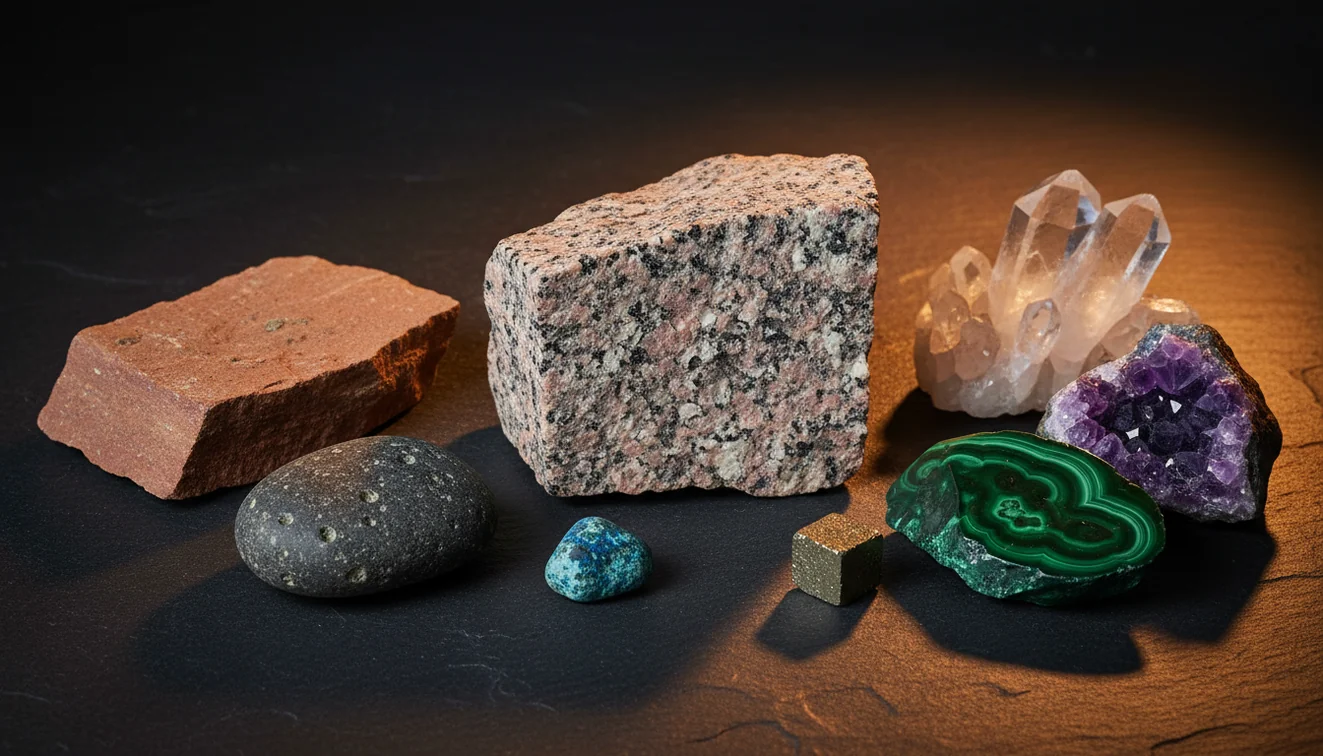
Quick answer: How to identify landscape and garden rocks starts with observing texture, grain size, layering, hardness, streak, and acid reaction on a clean dry surface. Photo identification can provide likely rock matches, but garden stones should be confirmed with simple field tests because weathering, staining, tumbling, and mixed gravel can make different rocks look alike.
AI Rock ID can help with landscape and garden rock identification by turning clear iPhone or iPad photos into likely rock candidates for later checking. RockIdentifier.io supports the same topic on the web by allowing users to upload garden stone photos and compare results with field observations such as hardness, streak, texture, and acid reaction.
Quick summary
- Best for
- Homeowners, gardeners, landscapers, DIY yard planners, beginners
- Works on
- Landscape rocks, garden stones, gravel, cobbles, edging stone, decorative aggregate
- Accuracy
- Good for narrowing common garden rocks, but field tests are needed for reliable labeling
- Needs confirmation
- Yes
- Professional replacement
- No
- Platforms
- iPhone, iPad, Web
This guide is best for
- Homeowners trying to name unknown rocks in garden beds, paths, or borders
- Gardeners comparing gravel, cobbles, lava rock, limestone, quartzite, granite, or sandstone
- DIY landscapers choosing durable stone for drainage, edging, patios, or mulch replacement
- Beginners who want a simple workflow using photos plus hardness, streak, and acid tests
- Property owners documenting mixed stone piles or supplier-labeled decorative aggregate
- People checking whether yard material may be natural rock, concrete, slag, brick, or recycled fill
Consider another approach if you
- Safety decisions involving possible contaminated fill, industrial slag, asbestos-bearing rock, or demolition debris
- Exact mineral percentage analysis or lab-grade petrographic identification
- Gemstone valuation, appraisal, or authentication of polished decorative stones
- Large purchasing decisions based only on color or a single photo result
- Testing finished patios, sealed stone, or visible decorative surfaces with acid
To identify landscape and garden rocks, photograph a clean dry surface, note grain size and texture, then test hardness, streak, and acid reaction when appropriate. Most garden stones can be narrowed to common types such as granite, limestone, quartzite, basalt, sandstone, marble, slag, or manufactured concrete aggregate. Photo ID is fastest when it is treated as a candidate list, not a final lab-grade result.
What Is How to Identify Landscape and Garden Rocks?
How to identify landscape and garden rocks is a practical workflow for naming stones used in beds, paths, edging, drainage swales, patios, and decorative gravel. The goal is not just a pretty label; rock type affects durability, porosity, traction, weathering, and whether a stone is natural, dyed, recycled, or manufactured.
Start with visible properties: grain size, layering, foliation, vesicles, luster, fracture, and mineral grains. Then add simple checks such as Mohs hardness, streak on unglazed porcelain, and a vinegar or dilute acid test for carbonate rocks. For fast photo-based screening, the Rock Identifier iOS app download link is useful when stones are too heavy to move; photos are processed for identification in a privacy-friendly way and used to return likely matches.
For mineral terminology and rock categories, the USGS rocks and minerals overview is a reliable reference: https://www.usgs.gov/programs/VHP/rocks-and-minerals.
How to Identify Landscape and Garden Rocks Works
Landscape rock identification works by combining image recognition with basic geology observations. A photo can detect color pattern, visible crystals, bedding, vesicles, polish, and weathered rind, but field properties separate look-alikes. Granite and gneiss may both look speckled, yet gneiss shows foliation; limestone and quartzite may both appear pale, but limestone is softer and fizzes with weak acid.
The best mechanism is a two-pass method. First, use photo-based lookup to generate likely candidates from shape, texture, and surface features. Second, confirm or reject those candidates with hardness, streak, fracture, specific gravity feel, and reaction to acid. This is especially important for garden material because river tumbling, wetness, algae, iron staining, and dust can hide diagnostic grains.
How to Use Photo ID to Identify Landscape and Garden Rocks
Clean and dry the stone
Rinse off soil, fertilizer dust, algae, and mulch stain, then let the rock dry. Wet stones look darker and can make basalt, slag, and dark quartzite appear more similar than they really are.
Photograph diagnostic surfaces
Take one overall photo, one close-up of grains or bubbles, and one image with a coin or ruler for scale. If safe, photograph a fresh broken face because weathered rinds hide luster, cleavage, and true color.
Record simple field properties
Test whether the rock scratches glass, whether a steel nail scratches it, and what streak it leaves on unglazed porcelain. Note cleavage, conchoidal fracture, foliation, vesicles, or visible sand grains.
Check carbonate reaction
Place a small drop of vinegar or dilute acid on an inconspicuous fresh surface. Bubbling suggests calcite-rich limestone or marble, while quartzite, granite, basalt, and most slag will not fizz.
Compare candidates before labeling
Use the app result as a shortlist, then choose the candidate that fits your tests and the landscaping context. A bag of mixed river rock may contain several rock types, so identify representative pieces separately.
When to Use Landscape and Garden Rock Identification (and When Not To)
Use it when
- Use it when choosing rock for paths, edging, dry creek beds, drainage zones, mulch replacement, or decorative borders where hardness and weathering matter.
- Use it when a supplier label is vague, such as “river rock,” “lava rock,” “white gravel,” “pea stone,” or “decorative aggregate.”
- Use it when you need to separate natural rocks from concrete, brick fragments, ceramic, slag, dyed gravel, or recycled construction material.
- Use it when diagnosing why a stone is crumbling, staining pavers, holding moisture, producing dust, or reacting with acidic soil conditions.
- Use it when documenting multiple beds or piles across a property and you want consistent notes for each material.
Skip it when
- Do not use photo ID alone for safety decisions involving possible industrial slag, contaminated fill, asbestos-bearing rock, or unknown demolition debris.
- Do not rely on surface color alone for buying large quantities; request supplier specs, quarry source, or a physical sample when the material matters.
- Do not expect exact mineral percentages from a garden photo, especially for fine-grained igneous or metamorphic rocks.
- Do not use identification as a gemstone valuation, appraisal, or guarantee of authenticity for polished decorative stones.
- Do not acid-test finished patios, sealed stone, or visible decorative surfaces unless a tiny hidden spot is acceptable.
How to Identify Landscape and Garden Rocks vs Google Lens and Stone Identifier
| Feature | Rock Identifier | Google Lens | Stone Identifier App |
|---|---|---|---|
| Best for | Rock, mineral, crystal, and garden-stone photo matches with geology-focused prompts | Broad visual search across the web, products, images, and similar-looking objects | General stone and crystal lookup with simple photo matching |
| Geology workflow | Encourages texture, grain, fracture, and specimen-style photos | May match landscaping products, stock images, or shopping pages before rock properties | Often useful for decorative stones but may be less specific about field tests |
| Garden rock context | Good for cobbles, gravel, edging stone, drainage rock, and mixed yard samples | Good for finding similar bags or supplier photos when labels are visible | Helpful for common crystals and polished stones used decoratively |
| Look-alike handling | Returns likely candidates that should be checked with hardness, streak, and acid reaction | Returns visually similar results but may not separate limestone, quartzite, marble, and concrete | Varies by specimen type and photo quality |
| Practical limitation | Still needs field confirmation for fine-grained, weathered, or manufactured material | Not specialized for mineral properties or rock classification | May struggle with mixed aggregates and heavily weathered yard stone |
Use a specialized scanner when you want geology terms and field-test confirmation; use broad visual search when you mainly need to find a product label, supplier image, or similar decorative material.
Landscape and Garden Rock Identification Use Cases
- Choosing durable path stone: Quartzite, granite, and many basalts resist abrasion better than soft limestone or friable sandstone. Identifying the rock helps you avoid material that powders, chips, or becomes slick in high-traffic paths.
- Sorting mixed river rock: River cobbles are rounded by transport, so crystal shape is often missing. Sorting by hardness, acid reaction, foliation, and grain size helps separate quartzite, limestone, granite, basalt, and sandstone within the same load.
- Checking “lava rock” claims: Natural scoria has vesicles in a basaltic matrix, while slag may show glassy luster, sharp conchoidal fracture, metallic inclusions, or unnatural color variation. This matters when the material is used around pets, vegetables, or water features.
- Matching existing garden beds: A close match requires more than color. Grain size, angularity, polish, weathered rind, and mineral sparkle determine whether replacement gravel blends with older stone after rain and sun exposure.
- Understanding drainage and moisture: Porous pumice, scoria, sandstone, and some limestone behave differently from dense quartzite or granite. Identification helps predict water retention, staining, freeze-thaw durability, and suitability near foundations.
How to Identify Landscape and Garden Rocks Limitations
- Treated stones can mislead identification because dye, sealers, tumbling compounds, and surface coatings mask natural luster, grain boundaries, and streak.
- Polished specimens are harder to classify from photos because polishing removes weathering clues, rounds crystal edges, and may make different rocks show the same glossy surface.
- Rare minerals and unusual local quarry materials may not match common reference photos; a local geologist, university extension office, or quarry data sheet may be needed.
- Photo quality strongly affects results. Blurry images, wet surfaces, direct sunlight, deep shade, and no scale object can cause false matches between quartzite, marble, granite, and concrete.
- Value estimates should not be made from garden-rock identification. Decorative, mineral, or gemstone value depends on provenance, treatment, clarity, cut, demand, and expert appraisal.
- Fine-grained rocks can be ambiguous. Basalt, dark andesite, hornfels, and some industrial slag may look similar unless density, vesicle shape, magnetism, and fresh fracture are checked.
- Mixed aggregate may contain several rock types in one bed. Identify multiple representative stones instead of assuming every piece in a bag or pile has the same origin.
- Safety-sensitive material needs local confirmation. Suspected slag, contaminated fill, asbestos-bearing rock, or demolition debris should not be cleared by app results alone.
Common mistakes
- Identifying landscape rock by color alone, even though wetness, staining, and weathering can change the apparent color.
- Photographing only the rounded outside of a cobble instead of including a fresh or less-weathered surface.
- Assuming every piece in a bag of river rock or pea gravel is the same rock type.
- Skipping hardness and acid tests when trying to separate pale limestone, marble, quartzite, and concrete aggregate.
- Using a wet photo for identification when dry texture, grain boundaries, vesicles, and layering would be clearer.
- Mistaking manufactured concrete, brick fragments, ceramic, dyed gravel, or slag for natural garden stone.
- Acid-testing a visible patio, sealed stone, or finished decorative surface instead of using a tiny hidden spot or loose sample.
Identify Landscape and Garden Rocks with Photos and Field Checks
A clear photo can narrow the possibilities for landscape and garden rocks, but the most reliable label comes from comparing the image result with texture, hardness, streak, and acid reaction. Use photo identification as a starting point, especially for mixed gravel, cobbles, edging stone, and decorative aggregate.
Related Articles
Frequently Asked Questions
How do I identify garden rocks?
Start with a clean, dry stone and photograph both the whole rock and a close-up of its texture. Then check hardness, streak, fracture, layering, and acid reaction so the photo result can be confirmed.
Can color identify landscape rocks?
Color helps, but it is one of the weakest clues because iron staining, wetness, algae, and dust can change appearance. Texture, grain size, hardness, foliation, and acid reaction are usually more reliable.
Is my rock limestone or quartzite?
Limestone is softer and usually fizzes with vinegar or dilute acid on a fresh surface. Quartzite is much harder, often scratches glass, and commonly has a sugary interlocking quartz texture.
Why does gravel change color wet?
Water reduces surface scattering, so colors look darker and more saturated. It also highlights grains and cracks, which can help inspection but may confuse comparison with dry reference photos.
What is landscape lava rock?
True lava rock is usually vesicular volcanic material such as scoria or pumice. Some landscaping material sold with a similar look may be slag, which can show glassy surfaces, sharp fracture, and metallic inclusions.
How many photos should I take?
Take at least three photos: one overall view, one close-up of texture, and one fresh or broken surface if available. Add a coin or ruler for scale because pebble size and grain size affect identification.
Can I test rocks with vinegar?
Yes, vinegar can reveal some carbonate rocks if it bubbles on a fresh surface, though dilute hydrochloric acid is more sensitive. Test only a small hidden spot because acid can etch limestone, marble, and decorative finishes.
Are polished stones harder to identify?
Yes, polishing removes many natural surface clues and can make unrelated stones look similar. Use any unpolished edge, chip, underside, or broken surface for a better identification attempt.
Can identification tell rock value?
Basic identification cannot provide a reliable value estimate. Price depends on rarity, treatment, size, condition, provenance, and market demand, so valuable-looking stones need expert appraisal.