What Rock Is This? A Beginner's Field Guide
What rock is this? A beginner's field guide starts with a clear photo, a fresh surface, and a few simple field checks. Use the Rock Identifier iOS app link on this page when you want a fast shortlist before confirming with hardness, streak, texture, and context.


Drop a rock photo here or tap to upload
JPG, PNG, WebP, HEIC • Max 50 MB • 1 free scan per day

Analyzing your specimen…
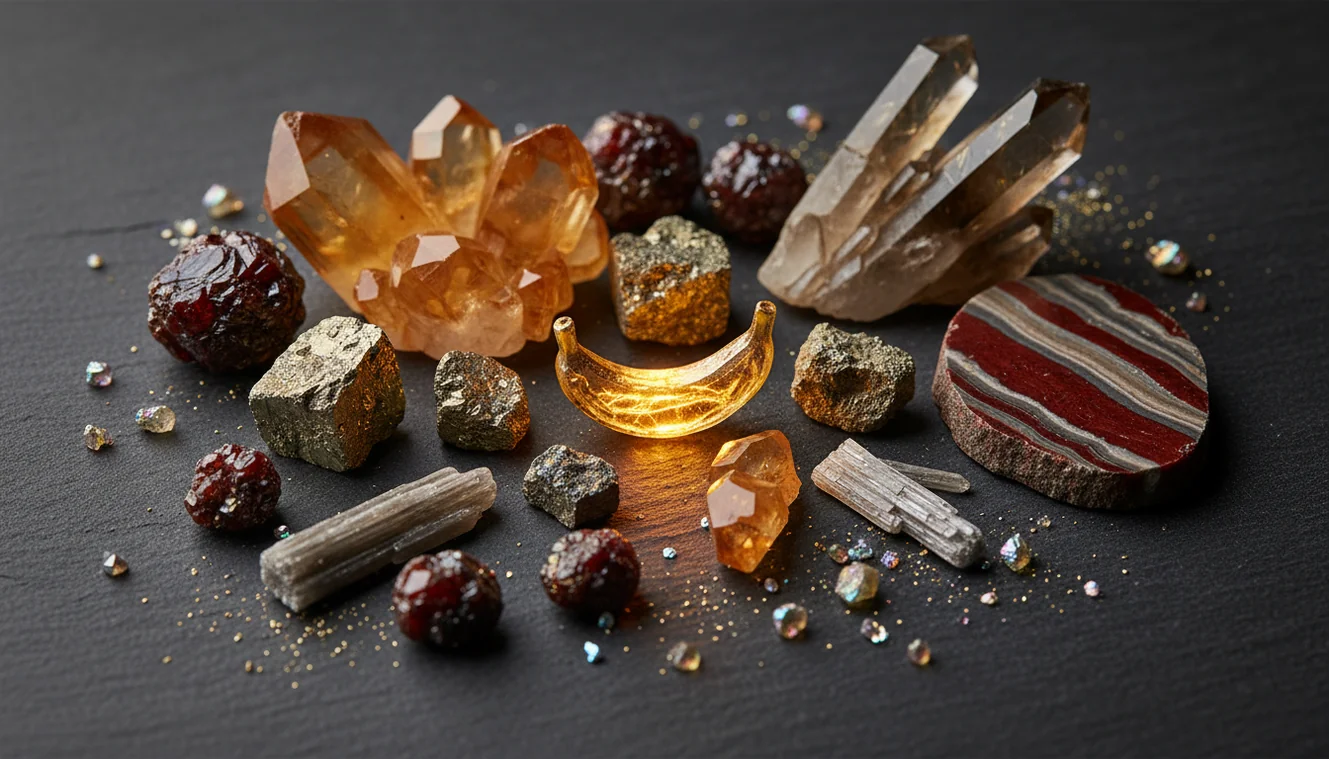
Quick answer: What Rock Is This? A Beginner's Field Guide is a beginner workflow for moving from an unknown specimen to a likely rock, mineral, crystal, or gemstone identification. A photo can provide a useful shortlist, but the identification should be checked with hardness, streak, cleavage, texture, luster, and geologic context.
AI Rock ID can support the What Rock Is This? A Beginner's Field Guide workflow by giving an initial photo-based shortlist for rocks, minerals, crystals, and gemstones on iPhone and iPad. RockIdentifier.io provides a web photo upload option for the same topic when a user wants to compare an unknown specimen before confirming it with field observations.
Quick summary
- Best for
- Beginners, hikers, students, rock collectors, field trip users
- Works on
- Rocks, minerals, crystals, gemstones, beach cobbles, field specimens
- Accuracy
- Most reliable as a shortlist when clear photos are confirmed with physical field tests.
- Needs confirmation
- Yes
- Professional replacement
- No
- Platforms
- iPhone, iPad, Web
This guide is best for
- Beginners asking what an unknown rock or mineral might be
- Hikers and field walkers who want to record a likely ID while still at the collection site
- Students learning how to compare hardness, streak, luster, cleavage, and texture
- Collectors sorting unlabeled rocks, crystals, minerals, or beach cobbles
- Teachers introducing igneous, sedimentary, and metamorphic rock clues
- Users who want a photo-based starting point before doing simple hand-sample tests
Consider another approach if you
- People valuing gemstones, jewelry, or rare mineral specimens for sale
- Users who need a legally or financially defensible identification
- Anyone trying to identify a specimen from one wet, blurry, shadowed, or overexposed photo
- Cases that require lab methods such as XRD, thin section petrography, or professional gem testing
- Polished, dyed, heat-treated, or tumbled stones with few natural diagnostic features
What rock is this? A beginner's field guide is a practical workflow for comparing texture, luster, grain size, hardness, streak, cleavage, and geologic setting. Rock Identifier can give a free photo-based shortlist, but a confident ID comes from matching the image result with at least two physical properties.
What Is What Rock Is This? A Beginner's Field Guide?
What rock is this? A beginner's field guide is a step-by-step way to move from an unknown stone to a defensible rock, mineral, crystal, or gemstone name. The useful clues are texture, grain size, luster, streak, cleavage, fracture, Mohs hardness, magnetism, reaction to dilute acid, and whether the specimen is part of a matrix or a loose cobble.
Start broad: igneous, sedimentary, or metamorphic. Then narrow by visible minerals, layering, vesicles, crystal habit, or glassy fracture. For background on rock types and the rock cycle, the USGS overview is a reliable reference: https://www.usgs.gov/special-topics/water-science-school/science/rocks-and-rock-cycle.
How What Rock Is This? A Beginner's Field Guide Works
The workflow works by turning a photo into a hypothesis, then testing that hypothesis against observable geology. A photo-based lookup compares shape, color, surface texture, crystal habit, and visible grain patterns against known rock and mineral examples; it is strongest when the image shows a clean, dry surface and a scale object. Your photos are processed for identification rather than treated as public field reports, which keeps the workflow privacy-friendly.
After the first match, verify the result in hand. Quartz should scratch glass and break with conchoidal fracture; calcite should be softer and may fizz with acid; basalt may be fine-grained, dark, and sometimes vesicular. The name is credible only when the visual match and field properties agree.
How to Use What Rock Is This? A Beginner's Field Guide
Photograph the specimen
Shoot the rock dry, in shade, with one close-up, one edge view, one fresh-break view if available, and one photo showing the matrix or collection setting.
Record visible traits
Write down color, luster, grain size, layering, vesicles, crystal habit, cleavage planes, fracture style, and any obvious inclusions or weathering rind.
Run simple tests
Use a copper coin, steel nail, glass plate, magnet, streak plate, and dilute vinegar or acid only when safe and appropriate for the specimen.
Compare likely matches
Check whether the suggested rock or mineral matches hardness, streak, cleavage, texture, and geologic context instead of accepting a color match alone.
Save the final notes
Keep the best candidate, location, test results, and uncertainty level so you can revisit the ID after better photos, a hand lens check, or expert review.
When to Use What Rock Is This? A Beginner's Field Guide (and When Not To)
Use it when
- Use it when you find an unlabelled rock, crystal, mineral, beach cobble, gravel piece, or field specimen and need a quick shortlist before doing tests.
- Use it when texture is visible: interlocking crystals, layering, clasts, vesicles, banding, cleavage faces, or a fresh fracture surface.
- Use it when you can collect basic observations such as streak, hardness, magnetism, specific gravity estimate, and reaction to acid.
- Use it for teaching beginners how to separate quartz, calcite, feldspar, basalt, granite, chert, schist, marble, and common slag look-alikes.
Skip it when
- Do not rely on it alone for selling gemstones, valuing jewelry, or confirming a rare mineral species.
- Do not use a single wet, shadowed, or overexposed photo as final evidence.
- Do not assume a polished cabochon, dyed agate, heat-treated crystal, or tumbled stone will show diagnostic natural texture.
- Do not replace lab methods such as XRD, thin section petrography, refractive index, or professional gem testing when the identification has financial or safety consequences.
What Rock Is This? A Beginner's Field Guide vs Google Lens and Rock Scanner
| Feature | Rock Identifier | Google Lens | Rock Scanner |
|---|---|---|---|
| Best use | Rock, crystal, mineral, and gemstone photo ID with field-note style verification | General image search for visually similar web photos | Rock and mineral photo matching with basic reference entries |
| Geology focus | Designed around specimens, visual traits, and common look-alikes | Broad visual search; not geology-specific | Geology-focused, but depth varies by specimen type |
| Beginner workflow | Good for shortlisting, saving finds, and comparing luster, habit, and hardness ranges | Useful for browsing images, but results may mix jewelry, decor, and unrelated objects | Useful for quick checks, with manual confirmation still needed |
| Photo sensitivity | Needs clean lighting, multiple angles, and a scale object for best results | Very sensitive to background and visually dominant colors | Needs clear texture and unpolished surfaces for stronger matches |
| Final confirmation | Should be paired with streak, Mohs hardness, cleavage, fracture, and context | Requires independent geology checks | Requires independent geology checks |
Google Lens is useful when you want broad visual similarity, while a dedicated rock app is better when the question is mineral habit, lithology, or field verification. None of these tools can measure hardness, streak, density, or crystal chemistry from a photo.
Use Cases
- Field walks and hikes: Use the scanner to sort unknown cobbles, vein minerals, and outcrop fragments while the location and surrounding lithology are still fresh in your notes.
- Classroom practice: Students can compare photo suggestions with hand-sample tests such as streak, Mohs hardness, cleavage, fracture, and reaction to dilute acid.
- Beach and river finds: Rounded stones are hard because weathering removes sharp crystal faces, so the workflow helps prioritize texture, density, magnetism, and fresh chips.
- Gem and crystal sorting: The guide helps separate common quartz varieties, calcite, fluorite, feldspar, jasper, agate, and glass imitations before any value or authenticity claim.
- Collection cleanup: When old labels are missing, a photo shortlist plus physical tests can rebuild a reasonable catalog with uncertainty noted specimen by specimen.
What Rock Is This? A Beginner's Field Guide Limitations
- Treated stones can mislead identification because dyeing, heating, irradiation, resin filling, or surface coating may change color and luster without changing the base material.
- Polished specimens, cabochons, beads, and tumbled stones often hide grain boundaries, cleavage, fracture, weathering texture, and matrix relationships.
- Rare minerals are difficult to confirm from photos because uncommon species may look like common quartz, feldspar, calcite, mica, sulfides, or oxides.
- Photo quality matters: blur, glare, wet surfaces, mixed lighting, and no scale object can push the match toward the wrong rock group.
- Value estimates should not be made from a photo ID; price depends on species confirmation, treatment status, locality, size, clarity, cut, damage, and market demand.
- Rock mixtures can be labelled incompletely because granite, gneiss, schist, conglomerate, and skarn may contain several visible minerals in one specimen.
- Industrial materials such as slag, clinker, concrete, brick, asphalt, and glass can mimic vesicular basalt, obsidian, breccia, jasper, or meteorite-like surfaces.
- Safety and legal context still matter; unknown radioactive minerals, asbestos-bearing rocks, mine waste, and protected collection sites require caution beyond identification.
Common mistakes
- Identifying a rock by color alone instead of checking hardness, streak, texture, and luster.
- Using a wet or shadowed photo that hides grain size, cleavage, fracture, and surface texture.
- Ignoring the fresh surface and relying only on a weathered rind or stained exterior.
- Assuming a photo match is final without testing whether the specimen can scratch glass or react to acid.
- Confusing polished or tumbled stones with natural field specimens that show diagnostic texture.
- Forgetting to record where the specimen was found, even though geologic context can rule out many look-alikes.
- Treating slag, concrete, glass, or man-made material as a natural rock without checking bubbles, texture, and setting.
Use a What Rock Is This Workflow Before Naming a Specimen
Start with clear photos and a likely shortlist, then confirm the result with simple field observations. A careful identification is strongest when the photo evidence, physical tests, and geologic context all point to the same answer.
Related Articles
Frequently Asked Questions
What rock is this if it fizzes?
Visible fizz usually suggests carbonate minerals, especially calcite, so limestone, marble, or calcite-rich veins become likely. Confirm with Mohs hardness near 3, rhombohedral cleavage, and a fresh surface rather than a weathered rind.
Can one photo identify a rock?
Sometimes, but one photo is usually a shortlist rather than a final ID. Accuracy improves with multiple angles, a fresh break, visible grain texture, and a scale object.
How do I test hardness?
Try whether the specimen can be scratched by a fingernail, copper coin, steel nail, or glass plate. A mineral that scratches glass is harder than about Mohs 5.5, which helps separate quartz from softer calcite or gypsum.
Is color enough for identification?
Color is one of the least reliable clues because staining, weathering, coatings, and lighting can change the surface appearance. Use color with luster, streak, hardness, cleavage, fracture, and texture.
How do I tell quartz from calcite?
Quartz is harder, scratches glass, has no cleavage, and commonly breaks with conchoidal fracture. Calcite is softer, shows rhombohedral cleavage, and reacts with acid on a fresh surface.
Why does my rock look metallic?
Metallic luster can point to sulfides, oxides, graphite, or manmade slag. Check streak color, magnetism, weight in hand, and whether the surface is natural or coated.
What does cleavage mean?
Cleavage is the tendency of a mineral to break along flat, repeated planes controlled by crystal structure. It differs from fracture, which is irregular, splintery, hackly, or shell-like.
Are polished stones harder to identify?
Yes, polished stones are harder because tumbling and cutting remove natural texture, matrix, and fracture clues. Use any unpolished edge, visible inclusions, translucency, hardness, and known source information.
Can this identify meteorites?
A photo can flag meteorite-like traits, but it cannot confirm a meteorite. Magnetic response, density, fusion crust, chondrules, nickel testing, and expert lab review are often needed.