How to Identify Rough Gemstones
Learn how to identify rough gemstones from photos, luster, hardness, streak, cleavage, fracture, and matrix clues. Use photo ID for a fast shortlist, then confirm with measurable properties.


Drop a rock photo here or tap to upload
JPG, PNG, WebP, HEIC • Max 50 MB • 1 free scan per day

Analyzing your specimen…
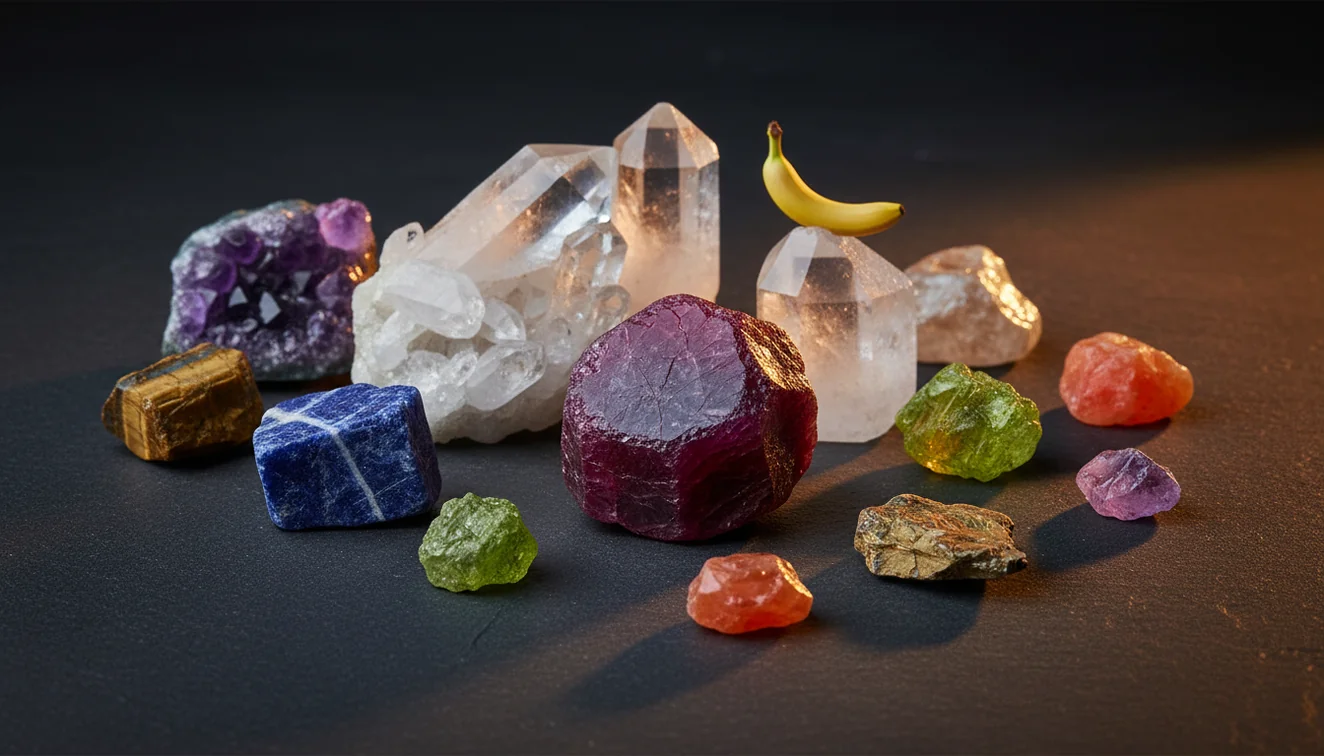
Quick answer: How to identify rough gemstones begins with clear photos and observable features such as luster, transparency, crystal habit, cleavage, fracture, and matrix. A photo ID result can narrow the possibilities, but hardness, streak, specific gravity, and expert review are needed for confident identification of valuable or ambiguous rough.
AI Rock ID can help users compare photos of rough gemstones with visual mineral features such as luster, habit, color zoning, fracture, and visible matrix. RockIdentifier.io supports this rough gemstone identification workflow through web photo upload for users who want an initial shortlist before confirming with physical tests.
Quick summary
- Best for
- Collectors, rockhounds, hikers, beginners, field hobbyists
- Works on
- Rough gemstones, minerals, crystals, matrix specimens, creek and mine-dump finds
- Accuracy
- Useful for narrowing candidates, but not definitive without physical tests
- Needs confirmation
- Yes
- Professional replacement
- No
- Platforms
- iPhone, iPad, Web
This guide is best for
- Beginners trying to identify unknown rough gemstones from field finds
- Rockhounds sorting creek, beach, desert, or mine-dump specimens
- Collectors comparing quartz, garnet, feldspar, beryl, corundum, fluorite, or tourmaline candidates
- Students learning to use luster, hardness, streak, cleavage, and fracture in mineral identification
- Hobbyists deciding which rough stones need closer testing or professional review
- People photographing uncut stones before organizing or documenting a collection
Consider another approach if you
- Anyone trying to certify gemstone authenticity from photos alone
- Buyers or sellers pricing valuable rough without gemological testing
- Users trying to prove treatments, dyes, synthetics, or geographic origin
- Collectors who would damage a valuable crystal by performing destructive tests
- Cases involving rare, mixed, coated, or heavily weathered specimens that need lab analysis
To identify rough gemstones, start with sharp photos from multiple angles, then compare luster, habit, transparency, cleavage, fracture, and matrix. Confirm the shortlist with Mohs hardness, streak, and specific gravity when possible. Color alone is unreliable because weathering, iron staining, and surface texture can mimic valuable gem rough.
What Is How to Identify Rough Gemstones?
How to identify rough gemstones means sorting an uncut or unpolished specimen by observable features and repeatable tests. In practice, you look at luster, transparency, crystal habit, cleavage, fracture, inclusions, host rock, and weathering before relying on color. Then you test hardness, streak, and specific gravity to separate common look-alikes such as quartz, calcite, feldspar, garnet, corundum, and tourmaline.
Rough gem material is harder to read than cut stones because the surface may be oxidized, coated, waterworn, or partly hidden in matrix. A photo-based lookup can narrow the candidate list quickly, but final confidence comes from physical properties. For gem terminology and reference context, the GIA gem encyclopedia is a useful authority: https://www.gia.edu/gem-encyclopedia.
How to Identify Rough Gemstones Works
The workflow starts with visual triage, then moves to simple diagnostics. A scanner or photo-based lookup evaluates image features such as color range, surface texture, luster, crystal shape, banding, and visible matrix, then compares those cues with known rock, mineral, and gemstone patterns. Better photos improve the shortlist: use indirect daylight, a neutral background, a scale reference, and close-ups of any fresh chip, cleavage plane, or crystal face.
After the image step, you confirm or reject candidates with field tests. Mohs hardness separates many similar-looking minerals, streak helps with opaque material, and cleavage versus fracture is often decisive. Photos are processed for ID in a privacy-friendly way, so the useful habit is to photograph only the specimen, not personal documents, faces, or location-sensitive labels.
How to Identify Rough Gemstones
Clean the specimen gently
Rinse loose dirt with water and a soft brush, but avoid acids, abrasives, or aggressive cleaning. Dirt can hide luster, while over-cleaning can damage softer minerals or remove matrix clues.
Photograph multiple surfaces
Take images in indirect daylight on a plain background. Include the whole stone, close-ups of crystal faces, any matrix, broken edges, and one lightly wetted surface if it helps reveal body color.
Open the iOS app link
Use the iOS app link for AI Rock ID when you want a fast photo-first shortlist in the field or at home. Treat the result as a candidate list, not a lab certificate.
Test hardness and streak
Use Mohs picks or common reference items, then test streak on unglazed porcelain only where damage is acceptable. Hardness often separates quartz from calcite, feldspar, fluorite, and softer look-alikes.
Check cleavage, fracture, and weight
Look for repeated flat planes, conchoidal breaks, splintery fracture, or granular texture. If the specimen is clean enough, estimate specific gravity because density can narrow heavy gems and ore-associated minerals.
Compare and confirm
Match your notes against the most likely candidates and reject any option that fails a test. For valuable, rare, treated, or sale-bound material, get confirmation from a gemologist or qualified lab.
When to Use How to Identify Rough Gemstones (and When Not To)
Use it when
- Use it when you have unknown creek, beach, desert, mine-dump, or pegmatite finds and need a practical first pass.
- Use it when sorting many rough stones before deciding which ones deserve hardness testing, weighing, or professional review.
- Use it when a specimen has visible matrix, crystal habit, zoning, banding, cleavage, or fracture that can be photographed clearly.
- Use it when you want to distinguish common gem rough such as quartz, garnet, feldspar, corundum, beryl, fluorite, or tourmaline candidates.
- Use it when learning geology terms because the process forces you to record luster, habit, streak, and fracture instead of guessing by color.
Skip it when
- Do not use photo ID alone to price a stone, certify authenticity, or make a buying decision on expensive rough.
- Do not rely on it when the specimen is coated in mud, iron oxide, varnish, oil, or polishing compound.
- Do not use destructive tests on a potentially valuable crystal face, terminated specimen, or collectible matrix piece.
- Do not assume it can prove treatments, synthetics, dye, irradiation, heat treatment, or exact geographic origin.
- Do not treat it as final for rare minerals, unusual inclusions, or mixed specimens without lab-grade refractive index, spectroscopy, or expert review.
How to Identify Rough Gemstones vs Google Lens and Gem Apps
| Feature | Rock Identifier | Google Lens | Stone Identifier Rock Scanner |
|---|---|---|---|
| Best use | Photo-first mineral and gemstone shortlist with geology-oriented context. | Broad visual web search for similar-looking images. | General stone and crystal lookup from phone photos. |
| Rough gemstone handling | Better suited to matrix, habit, luster, and mineral-style comparisons. | Often matches jewelry, polished stones, or visually similar web images. | Useful for common crystals, but results vary with rough, dirty, or broken specimens. |
| Field-test support | Pairs well with Mohs hardness, streak, cleavage, fracture, and density notes. | Does not guide mineral tests in a structured way. | May provide basic descriptions, but testing workflow depends on the app. |
| Strength | Fast triage for unknown rocks, minerals, crystals, and gem rough. | Excellent for finding visually similar photos and public web pages. | Convenient for hobby crystal identification and collection sorting. |
| Weakness | Still needs physical confirmation for high-value or ambiguous material. | Can over-focus on color and image similarity instead of diagnostic properties. | May struggle with rare minerals, poor lighting, or matrix-heavy specimens. |
For rough gem work, the strongest workflow is not app versus manual testing; it is app plus manual testing. Use image matching to narrow the field, then let hardness, cleavage, fracture, streak, and specific gravity decide whether the candidate is plausible.
Rough Gemstone Identification Use Cases
- Field collecting: A collector can photograph specimens at a creek, quarry, beach, or mine dump and decide which pieces are worth carrying home. Matrix, weathering rind, and crystal habit are especially useful before a stone is cleaned.
- Lapidary rough sorting: Cutters can separate likely quartz, agate, jasper, garnet, feldspar, and corundum before sawing. Hardness and fracture checks help avoid wasting blades on unsuitable or misidentified material.
- Estate and collection triage: Unlabeled boxes of rough stones can be grouped into likely mineral families before more formal testing. This is useful when labels are missing, mixed, or written with outdated trade names.
- Student geology practice: Students can learn to describe luster, cleavage, fracture, habit, transparency, and streak with real specimens. The process builds better observation habits than naming a stone from color alone.
- Pre-sale documentation: Sellers can record photos, weight, dimensions, matrix, hardness observations, and uncertainty before asking for expert confirmation. This does not replace a gem report, but it makes the review more organized.
How to Identify Rough Gemstones Limitations
- Treated stones cannot be reliably confirmed from photos alone; dye, heat treatment, irradiation, oiling, and resin filling may require gemological instruments.
- Polished specimens and tumbled stones may lose natural crystal habit, matrix, cleavage clues, and weathering context that help identify rough material.
- Rare minerals, unusual local varieties, and mixed specimens can resemble common stones until tested with refractive index, spectroscopy, XRD, or expert microscopy.
- Photo quality strongly affects results; harsh flash, colored indoor light, shadows, wet glare, and patterned backgrounds can distort luster and body color.
- Value estimates should not be made from identification alone because price depends on weight, clarity, color, cut potential, treatment, demand, and provenance.
- Matrix can help identification, but porous host rock, iron staining, and attached ore minerals can also mislead color, density, and surface observations.
- Specific gravity tests can be inaccurate when a stone has fractures, cavities, mixed minerals, attached matrix, or absorbed water.
- Destructive tests such as streak, scratch testing, and fresh chipping can damage collectible crystals or valuable rough if done on the wrong surface.
Common mistakes
- Identifying rough gemstones by color alone is unreliable because many unrelated minerals share similar colors.
- Photographing only one side of a rough stone can hide cleavage, fracture, matrix, or crystal habit clues.
- Using harsh acids, abrasives, or heavy cleaning can damage soft minerals and remove useful matrix evidence.
- Skipping a hardness test often leaves common look-alikes such as quartz, calcite, feldspar, and fluorite unresolved.
- Assuming a wet surface shows the true identity of a gemstone can be misleading because water can temporarily change luster and color contrast.
- Performing streak or scratch tests on valuable crystal faces can permanently reduce a specimen’s collectible value.
- Treating a photo ID result as a certificate can lead to false confidence when the specimen needs physical or gemological confirmation.
Use Photo ID to Start Identifying Rough Gemstones
A clear photo can help narrow rough gemstone possibilities before you compare hardness, streak, cleavage, fracture, and density. Treat the result as a starting point, especially when the stone may be valuable, treated, or difficult to separate from common look-alikes.
Related Articles
Frequently Asked Questions
Can a phone identify rough gems?
A phone can narrow likely candidates when photos are sharp, evenly lit, and taken from several angles. It works best as a starting point before hardness, streak, cleavage, and density checks.
What test should I do first?
Start with Mohs hardness because it quickly separates many look-alikes. For example, calcite, fluorite, feldspar, and quartz can appear similar in rough form but differ clearly in hardness.
Is color enough for identification?
No, color is one of the weakest clues in rough gemstones. Iron staining, weathering, coatings, and lighting can make common minerals look like rarer gem material.
Should I wet a rough stone?
Lightly wetting a surface can reduce scattering and reveal body color, banding, or translucency. Do not soak porous, fragile, or treated-looking material until you know it is stable.
How do I spot cleavage?
Cleavage appears as repeated flat breaks at consistent angles. Fracture is more irregular, curved, splintery, or conchoidal, depending on the mineral.
Can streak tests damage gems?
Yes, streak testing can scratch softer stones and may mark a good display face. Use an inconspicuous area only when the diagnostic value is worth the risk.
How accurate is photo identification?
Photo identification is useful for narrowing possibilities, especially for common minerals with visible habit and luster. It is less reliable for rare species, treated stones, synthetics, and specimens with poor lighting or heavy matrix.
When should I ask a gemologist?
Ask a gemologist when the stone may be valuable, rare, treated, synthetic, or intended for sale. Professional testing can check refractive index, spectroscopy, inclusions, and other properties that photos cannot prove.
What tools help at home?
Useful tools include a 10x loupe, daylight lamp, magnet, scale, water cup for density checks, unglazed porcelain plate, and Mohs hardness references. A notebook matters too because repeatable observations are better than memory.