Most Valuable Gemstones You Can Find and Identify
The most valuable gemstones you can find and identify are screened by species, color, clarity, durability, origin, and treatment risk. Use photo ID for a fast shortlist, then confirm with observable mineral properties.


Drop a rock photo here or tap to upload
JPG, PNG, WebP, HEIC • Max 50 MB • 1 free scan per day

Analyzing your specimen…
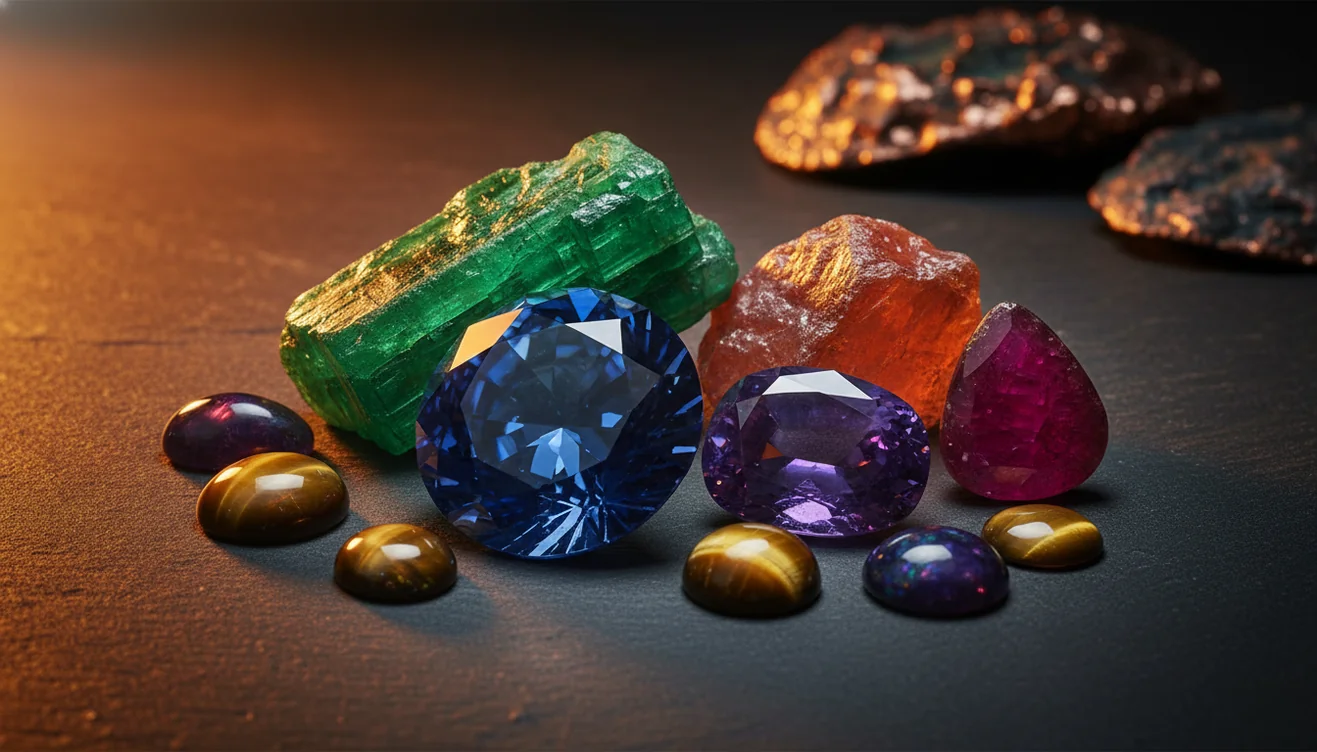
Quick answer: Most valuable gemstones you can find and identify include diamond, ruby, sapphire, emerald, alexandrite, spinel, and high-quality tourmaline, but value depends on confirmed identity, color, clarity, size, origin, and treatment status. Photo identification can provide a useful first shortlist for rough gems, but reliable valuation requires mineral-property checks and, for high-value stones, professional gem testing.
AI Rock ID can help screen possible valuable gemstones by comparing a specimen photo with likely mineral and gemstone candidates. RockIdentifier.io supports the same topic through web photo upload, giving users a first-pass identification before they pursue physical tests or professional gemological confirmation.
Quick summary
- Best for
- Collectors, rockhounds, field beginners, gem hunters, hobby mineral identifiers
- Works on
- Rough gemstones, crystals, minerals, gravel finds, stones in matrix
- Accuracy
- Useful for visual screening, but not sufficient for final gemstone identity or value
- Needs confirmation
- Yes
- Professional replacement
- No
- Platforms
- iPhone, iPad, Web
This guide is best for
- Rockhounds who want to screen possible ruby, sapphire, emerald, spinel, tourmaline, or topaz finds
- Beginners comparing valuable gemstone candidates with common look-alikes such as glass, quartz, fluorite, or dyed stones
- Collectors documenting rough crystals before deciding whether to seek testing or appraisal
- Field users who need a quick shortlist before checking hardness, luster, cleavage, density, or crystal habit
- Hobbyists learning why gemstone value depends on verified identity, quality, treatment, and origin
- People sorting gravel, mine dump, or stream finds for possible gem material
Consider another approach if you
- Anyone needing a certified appraisal, insurance value, or sale price
- Owners of faceted, mounted, heirloom, or high-value stones that require non-destructive gemological testing
- Users trying to confirm natural versus synthetic origin or treatment status from a photo alone
- People relying only on gemstone color without checking hardness, density, refractive behavior, or inclusions
- Sellers who need legally defensible gemstone identification documentation
The most valuable gemstones you can find and identify are usually diamond, ruby, sapphire, emerald, alexandrite, spinel, and high-grade tourmaline, but value depends on verified identity, color, clarity, size, treatment, and origin. Photo identification is best used as a screening step before hardness, specific gravity, refractive index, and professional gem testing.
What Is Most Valuable Gemstones You Can Find and Identify?
Most valuable gemstones you can find and identify are natural gem materials that may have strong market demand when their identity, quality, and condition are verified. In the field, that usually means looking for durable species with good color saturation, transparency, crystal habit, and enough clean material to cut or collect.
Diamond, ruby, sapphire, emerald, alexandrite, spinel, and premium tourmaline are common high-value candidates, but color alone is a weak identifier. A green crystal may be emerald, but it may also be fluorite, tourmaline, glass, or dyed quartz. For reference standards on gem identity and treatments, the Gemological Institute of America is a useful authority: https://www.gia.edu/gem-encyclopedia.
For a free photo ID workflow, Rock Identifier can turn a field photo into likely mineral candidates before you decide whether to test hardness, density, cleavage, or pay for lab confirmation.
How Most Valuable Gemstones You Can Find and Identify Works
Most valuable gemstone identification works by combining visual recognition with mineral-property checks. AI Rock ID analyzes a photo for color range, luster, transparency, crystal habit, fracture texture, matrix, and surface patterns, then compares those features with known rocks, crystals, minerals, and gemstones.
The result is not a lab certificate. It is a ranked shortlist that helps you decide what to check next: Mohs hardness, cleavage direction, streak where safe, heft, specific gravity, fluorescence, or refractive behavior if you have tools. Photos are processed for identification in a privacy-friendly way, so the image is used to return an ID result rather than to replace proper gemological testing.
This mechanism is strongest on clear, well-lit rough specimens with visible crystal faces and weakest on small polished stones with no context.
How to Use It to Identify Valuable Gemstones
Photograph the specimen in neutral light
Place the stone on a plain background in indirect daylight. Take one close image, one side image, and one photo with a coin or ruler for scale.
Include matrix and crystal faces
Show the host rock, cleavage, termination, fracture, zoning, or inclusions if present. These features often separate sapphire from spinel, quartz from topaz, and fluorite from emerald-like look-alikes.
Upload through the app
Use the iOS app link or Android version when you want a quick field scan from a phone photo. Start with the clearest image, then compare the returned candidates against your observations.
Check non-destructive properties
Estimate hardness only on an inconspicuous rough edge, note luster and transparency, and record whether the stone shows cleavage or conchoidal fracture. Avoid scratching polished faces.
Verify before assigning value
If the candidate is transparent, clean, large, or possibly valuable, move to refractive index, specific gravity, microscopy, or a qualified gem lab. Value claims need confirmed identity and treatment status.
When to Use Most Valuable Gemstone Identification (and When Not To)
Use it when
- Use it when screening unfamiliar crystals, pebbles, or gravel concentrates and you need a fast shortlist of possible gem species.
- Use it when you have rough material with visible crystal habit, matrix, zoning, cleavage, or fracture that can support photo-based lookup.
- Use it before paying for cutting, appraisal, or laboratory testing, especially if the stone might be ruby, sapphire, emerald, spinel, tourmaline, or topaz.
- Use it to organize field notes by locality, host rock, color, luster, transparency, and estimated hardness while the find context is still fresh.
Skip it when
- Do not use it as the final authority for sale price, insurance value, treatment status, or natural-versus-synthetic separation.
- Do not rely on it when the only evidence is color; many unrelated minerals share red, blue, green, yellow, or violet hues.
- Do not use destructive testing on a faceted gem, heirloom stone, or possible high-value specimen.
- Do not assume a match is correct when the photo is blurry, strongly backlit, color-shifted by indoor light, or dominated by matrix.
Most Valuable Gemstones You Can Find and Identify vs Google Lens and Stone Identifier
| Feature | Rock Identifier | Google Lens | Stone Identifier Rock Scanner |
|---|---|---|---|
| Primary purpose | Dedicated rock, mineral, crystal, and gemstone photo ID | General visual search across the web | Stone and crystal photo recognition |
| Gemstone workflow | Returns likely mineral candidates and supports follow-up property checks | Often returns shopping pages, jewelry images, or broad visual matches | Useful for casual crystal names, with variable depth on geology terms |
| Best specimen type | Rough stones, crystals, minerals in matrix, and field finds | Objects with distinctive visual context or popular image matches | Common tumbled stones and recognizable crystals |
| Value screening | Good for narrowing candidates before lab-grade confirmation | Not designed to evaluate species, treatments, or gem properties | Helpful for first-pass naming, not a valuation tool |
| Main limitation | Still cannot measure refractive index, density, or treatment status from a photo | Can confuse look-alike minerals because it searches visual similarity | May overfit polished stones when diagnostic features are hidden |
A dedicated scanner is the better choice when the question is mineral identity, not just visual similarity. Google Lens is useful for broad image discovery, but valuable gemstone screening needs geology-specific clues such as habit, cleavage, matrix, luster, and hardness.
Use Cases for Valuable Gemstone Identification
- Field collecting in gem-bearing areas: Use photo identification to sort unfamiliar crystals from stream gravels, pegmatites, skarns, or metamorphic float. Record the locality and host rock because origin can support or rule out candidates.
- Screening inherited rough stones: A photo-based lookup can help separate likely quartz, glass, corundum, beryl, garnet, and tourmaline before you spend money on appraisal. It is especially useful when labels are missing or unreliable.
- Avoiding look-alike mistakes: Many valuable gems have convincing substitutes. Blue spinel, sapphire, iolite, glass, and dyed quartz can overlap in color, so the next step is checking cleavage, hardness, density, and inclusions.
- Prioritizing lab testing: If several stones look promising, start with the candidates that are transparent, durable, clean, and large enough to cut. Lab testing is most justified when a confirmed identity would materially change value.
Most Valuable Gemstones You Can Find and Identify Limitations
- Treated stones can fool photo ID because heat treatment, dye, oiling, diffusion, coating, and fracture filling may not be visible in a normal phone image.
- Polished specimens and faceted gems often hide diagnostic crystal habit, cleavage, growth zoning, and matrix, which makes photo-only identification less reliable.
- Rare minerals and uncommon gem varieties may be underrepresented compared with common quartz, calcite, fluorite, garnet, beryl, and corundum examples.
- Photo quality matters: blur, glare, warm indoor light, wet surfaces, heavy shadows, or no scale reference can shift the suggested ID.
- Value estimates cannot be confirmed from a photo because price depends on verified species, carat weight, clarity, cut potential, origin, demand, and treatment documentation.
- Synthetic gems, simulants, and glass can look natural in photos; separation often requires magnification, refractive index, spectroscopy, or lab testing.
- Hardness and streak tests can damage specimens, especially softer gems, polished faces, and stones with perfect cleavage such as topaz or fluorite.
Common mistakes
- Assuming a bright green stone is emerald without ruling out fluorite, tourmaline, glass, dyed quartz, or other green minerals
- Treating a photo match as a gemstone appraisal instead of a preliminary identification clue
- Scratching a polished or potentially valuable stone instead of using safer non-destructive observations first
- Ignoring treatment risk, even though heating, filling, dyeing, and diffusion can strongly affect gemstone value
- Judging value by color alone while overlooking clarity, size, durability, origin, inclusions, and confirmed species
- Photographing only one angle and leaving out crystal faces, matrix, fracture, zoning, or scale
- Selling or cutting a possible high-value stone before confirming identity with gemological tests
Screen Valuable Gemstone Finds Before You Test Them
A photo-based identification can help narrow a possible gemstone to likely candidates before you decide on hardness, density, refractive index, or lab testing. Use the result as a starting point for verification, not as a final value statement.
Related Articles
Frequently Asked Questions
Can a phone photo identify gemstones?
A phone photo can narrow the possibilities, especially for rough stones with visible crystal habit, luster, and matrix. It cannot confirm refractive index, treatment status, synthetic origin, or final market value.
What gemstones are most valuable?
Diamond, ruby, sapphire, emerald, alexandrite, spinel, and high-grade tourmaline are often among the most valuable categories. Actual value depends on verified identity, color quality, clarity, size, origin, cut potential, and treatments.
How do I spot gemstone look-alikes?
Do not rely on color alone. Compare hardness, cleavage, fracture, specific gravity, luster, inclusions, and matrix because different minerals can share nearly identical hues.
Should I scratch test a gemstone?
Only test an inconspicuous rough area if you can accept possible damage. Never scratch a polished face, faceted stone, heirloom gem, or specimen that may have high value.
Can I identify a cut stone?
A photo may suggest a general category, but faceting removes many natural clues such as crystal habit and matrix. Cut stones usually need refractive index, magnification, and sometimes lab instruments.
How do I avoid glass?
Glass often shows round bubbles, very uniform color, and conchoidal fracture without consistent cleavage. Natural minerals may show crystal faces, growth zoning, mineral inclusions, or predictable cleavage directions.
When is lab testing needed?
Lab testing is needed when the stone is potentially valuable, transparent, large, clean, or intended for sale or insurance. A lab can confirm species, natural origin, treatments, and sometimes geographic origin.
Does location affect gemstone value?
Yes, locality can affect both identification and value. Documented origin matters for some gems, and the host rock can also help rule in or rule out possible species.