
Glass Identifier: Detect Man-Made Glass vs Natural Rock
Upload glass photos
Clear, well-lit images help the AI identify it more accurately.

Analyzing surface patterns and fracture characteristics...
Checking texture, color, structure, and lookalikes…
Not sure if your find is natural obsidian or man-made slag glass? Upload a photo and let our AI analyze surface textures, bubble patterns, and fracture characteristics to help distinguish glass from genuine geological specimens.


Finding a smooth, glassy specimen can be exciting, but determining whether it's natural volcanic glass, tumbled sea glass, or industrial slag requires careful analysis. Man-made glass frequently mimics the appearance of obsidian, tektites, and other natural volcanic materials, leading to common misidentifications among collectors and beachcombers alike.
Our free glass identifier tool uses AI image recognition to examine key diagnostic features including bubble patterns, flow lines, surface weathering, and fracture characteristics. Whether you've discovered a beach find, excavated something from an old dump site, or purchased a specimen you're uncertain about, this tool provides instant preliminary analysis to guide your identification.
Good fit for
- Beach finds that might be sea glass or natural stones
- Smooth black specimens that could be obsidian or slag
- Translucent materials found near old industrial sites
- Purchased specimens you suspect may be man-made
- Colorful glassy rocks from riverbeds or fields
Not for
- Definitively authenticating valuable volcanic glass
- Identifying specific glass manufacturers or ages
- Detecting glass treatments or coatings
- Replacing professional gemological analysis
At a glance
Glass encompasses both natural volcanic glasses like obsidian and tektites, as well as man-made materials including slag glass, bottle glass, and industrial cullet. Distinguishing between natural and artificial glass requires examining bubble patterns, chemical weathering, and contextual clues about where the specimen was found.
| Primary Concern | Natural vs man-made origin |
|---|---|
| Common Lookalikes | Obsidian, tektites, Apache tears |
| Key Diagnostic | Bubble shape and distribution |
| Hardness Range | 5-6 Mohs (both types) |
| Fracture Type | Conchoidal in both |
| Best Test | UV light + magnification |
Why Glass Identification Matters for Collectors
The distinction between natural volcanic glass and man-made glass carries significant implications for collectors, rockhounds, and anyone building a mineral collection. Natural obsidian, formed when felsic lava cools rapidly without crystal growth, represents genuine geological history spanning thousands to millions of years. Man-made slag glass, while sometimes beautiful, is industrial waste typically less than 200 years old.
Misidentification is remarkably common because both materials share fundamental properties: conchoidal fracture patterns, vitreous luster, and similar hardness around 5-6 on the Mohs scale. Unscrupulous sellers sometimes market slag glass as obsidian, Apache tears, or even tektites. Sea glass collectors face the opposite challenge, distinguishing genuinely old, well-weathered pieces from recently tumbled glass fragments.
Understanding what you've found also affects how you should handle and store specimens. Natural obsidian edges can be extraordinarily sharp and were historically used for surgical tools. Slag glass may contain heavy metals from industrial processes. Proper identification ensures safe handling and appropriate display in your collection.
Slag Glass: The Most Common Obsidian Impostor
Slag glass forms as a byproduct of metal smelting operations, particularly iron and copper production. When ore is heated to extract metal, impurities float to the surface and are skimmed off as slag. This molten waste cools into a glassy material that can look strikingly similar to natural volcanic glass, especially when it's black, dark green, or deep blue.
Several features help distinguish slag glass from obsidian. Slag typically contains abundant spherical bubbles visible under magnification, these form from gases trapped during rapid industrial cooling. Natural obsidian may contain some bubbles, but they're usually elongated and aligned in flow patterns from volcanic movement. Slag glass often shows swirled color patterns where different chemical compositions mixed incompletely, creating marbled effects rarely seen in natural obsidian.
Location context provides crucial clues. If you found your specimen near old railroad tracks, mining operations, or historical industrial sites, slag glass becomes highly probable. Natural obsidian occurs only in specific volcanic regions. In North America, genuine obsidian sources include areas of Oregon, California, Wyoming, and parts of the Southwest, finding 'obsidian' in Pennsylvania or Ohio almost certainly indicates slag glass.
Sea Glass and Beach Glass Identification
Sea glass represents a unique category, man-made glass that has been naturally weathered by ocean tumbling over decades. Genuine sea glass develops a distinctive frosted surface texture from constant abrasion by sand and salt water. This patina, combined with smoothed edges and a soft, matte appearance, distinguishes well-aged sea glass from recently broken bottle fragments.
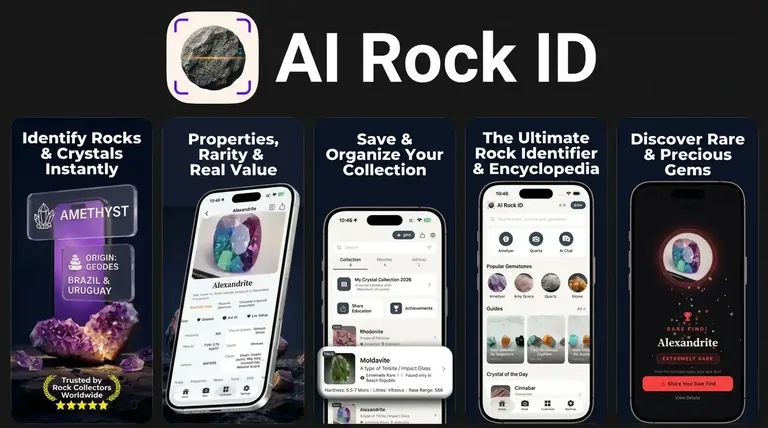
The RockIdentifier.io tool can help assess whether beach finds show genuine weathering patterns or appear too fresh to be authentic sea glass. Key indicators include uniform frosting across all surfaces, absence of sharp edges, and the characteristic 'C-shaped' marks from sand impacts visible under magnification. Truly old sea glass often shows pitting and may have a slightly tacky feel from hydration of the glass surface.
Color can indicate age and rarity in sea glass. Common colors like clear, brown, and green typically come from modern bottles and require 20-50 years of tumbling to develop good frosting. Rare colors including cobalt blue, red, orange, and purple often originated from older bottles, decorative glass, or specialized containers, making them more valuable to collectors. Our AI analyzes color saturation and weathering patterns to help assess your finds.
Natural Volcanic Glass: Obsidian, Tektites, and Apache Tears
Natural volcanic glass forms through rapid cooling of silica-rich lava, preventing crystal formation and creating an amorphous solid. Obsidian, the most common natural volcanic glass, typically appears black but can also be mahogany, rainbow, snowflake, or golden sheen varieties depending on mineral inclusions and internal structures.
Tektites represent another natural glass category, formed when meteorite impacts melt terrestrial rock and eject it into the atmosphere. These glasses cool during flight and often show aerodynamic shapes, surface sculpturing from atmospheric ablation, and characteristic flow lines. Moldavites from the Czech Republic and Libyan desert glass are prized tektite varieties. The AI Rock ID app can help distinguish tektites from similar-looking man-made glass based on surface texture analysis.
Apache tears are small, rounded obsidian nodules found weathering out of perlite deposits, primarily in Arizona and Nevada. Their naturally tumbled appearance can resemble polished slag glass, but genuine Apache tears show characteristic obsidian fracture patterns when broken and lack the bubble concentrations typical of industrial glass. When photographing suspected Apache tears for identification, capture both the smooth exterior and any visible fracture surfaces.
Photography Tips for Accurate Glass Identification
Capturing diagnostic features requires specific photography techniques that differ from standard rock photography. For glass specimens, backlighting proves invaluable, hold your specimen up to a bright light source or window and photograph it with light passing through. This reveals internal bubbles, flow patterns, and inclusions that surface photography misses entirely.
Use your phone's macro mode or a clip-on macro lens to capture bubble shapes and distribution. Spherical, randomly distributed bubbles suggest man-made glass, while elongated bubbles aligned in parallel patterns indicate natural volcanic flow. The RockIdentifier.io upload tool works best with close-up images showing these internal features clearly.
Photograph surface textures under raking light, position a light source at a low angle to emphasize surface relief. This technique reveals the frosted patina of genuine sea glass, the flow ridges on natural obsidian, and the sometimes-present mold marks or manufacturing lines on industrial glass. Include a photo of any fracture surfaces, as the freshly broken interior often provides clearer diagnostic information than weathered exteriors.
Advanced Testing Methods Beyond Photo Analysis
While our AI glass identifier provides excellent preliminary analysis, some identifications benefit from hands-on testing. Ultraviolet light examination can reveal fluorescence patterns, many modern glasses fluoresce under UV due to added compounds, while natural obsidian typically shows no fluorescence. This simple test, using an inexpensive UV flashlight, helps confirm AI identifications.
Specific gravity testing offers another verification method. Natural obsidian typically has a specific gravity around 2.35-2.60, while slag glass varies more widely (2.3-3.5) depending on metal content. Heavier-than-expected specimens may contain iron or other metals from smelting processes, suggesting industrial origin.
For valuable specimens or scientific purposes, professional analysis through X-ray fluorescence (XRF) or electron microprobe can definitively determine chemical composition. Natural obsidian shows characteristic trace element patterns from its volcanic source, while man-made glass contains industrial additives. The AI Rock ID iPhone app can suggest when professional testing might be warranted based on initial photo analysis.
Common Misidentifications and How to Avoid Them
Black slag glass sold as obsidian represents the most frequent misidentification in the rock and mineral market. Online marketplaces are particularly problematic, with sellers either unknowingly or deliberately mislabeling industrial glass. Before purchasing, request photos showing internal structure with backlighting, and be skeptical of unusually low prices for large obsidian pieces.
Green and blue glasses cause particular confusion. Natural green obsidian exists but is quite rare, most green 'obsidian' on the market is either slag glass or artificially colored glass. Blue obsidian is essentially non-existent in nature; blue specimens are almost certainly man-made. When you encounter these colors, upload photos to RockIdentifier.io for analysis before assuming natural origin.
Tektite misidentification runs in both directions. Genuine tektites command premium prices, leading to glass imitations. Conversely, unusual natural tektites are sometimes dismissed as industrial glass. Key tektite features include surface sculpturing from atmospheric passage, absence of spherical bubbles, and characteristic shapes. Our identification tool examines these features to help distinguish authentic tektites from look-alikes.
Building a Glass and Volcanic Glass Collection
Whether you collect natural volcanic glass, curated sea glass, or historically significant slag glass, proper identification enhances your collection's value and your understanding of each piece. Many collectors appreciate slag glass for its industrial heritage and often striking colors, there's no shame in collecting it, as long as you know what you have.
Document your specimens with identification notes, including where found, date collected, and results from tools like the AI Rock ID app. This provenance information becomes increasingly valuable over time and helps future collectors or researchers understand your collection. Photograph pieces using the techniques described above and store images with your physical specimens.
Consider organizing your collection to highlight the natural versus man-made distinction. Display cases showing obsidian alongside similar-looking slag glass create educational opportunities and conversation starters. Include examples of how you identified each piece, the diagnostic features that revealed true identity. This approach transforms a simple collection into a teaching tool about glass identification.
How to Use This Glass Identifier
Capture Internal Structure
Hold your specimen against bright light and photograph it to reveal bubbles, flow patterns, and inclusions invisible in normal lighting.
Document Surface Features
Take close-up photos of surface textures, any frosting or patina, and fracture surfaces using macro mode for maximum detail.
Upload to Glass Identifier
Submit your best images to RockIdentifier.io or the AI Rock ID iPhone app for instant AI analysis of diagnostic features.
Review AI Analysis
Examine the identification results, paying attention to confidence levels and specific features the AI detected in your specimen.
Confirm with Testing
For uncertain identifications, perform UV light testing or specific gravity measurements to verify the AI's preliminary assessment.
More Identification Tools
Obsidian Identifier
Identify natural volcanic obsidian varieties and distinguish from glass imitations
Rock Identifier
General rock and mineral identification from photos using AI analysis
Mineral Identifier
Identify minerals by their physical properties and crystal structures
Gemstone Identifier
Analyze gemstones and distinguish natural stones from glass imitations
Meteorite Identifier
Determine if your find is a genuine meteorite or terrestrial rock
Stone Identifier
Identify various stones including tumbled specimens and decorative materials
Frequently Asked Questions
How can I tell if black glass is obsidian or slag?
Examine the specimen under magnification with backlighting. Slag glass typically contains numerous spherical bubbles randomly distributed throughout, while natural obsidian has few bubbles that are elongated and aligned in flow patterns. Location context also helps, obsidian only occurs near volcanic regions, while slag appears near old industrial sites.
Is sea glass worth anything?
Genuine, well-frosted sea glass has collector value, especially in rare colors like red, orange, cobalt blue, and purple. Common colors (clear, brown, green) are worth less but still collected. Value depends on size, color rarity, degree of frosting, and overall condition. Pieces with uniform weathering and no sharp edges command premium prices.
Can AI really distinguish natural glass from man-made glass?
AI image analysis can identify many diagnostic features including bubble patterns, surface textures, color distributions, and weathering characteristics that indicate natural versus artificial origin. While not infallible, our tool provides reliable preliminary identification that guides further testing. Complex cases may require hands-on examination or professional analysis.
What is the difference between sea glass and beach glass?
Sea glass specifically refers to glass tumbled by ocean waves and salt water, developing a distinctive frosted patina from the salt and sand combination. Beach glass is a broader term that includes glass weathered in freshwater lakes or rivers, which may develop different surface characteristics. Both are collected, but sea glass typically shows more uniform frosting.
Why does my obsidian have bubbles in it?
Natural obsidian can contain some bubbles from gases present during volcanic eruption, but these are typically elongated and aligned in the direction of lava flow. If your specimen has numerous round bubbles scattered randomly, it's likely slag glass rather than natural obsidian. Use our glass identifier tool to analyze bubble patterns in your specimen.
How old does glass need to be to become sea glass?
Genuine sea glass typically requires 20-50 years of ocean tumbling to develop proper frosting and smooth edges, though this varies with wave action and sand coarseness. Glass from high-energy beaches may weather faster, while protected coves produce slower weathering. The best sea glass often comes from pieces 50-100+ years old.
Is blue obsidian real or always fake?
Natural blue obsidian is extremely rare to essentially non-existent. The vast majority of blue 'obsidian' sold commercially is man-made glass, often from China. Some specimens marketed as blue obsidian are actually blue-tinted slag glass or artificially colored glass. If you encounter blue obsidian, assume it's man-made unless proven otherwise through professional testing.
Can slag glass be valuable?
Yes, certain slag glass has collector value, particularly pieces with unusual colors, interesting patterns, or documented industrial provenance. Victorian-era slag glass used in decorative items is actively collected. Even common slag glass interests industrial archaeologists studying historical smelting operations. The key is accurate identification, know what you have and appreciate it for what it actually is.