How to Identify Tumbled Stones
How to identify tumbled stones starts with controlled photos, then moves to hardness, streak, luster, pattern, and density checks. AI Rock ID helps create a fast shortlist when polished surfaces hide crystal habit.


Drop a stone photo here or tap to upload
JPG, PNG, WebP, HEIC • Max 50 MB • 1 free scan per day

Analyzing your specimen…
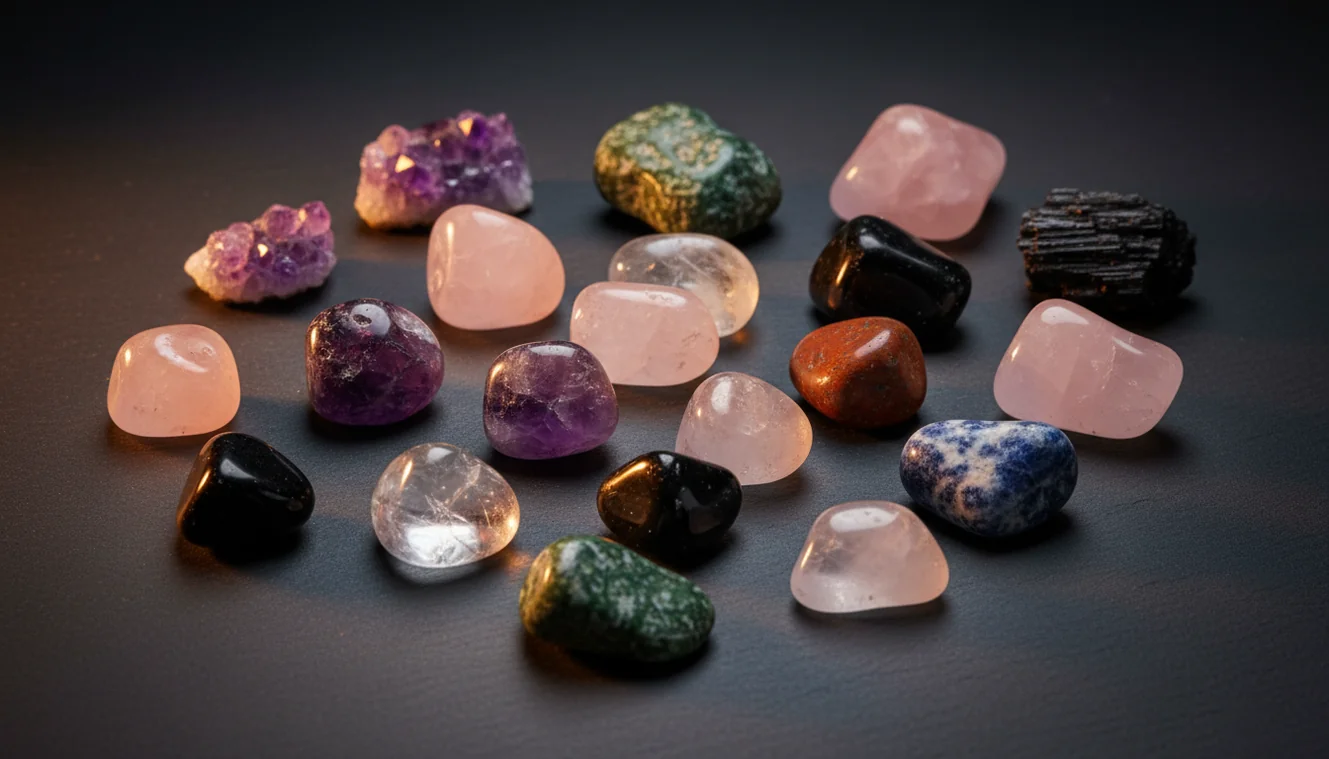
Quick answer: How to identify tumbled stones starts with clear photos, then uses hardness, streak, luster, translucency, banding, and density to narrow the possibilities. Polishing removes many natural crystal clues, so a photo match should be treated as a shortlist rather than a final identification.
AI Rock ID can help with how to identify tumbled stones by generating a visual shortlist from clear photos of polished surfaces, banding, translucency, and luster. RockIdentifier.io supports web photo upload for tumbled stone identification, but the article emphasizes confirming image results with mineral tests such as hardness, streak, and density.
Quick summary
- Best for
- Collectors, beginners, teachers, hobbyists, mixed stone bag owners
- Works on
- Tumbled stones, polished rocks, crystals, common gems, lapidary materials
- Accuracy
- Useful for narrowing common polished stones, but close look-alikes require physical tests
- Needs confirmation
- Yes
- Professional replacement
- No
- Platforms
- iPhone, iPad, Web
This guide is best for
- Beginners trying to identify polished stones from a mixed bag
- Collectors checking old or missing labels on tumbled stones
- Teachers demonstrating hardness, streak, luster, and density with safe specimens
- Hobbyists sorting agate, jasper, quartz, calcite, feldspar, hematite, or sodalite
- Crystal owners who want a practical workflow beyond color matching
- Users who need a photo-based shortlist before doing simple mineral tests
Consider another approach if you
- Anyone needing gem appraisal, treatment disclosure, or market value
- Owners of valuable, sentimental, or mounted stones that should not be scratched
- Users trying to confirm rare mineral species from one polished pebble
- Buyers making purchase decisions from photos alone
- Specimens with heavy dye, coatings, resin filling, or unclear trade names
To identify tumbled stones, start with color pattern, luster, translucency, and any remaining banding or matrix. Confirm the shortlist with Mohs hardness, streak, specific gravity, and fracture or cleavage clues because polishing can hide diagnostic surfaces. A photo identifier is useful for triage, but physical tests are what separate close look-alikes.
What Is How to Identify Tumbled Stones?
How to identify tumbled stones means reading the few clues that survive polishing, then confirming them with repeatable mineral tests. Tumbling rounds edges, increases luster, softens cleavage traces, and can make quartz, jasper, agate, calcite, and dyed material look deceptively similar.
A good identification workflow treats the polished stone as a specimen with missing context. Look for banding, inclusions, grain size, translucency, waxy versus vitreous luster, conchoidal fracture, and unusual heft. Then compare those observations with known mineral properties from an authority such as [mindat.org](https://www.mindat.org/), especially hardness, streak, cleavage, and specific gravity.
How Tumbled Stone Identification Works
Tumbled stone identification works by combining visual pattern recognition with basic mineral property tests. The photo-based lookup first compares color distribution, banding, texture, translucency, and surface luster against likely polished-stone categories, then a human should test the most plausible matches.
Mechanically, tumbling removes sharp crystal faces and blunts fracture edges, so crystal habit and cleavage are less reliable than on a raw specimen. Hardness becomes more important: quartz resists a steel nail, calcite scratches easily, and softer stones may show polish wear or pits. Streak can help with hematite and some opaque minerals, while heft or water displacement helps separate dense stones from lighter silicates.
How to Use a Tumbled Stone Identifier
Clean the stone
Rinse dust and skin oil from the surface, then dry it before photographing. Dirt, wax, and fingerprints can mimic cloudy inclusions or hide fine banding.
Photograph several angles
Use bright indirect light, avoid flash glare, and capture the top, side, and any patterned face. Include a coin or ruler for scale.
Upload the image
Open the Rock Identifier iOS app from the page link, then choose the camera or upload option. Photos are processed for ID in a privacy-friendly way rather than treated as public specimen records.
Compare the shortlist
Review the suggested candidates against your observations: luster, banding, translucency, fracture, visible grains, pits, or any remaining matrix.
Confirm with tests
Use a copper coin, steel nail, quartz point, and unglazed porcelain streak plate when safe. Record hardness, streak, and heft before naming the stone.
When to Use Tumbled Stone Identification (and When Not To)
Use it when
- Use it when you have a polished stone from a mixed lot and no locality label.
- Use it when color, banding, translucency, or inclusions are visible in clear indirect light.
- Use it when you can add simple checks such as Mohs hardness, streak, and relative density.
- Use it when sorting common lapidary materials such as agate, jasper, quartz, aventurine, sodalite, calcite, hematite, or feldspar.
- Use it when you need a fast shortlist before doing more careful hand-lens inspection.
Skip it when
- Do not use it alone for gem value, treatment disclosure, or buying decisions.
- Do not rely on it when the stone is dyed, coated, resin-filled, or sold under a trade name.
- Do not use destructive tests on sentimental, valuable, or unknown jewelry pieces.
- Do not expect confident species-level ID for rare minerals from a polished pebble only.
- Do not trust results from blurry photos, flash reflections, or strong color-shifting indoor light.
How to Identify Tumbled Stones vs Google Lens and Rock Scanner
| Feature | Rock Identifier | Google Lens | Rock Scanner |
|---|---|---|---|
| Best use | Rock, crystal, mineral, and gemstone photo ID with property cross-checks | General visual search across the open web | Quick rock and mineral photo matching |
| Geology focus | Uses mineral terms such as Mohs hardness, streak, cleavage, fracture, and luster | May return shopping pages, decor names, or broad image matches | Usually geology-focused, but detail varies by specimen type |
| Tumbled stone handling | Strong for polished-stone triage when paired with physical tests | Good for obvious patterns, weaker for look-alike minerals | Useful for common stones, less reliable for treated or ambiguous pieces |
| Confirmation support | Encourages comparing photo matches with observable properties | Requires the user to research tests separately | Often provides likely names but may need outside verification |
| Main limitation | Photo ID still cannot prove treatment, value, or rare species by image alone | Not designed specifically for mineral identification | Can struggle with lighting, polish glare, and mixed-rock specimens |
For tumbled stones, a rock-specific scanner is usually better than general image search because polished minerals need property checks, not just visual similarity. Google Lens can help find look-alike images, but hardness, streak, density, and fracture observations should decide the final name.
Tumbled Stone Identification Use Cases
- Sorting a mixed stone bag: A photo shortlist helps separate obvious quartz-family pieces, banded agates, jaspers, calcite, sodalite, hematite, and feldspar before you test each group. This is faster than treating every pebble as a fresh unknown.
- Checking a collection label: If an old label says aventurine, serpentine, jade, or green jasper, compare the claim with hardness, translucency, grain texture, and specific gravity. Many trade names overlap visually after polishing.
- Teaching mineral properties: Tumbled stones are safe, durable teaching specimens for luster, streak, hardness, fracture, and density. They also show why color alone is a weak diagnostic clue.
- Preparing for lapidary work: Before cutting, drilling, or wire-wrapping, identify the likely material and its hardness. Softer carbonates and porous stones need different handling than quartz or agate.
How to Identify Tumbled Stones Limitations
- Treated stones can fool photo ID. Dye, heat treatment, resin filling, wax, oil, and surface coatings can imitate natural banding, richer color, or higher polish.
- Polished specimens lose key clues. Tumbling rounds crystal habit, blunts cleavage, erases fresh fracture surfaces, and removes matrix context that would help on a raw specimen.
- Rare minerals are difficult from photos alone. A polished pebble without locality, crystal form, or lab data often cannot support a confident rare-species identification.
- Photo quality strongly affects results. Flash glare, blur, warm indoor light, shadows, overexposure, and camera white balance can change apparent color and luster.
- Value estimates are not reliable from identification alone. Price depends on size, treatment, locality, quality, market demand, and whether the material is natural or enhanced.
- Look-alikes remain common. Quartz, chalcedony, jasper, agate, calcite, feldspar, serpentine, and dyed stones can overlap in color and polish, so tests are necessary.
Common mistakes
- Using color alone to name a tumbled stone, even though quartz, calcite, jasper, dyed agate, and glass can share similar colors
- Photographing polished stones under flash, which creates glare that hides banding, pits, and translucency
- Assuming a smooth polish means the stone is a single mineral rather than a rock, aggregate, or treated material
- Skipping hardness tests even though tumbling removes many crystal-shape clues
- Scratching a valuable or sentimental stone before deciding whether destructive testing is appropriate
- Trusting trade names such as jade, onyx, or aventurine without checking mineral properties
- Ignoring unusual heft, streak color, or fracture pattern when the photo match looks convincing
Identify Tumbled Stones with Photos and Simple Tests
A tumbled stone identifier can help organize likely matches from clear photos, especially when polished surfaces hide natural crystal form. The most reliable workflow combines the photo shortlist with hardness, streak, luster, density, and visible pattern checks.
Related Articles
Frequently Asked Questions
Can I streak test polished stones?
Yes, but use caution because a streak test can scuff the polish. Test an inconspicuous spot against unglazed porcelain, and remember that many silicate minerals leave a white or weak streak.
How do I tell quartz from calcite?
Quartz is about Mohs 7 and should not scratch with a steel nail, while calcite is Mohs 3 and scratches easily. Calcite may also fizz with weak acid, but avoid acid testing on valuable or unknown pieces.
Why do polished stones look alike?
Tumbling removes many of the sharp features that geologists use, including crystal faces, cleavage edges, and rough fracture surfaces. After polishing, many minerals share a glassy or waxy luster and must be separated by tests.
Is color enough to name one?
No. Color is one of the weakest clues because impurities, staining, dye, heat treatment, and lighting can change appearance. Use color with pattern, hardness, streak, density, and fracture.
What light is best for photos?
Bright indirect daylight is usually best. Avoid flash because it creates glare on polish and can hide banding, pits, chatoyancy, or subtle grain texture.
Can an app identify dyed agate?
A photo tool may suggest agate from banding, but it cannot always prove whether the color is natural. Unusually bright blue, pink, purple, or neon tones should be treated as possible dye unless verified.
Does specific gravity help?
Yes. Heft or simple water displacement can separate dense materials such as hematite or garnet-rich rocks from lighter quartz, feldspar, or calcite look-alikes.
Can I identify stones without scratching?
Sometimes, especially if the pattern is distinctive, such as banded agate, snowflake obsidian, or sodalite. For close look-alikes, non-destructive clues may only produce a shortlist rather than a final identification.
Are tumbled stones real minerals?
Many are real minerals or rocks, but some are composites, glass, dyed material, or trade-name stones. A polished piece may represent a mineral, a rock made of several minerals, or a treated lapidary material.