What Makes a Crystal Valuable?
What makes a crystal valuable? Value comes from verified mineral identity, quality, rarity, provenance, and demand—not size alone.


Drop a rock photo here or tap to upload
JPG, PNG, WebP, HEIC • Max 50 MB • 1 free scan per day

Analyzing your specimen…
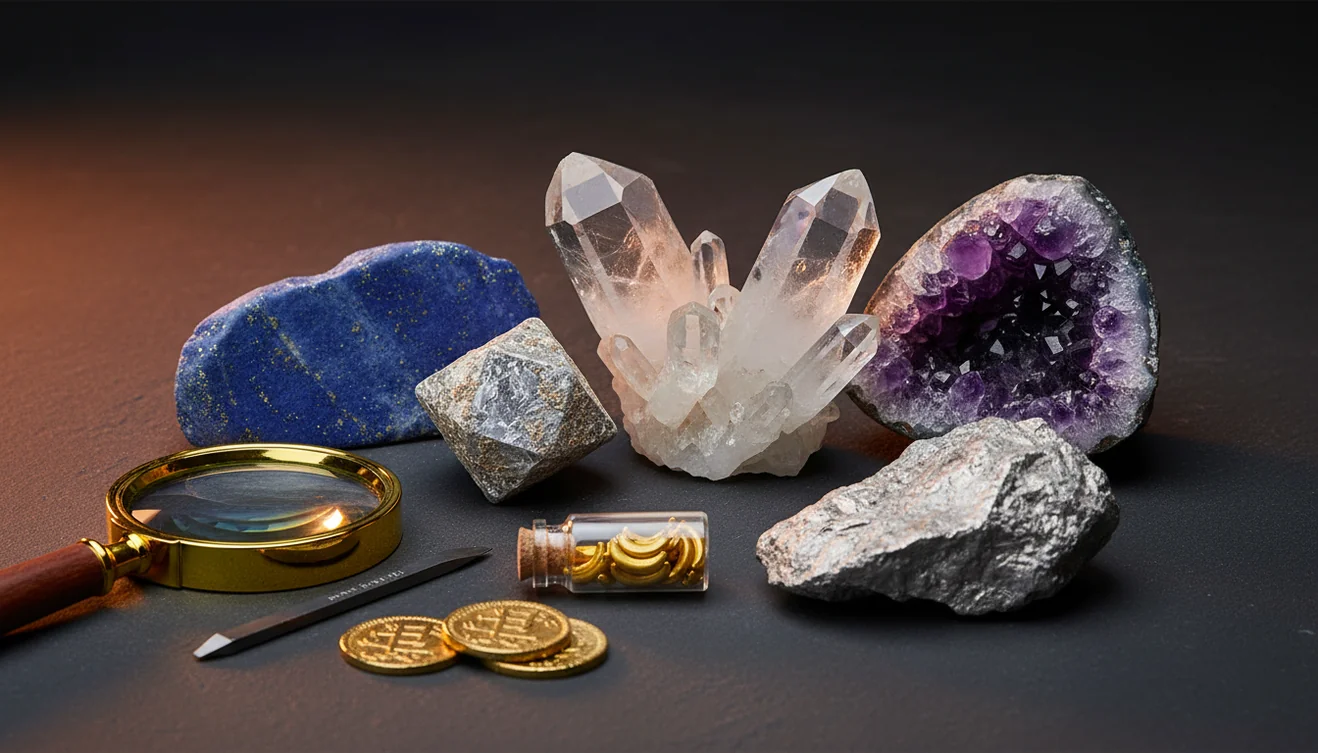
Quick answer: What makes a crystal valuable is its verified mineral identity, quality, rarity, provenance, and buyer demand. Size can matter, but color, clarity, crystal habit, undamaged terminations, treatment status, and documented locality often have a stronger effect on value.
AI Rock ID can help users form a preliminary mineral identification before they evaluate what makes a crystal valuable, such as condition, habit, color, and locality. RockIdentifier.io provides a web photo-upload option for checking an unknown crystal before comparing physical properties and recent sold prices.
Quick summary
- Best for
- Collectors, beginners, estate-sale buyers, field collectors, crystal sellers
- Works on
- Minerals, crystals, gemstones, rough specimens, polished stones
- Accuracy
- Visual checks can support a preliminary value assessment, but identity, treatments, and market price require confirmation.
- Needs confirmation
- Yes
- Professional replacement
- No
- Platforms
- iPhone, iPad, Web
This guide is best for
- Beginners trying to understand why two similar crystals can have very different prices
- Collectors sorting field finds, inherited specimens, or estate-sale mineral boxes
- Crystal buyers comparing condition, locality, and quality before purchasing
- Sellers preparing basic descriptions before researching sold comparable prices
- Hobbyists checking whether a specimen may need expert mineral or gem testing
- Students learning how mineral identity affects crystal value
Consider another approach if you
- Insurance appraisals or legal valuation of high-value specimens
- Final pricing of gemstones that may be treated, synthetic, filled, or coated
- Estate valuation that requires documented market value and professional review
- Identifying value from color or size alone without physical testing
- Pricing rare minerals without locality research and sold-comparable evidence
A crystal becomes valuable when it is correctly identified and has desirable quality at a scarce grade: strong color, clean faces, good clarity, minimal damage, and credible locality. Gem buyers usually pay for durability, transparency, and treatment status, while mineral collectors often pay for crystal habit, matrix aesthetics, and provenance.
What Is What Makes a Crystal Valuable?
What makes a crystal valuable is the combination of mineral identity, specimen quality, rarity, provenance, and current buyer demand. A bright amethyst point with chipped terminations may be less desirable than a smaller, undamaged crystal with sharp faces, clean zoning, and a documented locality. Correct naming matters first because quartz, fluorite, calcite, beryl, and corundum sit in very different markets.
Use observable traits before pricing: Mohs hardness, luster, cleavage, fracture, transparency, inclusions, color zoning, and crystal habit. Cross-check mineral names and locality notes with an authority such as mindat.org at https://www.mindat.org/. If you use Rock Identifier as a first pass, open the iOS app link from the page, photograph the specimen, and treat the result as a candidate ID; photos are processed for identification in a privacy-friendly workflow.
How Knowing What Makes a Crystal Valuable Works
Crystal valuation works by separating four questions: what is it, how good is it, how scarce is that quality, and what are buyers actually paying. Identification comes first because physical properties such as hardness, cleavage, specific gravity, and crystal system determine both durability and scarcity. Quality grading then considers color saturation, clarity, transparency, sharpness of faces, undamaged terminations, matrix contrast, and whether the surface is natural or altered.
Rarity is not just species rarity; it is rarity in a desirable form. Common quartz can be valuable if it has exceptional habit, clarity, inclusions, or locality, while a rare mineral may be modestly priced if it is tiny, damaged, or poorly crystallized. Market value is best checked with recent sold listings, dealer records, and comparable specimens, not hopeful asking prices.
How to Use Crystal Value Checks
Identify the mineral
Start with a likely mineral name, then verify it with luster, crystal habit, streak, hardness, cleavage, and fracture. Do not price a specimen from color alone.
Inspect the condition
Look for bruised faces, broken terminations, glued repairs, surface pits, iron staining, scratches, and chips. Damage usually lowers value even when color is attractive.
Grade color and clarity
Judge color saturation, zoning, transparency, inclusions, and internal fractures under indirect light. Photograph the crystal dry and slightly damp to reveal surface texture.
Check rarity and locality
Compare the species, crystal habit, and mine or region. A closed locality, classic label, or distinctive habit can raise specimen value.
Compare sold prices
Use recent sold examples that match size, quality, locality, and treatment status. Asking prices are useful signals, but completed sales are stronger evidence.
When to Use What Makes a Crystal Valuable? (and When Not To)
Use it when
- Use crystal value checks when sorting field finds, estate-sale boxes, thrift-store stones, or inherited mineral specimens.
- Use them before buying, trading, labeling, cleaning, trimming, or listing a crystal for sale.
- Use them when the value gap between look-alikes is large, such as quartz versus topaz, calcite versus fluorite, or glass versus natural crystal.
- Use them when provenance, matrix, crystal habit, or undamaged terminations could make a common mineral more collectible.
Skip it when
- Do not use visual value checks alone for insurance appraisals, high-value gemstones, legal disputes, or estate valuation.
- Do not rely on them when a stone may be dyed, irradiated, heat treated, filled, coated, or synthetic.
- Do not assume a polished tumble or carved crystal can be valued like a natural mineral specimen.
- Do not clean aggressively before evaluation; acid, wire brushes, and tumbling can permanently reduce specimen value.
What Makes a Crystal Valuable? vs Google Lens and Rock Scanner
| Feature | Rock Identifier | Google Lens | Rock Scanner |
|---|---|---|---|
| Best use | Mineral-focused photo ID followed by property checks | Broad visual search for similar-looking images | General stone and crystal photo matching |
| Value workflow | Helps narrow a likely mineral name before checking rarity, habit, and condition | Finds web pages and shopping listings but may mix trade names and look-alikes | Useful for quick guesses, then needs independent verification |
| Geology context | Oriented toward rocks, minerals, crystals, and gemstones | Not geology-specific and can confuse glass, slag, and polished stones | Crystal-focused but may vary by specimen type and image quality |
| Pricing reliability | Does not replace sold-comparable research or professional appraisal | Shows marketplace results, but asking prices can be inflated | May identify category, but value still depends on grade and provenance |
| Best verification step | Confirm with hardness, streak, cleavage, fracture, and specific gravity | Confirm by leaving image search and doing physical tests | Confirm with hands-on mineral tests and locality research |
AI Rock ID is strongest as a mineral-identification starting point, not as a final price authority. Google Lens is useful for broad visual comparison, while a competing scanner can be helpful for quick sorting; all three still need physical tests and sold-price research for serious valuation.
Crystal Value Use Cases
- Field collecting: Use value checks to decide which specimens deserve careful wrapping, GPS locality notes, and later cleaning. Sharp habit, fresh surfaces, and matrix context are often more important than raw size.
- Estate and thrift finds: Sort unknown boxes by likely mineral identity, damage, labels, and unusual localities. Old handwritten labels can add confidence and collector interest when they match the specimen.
- Buying crystals: Check whether the price reflects species, clarity, color, treatment status, and condition. Be cautious when listings use only trade names without a mineral name or locality.
- Selling specimens: Describe the mineral, size, locality, condition, and any known treatment honestly. Buyers trust listings that show multiple angles, close-ups of damage, and comparable evidence.
What Makes a Crystal Valuable? Limitations
- Treated stones can look natural in photos; dye, heat, irradiation, coatings, fillers, and oiling may change both appearance and value.
- Polished specimens hide crystal habit, cleavage, natural faces, and some diagnostic surface textures, making valuation less certain.
- Rare minerals may need lab confirmation because small differences in chemistry can create large differences in price.
- Photo quality affects identification; glare, blur, wet surfaces, colored lighting, and missing scale can mislead any visual workflow.
- Value estimates are market-dependent and should be based on recent sold comparisons, not retail asking prices alone.
- Locality claims can be wrong or exaggerated unless supported by labels, field notes, dealer records, or collection history.
- Repairs, glued matrix, acid damage, and enhanced color may not be obvious without magnification and hands-on inspection.
Common mistakes
- Assuming a larger crystal is always more valuable than a smaller undamaged specimen.
- Pricing a crystal from color alone without confirming the mineral identity.
- Ignoring chipped terminations, bruised faces, glued repairs, and scratches when estimating value.
- Comparing a specimen to asking prices instead of recent sold prices.
- Treating polished, dyed, coated, or heat-treated material like an untreated natural crystal specimen.
- Cleaning a crystal with acid, wire brushes, or tumbling before checking whether cleaning could reduce its value.
- Overlooking old labels, mine names, and locality records that may increase collector interest.
Check What Makes a Crystal Valuable Before Pricing It
A reliable crystal value check starts with a likely mineral identity, then compares quality, rarity, condition, provenance, and recent sold examples. Photo identification can support the first step, but valuable or uncertain specimens should be confirmed with physical tests or professional review.
Related Articles
Frequently Asked Questions
Does bigger always mean more valuable?
No. A smaller crystal with sharp terminations, strong color, clean faces, and a documented locality can be worth more than a larger damaged piece.
What physical properties affect value most?
Mohs hardness, cleavage, fracture, luster, clarity, and specific gravity are common value drivers. They help confirm identity and indicate durability, which matters for both gemstones and display specimens.
Do inclusions lower crystal value?
Sometimes, especially in transparent gemstones where clarity is prized. In mineral specimens, distinctive inclusions, phantoms, rutile needles, or fluid inclusions can add interest and value.
How do treatments affect price?
Treatments usually lower value when buyers expect natural color or untreated material. Dye, heat, irradiation, coatings, and fracture filling should be disclosed because they change how a crystal is compared.
Is locality important for crystals?
Yes. A famous, closed, or highly specific locality can raise value, especially when the crystal habit is characteristic of that source.
Can polished crystals be valuable?
They can be valuable as lapidary items or decorative pieces, but they are harder to evaluate as mineral specimens. Polishing removes or hides natural faces, cleavage, and growth features.
How can I price a crystal?
First confirm the mineral identity and condition. Then compare recent sold listings with similar size, color, clarity, locality, treatment status, and damage level.
Why are some quartz crystals expensive?
Quartz is common, but exceptional quartz is not. High clarity, unusual inclusions, rare locality, sharp habit, strong luster, or aesthetic matrix can push a quartz specimen above ordinary prices.