What Is Mineral Luster and Why Does It Matter?
What is mineral luster and why does it matter? Use luster as a fast field clue, then open the AI Rock ID iOS app link for a free photo-based shortlist before you confirm with streak, hardness, and cleavage.


Drop a mineral photo here or tap to upload
JPG, PNG, WebP, HEIC • Max 50 MB • 1 free scan per day

Analyzing your specimen…
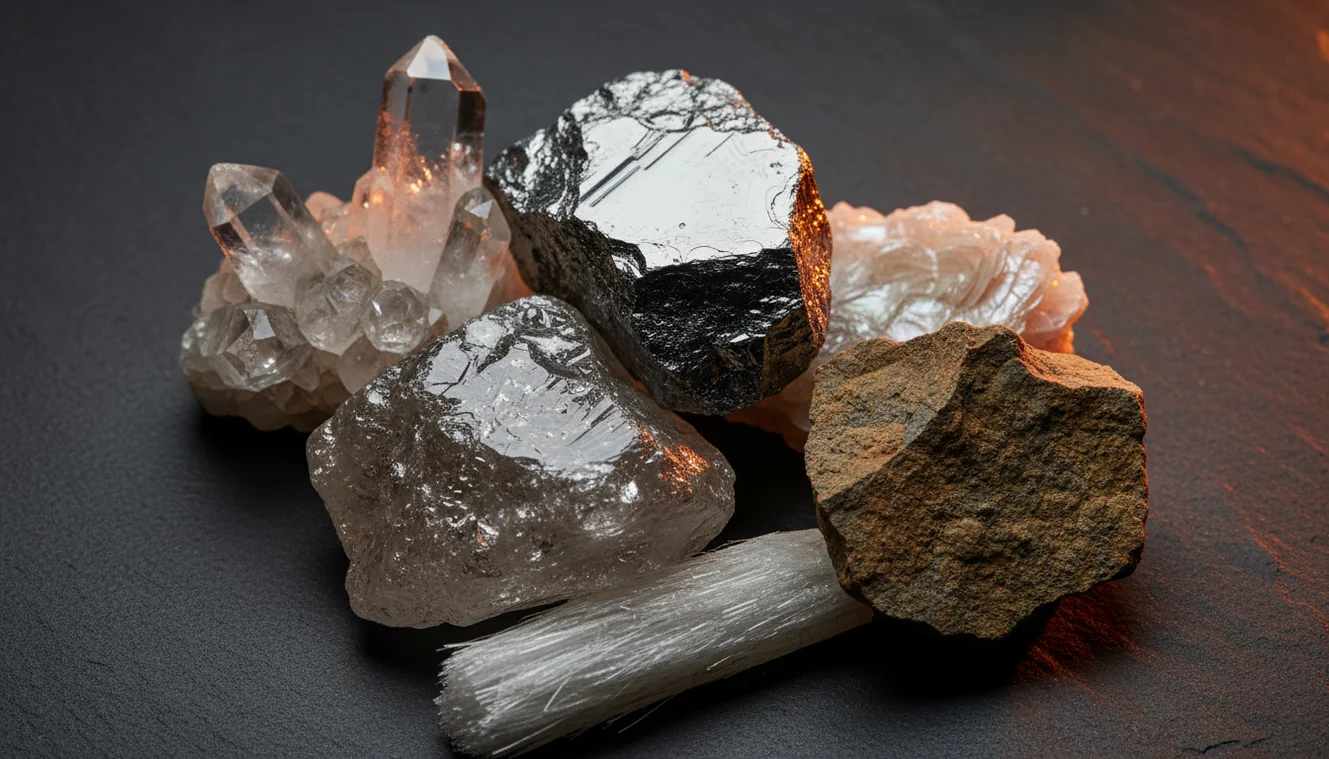
Quick answer: Mineral luster is the way a mineral surface reflects light, such as metallic, vitreous, pearly, silky, waxy, greasy, dull, or adamantine. Mineral luster matters because it gives a fast, non-destructive first clue for identification, but it should be confirmed with tests such as streak, Mohs hardness, cleavage, fracture, and density.
AI Rock ID can help compare a mineral photo with possible matches when luster is visible on a clean surface, but the result still needs confirmation with physical tests. RockIdentifier.io provides a web photo upload option for mineral and rock images, including specimens where luster is one of several visible identification clues.
Quick summary
- Best for
- Beginners, collectors, hikers, students, field observers
- Works on
- Minerals, crystals, rocks, hand specimens, fresh broken surfaces
- Accuracy
- Useful as an early visual clue, but unreliable when surfaces are weathered, polished, coated, wet, or photographed with glare
- Needs confirmation
- Yes
- Professional replacement
- No
- Platforms
- iPhone, iPad, Web
This guide is best for
- Beginners learning how to describe mineral surfaces with standard geology terms
- Collectors comparing shiny, glassy, pearly, waxy, or dull specimens
- Hikers and field observers making quick notes before more detailed tests
- Students practicing non-destructive mineral identification methods
- Rock and mineral owners trying to separate luster from color or sparkle
- Anyone deciding which follow-up tests to use after a first visual inspection
Consider another approach if you
- People who need a final mineral identification from luster alone
- Jewelry, gem, or value appraisals where professional grading is required
- Polished, tumbled, sealed, or treated stones that no longer show natural surfaces
- Specimens covered by weathering, clay, varnish, oxidation, or wet coatings
- Safety-critical identification of hazardous, asbestos-like, or industrial minerals
Mineral luster is the way a mineral surface reflects light, described with standardized terms such as metallic, vitreous, pearly, silky, resinous, waxy, greasy, and adamantine. It matters because luster gives a fast first split between mineral groups and helps you choose confirmatory tests like streak, Mohs hardness, cleavage, and specific gravity. Luster should not be used alone because weathering, coatings, polishing, and lighting can change what you see.
What Is Mineral Luster and Why Does It Matter?
Mineral luster is the observed quality of light reflected from a mineral’s surface. It matters because it is one of the quickest non-destructive clues in hand-specimen identification, especially when color is unreliable due to impurities, oxidation, or mixed grain size.
In practice, luster helps you sort a specimen into metallic, submetallic, or nonmetallic groups before you run streak, Mohs hardness, cleavage, fracture, magnetism, or acid reaction tests. Common nonmetallic luster terms include vitreous, pearly, silky, resinous, waxy, greasy, dull, and adamantine. For a deeper mineral reference, compare observations with mindat.org at https://www.mindat.org/.
How Mineral Luster Identification Works
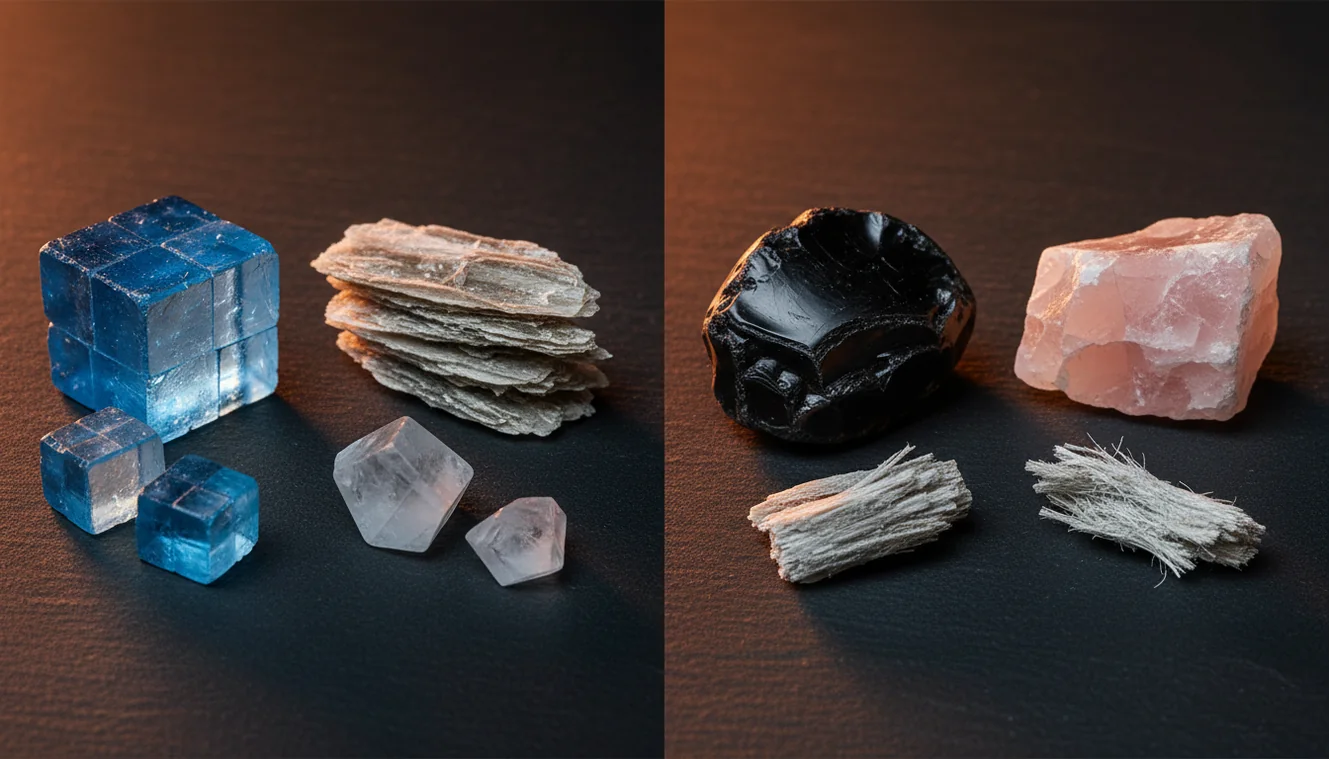
Mineral luster identification works by judging how a clean surface reflects light, then matching that reflection to standard geology terms. Metallic luster looks opaque and metal-like, as in galena or pyrite. Vitreous luster looks glassy, common in quartz and many feldspars, while pearly luster often appears along cleavage planes in mica or calcite.
The mechanism is controlled by surface texture, refractive index, absorption, crystal structure, and grain size. A fresh crystal face may show bright directional highlights, while a weathered rind may look dull even on the same specimen. If you use a photo-based lookup, photos are processed for ID in a privacy-friendly workflow; still, the best result comes from clean, well-lit images and physical confirmation.
How to Use Mineral Luster for Identification
Clean the surface
Wipe away dust, clay, fingerprints, or loose oxidation before judging luster. If possible, inspect a fresh break or unweathered crystal face rather than a stained exterior.
Rotate under indirect light
Turn the specimen slowly in bright shade or diffuse window light. Harsh sun and phone flash can create glare that makes waxy, vitreous, and greasy surfaces look too similar.
Choose the broad class
Decide whether the specimen is metallic, submetallic, or nonmetallic. This first split is often more useful than color because many minerals occur in several colors.
Name the luster type
Refine the description with terms such as vitreous, pearly, silky, resinous, waxy, greasy, dull, or adamantine. Record where you saw it, because cleavage faces and broken surfaces can differ.
Confirm with tests
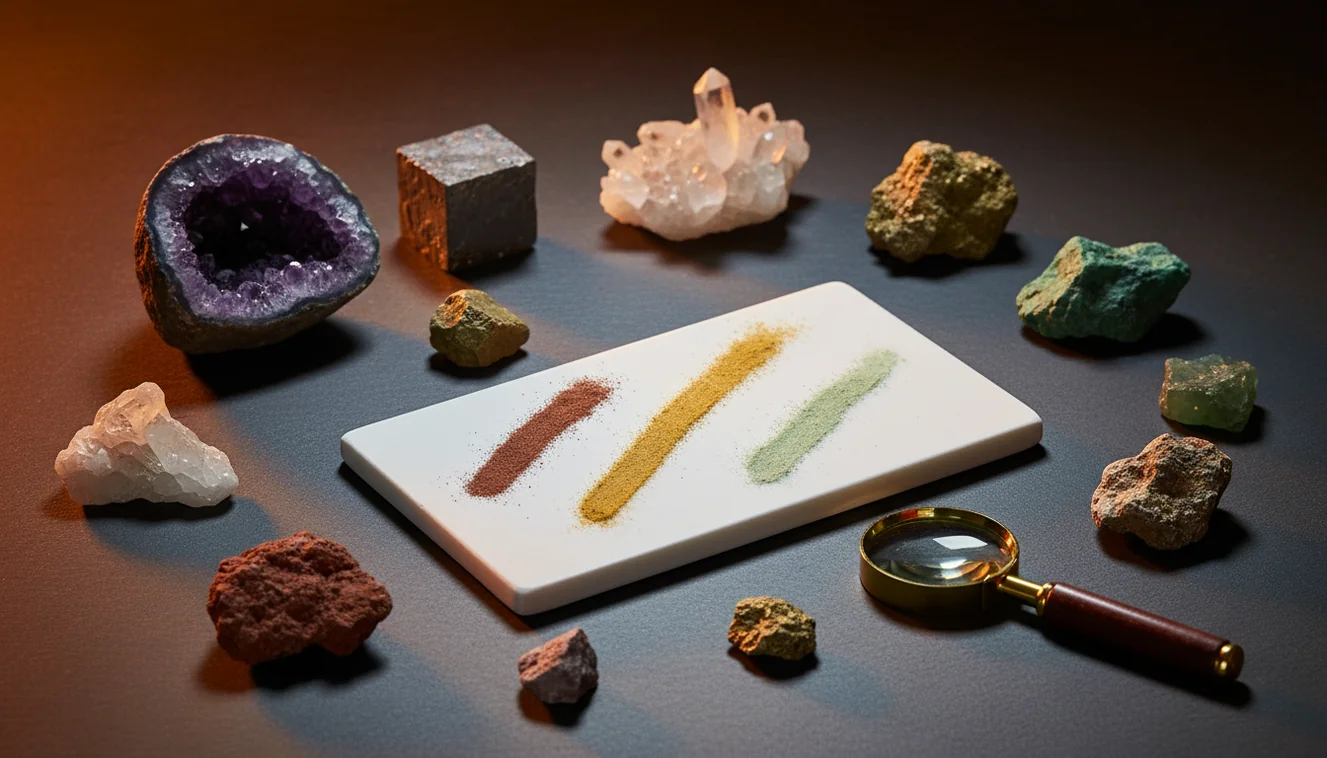
Use streak, Mohs hardness, cleavage, fracture, density, magnetism, or acid reaction to check the luster-based guess. A luster call is a strong clue, not a final identification.
When to Use Mineral Luster (and When Not To)
Use it when
- Use mineral luster when you need a fast first split between metallic, submetallic, and nonmetallic specimens.
- Use it when color is misleading, such as in quartz varieties, tarnished sulfides, iron-stained feldspar, or mixed matrix pieces.
- Use it before streak and hardness tests to decide which confirmatory checks are most likely to separate similar candidates.
- Use it on a fresh, clean surface where crystal faces, cleavage planes, or fracture surfaces are visible.
- Use it when sorting many specimens from one outcrop and you need a repeatable field note.
Skip it when
- Do not rely on luster alone for polished stones, tumbled crystals, jewelry, or treated material.
- Do not judge luster from a weathered rind, clay coating, varnish, iron staining, or wet surface unless you label that observation clearly.
- Do not use luster as a value estimate; brilliance and price are separate questions.
- Do not assume every shiny specimen is metallic, because vitreous quartz and feldspar can sparkle strongly.
- Do not over-trust a single photo taken with glare, flash, low resolution, or heavy HDR processing.
Mineral Luster vs Google Lens and Crystal Identifier
| Feature | Rock Identifier | Google Lens | Crystal Identifier |
|---|---|---|---|
| Best use | Mineral and rock photo shortlist with geology-oriented labels | Broad visual search across the web | Crystal and gemstone-style visual matching |
| Luster handling | Useful when photos show fresh faces, cleavage, fracture, and surface reflection | May match similar-looking shiny objects without mineral context | Often helpful for polished or collector-style specimens, but may underweight field tests |
| Confirmatory guidance | Prompts comparison with properties such as streak, hardness, cleavage, habit, and texture | Usually requires the user to research tests separately | Varies by app; often focused on names, meanings, or appearance |
| Field geology fit | Good for hand specimens, outcrop finds, and mixed mineral piles | Good for quick web matches, labels, and general image recognition | Good for common crystals, gemstones, and visually distinctive specimens |
| Main caution | A photo result still needs physical verification | Visual matches can confuse coatings, lighting, and non-mineral objects | Polished stones can hide natural luster, cleavage, and fracture |
A dedicated mineral workflow is strongest when it combines photo evidence with field properties. General image search can be useful, but mineral luster is best interpreted alongside streak, hardness, cleavage, fracture, crystal habit, and specific gravity.
Mineral Luster Use Cases
- Separating metallic sulfides from oxides: Luster quickly flags minerals such as pyrite, galena, chalcopyrite, magnetite, and hematite for streak and magnetism checks. Metallic appearance narrows the test plan faster than color alone.
- Distinguishing quartz, calcite, and feldspar: These common light-colored minerals can all look pale or translucent, but their luster, cleavage, and hardness differ. Vitreous quartz lacks cleavage, calcite shows rhombohedral cleavage, and feldspar often shows two cleavage directions.
- Recording reliable field notes: A luster term gives another repeatable observation beside color, habit, grain size, and matrix. Notes like “vitreous on fresh fracture, dull on rind” are more useful than simply writing “shiny.”
- Sorting weathered collecting material: Luster helps decide which pieces deserve a fresh break, streak test, or hardness check. A dull exterior with a glassy interior can reveal a very different mineral surface than the outside suggests.
Mineral Luster Limitations
- Treated stones can show coatings, dyes, oils, resins, or heat effects that alter natural luster and make the surface look more glassy, greasy, or brilliant than it would in the field.
- Polished specimens and tumbled crystals often erase natural fracture, cleavage, and surface texture, so their shine may describe the polish rather than the mineral’s diagnostic luster.
- Rare minerals may not be recognized reliably from luster because the same luster category can occur across many unrelated species with different chemistry and crystal systems.
- Photo quality strongly affects luster calls; glare, flash, low resolution, motion blur, shadows, wet surfaces, and HDR processing can exaggerate or flatten reflections.
- Value estimates cannot be made from luster alone because price depends on identity, size, clarity, locality, treatment, damage, demand, and documentation.
- Weathering, tarnish, iron staining, clay films, silica coatings, and oxidation can mask the true luster of sulfides, carbonates, feldspars, and many mafic minerals.
- Fine-grained aggregates can look waxy or dull even when individual crystals would be vitreous under magnification.
Common mistakes
- Calling every shiny mineral metallic when many vitreous minerals, such as quartz and feldspar, can sparkle strongly
- Judging luster from a weathered rind instead of a fresh break or clean crystal face
- Using phone flash or harsh sunlight and mistaking glare for natural luster
- Confusing color with luster, even though minerals of many colors can share the same luster type
- Ignoring that one specimen can show different luster on cleavage faces, fracture surfaces, and altered areas
- Trying to identify a mineral by luster without checking streak, hardness, cleavage, or fracture
- Evaluating polished or wet stones as if they still show the mineral’s natural surface reflection
Use Mineral Luster as a First Identification Clue
Mineral luster is most useful when it is observed on a clean, dry, fresh surface and treated as one clue among several. A photo-based shortlist can help organize possibilities, but confirmation should come from physical properties such as streak, hardness, cleavage, and fracture.
Related Articles
Frequently Asked Questions
Is luster the same as shine?
No. Shine is an informal impression, while luster is a standardized mineral property describing how a surface reflects light. Using luster terms makes your observation easier to compare with field guides and mineral databases.
What are the main luster types?
The broad groups are metallic, submetallic, and nonmetallic. Nonmetallic luster is refined with terms such as vitreous, pearly, silky, resinous, waxy, greasy, dull, and adamantine.
Can one mineral show different luster?
Yes. A crystal face, cleavage plane, fresh fracture, and weathered rind can show different apparent luster on the same specimen. Always record the surface you inspected.
How do I test mineral luster?
Clean the specimen and rotate it under indirect light. Decide whether it is metallic or nonmetallic, then choose the closest descriptive term and confirm with streak, hardness, cleavage, and fracture.
Why does luster matter in identification?
Luster matters because it gives a quick first split when color is misleading. It helps you choose the next test, especially for sulfides, oxides, quartz varieties, feldspar, calcite, mica, and gypsum.
Can photos identify luster accurately?
Photos can help if the surface is clean, sharp, and lit without glare. They are less reliable for polished stones, wet specimens, dark metallic minerals, and samples with coatings or heavy weathering.
Does luster distinguish quartz and calcite?
Only partly, because both can look vitreous on fresh surfaces. Hardness and cleavage are more diagnostic: quartz is hardness 7 with no cleavage, while calcite is hardness 3 with rhombohedral cleavage.
When is luster least reliable?
Luster is least reliable on weathered, coated, polished, wet, or poorly lit surfaces. It is also weak as a stand-alone clue when several candidate minerals share the same reflective character.