Mineral vs Rock: How to Tell the Difference
Mineral vs rock: how to tell the difference starts with one question: is the specimen one consistent material or a natural aggregate? Use photo clues first, then confirm with hardness, streak, cleavage, and texture.


Drop a mineral photo here or tap to upload
JPG, PNG, WebP, HEIC • Max 50 MB • 1 free scan per day

Analyzing your specimen…
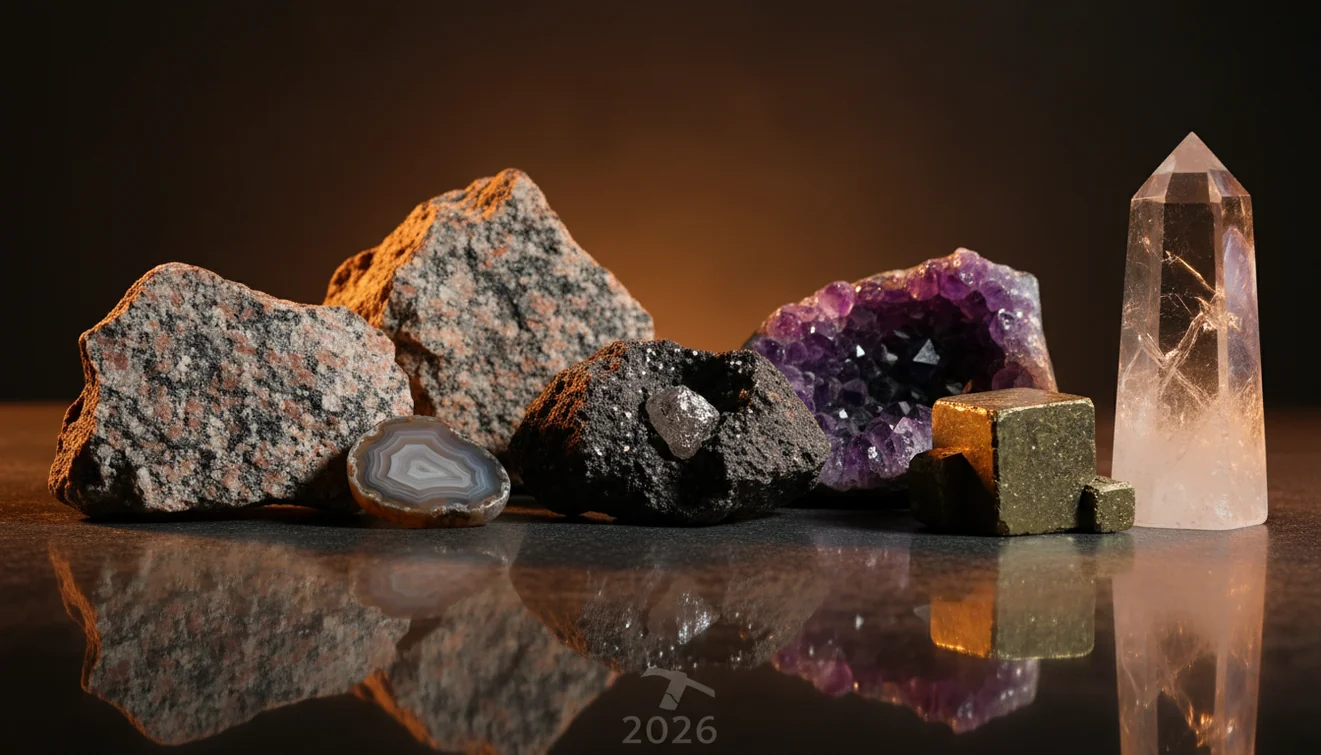
Quick answer: Mineral vs rock: how to tell the difference starts by asking whether the specimen is one consistent substance or a natural aggregate of multiple materials. A mineral usually has repeatable hardness, streak, cleavage, and crystal structure, while a rock often shows mixed grains, layers, clasts, glass, fossils, or variable test results.
AI Rock ID helps users approach mineral vs rock identification by comparing a specimen photo with visible clues such as texture, crystal habit, luster, and grain relationships. RockIdentifier.io supports the same topic on the web by allowing photo upload as a first-pass check before confirming the specimen with hardness, streak, cleavage, and geologic context.
Quick summary
- Best for
- Collectors, hikers, students, teachers, beginners, field note takers
- Works on
- Rocks, minerals, crystals, rough specimens, hand samples
- Accuracy
- Useful for a first distinction when photo clues and simple physical tests agree; uncertain for polished, weathered, or mixed specimens.
- Needs confirmation
- Yes
- Professional replacement
- No
- Platforms
- iPhone, iPad, Web
This guide is best for
- Beginners deciding whether to name a specimen as a mineral species or a rock type
- Collectors labeling mixed hand samples, crystals, and rough stones
- Students learning the difference between composition, crystal structure, and texture
- Hikers or field observers comparing visible grains, layers, vesicles, or crystal habit
- Teachers explaining why quartz, granite, obsidian, and quartzite are classified differently
- Users checking whether a photo identification should be confirmed with hardness, streak, or cleavage
Consider another approach if you
- Users who need lab-grade mineral chemistry or crystallographic confirmation
- Gem buyers trying to determine value, treatment history, or authenticity
- People identifying faceted, tumbled, or heavily polished stones with no natural texture visible
- Rare-mineral collectors who require species-level verification
- Users trying to force mineraloids, volcanic glass, or organic materials into a simple mineral-or-rock answer
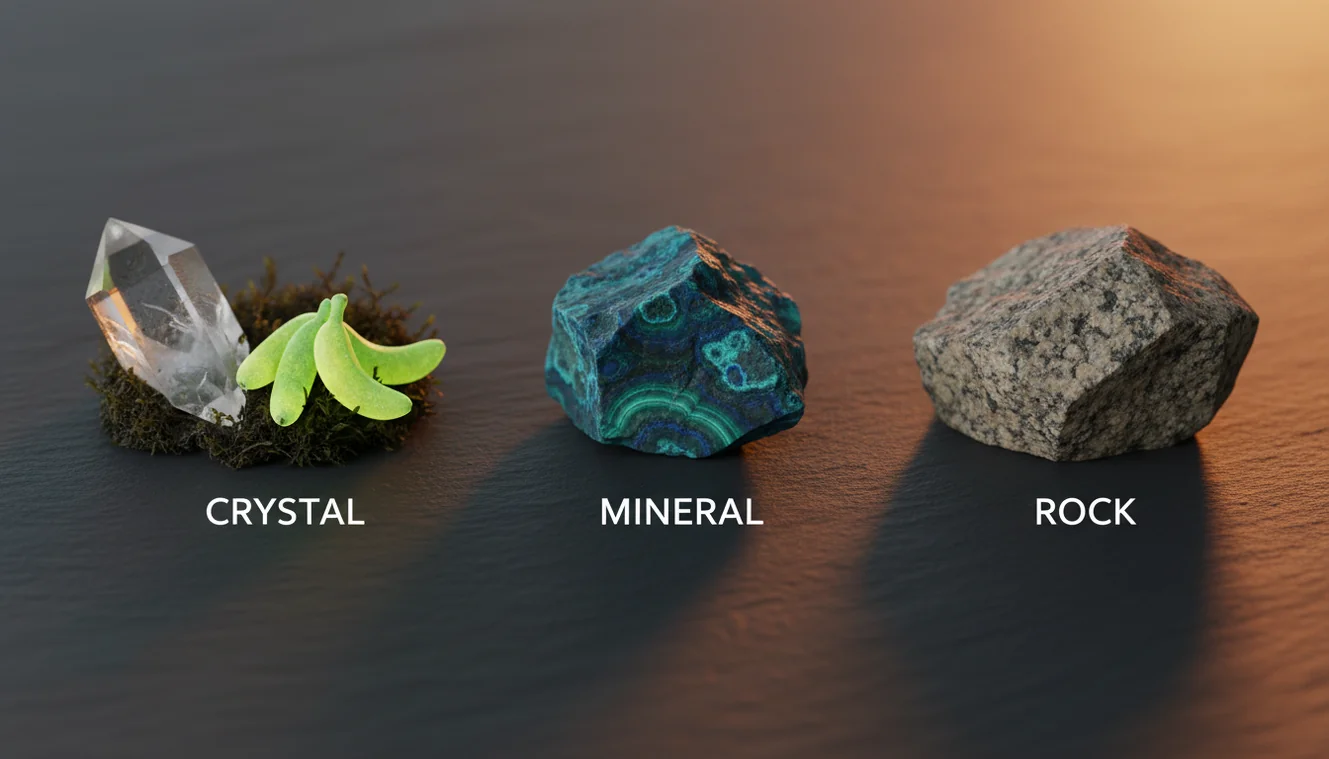
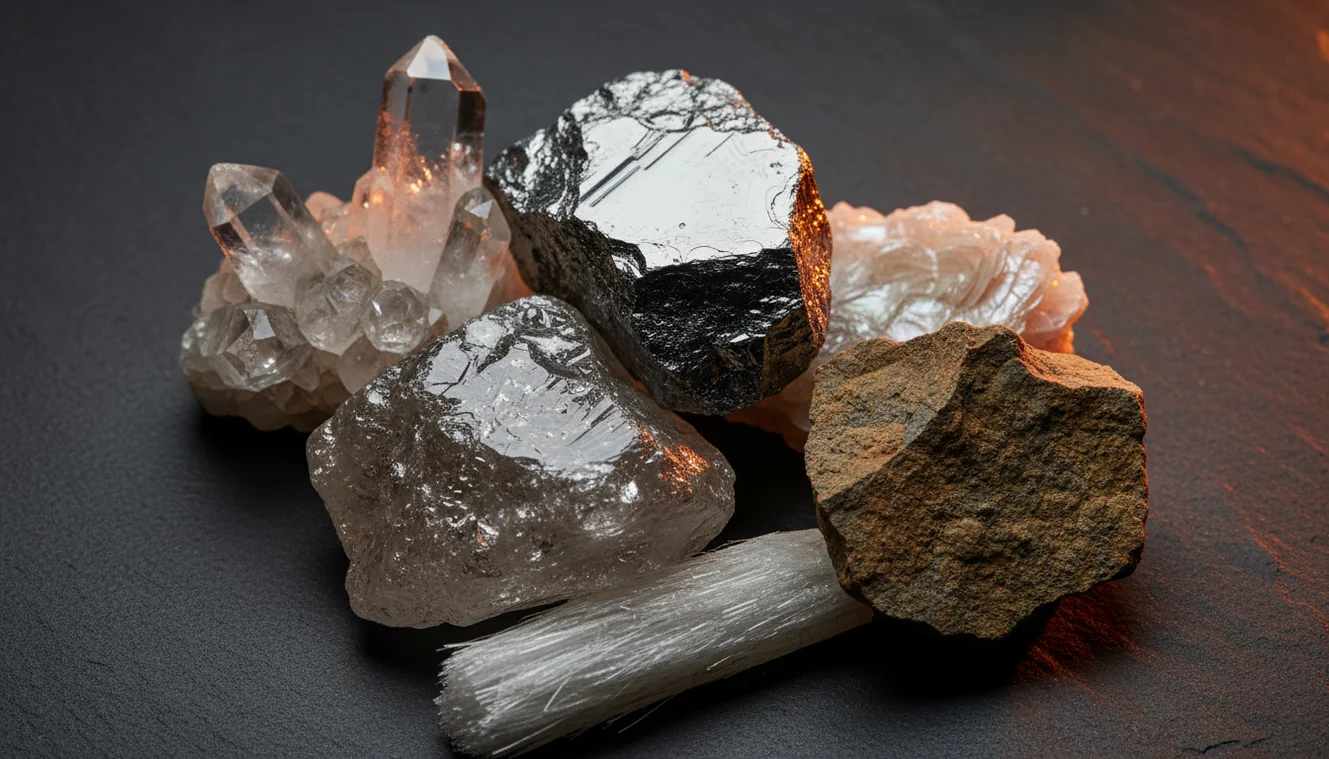
A mineral is a naturally occurring solid with a defined chemical composition and crystal structure. A rock is an aggregate of one or more minerals, mineraloids, glass, or organic material. If properties stay consistent across the specimen, think mineral; if grains, textures, or test results vary, think rock.
What Is Mineral vs Rock: How to Tell the Difference?
Mineral vs rock: how to tell the difference is a practical field distinction between a single crystalline substance and a mixed geologic material. A mineral has a specific chemical composition and an ordered crystal lattice, so its Mohs hardness, streak, cleavage, luster, and specific gravity tend to repeat from spot to spot.
A rock is a natural aggregate, often made of multiple minerals plus possible volcanic glass, mineraloids, fossils, or organic matter. Granite, for example, contains quartz, feldspar, and mica, so one grain may resist scratching while another cleaves easily. The USGS gives the same core distinction between rocks and minerals: https://www.usgs.gov/faqs/what-difference-between-rock-and-mineral.
Rock Identifier can give a photo-based first pass, especially when visible grains, banding, vesicles, or crystal habit are clear. Treat the result as a starting hypothesis, then verify it with simple physical tests.
How Mineral vs Rock: How to Tell the Difference Works
The method works by separating composition, structure, and texture. First, inspect whether the sample is uniform: a mineral should show one dominant property set, while a rock usually shows mixed grains, layers, clasts, foliation, or a matrix. Next, test more than one spot for hardness, streak, and cleavage. Repeatable hardness and a single streak color support a mineral ID; variable scratch resistance or several cleavage behaviors support a rock ID.
Photo-based lookup adds a fast visual screen for color, luster, crystal habit, grain size, and rock texture. Photos are processed for identification in a privacy-friendly way, and the best results come from sharp images in natural light. The App Store download link on the page is useful when you want to run the same workflow in the field.
How to Tell Mineral vs Rock
Inspect uniformity
Look across the whole specimen for one consistent material. A single mineral usually keeps the same luster, color range, fracture style, and crystal habit, while a rock commonly shows mixed grains, layers, clasts, vesicles, or a visible matrix.
Test hardness in several spots
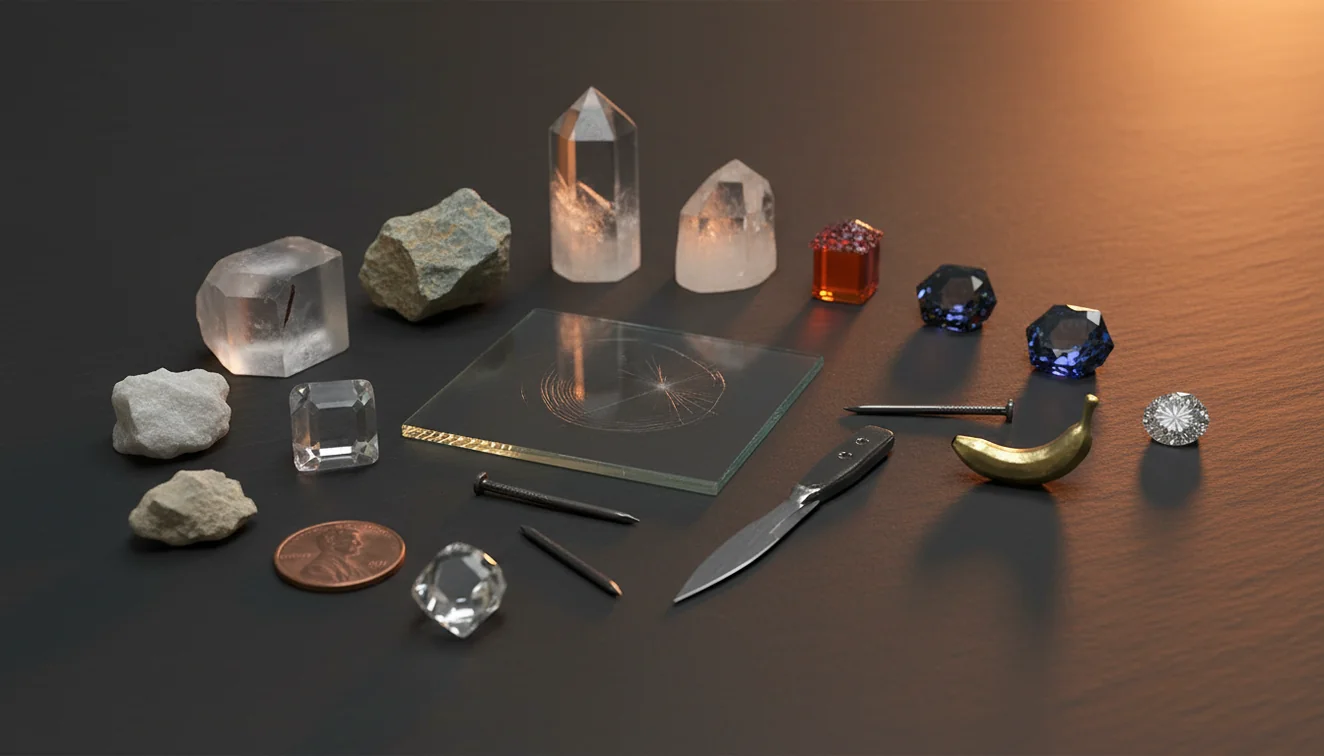
Scratch separate areas with a fingernail, copper coin, steel point, or glass plate. If one area scratches easily and another does not, you are probably testing different mineral grains inside a rock.
Check streak and cleavage
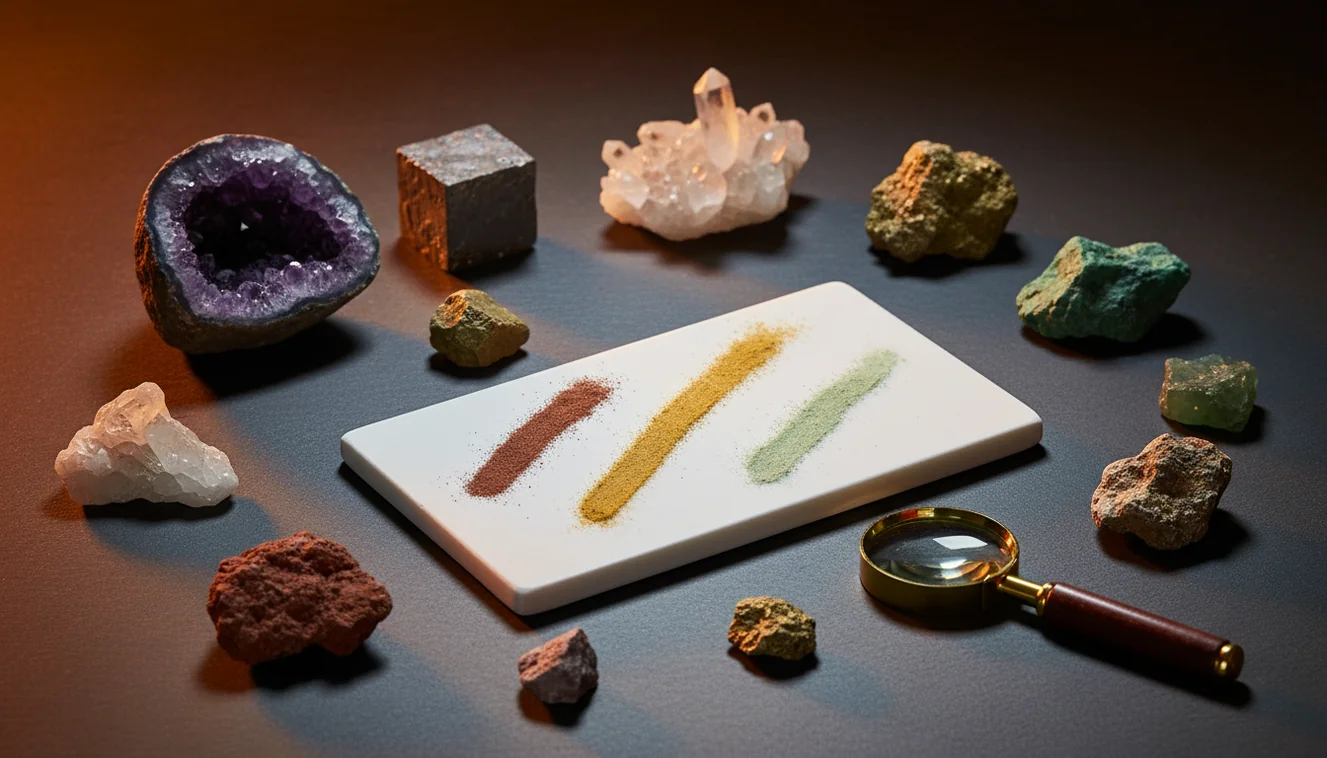
Use an unglazed streak plate if available, then look for flat breakage planes. A mineral tends to give one repeatable streak and predictable cleavage angles; a rock may show multiple streak colors or conflicting fracture patterns.
Read the texture
Classify visible texture before naming the sample. Interlocking crystals suggest igneous rock, rounded grains in cement suggest sedimentary rock, and aligned platy minerals suggest metamorphic rock.
Confirm with context
Use location, field setting, acid reaction, magnetism, density, and nearby rock units to narrow the ID. A photo suggestion is strongest when it matches both the specimen’s physical tests and its geologic context.
When to Use Mineral vs Rock: How to Tell the Difference (and When Not To)
Use it when
- Use it when a specimen has mixed visual clues and you need to decide whether to identify a mineral species or classify a rock type.
- Use it when hardness, streak, or cleavage results change from one part of the sample to another.
- Use it when labeling a collection, teaching beginners, or writing field notes where “quartz” and “quartzite” must not be confused.
- Use it when a photo result names a mineral but the sample clearly has grains, layers, vesicles, fossils, or a cemented matrix.
- Use it before choosing tests: streak and cleavage are strongest for minerals, while texture, acid reaction, and grain relationships are stronger for rocks.
Skip it when
- Do not use it as a final species-level identification for rare minerals without lab confirmation.
- Do not rely on it for faceted gems or heavily polished stones where natural texture has been removed.
- Do not use photo appearance alone to separate minerals with similar color and luster, such as calcite and quartz.
- Do not use it to estimate market value, grade, provenance, or treatment history.
- Do not force a binary answer for mineraloids and volcanic glass; opal and obsidian sit in important gray zones.
Mineral vs Rock: How to Tell the Difference vs Google Lens and Geology Toolkit
| Feature | Rock Identifier | Google Lens | Geology Toolkit |
|---|---|---|---|
| Primary purpose | Photo-based rock, mineral, crystal, and gemstone identification with geology-focused prompts. | General visual search across the web, useful for broad lookalikes and shopping-style image matches. | Geology reference and field tools, often stronger for users who already know the test results. |
| Mineral vs rock workflow | Guides users toward texture, crystal habit, hardness, streak, and cleavage checks after a photo scan. | May return visually similar minerals, rocks, jewelry, or decorative objects without separating definitions. | Can support classification, but usually requires more manual lookup and geology vocabulary. |
| Best for beginners | Good when the user has a specimen photo and needs a structured next step. | Good when the user wants quick visual matches from the open web. | Good when the user wants charts, maps, or field references and can interpret them. |
| Main weakness | Photo results still need confirmation with physical tests and context. | Visual matches can confuse polished stones, trade names, and unrelated lookalikes. | Less convenient for instant photo-first identification. |
For mineral versus rock decisions, a dedicated scanner is usually better than a general image search because it asks geology-specific questions. Google Lens is useful for broad visual discovery, but it may not distinguish a mineral species from a rock aggregate unless the image and surrounding web results are very clear.
Mineral vs Rock: How to Tell the Difference Use Cases
- Field collecting: Use the distinction before bagging and labeling samples. If the specimen shows several mineral grains, record the rock texture and setting; if it is uniform, record mineral properties such as hardness, streak, cleavage, and crystal habit.
- Classroom identification: Students often memorize names before learning categories. Starting with mineral versus rock prevents common mistakes like calling granite a mineral or treating obsidian as a crystalline mineral.
- Crystal and gem sorting: Many gem materials are minerals, but some are mineraloids, glass, organic materials, or minerals in matrix. The distinction helps separate a single gem species from a decorative rock containing attractive crystals.
- Photo ID verification: Use photo-based lookup to generate candidates, then test whether the specimen behaves consistently. A result that looks plausible in a photo can still be wrong if hardness, streak, or texture contradicts it.
- Collection cataloging: A clean catalog separates species names from rock names. Label quartz as a mineral, granite as a rock, and quartz in granite as a mineral occurrence within a rock matrix.
Mineral vs Rock: How to Tell the Difference Limitations
- Treated stones can mislead visual identification because dyeing, heating, coating, fracture filling, or resin stabilization may change color, luster, and surface texture.
- Polished specimens remove natural fracture surfaces, grain boundaries, cleavage faces, weathering rind, and matrix clues, making mineral versus rock decisions harder.
- Rare minerals may require thin section petrography, X-ray diffraction, Raman spectroscopy, or chemical analysis; field tests and photos are not enough for confirmation.
- Photo quality strongly affects results. Blurry images, harsh flash, wet surfaces, shadows, scale problems, and single-angle photos can hide grain texture or cleavage.
- Value estimates are outside the scope of mineral versus rock identification. Price depends on size, quality, provenance, treatment, demand, legality, and expert appraisal.
- Weathered surfaces can mask diagnostic traits. A fresh broken surface may show true color, crystal habit, grain boundaries, or reaction to acid more reliably.
- Some materials are gray-zone cases. Obsidian is volcanic glass, opal is a mineraloid, coal is organic-rich rock, and amber is organic rather than a mineral.
Common mistakes
- Calling every shiny or crystal-like specimen a mineral without checking whether it contains mixed grains.
- Identifying a whole rock by testing only one mineral grain on its surface.
- Using color alone to separate minerals and rocks, even though both can vary widely in color.
- Assuming a single hardness result represents the entire specimen when different spots scratch differently.
- Confusing a rock name with a mineral name, such as treating granite as one mineral instead of an aggregate.
- Ignoring texture clues such as foliation, cemented grains, vesicles, or interlocking crystals.
- Treating a photo match as final even when streak, cleavage, hardness, or geologic context disagrees.
Check Mineral vs Rock Identification With Photos and Simple Tests
A photo-based result can help frame the first question: whether the specimen is one consistent mineral or a mixed rock. Confirm the suggestion by testing more than one spot for hardness, streak, cleavage, and texture.
Related Articles
Frequently Asked Questions
Can a rock be one mineral?
Yes. A rock made mostly of one mineral is called monomineralic, such as marble dominated by calcite or quartzite dominated by quartz. It is still a rock because it forms as a geologic aggregate with texture, grain boundaries, and possible impurities.
Is obsidian a mineral?
No. Obsidian is volcanic glass, so it lacks the ordered crystal lattice required for a mineral. It is usually treated as a rock material formed by rapid cooling of silica-rich lava.
What is the fastest test?
Test consistency in several places. If hardness, streak, and cleavage stay the same, the specimen is likely a mineral; if the results change from grain to grain, it is likely a rock.
Are gems minerals or rocks?
Most gemstones are minerals, including corundum for ruby and sapphire or beryl for emerald and aquamarine. Some gem materials are mineraloids, organic substances, or rocks containing attractive mineral crystals.
Why do rocks vary in hardness?
Rocks are mixtures, so the hardness depends on which mineral grain you test. In granite, quartz is much harder than mica, so a single Mohs number does not describe the whole rock well.
Is quartz a rock or mineral?
Quartz is a mineral with a consistent chemical composition, SiO2, and a crystalline structure. Quartzite is a rock made mostly of quartz grains recrystallized during metamorphism.
Is granite a mineral?
No. Granite is an igneous rock made mainly of quartz, feldspar, and mica. Its visible interlocking grains and variable mineral properties are the clues that it is a rock.
Do minerals have crystals?
Minerals have an internal crystal structure even when the specimen does not show perfect external crystal faces. A broken quartz pebble may look massive, but its atoms are still arranged in an orderly lattice.
Can photos identify both?
Photos can suggest likely mineral or rock candidates when color, luster, grain size, texture, and crystal habit are visible. Physical tests are still needed because many unrelated specimens look similar in a single image.