
Metal Identifier - Identify Metals from Photos
Upload metal photos
Clear, well-lit images help the AI identify it more accurately.

Analyzing metallic properties...
Checking texture, color, structure, and lookalikes…
Upload a photo of any metallic find, alloy sample, or ore specimen. Our AI analyzes surface characteristics to help identify the metal type in seconds.


Whether you've uncovered a mysterious metallic object while metal detecting, inherited old coins or artifacts, or found ore samples during a hike, identifying metals can be surprisingly challenging. Different metals and alloys share similar appearances, and surface oxidation or patina can obscure their true identity.
RockIdentifier.io uses advanced AI image recognition to analyze your metal photos and provide instant identification suggestions. While laboratory testing remains the gold standard for precise metal analysis, our free tool offers a fast, accessible starting point for collectors, prospectors, scrap dealers, and curious hobbyists exploring the world of metals and metallurgy.
Good fit for
- Native metal specimens like copper, silver, or gold nuggets
- Ore samples containing visible metallic minerals
- Scrap metal pieces needing basic categorization
- Antique metal objects with unknown composition
- Meteorite suspects with metallic appearance
Not for
- Precise alloy composition percentages
- Heavily corroded metals with no visible surface
- Plated items requiring destructive testing
- Certified precious metal authentication
At a glance
Metal identification is the process of determining the type, composition, or classification of metallic materials through visual inspection, physical testing, or chemical analysis. Common methods range from simple visual assessment and magnet tests to advanced spectroscopy and assay techniques.
| Primary Use | Identifying metal types from photos |
|---|---|
| Common Targets | Native metals, ores, alloys, scrap |
| Analysis Method | AI visual pattern recognition |
| Best Results | Clean, well-lit metallic surfaces |
| Limitations | Cannot determine exact alloy percentages |
| Cost | Free online tool |
Understanding Metal Identification Challenges
Metal identification presents unique challenges that differ significantly from identifying rocks or minerals. Metals can exist in pure native forms, as complex alloys combining multiple elements, or locked within ore minerals where they may not display their characteristic metallic luster. Surface conditions dramatically affect appearance, a freshly cut aluminum surface looks entirely different from one exposed to years of weathering.
The human eye struggles to distinguish between many common metals. Stainless steel, nickel, and chrome plating can appear nearly identical. Brass and bronze share golden-yellow hues that overlap with some copper alloys. Even experienced metallurgists often require testing beyond visual inspection for definitive identification. Our AI metal identifier helps bridge this gap by analyzing subtle visual cues including color temperature, surface texture, oxidation patterns, and crystalline structure visible in ore specimens.
Understanding these limitations helps set realistic expectations. While AI analysis provides valuable starting points and can confidently identify many common metals and ores, some identifications require physical testing methods like spark tests, acid tests, or professional spectrographic analysis for confirmation.
Native Metals and Natural Specimens
Native metals occur in nature in their pure elemental form, making them particularly exciting finds for prospectors and mineral collectors. Gold, silver, copper, and platinum group metals are the most commonly encountered native metals, though native iron (excluding meteorites) remains exceptionally rare on Earth's surface.
When photographing native metal specimens for identification, capturing their characteristic luster is essential. Native copper often displays a distinctive salmon-pink color on fresh surfaces, developing green patina over time. Native silver tarnishes to gray or black but shows brilliant white metallic luster when scratched. Native gold maintains its yellow color regardless of weathering, though it may be coated with iron oxides in placer deposits.
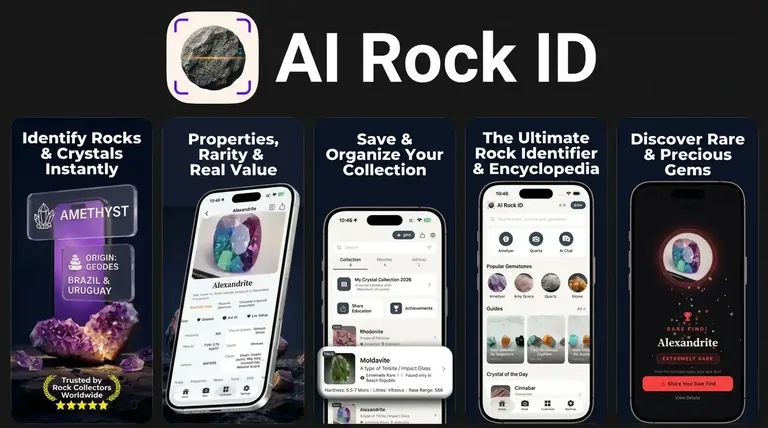
The AI Rock ID app excels at identifying native metal specimens when photos clearly show metallic surfaces. For specimens partially embedded in matrix rock, try to capture both the metallic portions and surrounding material, as the host rock often provides valuable context for identification. Quartz veins hosting native gold or copper-bearing basalt can help narrow down possibilities significantly.
Ore Minerals and Metallic Minerals
Many valuable metals occur not as native elements but as ore minerals, chemical compounds containing the desired metal combined with other elements. These metallic minerals often display the characteristic metallic luster that makes them visually striking, even though they require smelting to extract pure metal.
Common metallic ore minerals include galena (lead sulfide) with its distinctive cubic crystals and silver-gray color, pyrite (iron sulfide) known as fool's gold for its brassy yellow appearance, and chalcopyrite (copper iron sulfide) displaying iridescent tarnish. Hematite and magnetite represent important iron ores, while sphalerite contains zinc and cassiterite yields tin.
RockIdentifier.io can help distinguish between these metallic minerals by analyzing crystal habit, color, and surface characteristics. Pyrite's cubic crystals and striated faces differ markedly from chalcopyrite's more irregular masses with peacock-colored tarnish. Galena's perfect cubic cleavage creates distinctive stepped surfaces that AI recognition can identify. When uploading ore specimens, include multiple angles if possible to capture crystal shapes and cleavage patterns.
Identifying Scrap Metals and Alloys
Scrap metal identification serves practical purposes for recyclers, hobbyists, and anyone dealing with unknown metallic materials. Different metals command vastly different prices at recycling centers, and misidentification can mean significant financial loss or contamination of valuable batches.
Common scrap metals include ferrous materials (iron and steel), aluminum, copper, brass, bronze, stainless steel, and lead. Each displays characteristic visual properties, though surface conditions greatly affect appearance. Clean copper shows distinctive orange-red color, while weathered copper develops green verdigris. Aluminum appears silvery-white and notably lightweight. Brass ranges from yellow to reddish depending on zinc content.
Our metal identifier tool provides helpful starting points for scrap categorization, though we recommend supplementing AI analysis with simple physical tests. A magnet test quickly separates ferrous from non-ferrous metals. Weight comparison helps distinguish aluminum from stainless steel. For valuable scrap, professional XRF analysis provides definitive composition data that visual identification cannot match.
Common Metal Lookalikes and Misidentifications
Certain metals and metallic materials frequently confuse even experienced observers. Understanding common lookalikes helps interpret AI identification results and guides additional testing when needed.
Pyrite and gold represent the classic confusion pair, earning pyrite its fool's gold nickname. However, they differ significantly upon close inspection, pyrite forms cubic crystals with striated faces and shatters when struck, while gold appears in irregular nuggets or flakes, bends without breaking, and maintains color in shadow. Chalcopyrite also mimics gold but displays iridescent tarnish that gold never shows.
Silver-colored metals present another identification challenge. Stainless steel, nickel, chrome, platinum, and silver can appear nearly identical in photographs. Aluminum shares this silver appearance but weighs significantly less. Galena's metallic gray resembles silver but displays perfect cubic cleavage. When uploading silver-toned metals to RockIdentifier.io, note any distinguishing features like weight, magnetism, or tarnish patterns in your assessment of results.
Copper-colored materials include native copper, bronze, brass, and weathered iron. Fresh copper shows salmon-pink tones, while brass appears more yellow and bronze more brown. Rusty iron can mimic copper colors but shows different texture and responds to magnets.
Photography Tips for Metal Identification
Quality photographs dramatically improve AI metal identification accuracy. Metallic surfaces present unique photographic challenges due to their reflective nature, requiring thoughtful lighting and positioning.
Avoid direct flash, which creates harsh reflections that obscure surface details and distort color perception. Instead, use diffused natural light or position your specimen near a window with indirect sunlight. Overcast days provide ideal lighting conditions for photographing metals, eliminating harsh shadows while maintaining accurate color representation.
Capture multiple angles to show three-dimensional form, crystal structure if present, and any variation in surface appearance. Include a common object for scale, a coin or ruler helps viewers and AI systems understand specimen size. For ore samples, photograph both weathered exterior surfaces and any fresh breaks that reveal internal character.
Clean specimens when possible without damaging them. Dust and debris obscure surface details that aid identification. For tarnished metals, consider photographing both tarnished surfaces and any areas where fresh metal shows through scratches or breaks. The AI Rock ID iPhone app allows you to capture and analyze multiple images, improving identification confidence through varied perspectives.
Limitations of Visual Metal Identification
Honest acknowledgment of limitations ensures users maintain appropriate expectations and pursue additional testing when stakes are high. Visual identification, whether by human experts or AI systems, cannot determine precise alloy compositions or authenticate precious metals for commercial purposes.
Plated materials present particular challenges. Gold-plated brass, silver-plated copper, and chrome-plated steel appear identical to solid versions in photographs. Only destructive testing or specialized equipment can reveal plating. Similarly, filled or clad materials, like gold-filled jewelry or clad coinage, require cross-sectional examination or specific gravity testing for identification.
Surface treatments including anodizing, powder coating, and various patinas can completely mask underlying metal identity. Heavily corroded specimens may retain no visible metallic surface for analysis. In these cases, our tool may suggest possibilities based on corrosion products, but confidence remains limited.
For valuable finds, insurance purposes, or commercial transactions, always seek professional verification. Assay offices, metallurgical laboratories, and certified appraisers provide definitive analysis that visual identification cannot replace. RockIdentifier.io serves as an educational starting point and preliminary screening tool, not a substitute for professional authentication.
Beyond Visual ID: Complementary Testing Methods
Combining AI visual identification with simple physical tests significantly improves accuracy. Several tests require no special equipment and can be performed safely at home.
The magnet test immediately separates ferrous metals (iron, steel, nickel) from non-ferrous materials. Note that stainless steel varies, some grades are magnetic while others are not. Weight assessment helps distinguish aluminum from heavier metals of similar appearance. Specific gravity testing, using water displacement, provides more precise density measurements.
Acid testing remains standard for precious metal verification. Testing kits using nitric acid and aqua regia can confirm gold, silver, and platinum, though these require careful handling. Streak testing on unglazed porite helps identify some metallic minerals, pyrite leaves a greenish-black streak while gold leaves a golden streak.
For serious collectors or prospectors, investing in a portable XRF analyzer provides laboratory-quality elemental analysis in the field. While expensive, these devices offer definitive identification that no visual method can match. Use RockIdentifier.io for initial screening, then apply appropriate testing methods based on your identification needs and the value of specimens in question.
How to Use This Metal Identifier
Prepare Your Metal Specimen
Clean the surface gently to remove loose dirt or debris. If safe, expose a fresh surface by scratching an inconspicuous area to reveal true metal color beneath oxidation.
Photograph in Good Lighting
Use diffused natural light, avoiding direct flash. Capture the metallic luster without harsh reflections that obscure surface details and distort color accuracy.
Upload to RockIdentifier.io
Select your clearest photo showing metallic surfaces, crystal structure if present, and any distinctive features. Include scale reference when possible.
Review AI Analysis Results
Examine suggested identifications and confidence levels. Read provided information about each possibility to assess which best matches your specimen's characteristics.
Confirm with Additional Testing
For important identifications, supplement AI results with physical tests like magnet checks, weight assessment, or professional analysis as appropriate for your needs.
More Identification Tools
Meteorite Identifier
Analyze metallic specimens that might be iron or stony-iron meteorites from space
Gold Identifier
Specialized identification for gold nuggets, gold ore, and fool's gold lookalikes
Mineral Identifier
Identify metallic minerals and ore specimens in your collection
Rock Identifier
General rock and mineral identification for all specimen types
Crystal Identifier
Identify crystalline metallic minerals like pyrite and galena
Gemstone Identifier
Identify precious and semi-precious stones including metallic gems
Frequently Asked Questions
Can AI identify what type of metal something is from a photo?
AI can analyze visual characteristics like color, luster, surface texture, and oxidation patterns to suggest probable metal types. However, accuracy depends on image quality and surface condition. Many metals appear similar in photographs, so AI identification works best as a starting point supplemented by physical testing for confirmation.
How do I tell if a metal is gold or pyrite (fool's gold)?
Gold and pyrite differ in several ways visible in good photographs. Pyrite forms cubic crystals with striated faces and appears brassy-yellow, while gold occurs in irregular shapes with pure yellow color. Gold maintains its color in shadow, whereas pyrite looks darker. Physical tests confirm identity, gold is soft and malleable while pyrite is hard and brittle.
Can this tool identify the exact alloy composition of metal?
No, visual identification cannot determine precise alloy percentages. Our AI can suggest general categories like brass, bronze, or stainless steel, but distinguishing between specific alloy grades (like 304 vs 316 stainless) requires laboratory analysis such as XRF spectroscopy or chemical testing.
How do I identify scrap metal for recycling?
Start by uploading clear photos to our metal identifier for initial categorization. Supplement with a magnet test to separate ferrous from non-ferrous metals. Compare weight, aluminum is notably light while lead is very heavy. For valuable scrap, recycling centers often provide free identification, or you can use our tool for preliminary sorting before bringing materials in.
Can the AI tell if something is solid gold or gold-plated?
Unfortunately, no visual method can reliably distinguish solid gold from quality gold plating in photographs. Both appear identical on the surface. Identifying plated items requires examining wear points where base metal shows through, performing acid tests, or using electronic gold testers. Our tool identifies the visible surface material only.
What's the best way to photograph shiny metal for identification?
Avoid direct flash and harsh sunlight, which create reflections that obscure details. Use diffused natural light from a window or photograph on an overcast day. Position the metal at slight angles to show luster without mirror-like glare. Capture multiple angles and include any areas showing different colors or textures.
Can this identify metal ore and metallic minerals?
Yes, our AI recognizes many common metallic ore minerals including pyrite, galena, chalcopyrite, hematite, magnetite, and others. For ore specimens, photograph both weathered surfaces and fresh breaks when available. Crystal shapes and cleavage patterns help distinguish between similar-looking metallic minerals.
Is this metal identifier free to use?
Yes, RockIdentifier.io offers free metal identification through our web tool. Simply upload a photo and receive AI analysis instantly. For mobile convenience, the AI Rock ID app for iPhone provides the same identification capabilities with optimized camera integration for capturing specimens in the field.