How to Identify Gold-Bearing Rock
How to identify gold-bearing rock starts with separating true native gold from pyrite, mica, chalcopyrite, and iron staining. Use photo screening, then verify with streak, hardness, malleability, host rock, and, when needed, assay.


Drop a gold photo here or tap to upload
JPG, PNG, WebP, HEIC • Max 50 MB • 1 free scan per day

Analyzing your specimen…
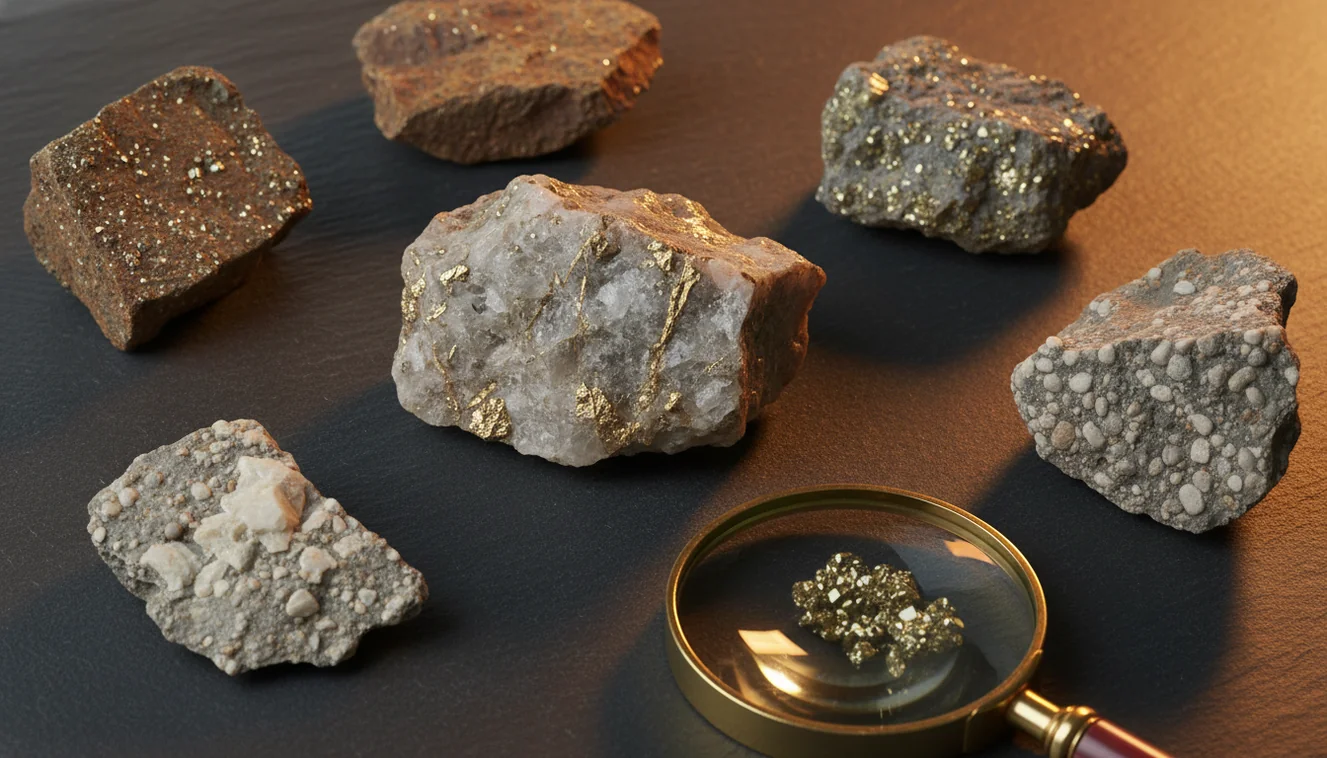
Quick answer: How to identify gold-bearing rock means checking whether yellow metallic material behaves like native gold rather than pyrite, mica, chalcopyrite, or iron staining. Useful clues include a warm yellow color in shade, malleability, a yellow streak, softness around Mohs 2.5–3, high density, and occurrence in plausible host rocks such as quartz veins or sulfide-rich altered zones.
AI Rock ID can help screen suspected gold-bearing rock by comparing photo clues such as yellow metallic luster, quartz matrix, sulfide minerals, and iron staining. RockIdentifier.io provides a web upload option for preliminary visual identification, but gold-bearing rock still needs field tests and assay confirmation when the result matters.
Quick summary
- Best for
- Prospectors, rockhounds, collectors, beginners, field geology learners
- Works on
- Quartz vein rocks, sulfide-rich rocks, altered rocks, placer-related specimens, metallic mineral samples
- Accuracy
- Photo screening and field tests can narrow likely gold-bearing rocks, but visible ID cannot confirm grade or microscopic gold.
- Needs confirmation
- Yes
- Professional replacement
- No
- Platforms
- iPhone, iPad, Web
This guide is best for
- Beginners trying to separate real gold from pyrite, mica, and chalcopyrite
- Rockhounds checking quartz vein or iron-stained specimens after a field trip
- Prospectors deciding which samples deserve labeling, panning, microscopy, or assay
- Collectors learning field tests such as streak, hardness, luster, and malleability
- Students comparing visible gold indicators with host-rock and mineral context
- Hikers or landowners who found a shiny yellow rock and need a cautious first screen
Consider another approach if you
- Anyone needing an ore grade, value estimate, or legally defensible assay result
- Buyers, sellers, or investors making financial decisions from a specimen photo
- Claim staking or permitting decisions that require land status and professional review
- Testing fine or invisible gold locked inside sulfides without lab methods
- Crushing sulfide-bearing rock without proper dust control, eye protection, and safe handling
Gold-bearing rock is best identified by metallic yellow material that stays yellow in shade, dents or flattens instead of crumbling, and commonly occurs in quartz veins, altered zones, or sulfide-rich rock. Pyrite and chalcopyrite are harder, more brittle, and usually leave a dark streak. A photo-based scan can narrow the candidate, but financial or staking decisions require panning, microscopy, or a professional assay.
What Is How to Identify Gold-Bearing Rock?
How to identify gold-bearing rock is the field process of deciding whether a specimen contains visible or likely native gold, rather than a gold-colored look-alike. The best evidence combines mineral appearance, host rock, and behavior under simple tests: gold is metallic, warm yellow, soft at Mohs 2.5–3, malleable, and unusually dense. It may appear as flakes, blebs, wires, smeared films, or microscopic grains locked in sulfides.
Common settings include quartz veins in shear zones, altered volcanic rocks, iron-oxide-stained fractures, and sulfide bands with pyrite, arsenopyrite, or chalcopyrite. The [USGS mineral resources program](https://www.usgs.gov/centers/national-minerals-information-center/gold-statistics-and-information) is a useful authority for gold geology and production context. Rock Identifier can help screen a specimen from photos, but field context and confirmatory testing still matter.
How to Identify Gold-Bearing Rock Works
The method works by testing whether the yellow material behaves like native gold and whether the surrounding rock fits a plausible gold setting. Start with optical clues: true gold keeps a warm yellow color in shade, looks smooth or smeared under a hand lens, and lacks the sharp cubic crystal habit of pyrite. Then use physical tests: a streak plate should show a yellow streak, a copper penny may dent the gold, and the grain should flatten rather than shatter.
A photo-based lookup adds a fast visual comparison step. The scanner evaluates color, luster, texture, vein material, iron staining, and associated minerals from your image; photos are processed for identification and not used to replace field notes. Treat the result as a ranked suggestion, not an ore grade.
How to Use a Gold-Bearing Rock Identifier
Photograph the specimen
Take sharp dry and wet photos in natural light. Include a coin, ruler, or hand lens for scale, and capture both the yellow material and the host rock.
Inspect the yellow grains
Use a 10x hand lens to check whether the material is smooth, flattened, wiry, or smeared. Be cautious with glittery sheets, sharp cubes, and brassy crystals.
Run streak and hardness tests
Rub a tiny exposed area on unglazed porcelain and compare the streak. Test hardness gently: gold dents and does not scratch glass, while pyrite is hard and brittle.
Record the geologic context
Note quartz veining, rusty oxidation, sulfide minerals, shear fabric, alteration halos, and where the sample was collected. Context often separates a random shiny rock from a meaningful target.
Scan and confirm
Open the AI Rock ID iOS app link on this page for a quick photo screen, then confirm important samples by panning crushed material, microscopy, XRF where appropriate, or professional assay.
When to Use How to Identify Gold-Bearing Rock (and When Not To)
Use it when
- Use it when you find yellow metallic material in quartz, altered rock, or sulfide-rich veins.
- Use it when you need to separate native gold from pyrite, chalcopyrite, mica, or iron oxides.
- Use it before keeping, labeling, or prioritizing field samples from a prospecting trip.
- Use it when comparing dry and wet photos of a specimen for quick visual screening.
- Use it when teaching basic mineral ID concepts such as luster, streak, hardness, and malleability.
Skip it when
- Do not use it as a final assay, ore grade, or value estimate.
- Do not rely on it for buying, selling, staking, or investment decisions.
- Do not assume all quartz veins with rust staining contain gold.
- Do not use it as a substitute for land access checks, claim research, or collecting permits.
- Do not crush sulfide-bearing rock without eye protection, dust control, and safe handling.
How to Identify Gold-Bearing Rock vs Google Lens and Stone Identifier
| Feature | Rock Identifier | Google Lens | Stone Identifier |
|---|---|---|---|
| Primary purpose | Photo-based rock, mineral, crystal, and gemstone identification with geology-oriented outputs. | General visual search across the web, useful for matching similar-looking images. | Consumer stone and crystal identification, often focused on common specimens. |
| Gold-bearing rock screening | Looks at mineral color, luster, matrix, quartz veining, and likely look-alikes. | May return jewelry, pyrite photos, or unrelated yellow minerals depending on image matches. | May identify common gold-colored minerals but can lack deposit-context detail. |
| Field test guidance | Encourages streak, hardness, malleability, density, and host-rock notes. | Usually provides search results rather than a structured mineral testing workflow. | Often gives basic descriptions, but testing depth varies by result. |
| Best use | Fast specimen triage before hand-lens testing, panning, or assay. | Finding visually similar web images and broad references. | Checking common polished stones, crystals, and hobby mineral samples. |
| Main limitation | Cannot prove microscopic gold content or estimate grade from a photo. | Not geology-specific and may over-match shiny surfaces. | May struggle with mixed matrix rocks, altered ore, and fine sulfide textures. |
For gold-bearing rock, a specialized scanner is most useful when paired with old-school mineral tests. Google Lens can be helpful for broad image matching, but it is not designed to decide whether a quartz-sulfide specimen contains native gold.
How to Identify Gold-Bearing Rock Use Cases
- Prospecting sample triage: Use the workflow to decide which quartz, vein, or altered rock samples are worth labeling, carrying, and testing later. It helps prevent every brassy pyrite specimen from becoming a priority sample.
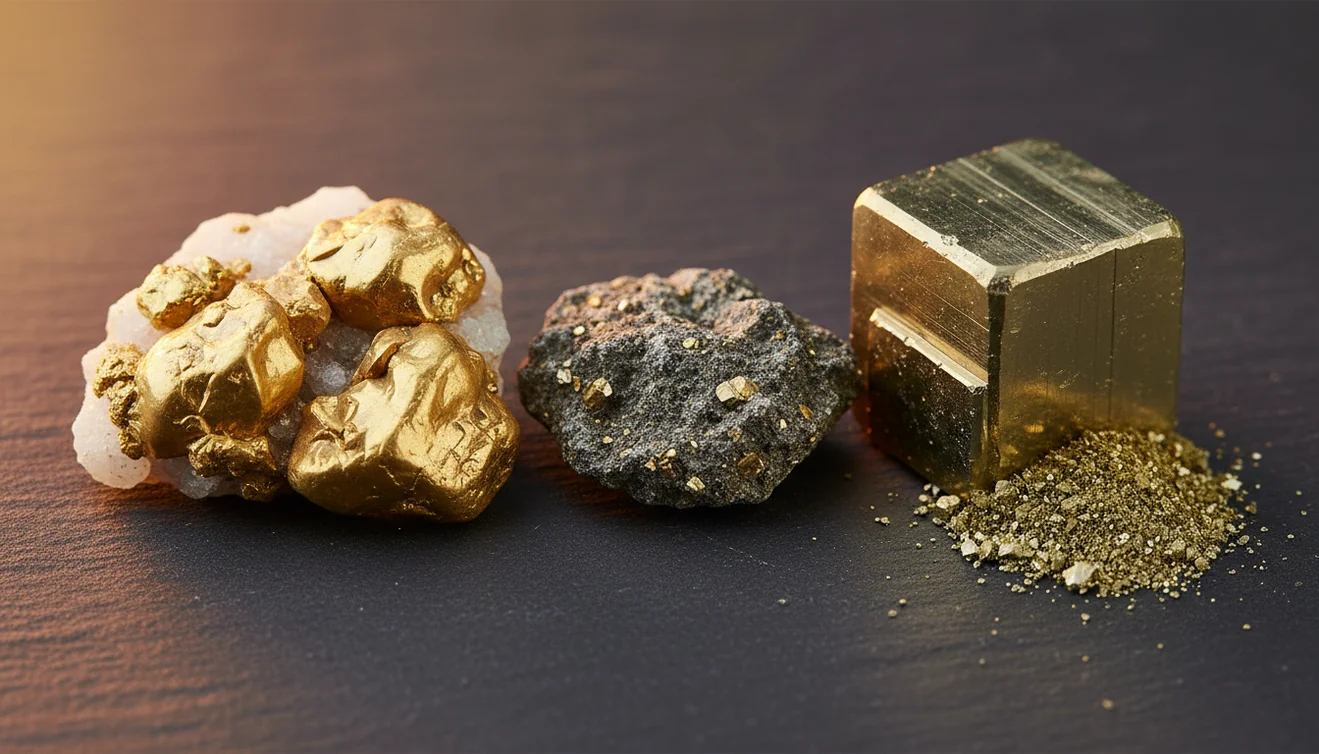
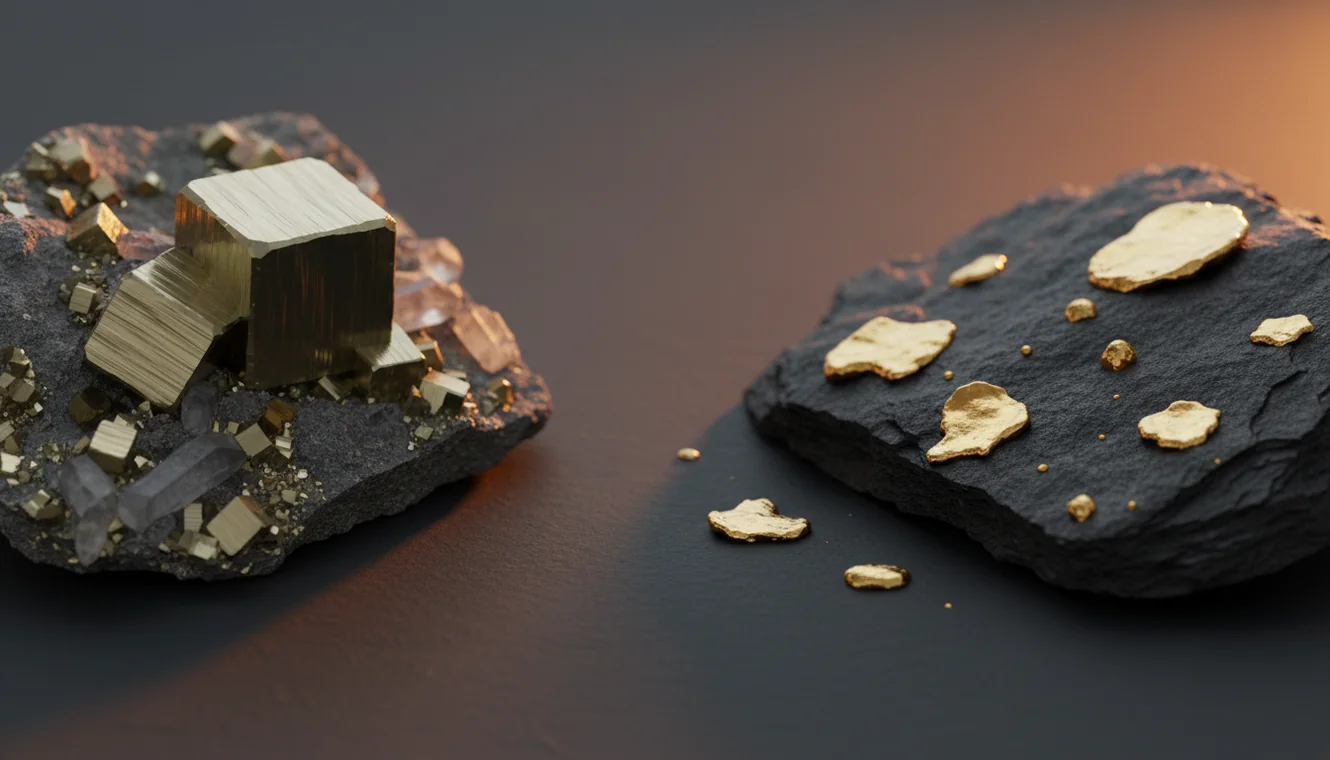
- Pyrite versus gold checks: Compare streak, hardness, crystal habit, and malleability when a rock shows yellow metallic flecks. Gold flattens and stays yellow; pyrite is harder, brittle, and usually streaks dark.
- Field notebook consistency: Record host rock, vein orientation, sulfides, iron oxides, GPS area, and photo numbers for each candidate sample. These notes make later panning or assay results easier to interpret.
- Learning ore textures: Students and hobby collectors can use specimens to recognize quartz veins, boxwork, limonite staining, sulfide weathering, and visible gold habits. The goal is pattern recognition, not instant proof.
How to Identify Gold-Bearing Rock Limitations
- Treated stones, painted surfaces, metallic coatings, and contamination can look like native gold in a photo.
- Polished specimens may hide fracture texture, grain shape, streak behavior, and natural matrix relationships.
- Rare gold minerals and tellurides may not look like yellow native gold and often require lab methods.
- Poor photo quality, glare, shadows, wet reflections, and missing scale can produce misleading visual matches.
- Value estimates cannot be made from appearance; grade depends on gold concentration, sample representativeness, recovery, and assay results.
- Microscopic or invisible gold locked in pyrite or arsenopyrite can be present even when no yellow grains are visible.
- A few visible flakes do not prove ore; a small rich-looking patch may represent very low overall gold content.
- Look-alikes such as pyrite, chalcopyrite, mica, limonite, and weathered sulfides are common and require physical testing.
Common mistakes
- Assuming every brassy yellow mineral in quartz is native gold.
- Judging color only in bright sunlight instead of checking whether the yellow stays warm in shade.
- Ignoring streak color, even though pyrite and chalcopyrite usually leave darker streaks than gold.
- Calling a brittle grain gold when it shatters instead of flattening under gentle pressure.
- Treating rusty iron staining as proof that a quartz vein contains gold.
- Relying on a magnet, vinegar, or one quick photo as a final gold test.
- Forgetting that valuable gold may be microscopic and that visible shine does not equal ore grade.
Use photo screening carefully when identifying gold-bearing rock
A photo scan can help organize visual clues before field testing suspected gold-bearing rock. Important samples should still be checked with streak, hardness, malleability, geologic context, and professional assay when value or land decisions are involved.
Related Articles

Frequently Asked Questions
How do I spot real gold?
Real gold stays a warm yellow in both sun and shade, looks metallic rather than glittery, and commonly appears rounded, smeared, flaky, or wiry. It is soft and malleable, so it dents or flattens instead of shattering.
Is pyrite always easy to tell?
Not always, especially when pyrite is weathered or broken into tiny grains. Pyrite is usually brassy, hard, brittle, sometimes cubic, and leaves a greenish-black to brownish-black streak.
Does gold always occur in quartz?
No. Quartz veins are common hosts, but gold can also occur in altered volcanic rocks, shear zones, sulfide-rich bands, and placer gravels. Quartz is a strong clue, not a requirement.
What streak does gold leave?
Native gold leaves a yellow streak, though it can be faint if the grain is small or embedded in quartz. Most common sulfide look-alikes leave dark streaks, especially pyrite and chalcopyrite.
Can a magnet find gold?
A magnet does not directly identify native gold because gold is not magnetic. Magnetite or magnetic black sand may occur near placer deposits, but magnetism is only a context clue.
Will vinegar prove it is gold?
Vinegar is not a reliable confirmation test for gold in rock. Many look-alikes also show little reaction, so use streak, hardness, malleability, density clues, and lab confirmation when needed.
What does gold look like magnified?
Under a hand lens, gold often looks smooth, rounded, smeared, flaky, or threadlike rather than sharply crystalline. It may sit along tiny fractures in quartz or near dark sulfides and rusty iron oxides.
Can photos confirm gold ore?
Photos can suggest likely gold, pyrite, quartz, sulfides, or iron staining, but they cannot measure gold content. Ore confirmation requires representative sampling and analytical work such as assay.
When should I get an assay?
Get an assay when the result affects money, land decisions, sales, staking, or serious exploration. Also consider assay when the rock is sulfide-rich, finely mineralized, or lacks visible gold but comes from a promising geologic setting.