
Pearl Identifier - Instant AI Analysis
Upload pearl photos
Clear, well-lit images help the AI identify it more accurately.

Analyzing pearl characteristics...
Checking texture, color, structure, and lookalikes…
Upload a photo of your pearl to instantly determine if it's natural, cultured, or imitation. Our AI analyzes surface characteristics, luster, and visual markers to help you understand what you have.


Pearls have captivated humanity for thousands of years, but distinguishing between natural, cultured, and imitation pearls can challenge even experienced collectors. Whether you've inherited jewelry, discovered pearls at an estate sale, or want to verify a recent purchase, accurate identification matters for both value assessment and personal satisfaction.
RockIdentifier.io uses advanced AI image analysis to examine your pearl's surface texture, luster quality, shape variations, and other visual characteristics. While laboratory testing remains the gold standard for definitive authentication, our free tool provides valuable preliminary insights that can guide your next steps.
Good fit for
- Verifying if inherited pearl jewelry contains real pearls
- Screening estate sale or thrift store pearl finds
- Learning to recognize cultured vs imitation pearl characteristics
- Getting preliminary analysis before professional appraisal
- Identifying different pearl types like freshwater, Akoya, or South Sea
Not for
- Certified authentication for insurance or resale purposes
- Detecting sophisticated laboratory-grown pearl imitations
- Precise monetary valuation of pearl jewelry
- Identifying pearls still mounted in complex settings
At a glance
Pearls are organic gems formed when mollusks deposit layers of nacre around an irritant, creating lustrous spherical or baroque shapes. Natural pearls form spontaneously in wild mollusks, while cultured pearls result from human-initiated nucleation in farmed oysters or mussels.
| Composition | Calcium carbonate (aragonite) + conchiolin |
|---|---|
| Hardness | 2.5-4.5 Mohs scale |
| Luster | Pearly (orient) |
| Formation | Organic - mollusk secretion |
| Specific Gravity | 2.60-2.85 |
| Common Types | Akoya, South Sea, Tahitian, Freshwater |
Understanding Pearl Types: Natural, Cultured, and Imitation
The pearl market encompasses three fundamentally different categories, each with distinct origins and values. Natural pearls form entirely without human intervention when a wild mollusk encounters an irritant and responds by coating it with nacre over several years. These gems are exceptionally rare today, with most natural pearl fisheries depleted, making authenticated natural pearls extremely valuable collector items.
Cultured pearls, which dominate the modern market, form through the same biological process but begin with human-inserted nuclei. Technicians carefully implant a bead nucleus (typically made from freshwater mussel shell) into farm-raised oysters or mussels, which then deposit nacre layers over 6 months to several years. Cultured pearls are genuine pearls with real nacre, they simply had assistance starting the process.
Imitation pearls, also called faux or simulated pearls, contain no nacre whatsoever. Manufacturers create these from glass, plastic, or shell beads coated with pearl essence (often made from fish scales) or synthetic coatings. While some high-quality imitations can appear convincing at first glance, they lack the depth of luster and surface characteristics that define real pearls.
Visual Characteristics Our AI Analyzes
When you upload a pearl photo to RockIdentifier.io, our AI examines multiple visual markers that help distinguish pearl types. Surface texture provides crucial clues, real pearls (both natural and cultured) display subtle irregularities, tiny ridges, and organic variations when examined closely. Imitation pearls typically show uniform, almost too-perfect surfaces or visible coating patterns.
Luster quality, often called orient in the pearl trade, refers to the depth and complexity of light reflection. Genuine nacre creates a soft, glowing luminosity that seems to emanate from within the pearl, with subtle color overtones that shift as the pearl moves. Imitation pearls usually display surface-only shine without this dimensional quality.
Shape and size consistency also inform identification. While perfectly round pearls exist, most genuine pearls show slight asymmetry or baroque forms. A strand where every pearl appears identically perfect may warrant closer examination. Our AI evaluates these characteristics collectively, providing probability assessments for different pearl categories.
Common Pearl Lookalikes and Imitations
Several materials convincingly mimic pearls and frequently appear in vintage and costume jewelry. Majorica pearls, produced in Spain since 1890, use glass cores coated with multiple layers of pearl essence, achieving remarkable visual similarity to cultured pearls. These high-quality imitations can fool casual observers but lack nacre's characteristic surface texture.
Shell pearls, made from ground mother-of-pearl shell reformed and coated, present another common imitation. These often appear in contemporary fashion jewelry and can display convincing luster. However, their surfaces tend toward excessive uniformity, and they lack the weight variation found in genuine cultured pearls.
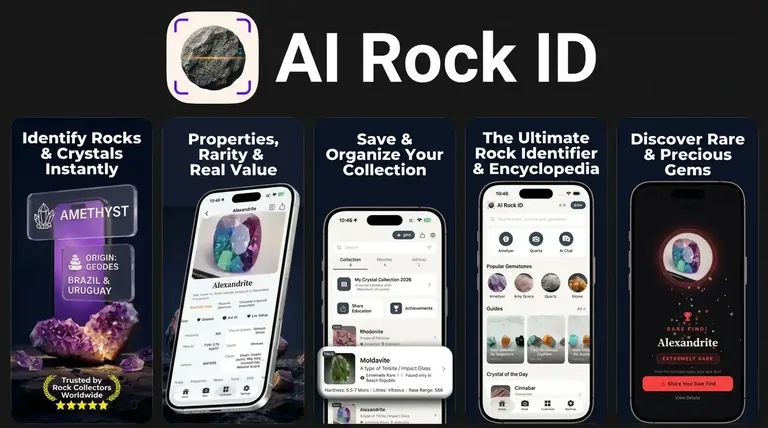
Plastic and resin pearls represent the most basic imitations, typically identifiable by their lightweight feel and surface characteristics visible in photographs. Cotton or wax-filled glass pearls, common in vintage costume jewelry, may show visible seams or coating wear. The AI Rock ID iPhone app can help you quickly screen jewelry finds before investing in professional authentication.
Photographing Pearls for Accurate AI Analysis
Capturing pearl images that enable accurate AI analysis requires attention to lighting and positioning. Natural, diffused daylight provides ideal illumination, photograph near a window with indirect light rather than direct sunlight, which creates harsh reflections that obscure surface details. Avoid flash photography, which flattens the dimensional luster that helps identify genuine nacre.
Position individual pearls against a neutral, non-reflective background. White, gray, or black fabric works well, allowing the AI to clearly distinguish the pearl's boundaries and analyze surface characteristics without background interference. For stranded pearls, photograph a section showing 5-10 pearls clearly, ensuring the drill holes are visible if possible.
Capture multiple angles when possible, the way luster shifts across a pearl's surface provides valuable identification data. Close-up images showing surface texture help our AI detect the subtle irregularities characteristic of genuine nacre versus the uniform coatings on imitations. If examining a pearl necklace, include images of the clasp and knots between pearls, as these details can indicate quality and authenticity.
Freshwater vs Saltwater Pearl Identification
Understanding the distinction between freshwater and saltwater cultured pearls helps contextualize AI identification results. Freshwater pearls, primarily cultivated in Chinese mussel farms, typically form without bead nuclei, they're solid nacre throughout. This gives them excellent durability but often results in baroque or semi-round shapes rather than perfect spheres.
Saltwater pearls include several prestigious varieties: Japanese Akoya pearls known for exceptional roundness and mirror-like luster; South Sea pearls from Australia, Indonesia, and the Philippines, prized for large sizes and satiny luster; and Tahitian pearls from French Polynesia, famous for natural dark colors ranging from gray to peacock green.
Each saltwater variety contains a bead nucleus surrounded by nacre layers, typically 0.3mm to 2mm thick depending on cultivation time. RockIdentifier.io can help distinguish these categories based on visual characteristics, though definitive identification of specific pearl origins often requires gemological laboratory analysis including X-ray examination of internal structure.
The Tooth Test and Other Traditional Methods
You may have heard of the tooth test, rubbing a pearl gently against your teeth to feel for grittiness. Genuine nacre feels slightly rough or sandy due to its crystalline aragonite structure, while imitation coatings feel smooth or slippery. While this test has merit, it's not foolproof and risks damaging delicate pearl surfaces.
Other traditional tests include examining drill holes under magnification (genuine pearls show nacre layers; imitations may show coating peeling from core material), checking weight (glass imitations feel heavier than expected; plastic feels lighter), and observing how pearls warm against skin (genuine pearls warm slowly; plastic warms quickly).
These physical tests complement AI visual analysis. Use RockIdentifier.io for initial screening, then apply traditional methods to promising specimens. For valuable pieces, professional gemological testing using X-ray, spectroscopy, or microscopic examination provides definitive authentication that no visual method, human or AI, can match.
Limitations of Visual Pearl Identification
Transparency about AI capabilities helps you use our tool effectively. Visual analysis cannot definitively distinguish natural from cultured pearls, both contain genuine nacre with similar surface characteristics. Only X-ray examination revealing internal structure (bead nucleus in cultured; concentric nacre layers in natural) provides certain differentiation.
High-quality imitations increasingly challenge visual identification. Some modern simulated pearls use sophisticated coating technologies that closely replicate nacre's optical properties in photographs. Our AI provides probability assessments rather than absolute determinations, flagging characteristics that warrant professional examination.
Pearl treatments including bleaching, dyeing, and luster enhancement may not be detectable through photographs alone. If you're evaluating pearls for significant purchase or insurance purposes, use RockIdentifier.io as a preliminary screening tool, then consult certified gemologists with laboratory equipment for authentication that protects your investment.
Building Pearl Knowledge Through AI-Assisted Learning
Regular use of pearl identification tools accelerates your ability to recognize quality and authenticity markers. As you photograph and analyze different pearls, you'll develop intuition for the subtle luster differences between nacre and coatings, the surface irregularities that indicate organic formation, and the shape variations that characterize different pearl types.
The AI Rock ID iPhone app makes this learning portable, examine pearls at estate sales, antique shops, or jewelry stores with instant AI feedback. Compare results across multiple specimens to understand the range of characteristics within each pearl category. Over time, you'll find yourself noticing details that previously escaped attention.
Consider documenting your pearl collection or finds with photographs and AI analysis results. This creates a personal reference library showing confirmed identifications alongside the visual characteristics that led to those conclusions. Whether you're a collector, jeweler, or curious enthusiast, systematic observation builds expertise that enhances every future pearl encounter.
How to Use This Pearl Identifier
Prepare Your Pearl
Clean the pearl gently with a soft cloth to remove oils or dust. Remove from settings if possible, or ensure the pearl is clearly visible and unobstructed.
Set Up Lighting
Position near a window with diffused natural light. Avoid direct sunlight or flash, which creates reflections that obscure surface details.
Capture Clear Images
Photograph against a neutral background, capturing the full pearl plus close-ups showing surface texture. Include multiple angles if possible.
Upload for Analysis
Visit RockIdentifier.io or open the AI Rock ID app and upload your clearest image. The AI will analyze luster, surface characteristics, and shape.
Review Results
Examine the AI's assessment of pearl type probability. Note any characteristics flagged for attention and consider professional appraisal for valuable specimens.
More Identification Tools
Gemstone Identifier
Identify precious and semi-precious gemstones from photos
Crystal Identifier
Analyze crystal specimens and mineral formations
Mineral Identifier
Identify minerals by visual characteristics and properties
Stone Identifier
General stone and rock identification tool
Glass Identifier
Distinguish natural glass from manufactured materials
Rock Identifier
Complete AI rock and mineral identification suite
Frequently Asked Questions
How can I tell if my pearl is real or fake from a photo?
AI analysis examines surface texture, luster depth, and shape characteristics visible in photographs. Real pearls show subtle surface irregularities and dimensional luster that seems to glow from within, while imitations typically display uniform surfaces and surface-only shine. Upload clear, well-lit images to RockIdentifier.io for preliminary assessment.
What's the difference between natural and cultured pearls?
Natural pearls form spontaneously in wild mollusks without human intervention, making them extremely rare and valuable. Cultured pearls form through the same biological process but begin with a human-inserted nucleus in farmed mollusks. Both contain genuine nacre, the difference lies in how formation started, not in the material itself.
Can AI identify if pearls are freshwater or saltwater?
Visual AI analysis can suggest freshwater versus saltwater origin based on characteristic shapes, sizes, and luster qualities. Freshwater pearls often show baroque shapes and are solid nacre, while saltwater varieties like Akoya display exceptional roundness. However, definitive origin identification may require gemological testing.
Are Majorica pearls real pearls?
Majorica pearls are high-quality imitations, not real pearls. They consist of glass cores coated with multiple layers of pearl essence, creating convincing visual similarity to cultured pearls. While beautiful and durable, they contain no nacre and should not be represented or valued as genuine pearls.
Why do my pearls look different colors in photos?
Pearl color appearance varies significantly with lighting conditions. The orient, subtle color overtones in genuine nacre, shifts with light angle and quality. Photograph in consistent, diffused natural light for accurate color representation. Artificial lighting, especially LED or fluorescent, can alter perceived pearl colors substantially.
How accurate is the tooth test for identifying real pearls?
The tooth test has validity, genuine nacre feels slightly gritty against teeth due to its crystalline structure, while imitation coatings feel smooth. However, it's not foolproof and risks surface damage. Use it as one data point alongside AI visual analysis and other methods rather than a definitive test.
Can you identify pearl value from a photograph?
Photographs enable assessment of factors affecting value, luster quality, surface cleanliness, shape, and apparent size, but precise valuation requires physical examination and often laboratory testing. AI identification helps categorize pearl type, which establishes a value range, but professional appraisal determines specific worth.
What do drill holes reveal about pearl authenticity?
Drill hole examination under magnification reveals internal structure. Genuine pearls show concentric nacre layers; imitations may display coating peeling away from glass or plastic cores. If your photo clearly shows drill holes, our AI can analyze visible characteristics, though microscopic examination provides more detail.