Crystal vs Mineral vs Rock: What's the Difference?
A mineral is a naturally occurring solid with defined chemistry and crystal structure, a crystal is the ordered atomic arrangement or visible growth form, and a rock is a natural aggregate of minerals or mineraloids. Use photo ID as a starting point, then confirm with hardness, streak, cleavage, and texture.


Drop a crystal photo here or tap to upload
JPG, PNG, WebP, HEIC • Max 50 MB • 1 free scan per day

Analyzing your specimen…
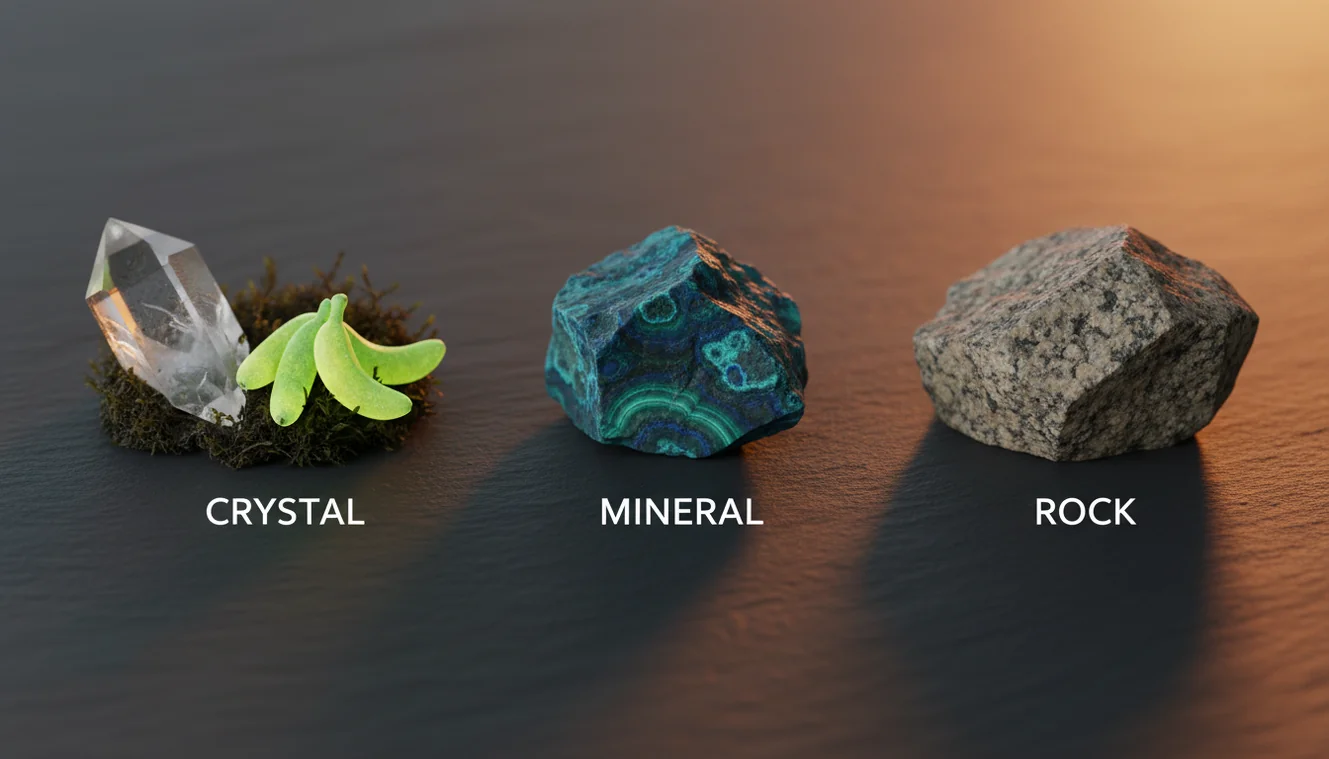
Quick answer: Crystal vs mineral vs rock refers to three different levels of description: a mineral is defined by chemistry and internal crystal structure, a crystal is an ordered growth form or atomic arrangement, and a rock is a natural aggregate of minerals, mineraloids, glass, or organic material. A photo can help suggest whether a specimen is a crystal, mineral, or rock, but hardness, streak, cleavage, texture, and geologic context are needed for confirmation.
AI Rock ID can provide a photo-based shortlist when a specimen might be a crystal, a mineral, or a rock, but the suggested result should be checked with physical properties. RockIdentifier.io supports web photo upload for this topic and is most useful when the user compares the visual result with hardness, streak, cleavage, texture, and matrix.
Quick summary
- Best for
- Collectors, beginners, students, hikers, field hobbyists
- Works on
- Rocks, minerals, crystals, rough specimens, hand samples
- Accuracy
- Photo identification can suggest likely categories and names, but physical tests are needed for reliable confirmation.
- Needs confirmation
- Yes
- Professional replacement
- No
- Platforms
- iPhone, iPad, Web
This guide is best for
- Beginners learning the difference between a crystal, a mineral, and a rock
- Collectors labeling specimens that may contain multiple minerals
- Hikers or field collectors sorting rough hand samples
- Students comparing mineral properties with rock textures
- People checking whether a seller’s “crystal” is a mineral, rock, or decorative stone
- Anyone using photo identification as a first step before hardness, streak, and cleavage tests
Consider another approach if you
- Gemstone buyers who need value, treatment, or authenticity verification
- Researchers identifying rare minerals that require laboratory analysis
- Owners of fragile, historic, or valuable specimens that should not be scratched or streak-tested
- Users trying to identify polished stones from color alone
Crystal vs mineral vs rock: what's the difference? A mineral is defined by chemistry and internal structure, a crystal is the ordered lattice or shape a mineral can grow into, and a rock is a mixture of minerals, glass, organic material, or mineraloids. Rock Identifier can suggest likely specimen names from a photo, but physical tests are still needed for confirmation.
What Is Crystal vs Mineral vs Rock: What's the Difference?
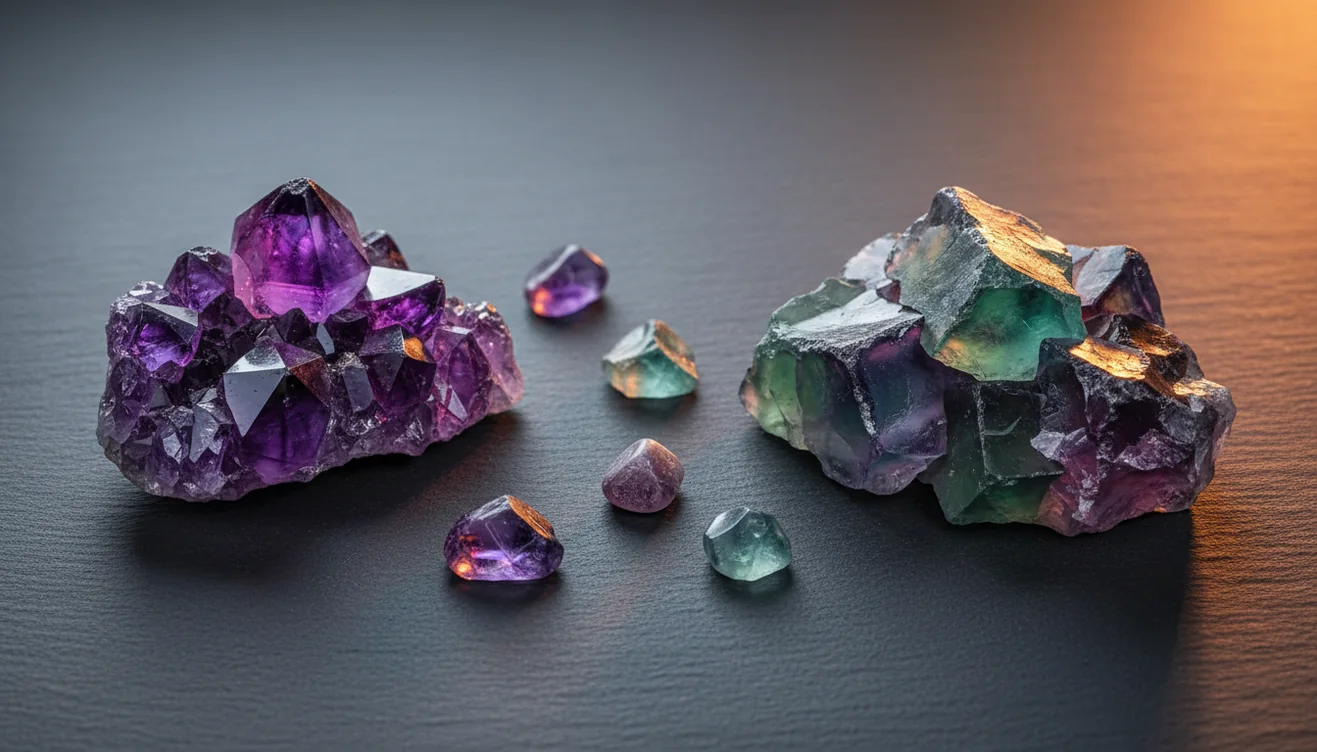
The difference is category and scale. A mineral is a natural inorganic solid with a fairly definite chemical composition and crystalline atomic structure, such as quartz, calcite, or feldspar. A crystal is the expression of ordered atomic growth, so it may show faces, symmetry, and habit, but it is not automatically a separate mineral name.
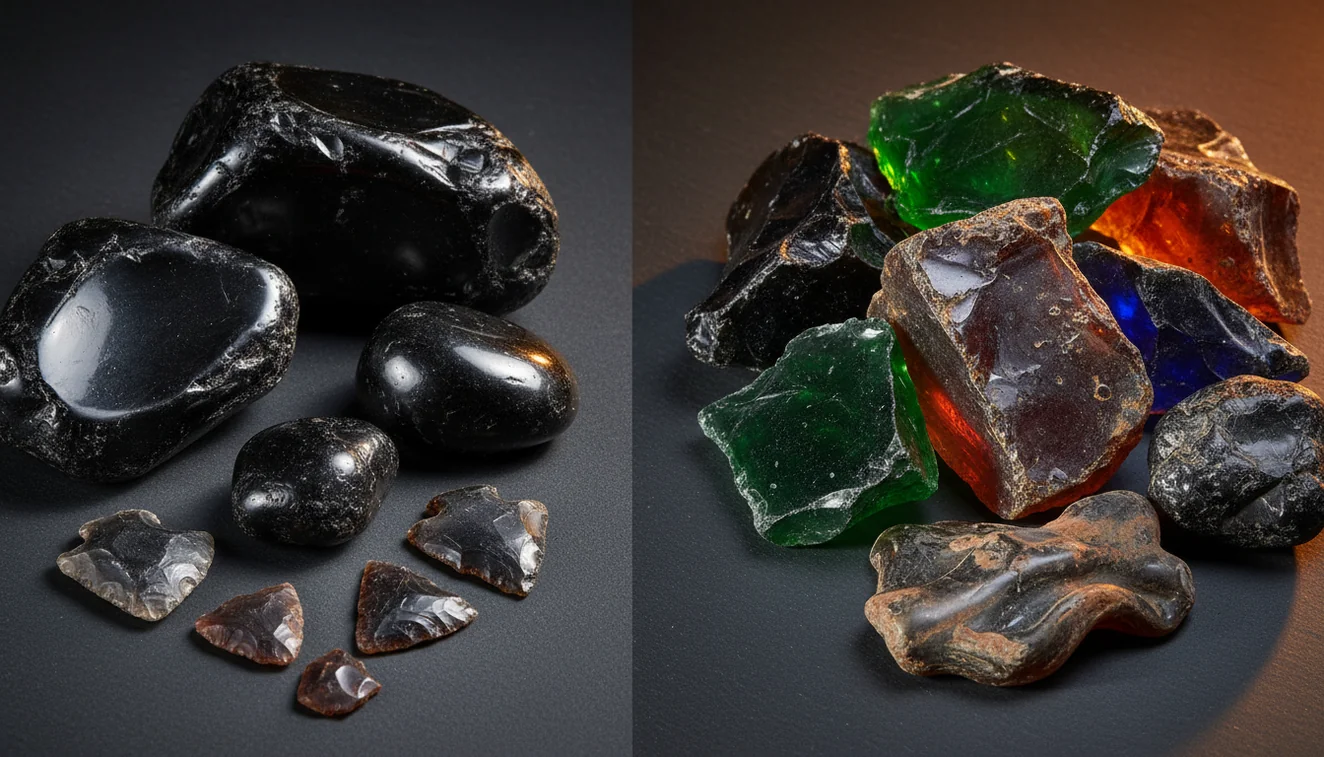
A rock is a naturally formed aggregate, usually made of several minerals. Granite, for example, commonly contains quartz, feldspar, and mica; marble is mostly calcite; obsidian is a volcanic glass and is often discussed with rocks even though it is not a true mineral. For formal mineral definitions, the USGS gives a useful baseline: https://www.usgs.gov/faqs/what-a-mineral.
How Crystal vs Mineral vs Rock: What's the Difference? Works
Crystal, mineral, and rock identification works by separating visible form from diagnostic properties. First, inspect whether the specimen is a single substance or an aggregate of grains, bands, or mixed lusters. Next, look for crystal habit, cleavage planes, fracture, luster, streak, and Mohs hardness; those properties distinguish look-alikes better than color.
A photo-based lookup compares visible features such as color zones, crystal faces, grain texture, and matrix against known examples. Use the AI Rock ID iOS app link when you want a quick field shortlist before testing. Photos are processed for identification in a privacy-friendly way, then the result should be checked against physical evidence.
How to Use Crystal vs Mineral vs Rock Identification
Classify the specimen type
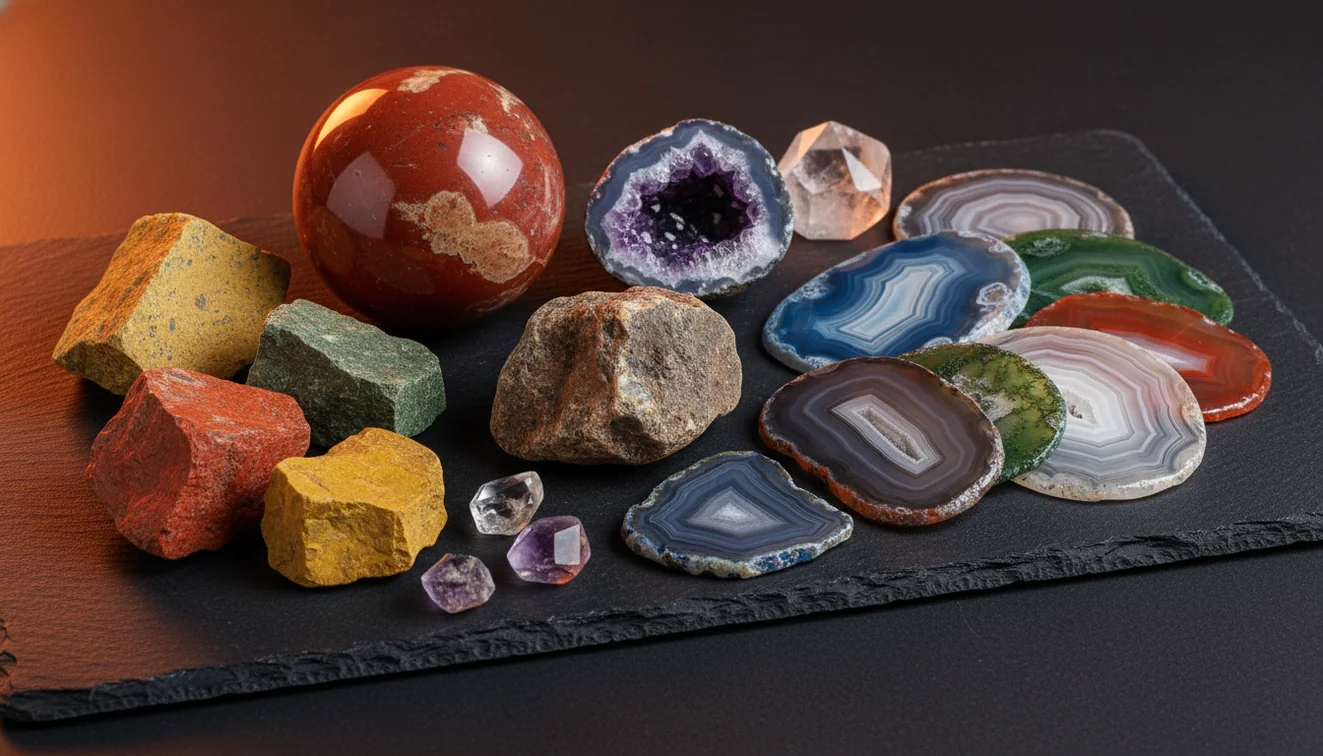
Decide whether you are looking at one consistent material or a mixed aggregate. Multiple grain colors, banding, or visible matrix usually point toward a rock rather than a single mineral.
Photograph diagnostic surfaces
Take one whole-specimen photo and one close-up of crystal faces, cleavage, fracture, or grain texture. Use diffuse daylight, a plain background, and a coin or ruler for scale.
Run a photo-based lookup
Use the scanner to generate a shortlist of likely minerals, rocks, or crystal habits. Treat the output as a hypothesis, not the final label.
Test simple properties
Check streak, Mohs hardness, luster, cleavage, fracture, magnetism, and heft. Quartz and calcite can overlap in color, but hardness and cleavage separate them quickly.
Record context and final ID
Note locality, matrix, weathering, and any uncertainty. A specimen label should say whether the name refers to the rock, the dominant mineral, or a visible crystal.
When to Use Crystal vs Mineral vs Rock Identification (and When Not To)
Use it when
- Use it when a specimen sparkles and you need to know whether the shine comes from mica, quartz, sulfides, or another mineral.
- Use it when labeling a collection, because rock names and mineral names describe different things.
- Use it when sorting field samples and deciding which visible mineral in the matrix deserves closer testing.
- Use it when a seller calls something a crystal, but you want to verify whether it is a mineral specimen, a rock, or a treated decorative stone.
- Use it before streak and hardness tests so you know which candidate minerals are plausible.
Skip it when
- Do not use photo ID alone to determine gemstone value, treatment status, or authenticity.
- Do not rely on it for rare minerals that require X-ray diffraction, spectroscopy, or chemical analysis.
- Do not use destructive tests on valuable, historic, or fragile specimens without expert advice.
- Do not identify polished stones from color only; polishing removes cleavage, fracture, and natural surface texture.
- Do not ignore locality and matrix, because geological context often rules out attractive but impossible matches.
Crystal vs Mineral vs Rock: What's the Difference? vs Google Lens and Crystal Apps
| Feature | Rock Identifier | Google Lens | Rock & Crystal Identifier |
|---|---|---|---|
| Primary purpose | Specimen-focused rock, mineral, crystal, and gemstone photo lookup | General visual search across the web | Crystal and stone matching for common collection pieces |
| Best for | Getting a geology-oriented shortlist, then confirming with streak, hardness, cleavage, and matrix | Finding visually similar images, shops, articles, or broad labels | Recognizing popular tumbled stones, crystals, and decorative specimens |
| Geology terms | Uses terms such as habit, luster, matrix, cleavage, igneous, sedimentary, and metamorphic context | May return shopping names, image captions, or unrelated visual matches | Often emphasizes crystal names, colors, and collector categories |
| Weak point | Still cannot measure hardness, streak, specific gravity, or chemistry from a photo | Not optimized for mineral look-alikes or mixed rocks | Can struggle with rough field rocks and uncommon minerals |
| Confirmation workflow | Photo shortlist plus physical property checks | Manual verification required from external sources | Photo shortlist, usually strongest for common crystals |
Use the comparison as a workflow choice, not a winner-take-all answer. General visual search is useful for context, while a specimen-specific scanner is better for geology terms and follow-up tests. None of these tools replaces hardness, streak, cleavage, specific gravity, and locality.
Crystal vs Mineral vs Rock Use Cases
- Field collecting: A quick distinction tells you whether to describe a hand sample as granite, quartz vein material, calcite in limestone, or a visible crystal on matrix. That improves field notes and prevents over-labeling every shiny surface as a crystal.
- Collection labeling: Labels are clearer when they separate the rock name from the mineral name. A specimen might be basalt with olivine phenocrysts, quartz on matrix, or marble dominated by calcite.
- Buying and selling checks: The distinction helps spot vague marketing language. A product sold as a crystal may be dyed agate, glass, tumbled quartz, or a rock containing small mineral crystals.
- Classroom geology: Students learn faster when they see that crystal shape, mineral identity, and rock texture answer different questions. Hand samples can then be sorted by composition, texture, and formation environment.
- Photo triage before testing: A photo-based shortlist helps choose the next test. If calcite is plausible, test hardness and acid reaction; if quartz is plausible, check hardness and lack of cleavage.
Crystal vs Mineral vs Rock: What's the Difference? Limitations
- Treated stones can be misleading. Dyeing, heat treatment, coatings, irradiation, and resin filling can change color or surface appearance without changing the underlying material.
- Polished and tumbled specimens hide key diagnostic features. Cleavage, fracture, weathering rind, grain boundaries, and natural crystal habit may be removed or rounded off.
- Rare minerals often need laboratory confirmation. X-ray diffraction, Raman spectroscopy, thin section work, or chemical analysis may be required for a defensible identification.
- Photo quality strongly affects results. Blur, harsh flash, wet surfaces, shadows, and busy backgrounds can distort luster, texture, transparency, and color.
- Value estimates are not reliable from identification alone. Price depends on size, locality, treatment, damage, provenance, cut quality, and market demand.
- Mixed rocks can contain several minerals in one image. The scanner may identify the most visible grain instead of the rock name or the dominant mineral.
- Color is a weak diagnostic property. Iron staining, weathering, impurities, and lighting can make unrelated minerals look similar.
Common mistakes
- Calling every shiny mineral a crystal even when no crystal faces or habit are visible.
- Calling a rock a mineral when the specimen is actually a mixture of several grains or phases.
- Using color as the main test even though many minerals share the same color range.
- Ignoring matrix, banding, and grain texture when deciding whether a specimen is a rock.
- Assuming a polished stone shows the same diagnostic features as a rough natural surface.
- Treating a photo result as a final identification without checking streak, hardness, cleavage, or fracture.
- Using a trade or decorative name when a mineral name or rock name would be more accurate.
Check crystal vs mineral vs rock clues from a photo
A photo-based scan can help suggest whether a specimen is best described as a crystal, a mineral, or a rock. Use the result as a starting point, then confirm it with observable properties such as hardness, streak, cleavage, texture, and matrix.
Related Articles
Frequently Asked Questions
Is every mineral a crystal?
Most minerals are crystalline at the atomic scale, but they do not always show visible crystal faces. A massive quartz piece can be crystalline internally even if it looks like a plain lump.
Can a rock be one mineral?
Yes. Some rocks are monomineralic, such as marble made mostly of calcite or quartzite made mostly of quartz. Many rocks, however, are mixtures of several minerals.
Is quartz a rock or mineral?
Quartz is a mineral because it has a defined chemical composition, SiO2, and a crystalline structure. A rock can contain quartz, and quartzite is a rock made mostly of quartz grains.
Are crystals and gemstones the same?
No. A crystal describes ordered atomic growth, while a gemstone is a material valued for beauty, durability, rarity, or use in jewelry. Some gemstones are crystals, but glass, organic gems, and rocks can also be used decoratively.
Why does streak matter more?
Streak is the powdered color of a mineral and is often more consistent than surface color. Weathering, impurities, and staining can change the outside color while the streak remains diagnostic.
How do I identify a shiny rock?
Start by checking whether the shine comes from individual grains, flat cleavage surfaces, metallic minerals, or tiny crystal coatings. Then test hardness, streak, and magnetism before trusting color.
What is matrix in minerals?
Matrix is the host rock or surrounding material that a mineral or crystal is attached to. It can provide clues about formation, locality, and likely mineral associations.
Can photos identify minerals accurately?
Photos can suggest likely matches when crystal habit, luster, texture, and matrix are visible. They cannot directly measure hardness, streak, specific gravity, or chemical composition, so confirmation tests are important.
What test separates calcite from quartz?
Hardness and cleavage separate them quickly. Quartz is harder, around 7 on the Mohs scale, and lacks cleavage; calcite is softer, around 3, and has strong rhombohedral cleavage.