
Ruby Identifier
Upload ruby photos
Clear, well-lit images help the AI identify it more accurately.

Analyzing your ruby specimen...
Checking texture, color, structure, and lookalikes…
Upload a photo of your red gemstone and let AI determine if it's genuine ruby, garnet, spinel, or glass imitation. Get instant results free.


Ruby ranks among the most valuable gemstones on Earth, commanding prices that can exceed diamonds of similar size. This exceptional value makes ruby one of the most frequently imitated stones, with red garnet, red spinel, and glass all commonly sold as genuine ruby to unsuspecting buyers.
Our AI ruby identifier analyzes your uploaded photos to distinguish authentic ruby from its many lookalikes. Whether you've inherited jewelry, found a stone at an estate sale, or want to verify a purchase, this free tool provides instant preliminary identification to guide your next steps.
Good fit for
- Verifying inherited ruby jewelry authenticity
- Screening estate sale or antique finds
- Distinguishing ruby from red garnet or spinel
- Checking if a red stone is glass imitation
- Pre-screening before professional appraisal
Not for
- Certified gemological grading reports
- Determining exact carat weight or value
- Identifying synthetic vs natural ruby
- Detecting heat treatment or enhancements
At a glance
Ruby is the red variety of the mineral corundum (aluminum oxide), colored by trace amounts of chromium. It ranks 9 on the Mohs hardness scale, making it the second hardest natural gemstone after diamond.
| Chemical Formula | Al₂O₃ (with Cr) |
|---|---|
| Mohs Hardness | 9 |
| Crystal System | Trigonal |
| Refractive Index | 1.762-1.770 |
| Specific Gravity | 3.97-4.05 |
| Primary Sources | Myanmar, Mozambique, Thailand |
Why Ruby Identification Matters
Fine rubies can sell for over $1 million per carat, making them among the most valuable substances by weight on the planet. This extraordinary value creates powerful incentives for substitution and fraud. Historical records show that many famous 'rubies' in crown jewels and museum collections were later identified as red spinel, including the famous Black Prince's Ruby in the British Imperial State Crown.
Today's marketplace presents even more challenges. Natural ruby, synthetic ruby, heated ruby, glass-filled ruby, red garnet, red spinel, red tourmaline, and plain glass all circulate in jewelry and loose stone markets. Without proper identification, buyers risk paying ruby prices for stones worth a fraction of that amount. Even experienced collectors benefit from preliminary screening tools before committing to expensive professional certification.
Ruby vs Garnet: Key Visual Differences
Red garnet represents the most common ruby substitute, particularly almandine and pyrope varieties. While both stones display attractive red coloration, careful observation reveals distinguishing characteristics that our AI analyzes in your photos.
Ruby typically exhibits a purer, more saturated red with subtle pinkish or purplish secondary hues. The finest specimens show what gemologists call 'pigeon blood' red, an intense red with a slight blue undertone. Garnet tends toward darker, more brownish or orangish reds, often appearing almost black in dim lighting. Ruby also displays stronger fluorescence under UV light, sometimes glowing bright red, while most garnets remain inert.
Crystal structure provides another clue. Ruby forms hexagonal crystals, often appearing as barrel-shaped or tabular specimens in rough form. Garnet crystallizes in the cubic system, typically forming dodecahedral or trapezohedral shapes. When examining cut stones, ruby's higher refractive index creates more brilliant light return than garnet's relatively subdued sparkle.
Ruby vs Spinel: The Historical Confusion
Red spinel fooled royalty and gemologists for centuries before modern identification techniques emerged. Spinel and ruby share similar color ranges, comparable hardness (8 vs 9), and often occur in the same geological deposits. This explains why so many historical 'rubies' turned out to be spinel upon scientific examination.
Despite their similarities, observable differences exist. Ruby displays dichroism, showing slightly different colors when viewed from different angles, while spinel appears the same color from all directions due to its cubic crystal structure. Ruby's trigonal crystal system creates this optical property that trained observers and AI systems can detect.
Color distribution also differs. Ruby often shows color zoning, with parallel bands of varying saturation visible under magnification. Spinel typically displays more even color distribution throughout the stone. Additionally, ruby commonly contains silk-like rutile needle inclusions that create a soft, velvety appearance, while spinel's inclusions tend toward octahedral crystals and fingerprint-like patterns.
Identifying Glass Imitations
Glass represents the cheapest and most common ruby imitation, found everywhere from costume jewelry to deliberate fraud. Fortunately, glass displays several characteristics that distinguish it from genuine ruby, many visible in photographs.
Examine your stone for bubbles, round or elongated gas inclusions that never occur in natural ruby. Glass also shows swirl marks and flow lines from the manufacturing process, appearing as curved streaks within the material. These features photograph well under proper lighting and provide strong evidence of glass composition.
Surface characteristics differ significantly. Glass scratches easily, often showing wear patterns around facet edges and on the table surface. Ruby's exceptional hardness (9 on Mohs scale) means it resists scratching from nearly everything except diamond and other corundum. Glass also feels warmer to the touch and lighter in hand than ruby of similar size, though these tests require physical examination beyond photo analysis.
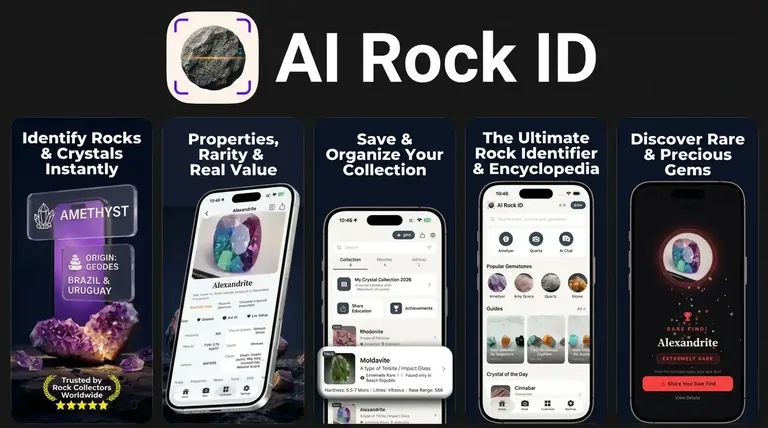
The AI Rock ID app and RockIdentifier.io web tool analyze these visual characteristics in your uploaded photos, flagging likely glass imitations based on bubble presence, surface wear patterns, and optical properties inconsistent with genuine corundum.
Photographing Ruby for Accurate AI Analysis
Quality photographs dramatically improve identification accuracy. For loose stones, photograph against a plain white or neutral gray background that doesn't cast colored reflections onto your specimen. Natural daylight or daylight-balanced LED lighting reveals true color better than incandescent bulbs, which add warm tones that can mask important hues.
Capture multiple angles when possible. A top-down view of the table facet shows color saturation and any visible inclusions. Side views reveal the stone's proportions and can display dichroism if you rotate the specimen between shots. Close-up images of any visible inclusions help distinguish ruby's characteristic silk from garnet's or spinel's different inclusion types.
For mounted jewelry, photograph the piece against contrasting backgrounds and include shots that show the setting style. Antique settings often indicate the stone's age and origin, providing context that aids identification. Avoid using flash directly on the stone, as this creates harsh reflections that obscure internal features. Instead, use diffused lighting or photograph near a window with indirect sunlight.
Understanding AI Identification Limitations
Our ruby identifier provides valuable preliminary screening but cannot replace professional gemological examination for high-stakes decisions. Photo-based AI analysis excels at distinguishing obviously different materials, separating glass from genuine gemstones or identifying garnet's characteristic color, but faces inherent limitations.
Synthetic ruby presents the greatest challenge. Laboratory-created ruby shares identical chemical composition and crystal structure with natural ruby, making visual distinction extremely difficult even for trained gemologists with physical access to the stone. Detecting synthetics typically requires microscopic examination of inclusion types and growth patterns, or advanced spectroscopic analysis.
Heat treatment and clarity enhancement also escape photo detection. Most commercial rubies undergo heat treatment to improve color and clarity, a widely accepted practice that nonetheless affects value. Glass-filled rubies, where lead glass fills fractures to improve apparent clarity, require careful examination under magnification to detect. For valuable stones or important purchases, use RockIdentifier.io as a first screening step, then seek professional certification from GIA, AGL, or other recognized gemological laboratories.
Common Ruby Sources and Their Characteristics
Geographic origin significantly impacts ruby value and appearance. Burmese rubies from the Mogok Valley historically commanded the highest prices, prized for their intense 'pigeon blood' red color and strong fluorescence. These stones often contain characteristic silk inclusions that create a desirable soft, glowing appearance.
Mozambique has emerged as a major ruby source, producing stones that rival Burmese quality. Mozambican rubies typically show excellent saturation with slightly more purplish secondary hues. Thai rubies tend darker, sometimes appearing almost garnet-like, with less fluorescence due to higher iron content. Sri Lankan rubies often display lighter, more pinkish tones.
While our AI tool cannot definitively determine geographic origin from photos alone, understanding these regional characteristics helps you evaluate identification results. A stone identified as ruby but displaying characteristics inconsistent with known sources warrants additional scrutiny.
Next Steps After AI Identification
When RockIdentifier.io or the AI Rock ID iPhone app indicates your stone is likely genuine ruby, consider the stone's value and your intended use before deciding on next steps. For costume jewelry or specimens of modest value, AI identification may provide sufficient confidence for your purposes.
For potentially valuable stones, professional certification becomes worthwhile. Gemological laboratories like GIA, AGL, and Gübelin provide detailed reports including natural vs synthetic determination, treatment disclosure, and sometimes origin identification. These reports cost between $50-500 depending on services requested but provide documentation that protects your investment and facilitates future sale.
If AI analysis suggests your 'ruby' is actually garnet, spinel, or glass, don't despair. Fine red spinel commands significant value in its own right, and even garnets make beautiful, durable jewelry stones. Accurate identification simply ensures you understand what you own and can make informed decisions about its care, insurance, and potential sale.
How to Use This Ruby Identifier
Prepare Your Stone
Clean your ruby or suspected ruby with a soft cloth to remove dust and oils. For mounted jewelry, ensure the stone is visible and not obscured by prongs or bezels.
Set Up Lighting
Position your stone in natural daylight or under daylight-balanced LED lighting. Avoid direct flash and incandescent bulbs that distort color perception.
Capture Clear Photos
Photograph against a neutral background from multiple angles. Include top-down, side, and close-up views showing any visible inclusions or color variations.
Upload for Analysis
Use the upload button on RockIdentifier.io or open the AI Rock ID iPhone app. Select your clearest photo for AI analysis.
Review Results
Examine the identification results, confidence level, and any noted characteristics. For valuable stones, use this as preliminary screening before professional certification.
More Identification Tools
Gemstone Identifier
Identify any gemstone from photos using AI analysis
Glass Identifier
Determine if your specimen is glass or natural stone
Crystal Identifier
Identify crystal specimens and mineral formations
Mineral Identifier
AI-powered identification for all mineral types
Stone Identifier
General stone and rock identification tool
Quartz Identifier
Identify quartz varieties including amethyst and citrine
Frequently Asked Questions
How can I tell if my ruby is real or fake?
Examine the stone for bubbles (indicating glass), check hardness by looking for scratches (real ruby resists scratching), and observe color under different lighting. Real ruby often shows slight color variation from different angles (dichroism) and may fluoresce red under UV light. Upload a photo to our AI identifier for instant preliminary analysis.
What is the difference between ruby and garnet?
Ruby is aluminum oxide (corundum) with hardness 9, while garnet is a silicate mineral group with hardness 6.5-7.5. Ruby typically shows purer red with pinkish or purplish hints, while garnet tends toward darker, more brownish reds. Ruby displays dichroism and often fluoresces; garnet does not. Ruby also has higher refractive index, creating more brilliance.
Can AI identify synthetic ruby from natural ruby?
Photo-based AI analysis cannot reliably distinguish synthetic from natural ruby because they share identical chemical composition and crystal structure. Detecting synthetics requires microscopic examination of inclusion types and growth patterns or spectroscopic analysis. For valuable stones, professional gemological certification is necessary to confirm natural origin.
Why do some rubies look pink instead of red?
Ruby color depends on chromium concentration in the corundum crystal. Lower chromium content produces pink tones, while higher concentrations create deeper red. The gemological boundary between pink sapphire and ruby remains somewhat subjective, with different laboratories using different standards. Generally, stones must show predominantly red hue to qualify as ruby.
How do I photograph a ruby for identification?
Use natural daylight or daylight-balanced LED lighting against a neutral white or gray background. Avoid flash, which creates harsh reflections. Capture multiple angles including top-down table view and side profiles. For best results, include close-up shots showing any visible inclusions or color zoning within the stone.
Is red spinel valuable like ruby?
Fine red spinel has significant value, though typically less than comparable ruby. Top-quality red spinel can sell for $3,000-10,000 per carat, compared to $10,000-100,000+ for fine ruby. Spinel's value has increased as collectors appreciate its beauty and rarity. Many historical 'rubies' in crown jewels were actually spinel.
What inclusions are normal in natural ruby?
Natural ruby commonly contains rutile silk (fine needle-like inclusions), fingerprint inclusions, crystal inclusions, and color zoning. These inclusions actually help confirm natural origin, as synthetic rubies show different inclusion patterns. Completely flawless rubies are extremely rare and valuable, or may indicate synthetic origin.
Does ruby scratch easily?
Ruby ranks 9 on the Mohs hardness scale, second only to diamond. It resists scratching from nearly all common materials and maintains its polish indefinitely with normal wear. If your red stone shows scratches or worn facet edges, it's likely garnet, glass, or another softer material rather than genuine ruby.