Quartz vs Calcite: How to Tell Them Apart
Quartz vs calcite: how to tell them apart comes down to hardness, cleavage, and carbonate reaction, not color. Download Rock Identifier from the iOS app page for a photo-first check; photos are processed for identification only in a privacy-friendly workflow.


Drop a crystal photo here or tap to upload
JPG, PNG, WebP, HEIC • Max 50 MB • 1 free scan per day

Analyzing your specimen…
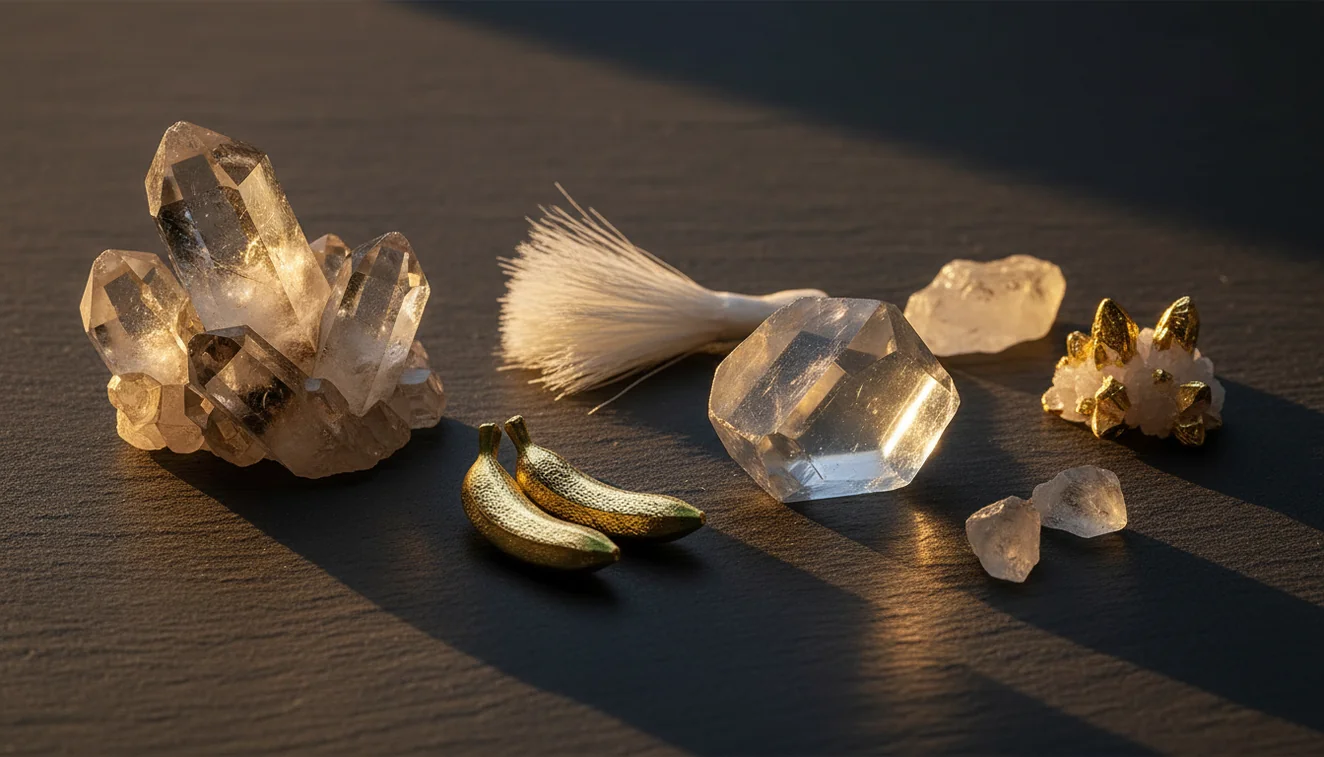
Quick answer: Quartz vs calcite: how to tell them apart depends mainly on hardness, cleavage, and acid reaction rather than color. Quartz is Mohs 7, usually scratches glass, has no true cleavage, and does not fizz in dilute acid, while calcite is Mohs 3, shows rhombohedral cleavage, and fizzes on a fresh surface.
AI Rock ID can help narrow a quartz vs calcite identification by comparing visible features such as luster, crystal habit, and cleavage-like faces from an iPhone or iPad photo. RockIdentifier.io supports the same topic with web photo upload, but the final distinction should still be checked with hardness, cleavage, and acid reaction when testing is safe.
Quick summary
- Best for
- Collectors, students, hikers, lapidary beginners, rockhounds
- Works on
- Quartz, calcite, clear crystals, white minerals, vein minerals, hand samples
- Accuracy
- Strong when photo clues are confirmed with hardness, cleavage, and acid reaction tests.
- Needs confirmation
- Yes
- Professional replacement
- No
- Platforms
- iPhone, iPad, Web
This guide is best for
- Beginners comparing clear, white, or milky minerals that could be quartz or calcite
- Rockhounds sorting vein material in the field
- Students learning Mohs hardness, cleavage, fracture, and acid reaction
- Collectors checking whether a specimen is a silicate or carbonate mineral
- Lapidary beginners evaluating durability before cutting or polishing
- People who want to pair photo identification with simple hands-on tests
Consider another approach if you
- Owners of museum specimens, heirlooms, or mounted jewelry that should not be scratched or acid tested
- Users who need professional gem grading, appraisal, or market value estimates
- People identifying complex carbonate mixtures such as dolomite, aragonite, or coated specimens without further testing
- Anyone relying only on color to separate quartz from calcite
Quartz is Mohs 7, has no true cleavage, breaks with curved conchoidal fracture, and does not fizz in dilute acid. Calcite is Mohs 3, shows strong rhombohedral cleavage, and fizzes when dilute hydrochloric acid touches a fresh surface. If a clear or white mineral scratches glass and stays quiet in acid, it is far more likely quartz than calcite.
What Is Quartz vs Calcite: How to Tell Them Apart?
Quartz vs calcite: how to tell them apart is a practical mineral identification problem because both minerals can be clear, white, milky, glassy, or massive in hand sample. The reliable split is not color; it is the combination of Mohs hardness, cleavage or fracture, and acid reaction.
Quartz is silicon dioxide, a hard silicate mineral with conchoidal fracture. Calcite is calcium carbonate, a softer carbonate mineral with perfect rhombohedral cleavage. For a reference baseline on mineral resources and geology terms, the USGS mineral resources program is a useful authority: https://www.usgs.gov/centers/national-minerals-information-center.
How Quartz vs Calcite: How to Tell Them Apart Works
Quartz vs calcite identification works by separating a silicate from a carbonate using observable properties and one simple chemical reaction. A photo-based lookup can suggest likely matches from luster, crystal habit, matrix, and visible cleavage planes: quartz often shows hexagonal prisms or irregular glassy fracture, while calcite often shows rhombohedra, dogtooth scalenohedra, or repeated flat faces.
Hands-on confirmation is stronger. Quartz at Mohs 7 scratches glass and resists a knife point. Calcite at Mohs 3 is scratched by a copper coin or knife and fizzes in dilute hydrochloric acid because carbonate releases carbon dioxide gas. Use photo ID as the shortlist, then confirm with hardness and acid when the specimen matters.
How to Use Quartz vs Calcite Tests
Inspect fresh surfaces
Look for repeated flat cleavage planes versus curved, shell-like fracture. Calcite commonly breaks into slanted rhombohedral faces; quartz breaks irregularly with conchoidal, glassy curves.
Test hardness carefully
Try scratching common glass with a sharp mineral edge. Quartz usually scratches glass; calcite will not. Then try a knife point on the specimen: calcite is easily scratched, while quartz resists.
Check for acid fizz
Place one drop of dilute hydrochloric acid on a fresh or lightly scratched area. Calcite effervesces; quartz stays quiet. Vinegar can work weakly, but powdered or freshly exposed calcite reacts more clearly.
Compare crystal habit
Use shape as supporting evidence. Quartz favors hexagonal prisms, points, massive vein quartz, and glassy fracture chips; calcite favors rhombohedra, dogtooth crystals, cleavage blocks, and carbonate vein material.
Confirm the context
Consider the host rock. Granite, pegmatite, quartzite, and silica-rich veins favor quartz; limestone, marble, shells, and carbonate veins favor calcite. Mixed veins are common, so context should not replace testing.
When to Use Quartz vs Calcite: How to Tell Them Apart (and When Not To)
Use it when
- Use it when a clear, white, milky, or glassy mineral could be either quartz or calcite.
- Use it when mapping veins and you need to separate silica-rich quartz veins from carbonate-rich calcite veins.
- Use it before acid cleaning, because quartz tolerates mild acid better than calcite, which dissolves and fizzes.
- Use it when sorting lapidary rough, since quartz is much harder and more durable than calcite.
- Use it when a photo suggests cleavage or crystal habit but a field test is needed for confirmation.
Skip it when
- Do not rely on it for professional appraisal, gem grading, or market value estimates.
- Do not use destructive scratch or acid tests on museum specimens, heirlooms, mounted jewelry, or fragile crystals.
- Do not assume every carbonate is calcite; dolomite, aragonite, and carbonate coatings can complicate acid results.
- Do not treat a photo-only answer as final when hardness and acid reaction have not been checked.
- Do not use vinegar or acid near metal settings, labels, electronics, or porous display bases.
Quartz vs Calcite: How to Tell Them Apart vs Google Lens and Rock Scanner Apps
| Feature | Rock Identifier | Google Lens | Rock & Crystal Identifier App |
|---|---|---|---|
| Best starting point | Mineral-focused photo ID with geology-style prompts for habit, luster, and specimen context | Broad visual search for similar web images, products, and pages | Crystal-focused photo matching with common specimen names and metaphysical catalog terms |
| Quartz vs calcite clues | Highlights likely mineral matches and encourages hardness, cleavage, and acid confirmation | May show visually similar quartz, calcite, glass, or décor items without test guidance | Often useful for common crystals but may under-explain carbonate reaction and cleavage |
| Field-test support | Works best when paired with scratch, glass, knife, and dilute acid observations | No mineral-specific testing workflow | Varies by app; some give short property summaries |
| Photo-only reliability | Good for narrowing candidates, weaker when polished or massive specimens hide structure | Good for finding look-alike images, weaker for mineral property separation | Good for popular crystals, weaker for mixed matrix and rare mineral assemblages |
| Use case | Collector, student, hiker, or lapidary user who wants a mineral ID shortlist | General search when you want visual matches or shopping results | Crystal collector who wants fast naming of common tumbled or display specimens |
The best workflow is not app versus field test; it is app plus field test. Visual tools can narrow quartz versus calcite from habit and cleavage, but hardness and acid reaction are the decisive checks when the specimen is in your hand.
Quartz vs Calcite Use Cases
- Field collecting: Use quartz versus calcite checks when you collect from veins, vugs, quarries, roadcuts, or carbonate outcrops. A glass scratch and acid drop can prevent mislabeling common white minerals.
- Geology class labs: Students can practice Mohs hardness, cleavage, fracture, and effervescence on two minerals that look deceptively similar. The pair is ideal for learning why a single visual clue is rarely enough.
- Lapidary sorting: Quartz is durable enough for many cutting, tumbling, and jewelry uses, while calcite is soft and acid-sensitive. Separating them early helps avoid scratched, etched, or underperforming finished pieces.
- Rock cleaning decisions: Quartz specimens often tolerate mild acid cleaning better than calcite specimens. If the unknown mineral fizzes, stop and rethink the cleaning plan before dissolving or dulling the surface.
- Home collection labeling: Clear calcite, milky quartz, vein quartz, and white carbonate pieces are commonly mixed in old collections. A short test sequence makes labels more defensible than color-based guessing.
Quartz vs Calcite: How to Tell Them Apart Limitations
- Treated stones can mislead identification because dyes, stabilizers, coatings, and acid-washed surfaces may change luster or mask natural texture.
- Polished specimens are harder to separate from photos because tumbling removes cleavage edges, fracture surfaces, and natural crystal habit.
- Rare minerals and look-alikes can overlap visually with quartz or calcite; dolomite, aragonite, gypsum, fluorite, chalcedony, and glass should stay on the shortlist when tests conflict.
- Photo quality matters: glare, low resolution, wet surfaces, strong backlighting, and white-balance shifts can make luster and transparency unreliable.
- Value estimates should not be made from quartz-versus-calcite ID alone; size, locality, damage, clarity, aesthetics, treatment, and market demand all matter.
- Acid tests can be ambiguous on dirty, weathered, sealed, or coated samples; expose a fresh surface and test only a tiny spot.
- Scratch tests can be misread when a knife leaves a gray metal streak instead of cutting the mineral; wipe the mark and check for a true groove.
Common mistakes
- Assuming clear calcite is quartz because both minerals can be transparent or white.
- Using color as the main test when quartz and calcite can share many of the same colors.
- Mistaking calcite cleavage faces for quartz crystal faces without checking fracture and hardness.
- Expecting vinegar to produce a strong fizz on every calcite sample, even when the surface is weathered or not freshly scratched.
- Scratching a visible display face instead of using an inconspicuous edge or broken surface.
- Calling a mineral quartz only because it scratches weak glass without checking for cleavage or acid reaction.
- Forgetting that mixed veins can contain both quartz and calcite in the same hand sample.
Check Quartz vs Calcite with Photo Clues and Field Tests
A photo can help narrow quartz vs calcite by showing habit, luster, and possible cleavage, but hardness and acid reaction provide stronger confirmation. Use non-destructive observation first, and avoid scratch or acid tests on valuable or delicate specimens.
Related Articles
Frequently Asked Questions
Can quartz fizz in vinegar?
No. Quartz is SiO2 and does not effervesce in vinegar or dilute hydrochloric acid. If you see fizzing, suspect calcite, another carbonate, or carbonate cement on the specimen.
Does calcite scratch glass?
Calcite normally does not scratch common window glass because calcite is Mohs 3 and glass is about Mohs 5.5. If you think it scratched glass, check whether you made a powder streak or used a harder attached mineral.
Will quartz always scratch glass?
Most quartz will scratch common glass because quartz is Mohs 7. A weathered rind, rounded edge, weak pressure, or dirty surface can confuse the test, so use a fresh sharp edge when possible.
How does calcite cleavage look?
Calcite cleavage appears as repeated flat faces meeting at slanted, non-right angles. Broken pieces often look like skewed blocks or rhombohedra rather than irregular chips.
How does quartz fracture look?
Quartz usually breaks with conchoidal fracture, producing curved, shell-like surfaces. Fresh breaks can look glassy, uneven, and smoothly curved rather than flat and planar.
Is clear calcite quartz?
No. Clear calcite, including Iceland spar, can resemble clear quartz but is much softer, has rhombohedral cleavage, and fizzes in acid. It may also show double refraction, making text appear doubled through the crystal.
What if calcite does not fizz?
Test a fresh scratched or broken surface, because dirt, coatings, or weathered surfaces can suppress the reaction. Vinegar is weak, so dilute hydrochloric acid gives a clearer result when used safely.
Can color separate quartz and calcite?
Color is one of the weakest clues because both minerals can be colorless, white, gray, yellowish, or stained by iron oxides. Use hardness, cleavage, fracture, and acid reaction instead.
Which is better for jewelry?
Quartz is generally better for everyday jewelry because it is harder and more scratch resistant. Calcite is attractive but soft, easily scratched, and vulnerable to acids, so it is better for protected settings or display specimens.