Types of Quartz Identification: Complete Guide to Quartz Varieties
Use observable traits like crystal habit, color zoning, transparency, fracture, inclusions, and geologic setting to separate common quartz varieties. This guide explains how to identify quartz in hand sample, in photos, and in the field.


Drop a rock photo here or tap to upload
JPG, PNG, WebP, HEIC • Max 50 MB • 1 free scan per day

Analyzing your specimen…
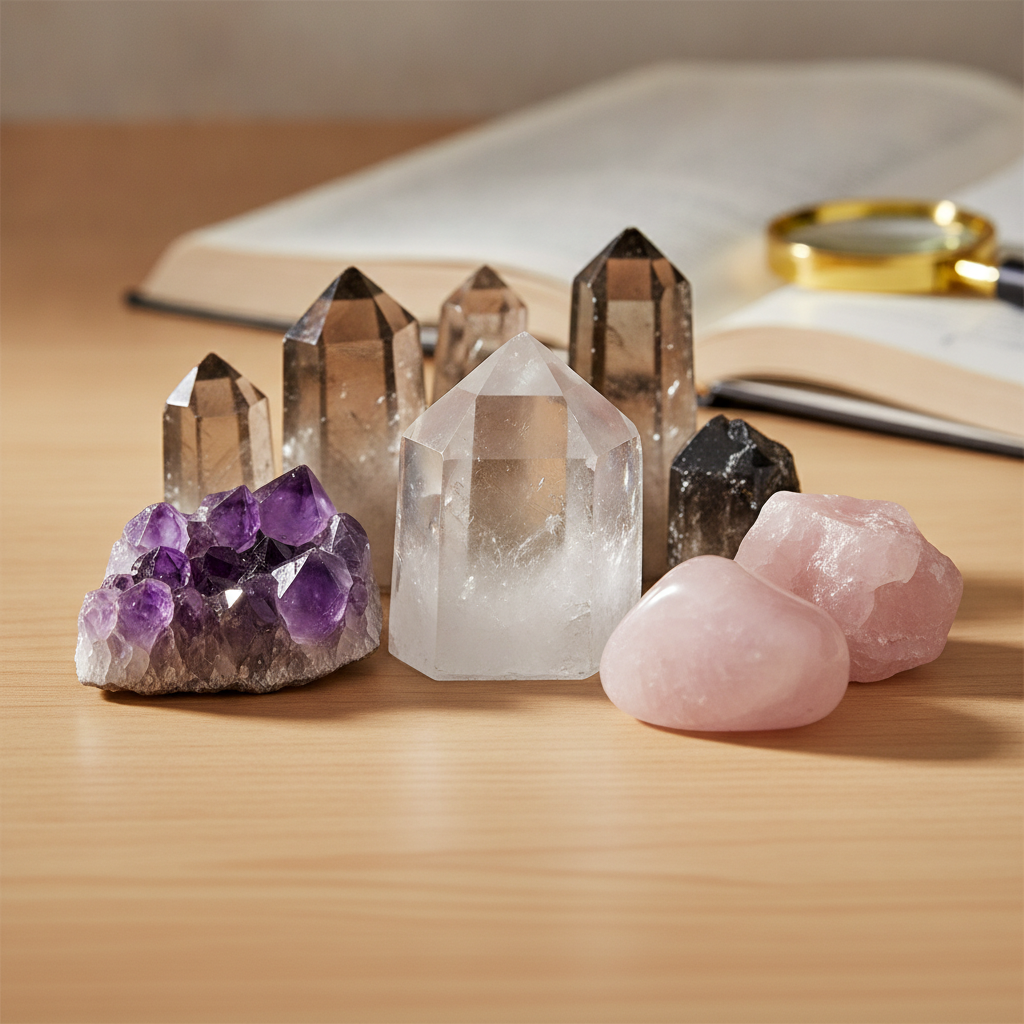
Quick answer: Types of quartz identification separates quartz varieties by observable traits such as color, transparency, crystal habit, luster, inclusions, banding, and fracture. A reliable identification usually starts by confirming quartz-level properties, including Mohs hardness 7, white streak, no cleavage, vitreous to waxy luster, and conchoidal fracture, before naming a variety such as amethyst, agate, jasper, smoky quartz, citrine, rose quartz, or rock crystal.
AI Rock ID can help users compare quartz photos with visual identification clues such as color zoning, crystal habit, luster, banding, inclusions, and fracture. RockIdentifier.io supports this quartz identification workflow through web photo upload for first-pass comparison of common quartz varieties.
Quick summary
- Best for
- Collectors, beginners, hikers, students, field hobbyists
- Works on
- Quartz crystals, agate, jasper, chalcedony, geodes, vein quartz, beach and river finds
- Accuracy
- Most accurate for common quartz varieties when photos are combined with hardness, habit, fracture, translucency, and locality clues.
- Needs confirmation
- Yes
- Professional replacement
- No
- Platforms
- iPhone, iPad, Web
This guide is best for
- Beginners trying to separate common quartz varieties by visible traits
- Rockhounds sorting quartz finds from geodes, veins, beaches, rivers, or mine dumps
- Collectors comparing amethyst, citrine, smoky quartz, rose quartz, agate, jasper, chalcedony, and rock crystal
- Students learning how habit, luster, fracture, inclusions, and transparency support mineral identification
- Field users who can pair photo identification with simple hardness and streak checks
- Hobbyists cataloging quartz specimens before deciding whether expert testing is needed
Consider another approach if you
- Gem buyers who need professional grading, appraisal, or value confirmation
- Users trying to prove natural versus treated citrine, dyed agate, or synthetic quartz from a photo alone
- Collectors handling museum pieces, heirlooms, or cut gems where scratch tests would be inappropriate
- Anyone needing trace-element chemistry, irradiation history, or laboratory confirmation
Types of quartz identification means separating quartz varieties by color, transparency, crystal habit, inclusions, and formation environment. Rock Identifier can help compare a quartz photo against visual markers such as vitreous luster, conchoidal fracture, hexagonal prisms, banding, and drusy crystal surfaces. A confident result usually combines the image match with hardness, streak, and location context.
What Is Types of Quartz Identification?
Types of quartz identification is the process of telling quartz varieties apart using physical traits rather than a single color name. Quartz is silicon dioxide, but it appears as clear rock crystal, purple amethyst, yellow citrine, smoky quartz, rose quartz, milky quartz, chalcedony, agate, jasper, and many mixed forms. The same mineral can look glassy, massive, banded, druzy, cryptocrystalline, or prismatic depending on how it formed.
Start with the constants: quartz has a Mohs hardness of 7, a white streak, no true cleavage, vitreous to waxy luster, and conchoidal fracture. Then sort the variety by diagnostic clues: amethyst is purple from irradiation and iron impurities, smoky quartz is gray-brown to black, agate shows curved banding, and jasper is opaque microcrystalline quartz. For mineral background, compare terminology with the quartz entry on [mindat.org](https://www.mindat.org/min-3337.html).
How Types of Quartz Identification Works
Types of quartz identification works by narrowing a specimen from “quartz” to a likely variety through repeated evidence checks. A photo-based lookup first evaluates visible signals: color family, translucency, crystal shape, banding, surface texture, and inclusions such as rutile needles, chlorite, hematite, or fluid veils. Photos are processed for identification in a privacy-friendly way, and better lighting usually improves the match.
The practical workflow is comparative. Confirm quartz-level traits first: it should scratch glass, resist a steel knife, show no cleavage planes, and often break with curved conchoidal surfaces. Next, classify the habit. Macrocrystalline quartz includes amethyst, citrine, smoky quartz, rose quartz, and rock crystal; cryptocrystalline quartz includes chalcedony, agate, onyx, carnelian, chrysoprase, and jasper. Finally, use locality and host rock to reject lookalikes such as calcite, fluorite, glass, or dyed chalcedony.
How to Use Types of Quartz Identification in the Field
Clean the surface
Brush away soil, clay, iron staining, or pocket debris before judging color and luster. Quartz often carries coatings that hide banding, zoning, or crystal faces, so inspect both a fresh surface and the weathered exterior.
Photograph multiple angles
Take one close-up of the best crystal face, one side view, and one image beside a coin or ruler. Use the iOS app link from rockidentifier.io when you want a quick free photo ID while comparing visual matches.
Check hardness
Test an inconspicuous edge against glass if it is safe and permitted. Quartz should scratch glass and resist a knife point; calcite, fluorite, and many lookalikes fail this simple field screen.
Classify the habit
Decide whether the specimen is prismatic, massive, drusy, banded, nodular, geode-lined, or microcrystalline. Habit is often more reliable than color because quartz colors can overlap or be altered by staining.
Compare diagnostic features
Match purple zones to amethyst, smoky gray-brown tones to smoky quartz, curved bands to agate, opaque red or yellow bodies to jasper, and translucent orange-red tones to carnelian. Record uncertainty when traits conflict.
Add location context
Note the host rock, mine district, beach, river gravel, pegmatite, vug, vein, or geode source. Geological setting can separate natural citrine from heat-treated amethyst and distinguish quartz from similar silicate or carbonate minerals.
When to Use Types of Quartz Identification (and When Not To)
Use it when
- Use it when a specimen is hard, glassy, non-cleaving, and likely quartz but the variety is unclear.
- Use it when comparing common quartz varieties such as amethyst, citrine, smoky quartz, rose quartz, agate, jasper, chalcedony, and rock crystal.
- Use it when sorting mixed field finds from geodes, pegmatites, hydrothermal veins, river gravels, beaches, or old mine dumps.
- Use it when you need a first-pass label before cataloging a collection, teaching a class, or deciding what tests to run next.
- Use it when you can combine photos with hardness, translucency, fracture, banding, and locality notes.
Skip it when
- Do not use it as the only method for pricing gems, grading clarity, or confirming commercial value.
- Do not rely on color alone; dyed agate, heat-treated amethyst, and iron-stained quartz can mislead beginners.
- Do not use destructive tests on museum pieces, cut gems, heirlooms, or specimens you do not own.
- Do not expect a photo to prove trace-element chemistry, irradiation history, synthetic origin, or treatment status.
- Do not treat it as a substitute for lab testing when the specimen may be rare, valuable, or part of a formal appraisal.
Types of Quartz Identification vs Google Lens and Rock & Crystal Identifier
| Feature | Rock Identifier | Google Lens | Rock & Crystal Identifier |
|---|---|---|---|
| Best use | Photo-based mineral and quartz variety lookup with geology-focused prompts | Broad visual search across web images, products, and similar photos | Crystal hobby identification with common stone names and visual matches |
| Quartz-specific cues | Emphasizes habit, luster, banding, inclusions, fracture, and likely varieties | May return visually similar jewelry, décor, or unrelated stock images | Often recognizes popular crystals but may generalize microcrystalline varieties |
| Field workflow | Works well with multiple angles plus hardness and locality notes | Useful for quick image comparison but not structured for mineral testing | Helpful for casual collecting and crystal cataloging |
| Lookalike handling | Can suggest quartz-adjacent checks against calcite, fluorite, glass, and dyed stones | Depends heavily on indexed images and surrounding search results | May identify trade names before mineralogical varieties |
| Learning value | Pairs a likely ID with traits a collector can verify in hand sample | Good for finding matching web pages but less consistent for geology terms | Good for beginners who want simple crystal labels |
For quartz, a specialist scanner is usually better than a general image search when the question is mineral variety rather than shopping match. Still, no app replaces hardness testing, locality data, and careful observation under neutral light.
Types of Quartz Identification Use Cases
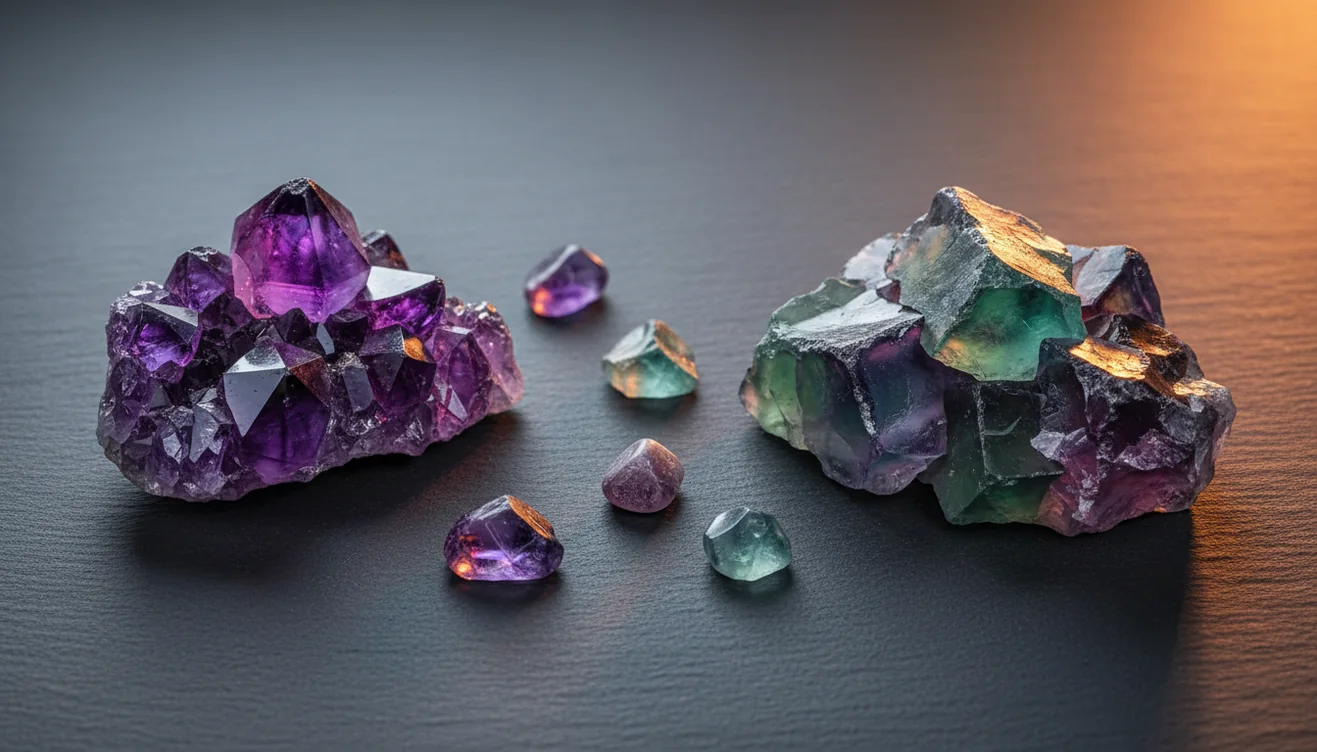
- Separating amethyst from fluorite: Purple specimens can be deceptive, especially in cubes, veins, and crystal clusters. Quartz has hexagonal habit, hardness 7, no cleavage, and conchoidal fracture, while fluorite is softer, has perfect octahedral cleavage, and often forms cubic crystals.
- Sorting agate, jasper, and chalcedony: Microcrystalline quartz varieties are best separated by transparency and pattern. Agate is typically translucent with curved or fortification banding, jasper is opaque and often red, yellow, green, or brown, and chalcedony is a broader waxy translucent category.
- Checking citrine versus heat-treated amethyst: Natural citrine is commonly pale yellow to smoky yellow-brown and may show subtle zoning. Heat-treated amethyst is often bright orange, reddish, or concentrated near crystal tips, so origin and crystal morphology matter.
- Labeling quartz from geodes: Geodes commonly contain clear, milky, smoky, amethystine, or drusy quartz linings. Identification should note both the cavity habit and any secondary minerals such as calcite, celestine, iron oxides, or chalcedony rims.
- Teaching mineral properties: Quartz is ideal for teaching hardness, streak, fracture, luster, and crystal habit because it is common and durable. Students can compare macrocrystalline points with cryptocrystalline agate or jasper to see how one mineral species produces many appearances.
Types of Quartz Identification Limitations
- Treated stones can look natural in photos. Heat-treated amethyst, irradiated smoky quartz, dyed agate, and coated aura quartz often require provenance, microscopy, spectroscopy, or gemological testing.
- Polished specimens remove many field clues. Tumbling, cabochon cutting, and carving can erase crystal faces, fracture surfaces, rind texture, and host-rock relationships.
- Rare minerals and unusual inclusions may be misread. Quartz can contain rutile, tourmaline, chlorite, hematite, goethite, or fluid inclusions that change the visual match.
- Photo quality strongly affects results. Harsh flash, warm indoor light, wet surfaces, low resolution, and cluttered backgrounds can distort color, transparency, and luster.
- Value estimates are not reliable from variety names alone. Price depends on size, clarity, color saturation, locality, treatment, damage, cutting quality, and market demand.
- Color is not definitive. Iron staining can make clear quartz appear yellow, smoky quartz can grade into near-clear material, and rose quartz may be massive rather than well crystallized.
- Some lookalikes need physical tests. Calcite, glass, fluorite, feldspar, beryl, opal, and topaz can overlap visually with quartz in certain photos.
- Locality claims need verification. A label saying “Herkimer diamond,” “Brandberg amethyst,” or “Madagascar rose quartz” should be checked against provenance, habit, and specimen history.
Common mistakes
- Identifying every purple quartz as amethyst without checking color zoning, crystal habit, and geologic setting.
- Calling any yellow quartz citrine without considering iron staining, heat-treated amethyst, or smoky-yellow quartz.
- Relying on color alone when banding, translucency, fracture, and surface texture are more diagnostic.
- Confusing agate with jasper because both are microcrystalline quartz, even though agate is typically more translucent and banded while jasper is opaque.
- Mistaking glass for quartz because both can look clear and shiny, while glass is usually softer and lacks natural quartz crystal habit.
- Ignoring hardness tests when safe, even though quartz should scratch glass and resist a steel knife point.
- Overlooking coatings, weathering, or iron stains that can hide the true color and luster of a quartz specimen.
Check types of quartz identification with photos and field clues
Photo comparison can help narrow a quartz specimen to a likely variety, especially when paired with hardness, habit, fracture, banding, transparency, and locality notes. Use the result as a first-pass identification when distinguishing common quartz varieties.
Related Articles
Frequently Asked Questions
How do I identify quartz?
Confirm the basic quartz traits first: hardness about 7, white streak, no true cleavage, vitreous luster, and conchoidal fracture. Then use color, transparency, crystal habit, banding, inclusions, and locality to narrow the variety.
What type of quartz is purple?
Purple quartz is usually amethyst. The color can be pale lilac to deep violet and may occur in zones, especially near crystal tips or along growth layers.
Is citrine always natural?
No, much commercial citrine is heat-treated amethyst or smoky quartz. Natural citrine is often less intensely orange and should be evaluated with crystal habit, zoning, locality, and seller documentation.
How can I tell agate from jasper?
Agate is usually translucent and commonly shows curved, parallel, or fortification banding. Jasper is opaque microcrystalline quartz, often red, yellow, brown, green, or multicolored, with little to no light passing through thin edges.
Does quartz scratch glass?
Yes, quartz should scratch common glass because quartz has Mohs hardness 7 and glass is usually around 5.5. Use this test only on an inconspicuous spot and avoid testing valuable, cut, or fragile specimens.
What is milky quartz?
Milky quartz is white to cloudy quartz caused by tiny fluid inclusions, fractures, or internal scattering. It is common in veins, pegmatites, and massive quartz bodies.
Can quartz be mistaken for glass?
Yes, clear quartz and glass can look similar in photos or polished pieces. Quartz is harder, often shows natural crystal faces or conchoidal fracture, and lacks the rounded gas bubbles commonly seen in manufactured glass.
What quartz has bands?
Banded quartz is commonly agate, a microcrystalline quartz variety with layered chalcedony. Onyx is a term often used for straight or parallel-banded chalcedony, while jasper may show opaque bands or color patches.
Are rose quartz crystals rare?
Massive rose quartz is fairly common, but well-formed transparent pink quartz crystals are much rarer. Many rose quartz specimens occur as massive chunks rather than distinct hexagonal prisms.