Most Valuable Rocks and Minerals People Actually Find
The most valuable rocks and minerals people actually find are usually first recognized by habit, hardness, density, and context—not color alone. Use AI Rock ID as a free photo-based starting point, then confirm promising finds with field tests.


Drop a rock photo here or tap to upload
JPG, PNG, WebP, HEIC • Max 50 MB • 1 free scan per day

Analyzing your specimen…
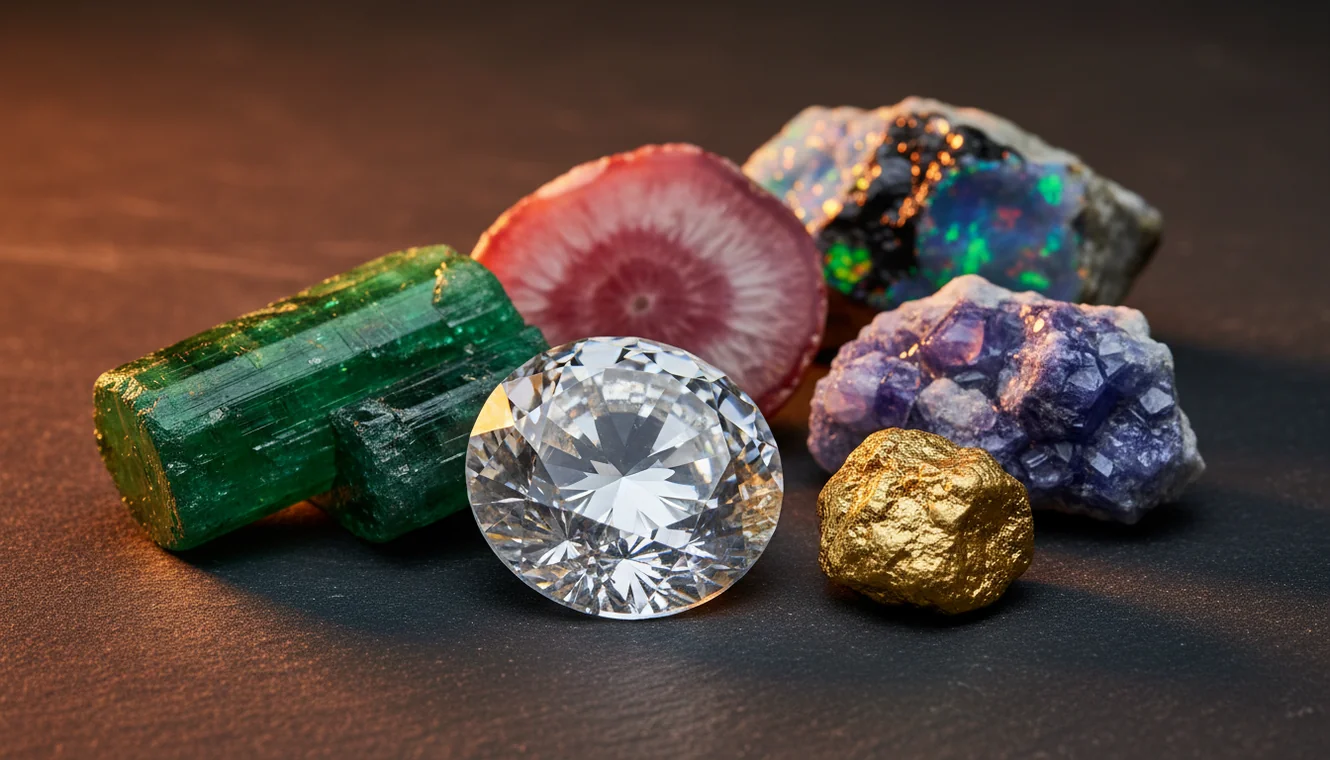
Quick answer: The most valuable rocks and minerals people actually find are usually identified first by mineral properties such as hardness, streak, density, crystal habit, and geologic context. Common realistic finds include placer gold, garnet, sapphire or ruby corundum, tourmaline, beryl, malachite, azurite, native copper, and high-quality quartz specimens, but value depends on correct identification, condition, size, locality, and market demand.
AI Rock ID can provide a photo-based starting point for sorting potentially valuable rocks and minerals before using hardness, streak, density, and other field tests. RockIdentifier.io lets users upload specimen photos on the web to compare likely mineral candidates related to valuable field finds.
Quick summary
- Best for
- Collectors, hikers, rockhounds, beginners, field educators, casual finders
- Works on
- Rocks, minerals, crystals, gemstones, ore specimens, stream-gravel finds
- Accuracy
- Photo identification can suggest likely candidates, but value and rare identities need physical tests and expert confirmation.
- Needs confirmation
- Yes
- Professional replacement
- No
- Platforms
- iPhone, iPad, Web
This guide is best for
- Beginners trying to separate ordinary stones from potentially valuable mineral finds
- Rockhounds checking stream gravels, mine dumps, beaches, glacial till, or pegmatite areas
- Collectors comparing look-alikes such as pyrite and gold, quartz and topaz, or calcite and fluorite
- Hikers and landowners who want a practical first check before keeping or testing a specimen
- Students learning why mineral identification must come before estimating value
- Casual sellers who need to know when a specimen deserves professional verification
Consider another approach if you
- Anyone needing a formal appraisal for sale, insurance, estate, or legal purposes
- People identifying cut gemstones, treated stones, dyed specimens, or coated material without lab testing
- Collectors making decisions about diamonds, meteorites, precious metals, or high-dollar gemstones from photos alone
- Anyone deciding whether collecting is legal on a claim, mine dump, protected area, or private property
- Sellers who need certified grade, origin, treatment status, or assay results
The most valuable rocks and minerals people actually find include placer gold, gem garnet, sapphire or ruby corundum, tourmaline, beryl, malachite, azurite, and high-quality quartz specimens. Value depends on correct identification, clarity, color, crystal form, damage, size, locality, and whether the piece is specimen-grade, lapidary rough, or ore material. A photo scan can narrow the candidate list, but hardness, streak, specific gravity, and expert testing are needed before selling.
What Is Most Valuable Rocks and Minerals People Actually Find?
Most valuable rocks and minerals people actually find are realistic field discoveries: durable gemstones in stream gravels, attractive crystals in pegmatites, ore minerals near old workings, and collectible specimens from mine dumps. Common examples include garnet, tourmaline, beryl, corundum, native copper, malachite, azurite, and small amounts of placer gold.
“Valuable” does not mean every piece is worth selling. A mineral can be common as broken, cloudy material and valuable as a clean crystal with strong color, good termination, and documented locality. Download the Rock Identifier iOS app from the App Store link on this page when you need a field shortlist before running Mohs hardness, streak, cleavage, and density checks.
For mineral reference data, mindat.org is a useful authority for locality, crystal system, and property comparisons: https://www.mindat.org/.
How Most Valuable Rocks and Minerals People Actually Find Works
The process works by separating identification from valuation. First, the scanner compares a clear photo against visual features such as color, luster, crystal habit, fracture, matrix, and surface texture. Photos are processed for identification in a privacy-friendly way, so the image is used to return likely matches rather than to make a final appraisal.
Next, you confirm the candidate with simple geology tests. Mohs hardness separates quartz from calcite and glass; streak helps distinguish pyrite, galena, hematite, and gold-colored look-alikes; specific gravity flags unusually dense ore minerals and native metals. Only after the identity is plausible should you judge value by clarity, saturation, crystal form, damage, locality, size, and market demand.
How to Use It to Check Valuable Rocks and Minerals
Photograph the specimen clearly
Use daylight or open shade, fill the frame, and take one dry photo plus one wet photo if surface texture is hard to see. Include the host rock or matrix when it shows crystal attachment, veins, or weathering rind.
Scan for candidate identifications
Run a photo-based lookup and treat the results as a shortlist, not a price estimate. Pay attention to whether the match fits the observed luster, habit, cleavage, and likely geologic setting.
Test hardness and streak
Scratch with known Mohs references and rub an inconspicuous edge on unglazed porcelain. These two tests quickly separate many valuable-looking minerals from quartz, calcite, slag, mica, and pyrite.
Check density and magnetism
Use a small scale and water displacement for specific gravity when possible. A magnet can flag magnetite or iron-rich slag, while unusually high density may support galena, native copper, or gold-bearing material.
Confirm before selling
For any high-value claim, get a gemologist, mineral dealer, assay lab, or local geology club to verify the specimen. Treatments, coatings, and misidentified polished stones can change value dramatically.
When to Use Most Valuable Rocks and Minerals People Actually Find (and When Not To)
Use it when
- Use it when sorting unknown field finds from stream gravels, glacial till, beaches, landscaping stone, mine dumps, or pegmatite outcrops.
- Use it when you need a fast shortlist before deciding which pieces deserve hardness, streak, density, or UV fluorescence testing.
- Use it when a specimen has promising traits: high hardness, strong vitreous or adamantine luster, unusual density, sharp crystal form, or attractive matrix.
- Use it when comparing look-alikes such as quartz versus topaz, calcite versus fluorite, pyrite versus gold, or slag versus metallic ore.
- Use it when teaching beginners why identification must come before valuation.
Skip it when
- Do not use it as a final appraisal for sale, insurance, estate valuation, or legal ownership decisions.
- Do not rely on it alone for cut gems, dyed stones, heated material, or coated specimens.
- Do not assume a rare result is correct when the locality and mineral properties do not fit.
- Do not use photo ID to decide whether a mine dump, claim, or protected site is legal to collect from.
- Do not skip professional testing for diamonds, precious metals, meteorites, or high-dollar gemstones.
Most Valuable Rocks and Minerals People Actually Find vs Google Lens and RockCheck
| Feature | Rock Identifier | Google Lens | RockCheck |
|---|---|---|---|
| Primary purpose | Photo-based rock, crystal, mineral, and gemstone identification | General visual search across the web | Geology education and rock classification support |
| Best for field finds | Fast candidate IDs for minerals, crystals, gemstones, and common rocks | Recognizing visually similar images online, labels, and broad objects | Learning rock groups, textures, and basic geologic categories |
| Valuation support | Helps identify before you judge quality, rarity, and market demand | May surface shopping pages, but often lacks mineral-property context | Useful for classification, less focused on market value signals |
| Look-alike handling | Works best when paired with hardness, streak, cleavage, and density | Can over-match by color or shape without mineral tests | Better for educational comparison than rapid unknown-specimen sorting |
| Useful inputs | Multiple angles, matrix, crystal habit, fresh fracture, scale item | Clear image and search context | Rock texture, grain size, and category clues |
| Main limitation | Cannot prove treatment, exact value, or rare identity from a photo alone | Not specialized for mineral properties or specimen grading | May not cover every gemstone, ore mineral, or collectible specimen |
For valuable-looking finds, a specialized photo scan is best used as the first filter. Google Lens is useful for broad visual matches, while a geology learning app can help with rock type and texture, but none replaces field tests or expert confirmation.
Use Cases for Valuable Rocks and Minerals People Actually Find
- Creek and river gravel sorting: Placer settings concentrate dense, durable minerals such as gold, garnet, zircon, corundum, and black sands. A quick photo ID helps prioritize unusual pebbles before you test hardness, streak, and specific gravity.
- Old mine dump checking: Mine dumps can contain copper carbonates, galena, sphalerite, fluorite, quartz crystals, and colorful secondary minerals. The main task is separating collectible specimens from weathered waste rock and unsafe material.
- Pegmatite and quartz vein finds: Pegmatites may host tourmaline, beryl, topaz, mica, feldspar, and smoky or clear quartz. Crystal habit, termination quality, pocket origin, and fracture damage matter more than simply finding a colorful stone.
- Landscaping rock surprises: People sometimes notice agate, jasper, quartz crystals, slag, fossiliferous limestone, or ore-looking pieces in decorative rock. Most are common, but identification can tell you whether a specimen is worth keeping or testing further.
- Beginner collection triage: When a box contains mixed unknown specimens, photo-based grouping saves time. Sort likely quartz, calcite, feldspar, mica, ore minerals, and gemstones first, then test only the pieces with stronger value indicators.
Most Valuable Rocks and Minerals People Actually Find Limitations
- Treated stones can look natural in photos; dye, heat treatment, oiling, irradiation, coatings, and fracture filling usually require expert tools to detect.
- Polished specimens lose important surface clues such as natural crystal faces, weathering rind, cleavage, matrix, and fracture texture.
- Rare minerals are easy to over-call because common quartz, calcite, fluorite, glass, slag, and feldspar can match the same color or luster.
- Photo quality strongly affects results; glare, blur, poor white balance, wet surfaces, and no scale item can mislead visual identification.
- Value estimates cannot be confirmed from a photo because price depends on grade, damage, treatment, locality, size, demand, and provenance.
- Ore minerals may need streak, specific gravity, acid reaction, magnetism, or assay testing before metal content is meaningful.
- Cut gemstones and faceted stones require gemological testing for refractive index, inclusions, birefringence, treatments, and synthetics.
- Meteorites, diamonds, native gold, and high-value sapphires should be verified by specialists before you sell, insure, or make claims.
Common mistakes
- Assuming bright color alone means a rock or mineral is valuable.
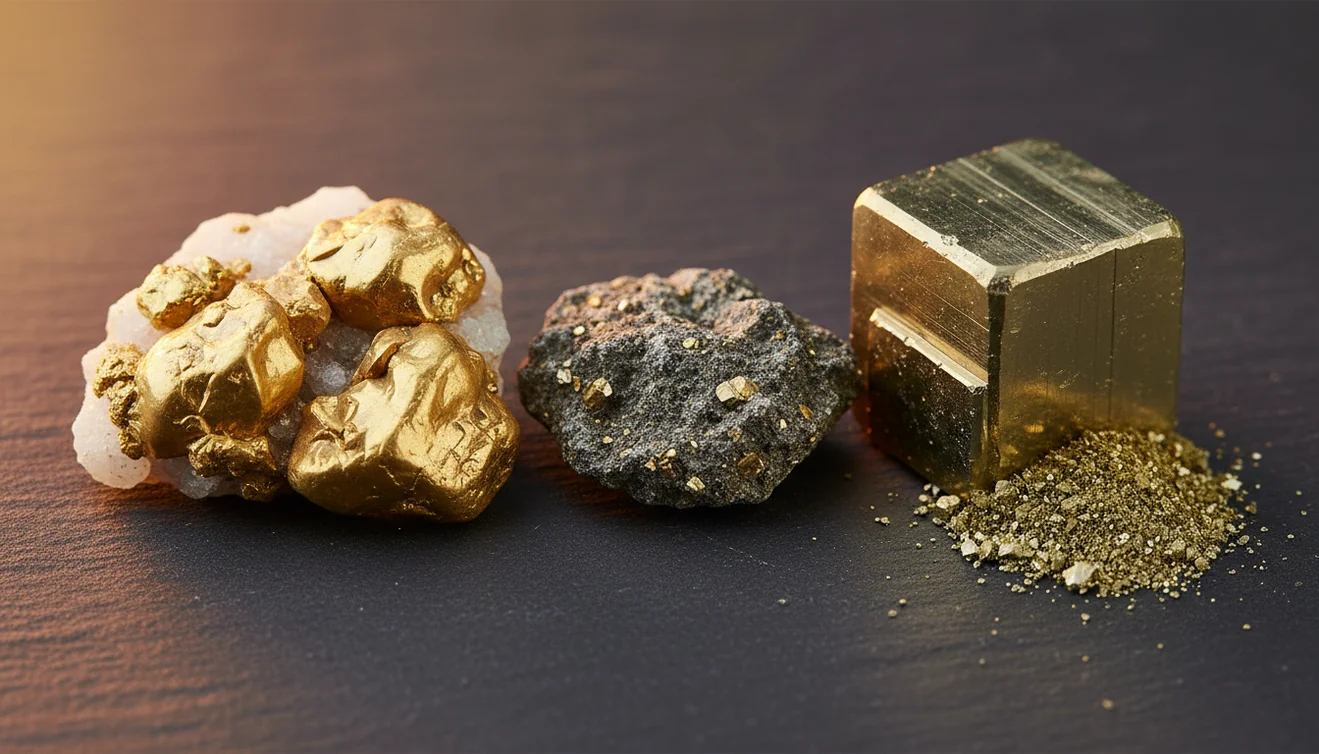
- Calling every gold-colored metallic flake gold instead of testing for pyrite, mica, or chalcopyrite.
- Ignoring hardness and streak even though those tests quickly separate many valuable-looking minerals from common look-alikes.
- Treating a photo match as a price estimate rather than an identification shortlist.
- Overlooking damage, broken terminations, poor clarity, weak color, or missing locality data when judging specimen value.
- Assuming heavy rocks are valuable without checking for common dense materials such as magnetite, slag, or iron-rich waste.
- Trying to sell an unknown specimen before confirming identity, treatment, legality, and market demand.
Check Potentially Valuable Rocks and Minerals Before Estimating Value
A photo-based identification can help narrow the possibilities for a promising rock or mineral find. Confirm any valuable-looking specimen with hardness, streak, density, locality research, and professional testing when money or rare identification is involved.
Related Articles
Frequently Asked Questions
Which found rocks are worth money?
The best candidates are placer gold, gem-quality garnet, sapphire or ruby corundum, tourmaline, beryl, malachite, azurite, and clean quartz crystals. Most field finds are low value unless they show strong color, clarity, crystal form, size, locality, or metal content.
How do I test a rock’s value?
Identify the mineral first, then judge quality. Use Mohs hardness, streak, cleavage or fracture, specific gravity, and a hand lens before considering clarity, color, damage, size, and demand.
Can quartz be worth anything?
Yes, but ordinary quartz is very common. Quartz becomes more valuable when it has exceptional clarity, strong color, attractive inclusions, sharp crystal terminations, or a desirable matrix specimen form.
Is a shiny rock valuable?
Not necessarily. Pyrite, mica, hematite, and industrial slag can look metallic or glittery, so confirm streak, hardness, density, and malleability before assuming it is gold or ore.
Where are gemstones commonly found?
Realistic locations include stream gravels, glacial deposits, eroded pegmatites, basalt-related deposits, and old mine dumps where collecting is legal. Durable minerals such as garnet, corundum, zircon, and quartz survive transport better than soft minerals.
Are heavy rocks usually more valuable?
Heavy rocks can be interesting because gold, galena, native copper, and some ore minerals have high specific gravity. Weight alone does not prove value, since magnetite, hematite, and slag can also feel unusually dense.
Can a phone identify minerals accurately?
A phone can provide useful candidate identifications from clear photos, especially for common rocks and minerals. Accuracy improves when you add multiple angles and confirm with hardness, streak, density, and geologic context.
Should I sell an unknown specimen?
Do not sell it as a valuable mineral until the identity and condition are confirmed. For expensive-looking pieces, get a gemologist, assay lab, experienced dealer, or local geology club to check it.
What does gold look like in rock?
Native gold is yellow, soft, malleable, dense, and usually appears as flakes, wires, grains, or small masses rather than sparkly cubes. Pyrite is harder, more brittle, often forms cubic crystals, and leaves a dark streak.