
Jewelry Identifier
Upload jewelry photos
Clear, well-lit images help the AI identify it more accurately.

Analyzing your jewelry...
Checking texture, color, structure, and lookalikes…
Upload a photo of your jewelry to identify set gemstones, metals, and settings. Our AI analyzes rings, necklaces, bracelets, and more in seconds.


Whether you've inherited a vintage ring, found jewelry at an estate sale, or simply want to know what gemstone sits in your favorite necklace, identifying set stones and metals can be surprisingly challenging. Professional appraisals cost money and time, while guessing leaves you uncertain about what you actually own.
RockIdentifier.io's free jewelry identification tool uses advanced AI to analyze your jewelry photos and identify likely gemstones, metal types, and setting styles. While no photo-based tool replaces professional gemological testing, our AI provides instant preliminary identification to help you understand your pieces better.
Good fit for
- Identifying unknown gemstones in inherited jewelry
- Getting preliminary IDs before professional appraisal
- Learning about vintage or antique jewelry pieces
- Distinguishing common gemstones from glass or synthetics
- Understanding metal colors and setting styles
Not for
- Certified gemstone grading or appraisals
- Detecting lab-grown vs. natural diamonds
- Precise metal purity testing (requires acid test)
- Insurance or legal documentation purposes
At a glance
Jewelry identification involves analyzing set gemstones, metal types, and construction techniques to determine the materials and potential value of jewelry pieces. Photo-based AI identification provides preliminary assessments based on visual characteristics like color, luster, cut style, and metal appearance.
| Primary Use | Identifying gemstones and metals in jewelry |
|---|---|
| Best For | Rings, necklaces, bracelets, earrings |
| Identification Method | AI photo analysis |
| Cost | Free online tool |
| Accuracy Level | Preliminary visual identification |
| Time Required | Seconds per photo |
What Can AI Identify in Your Jewelry Photos?
Modern AI jewelry identification analyzes multiple visual elements simultaneously. When you upload a photo to RockIdentifier.io, our system examines gemstone color, transparency, luster, and visible inclusions. It also assesses metal color and finish, setting style, and overall construction quality to provide comprehensive preliminary identification.
For gemstones, the AI can distinguish between major stone families based on their optical properties. A deep blue stone might be identified as sapphire, lapis lazuli, or blue topaz depending on its transparency, surface texture, and color saturation. Red stones get analyzed for the specific hue differences between ruby, garnet, red spinel, and glass imitations.
Metal identification focuses on color tone and surface characteristics. The AI recognizes the warm yellow of gold, the bright white of silver or white gold, the pink tones of rose gold, and the darker appearance of oxidized or antiqued metals. However, determining exact purity, like whether gold is 10K, 14K, or 18K, requires physical testing beyond what photos can reveal.
Common Gemstone Lookalikes in Jewelry
Many gemstones share similar appearances, making visual identification challenging even for experienced collectors. Diamonds are frequently confused with white sapphire, moissanite, and cubic zirconia, all of which can appear nearly identical in photos. The AI Rock ID iPhone app helps distinguish these based on subtle differences in brilliance patterns and light dispersion visible in quality photos.
Blue gemstones present particular identification challenges. Sapphire, tanzanite, blue topaz, aquamarine, and even blue glass can look remarkably similar. Key distinguishing features include color zoning patterns, the specific shade of blue, and transparency characteristics. Sapphires typically show a more saturated, velvety blue, while topaz tends toward a lighter, more watery appearance.
Green stones create similar confusion. Emerald, peridot, green tourmaline, tsavorite garnet, and chrome diopside all occupy the green spectrum. Emeralds usually contain visible inclusions (called jardin), while peridot has a distinctive olive-yellow undertone. Our AI analyzes these subtle color variations to suggest the most likely identification.
Red and pink stones require careful analysis to distinguish ruby from garnet, red spinel, pink sapphire, and rhodolite. True rubies display a specific "pigeon blood" red with slight blue undertones, while garnets lean toward orange-red or purple-red depending on variety.
How to Photograph Jewelry for Best AI Results
Quality photos dramatically improve identification accuracy. Natural daylight provides the most accurate color representation, photograph your jewelry near a window during daytime, avoiding direct harsh sunlight that creates glare. Indoor lighting often adds yellow or blue color casts that can mislead identification algorithms.
Position your jewelry on a neutral background, preferably white, gray, or black. Busy patterns or colored backgrounds interfere with accurate color analysis. A plain piece of paper or fabric works well. Ensure the gemstone faces the camera directly so the AI can analyze its face-up appearance.
Take multiple photos from different angles. A straight-on shot of the gemstone, a side profile showing the setting, and a close-up of any visible inclusions or surface features all provide valuable identification data. The RockIdentifier.io tool works best with clear, focused images where gemstone details are visible.
Avoid using flash photography, which creates bright reflections that obscure gemstone characteristics. If your phone camera has a macro mode, use it for close-up shots. Clean your jewelry before photographing, fingerprints and dust can affect how light interacts with the stone surface.
Understanding Metal Types in Jewelry
Jewelry metals fall into several categories that AI can help distinguish visually. Yellow gold ranges from pale yellow (lower karat) to rich, warm yellow (higher karat or gold-plated). White metals include sterling silver, white gold, platinum, palladium, and stainless steel, all appearing similar in photos but with subtle differences in brightness and tone.
Rose gold has become increasingly popular and displays distinctive pink-copper tones. The AI can identify rose gold coloring, though distinguishing rose gold from copper or bronze requires examining other factors like tarnish patterns and construction quality. Antique jewelry often features metals that have developed patina over time.
Two-tone and mixed-metal jewelry presents interesting identification opportunities. Victorian and Edwardian pieces often combined yellow and white metals, while modern jewelry might mix rose gold with white gold. The AI analyzes each visible metal area separately to provide comprehensive identification.
Costume jewelry uses base metals like brass, copper, and nickel, often plated with gold or silver. While photo analysis cannot definitively distinguish plated from solid precious metals, certain visual cues, like wear patterns showing different metal underneath, can suggest plating.
Identifying Vintage and Antique Jewelry
Antique jewelry presents unique identification challenges and opportunities. Different eras featured distinctive cutting styles, setting techniques, and metal preferences. Victorian jewelry (1837-1901) often used rose-cut diamonds, seed pearls, and yellow gold. Edwardian pieces (1901-1915) favored platinum, white metals, and delicate filigree work.
Art Deco jewelry (1920s-1930s) displays geometric patterns, contrasting colors, and bold designs. These pieces frequently feature emeralds, sapphires, and rubies alongside diamonds in platinum or white gold settings. The AI Rock ID app can recognize these period-specific characteristics to help date and identify vintage pieces.
Estate jewelry identification benefits from examining construction details visible in photos. Hand-crafted pieces show slight irregularities, while machine-made modern jewelry appears more uniform. Old mine cut and old European cut diamonds have different proportions than modern brilliant cuts, differences the AI can detect in clear photographs.
When photographing antique jewelry for identification, capture any hallmarks, maker's marks, or stamps visible on the metal. While the AI focuses primarily on gemstone and metal identification, these marks provide valuable additional information for complete identification.
Limitations of Photo-Based Jewelry Identification
Understanding what AI jewelry identification cannot do helps set appropriate expectations. Photo analysis cannot determine whether a diamond is natural or lab-grown, these require specialized equipment detecting trace elements and growth patterns invisible to cameras. Similarly, many synthetic gemstones are visually identical to natural stones.
Metal purity testing requires physical methods like acid testing, X-ray fluorescence, or electronic testers. A photo showing yellow metal can suggest gold, but cannot confirm whether it's solid gold, gold-filled, gold-plated, or brass. Hallmarks and stamps provide clues, but these can be faked or worn away on older pieces.
Treated gemstones often appear identical to untreated stones in photos. Heat-treated sapphires, fracture-filled emeralds, and irradiated blue topaz cannot be distinguished from untreated stones through visual analysis alone. Professional gemological laboratories use microscopy and spectroscopy for these determinations.
For valuable pieces or insurance purposes, always follow up AI identification with professional appraisal. RockIdentifier.io provides excellent preliminary identification to help you understand what you might have, but certified gemologists with proper equipment provide the definitive assessments needed for significant purchases or sales.
When to Seek Professional Jewelry Appraisal
AI identification serves as an excellent first step, but certain situations require professional gemological evaluation. If you're considering selling jewelry, insurance documentation, or estate valuation, certified appraisers provide legally recognized assessments. They use calibrated equipment to measure exact carat weights, color grades, and clarity characteristics.
Suspected high-value pieces warrant professional examination. If the AI suggests your stone might be a ruby, emerald, or natural sapphire, professional testing confirms the identification and detects any treatments that affect value. Similarly, suspected diamonds should be evaluated by GIA-certified gemologists who can provide grading reports.
Antique and estate jewelry often benefits from specialist appraisal. Period experts can authenticate construction techniques, identify maker's marks, and assess historical significance that affects value beyond just materials. The preliminary identification from RockIdentifier.io helps you decide whether professional appraisal is worthwhile.
Use our free tool to screen jewelry before investing in professional services. If the AI identifies your stone as glass or synthetic, you've saved appraisal fees. If it suggests potentially valuable natural gemstones, you know professional evaluation is worth pursuing.
Using AI Rock ID for Jewelry on iPhone
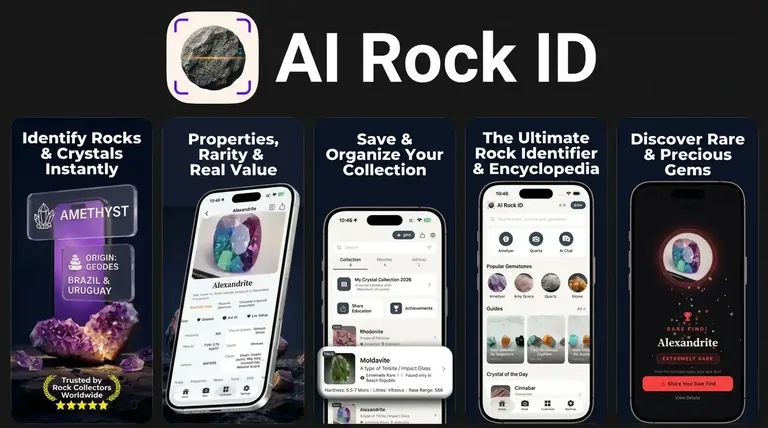
The AI Rock ID iPhone app extends jewelry identification capabilities to your mobile device. When you're at estate sales, antique shops, or flea markets, instant identification helps you make informed decisions before purchasing. The app works offline for basic identification, with enhanced analysis when connected to the internet.
For best results with the iPhone app, use the rear camera and tap to focus directly on the gemstone. The app's interface guides you through capturing optimal angles for identification. You can save identification results to build a catalog of your jewelry collection over time.
The app complements the RockIdentifier.io web tool, use whichever is most convenient for your situation. Desktop uploads work well for photographing jewelry at home with controlled lighting, while the mobile app excels for on-the-go identification when you encounter interesting pieces.
How to Use This Jewelry Identifier
Clean Your Jewelry
Gently clean the piece to remove oils and dust that can affect photo quality. A soft cloth works for most pieces, avoid harsh chemicals that might damage certain stones.
Set Up Good Lighting
Position your jewelry near a window with natural daylight. Avoid direct sunlight and flash photography, which create glare and inaccurate colors.
Use a Neutral Background
Place the jewelry on white, gray, or black paper or fabric. This helps the AI accurately analyze gemstone and metal colors without interference.
Capture Clear, Focused Photos
Take multiple shots: face-on view of the gemstone, side profile showing the setting, and close-ups of any visible details. Use macro mode if available.
Upload and Review Results
Upload your best photo to RockIdentifier.io. Review the AI's identification of gemstones, metals, and setting style, noting confidence levels and suggested alternatives.
More Identification Tools
Gemstone Identifier
Identify loose gemstones and crystals by photo
Diamond Identifier
Analyze diamonds and diamond lookalikes
Gold Identifier
Identify gold specimens and gold-colored minerals
Crystal Identifier
Identify crystals and mineral specimens
Glass Identifier
Distinguish glass from natural gemstones
Quartz Identifier
Identify quartz varieties including amethyst and citrine
Frequently Asked Questions
Can AI identify what gemstone is in my ring from a photo?
Yes, AI can provide preliminary identification of gemstones based on visual characteristics like color, transparency, luster, and visible inclusions. The accuracy depends on photo quality and the distinctiveness of the stone. Common gemstones like amethyst, turquoise, and garnet are typically identified with high confidence, while lookalikes like diamond versus cubic zirconia require professional testing for definitive answers.
How can I tell if my jewelry is real gold from a photo?
Photo analysis can identify gold-colored metal and suggest it may be gold based on color tone and surface characteristics. However, photos cannot determine whether metal is solid gold, gold-plated, gold-filled, or brass. Definitive gold testing requires physical methods like acid testing or electronic testers. Look for hallmarks (like 14K or 585) in your photos for additional clues.
What's the difference between a diamond and cubic zirconia in photos?
In photos, diamonds and cubic zirconia can appear nearly identical. Diamonds typically show more subtle light dispersion (fire) and may display slight color tinting, while CZ often appears more perfectly colorless with rainbow flashes. However, these differences are subtle and unreliable for definitive identification. Professional testing using thermal or electrical conductivity provides accurate distinction.
Can the jewelry identifier detect fake or synthetic gemstones?
AI identification can sometimes detect obvious imitations like glass or plastic based on surface characteristics and light behavior. However, high-quality synthetic gemstones (lab-created rubies, sapphires, emeralds) are chemically identical to natural stones and cannot be distinguished through photos alone. Detecting synthetics requires gemological equipment analyzing inclusions and growth patterns.
How do I identify the metal in antique jewelry?
Photograph the metal in natural light, capturing any visible hallmarks or stamps. The AI analyzes color tone, yellow gold, rose gold, white metals, or base metals, and surface characteristics. Antique jewelry often shows patina or wear patterns that provide identification clues. Note that antique pieces may use metal alloys or plating techniques different from modern jewelry.
Why does my blue stone identification show multiple possibilities?
Many blue gemstones share similar appearances: sapphire, tanzanite, blue topaz, aquamarine, iolite, and blue glass can all look alike in photos. The AI provides multiple possibilities ranked by likelihood based on color saturation, transparency, and other visible features. Professional gemological testing using refractive index and specific gravity measurements provides definitive identification.
Can I identify jewelry markings and hallmarks with this tool?
The jewelry identifier focuses primarily on gemstone and metal visual analysis rather than reading stamps or hallmarks. For best results with markings, photograph them clearly and research common hallmark databases. Marks like "925" indicate sterling silver, "750" indicates 18K gold, and maker's marks can identify manufacturers and periods.
Is AI jewelry identification accurate enough for selling or insurance?
AI identification provides preliminary assessment useful for understanding what you have and deciding whether professional appraisal is worthwhile. For selling valuable pieces or obtaining insurance documentation, you need certified appraisal from qualified gemologists who can provide legally recognized assessments with exact measurements, grades, and treatment disclosure.