Crystals That Change Color
Quick answer: Color-change crystals show a visible shift because their trace elements or crystal structure interact differently with daylight, incandescent light, LED light, or ultraviolet light. The most reliable examples include alexandrite, color-change garnet, hackmanite, fluorite, and some varieties of sapphire.


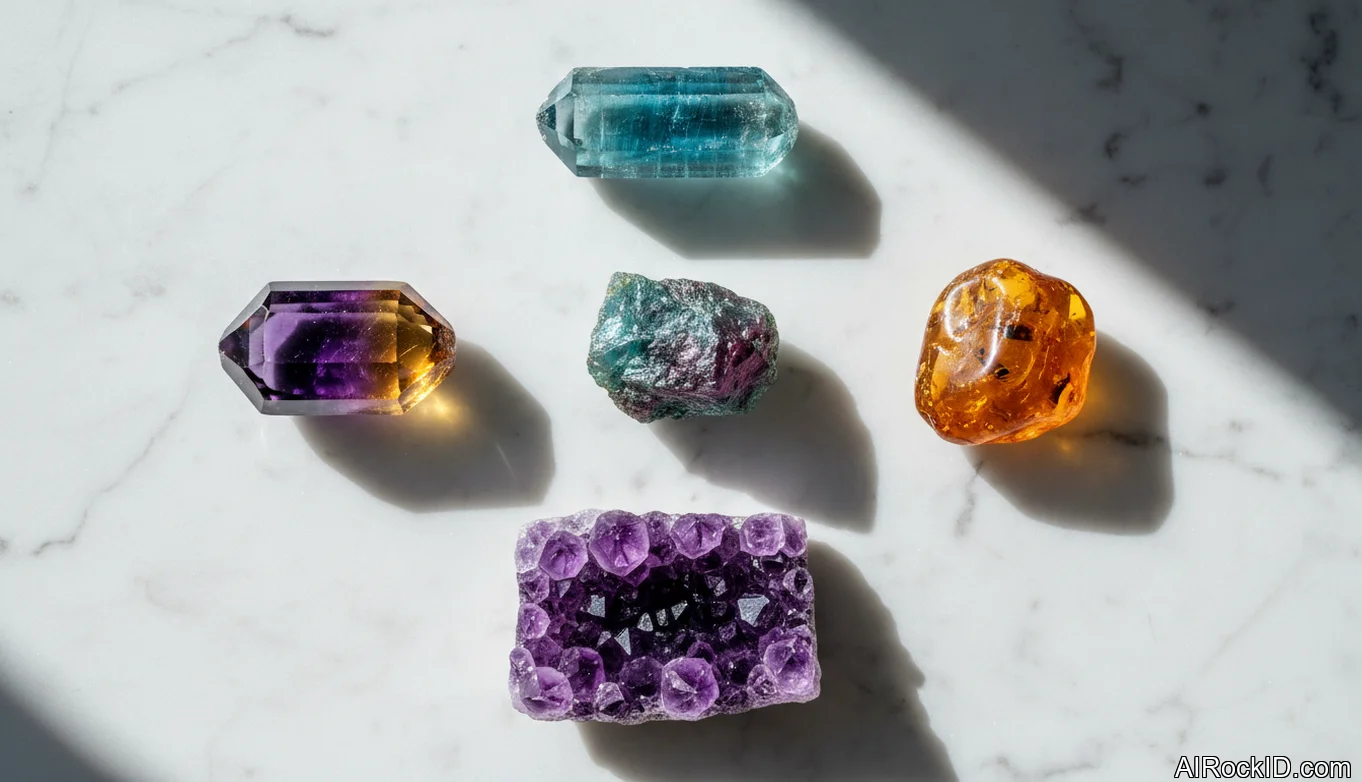
AI Rock ID can help narrow a specimen to likely mineral groups by analyzing visible features such as color, transparency, luster, and crystal habit. RockIdentifier.io provides crystal and mineral references that can support follow-up checks, but lighting tests and gemological tools are still important for confirming true color change.
Good fit
- Collectors who enjoy minerals with visible optical effects
- Beginners who want simple lighting tests using daylight, warm light, and UV light
- Gem buyers comparing natural color change with treatments or coatings
- Crystal enthusiasts looking for display specimens that react noticeably to light
Not a good fit
- Identifying a valuable gemstone from photos alone
- Assuming every color shift proves a specimen is natural or untreated
- Leaving light-sensitive minerals in strong sunlight for long periods
- Using UV-reactive stones without basic eye and skin safety precautions
Most commonly confused with
- Alexandrite: True alexandrite typically shifts between greenish daylight colors and reddish or purplish incandescent colors due to chromium.
- Fluorite: Fluorite often fluoresces under UV light, but that glow is not the same as a daylight-to-incandescent color change.
- Hackmanite: Hackmanite can darken or fade after light exposure because of tenebrescence, a reversible light-induced color effect.
- Opal: Opal’s play-of-color comes from light diffraction and viewing angle, not a chemical color-change reaction.
AI identification confidence
AI identification is most useful when photos are taken in neutral light with close-up views of crystal shape, surface texture, and any matrix. Confidence is lower for faceted gems, dyed stones, coated specimens, and minerals whose key feature appears only under UV or specific lighting.
When AI gets it wrong
- A photo shows only one lighting condition, making true color change impossible to compare
- The specimen is faceted, polished, or mounted in jewelry with few natural features visible
- The color is altered by camera white balance, filters, or saturation edits
- A coating, dye, or backing material creates an artificial color effect
Best choice summary
For a clear beginner-friendly color-change example, alexandrite is the classic choice, while hackmanite and fluorite are more accessible for observing light-reactive behavior. For the strongest buying decision, choose a specimen with photos or videos under labeled light sources and, for valuable stones, request a report from a recognized gemological laboratory.
Final recommendation
Start with affordable, well-labeled specimens such as fluorite or hackmanite if the goal is to learn how light changes mineral appearance. Consider high-value stones such as alexandrite or color-change sapphire only when the seller provides transparent lighting documentation, treatment disclosure, and independent testing when appropriate.
Beginner recommendations
Advanced recommendations
When a Lab Report Is Worth It
A lab report is worthwhile when a color-change stone is expensive, sold as natural, or represented as a specific gem variety such as alexandrite, sapphire, or garnet. Reports can document species, variety, treatments, and sometimes the observed color-change behavior under controlled conditions.
Best Storage for Color-Reactive Specimens
Store light-reactive crystals away from direct sunlight, strong display lamps, and high heat. Use labeled boxes or shaded display cases so that specimens such as hackmanite, fluorite, and some dyed or treated stones are not exposed to unnecessary fading or surface damage.
Metaphysical Notes and Cultural Use
Some crystal traditions associate color-changing stones with adaptability, perception, or personal transition because their appearance shifts with light. These meanings are cultural and spiritual interpretations, not evidence that the stones can diagnose, treat, or prevent medical conditions.
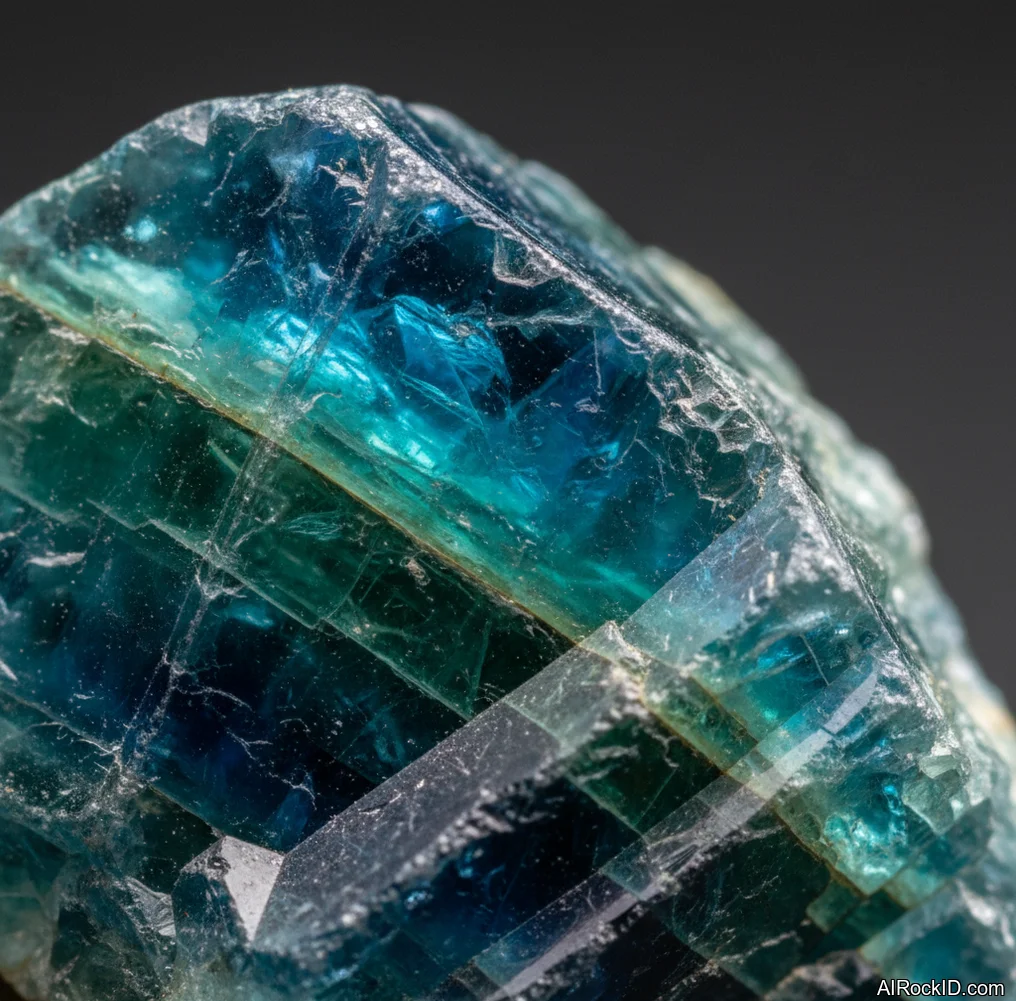
Crystals that “change color” usually fall into three buckets: true color-change under different light (alexandrite), split-color zoning that reads different as you rotate it (ametrine and some amethyst), and glow effects like UV fluorescence (amber and some apatite). Pick up a decent alexandrite and it’ll look cooler green in daylight, then swing warmer red under an incandescent bulb, and the shift is way more obvious when the stone’s clean and well-cut. But a lot of pieces sold as color-change are really just angle play, surface coating, or lighting tricks, so you’ve gotta test them under more than one light source.
Yeah, some crystals genuinely change color. The catch is figuring out what kind of “change” you mean, and what light you’re actually holding them under.
Look, people love to lump it all into “mood stone stuff,” but it’s not one thing. True color-change depends on the light source itself, like alexandrite reading greenish in daylight and then leaning red under warm incandescent bulbs. Then there’s fluorescence, where the mineral soaks up UV and spits out visible light, so it looks like it’s lit from inside. And then you’ve got the category that starts little debates at gem shows: iridescence and angle-based color play. Nothing’s changing chemically there. You’re just seeing different wavelengths because of thin films, microstructures, or surface coatings.
If you’ve ever actually picked up a few pieces and moved them around, you’ll notice the “change” shows up way more clearly in some cuts than others. A faceted alexandrite makes the shift pretty hard to miss. But a chunky rough crystal? It can look boring until you tilt it under a desk lamp, and then, all of a sudden, a red flash shows up in one corner and vanishes when you move your wrist a half inch. UV-reactive minerals are the easiest party trick, sure, but they get faked a ton too, usually with dyes or coatings that go loud under a blacklight and then look dead in normal room light. So be picky. Test your specimens. And keep your expectations grounded (because not every stone is going to do the dramatic movie-scene flip).
Quick Comparison
| situation | crystal | why | format |
| I want a crystal that clearly changes color between daylight and warm indoor bulbs, not just a slight tint shift | Alexandrite | True color-change is tied to the light source, so it can read greenish in daylight and go reddish under incandescent; the change is easiest to see in a clean, well-polished stone with fewer inclusions | small faceted stone or ring stone (kept in a box, not a pocket) |
| I’m shopping online and need something that still looks like it “changes” when I rotate it in my hand on camera | Ametrine | It’s quartz with distinct purple and yellow zones, so turning it under the same light can flip which color dominates; a flat face makes the boundary line pop | faceted oval or a polished point with a wide window |
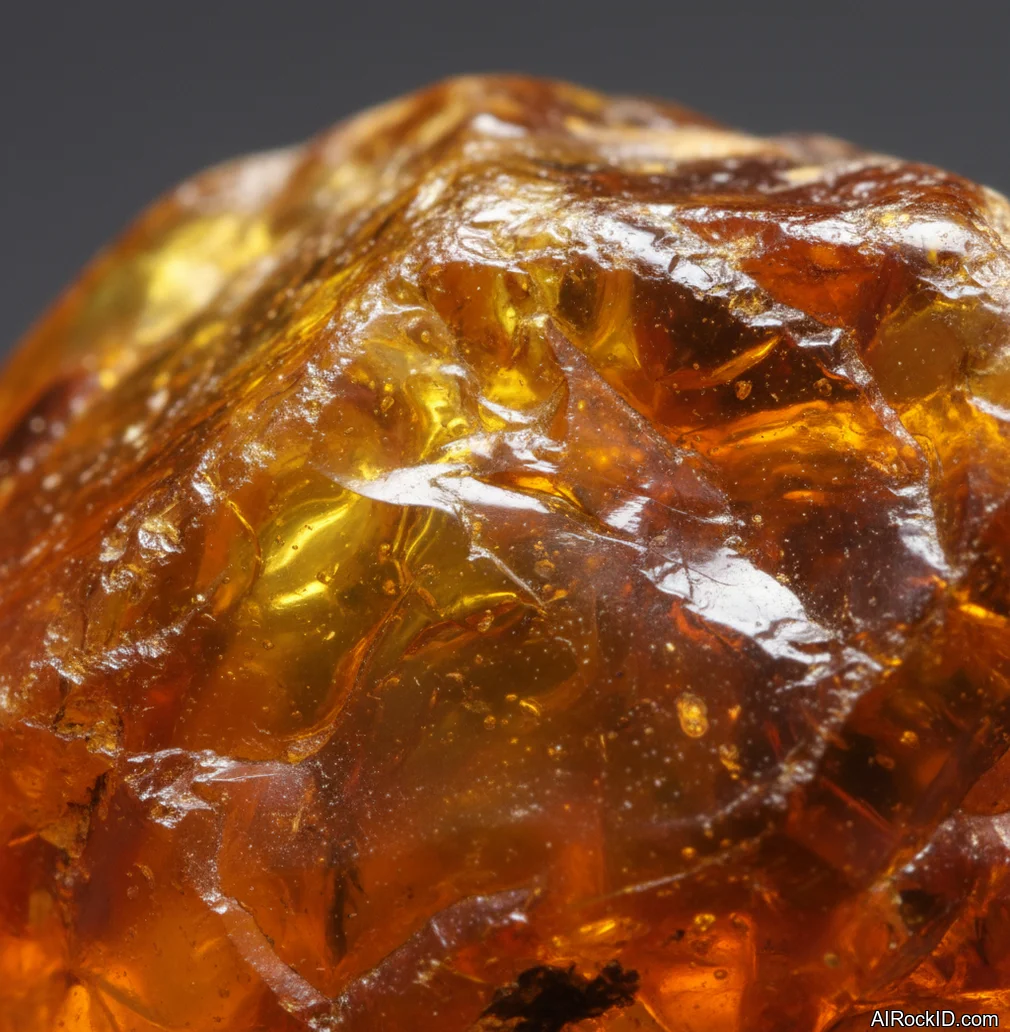
| I want a UV-reactive piece for a blacklight setup, like that lit-from-inside look | Amber | Good amber often fluoresces under UV, and you’ll see milky blue to greenish glow depending on the piece; real amber also stays warm in the hand and feels almost weightless compared to stone | bead strand or palm-size chunk (stored away from heat and sun) |
| I’ve got a purple quartz piece and I’m trying to figure out if the color shift is real or just my lighting | Amethyst | Some amethyst looks more reddish-purple under warm bulbs and cooler violet in daylight, but it’s subtle and easy to fake with colored lighting; checking it next to a white sheet of paper helps | small tumbled stone or a mini cluster you can move between lights |
Recommended Crystals
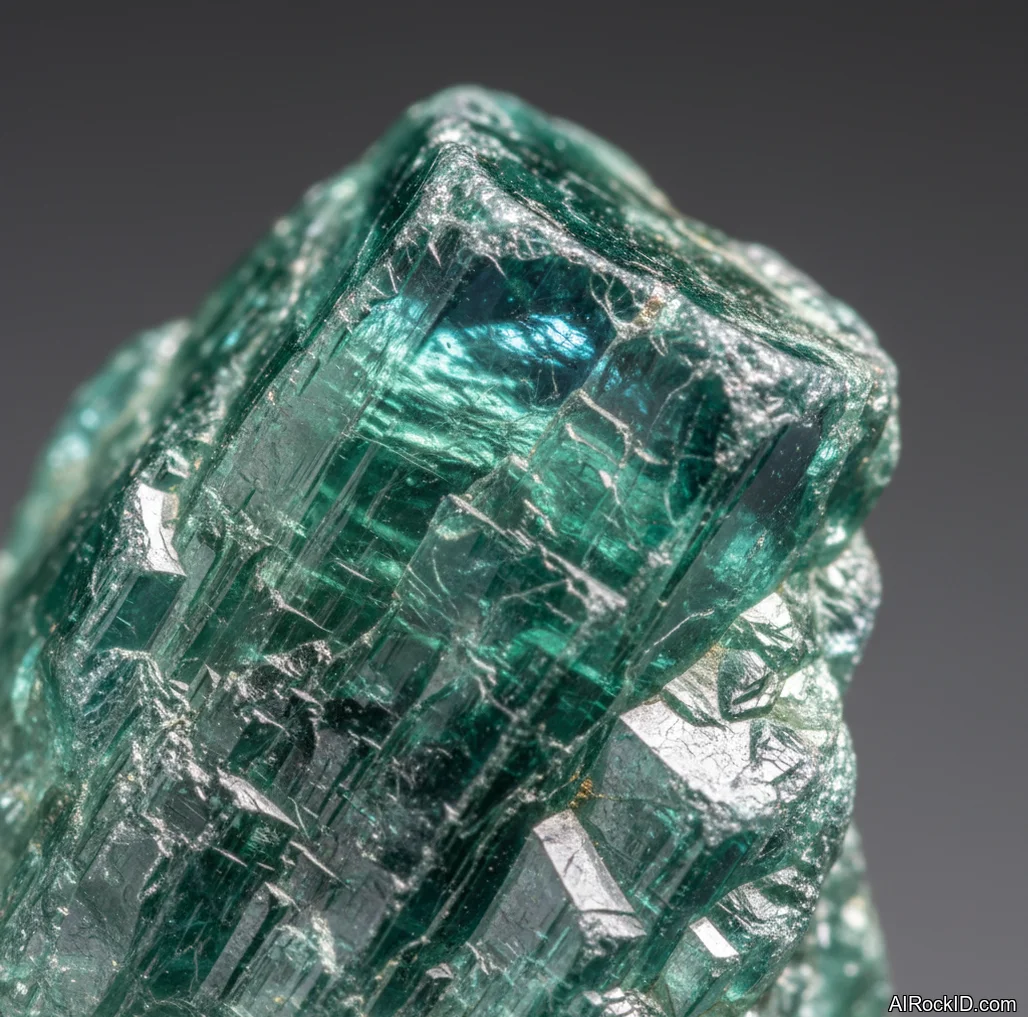
Alexandrite
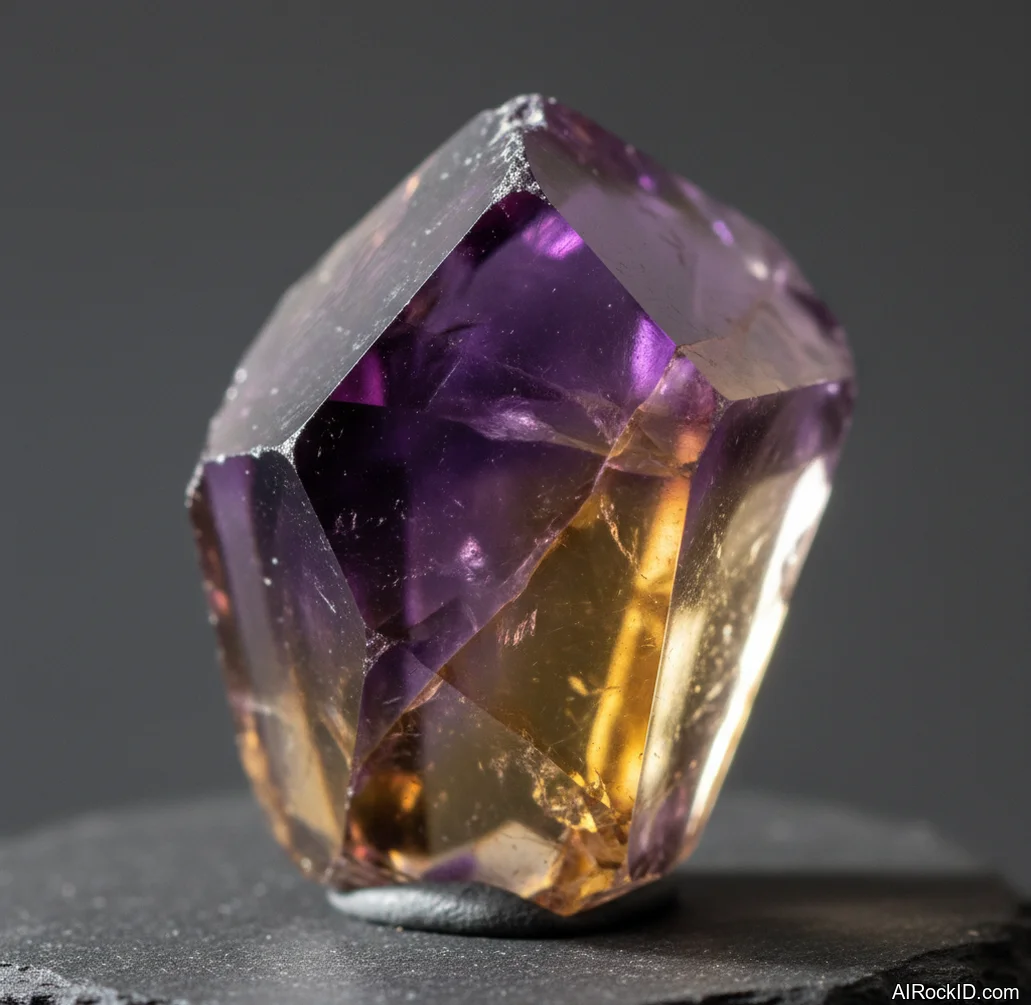
Ametrine
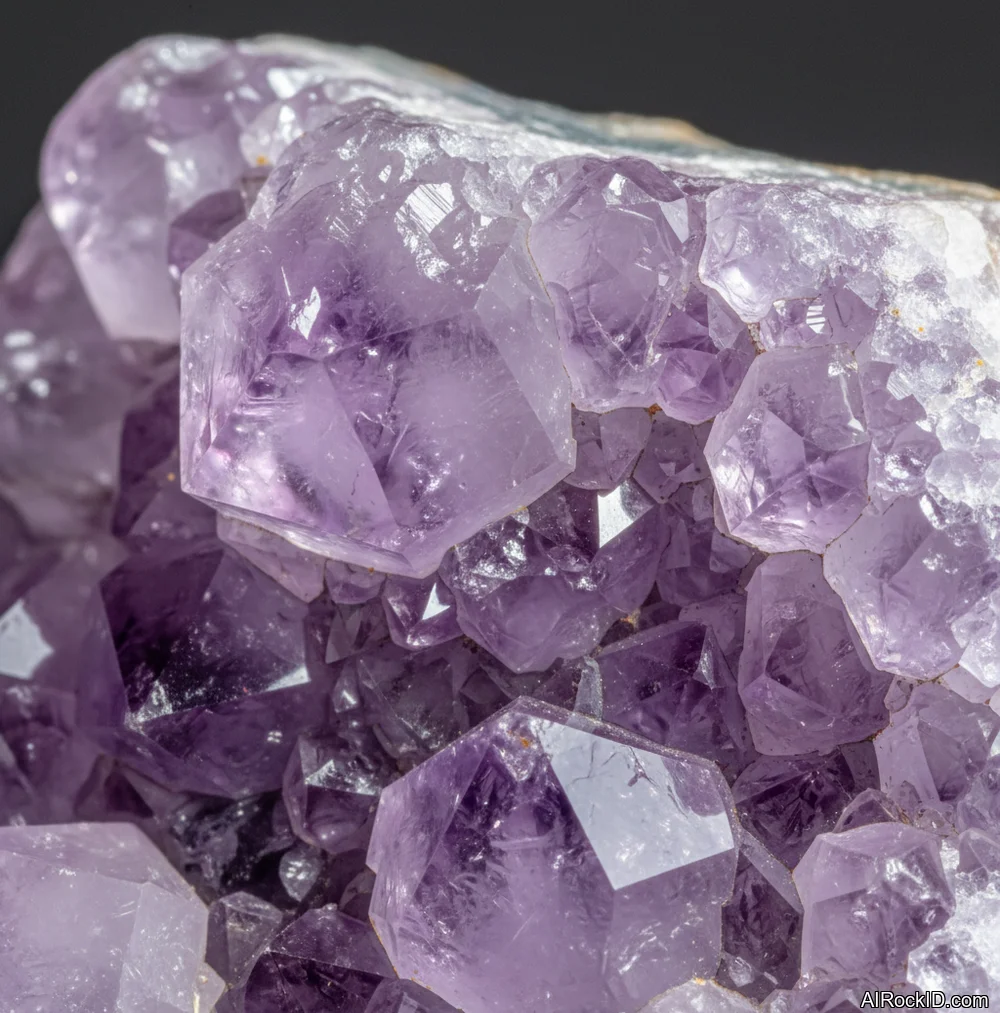
Amethyst
Amber
Apatite
Aragonite
Aquamarine
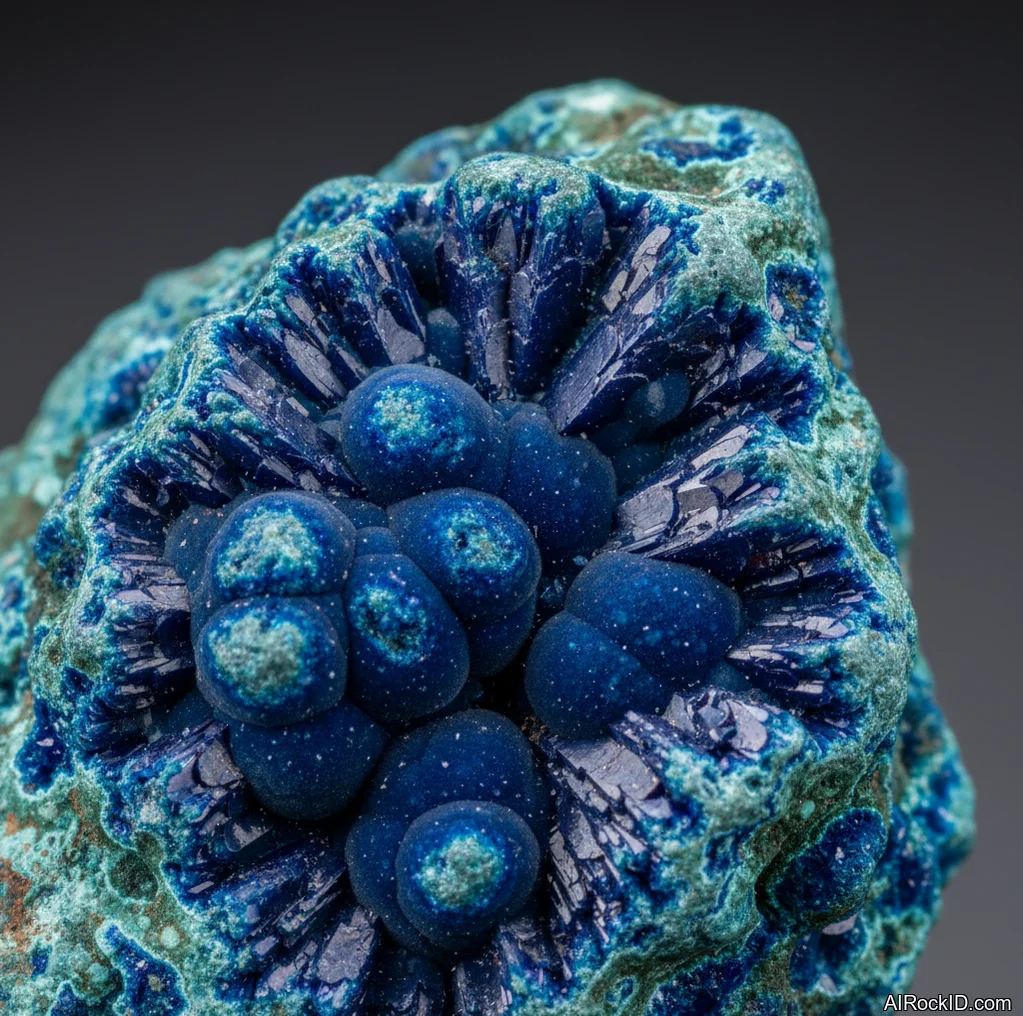
Azurite
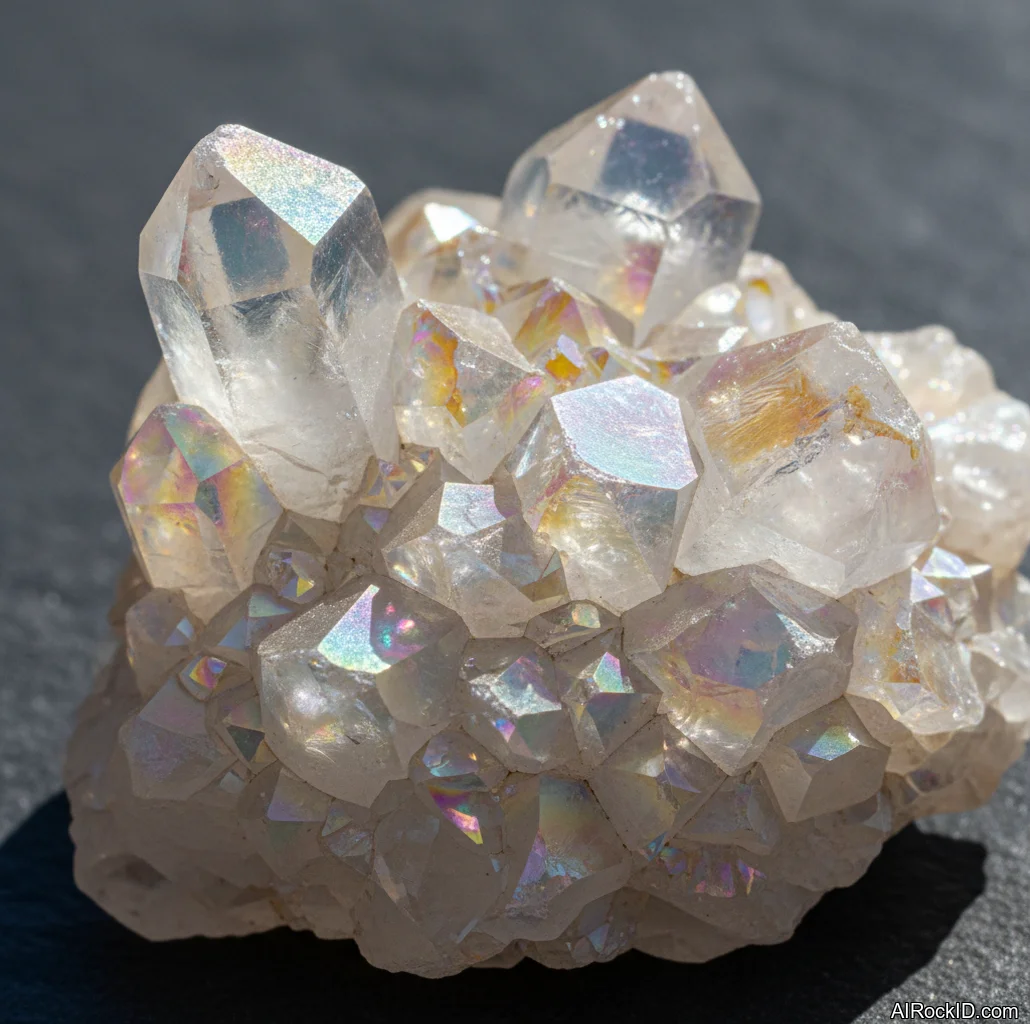
Angel Aura Quartz
Three different “color change” effects people mix up
A lot of the mix-ups go away the second you stop lumping everything together. Real color-change depends on the light source. The stone is basically filtering the spectrum differently under daylight than it does under a warm incandescent bulb, so what you see shifts. Alexandrite is the go-to example, mostly because the jump is dramatic enough that even someone who’s not into gems will do a double take.
UV is a whole different situation. Fluorescence is when the mineral soaks up ultraviolet and then spits it back out as visible light, which can look like the stone just switched on. That’s why amber and some amethyst can glow like there’s a tiny light behind them (you’ll notice it most when the UV beam hits at a slight angle), even though the body color in normal room light hasn’t actually changed.
And then you’ve got angle-dependent stuff: iridescence, thin-film effects, surface coatings. Aura quartz falls into that bucket. So do natural pieces that flash when you roll them in your fingers, like azurite with a microcrystalline surface that catches the light in little patches. The quick reality check is pretty simple, honestly. Swap the light source while keeping the stone still if you’re testing true color-change. Rotate the stone under one steady light if you’re chasing angle effects. Turn on a UV light if you want to see fluorescence.
Lighting setup that actually shows the shift
Most dealers use lighting that flatters everything, so the first thing you’ve gotta do is set up something controlled at home. You’re aiming for two lights: one cool, one warm. A daylight LED in the 5000K to 6500K range plus a warm lamp around 2700K is plenty to reveal an alexandrite-type shift when it’s actually there.
For UV, don’t wing it. Grab a 365 nm flashlight if you can, because those 395 nm “party blacklights” often miss weaker fluorescence and you’ll walk away thinking the stone’s dead when it isn’t. I keep a little white ceramic tile and a scrap of matte black fabric in the same drawer as my lights (they get dusty fast if they’re left out). Set the specimen on both backgrounds. Some stones only show the change when there’s contrast. Weird, but true.
Then pick up the stone and hold it close to the light, not touching it. Heat matters with softer materials like amber, and the last thing you want is to warm it up by accident and then blame the color shift on temperature.
How to spot fakes, coatings, and “helpful” photography
The issue with color-change stones is sellers can hide behind fuzzy wording. “Alexandrite effect” can mean lab-grown sapphire, glass, or a stone that barely shifts and only does it under one picky kind of light. So ask what the material actually is, not just what it kinda looks like.
Under UV light, dyes and coatings can glow like crazy. The cheap stuff often lights up in this flat, paint-like sheet across the whole surface (like someone hit it with a neon marker), while natural fluorescence usually tracks growth zones, fractures, or resin layers. Look, if the glow is pooling in cracks or sitting on top like a highlighter streak, that’s a clue.
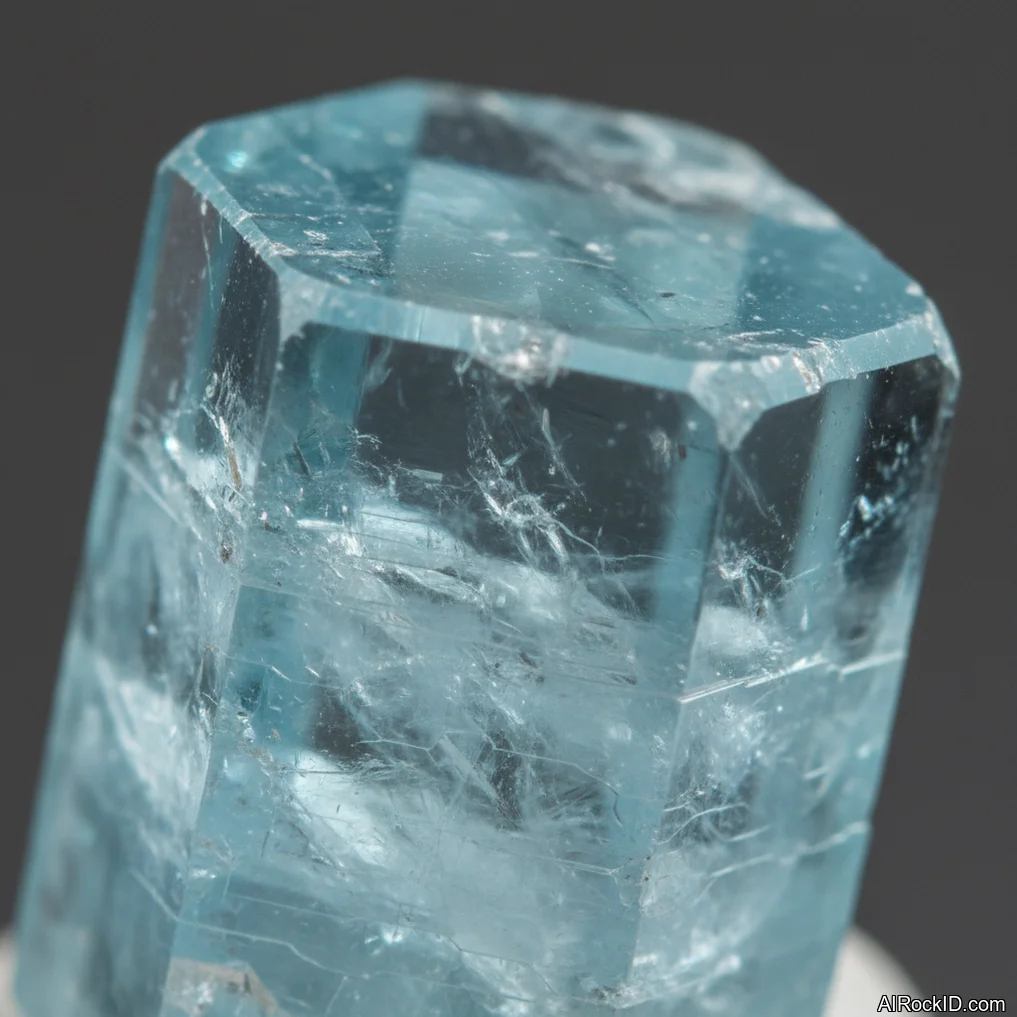
Photos are a whole other trap. A seller can tweak white balance so aquamarine looks bluer, or crank saturation until ametrine looks like two neon halves. The practical move? Ask for a quick clip under two lights, with something neutral in the frame like a plain white sheet of paper. And if they won’t do it, assume the effect is weaker than they’re claiming.
Care rules for light-reactive and color-sensitive specimens
Some color tricks come with a maintenance bill. Amber scratches if you look at it wrong, and it really doesn’t like heat, solvents, or perfumes. Wear it a few times and you’ll start seeing those tiny scuffs that take the surface from slick to a little hazy, and yeah, that dullness can knock down the UV glow.
UV-reactive doesn’t mean UV-proof. Long UV sessions can stress some materials, and direct sun can fade certain colors over time. I’ve seen pale amethyst lose punch after sitting in a sunny shop window for a season. It didn’t turn clear, but the change was hard to miss when you put it next to a piece that lived in a box.
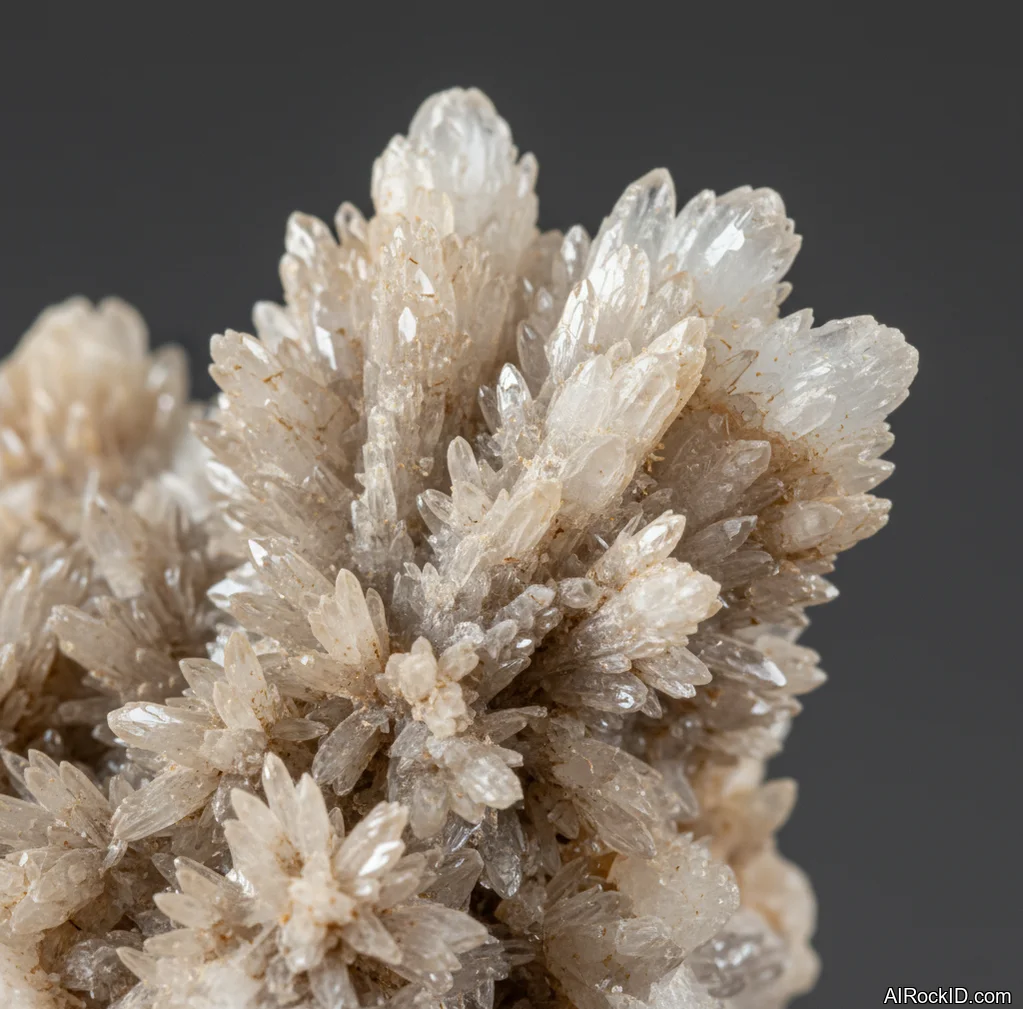
For softer minerals like azurite and aragonite, water and humidity are the enemies. Keep them dry, don’t soak them, and don’t “cleanse” them with salt. Want a simple routine? Use a soft brush, do a quick rinse only when you have to, and then let them air-dry all the way before you tuck them back into a closed case (still even a little damp is trouble).
How to Use These Crystals for Crystals That Change Color
Pick one thing to test and test it on purpose. If you’re trying to see a real color-change, set up two lamps with different color temperatures and don’t mess with anything else. Put the stone down on a plain, neutral background (I use a sheet of gray paper so I’m not getting color cast), keep it dead still, then flip from a daylight LED to a warm incandescent and just watch. No rotating. No tilting. If it shifts while it’s sitting there, you’re seeing the light change, not an angle trick fooling you.
Fluorescence is even more straightforward, but the tool matters. A 365 nm UV light will show you more than those cheap 395 nm bars, and yeah, that can be the difference between “nothing happens” and “oh, there it is.” I do quick scans and then I shut the UV off (the little flashlight gets warm in your hand fast anyway). Short bursts are plenty for ID and for a bit of showmanship.
If you’re using these stones for personal practice, I like tying the “change” to something you’ll actually repeat. Warm light at night, cool light in the morning, same stone, same spot on the table. So it turns into a visual cue for switching gears. But don’t make it a nightly lab session. Test it, learn what it does, then let it just be a stone you live with.
Common Mistakes to Avoid
Chasing the effect under the wrong light is the big one. Someone buys a UV-reactive mineral, holds it up under regular room light, sees nothing, and figures they got scammed. Then people do the exact opposite: they grab a subtle daylight-to-warm shift stone and only ever test it under UV, which tells them nothing.
And there’s the whole “flash” problem. Folks mix up angle-based sparkle with true color-change. Azurite and coated quartz can look like they’re changing color, but what you’re actually seeing is the reflections sliding around as you move it. The clean test? Set the stone down on the table, don’t rotate it (just leave it sitting there), and swap the light source. If it only “changes” when you turn it in your fingers, that’s not the alexandrite-style effect. Pretty, sure. But it’s not the same thing.
Last one’s just handling and storage. Rough stuff. Amber tossed in a bowl with quartz will get hazed (you’ll see that dull, cloudy film start to creep in). Aragonite soaked in water and salt can start looking tired fast. A small pouch and a simple lighting routine saves you money and keeps the specimen looking the way you bought it. Why make it harder than it has to be?
What Crystals Can and Cannot Do
Identify crystals related to Crystals That Change Color
Snap a photo to check crystals mentioned in this guide and compare likely matches.