Fluorite


Quick answer: Fluorite is a calcium fluoride mineral best recognized by its cubic crystal habit, perfect octahedral cleavage, and wide color range. It is useful for collectors, students, and lapidary hobbyists, but its Mohs hardness of 4 means it scratches more easily than quartz or glass.
AI Rock ID can help screen a fluorite specimen by comparing visible color zoning, crystal shape, cleavage, and luster from a clear photo. RockIdentifier.io provides identification support, but final confirmation is stronger when photo results are checked against hardness, cleavage, and specific gravity.
Good fit
- Collectors who want colorful cubic or octahedral crystals
- Beginners learning cleavage, zoning, and crystal habit
- Display specimens kept away from abrasion and moisture
- Educational kits comparing hardness and mineral structure
Not a good fit
- Rings or bracelets exposed to daily impact
- Ultrasonic cleaning or steam-cleaning routines
- Specimens stored loosely with harder minerals such as quartz or topaz
- Projects requiring a durable outdoor or water-resistant stone
Most commonly confused with
- Amethyst: Purple amethyst is harder, lacks fluorite’s perfect cleavage, and usually forms hexagonal quartz crystals rather than cubes.
- Calcite: Calcite is softer than fluorite, reacts with weak acid, and has rhombohedral cleavage rather than octahedral cleavage.
- Apatite: Apatite is slightly harder, commonly forms hexagonal crystals, and does not show fluorite’s classic cubic habit.
- Glass: Glass may imitate fluorite colors but usually shows bubbles, conchoidal fracture, and no natural cleavage.
Fluorite vs. Common Lookalikes
| Specimen | Hardness | Key difference | Typical crystal form |
|---|---|---|---|
| Fluorite | 4 | Perfect octahedral cleavage; often color-zoned | Cubic or octahedral |
| Amethyst | 7 | Harder purple quartz with no cleavage | Hexagonal points |
| Calcite | 3 | Reacts with weak acid; rhombohedral cleavage | Rhombohedral or scalenohedral |
| Apatite | 5 | Hexagonal habit; less distinct cleavage | Prismatic hexagonal |
| Glass imitation | Variable | May contain bubbles and lacks natural cleavage | Molded or irregular |
AI identification confidence
AI identification confidence is often moderate to high for fluorite when the photo clearly shows cubic crystals, color zoning, or octahedral cleavage. Confidence is lower for tumbled stones, single-color fragments, heavily polished carvings, or specimens photographed under colored lighting.
When AI gets it wrong
- Purple fluorite may be mistaken for amethyst when crystal shape is not visible.
- Polished green or blue fluorite may resemble glass, apatite, or dyed stones.
- Cleavage fragments can be confused with calcite or halite if scale and hardness are not checked.
- Fluorescence alone is not diagnostic because many minerals can glow under UV light.
Final recommendation
Choose fluorite when the priority is color, crystal geometry, and display value rather than durability. For jewelry or handling-heavy uses, a harder mineral such as quartz is usually more practical.
How to Check Fluorite Authenticity
Authentic fluorite commonly shows natural color zoning, internal veils, cleavage planes, or minor edge wear. A simple scratch comparison can help: fluorite should be scratched by a steel knife more readily than quartz, but testing should be done only on an inconspicuous area. Molded glass imitations may show bubbles, overly smooth surfaces, or repeated shapes. Bright color alone does not prove treatment or imitation because fluorite naturally occurs in many colors.
Buying Tips for Fluorite Specimens
Look for intact crystal edges, stable matrix, clear zoning, and minimal fresh-looking chips on corners or cleavage faces. Deeply saturated color, sharp cubic form, and unusual zoning can affect price, but fragile cleavage means condition should be checked closely. Ask whether a specimen has been repaired, oiled, dyed, or assembled if the color or surface texture appears unusually even.
Using UV Light with Fluorite
Some fluorite fluoresces under ultraviolet light, often blue, violet, cream, or greenish, but the response varies by locality and trace elements. A lack of fluorescence does not mean a specimen is fake. UV testing is best treated as a supporting observation rather than a standalone identification method.
What Is Fluorite?
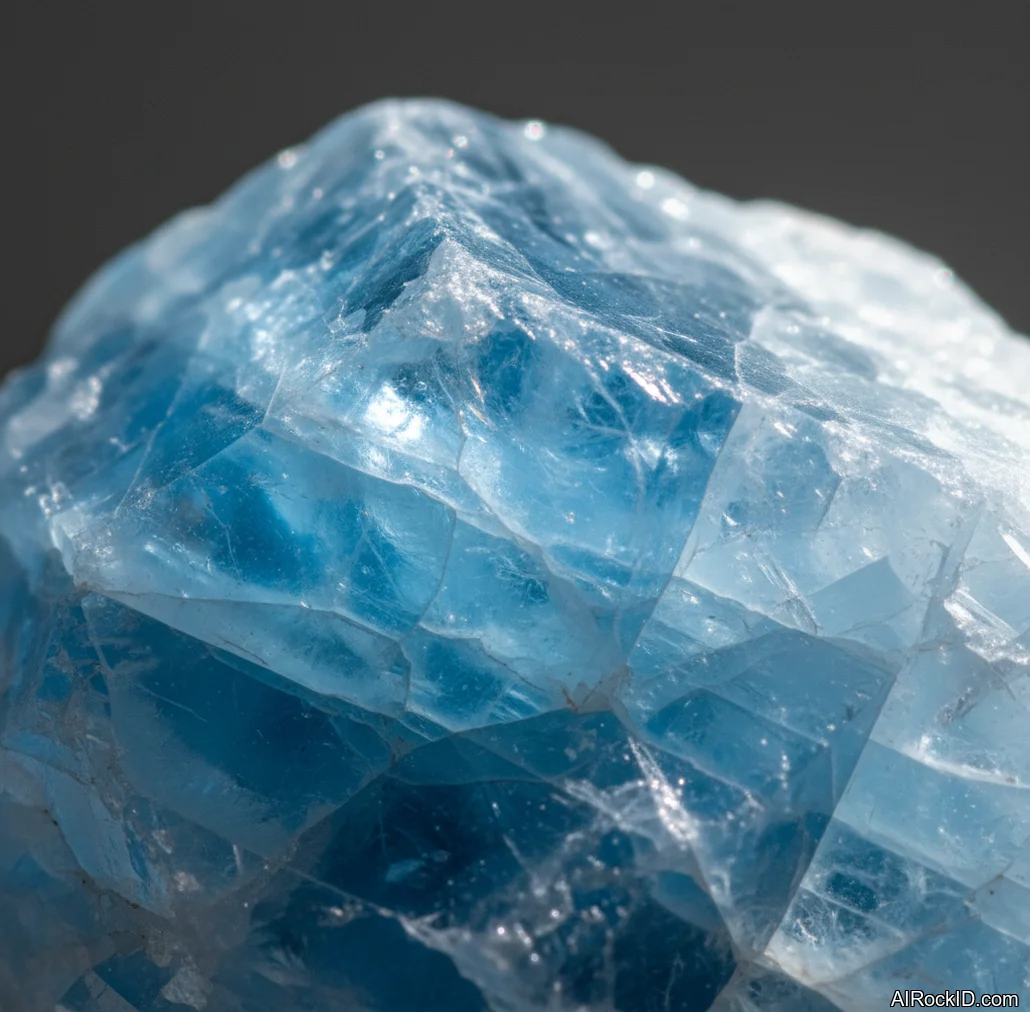
Fluorite is calcium fluoride (CaF2), a cubic halide mineral known for perfect cleavage and those bright, obvious color zones.
Grab a solid chunk and you notice it immediately: that cool, glassy slick feel in your hand. Then you roll it a little and the faces flip from mirror-bright to weirdly dead flat in an instant, like the light just got shut off. And a lot of specimens look like somebody sliced them cleanly with a blade, because the cleavage is that perfect. It’s not polishing. That’s simply how it breaks.
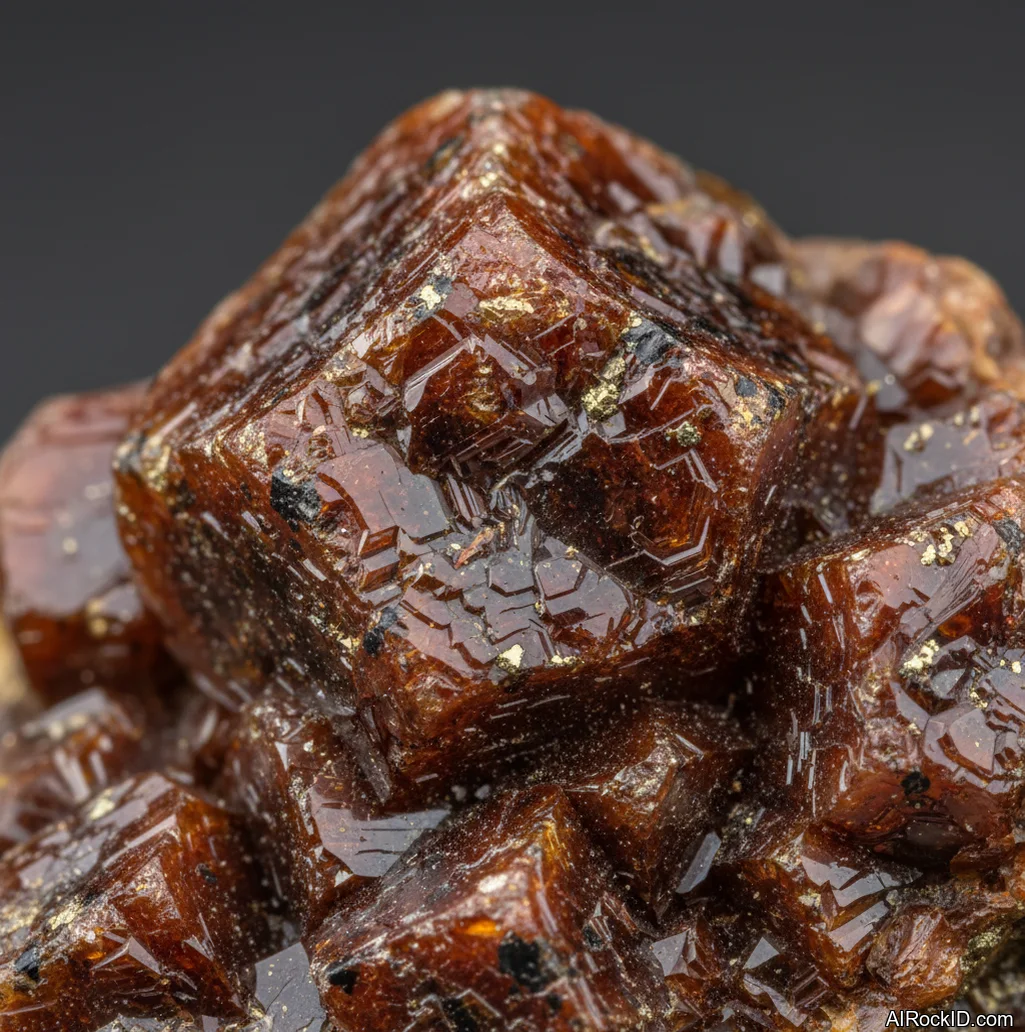
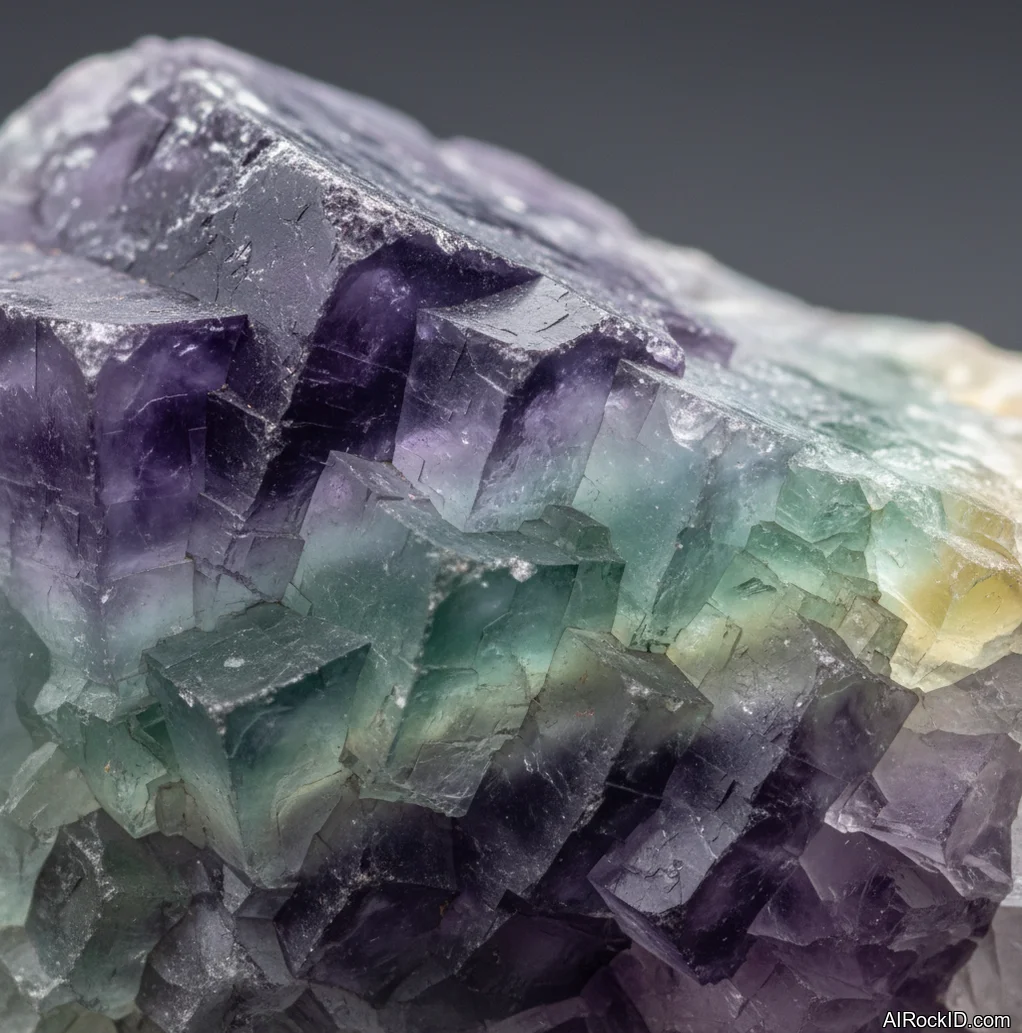
Most people picture cubes, and yeah, that’s the classic. But you’ll also run into stepped faces, octahedrons, and those chunky “stacked cube” habits that honestly feel like little building blocks when you turn them over.
Compared to quartz, fluorite’s a softie. It scratches way easier than folks expect, and the edges can bruise if it’s bouncing around in a pocket next to harder stones. Still, when you find one with crisp color bands or a phantom zone inside, you kind of just… stare at it. Under UV light, some pieces glow blue or purple, and some do absolutely nothing, which is half the fun when you’re sorting through a tray at a show (you never really know until you try).
Origin & History
Georgius Agricola was the one who put the Latin name “fluorite” on the map in 1530. He pulled it from “fluere,” which means “to flow,” because this stuff helped ores melt more easily during smelting. And that’s where “flux” slides into the picture too. For ages, people actually used the industrial name “fluorspar” more often, since miners mostly cared about it as a smelter’s helper (you could toss a bit in and watch the charge loosen up) and later as a source of fluorine.
“Fluorescence” traces back to fluorite as well. Stokes coined the word in 1852 after he saw the effect in fluorite, even though lots of other minerals light up under UV. Kind of great mineral-nerd trivia, honestly. And it still comes up the moment someone asks why their green cube pops under a blacklight but their purple one just sits there looking dull.
Where Is Fluorite Found?
Fluorite shows up worldwide, especially in hydrothermal veins and carbonate-hosted deposits. Collectors chase certain mines for color and glow, like Weardale for UV-reactive greens and Illinois for classic purple cubes.
Formation
Most fluorite shows up when hot, mineral-loaded fluids shove their way through cracks in rock. Then the fluid cools off or bumps into the host rock and reacts, and the Ca and F hook up and crystallize as fluorite, often sitting right next to calcite, quartz, barite, galena, or sphalerite.
Look, if you stare at a vein specimen long enough, the growth story starts to pop out. One color band, then another. Sometimes the boundary’s so sharp it feels like a timestamp. That zoning happens when the fluid’s chemistry shifts as it pulses through the fracture (you can almost picture it coming in waves, right?).
In carbonate rocks, fluorite can also straight-up replace parts of the host, so you’ll find it filling vugs and little pockets, with cubes perched on drusy calcite that has that sugary, sparkly crust to it when you tilt it under a light. And yeah, the prettiest cubes sometimes formed in a pocket that got crushed later, so you end up with killer color but chipped corners and bruised edges. It happens.
How to Identify Fluorite
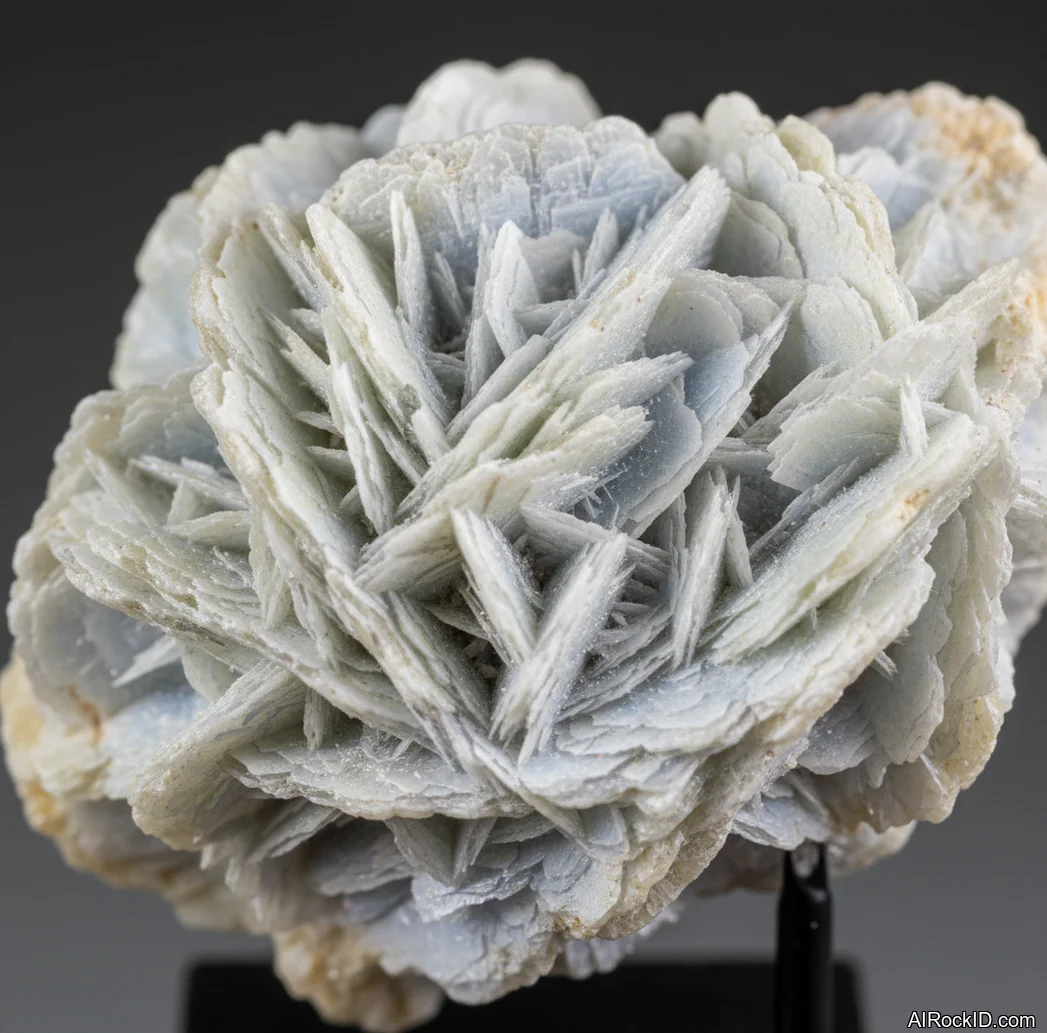
Color: Fluorite commonly comes in purple, green, blue, yellow, colorless, and mixed color-zoned combinations; banding and “phantom” zones are very common. Some material shifts a bit in different lighting, especially pale greens and blues.
Luster: It has a glassy (vitreous) luster on fresh faces and cleavage planes.
If you scratch it with a steel nail, it’ll usually mark pretty easily, while quartz won’t. The real test is cleavage: break a tiny corner off a low-value piece and it wants to split into smooth planes that meet at crisp angles, not jagged chips. And when you handle a lot of it, you start to recognize the feel: cool, slick, and a little “soapy” on the freshest cleavage faces.
Common Look-Alikes
Fluorite is sometimes confused with these materials:
- Purple or green calcite (especially cleavage chunks sold as fluorite)
- Amethyst quartz (purple points and clusters, often mislabeled in photos)
- Dyed agate/quartz sold as “rainbow fluorite” slabs or towers
- Man-made glass cubes and “fluorite” carvings (souvenir shop stuff)
- Blue apatite or blue calcite (tumbled stones marketed as blue fluorite)
Market Cautions & Treatments
When AI Can Get This Wrong
At first glance in a photo, AI mixes fluorite up with calcite and amethyst a lot, especially when it’s just a purple chunk with no clear cube shape. Banded “rainbow” pieces are worse because dyed agate can mimic the colors and the polish hides fluorite’s telltale cleavage steps. The real test is physical: fluorite scratches with a steel nail (hardness 4) but won’t scratch glass, and it breaks into flat, mirror-bright cleavage faces instead of splintery quartz or rhombohedral calcite.
Properties of Fluorite
Physical Properties
| Crystal System | Cubic |
| Hardness (Mohs) | 4 (Soft (2-4)) |
| Density | 3.18 g/cm3 |
| Luster | Vitreous |
| Diaphaneity | Transparent to translucent |
| Fracture | Uneven |
| Streak | White |
| Magnetism | Non-magnetic |
| Colors | Purple, Green, Blue, Yellow, Colorless, Pink, Brown, Black |
Chemical Properties
| Classification | Halides |
| Formula | CaF2 |
| Elements | Ca, F |
| Common Impurities | Y, Ce, Fe, Mn, Cl, Sr |
Optical Properties
| Refractive Index | 1.433-1.435 |
| Birefringence | None |
| Pleochroism | None |
| Optical Character | Isotropic |
Fluorite Health & Safety
Normal handling is pretty low risk. Thing is, the big concern is how fragile it is in your hands (it can chip if it taps the edge of a bench). And you’ll want to avoid breathing in any lapidary dust.
Safety Tips
If you’re going to cut or sand it, don’t do it dry. Use water, make sure you’ve got decent ventilation (a window and a fan helps), and wear a proper respirator, not just a flimsy dust mask. Then wash your hands when you’re done, and don’t track that fine grit onto your display shelves.
Fluorite Value & Price
Price Range
Rough/Tumbled: $5 - $300 per specimen
Cut/Polished: $10 - $80 per carat
Color zoning, clarity, crystal shape, and clean, chip-free edges can send the price climbing in a hurry. And UV fluorescence plus a famous locality can take a stone that looks kind of ordinary under normal light and land it in the “don’t touch without asking” case.
Durability
Nondurable — Scratch resistance: Fair, Toughness: Poor
Fluorite cleaves easily and can fade in strong sunlight, so it does best as a display piece rather than a daily-wear stone.
How to Care for Fluorite
Use & Storage
Store fluorite by itself or wrapped, because harder stones will scratch it and even other fluorite pieces can chip corners in a bowl. If you’ve got sharp cubes, give them a stable base so they don’t tip and clack together.
Cleaning
1) Rinse briefly with lukewarm water and a drop of mild soap. 2) Use a very soft toothbrush around crevices, then rinse again. 3) Pat dry and avoid long soaks, hot water, steam, or ultrasonic cleaners.
Cleanse & Charge
If you do metaphysical cleansing, keep it simple: smoke, sound, or a quick pass under running water. Skip harsh salt soaks, mostly because edges and cleavages can already be stressed.
Placement
Keep it out of direct sun if you care about color, especially pale greens and purples. A shaded shelf with steady temperature is the sweet spot.
Caution
Fluorite has perfect cleavage, so it’ll chip if you so much as knock it against your keys. Seriously, don’t just toss it in a pocket. And skip using it in rings. Keep it away from heat and strong sunlight (a sunny windowsill is a bad idea). Also, don’t put it in an ultrasonic cleaner.
Works Well With
Fluorite Meaning & Healing Properties
At the shop counter, fluorite is the one people reach for when their brain feels like it’s got twenty browser tabs frozen open. People say it feels “clearer,” like it helps you take the messy mental pile and sort it into smaller stacks you can actually deal with. I get it. When you look through a clean fluorite cube with zoning, your eyes slow down on their own and start tracking the lines, the edges, the little color bands running through it. It’s a focusing object in the most literal sense.
But there’s a catch. Folks love calling it a “study stone” and then expecting it to flip their brain into perfect mode like a switch. It won’t. In my routine it works best as a physical cue: cube on the desk, phone off, task list out, start with the next small thing. That’s it. Green pieces get talked about as calming, purple as more heady or dreamy, and blue as quiet. And honestly, that tracks with how people react to color even before you bring any woo into the room.
If you’re using crystals for emotional support, fluorite pairs well with breathwork or journaling because it’s structured. Straight lines. Clean corners. And when the day’s rough, holding a cold fluorite palm stone can feel grounding in a simple sensory way (that chill in your hand is hard to ignore). Still, none of this replaces actual care, therapy, or medical treatment. It’s a tool for attention and comfort, not a cure.
Common mistakes
- Assuming every purple transparent specimen is amethyst instead of checking crystal habit and hardness.
- Using fluorescence as the only test for fluorite identification.
- Storing fluorite loose with harder minerals that can scratch it.
- Cleaning fluorite in ultrasonic machines or harsh chemicals.
- Mistaking natural cleavage surfaces for broken or cut faces.
- Buying polished fluorite without checking for glass-like bubbles or repeated molded shapes.
Identify Fluorite from a photo
Compare Fluorite traits, care tips, value clues, and common lookalikes with a clear photo.