Opal


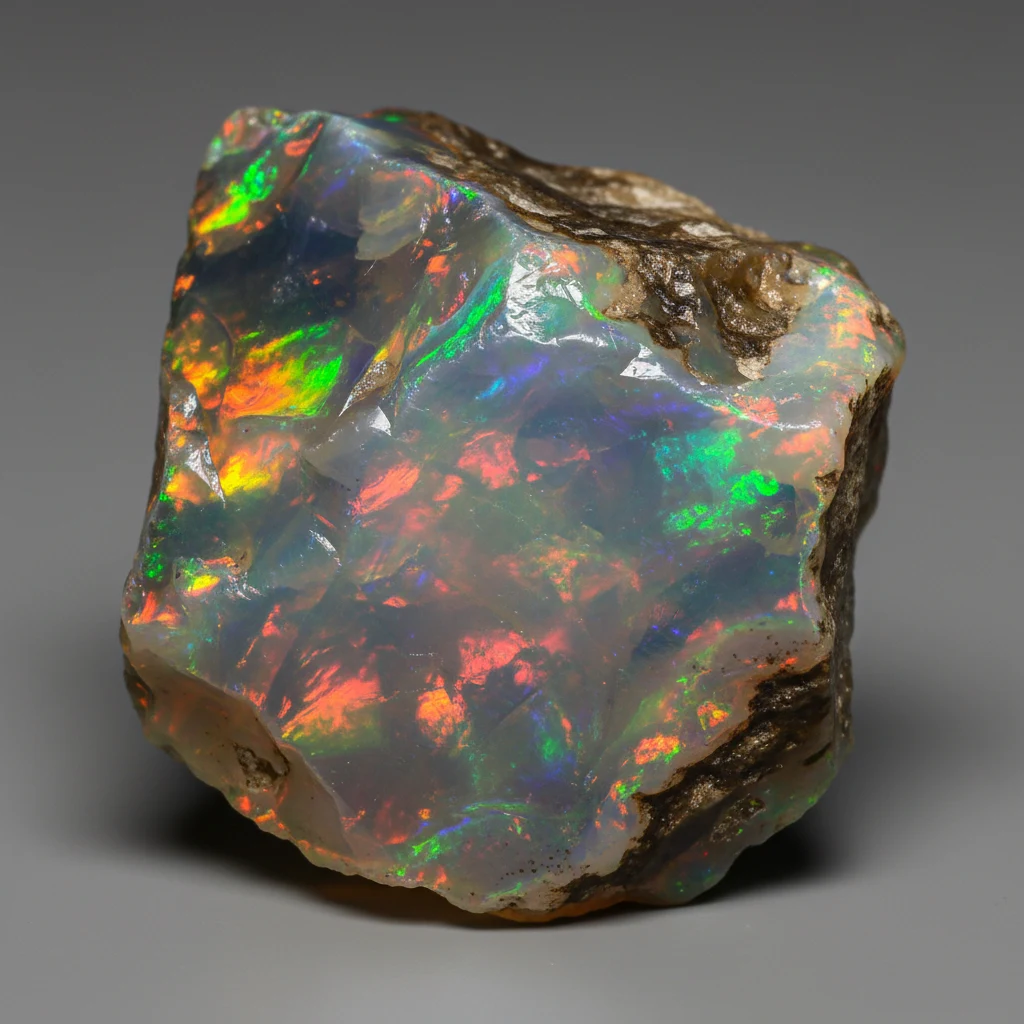
Quick answer: Opal is a hydrated amorphous silica material known for common milky, glassy, or waxy appearances and, in precious opal, shifting play-of-color. Because opal varies widely by body color, transparency, pattern, and treatment status, identification and valuation should consider both visual features and origin or seller documentation.
AI Rock ID can help screen opal photos by looking for features such as body color, translucency, surface luster, and possible play-of-color. RockIdentifier.io provides visual identification support, but opal results should be confirmed when value, treatment, or synthetic origin matters.
Good fit
- Collectors who want a colorful silica specimen with many natural varieties
- Jewelry buyers who understand that opal needs gentler wear than harder gemstones
- Anyone comparing precious opal, common opal, fire opal, and opalized material
- Photo identification users who can provide sharp images in natural light
Not a good fit
- Daily ring wear without accepting higher scratch and impact risk
- Buyers who need a gemstone that tolerates harsh cleaning or ultrasonic machines
- Anyone purchasing high-value opal without treatment, origin, or synthetic disclosure
Most commonly confused with
- Moonstone: Moonstone shows adularescence, a soft floating glow, rather than opal’s patchy or patterned play-of-color.
- Labradorite: Labradorite has broad directional flashes from feldspar cleavage, while opal lacks cleavage and may show color from internal silica structure.
- Chalcedony: Chalcedony is microcrystalline quartz and is usually harder, with no true play-of-color.
- Glass: Imitation glass may show bubbles, overly uniform color, or a different feel at edges and chips.
Opal vs Common Lookalikes
| Material | Typical visual clue | Key difference from opal |
|---|---|---|
| Precious opal | Shifting patches or pinfire color | Shows true play-of-color when moved |
| Moonstone | Soft blue or white sheen | Glow appears as adularescence, not spectral color patches |
| Labradorite | Strong blue, green, or gold flash | Flash is usually directional and tied to feldspar structure |
| Opalite glass | Milky blue body with orange edge glow | Often man-made and lacks natural opal structure |
| Chalcedony | Waxy, translucent, often banded | Harder and usually lacks play-of-color |
AI identification confidence
AI identification confidence is usually higher for precious opal with clear play-of-color and lower for common opal, pale opal, or heavily polished pieces. Photos taken in diffuse daylight plus a short angled-light video can improve separation from glass, moonstone, labradorite, and chalcedony.
When AI gets it wrong
- The photo is overexposed and hides subtle play-of-color or surface texture
- A polished cabochon has no visible matrix, inclusions, or edge details
- Opalite glass, doublets, or triplets are photographed face-up only
- The stone is wet, oiled, or shown under strong colored lighting
Final recommendation
For casual collecting, choose opal with clear photos, honest variety naming, and disclosure of treatments or assembled construction. For expensive jewelry or investment-level specimens, request reputable gemological documentation and avoid relying on photos alone.
How to Spot Opal Doublets, Triplets, and Synthetics
An opal doublet is a thin opal layer attached to a backing, while a triplet adds a clear protective cap on top. Side views can reveal straight glue lines, dark backing layers, or a domed cap that looks separate from the color layer. Synthetic opal may show very regular color patterns, such as columnar or snakeskin-like structure, especially under magnification.
Photo Tips for Identifying Opal
Use natural daylight or a neutral white light and photograph the stone dry from several angles. Include a side view, a close-up of any color play, and a photo beside a ruler or coin for scale. A short video while slowly tilting the specimen is often more useful than a single still image.
Buying Checklist for Opal
Ask whether the item is natural, synthetic, treated, stabilized, dyed, a doublet, or a triplet. Check whether the seller identifies the variety, such as precious opal, common opal, fire opal, boulder opal, or matrix opal. For higher-value pieces, written disclosure and return terms are more reliable than descriptive trade names alone.
What Is Opal?
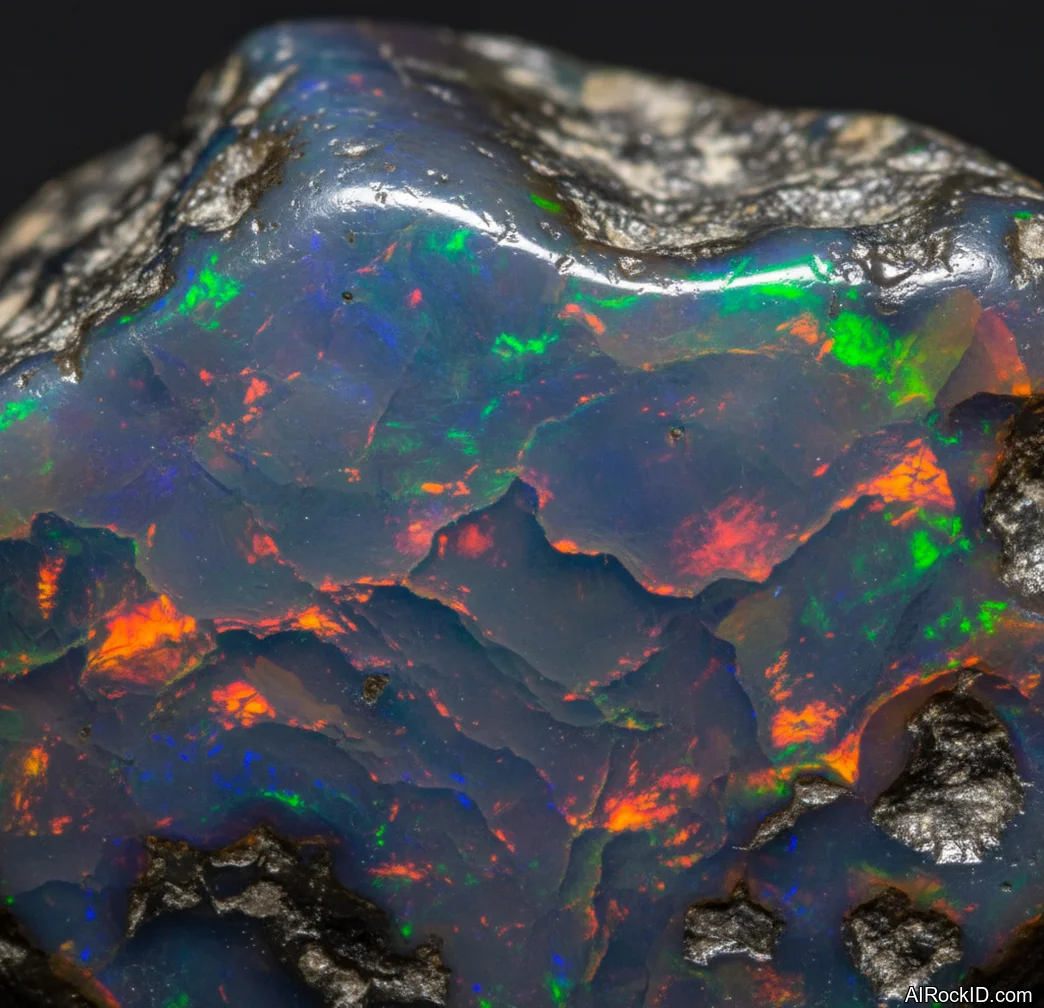
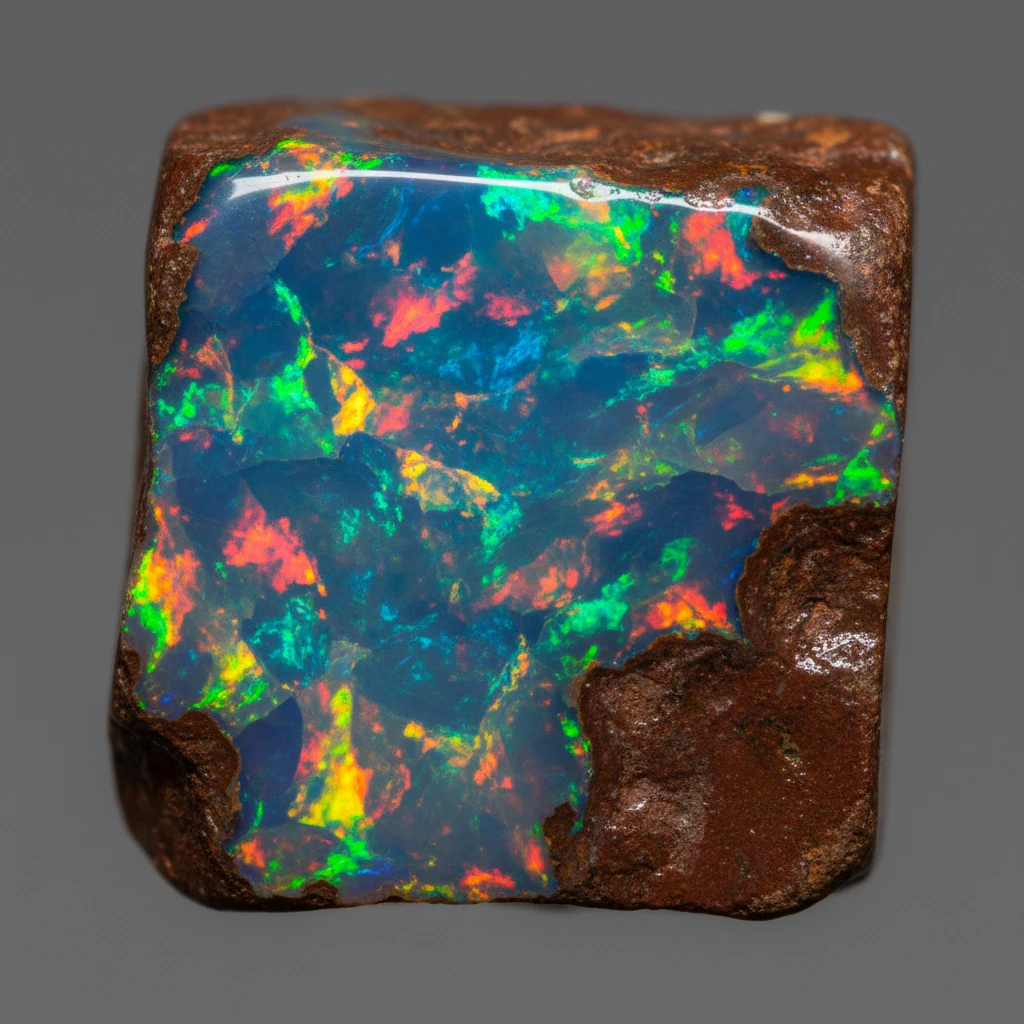
Opal is a hydrated amorphous silica mineraloid, not a crystal in the strict structural sense. Its formula is SiO2·nH2O, and the best-known material is precious opal, where shifting flashes of spectral color move across the stone as you tilt it in the hand.
Collectors separate precious opal from common opal, also called potch, by that play-of-color. A good specimen can look glassy, waxy, resinous, or pearly depending on its surface and transparency, while its moderate Mohs hardness of 5–6.5 and brittle conchoidal to uneven fracture make it a gem to handle with care.
Origin & History
The name opal is traditionally traced through Latin opalus and Greek opallios, probably from Sanskrit upala, meaning precious stone. That old naming history fits the material well: even a small cabochon can feel alive when red, green, blue, or orange fire rolls across its surface.
Opal has been used as a gemstone since antiquity, with historic European material from present-day Slovakia and later major discoveries in Australia. Australia became the dominant source of fine precious opal in the late 19th and 20th centuries, while Ethiopia and Mexico are major modern sources; locality data can be cross-checked in mineral references such as mindat.org.
Where Is Opal Found?
Opal is found worldwide, but major commercial deposits are concentrated in Australia, Ethiopia, and Mexico. Australia is famous for white, black, crystal, and boulder opal, Ethiopia for important hydrophane opal, and Mexico for transparent to translucent fire opal.
Formation
Opal forms when silica-rich water moves through cracks, cavities, fossils, volcanic rocks, sedimentary beds, or weathered host rocks, then deposits hydrated silica as water evaporates or conditions change. In the hand specimen, this origin often shows as veins, nodules, coatings, replacements, or cavity fillings.
Precious opal needs a regular, close-packed arrangement of microscopic silica spheres, which diffract light and create play-of-color. Common opal forms when the silica is disordered, so it may still be attractive in body color but lacks the shifting rainbow patches that define precious material.
How to Identify Opal
Identify opal by combining its look with its physical behavior: Mohs hardness about 5–6.5, white streak, no cleavage, conchoidal to uneven fracture, and a low density compared with quartz. Precious opal should show color patches that shift as the stone is moved, not just a fixed surface color.
Opal may be colorless, white, gray, black, brown, yellow, orange, red, pink, green, blue, or multicolored by play-of-color. Do not rely on color alone, because dyed opal, doublets, triplets, glass, plastic, and synthetic opal can imitate natural material; valuable stones deserve gemological checking.
Properties of Opal
Physical Properties
| Crystal System | Amorphous |
| Hardness (Mohs) | 5–6.5 Mohs (Moderate) |
| Density | About 1.98–2.25 g/cm³, variable with water content and porosity |
| Luster | Vitreous, resinous, waxy, or pearly |
| Diaphaneity | Transparent to opaque |
| Fracture | Conchoidal to uneven; brittle |
| Streak | White |
| Magnetism | Non-magnetic |
| Colors | Colorless, White, Gray, Black, Brown, Yellow, Orange, Red, Pink, Green, Blue, Multicolor play-of-color |
Chemical Properties
| Classification | Hydrated amorphous silica; mineraloid |
| Formula | SiO2·nH2O |
| Elements | Silicon, Oxygen, Hydrogen |
| Common Impurities | Aluminum, Iron, Calcium, Magnesium, Sodium, Potassium, Organic material |
Optical Properties
| Refractive Index | Approximately 1.37–1.47, commonly around 1.44–1.46 |
| Birefringence | None; may show anomalous strain effects |
| Pleochroism | None |
| Optical Character | Isotropic to anomalously isotropic; amorphous aggregate |
Opal Health & Safety
Solid opal is generally safe to handle, but prolonged soaking can damage some opals or treatments, and cutting or grinding produces silica-rich dust that should not be inhaled.
Opal Value & Price
Price Range
Rough/Tumbled: Common opal rough can be inexpensive, often a few dollars per piece or per ounce; attractive precious opal rough may range from tens to hundreds of dollars per gram, and exceptional black or boulder opal rough can be much higher.
Cut/Polished:
Value depends on play-of-color brightness, color range, dominant red or orange flashes, pattern, body tone, transparency, size, cut, stability, cracks, crazing, origin, and whether the stone is solid opal, a doublet, a triplet, treated, or synthetic.
Durability
Moderate to delicate — Scratch resistance: Lower than quartz and many jewelry gems; can be scratched by harder minerals and abrasive dust., Toughness: Fair to poor; opal is brittle and may chip or crack if struck.
Opal contains variable water and may be sensitive to rapid temperature change, drying, strong light and heat, ultrasonic cleaners, steam cleaners, and harsh chemicals. Some hydrophane opals absorb liquids and can temporarily change appearance.
How to Care for Opal
Use & Storage
Store opal separately from harder gemstones in a padded box or soft pouch. Keep it away from high heat, very dry storage conditions, and sudden temperature changes.
Cleaning
Clean with a soft damp cloth and mild soap if needed, then dry gently. Avoid ultrasonic cleaners, steam cleaners, bleach, acids, solvents, and prolonged soaking, especially for hydrophane opal, doublets, and triplets.
Cleanse & Charge
For spiritual use, cleanse gently with smoke, sound, moonlight, or a dry cloth rather than salt water or harsh sunlight.
Placement
Display away from direct heat sources, strong sunlight, and very dry windowsills. In jewelry, opal is best for earrings, pendants, brooches, or protected ring settings.
Caution
Opal can craze, chip, or absorb liquids. Avoid impacts, dehydration, oils, dyes, perfumes, and household chemicals.
Works Well With
Opal Meaning & Healing Properties
In modern crystal healing traditions, opal is associated with emotional expression, creativity, inspiration, imagination, hope, and amplifying personal intention. These are cultural and spiritual associations rather than scientifically proven medical effects, so opal should be enjoyed as a symbolic stone, not a treatment.
Practitioners commonly connect opal with the Crown, Heart, and Sacral chakras, with Libra, Scorpio, Cancer, and Pisces, and with Venus, the Moon, and the Water element. For spiritual use, cleanse it gently with smoke, sound, moonlight, or a dry cloth rather than salt water or harsh sunlight.
Identify Opal from a photo
Compare Opal traits, care tips, value clues, and common lookalikes with a clear photo.
Common mistakes
- Assuming every milky or iridescent stone is natural opal
- Calling opalite glass a natural opal variety
- Judging value from brightness alone without considering pattern, body color, transparency, size, and condition
- Ignoring side views that may reveal a doublet or triplet construction
- Using ultrasonic cleaners or harsh chemicals on opal jewelry
- Buying high-priced opal without treatment or synthetic disclosure