Azurite


Quick answer: Azurite is a soft blue copper carbonate mineral best recognized by its deep azure to royal-blue color and frequent association with green malachite. It is useful for collectors and visual identification practice, but it needs gentle handling because it scratches easily and can be affected by moisture, acids, and heat.
AI Rock ID can help compare an azurite specimen against similar blue minerals using visible features such as color, habit, luster, and matrix. RockIdentifier.io provides mineral reference information that can support, but not replace, hands-on tests or expert confirmation for valuable specimens.
Good fit
- Collectors who want a vivid blue copper mineral for a display case
- Beginners learning to identify copper carbonates and oxidation-zone minerals
- Specimens kept dry, stable, and away from frequent handling
- People comparing azurite with malachite, chrysocolla, or dyed stones
Not a good fit
- Jewelry intended for daily wear or impact-prone settings
- Wet environments, fountains, aquariums, or outdoor displays
- Handling by young children without supervision
- Cleaning methods involving acids, ultrasonic cleaners, steam, or soaking
Most commonly confused with
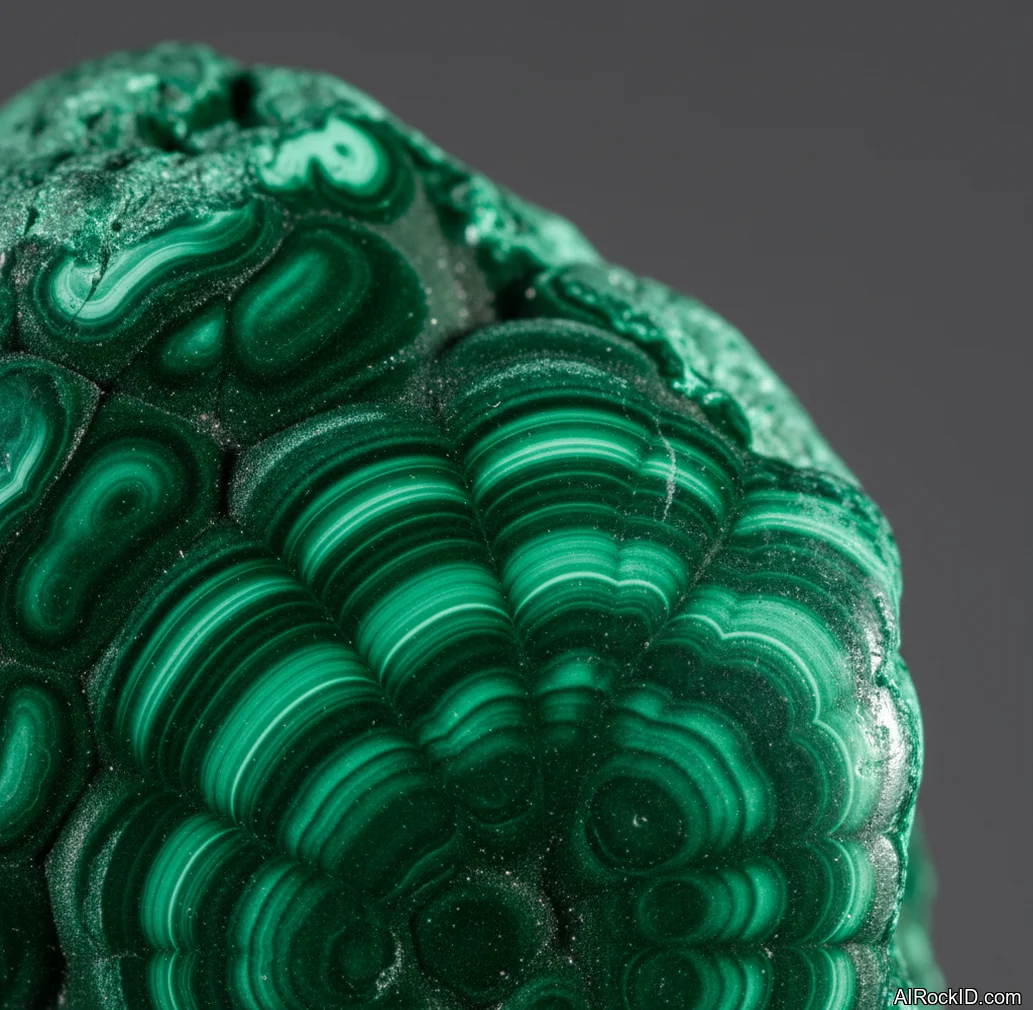
- Malachite: Malachite is green rather than blue and commonly forms banded or botryoidal copper carbonate masses.
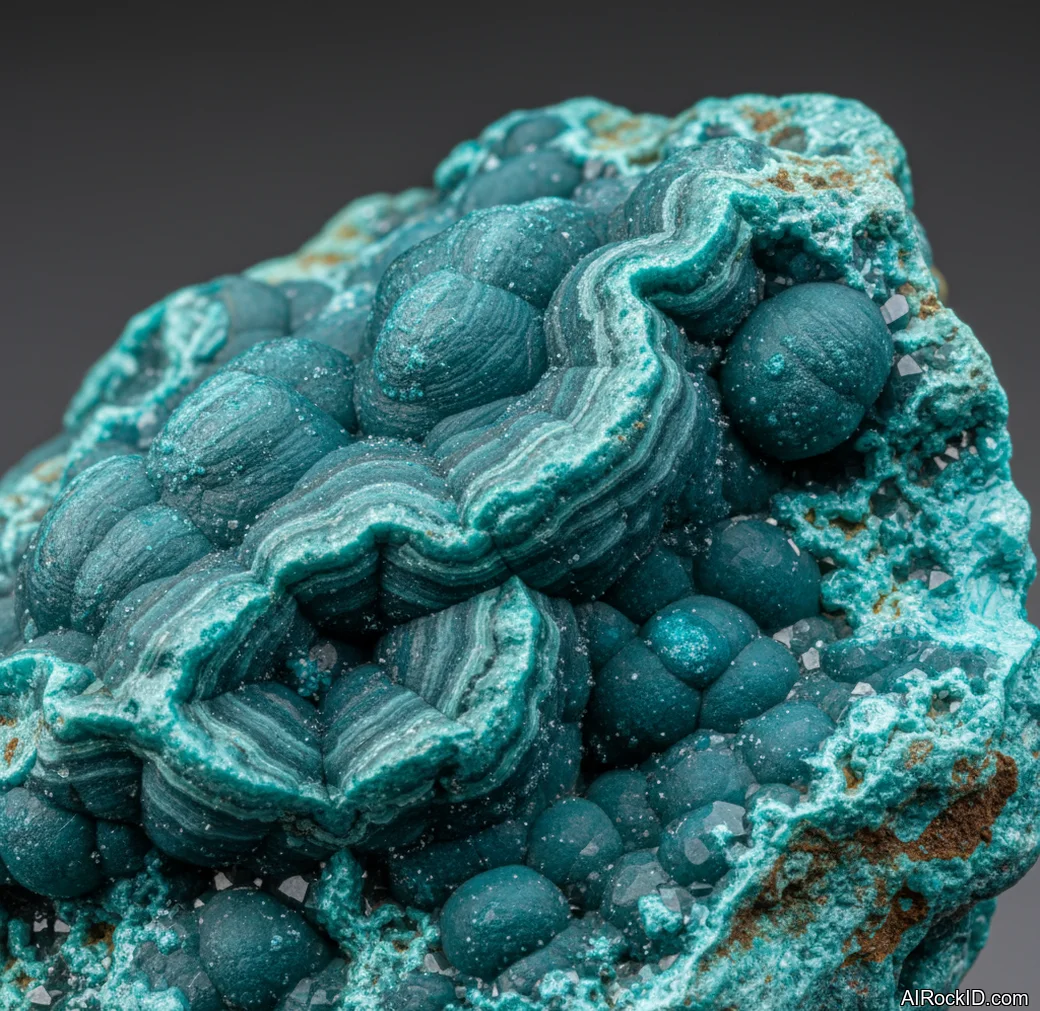
- Chrysocolla: Chrysocolla is usually blue-green, softer to variable in hardness, and often has a waxy or earthy appearance.
- Lapis Lazuli: Lapis lazuli is a rock, not a single mineral, and often shows white calcite or gold-colored pyrite specks.
- Sodalite: Sodalite is typically darker blue to violet-blue with white veining and lacks azurite’s copper-carbonate association.
Azurite Lookalike Comparison
| Specimen | Typical Color | Quick Difference | Mohs Hardness |
|---|---|---|---|
| Azurite | Deep azure to royal blue | Blue copper carbonate, often with malachite | 3.5–4 |
| Malachite | Green | Green copper carbonate with common banding | 3.5–4 |
| Chrysocolla | Blue-green to green | Often waxy, earthy, or mixed with quartz | 2.5–7 variable |
| Lapis Lazuli | Deep blue | Rock with calcite or pyrite inclusions | 5–5.5 |
| Sodalite | Blue to violet-blue | White veining, no copper-carbonate reaction pattern | 5.5–6 |
AI identification confidence
AI identification of azurite is often strongest when the image shows intense blue color, crystal habit, green malachite association, and a visible host matrix. Confidence is lower for polished stones, mixed copper ores, poor lighting, dyed materials, or specimens where color is the only clue.
When AI gets it wrong
- A blue-dyed stone or resin is photographed without visible texture or matrix.
- Azurite is mixed with malachite, chrysocolla, quartz, or other copper minerals in the same specimen.
- Lighting makes sodalite, lapis lazuli, or shattuckite appear more azurite-blue than they are in person.
- A close-up image lacks scale, hardness context, crystal habit, or streak information.
Final recommendation
Choose azurite when you want a display specimen with strong natural blue color and clear copper-mineral character. For frequent handling, daily jewelry, or wet settings, a harder blue mineral or a protected display arrangement is usually more practical.
How to Spot Natural Azurite When Buying
Natural azurite commonly shows uneven color, crystal texture, matrix attachment, or association with green malachite. Be cautious with uniformly blue polished pieces, unusually low prices for large vivid specimens, or listings that avoid showing close-up surface detail. Ask whether the specimen is natural, stabilized, dyed, repaired, or coated, especially for cabochons and display pieces.
Azurite in Mixed Copper Specimens
Azurite often occurs with other secondary copper minerals, including malachite, chrysocolla, cuprite, and tenorite. Mixed specimens can be visually appealing but may be harder to identify because blue, green, black, and red-brown minerals can occur together on the same matrix. Labels for mixed pieces should ideally list the main visible minerals rather than calling the entire specimen azurite.
Simple Non-Destructive Checks
A visual check should look for rich blue color, earthy to vitreous luster, possible green malachite, and a natural matrix or fracture pattern. Avoid scratch, acid, or water tests on collectible azurite because the mineral is soft and chemically sensitive. For valuable pieces, confirmation by a mineral dealer, museum, or gemological lab is safer than home testing.
What Is Azurite?
Azurite is a deep blue copper carbonate hydroxide mineral with the formula Cu3(CO3)2(OH)2.
Grab a decent hand specimen and the first thing you feel is the heft. It’s weirdly heavy for a rock that size, like it’s got a little lead shot hiding inside. And the color, wow. On a fresh break the blue can look almost like wet paint, especially under a desk lamp or in sunlight coming through a window.
People see that saturated blue and assume it’ll be tough like lapis. But it’s softer. Those cleavage directions are no joke, either. One careless squeeze and you can pop a clean little step right off an edge (ask me how I know). Sharp bits, too.
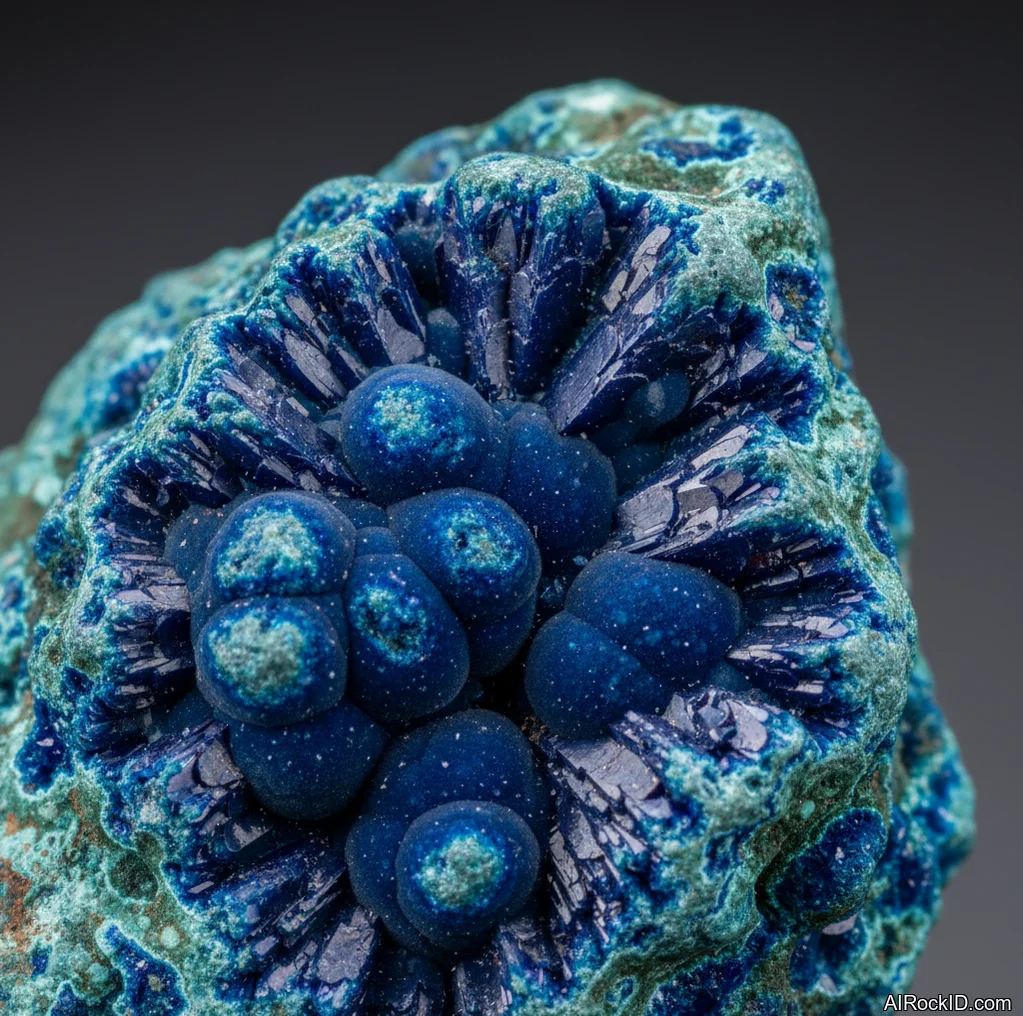
If you get one with good crystal faces, you start to see why collectors get obsessed. Sharp monoclinic crystals can flash bright when the light hits just right, then turn inky-dark the second you tilt the piece. A lot of what shows up for sale is botryoidal or drusy on brown limonite matrix, and plenty of it shifts into green malachite in swirls and seams. That blue-green combo? Classic copper country.
Origin & History
Most books peg the modern name to the French “azur,” basically “sky blue,” and yeah, that’s exactly right when you’re holding a clean, unweathered piece. Fresh azurite has that inky, midnight-blue look, and it’ll even leave a faint blue smudge on your fingertips if you rub a soft spot (ask me how I know). But let it sit around and weather, and the color can dull out fast.
The older collector name “chessylite” comes from Chessy-les-Mines near Lyon, France. That place was a big deal in the 1800s, when classic azurite from there was famous and, in a very real way, helped nail down the species for European mineralogists. You’ll see “chessylite” pop up in older labels for that reason.
Azurite’s also been used as a blue pigment, and you still run into it in older art and paint references. But for collectors, the story is more about the 19th century European localities and then later major finds in Morocco and the American Southwest. That’s what really pushed it into display cases and onto show tables.
Where Is Azurite Found?
Azurite shows up in oxidized zones of copper deposits worldwide. The stuff you see most at shows tends to be Morocco, Arizona, and older European localities when provenance is solid.
Formation
Most azurite shows up where copper sulfides are starting to rot out near the surface, in that oxidized zone. Groundwater moves through and grabs copper, carbonate, and hydroxide. Then it drops azurite into fractures, little vugs, and any porous host rock it can seep into, once the chemistry clicks and the CO2 levels are just right. So you end up seeing it right alongside malachite, cuprite, chrysocolla, plus that rusty limonite staining that loves to creep across the rock.
But azurite doesn’t want the exact same setup as malachite. It’s close. Not identical. And with extra water over time, azurite can straight-up turn into malachite. I’ve had older pieces where the blue edges slowly went a bit green and fuzzy right along the rims, especially on spots that got touched a lot or sat in a humid room. You can feel it sometimes, too. The surface loses that crisp, slightly gritty “dry” look and starts to seem a little duller (almost chalky). Not overnight. But it happens.
How to Identify Azurite
Color: Deep azure blue to indigo is the headline color, sometimes almost black-blue in thick crystals. Many specimens show mixed zones with green malachite or lighter blue crusts.
Luster: Vitreous on clean crystal faces, and more dull to earthy on massive or weathered areas.
If you scratch it with a copper coin or a steel nail, it won’t behave like quartz. It’ll mark and powder easier than people expect, and the streak is a light blue. The real test is in your hand: azurite feels dense and cool, and broken bits show bright, fresh blue inside even when the outside looks dusty.
Common Look-Alikes
Azurite is sometimes confused with these materials:
- Lapis lazuli (and dyed sodalite sold as “lapis”)
- Dyed howlite or dyed magnesite sold as “blue azurite”
- Chrysocolla (especially the bright, waxy blue-green stuff)
- Blue calcite (massive pieces can read as azurite in photos)
- Azurite-malachite mixes mislabeled as pure azurite
- Blue glass or resin “specimens” made to mimic botryoidal azurite
Market Cautions & Treatments
When AI Can Get This Wrong
At first glance, phone photos mix up azurite with lapis, dyed howlite, and even blue calcite because the camera flattens the texture and pushes the saturation. The real test is in-hand: azurite feels heavy for its size, scratches easily with a copper coin or knife, and you’ll often see bright blue on a fresh chip plus green malachite seams or crusts along the edges. If the “azurite” has perfectly uniform color with no grain, no cleavagey flashes, and it won’t scuff at all, AI is probably being fooled.
Properties of Azurite
Physical Properties
| Crystal System | Monoclinic |
| Hardness (Mohs) | 3.5-4 (Soft (2-4)) |
| Density | 3.77-3.89 g/cm3 |
| Luster | Vitreous |
| Diaphaneity | Translucent to opaque |
| Fracture | Conchoidal |
| Streak | Light blue |
| Magnetism | Non-magnetic |
| Colors | Deep blue, Azure blue, Indigo, Blue-green (with malachite), Dark blue-black |
Chemical Properties
| Classification | Carbonates |
| Formula | Cu3(CO3)2(OH)2 |
| Elements | Cu, C, O, H |
| Common Impurities | Fe, Mn, Zn |
Optical Properties
| Refractive Index | 1.730-1.850 |
| Birefringence | 0.120 |
| Pleochroism | Strong |
| Optical Character | Biaxial |
Azurite Health & Safety
Handling intact azurite is usually fine. But don’t do anything that makes dust, and don’t soak it in water. Just treat it like a copper mineral, because that’s what it is.
Safety Tips
Wash your hands after you’ve handled it. Keep it out of the kitchen and away from any food prep surfaces. And if you ever have to cut, drill, or mess with the material, don’t do it dry. Wear a respirator and use wet methods so dust doesn’t end up in your nose, on your sleeves, or all over the bench.
Azurite Value & Price
Price Range
Rough/Tumbled: $10 - $300 per specimen
Cut/Polished: $3 - $25 per carat
Sharp, glassy crystals sitting on a contrasting matrix are what really get people to open their wallets, especially when there’s a solid locality label on the box. Big, solid-blue chunks show up all the time, but once you’ve got clean crystals that don’t crumble when you nudge them (or leave blue grit on your fingertips), that’s when the price shoots up in a hurry.
Durability
Fragile — Scratch resistance: Poor, Toughness: Poor
Azurite is soft with perfect cleavage and can slowly alter to malachite in damp conditions or if constantly handled.
How to Care for Azurite
Use & Storage
Store azurite in a padded box or a cabinet where it won’t get knocked around, and keep it out of humid spots like bathrooms. I keep my better crystals in perky boxes because one drop can turn a great piece into blue gravel.
Cleaning
1) Use a soft, dry brush or a puff of air to remove loose dust. 2) If it needs more, wipe gently with a barely damp microfiber cloth, then dry right away. 3) Skip ultrasonic cleaners, steam, and long rinses.
Cleanse & Charge
For non-water methods, use smoke, sound, or a short rest on dry selenite. Avoid salt water and long moon-soaks since moisture can stress the surface over time.
Placement
A shelf away from direct sun and away from the kitchen sink is ideal. If you display it under bright lights, give it airflow and don’t trap it in a damp glass dome.
Caution
Don’t soak azurite. Seriously. And skip the harsh cleaners too. Also, don’t cut it or sand it unless you’ve got proper dust control and the right PPE, because that fine blue dust gets everywhere (it clings to your fingers and leaves a faint chalky smear). Keep it away from small kids and pets that might lick rocks. Why risk it?
Works Well With
Azurite Meaning & Healing Properties
Most dealers, and plenty of collectors who’ve been around forever, call azurite a “mind” stone, and yeah, I can see it. Hold a dark blue chunk in your palm and it kind of yanks your focus upward and inward, like your eyes want to lock onto one tiny dot. Not subtle, either. For me it’s less woo and more day-to-day: I keep one on my desk when I’m reading, labeling flats, or trying not to bounce between tasks every five minutes.
But here’s what people gloss over. Azurite’s fragile, and that changes the whole relationship. I wouldn’t carry it loose in a pocket unless you’re cool with blue dust ground into the seams of your jeans (and under your fingernails, honestly). Some folks treat it like a worry stone, rub it all day, then act surprised when the surface goes dull. If you want the feel without having to baby it, an azurite-malachite cab is usually tougher than one of those crumbly crystal clusters.
And on the emotional side, I’ve heard people tie it to insight and doing an honest self-check. That fits, at least with how the color reads: deep, serious, not sugary. Still, it’s not medicine. If someone’s dealing with anxiety, sleep problems, or anything clinical, crystals can be a comfort object and a reminder to slow down, but they don’t replace real care.
Common mistakes
- Assuming every vivid blue stone is azurite without checking hardness, matrix, or associated minerals.
- Confusing azurite-malachite specimens with a single uniform mineral species.
- Buying polished blue pieces without asking whether they are dyed, stabilized, or coated.
- Cleaning azurite with water, vinegar, ultrasonic machines, or steam.
- Using azurite in daily rings or bracelets where abrasion and impact are likely.
- Storing azurite in direct sunlight, damp conditions, or contact with harder minerals.
Identify Azurite from a photo
Compare Azurite traits, care tips, value clues, and common lookalikes with a clear photo.