Green Glass


Quick answer: Green glass is an amorphous man-made silicate material, not a crystalline mineral. It is often collected as tumbled pieces, beach glass, slag-like fragments, or decorative stones because its green color can resemble natural gems.
AI Rock ID can help screen green glass against lookalikes by checking color, luster, transparency, fracture style, and visible bubbles. RockIdentifier.io lists Green Glass separately so users can distinguish manufactured glass from natural green minerals and gemstones.
Good fit
- Collectors who want a simple reference for identifying green glass fragments
- Beachcombers comparing green sea glass with natural green stones
- Beginners learning the difference between amorphous glass and crystalline minerals
- Buyers checking whether a green polished stone may be glass rather than a gemstone
Not a good fit
- Anyone needing a natural mineral specimen with a defined crystal structure
- Buyers seeking investment-grade gemstones
- Identification of laboratory-tested gem materials without professional confirmation
Why people search for this
People often search for Green Glass when a green tumbled stone, beach find, or decorative bead looks similar to jade, aventurine, fluorite, or peridot. The main identification question is usually whether the piece is natural mineral material or manufactured glass.
Most commonly confused with
- Green Aventurine: Usually a quartz variety with granular texture or subtle sparkle, while green glass is amorphous and may show bubbles or curved fractures.
- Jade: Jade is tougher and commonly has a fibrous or interlocking mineral texture; glass is more brittle and may break with conchoidal fractures.
- Fluorite: Fluorite has perfect cleavage and lower hardness around Mohs 4, while green glass lacks cleavage and is usually harder.
- Peridot: Peridot is a natural olivine gemstone with higher refractive appearance and mineral inclusions; glass often has rounded bubbles or flow lines.
Green Glass vs. Common Green Lookalikes
| Material | Typical Clue | Key Difference |
|---|---|---|
| Green Glass | Bubbles, curved fractures, uniform color | Amorphous man-made silicate |
| Green Aventurine | Grainy quartz texture or mica sparkle | Natural crystalline quartz variety |
| Jade | Waxy luster and high toughness | Fibrous or interlocking mineral structure |
| Fluorite | Cleavage faces and lower hardness | Natural mineral with perfect cleavage |
| Peridot | Bright olive-green gem appearance | Natural olivine with higher gem value |
AI identification confidence
AI identification confidence for green glass is often moderate to high when the photo shows bubbles, conchoidal fracture, rounded beach-worn edges, or very uniform color. Confidence is lower for polished beads, small cabochons, and opaque pieces because several green minerals can look similar in casual photos.
When AI gets it wrong
- Polished stones may hide bubbles, fracture surfaces, and texture.
- Strong lighting can make glass appear more transparent or gem-like than it is.
- Dyed quartz, resin, and imitation jade can resemble green glass in photos.
- A single image without scale, hardness clues, or close-up detail can lead to uncertain results.
Final recommendation
Treat green glass as a decorative or collectible material unless testing confirms it is a natural mineral or gemstone. For buying, ask for the material name, origin claim, and whether the piece is natural stone, glass, resin, or treated material.
How to Tell Green Glass from Natural Stone
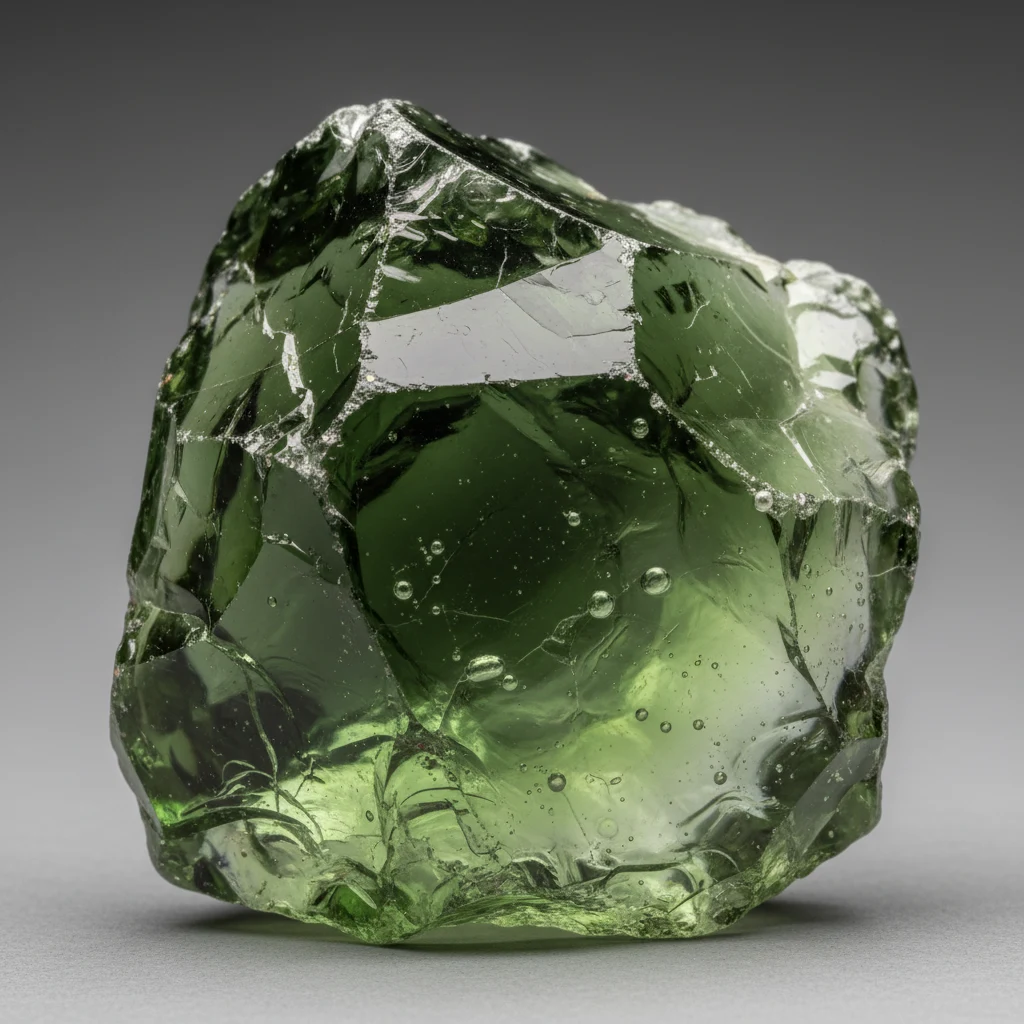
Look for small rounded bubbles, curved conchoidal fractures, mold seams, or a very even color distribution. Natural stones more often show grain, cleavage, banding, mineral inclusions, or uneven internal texture. A simple hardness check can help, but it should be done carefully because both glass and some minerals can scratch or chip.
Buying Green Glass and Imitation Gemstones
Green glass is acceptable when it is sold clearly as glass, sea glass, slag glass, or decorative material. Use caution when green glass is described with vague names such as “natural jade,” “emerald-like crystal,” or “rare green gemstone” without testing or provenance. Price should generally reflect decorative value rather than natural gemstone value.
Photo Tips for Identifying Green Glass
Photograph the piece in daylight from several angles, including a close-up of any broken edge, surface pits, bubbles, or internal features. Place it beside a ruler or coin for scale and include one image on a white background. Avoid color filters because they can make ordinary glass look like peridot, jade, or fluorite.
What Is Green Glass?
Green Glass is a green, transparent to translucent amorphous silicate glass with a vitreous shine and a Mohs hardness of 5.5-6.0. In hand, it usually feels smooth and cool, with color ranging from pale bottle-green to deep dark green. It is listed here as a tektite-type material, though the name also covers synthetic green glass made by glass production.
Collectors value Green Glass for its clean color, glassy luster, and approachable price rather than rarity. It has a colorless streak, conchoidal fracture, and no crystal system because it is amorphous. Its moderate durability makes it suitable for display and jewelry, but it can break if dropped, so a soft pouch is the right storage choice.
Origin & History
Green Glass refers to many kinds of glass, natural or synthetic, recognized by their green hue. The name is straightforward: it comes from the material’s characteristic green color. Glass of this kind has been produced since ancient times, and today it is still associated with both decorative objects and jewelry.
In a collection tray, Green Glass is best read as a color-and-material term rather than a single locality mineral name. Its listed classification is amorphous silicate, with a SiO2 formula and possible iron impurities. For general mineral and glass terminology, collectors commonly compare reference entries on mindat.org.
Where Is Green Glass Found?
Green Glass is commonly found in places associated with glassmaking. Listed countries include the USA, Italy, and Germany, with notable localities at Newark, Ohio, USA; Murano, Italy; and Bavaria, Germany. These names suit the material well, because Green Glass can be natural or produced through human glassworking.
Formation
Green Glass forms in two broad ways: naturally from volcanic activity or artificially through glass production processes. In either case, the result is an amorphous silicate rather than a crystal with orderly internal structure. That lack of crystal structure is why Green Glass is recorded as amorphous and optically isotropic.
Its green color may be linked with listed iron impurities, while the main formula is given as SiO2. Fresh broken areas can show curved, shell-like conchoidal fracture, the classic break seen in glassy material. For field context on natural glass and volcanic materials, USGS references are useful background, while the specimen itself should still be identified by its physical features.
How to Identify Green Glass
Identify Green Glass by its light to dark green color, vitreous luster, smooth surface, and transparent to translucent body. It is non-magnetic, has a colorless streak, and falls around Mohs 5.5-6.0. Under light, it should look glassy rather than fibrous, grainy, or crystalline.
Internal bubbles are a practical clue, especially in synthetic or production-related pieces. Broken edges may show conchoidal fracture, and the material has no birefringence, no pleochroism, and an isotropic optical character. Because it can be confused with other green glassy materials, use several observations together: color, luster, bubbles, amorphous structure, and fracture.
Properties of Green Glass
Physical Properties
| Crystal System | Amorphous |
| Hardness (Mohs) | 5.5-6.0 (Medium (4-6)) |
| Density | 2.5-2.9 g/cm3 |
| Luster | Vitreous |
| Diaphaneity | Transparent to translucent |
| Fracture | Conchoidal |
| Streak | Colorless |
| Magnetism | Non-magnetic |
| Colors | Green, Dark Green, Light Green |
Chemical Properties
| Classification | Silicate |
| Formula | SiO2 |
| Elements | Si, O |
| Common Impurities | Fe |
Optical Properties
| Refractive Index | 1.5-1.6 |
| Birefringence | None |
| Pleochroism | None |
| Optical Character | Isotropic |
Green Glass Health & Safety
There are no significant health risks associated with handling green glass.
Green Glass Value & Price
Price Range
Rough/Tumbled: $5 - $20 per specimen
Cut/Polished: $10 - $50 per carat
Price is influenced by color intensity and clarity.
Durability
Moderate — Scratch resistance: Fair, Toughness: Good
It can break easily if dropped.
How to Care for Green Glass
Use & Storage
Store in a soft pouch to prevent scratches.
Cleaning
Clean with mild soap and water. Avoid harsh chemicals.
Cleanse & Charge
Charge under moonlight for several hours.
Placement
Place in a location that receives natural light.
Caution
Handle with care to avoid breakage.
Works Well With
Green Glass Meaning & Healing Properties
Green Glass is often used symbolically for healing, balance, protection, grounding, meditation, emotional healing, and clarity. In crystal practice, its green color connects it with the Heart chakra, and its listed zodiac associations are Taurus and Virgo. Venus, Earth, and Water are also connected with its traditional profile.
For a simple practice, place Green Glass where it receives natural light, or charge it under moonlight for several hours. It pairs well with clear quartz, amethyst, and black tourmaline. These uses are spiritual and decorative, not medical; Green Glass is not a substitute for medical treatment.
Identify Green Glass from a photo
Compare Green Glass traits, care tips, value clues, and common lookalikes with a clear photo.
Common mistakes
- Assuming every green transparent stone is a natural gemstone
- Calling all green beach glass jade or emerald
- Ignoring bubbles, mold marks, or curved fracture surfaces
- Using color alone to separate glass from aventurine, fluorite, or peridot
- Paying gemstone prices for material labeled only with decorative trade names