mind

Best Crystals for Productivity
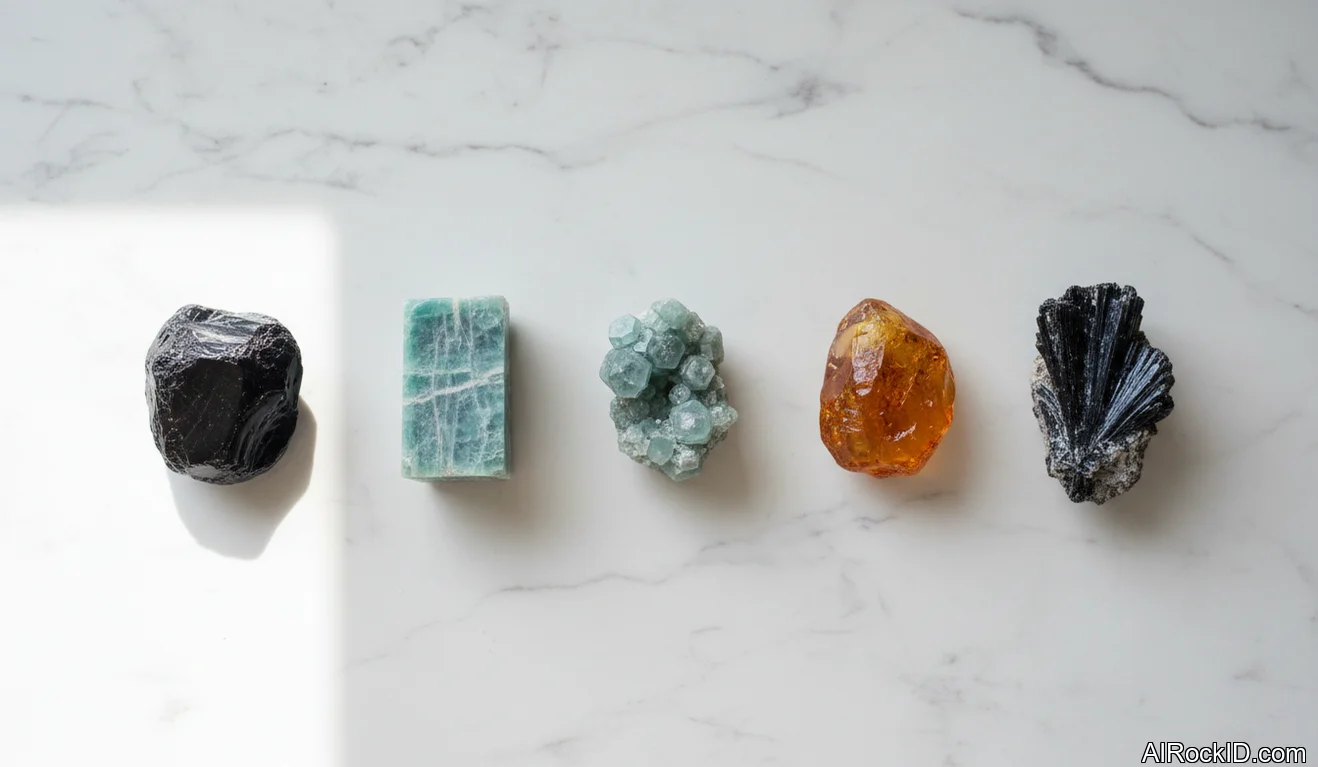
A small set of tumbled and raw crystals on a desk beside a notebook and pen, arranged for a productivity setup

The best crystals for productivity aren’t the ones that “amp you up.” They’re the ones that keep you steady, clear-headed, and consistent. I think of them as tiny environmental cues. Something you can see, pick up, and sort of reset with when your attention starts sliding off the rails.

If you’ve ever noticed how one specific pen somehow makes you write more, or how a freshly cleared desk changes your mood in five seconds flat, you already understand the concept. Crystals don’t replace planning, sleep, or deadlines. They just back up the habits you’re already trying to build.

Pick up a solid piece of black tourmaline or black onyx and you notice the weight first. It’s that dense, palm-filling heaviness, like a smooth river stone that actually pulls your hand down a touch. And that’s the point. Your hand slows for a beat, and you get that tiny pause you need before you click yet another tab.

But I’ve also seen people do better with brighter stones like apatite or amazonite when they’re stuck in mental mud and need some momentum. The way the stone feels matters too. A glossy tumbled piece has that slick, almost “worry-stone” feel, while a raw chunk has sharp faces and little edges that catch on your skin. That tactile difference can anchor different work modes (at least it does for me).

One reality check, though: the market’s messy. Some stones get mislabeled, dyed, or sold under fantasy names, and the vibe you’re going for gets blurry when the material isn’t what you think it is. So keep it simple. Choose a few you genuinely like touching, keep them where you actually work, and tie them to a repeatable routine: start, focus, break, finish. That’s where crystals really earn their spot on a desk.

Recommended Crystals
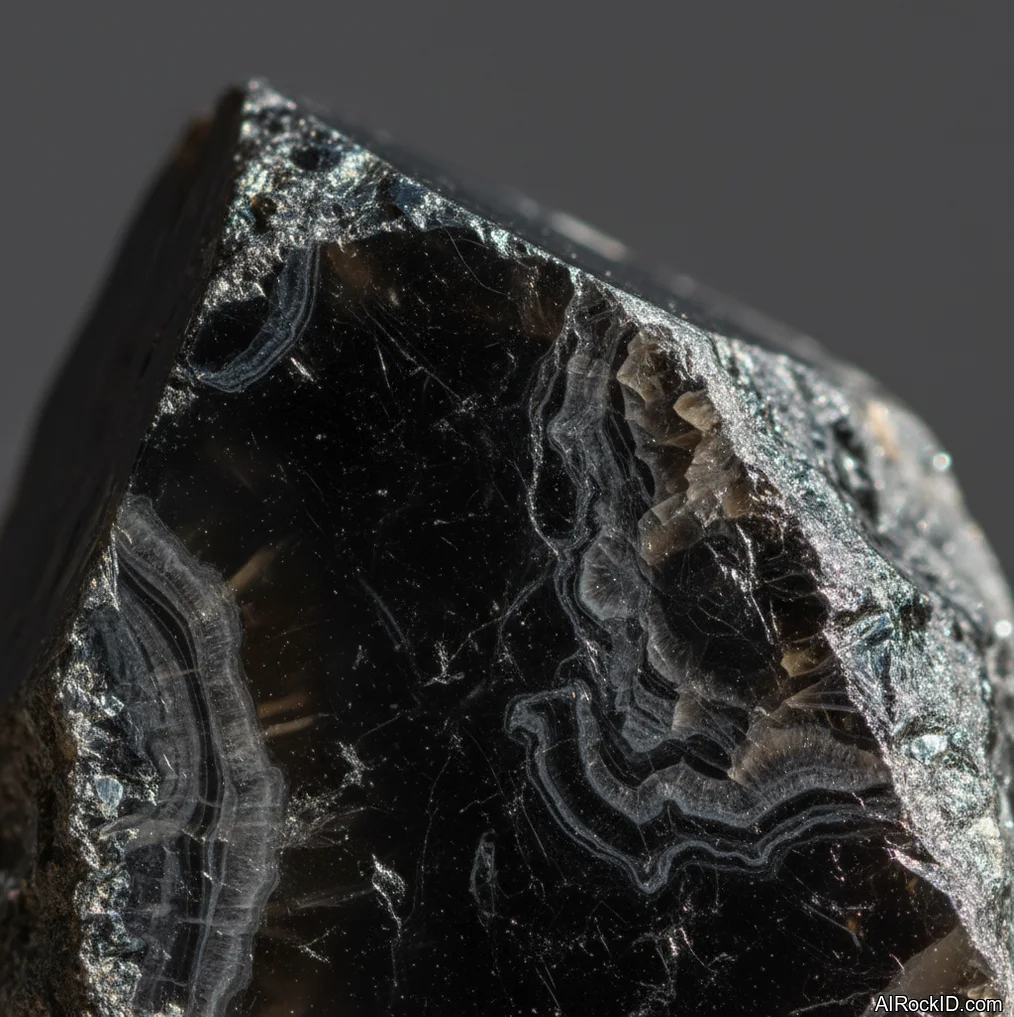
Black Onyx
Black Onyx

A lot of the “black onyx” you see for sale is really dyed chalcedony. But even the dyed pieces still have that slick, cool-to-the-touch weight in your palm that feels kind of serious sitting next to a keyboard. When my brain’s everywhere, I use an onyx palm stone like a little boundary: I pick it up, feel that chilled surface, and that’s my cue before I crack open email. Hold it under a desk lamp and tilt it around and you can sometimes spot faint banding. If it’s totally uniform, jet-black with nothing going on, I’d assume it’s dyed and move on. What matters is how it works for you. It steadies things in a plain, no-drama way. And honestly, that’s usually what productivity needs.
How to use: Keep a tumbled piece by your mouse or trackpad and touch it every time you switch tasks, so the switch becomes intentional. If you journal, set it on the page while you write the first three bullet points for the day. Wipe it down occasionally because desk oils make it slick.
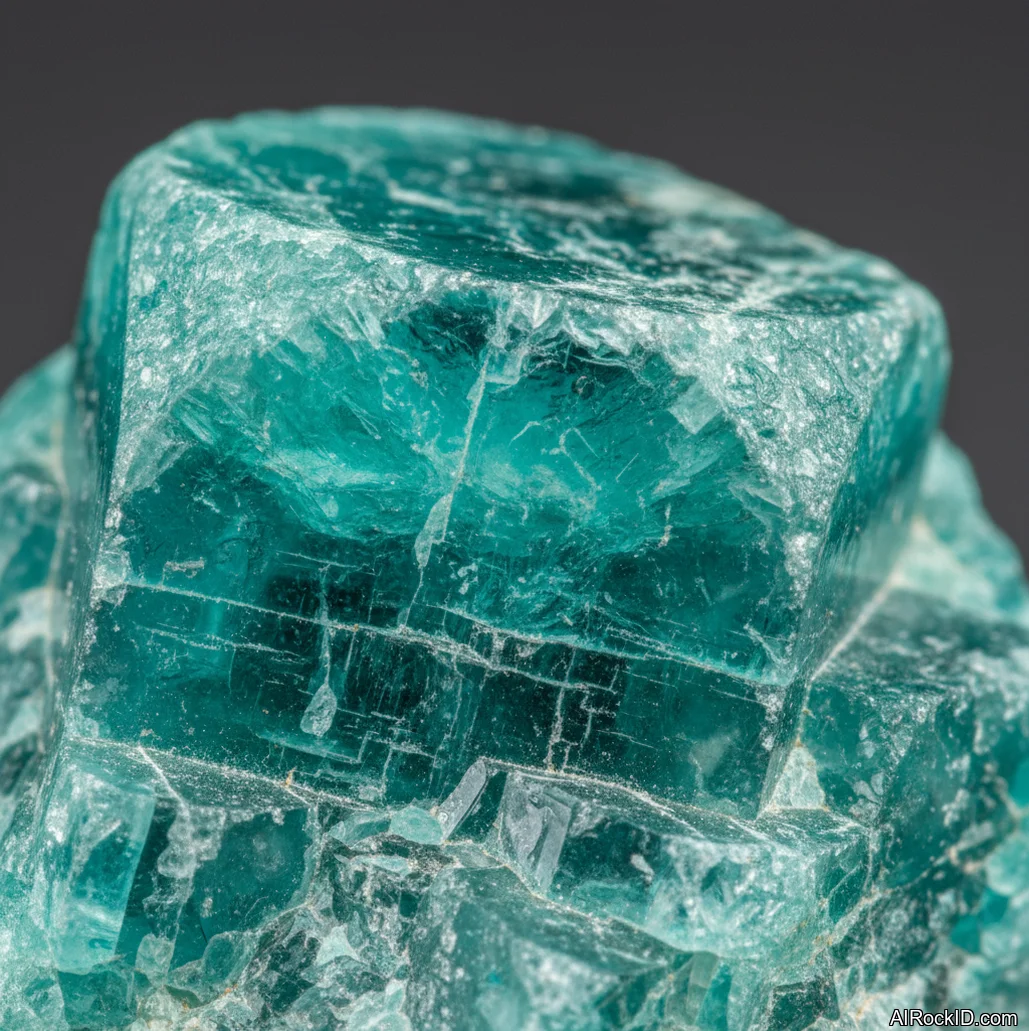
Amazonite

Amazonite

Amazonite’s got a look you can spot from across the table, and it’s not easy to fake. That blue-green feldspar base, plus those white streaks that honestly look like someone dragged a paintbrush right through it. Raw chunks can feel a bit chalky along the edges (especially where it’s freshly broken), but once it’s polished it turns silky fast, almost like glass under your thumb. For productivity, I reach for it when the real issue is overthinking and the endless rewrite loop. It kind of pushes you toward clean decisions and hitting send, instead of polishing the same thing forever.
How to use: Put it near your keyboard during writing or planning sessions, not in a drawer. If you catch yourself looping, hold it for ten slow breaths, then write the next action as a single sentence. Keep it out of direct sun for long stretches if the color on your piece seems prone to fading.
Apatite

Apatite

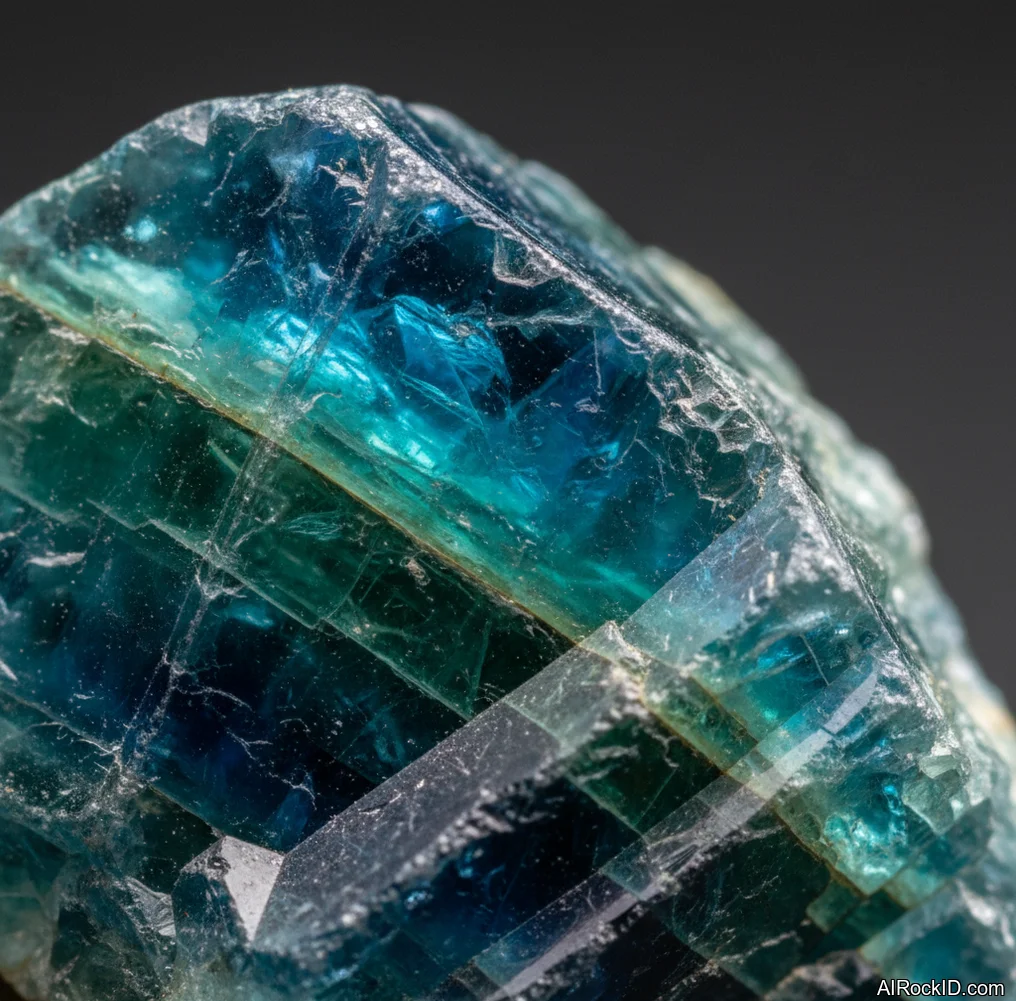
Apatite can look almost electric in your hand, but it’s softer than most people expect. Toss it in a pocket with your keys and you’ll spot tiny scuffs fast, the kind that show up as faint cloudy streaks when you tilt it under a lamp. And honestly, that softness is a decent reminder. Treat your attention gently, or it gets scratched up too. The clearer blue stuff tends to feel mentally “bright” when you’re brainstorming. But the pieces with more inclusions feel steadier when you’re actually executing. I’ve handled apatite that nearly glows under harsh shop lighting, that white LED glare that bounces off the surface and makes every little mark obvious (and every flash of color, too). It’s the sort of stone that makes you want to start something. Why not?
How to use: Use it at the start of a work block: set a 25 or 50 minute timer, hold the stone, and state the one output you’re shipping by the end. Don’t wear it daily if it’s a polished pendant unless you’re okay with it picking up tiny dings. Store it separately from harder stones.
Amber

Amber

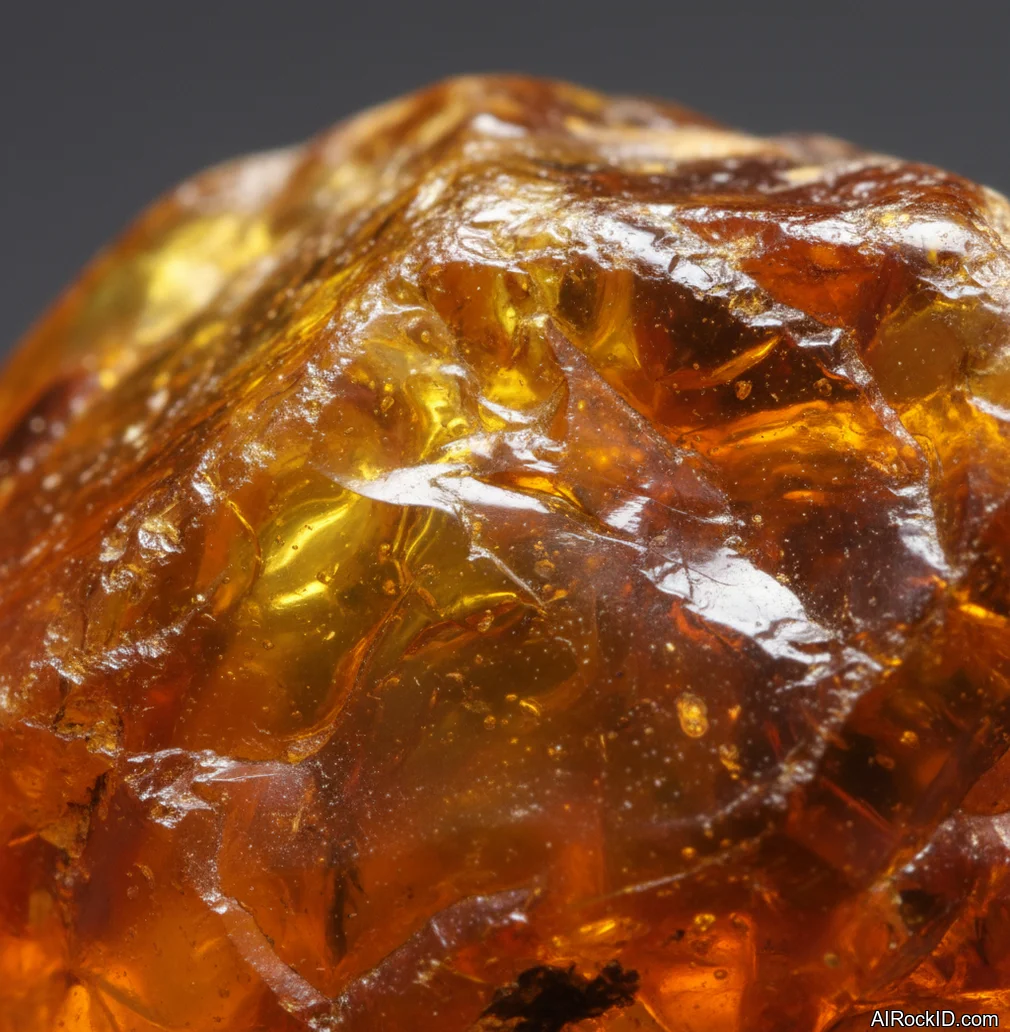
Real amber warms up fast in your palm and somehow feels lighter than your eyes expect. That’s the dead giveaway. Glass or resin knockoffs don’t do that, and after a minute they just feel… off, like they’re fighting your hand. I grab amber when I’m dragging and want a little lift without getting jittery. It isn’t a stone, so it acts its own way. Thing is, it picks up skin oils quickly and you’ll see that soft sheen show up (especially if you’ve been fidgeting with it while you read or scroll). For productivity, it’s my “get moving” piece. Mornings, post-lunch slump, that weird 2 p.m. fog. It helps.
How to use: Keep a small amber piece in a dish and handle it only at the beginning of a session so it doesn’t turn into a fidget that steals time. If it gets cloudy, wipe it with a soft cloth, no chemicals. Don’t leave it on a hot windowsill; it can craze or crack.
Arfvedsonite

Arfvedsonite

Arfvedsonite is the kind of stone you grab for one reason: the flash. If you’ve ever held a polished piece in your hand, you know the drill. Tilt it a hair and those blue-gray needles fire up under the light, then they vanish the second you shift the angle. Blink and you miss it. And honestly, that on-off shimmer feels like focus on a normal day. You’re locked in. Then you’re not. Then you’re back in again like nothing happened. So I reach for it when I’m planning and sequencing. It helps me see the next steps without spiraling into every possible step (because who needs that).
How to use: Use it during weekly reviews: hold it while you choose the top three priorities, then put it down and write them in plain language. If you’ve got a sphere, place it where you can see the flash as a quick “back to it” cue. Keep it away from harsh cleaners that can dull the polish.
Aegirine

Aegirine

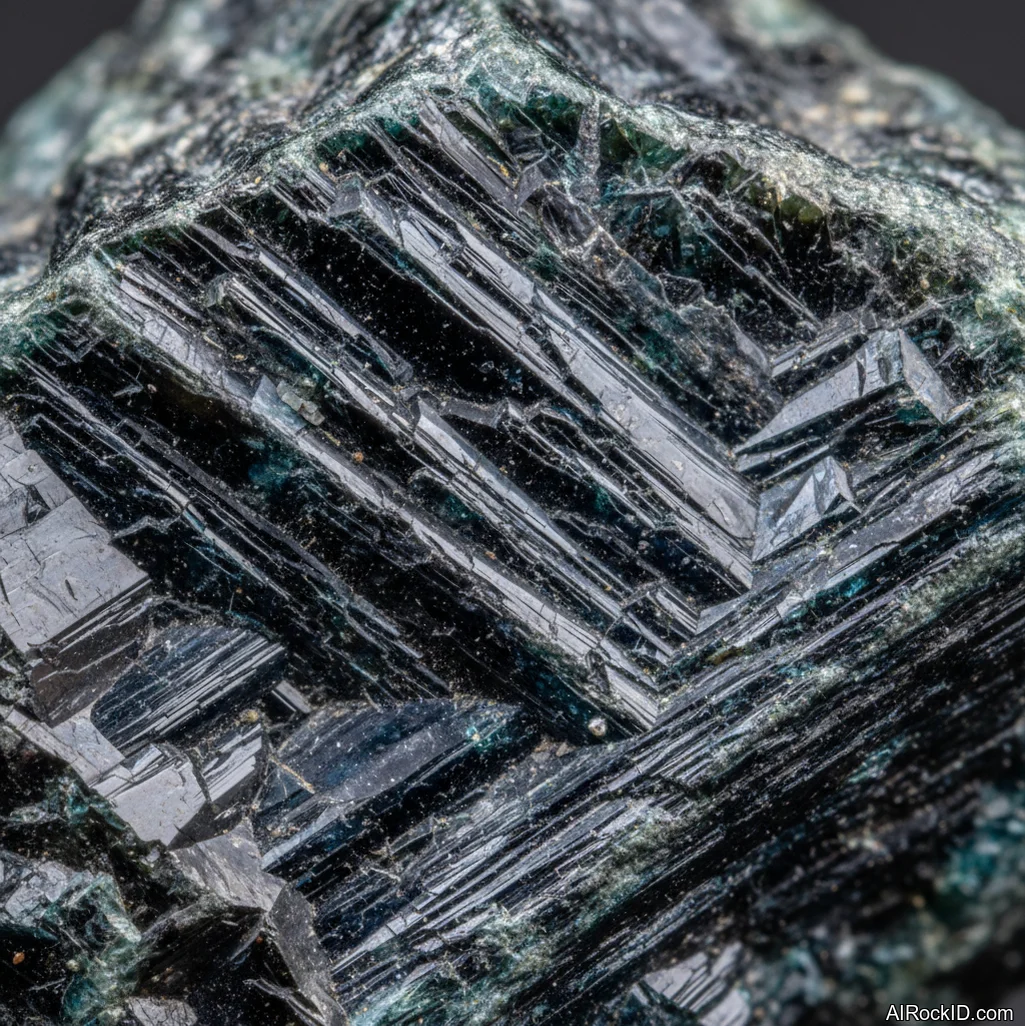
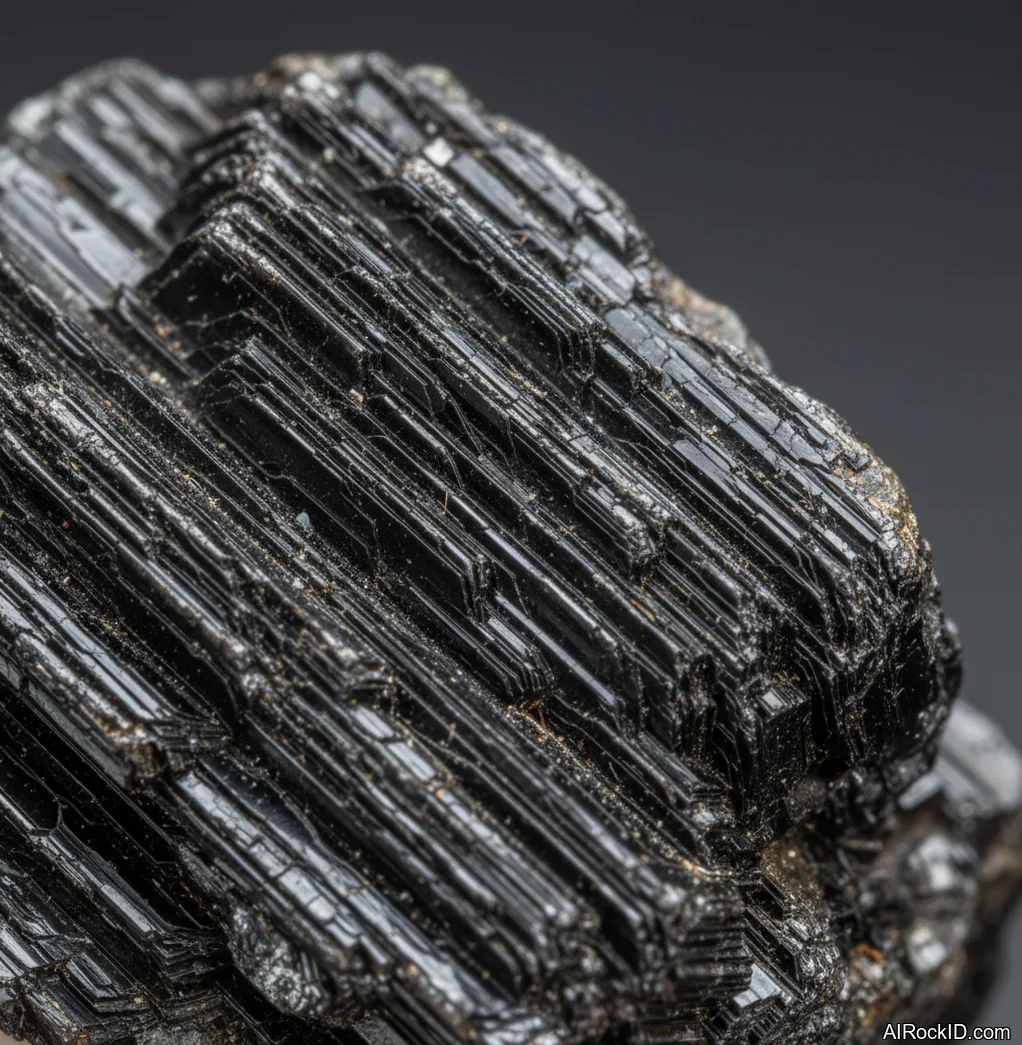
A good aegirine crystal is sharp, dark, and honestly a bit intimidating. Tiny black blades. It looks like it means business sitting on your desk. Thing is, the real test is picking it up and moving it around without getting careless. Those terminations chip fast if you just toss it in a bowl with other minerals, and you’ll hear that awful little clink that tells you you messed up. On the productivity side, I reach for aegirine when there’s interruption and noise, the kind that drags you into other people’s urgency. It helps you hold the line and finish what you said you’d finish. Simple as that.
How to use: Place a small cluster near your monitor but out of your elbow’s path, because it’s brittle. Pair it with a “do not disturb” block: set a timer and don’t check messages until it ends. Dust it gently with a soft brush instead of rinsing it.
Black Kyanite

Black Kyanite

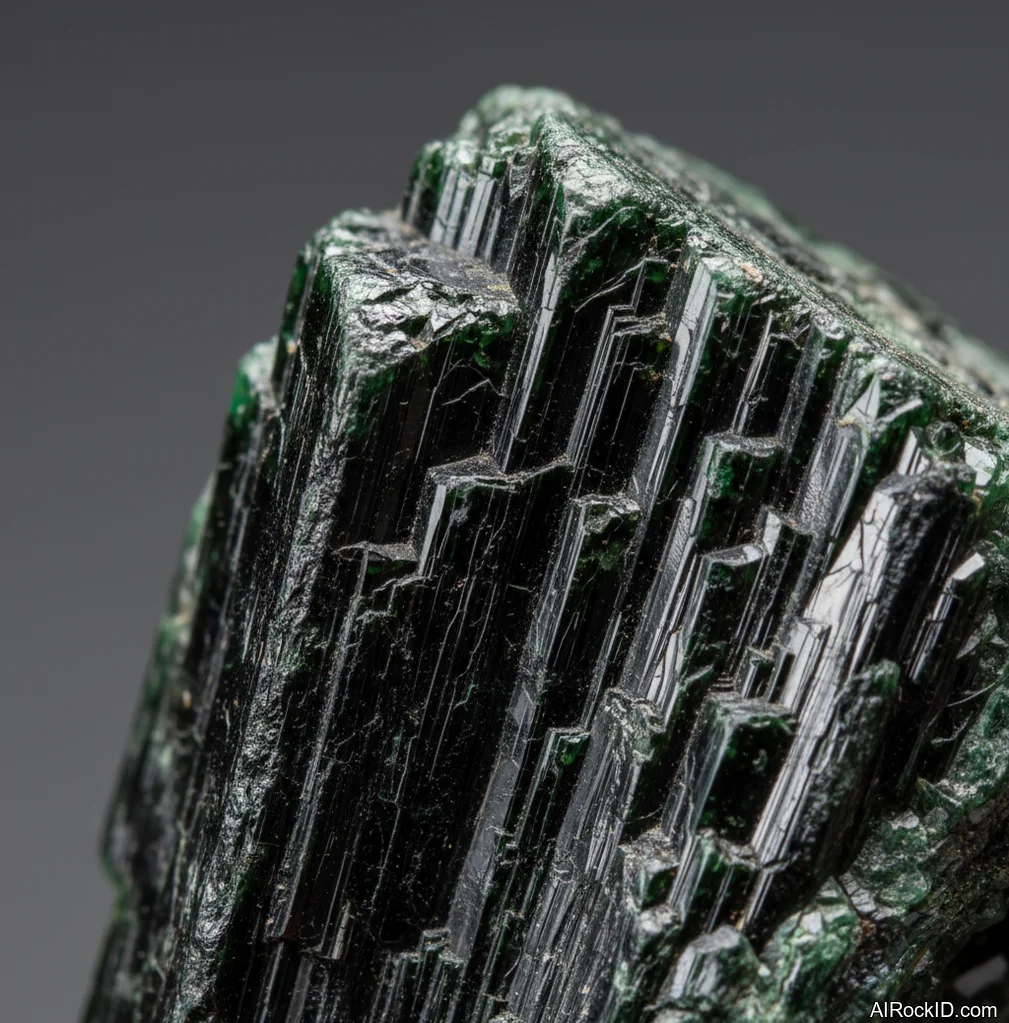
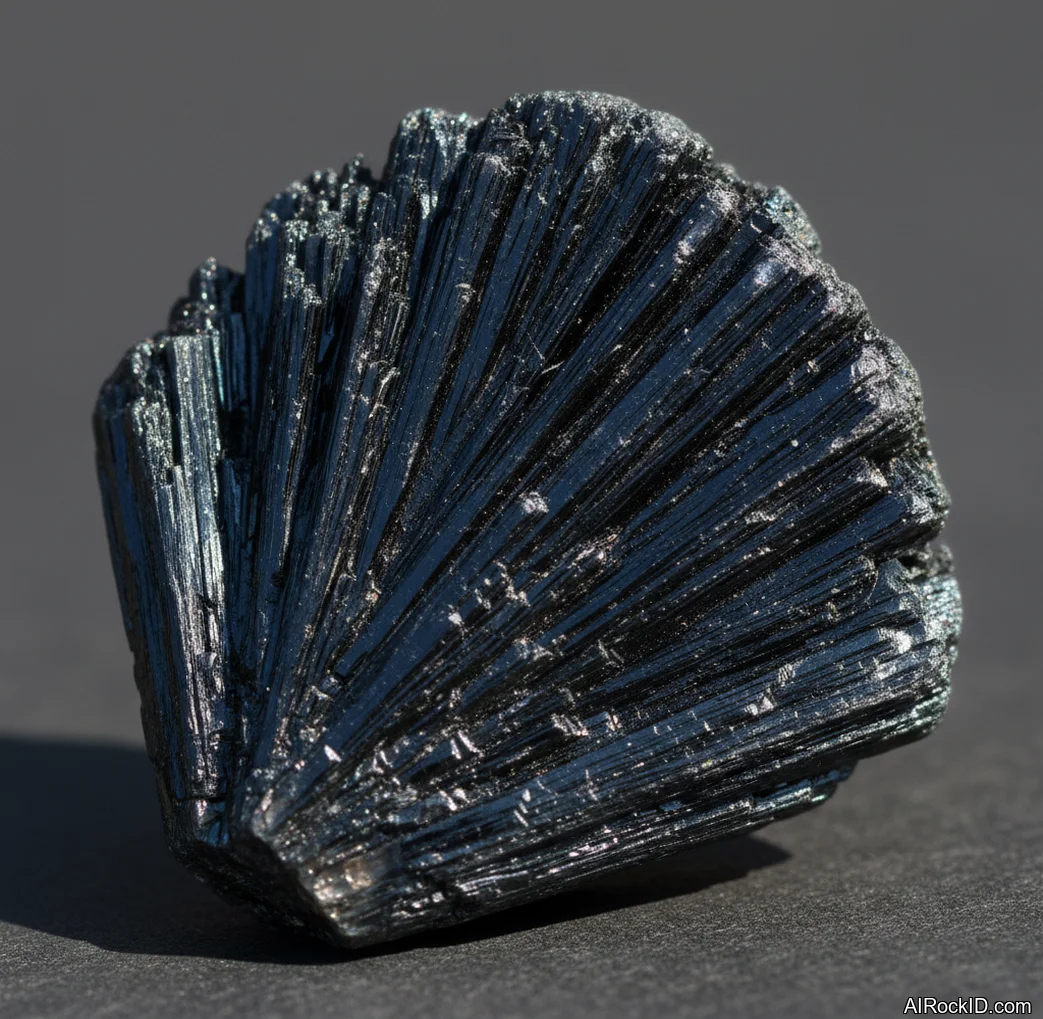
Black kyanite basically looks like a rough little fan, or like a mini broom. And if you get a really fibrous piece, it’ll shed tiny splinters. That scratchy, bristly texture is exactly why it works for me when my head feels cluttered, like I’ve got too many half-started tasks rattling around at once. It isn’t the kind of desk ornament you grab without thinking. It asks for a little respect when you pick it up. I’ve had pieces that actually snagged a microfiber cloth (which is saying something), and that’s when it really hits you how directional those fibers are, and how blade-like they can feel.
How to use: Use it as a reset tool between tasks: one minute of holding it, then physically clear your desk surface for the next task. Don’t pocket it in soft fabric you care about. Store it in its own small box so the edges don’t fray.
Black Mica

Black Mica

Black mica (biotite) is super flaky and layered, and if the piece is a bit loose you can actually pry up a paper-thin sheet with your fingernail (it even makes that soft, crunchy little crackle). It’s basically the layer-stone. And that lines up with how work really goes: your day is stacked in layers of attention, not one flawless, uninterrupted stretch. I reach for it when I’m trying to get something done in a noisy, chaotic room because it makes me feel less porous to whatever’s flying around me. Look, if you tilt it under a lamp, you’ll catch tiny reflective plates winking back like faint glitter, but it never feels flashy. Just… grounded.
How to use: Keep a chunk near your work lamp so the tiny reflective flecks are visible as a grounding cue. Don’t over-handle fragile pieces; the edges crumble and make a mess. If it sheds, tap it out over a trash can and wipe the desk.
Amethyst

Amethyst

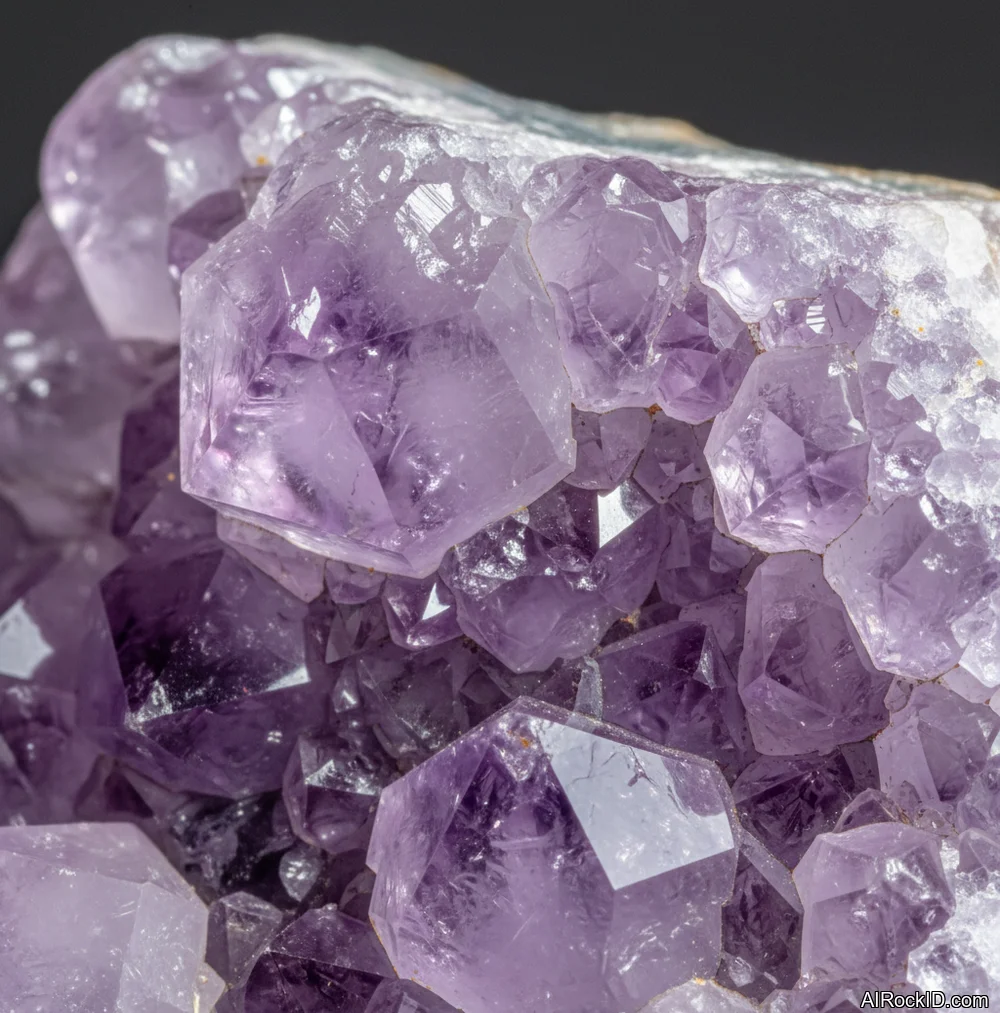
Uruguayan amethyst usually comes in darker, tighter crystals than a lot of the Brazilian stuff, and you really notice it when they’re side by side under the same lamp. The Uruguayan piece looks denser, like the color sinks in deeper (and the points often feel a bit more fine-grained when you run a finger over the face). For getting work done, I reach for amethyst when I want calm focus, the kind that helps with deep work instead of rapid-fire tasks. And it’s pretty solid as an “end of day” stone too, because wrapping things up cleanly matters just as much as getting started. But look, don’t expect it to fix your sleep if your caffeine’s out of control. What’s a crystal supposed to do against that?
How to use: Set a small cluster behind your screen so it’s in your peripheral vision during long sessions. If you’re prone to doom-scrolling at night, move it to your nightstand as a cue to shut down. Avoid leaving it in harsh sun if you notice your piece is fading.

Focus vs. motivation: pick stones for the problem you actually have

Most “productivity” problems aren’t really one problem. Some days you can’t even get going. Other days you light up ten tabs, start ten tasks, and somehow finish none of them. So I split my stones into two buckets on my own desk: focus stones and momentum stones.

Compared to amber or apatite, black onyx and amethyst feel quieter in your hand. They’re the ones I reach for when my brain’s already loud and I need fewer inputs, not more. Thing is, I can usually tell within about thirty seconds of holding a stone if it’s going to make me fidget, and that’s the wrong direction. But if I’m stuck staring at a blank page, a calmer stone can weirdly help me stay calm while I do nothing (and then eventually do something).

Pick up a stone and ask one blunt question: do I need to speed up or slow down? If you need to slow down, go heavier and darker, like black onyx, black mica, or aegirine. If you need to speed up, grab something that feels mentally bright like apatite or even a warm piece of amber. And keep the “wrong” bucket out of reach, so you’re not second-guessing yourself all day.

Desk placement that actually changes behavior

Where you put the stone matters more than which stone you pick. If it’s living in a drawer, it’s basically a collectible, not a tool. I’ve watched people buy a whole set and then never touch any of it because it’s lined up like desk decor behind the monitor, dust gathering in the little gaps.

The real test is friction. Put the stone somewhere it interrupts a bad habit by half a second. Black onyx by the mouse is great because you can’t miss it, and you’ll feel that cold, smooth weight the second your hand drifts. Amazonite near a notebook works because you reach for it during planning, usually right when you’re flipping a page or tapping the pen (you know the move). Aegirine and black kyanite should sit farther back, because you don’t want sharp or fibrous pieces where your forearm slides, especially if you’re the kind of person who drags their sleeve across the desk without thinking.

Try a two-zone setup. One stone in your “action” zone (keyboard, mouse, notebook, whatever you actually touch all day), and one in your “reset” zone, like a small dish off to the side. Touch the action stone only when you’re producing something. Touch the reset stone only when you’re stuck, anxious, or switching tasks. Sounds too small to matter, right? But it trains your hands. And once your hands learn it, your brain usually follows.

Timer pairing: crystals work better with a structure

Crystals don’t build structure. They piggyback on structure that’s already there. But if you match a stone with a timer, you end up with a repeatable loop your brain picks up scary fast.

Look, it sounds gimmicky at first. I get that. But a physical object paired with a clear start signal is straight-up classic habit design. I like grabbing apatite or amber at the start of a sprint because they feel like “go” stones in my hand, smooth and a little cool at first, then warming up as I hold them. Then I’ll switch to amethyst or black onyx when it’s time to stay in my lane and not get yanked into side quests. That swap is the cue. It says, okay, we’re done starting, now we’re executing.

So here’s a dead simple pattern: hold the stone for 10 seconds, say the output out loud, start the timer, then set the stone down where you can still see it (right by the keyboard works). When the timer ends, touch it again and write one line: what shipped, what didn’t, what’s next. Kind of boring, honestly. That’s why it works.

Buying tips: avoid the stuff that derails your setup

Most dealers aren’t out to scam you. But the supply chain’s a mess, and a lot of stuff gets labeled pretty loosely once it’s passed through a few hands.

Black onyx is the classic example. If it’s that perfectly even, ink-black color and it’s dirt cheap, it’s probably dyed. I’ve seen pieces where the polish looks great but the black is almost too “flat,” and if you catch a nick on an edge you can sometimes spot a lighter base underneath. Doesn’t make it useless for productivity or whatever you’re using it for, but you should know what you’re paying for.

Cheap “amber” is another one. A lot of it is resin or pressed material. Real amber feels warm and light in your hand, and it scratches way easier than people expect (like, a little too easy). So if a seller is calling it “indestructible,” yeah… walk away. Who says that about amber?

With aegirine and black kyanite, it’s less about fakes and more about how fragile they can be. Thing is, you want something that can sit on a desk and get bumped around without slowly turning into crumbs.

My practical rule is simple: pick stones you actually enjoy touching, and that can survive your real workday. And if you’re the kind of person who knocks over coffee mugs (be honest), skip the delicate blades. Go for tumbled onyx, amazonite, or a sturdy amethyst cluster.

How to Use These Crystals for Productivity

Pick a two-stone routine and actually stick with it for a week before you start piling on extras.

One “start” stone goes right where your hand already lands, like beside your mouse or smack on top of your notebook. Easy to reach. The other one, the “reset” stone, goes a little off to the side in a small dish. And yeah, that tiny bit of distance matters. Too close and you’ll end up absentmindedly fidgeting with it. Too far and it basically disappears from your brain.

For the start stone, I go for apatite or amber when I need momentum, and amazonite when I need decisiveness. You touch it, say the output out loud in one sentence, then start a timer. That’s it. Don’t sit there rubbing it the whole time (you know the move). If you catch yourself doing that, it’s usually a sign you’re anxious or dodging the work, so set the stone down and write the smallest next action. Small enough that you can’t argue with it.

For the reset stone, black onyx, amethyst, or black mica tend to work well because they feel grounding and they don’t yank your attention around with a bunch of sparkle. Use this one only when you’re switching tasks or when you’re coming back from a distraction. Touch it. Take five slow breaths. Then write a one-line “return ticket,” like: “Open the doc and finish section 2.” So simple it’s almost annoying. But that one line saves more time than any crystal ever will.

Common Mistakes to Avoid

The biggest screw-up is using crystals like they’re a replacement for an actual workflow. If your to-do list is a swamp and your calendar’s pure chaos, a stone isn’t going to save you. But it can help you stick to a promise you already made, like staying with one task until the timer buzzes (that little jolt of sound that snaps you back).

Another easy mess: people buy a dozen pieces and keep swapping them out all day. So it turns into procrastination wearing a self-improvement costume. I’ve literally watched someone spend more time “tuning” their desk, sliding stones into neat little rows and wiping fingerprints off a shiny surface, than writing the report. Keep it tight. Pick two stones, maybe three, and stick with them for a month. See how you actually react, then decide what you still need.

And watch the fidget trap. Some stones feel so good in your hand that they turn into a toy instead of a tool, especially polished onyx and amazonite (they’ve got that smooth, glassy finish that makes you want to rub your thumb over it nonstop). If you notice that happening, move the stone farther away and only touch it at the start and end of a work block. Why tempt yourself?

Important: Crystals won’t treat ADHD, anxiety disorders, depression, or burnout. They’re not a substitute for therapy, medication, sleep, or basic time management. And they definitely won’t magically fix a job that’s structurally overloaded, where you’re interrupted every five minutes and expected to respond instantly (I’ve lived that inbox life, and it’s brutal). So think of them more like cues and anchors. They can help you nudge your attention back and stick with routines, but they can’t manufacture energy you don’t have or do the work for you. Full stop.

Identify Any Crystal Instantly

Snap a photo and get properties, value, care instructions, and healing meanings in seconds.

Frequently Asked Questions

What are the best crystals for productivity and focus?
Black onyx, amethyst, aegirine, and black mica are commonly used for steadier focus and fewer distractions. Apatite and amber are commonly used for motivation and getting started.
Which crystal is best for getting started when procrastinating?
Apatite and amber are associated with motivation and mental “go” energy. They are commonly used at the start of a timed work sprint.
Which crystal is best for deep work and calm concentration?
Amethyst is associated with calmer concentration and reduced mental noise. Black onyx is associated with steadiness and follow-through.
How should I place crystals on my desk for productivity?
A common approach is one stone in the action zone near the mouse or notebook and one in a reset zone in a small dish to the side. Placement works best when the stone interrupts distraction habits and is easy to reach.
How many crystals should I use for productivity?
Two to three crystals is a practical range for a consistent routine. Using too many can increase decision fatigue and distraction.
Can crystals replace a planner, timer, or task system?
Crystals do not replace planning tools or time management systems. They are used as cues that support routines you already follow.
Is black onyx often dyed, and does that matter?
A large portion of black onyx on the market is dyed chalcedony. Dye does not prevent use as a tactile cue, but it affects value and labeling accuracy.
Are there fragile productivity crystals I should be careful with?
Aegirine crystals and black kyanite can be brittle or fibrous and can chip or shed. They are best kept in a stable spot rather than carried in a pocket.
How often should I cleanse or clean productivity crystals?
Physical cleaning is typically done as needed using a soft cloth or gentle dusting. Water and chemicals are not suitable for all materials, especially amber and delicate crystal clusters.
What is a simple crystal routine for a work session?
A basic routine is to hold a stone for 10 seconds, state the single output for the session, start a timer, and then put the stone down. At the end, touch it again and write one line describing the next action.
The information provided is for educational and spiritual exploration purposes. Crystals are not a substitute for professional medical, psychological, or financial advice.