Citrine
What Is Citrine?
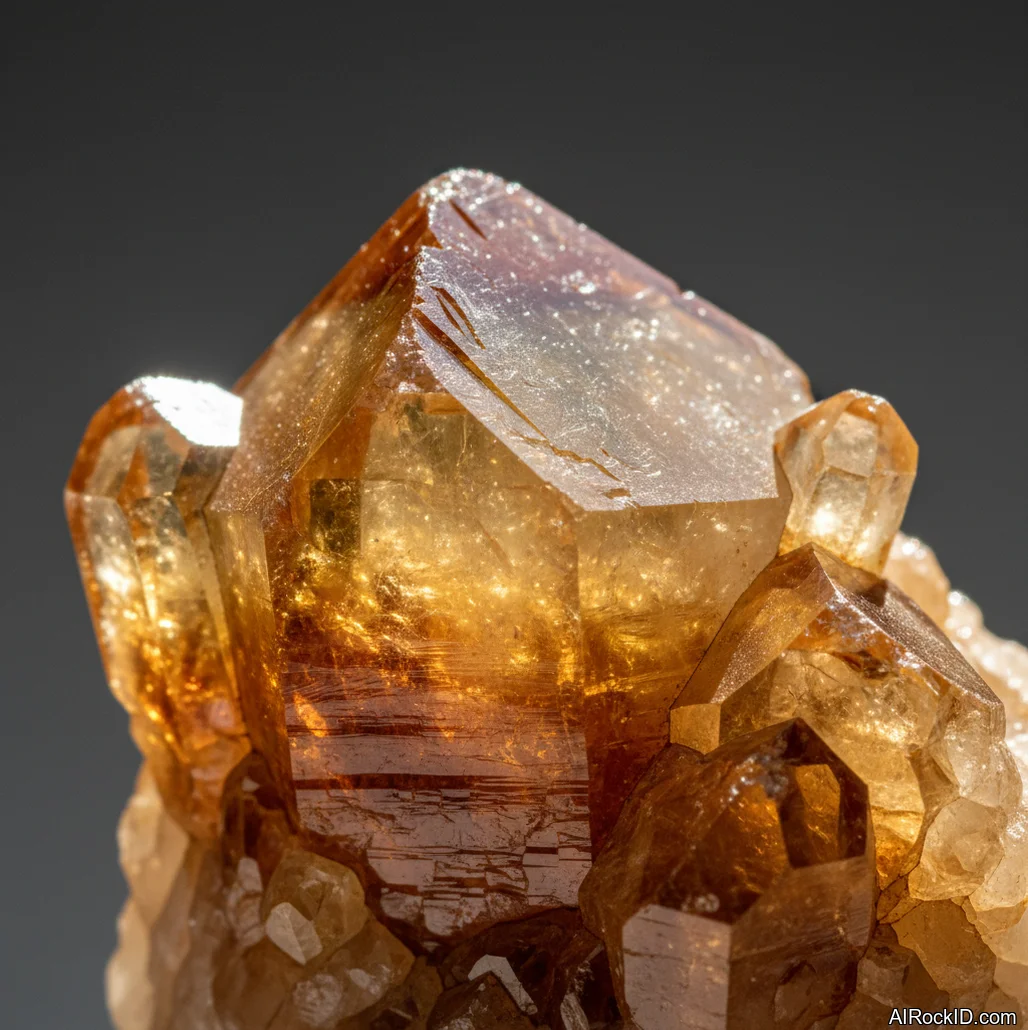
Citrine is the yellow-to-orange variety of quartz, and it gets that color mostly from iron-related defects in the crystal lattice.
Pick up a piece and you’ll notice it right away: that familiar quartz heft. Not heavy like garnet. Just solid, with that cool, almost slick feel in your palm (especially if it’s been sitting on a glass counter). Good natural citrine tends to land in a soft, slightly smoky honey shade, and if you tilt it under a desk lamp you can often see the color drifting a bit along the growth zones instead of sitting perfectly even. That little unevenness is a tell.
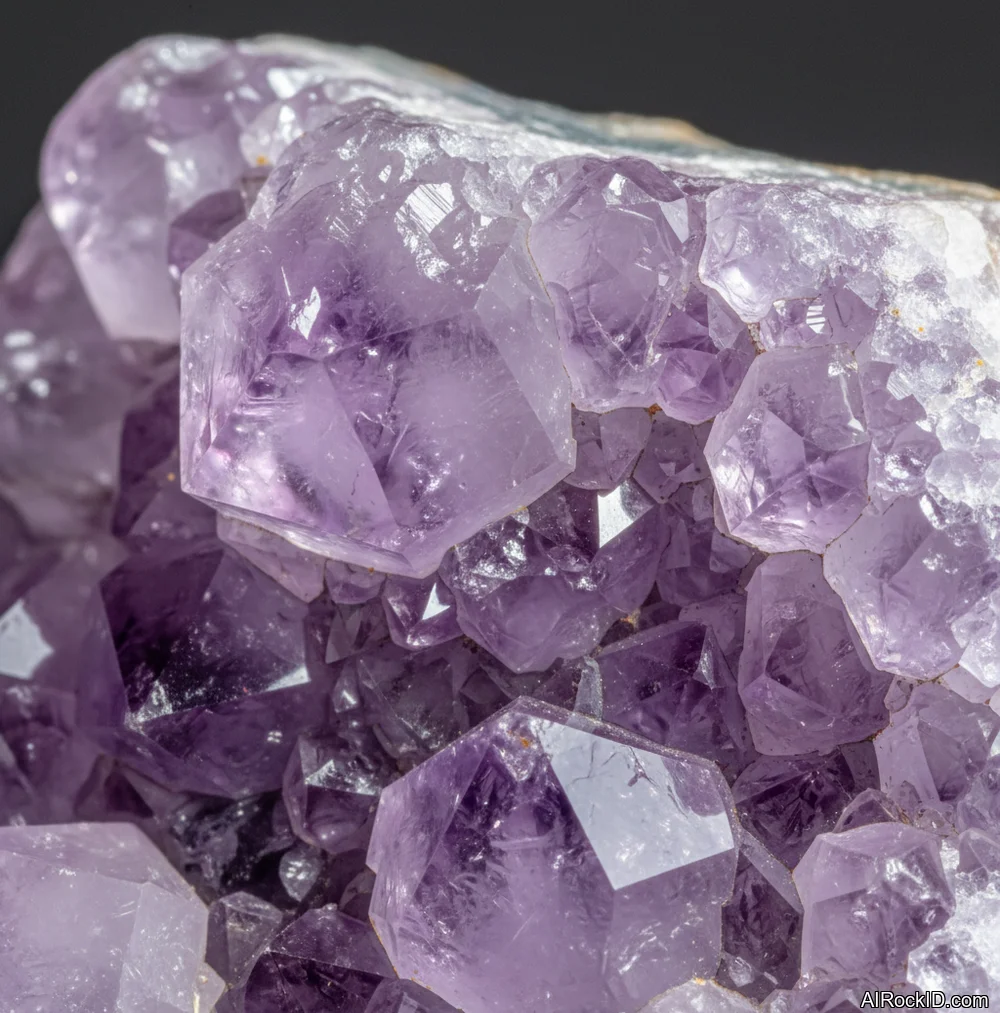
At first glance, a lot of “citrine” on display is actually heat-treated amethyst or smoky quartz. And once you’ve handled enough of it, the giveaway jumps out: that too-orange, too-uniform look you can spot from a few feet away. Real citrine can be bright, sure. But the nicest pieces still have some depth to them, not that flat burnt-sugar color that just screams oven.
Origin & History
“Citrine” comes from the French word *citron*, meaning lemon. And the word was being used for yellow quartz way back before anyone had lab gear to pick fights about color centers or trace iron. In older jewelry and mineral books, people tossed the term around pretty loosely (sometimes almost like a catch-all), which is a big reason the market still feels messy now.
Quartz has been described, then re-described, for centuries. But citrine as a specifically named variety starts showing up in European gem and trade writing in the 1700s and 1800s, right when yellow stones were easier to get and folks got better about separating them from topaz. So yeah, you’ll still run into vintage pieces labeled “topaz” that are clearly quartz once you look closely at the wear and that refractive look.
Where Is Citrine Found?
Most commercial citrine comes out of Brazil and Madagascar, with smaller occurrences in places like Russia and the USA. Alpine cleft material exists, but you don’t see it in quantity at everyday shows.
Formation
Citrine forms the same basic way most quartz does. Silica-rich fluids push through fractures and little open voids in the rock, then quartz starts growing as things cool off and the chemistry changes. You’ll run into it in hydrothermal veins, in pockets, and sometimes as crystals lining cavities (the kind where the points stick into open space and you can feel that gritty druse if you run a finger over it).
That yellow color comes from iron plus radiation-related color centers, and the exact look shifts from one locality to the next. But, collector-to-collector, here’s the truth: real natural citrine is a lot less common than sellers claim, because heating purple quartz can turn it yellowish, and that stuff pours into the market.
How to Identify Citrine
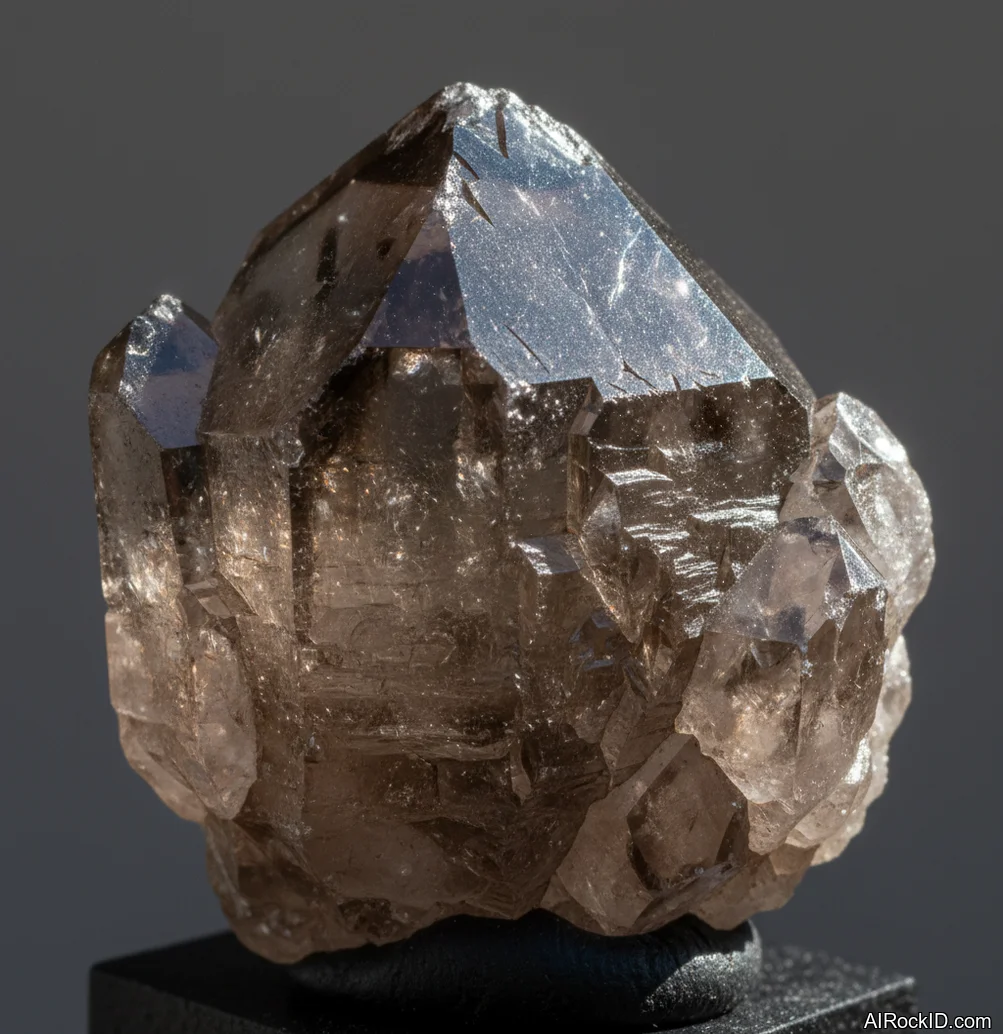
Color: Natural citrine runs pale straw-yellow through honey and light amber, sometimes with a faint smoky undertone. Heat-treated material often goes strong orange to brownish orange and can look a bit flat or patchy at the base.
Luster: Citrine has a glassy (vitreous) luster on fresh faces and a slick shine when polished.
Look closely at the color zoning. If it’s a cluster with bright orange tips and milky white bases, that’s a common heat-treated amethyst look. The real test is a loupe: natural pieces often show subtle growth lines and more believable, gradual color, while treated pieces can look like the color was turned up all at once.
Properties of Citrine
Physical Properties
| Crystal System | Trigonal |
| Hardness (Mohs) | 7 (Hard (6-7.5)) |
| Density | 2.65 g/cm3 |
| Luster | Vitreous |
| Diaphaneity | Transparent to translucent |
| Fracture | Conchoidal |
| Streak | White |
| Magnetism | Non-magnetic |
| Colors | Pale yellow, Straw yellow, Honey yellow, Golden yellow, Light orange, Amber, Yellow-brown |
Chemical Properties
| Classification | Silicates |
| Formula | SiO2 |
| Elements | Si, O |
| Common Impurities | Fe, Al, Li |
Optical Properties
| Refractive Index | 1.544–1.553 |
| Birefringence | 0.009 |
| Pleochroism | Weak |
| Optical Character | Uniaxial |
Citrine Health & Safety
Citrine is a type of quartz, and it’s generally safe to handle and keep on display. For most people, basic common-sense care is plenty.
Safety Tips
If you’re going to grind or sand it, put on safety glasses and a respirator so you’re not breathing in silica dust (that stuff hangs in the air longer than you’d think). And keep it wet while you work, because wet methods knock the dust way down.
Citrine Value & Price
Price Range
Rough/Tumbled: $5 - $120 per piece
Cut/Polished: $2 - $25 per carat
Clean, natural color with good clarity and a crisp crystal shape will bump the price up fast. Thing is, citrine pricing gets messy because of disclosure. Heat-treated quartz costs less, but it’s often sitting right next to natural material and sold the same way, without clear labeling.
Durability
Durable — Scratch resistance: Excellent, Toughness: Good
It’s stable in normal conditions, but long sun exposure can slowly fade some lighter yellow tones.
How to Care for Citrine
Use & Storage
Store citrine like you would any quartz: separate from softer stones so it doesn’t scratch them, and keep sharp points from knocking around. If you’ve got a cluster, I like a little foam pad under it so the tips don’t chip on a hard shelf.
Cleaning
1) Rinse with lukewarm water and a drop of mild soap. 2) Use a soft toothbrush to gently scrub dirt from crevices. 3) Rinse well and air-dry or pat dry with a microfiber cloth.
Cleanse & Charge
If you do energetic cleaning, smoke, sound, or a quick rinse works fine. I avoid long sunbaths for pale pieces because I’ve seen light yellows wash out on a bright windowsill over time.
Placement
Put it where you’ll actually see it, like a desk or entry shelf, but keep it out of harsh direct sun if the color is light. A north-facing room is usually safe and still looks great under indoor lighting.
Caution
Skip sudden temperature swings, and don’t reach for harsh acids or bleach. And keep anything with sharp points somewhere it won’t get bumped off a shelf, because quartz can still chip if it hits the floor (even though it’s hard).
Works Well With
Citrine Meaning & Healing Properties
Compared to a lot of the stones people reach for when they want to “calm down,” citrine is the one that usually gets pulled out for drive and mood. In my own little pile, it’s the piece I grab when I’m slogging through paperwork, staring at a screen too long, and I just want something sunny on the desk that doesn’t feel like it’s trying to lull me to sleep. It sits there catching whatever light’s in the room, and the color actually does wake my brain up a bit.
But look, I’m not going to sell you a fairy tale. A chunk of quartz isn’t going to replace sleep, therapy, meds, or dealing with whatever’s actually causing the stress in the first place. So what can it do? It can be a physical cue. You glance at that warm yellow, remember what you meant to do, and you straighten up for a minute (shoulders back, unclench your jaw, breathe).
Most dealers will talk “abundance,” and yeah, that’s the vibe people stick on yellow stones. I’ve found it works best when it’s tied to something real and practical, like leaving it by the cash drawer, next to your planner, or in that spot you avoid looking at when money stuff gets tense. And if you’re allergic to hype, just treat it like a reminder object and see if the habit actually sticks. Simple as that.
Identify Any Crystal Instantly
Snap a photo and get properties, value, care instructions, and healing meanings in seconds.