Aegirine
What Is Aegirine?
Aegirine is a sodium iron silicate pyroxene mineral with the formula NaFeSi2O6.
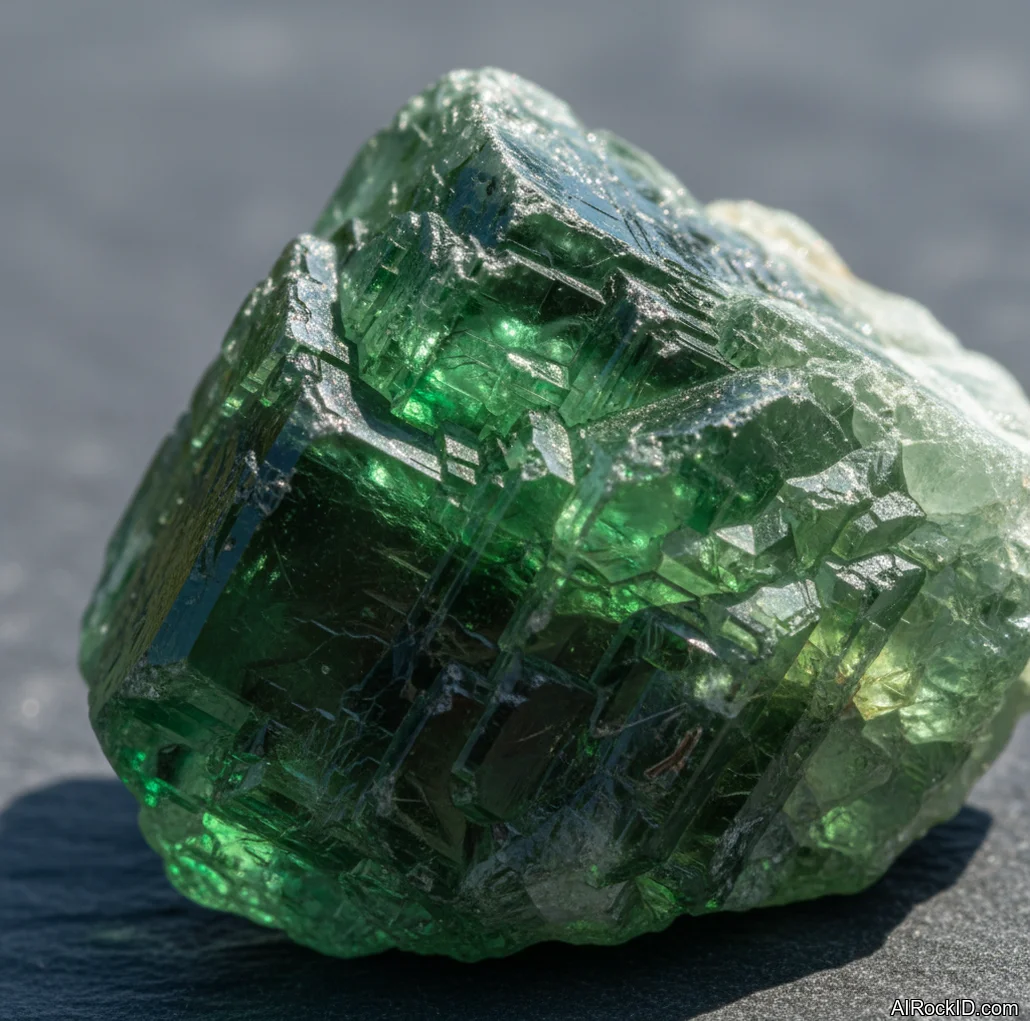
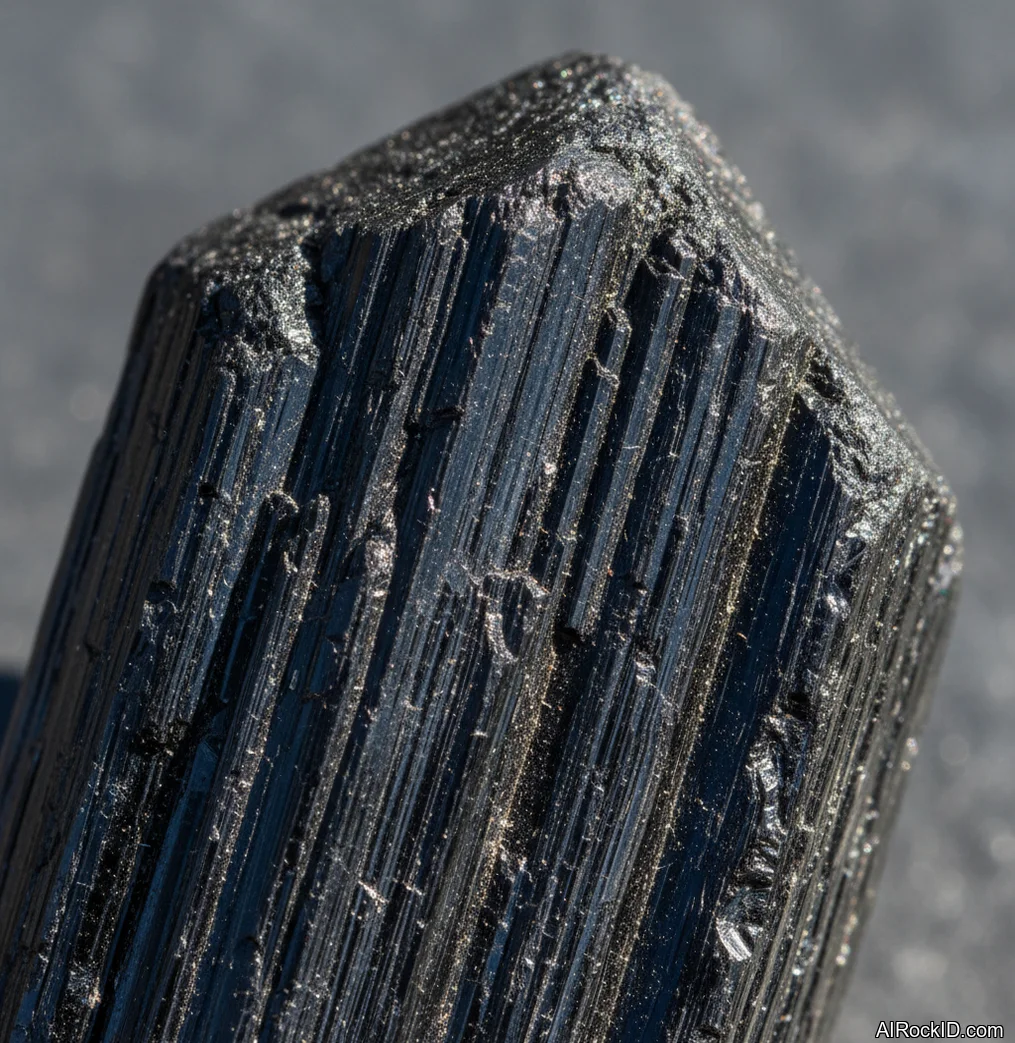
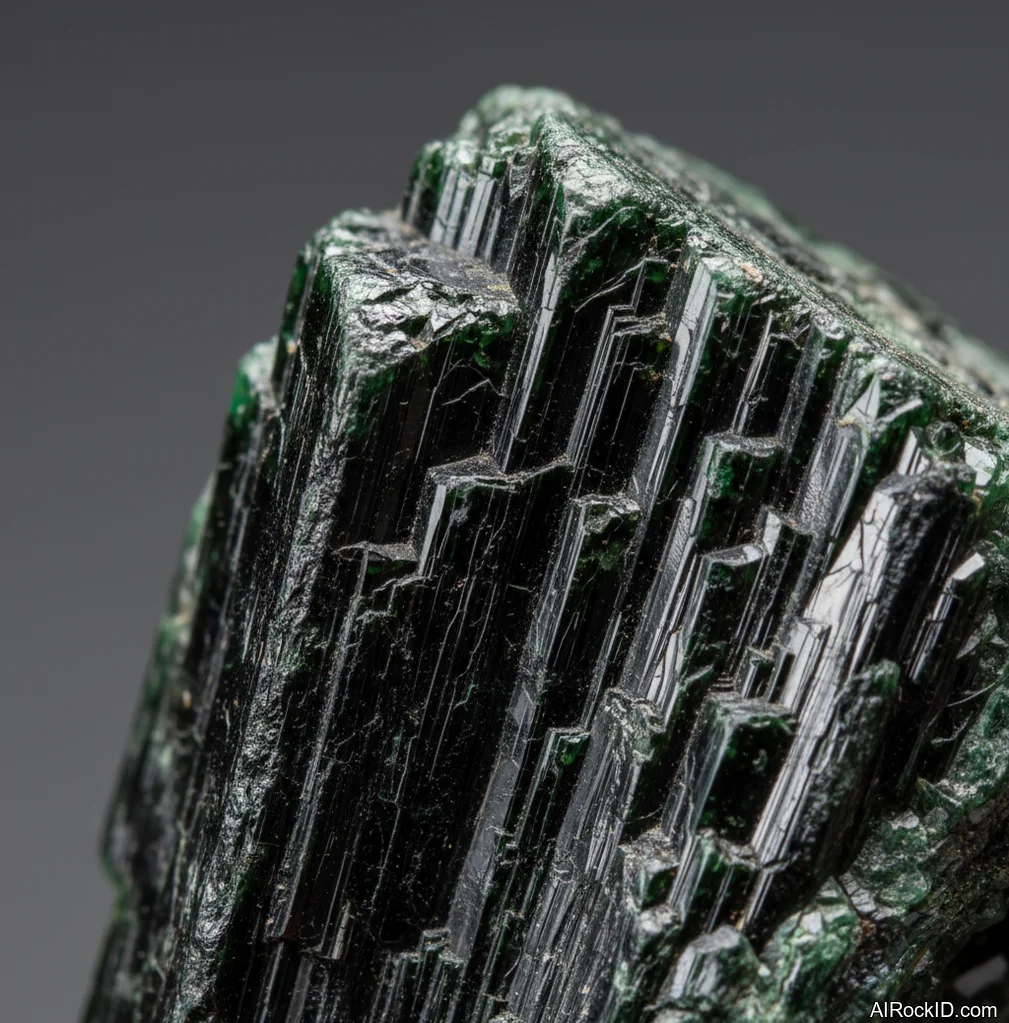
Grab a decent crystal and you notice it right away. It feels blade-like in your fingers. Even in a cluster, the prisms are long and sharp-edged, the kind that look like they could slice paper if you’re not paying attention. And when you turn it under a desk lamp, that surface luster jumps from inky black to bottle-green in a second. Most of the pieces I’ve handled are opaque, but the really thin tips can go green right at the edge (almost like a tiny glow line).
People often confuse it with black tourmaline or hornblende at first glance. But aegirine usually looks cleaner, more glassy on the crystal faces. It also tends to grow as straight, striated prisms, not the more rounded, furrowed habit you see on tourmaline. The best cabinet specimens have crisp terminations that flash like little mirrors when the light hits them. Thing is, it’s not the toughest mineral in the box, so the tips chip easier than you’d expect.
Origin & History
Aegirine first got described in 1835, by the Swedish mineralogist Jöns Jacob Berzelius. Its name comes from Ægir, the Norse sea god, since the original material was from the Låven (Låven island) area near Brevik, Norway.
Thing is, older books will sometimes call it “acmite,” and that name still pops up on vintage labels or those old dealer cards with the yellowed paper and a bit of glue stain on the back. But in modern mineral talk, “aegirine” is what you’ll hear most, especially when people mean the darker green to black crystals collectors chase.
Where Is Aegirine Found?
It turns up where alkaline igneous rocks are doing their thing, plus some metamorphic settings. Classic collector localities include Norway’s larvikite area and Mont Saint-Hilaire in Canada.
Formation
Most aegirine turns up in silica-undersaturated, sodium-rich igneous settings. Nepheline syenites, alkaline granites, pegmatites, the kind of rocks with chemistry that makes “normal” granite look boring. When the melt’s loaded with sodium and iron, aegirine is one of the pyroxenes that can drop out as long, skinny prisms.
Look at the matrix on a lot of specimens and you’ll catch it sitting right next to feldspars, nepheline, sodalite, eudialyte, plus other alkaline-suite minerals. Sometimes you can even spot it threaded through the host rock as those dark green to near-black needles, especially when it’s wedged between lighter grains (it really jumps out). And yes, it can form during metamorphism too, mainly where sodium metasomatism has messed with the rock’s chemistry. But if you’re talking about the crisp, showy crystals people actually chase, those are usually igneous-grown and nicely formed.
How to Identify Aegirine
Color: Most aegirine is black to very dark green; thin edges can show a clearer green when backlit. Some pieces look almost brown-black until you hit them with strong light.
Luster: Vitreous, often with bright reflections on clean crystal faces.
Pick up the piece and tilt it slowly under a single light source. Aegirine will often flash green along edges even when the body looks black. If you scratch it with a steel nail, it usually won’t gouge deeply, but it can show a faint mark because it sits around Mohs 5.5 to 6. The real test is the crystal habit: straight, prismatic “blades” with fine lengthwise striations are a common giveaway compared to chunkier black amphiboles.
Properties of Aegirine
Physical Properties
| Crystal System | Monoclinic |
| Hardness (Mohs) | 5.5-6 (Medium (4-6)) |
| Density | 3.50-3.60 g/cm3 |
| Luster | Vitreous |
| Diaphaneity | Transparent to translucent |
| Fracture | Uneven |
| Streak | white to pale greenish-white |
| Magnetism | Non-magnetic |
| Colors | black, dark green, greenish-black, brownish-black |
Chemical Properties
| Classification | Silicates |
| Formula | NaFeSi2O6 |
| Elements | Na, Fe, Si, O |
| Common Impurities | Mn, Ti, Ca, Mg, Al |
Optical Properties
| Refractive Index | 1.757-1.806 |
| Birefringence | 0.049 |
| Pleochroism | Strong |
| Optical Character | Biaxial |
Aegirine Health & Safety
Handling it is fine. But if you start cutting, grinding, or going at it hard with a brush, it can kick up that super fine dust you really don’t want in your lungs. So treat it like any other silicate mineral when you’re working with it.
Safety Tips
If you’re cutting or cleaning with power tools, don’t do it dry. Use water to keep the dust down, make sure there’s real ventilation (like a fan actually moving air, not just a cracked window), and wear a proper respirator that seals to your face. For everyday cleaning, skip the wire brush. Go easy instead.
Aegirine Value & Price
Price Range
Rough/Tumbled: $10 - $250 per specimen
Cut/Polished: $20 - $150 per carat
Price can jump all over the place depending on where it came from, how sharp the crystals are, and if the terminations are still intact. The stuff that sells is the clean, bright, needle-like crystals sitting on a contrasting matrix, the kind you can tilt under a lamp and watch the points catch. But chipped-up shards? Those just don’t pull the same money.
Durability
Moderate — Scratch resistance: Fair, Toughness: Fair
It’s generally stable in normal room conditions, but edges and terminations chip if it rattles around in a box.
How to Care for Aegirine
Use & Storage
Store it in a perky box or wrap it, especially if the crystals are long and thin. Those tips love to snap when they knock against harder stuff like quartz.
Cleaning
1) Rinse briefly in lukewarm water to remove loose dust. 2) Use a soft toothbrush with a drop of mild dish soap, then rinse well. 3) Pat dry and let it air-dry fully before putting it back in a closed box.
Cleanse & Charge
If you do energy-style care, stick to simple methods like smoke, sound, or a quick rinse and dry. I avoid salt soaks since they can leave crust in cracks on matrix.
Placement
Put it somewhere it won’t get bumped, like a cabinet shelf. Under a single spotlight it looks great because the faces throw back sharp flashes.
Caution
Skip ultrasonic cleaners and strong acids. They can chew up the matrix minerals and even wiggle loose those fragile little crystals (especially the ones that already feel a bit shaky if you tap the piece). And don’t toss it in a tumbler unless you’re genuinely fine with the sharp edges getting rounded off.
Works Well With
Aegirine Meaning & Healing Properties
Most people who lean metaphysical treat aegirine as a “clear-out” stone. I get why. In the hand it feels cool and dense, almost blunt about it, like a little chunk of “enough already.”
I’ve carried a small blade of it in my pocket and it reminds me of smoky quartz, only sharper. Not in a spooky way. More like it’s nudging you to quit babysitting junk thoughts.
If you stare at the color for a second, the grounding association makes sense. That green-black looks earthy, but it’s not soft or sleepy. In my own routine I reach for it when I need to lock onto one task and not spiral, and I don’t keep it on the nightstand because it can feel a bit too switched on for sleep (at least for me).
But look, reality check. This isn’t medical care. It’s not a replacement for therapy, meds, decent sleep, or just eating something. If you like using stones as reminders, aegirine is a good one for boundaries and mental clutter, and it sits nicely with calmer pieces when you want to take the edge off.
Identify Any Crystal Instantly
Snap a photo and get properties, value, care instructions, and healing meanings in seconds.