Amethyst
What Is Amethyst?
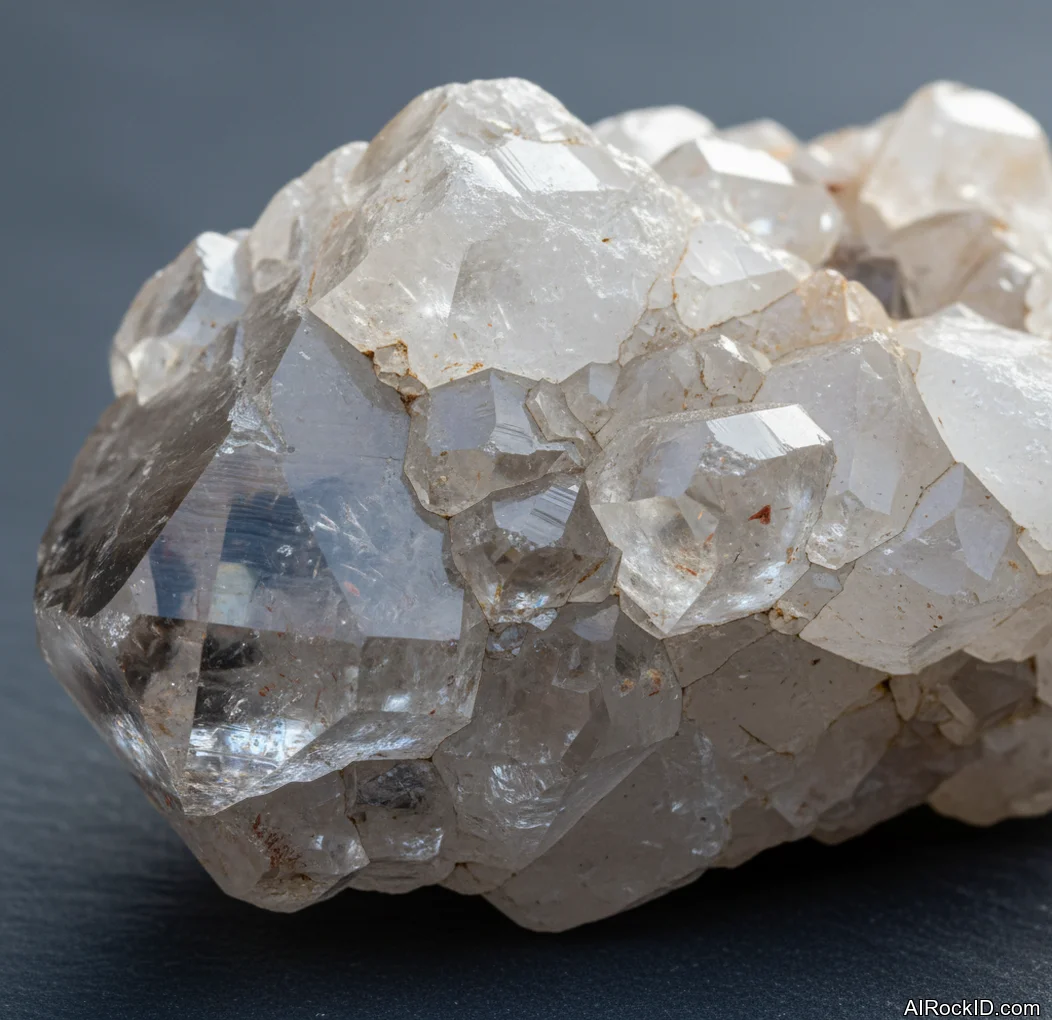
Amethyst is just quartz, only purple, and that color comes mostly from iron impurities plus natural irradiation. Grab a cluster and you’ll notice the usual quartz weight right away. It’s cool when you first touch it, and some of those points are sharp enough to catch on a sleeve if you get careless.
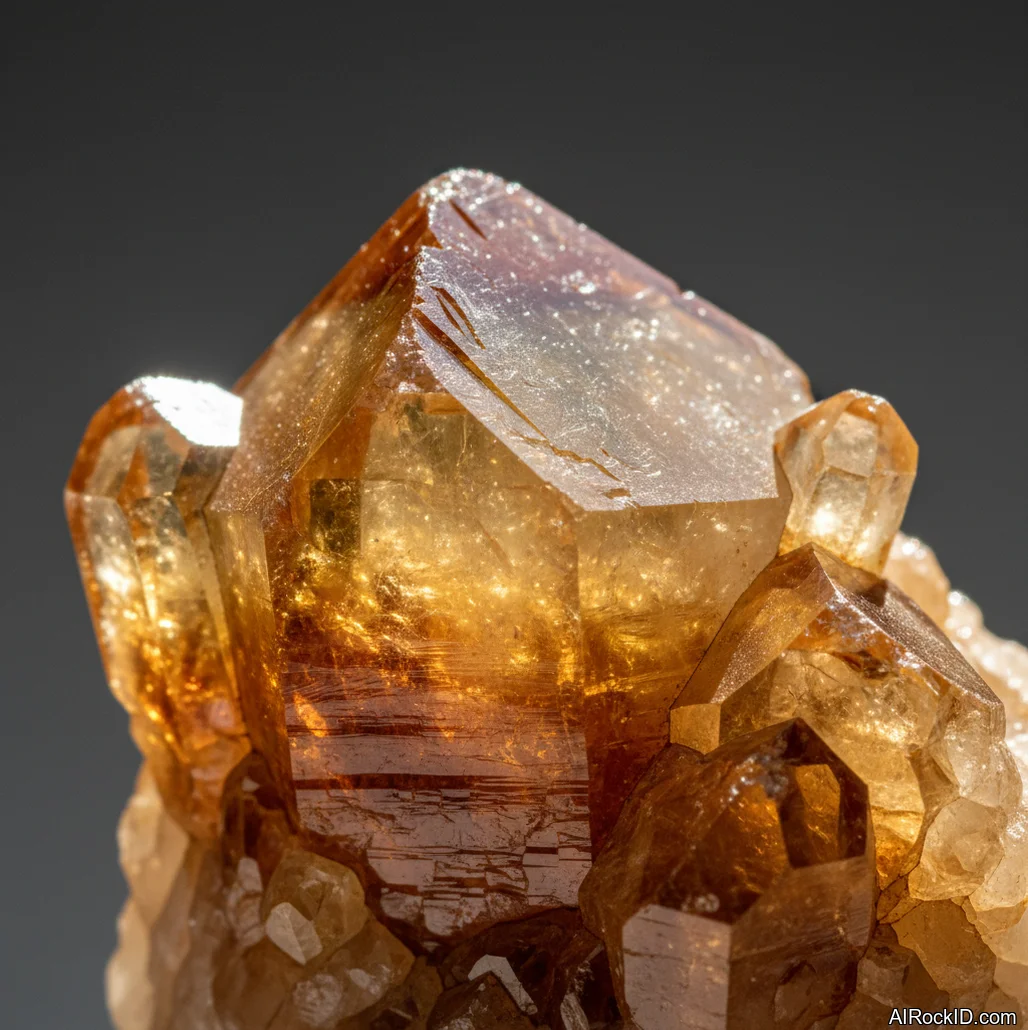
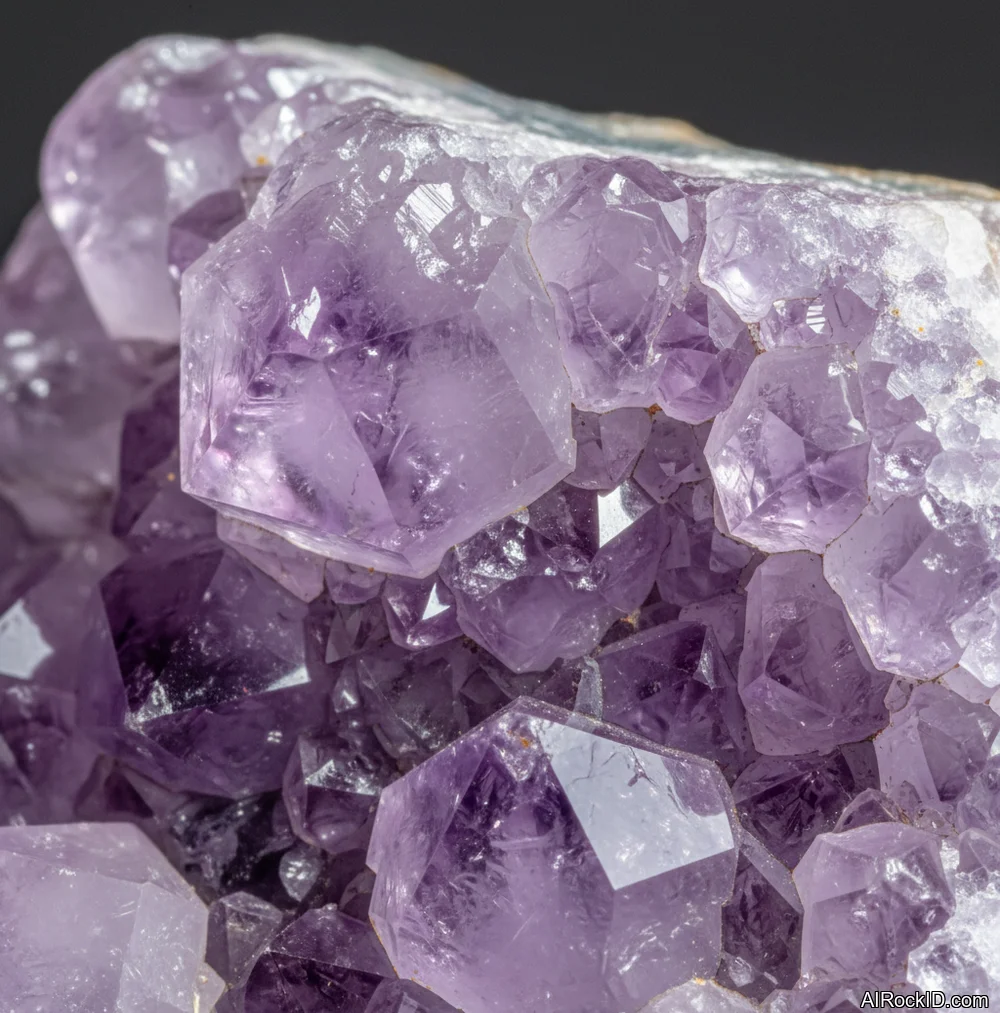
At a quick glance it can look like “yep, purple,” but the better pieces have zoning. Look down the length of a point and you’ll often spot a lighter base with a deeper violet cap. Sometimes you’ll even see faint chevrons, like little stacked V shapes inside the crystal. Under warm indoor bulbs, a few stones kick off a red or wine-ish flash, but take that same piece into daylight and it can read noticeably bluer.
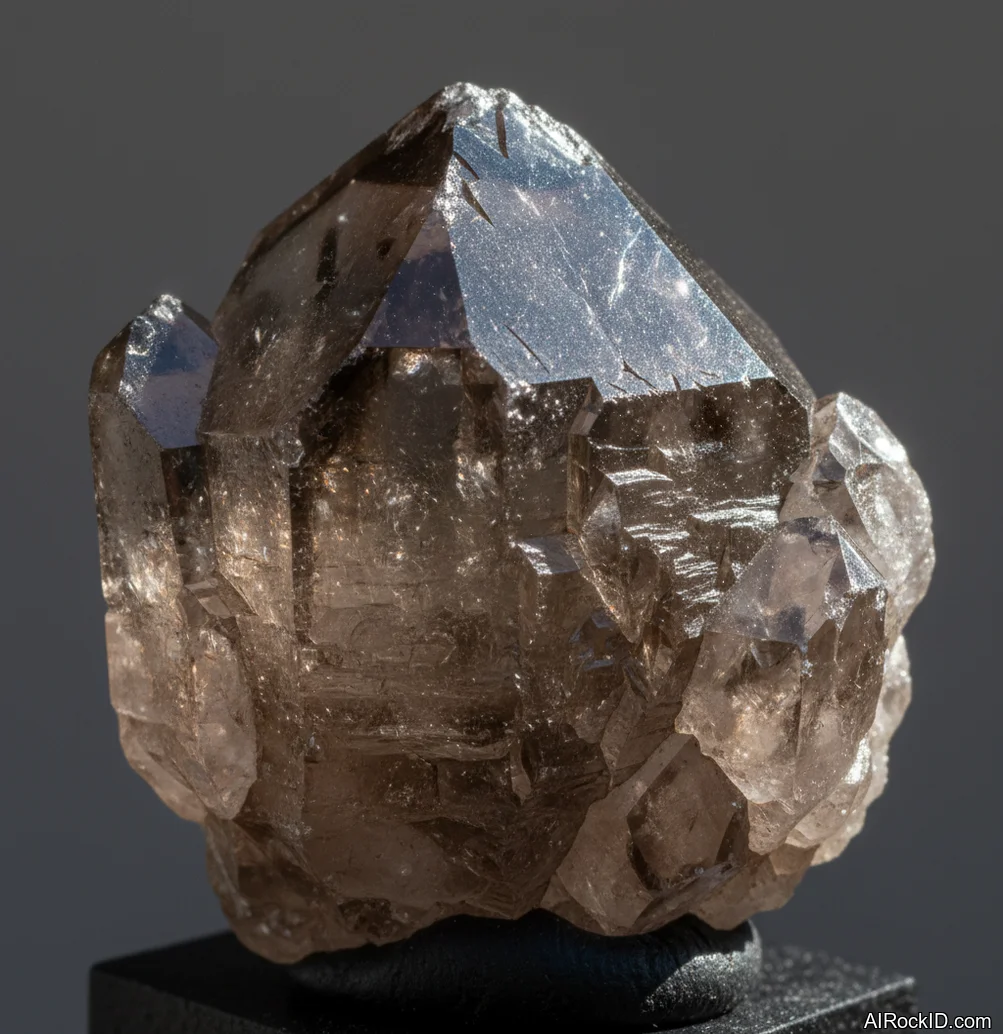
Most people’s first amethyst is a geode chunk from Brazil or Uruguay, cut flat on the back with a saw so it sits nicely. Those are solid, no question, but that’s not the whole picture. Natural single points with clean faces and intact terminations cost more, and honestly you can feel the difference when you run your thumb along the edges (carefully) and you’re not hitting a bunch of chipped tips.
Origin & History
Amethyst gets its name from the Greek *amethystos*, which people usually translate as “not intoxicated.” That’s why you keep bumping into the old story about wine cups and staying sober. But honestly, as a collector, I think the name survived because it’s a word people can actually say out loud, remember, and pass along without mangling it.
On the mineralogy side, amethyst is just quartz. Quartz was recognized and used way back in antiquity, long before anyone was writing down formal species descriptions or arguing over classifications in print. Quartz itself got formally described as a mineral species in the early days of modern mineralogy, and ever since then amethyst has been treated as a color variety, not a separate species. And yeah, that lines up with what you see when you’ve actually got a piece in hand and put it under the scope: it behaves like quartz, just purple.
Where Is Amethyst Found?
Most of the big geodes on the market come from southern Brazil and Uruguay. Finer single crystals and specialty material show up from places like Zambia, Four Peaks in Arizona, and classic Alpine pockets.
Formation
Raw pieces from basalt country usually tell the story if you know what you’re looking at. Gas bubbles in lava flows leave open cavities, and later silica-rich fluids seep in and line those hollows with quartz crystals. If there’s iron around and the conditions are right, some of that quartz grows in as amethyst, and you’ll often notice the darker color sitting up toward the tips.
But basalt cavities aren’t the only place it shows up. You’ll also see amethyst from hydrothermal veins and pocket deposits, including Alpine-style clefts where quartz grows in open cracks under pressure. The crystal habit shifts with the environment, which sounds abstract until you’ve actually held the stuff. Big cathedral geodes with thousands of points are awkward and heavy, and the inside feels a little gritty if you run a fingertip across it (careful, it’ll snag you). And then there’s the other end of the spectrum: a single, lustrous, razor-faced crystal pulled from a tight pocket. Totally different in the hand. Different vibe, too.
How to Identify Amethyst
Color: Amethyst ranges from pale lilac to deep violet, sometimes with reddish-purple flashes and visible color zoning. The strongest color is often at the termination, not evenly spread through the whole crystal.
Luster: Vitreous, like broken glass on a fresh face.
If you scratch it with a steel knife, it shouldn’t bite easily, and it will scratch glass without drama. The real test is consistency with quartz: conchoidal chips, no cleavage planes, and that cool, glassy feel that stays cool longer than most dyed or resin fakes in your palm. But watch the market: dyed quartz and purple glass show up a lot, and the color looks too even, too “painted,” especially in drilled beads.
Properties of Amethyst
Physical Properties
| Crystal System | Trigonal |
| Hardness (Mohs) | 7 (Hard (6-7.5)) |
| Density | 2.65 g/cm3 |
| Luster | Vitreous |
| Diaphaneity | Transparent to translucent |
| Fracture | Conchoidal |
| Streak | White |
| Magnetism | Non-magnetic |
| Colors | Light lavender, Lilac, Purple, Violet, Reddish purple |
Chemical Properties
| Classification | Silicates |
| Formula | SiO2 |
| Elements | Si, O |
| Common Impurities | Fe, Al, Mn |
Optical Properties
| Refractive Index | 1.544-1.553 |
| Birefringence | 0.009 |
| Pleochroism | Weak |
| Optical Character | Uniaxial |
Amethyst Health & Safety
Amethyst is usually safe to handle and keep on display. Thing is, the only real “risk” is just physical stuff: those sharp points and little chipped edges on a cluster can nick you if you run your finger along them.
Safety Tips
If you’re going to trim it or grind it, put on eye protection and a proper dust mask. And keep the work wet the whole time, so you don’t end up breathing silica dust.
Amethyst Value & Price
Price Range
Rough/Tumbled: $5 - $150 per piece
Cut/Polished: $2 - $30 per carat
Most of the price comes down to how saturated the color is, how clean the stone looks, and whether the terminations are still crisp and unchipped (those little points tell on you fast). Uruguay usually pulls higher numbers when it’s that inky, tight-crystal geode material you can feel is dense in your hand. But the big, pale Brazilian cathedrals? They’re priced for sheer size.
Durability
Durable — Scratch resistance: Excellent, Toughness: Good
It’s stable in normal conditions, but prolonged strong sunlight can fade the purple over time.
How to Care for Amethyst
Use & Storage
Store it where the points won’t rub other stones, because quartz will scratch a lot of stuff. And keep deep-color pieces out of a sunny window if you don’t want the purple to wash out.
Cleaning
1) Rinse with lukewarm water to remove dust. 2) Use a soft toothbrush with a drop of mild soap to get between points, then rinse well. 3) Pat dry and let it air-dry fully before putting it back on a shelf.
Cleanse & Charge
If you do energy-style cleansing, a quick rinse and a night on a windowsill with indirect moonlight is the low-risk route. Skip long sun baths if you care about color.
Placement
On a bookshelf or bedside table is fine, but set clusters on something stable so they don’t tip and chip points. If it’s a geode half, I like a little rubber or felt under it so it doesn’t skate on wood.
Caution
Skip harsh household cleaners, and don’t leave it sitting in strong sunlight for a long stretch. And please don’t hit geodes with boiling water or any sudden temperature swing, because those tiny internal fractures can let go and you’ll hear that awful, heartbreaking little crack.
Works Well With
Amethyst Meaning & Healing Properties
Reach for amethyst when you want a quiet stone. That’s the feel I get from it, which is why there’s a chunky chunk sitting by my desk instead of something that screams for attention. The points still grab the light, sure, but the purple kind of drinks it in at the same time, so it reads calmer than clear quartz.
In modern crystal culture, amethyst usually gets tied to relaxation, sleep routines, mental clarity, that whole lane. I’m not calling it medicine. It’s more like ritual and basic environment design: a cool, heavy piece in your palm, that steady purple to rest your eyes on, and a little habit trigger that nudges your brain into slowing down.
But there’s a real-world catch people skip past. A lot of “citrine” out there is just heat-treated amethyst, and once you’ve picked up a few in person you start noticing the baked orange-brown, the oddly even color, and that chalky white base that gives it away. If you actually care what you’re paying for, ask the seller straight up if it’s been heated. And don’t let the label do your thinking for you, ok?
Identify Any Crystal Instantly
Snap a photo and get properties, value, care instructions, and healing meanings in seconds.