Amber
What Is Amber?
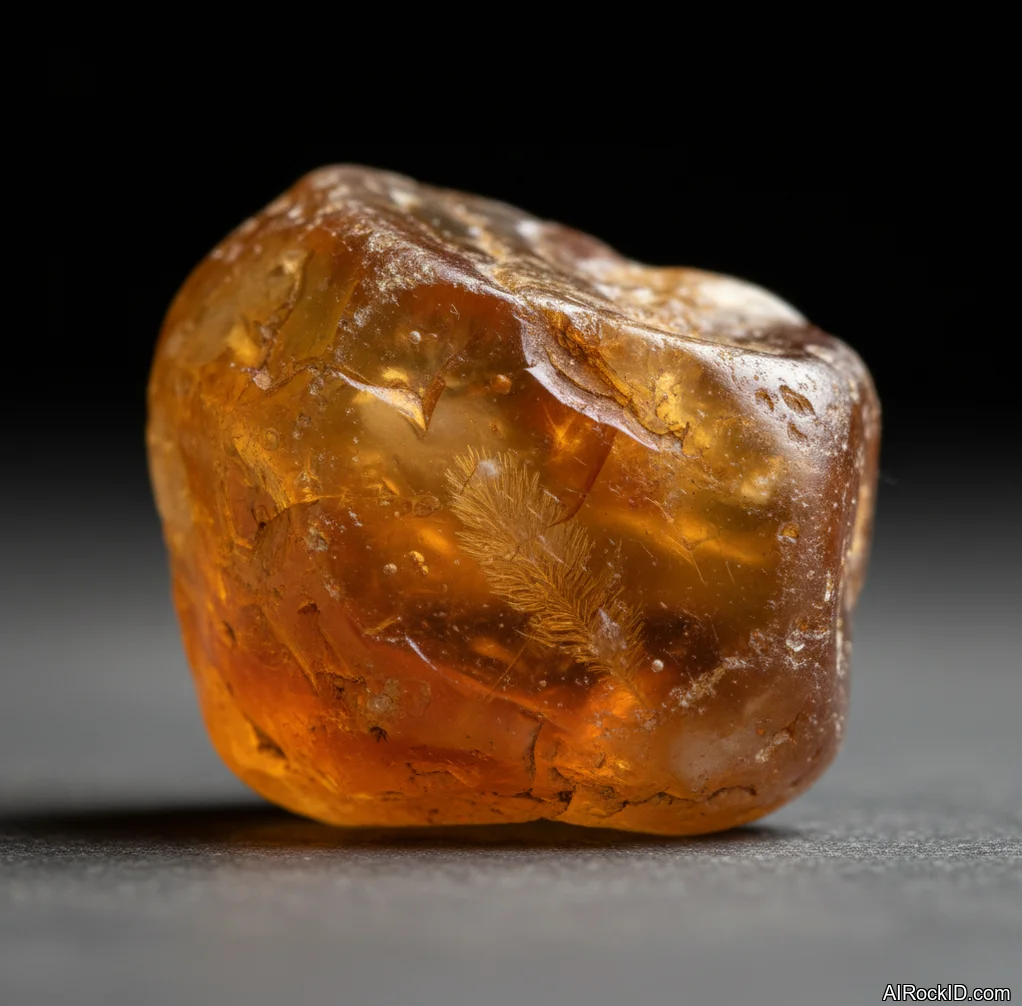
Amber is fossilized tree resin that hardened and polymerized over millions of years.
Pick up a chunk and the first thing you notice is how weirdly light it feels for its size. It doesn’t hit your palm like quartz or agate, where the heft instantly tells your brain “stone.” Amber’s more like holding a warm little snack (not that you should eat it), and when it’s well polished it gets this soft, resin glow that makes even plain honey-colored material look like it’s lit from the inside.
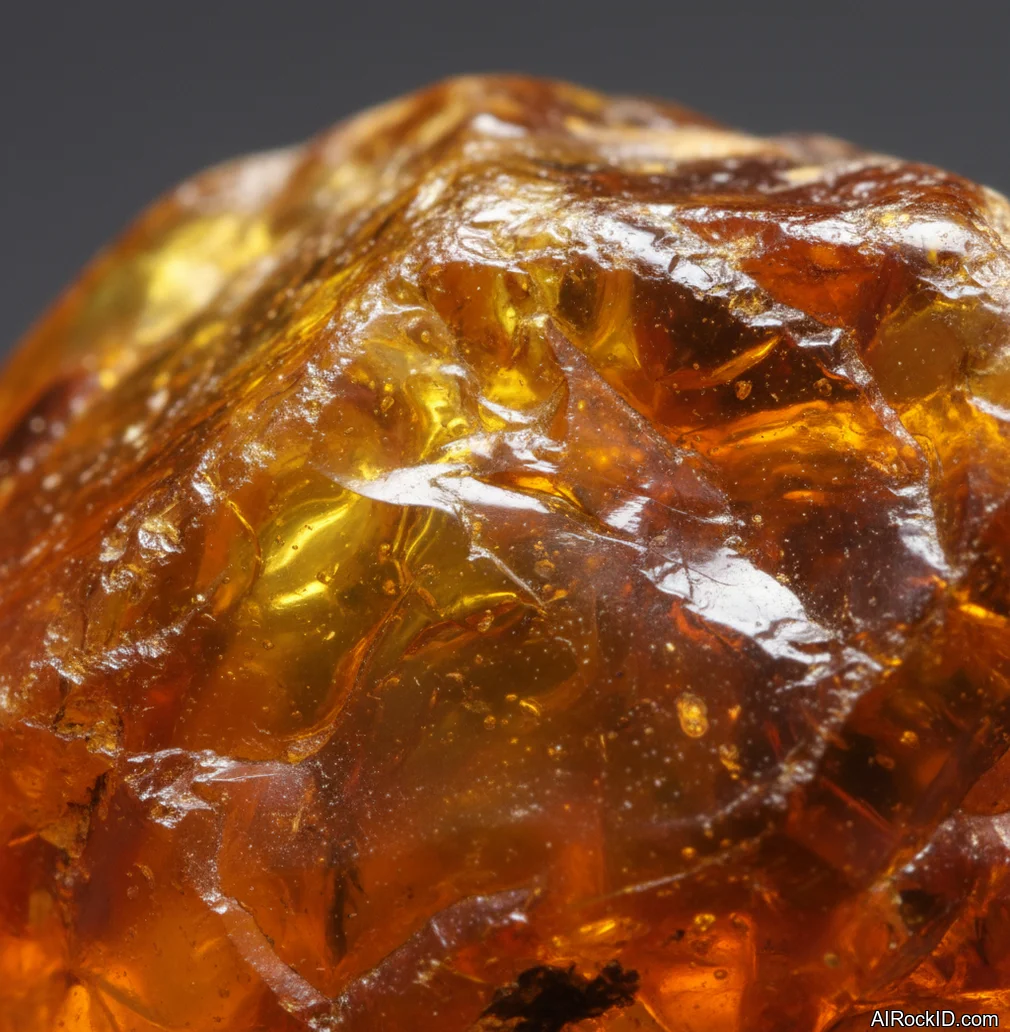
Look, get your face close and you’ll see why collectors can be so picky. Some pieces are crystal-clear, like a drop of old whiskey. Others go cloudy, swirly, or they’re full of tiny bubbles you can catch when you tilt it under a lamp. And inclusions are the whole rabbit hole, right? Plant bits are fairly common, but insect inclusions are a different market entirely, and that price jump can be brutal.
Origin & History
“Amber” comes to us by way of the Arabic *anbar*. Funny thing is, that word originally meant ambergris, not the fossil resin people think of now, and only later did medieval Europe start using it for resin. In older trade books you’ll also bump into “succinum” or “succinite,” which trace back to the Latin word for sap (sticky stuff, the kind that strings when you pull it).
People were carving and polishing amber long before anyone had “modern mineralogy” as a concept. Baltic pieces show up in ancient jewelry and along old trade routes, and it’s the kind of material that sits with one foot in geology and the other in archaeology. It’s not a crystal. But it still ends up in basically every collector’s flat because it tells a story.
Where Is Amber Found?
Most classic amber on the market is Baltic (including material mined around Kaliningrad). Clear blue-to-green fluorescent pieces are famously associated with the Dominican Republic, and Mexico and Myanmar also produce important deposits.
Formation
Resin is basically sticky tree sap, the goo that oozes out when a trunk gets nicked or split. If a blob of it plops onto the forest floor and gets buried quickly, it can dodge the usual rot. With time, it sheds its volatiles, polymerizes, and turns tougher, then ends up trapped in sediments that might only show up again once erosion chews through the layers or someone digs it out by mining.
But the setting is a big deal. You tend to see the really large deposits around coasts and deltas, because resin can get washed into sediment, buried, and sealed up before it breaks down. So that’s why “Baltic amber” comes up all the time. It’s linked to Eocene-age sediments in the Baltic region, and the sheer industrial scale of that deposit supplies a huge share of the world market.
How to Identify Amber
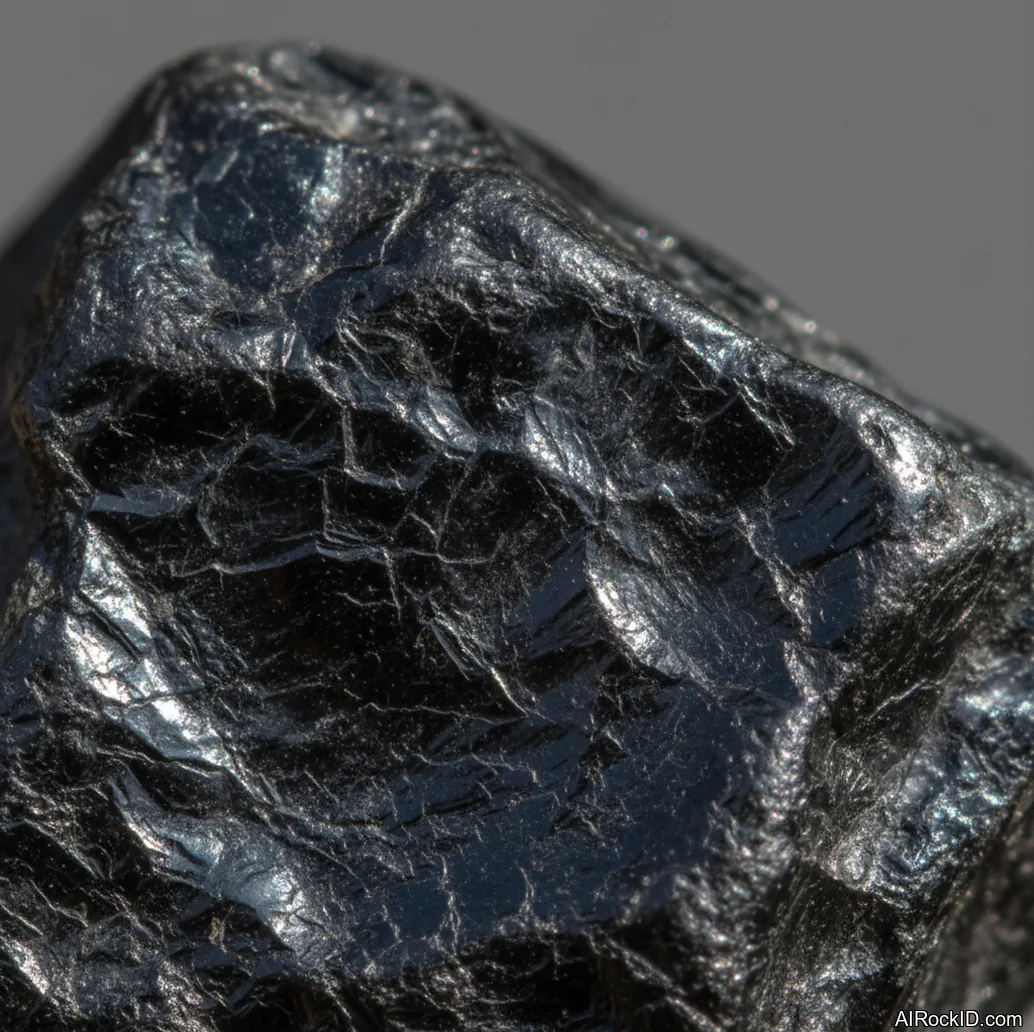
Color: Amber runs from pale lemon and honey to deep cognac, cherry-brown, and nearly black. It can also look milky or “butterscotch” when it’s full of tiny bubbles or micro-inclusions.
Luster: Polished amber has a resinous luster that looks softer than glassy quartz and less mirror-like than obsidian.
The real test is how it behaves in your hand. Real amber feels very light, and it warms up fast against your skin instead of staying cool like most stones. If you scratch it with a steel pin in an inconspicuous spot, it should shave a little and smell faintly piney or resin-like. Plastic fakes often smell like chemicals. And if you’ve handled enough, you start noticing the “too perfect” look in molded pieces: identical bubbles, identical swirls, zero randomness.
Properties of Amber
Physical Properties
| Crystal System | Amorphous |
| Hardness (Mohs) | 2-2.5 (Soft (2-4)) |
| Density | 1.05-1.10 g/cm3 |
| Luster | Resinous |
| Diaphaneity | Transparent to translucent |
| Fracture | Conchoidal |
| Streak | white |
| Magnetism | Non-magnetic |
| Colors | yellow, honey, gold, orange, cognac brown, reddish brown, white, black, greenish |
Chemical Properties
| Classification | Organic (fossil resin) |
| Formula | Variable organic polymers (often approximated as C10H16O) |
| Elements | C, H, O |
| Common Impurities | S, organic inclusions, mineral dust, plant debris |
Optical Properties
| Refractive Index | 1.54-1.55 |
| Birefringence | None |
| Pleochroism | None |
| Optical Character | Isotropic |
Amber Health & Safety
Normal handling is safe. But the stuff’s pretty soft, and it nicks fast, so the real “risk” is sharp tools or tossing it in a rough pocket with keys and all that. And if you try the heat test, don’t breathe in the fumes.
Safety Tips
Don’t do hot-needle tests on finished pieces. And if you’re going to sand it, at least use basic dust control, because that fine powder gets everywhere and sticks to your hands. Keep it away from solvents, perfume, and high heat too.
Amber Value & Price
Price Range
Rough/Tumbled: $5 - $50 per gram (common rough to nice polished); $100+ per gram for high-grade clarity or interesting inclusions
Cut/Polished: $2 - $25 per carat (cabochons, common qualities); $50+ per carat for premium clarity or special color
Most of the time, price comes down to clarity, size, and color. But inclusions can blow all of that up in a hurry. Provenance counts too, and you really see that with Dominican material or any piece that has a documented insect inclusion.
Durability
Fragile — Scratch resistance: Poor, Toughness: Fair
Amber scratches easily and can craze, darken, or become brittle with heat, UV exposure, or harsh chemicals.
How to Care for Amber
Use & Storage
Store amber by itself or in a soft pouch so it doesn’t get scratched by quartz, metal, or even other jewelry. And keep it out of sunny windowsills, because the color can shift over time.
Cleaning
1) Rinse quickly in lukewarm water. 2) Wipe with a soft microfiber cloth and a tiny bit of mild soap if needed. 3) Dry right away and buff gently; do not use ultrasonic or steam cleaners.
Cleanse & Charge
If you do energetic cleaning, keep it simple: smoke cleanse or a quick sound cleanse works without stressing the material. I wouldn’t bury amber in salt, and I don’t leave it baking in sun.
Placement
Wear it where it won’t bang into stuff, like a pendant rather than a ring. On a shelf, give it shade and a soft base so it doesn’t roll and chip.
Caution
Skip heat, alcohol, acetone, essential oils, and harsh cleaners. Thing is, amber’s pretty soft (Mohs 2–2.5), and I’ve seen even a slightly gritty cloth leave those tiny, hairline scratches that show up the second the light hits it.
Works Well With
Amber Meaning & Healing Properties
Next to most “sparkly” stones, amber just feels… heavier in meaning, even though it’s literally light in your hand. It began as tree resin, and I think people pick up on that right away. It reads as warm and comforting, like the inside of a well-worn leather bag or a smooth piece of wood you’ve handled a thousand times.
Thing is, if you grab a piece of amber when you’re stressed, you’ll get why people treat it like a worry stone. It heats up fast from your skin. It’s light. And when you rub it with your thumb, there’s this soft little drag to it, not that glassy slick feel polished agate has. I’ve passed amber across the counter to customers who swear their shoulders drop a notch the second they start rolling it between their fingers, and I buy the tactile side of that even if you take the spiritual talk out of it.
But I’m always clear about one thing in the shop: amber isn’t medicine. If someone’s dealing with pain, anxiety, or sleep issues, crystals can sit inside a routine, not replace the whole plan. What amber does well, in plain practical terms, is cue your brain with a few simple signals: warm color, soft feel, organic origin, that quick warmth on your palm. So yeah, it’s a small anchor you can keep in a pocket, and sometimes that’s enough to get your breathing back for a minute.
Identify Any Crystal Instantly
Snap a photo and get properties, value, care instructions, and healing meanings in seconds.