Arfvedsonite
What Is Arfvedsonite?
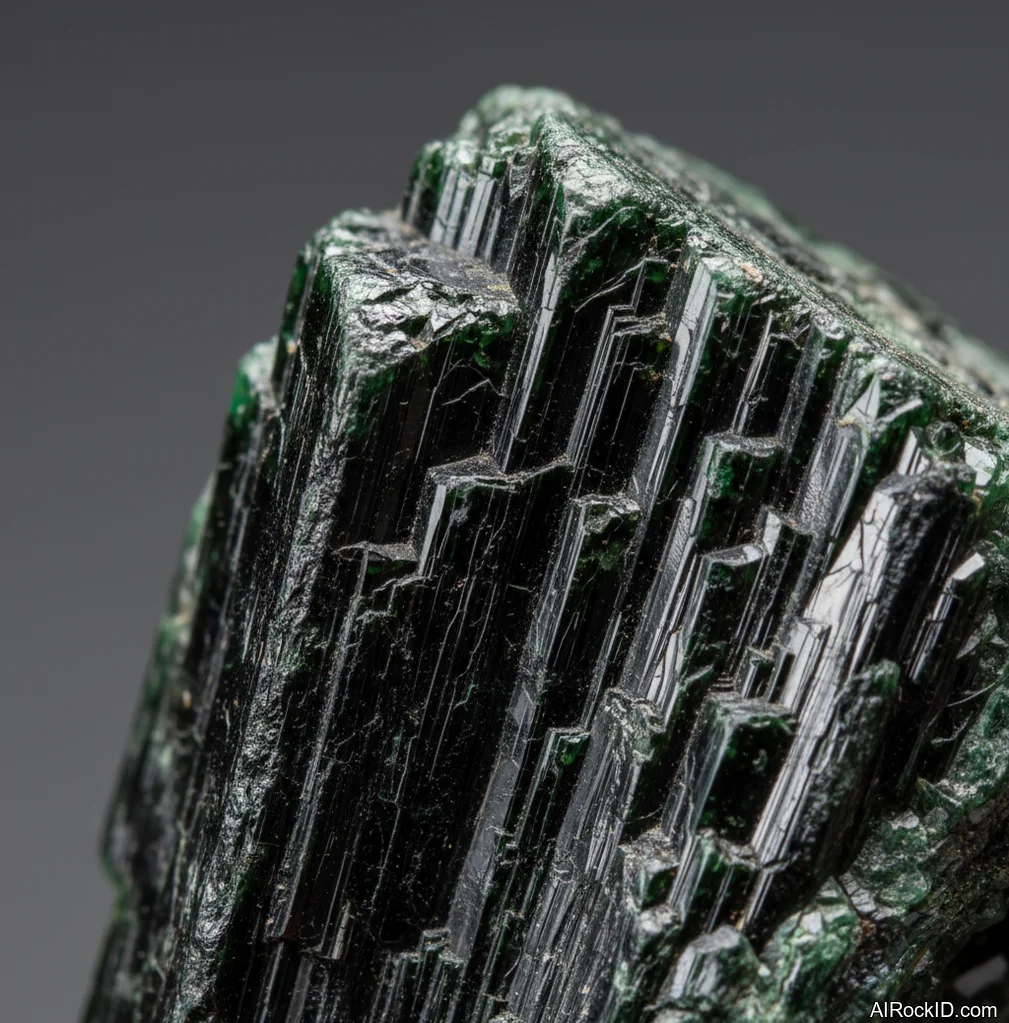
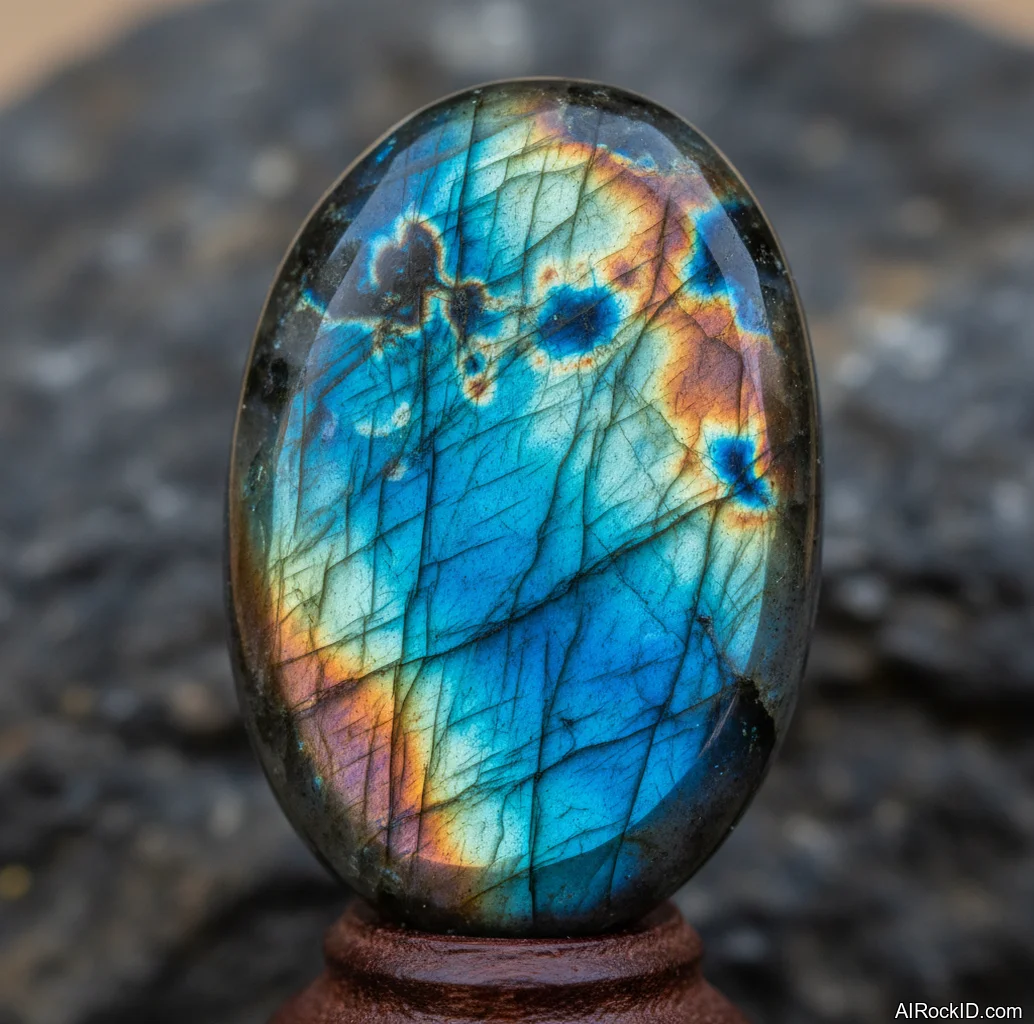
Arfvedsonite’s a sodium-rich amphibole mineral. Most of the time it looks blue-black to greenish black, and once it’s polished you’ll often see this bright blue chatoyant flash pop out.
Pick up a palm stone and the first thing you clock is the heft. It feels weirdly heavy for its size, and the face stays cool against your fingers even if it’s been sitting under warm shop lights for hours. Straight on, it can pass for just plain black rock. But tip it a little and that blue sheen skates across in bands, like slick satin trapped under a thin layer of glass.
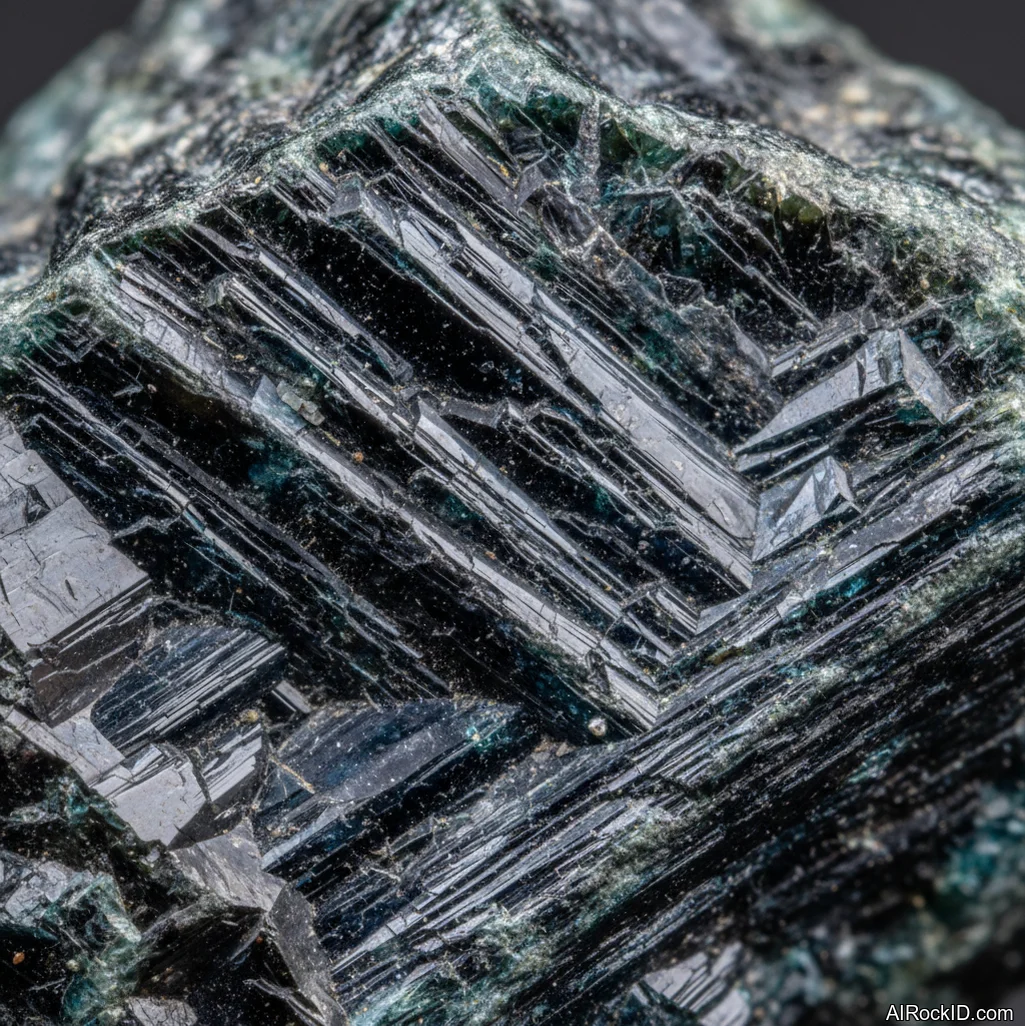
Thing is, most of what gets sold as arfvedsonite in shops is already polished. Raw pieces are out there, but they’re usually blocky, kind of fibrous, and honestly not much to look at until you catch a cleavage face at the right angle. That’s really the whole trick. The flash is directional, so how the cutter lines it up matters a ton, and two stones from the same lot can end up looking totally different in your hand.
Origin & History
In 1823, arfvedsonite got its first proper description from Jöns Jakob Berzelius, the Swedish chemist who more or less laid the groundwork for modern mineral chemistry. He named it after Johan August Arfwedson, the same Arfwedson who discovered lithium.
And yeah, the name messes with people because the spellings don’t match. In mineral references it’s “arfvedsonite,” but the guy it’s honoring is Arfwedson. So you’ll spot both versions online, and some sellers lean on that mix-up to relabel similar-looking material.
Where Is Arfvedsonite Found?
It turns up in alkaline igneous complexes and related pegmatites, with Greenland and the Kola Peninsula being classic sources for well-studied material.
Formation
Arfvedsonite pretty much sticks to alkaline rocks. You’ll run into it in nepheline syenite, peralkaline granites, and those odd pegmatites that come along with them. High sodium, plenty of volatiles, plus a grab bag of trace elements. That’s its turf.
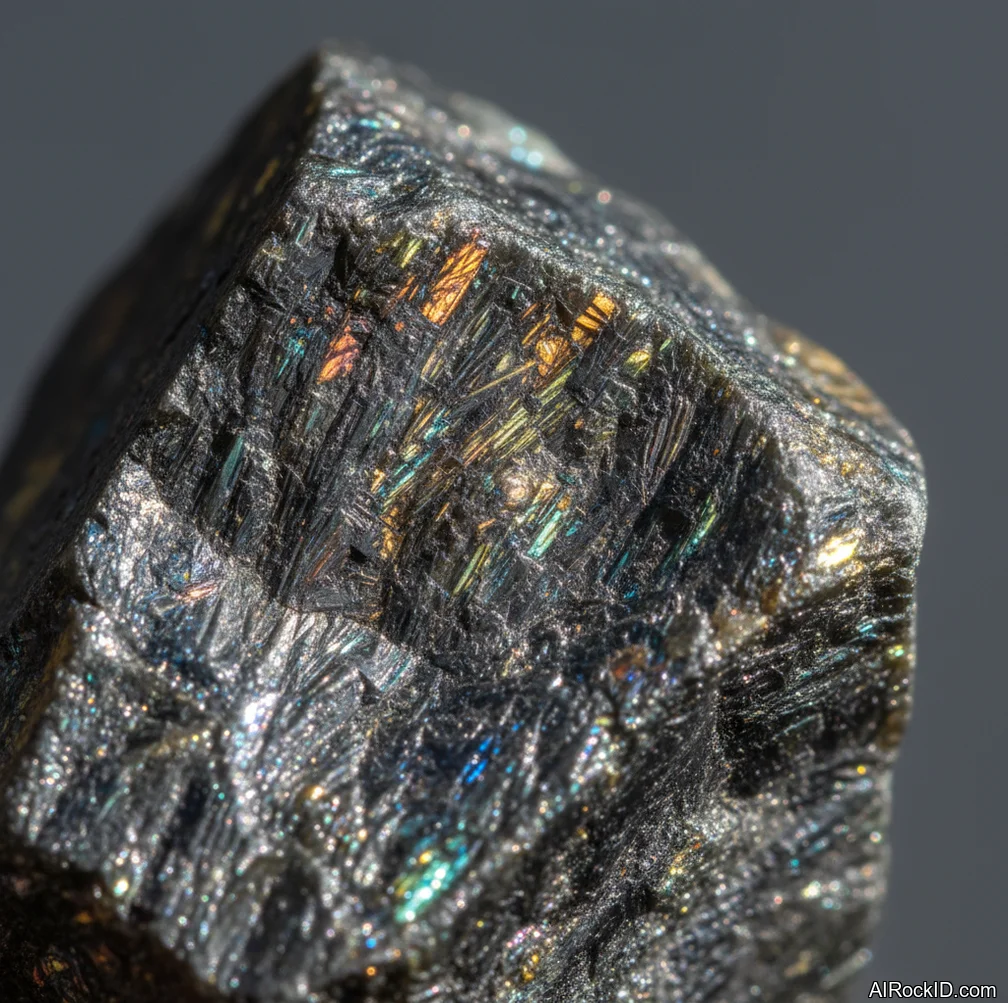
If you’ve got a rough chunk in your hand, look close (tilt it under a lamp). You’ll often spot it tangled up with feldspar, nepheline, aegirine, and quartz right in the same piece. In certain zones it shows up late, as a late-stage amphibole, growing into prismatic to fibrous aggregates. But the material people sell as “blue flash” is usually the more massive stuff, where the fibers are lined up just enough to kick back that sheen once it’s cut and domed.
How to Identify Arfvedsonite
Color: Usually blue-black, greenish black, or charcoal gray, sometimes with obvious blue highlights. Polished pieces can show a moving blue flash or silky bands when rotated.
Luster: Vitreous to silky, with a stronger silky effect on fibrous or polished material.
Pick up the stone and rotate it under a single light source, like a desk lamp, not diffuse daylight. Real arfvedsonite flash is directional, so the blue will sweep and then shut off when you hit the wrong angle. The problem with photos is they freeze the best angle, so in person you want to check that it flashes from more than one spot and doesn’t look like glitter sprinkled on top.
Properties of Arfvedsonite
Physical Properties
| Crystal System | Monoclinic |
| Hardness (Mohs) | 5-6 (Medium (4-6)) |
| Density | 3.2-3.6 g/cm3 |
| Luster | Vitreous |
| Diaphaneity | Opaque |
| Fracture | Uneven |
| Streak | white to pale gray |
| Magnetism | Non-magnetic |
| Colors | blue-black, greenish black, dark gray, black |
Chemical Properties
| Classification | Silicates |
| Formula | Na3(Fe2+)4Fe3+Si8O22(OH)2 |
| Elements | Na, Fe, Si, O, H |
| Common Impurities | Mn, Mg, Ti, Ca, K, F |
Optical Properties
| Refractive Index | 1.680-1.730 |
| Birefringence | 0.020 |
| Pleochroism | Strong |
| Optical Character | Biaxial |
Arfvedsonite Health & Safety
Handling it and giving it a rinse is totally fine. But the moment you cut it, sand it, or drill into it, you can kick up hazardous fine dust. That stuff hangs in the air and gets everywhere (you can even feel it in the back of your throat). So don’t make dust, and don’t breathe it in.
Safety Tips
If you end up working with it, go the wet-cut route (keeps that gritty dust from hanging in the air). Make sure the area’s got solid ventilation, and wear a proper respirator that’s actually rated for fine particulates, not just a flimsy mask. Then wash your hands afterward.
Arfvedsonite Value & Price
Price Range
Rough/Tumbled: $10 - $80 per palm stone or small polished piece
Cut/Polished: $3 - $25 per carat
Price jumps around depending on how strong that blue flash is, how wide it spreads, and if the polish comes up clean or shows little pits. Bigger pieces with an even sheen usually cost more, because a lot of rough ends up cutting dead when the fibers aren’t lined up right (you can see it go flat the moment you tilt it).
Durability
Moderate — Scratch resistance: Fair, Toughness: Fair
It’s generally stable for display, but it can chip on edges and cleavage-related weak spots if it gets knocked around.
How to Care for Arfvedsonite
Use & Storage
Store it so it doesn’t bang against quartz or corundum, because it’ll pick up scratches and edge chips. I keep mine in a soft pouch or a compartment tray.
Cleaning
1) Rinse with lukewarm water and a drop of mild soap. 2) Use a soft brush for crevices, then rinse again. 3) Pat dry, and don’t toss it back in a bowl while it’s still wet and slippery.
Cleanse & Charge
Smoke cleansing, sound, or a quick pass on a selenite plate all work fine. If you use moonlight, keep it out of harsh morning sun just to protect the polish and keep dust off the surface.
Placement
Set it where you can actually tilt it and see the flash, like a desk shelf with a single lamp nearby. In a dark corner it just reads black.
Caution
Don’t run it through an ultrasonic cleaner, and don’t leave it soaking for ages if it’s cracked or has an old glued repair. If you’re shaping it or drilling into it, watch the dust, too. You really don’t want to be breathing that stuff in.
Works Well With
Arfvedsonite Meaning & Healing Properties
Most dealers pitch arfvedsonite as a “focus and insight” stone, and yeah, I see the logic. When I’m sorting flats at a show, that shifting blue sheen is the exact kind of visual hook that snaps your attention back, like your eyes just got a quick reset. It’s not medicine. But as something you can hold in your hand, it works.
Grab a polished piece on a stressful day and it grounds you in a plain, physical way. Cool. Heavy. Smooth. The kind of surface that feels almost slick under your thumb, especially if the polish is fresh and you’ve been handling paper, tape, and display trays all morning. And I’ve watched people mix it up with labradorite and go in expecting a huge rainbow. But arfvedsonite doesn’t do that. Its flash is tighter, mostly blue, more like a silky sweep across the stone than a neon flare. Want loud color? This isn’t it.
In crystal shop talk, it’s linked to clearing mental clutter and cutting through indecision. That’s subjective, and it really depends on the person (and the day, honestly). What isn’t subjective is how easy it is to work into a routine: it’s sturdy enough to handle daily, and it looks sharp under a lamp when you need a quick visual break.
Identify Any Crystal Instantly
Snap a photo and get properties, value, care instructions, and healing meanings in seconds.