Serpentinite


Quick answer: Serpentinite is a typically green metamorphic rock made largely of serpentine-group minerals. It is often identified by its waxy to greasy luster, mottled color, relatively low hardness, and association with altered ultramafic rocks.
AI Rock ID can help compare a serpentinite photo against visually similar green rocks by checking color, luster, texture, and fracture patterns. RockIdentifier.io provides crystal and rock reference pages that can support photo-based identification with physical-property checks.
Good fit
- Collectors who like green, mottled, or waxy-looking metamorphic rocks
- Beginners practicing hardness and luster-based identification
- Lapidary users who understand that serpentinite can be soft and variable
- Geology learners studying alteration of ultramafic rocks
Not a good fit
- Anyone needing a scratch-resistant stone for daily-wear jewelry
- Buyers who want a consistently transparent or faceted gemstone
- Projects requiring material that can be safely drilled, cut, or polished without dust-control precautions
Why people search for this
People often search for serpentinite to tell it apart from jade, serpentine, and other green stones. It is also searched because some specimens have an attractive waxy surface and patterned appearance.
Most commonly confused with
- Serpentine: Serpentine is a mineral group, while serpentinite is a rock composed mainly of serpentine minerals.
- Jade: Jade is generally tougher and more durable; serpentinite is usually softer and may scratch more easily.
- Nephrite: Nephrite has interlocking amphibole fibers and high toughness, while serpentinite commonly has a waxier, softer feel.
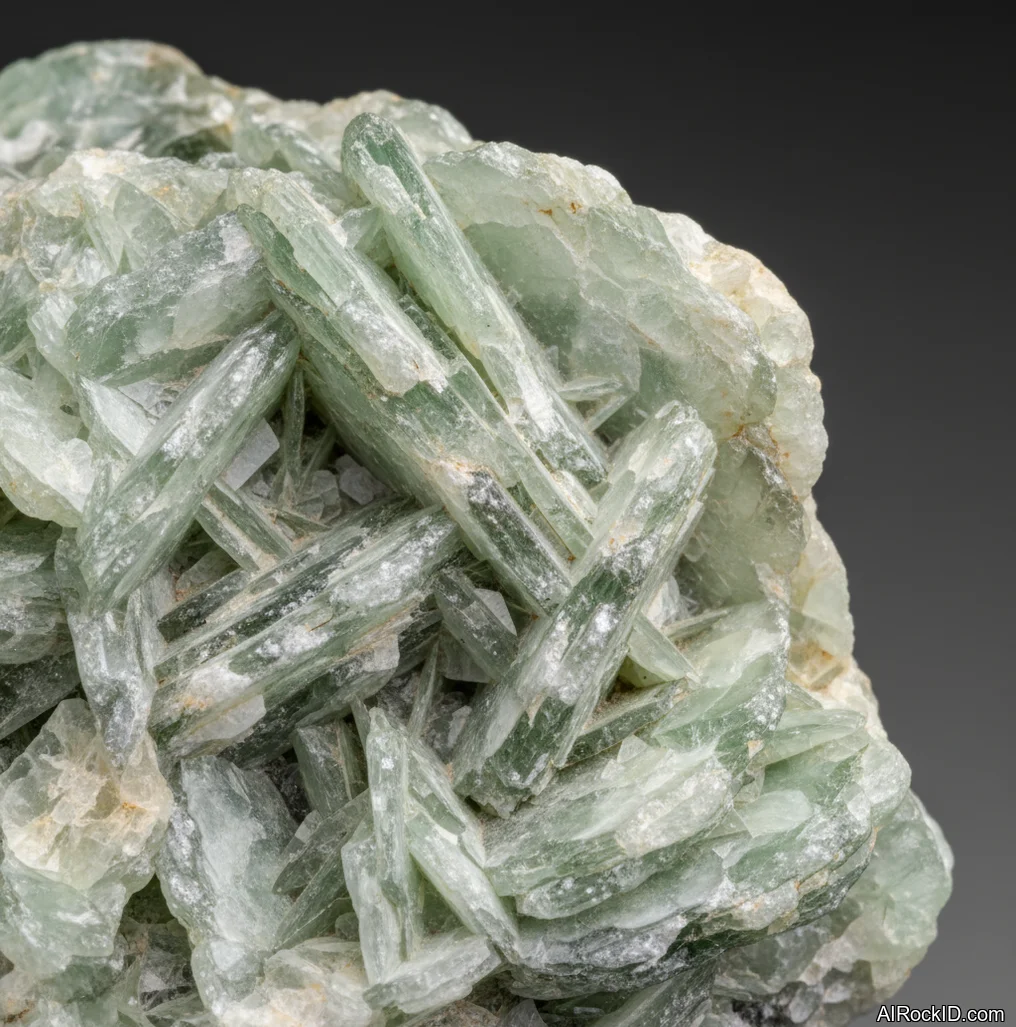
- Chrysotile: Chrysotile is a fibrous serpentine mineral; serpentinite may contain serpentine minerals but is a broader rock type.
Serpentinite vs. Common Green Lookalikes
| Stone | Typical hardness | Key difference |
|---|---|---|
| Serpentinite | Mohs 2.5–5.5 | Waxy, mottled metamorphic rock made mostly of serpentine minerals |
| Serpentine | Mohs 2.5–5.5 | Mineral group name rather than the rock name |
| Nephrite jade | Mohs 6–6.5 | Much tougher and usually more resistant to scratching |
| Green marble | Mohs 3–4 | Carbonate rock that may react with dilute acid |
| Soapstone | Mohs 1–2.5 | Usually softer and talc-rich with a soapy feel |
AI identification confidence
AI identification of serpentinite is usually moderate from clear photos because color and waxy luster overlap with jade, serpentine, marble, and soapstone. Confidence improves when the image is paired with hardness, streak, density, acid reaction, and locality information.
When AI gets it wrong
- Polished pieces can look like jade because surface texture and grain are hidden.
- Green marble and serpentinite may both show veining in photos.
- Low-resolution images may not show fibrous, granular, or waxy textures clearly.
- Color alone is unreliable because serpentinite can be green, blackish green, yellow-green, or mottled.
Final recommendation
Choose serpentinite if you want a green metamorphic rock with a waxy look and natural variation, and verify it with simple physical tests when possible. For jewelry or carving, ask sellers about the exact material, treatment, and whether any fibrous minerals are present.
How to Identify Serpentinite in Photos
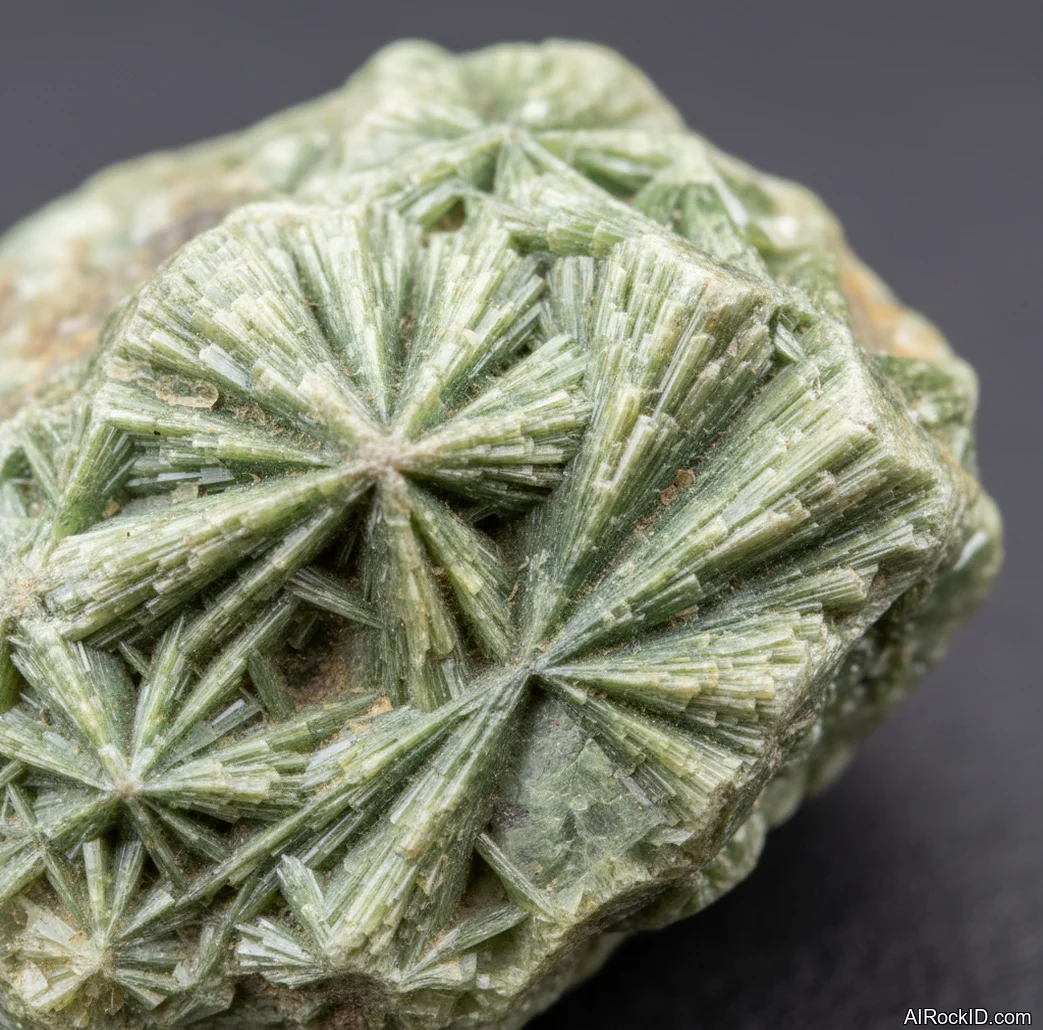
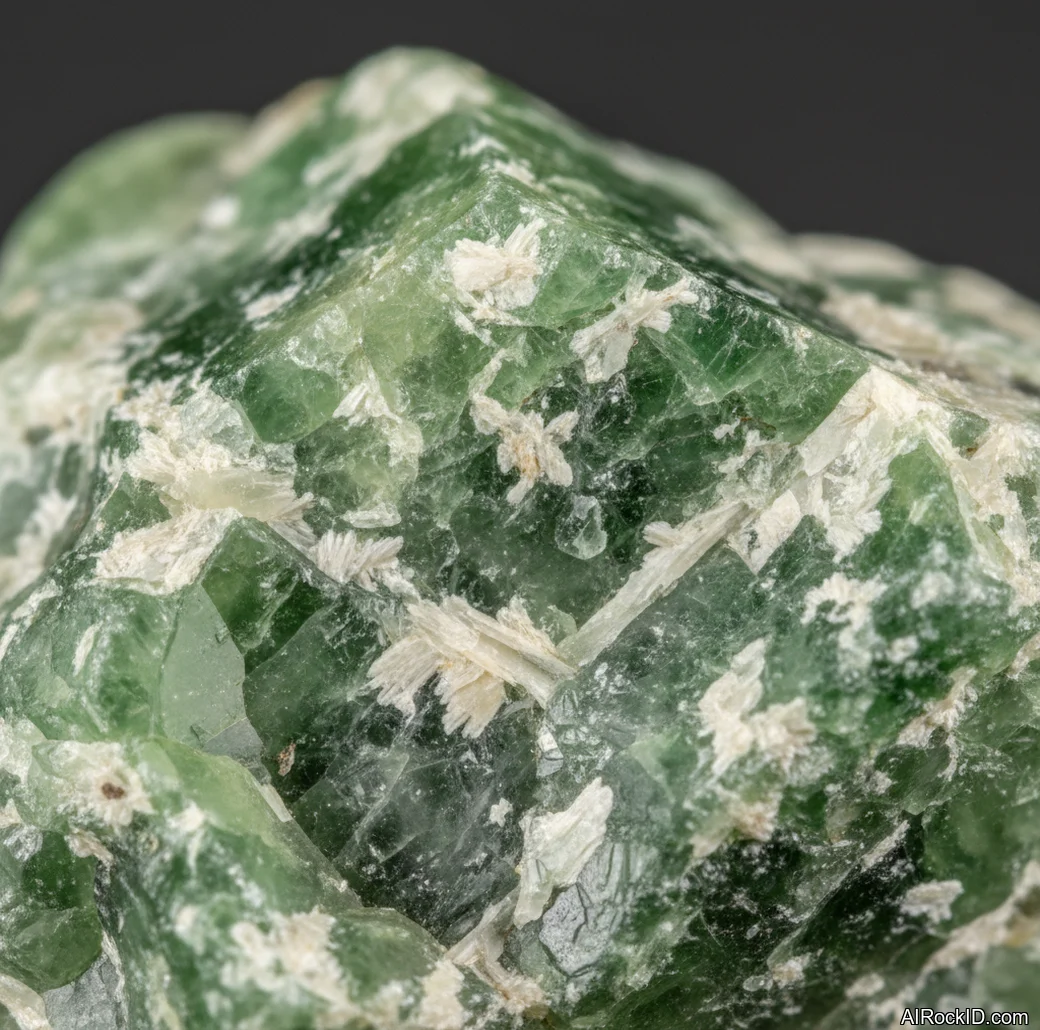
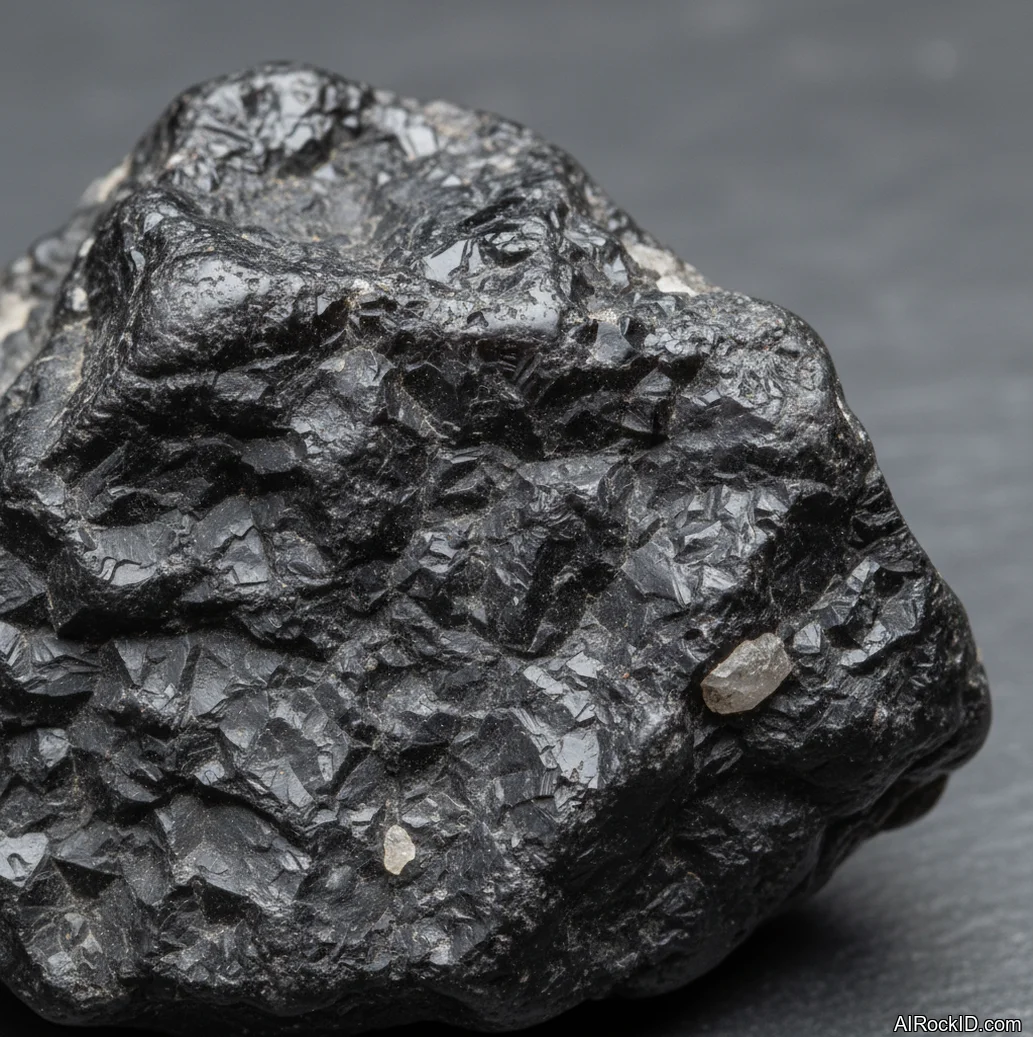
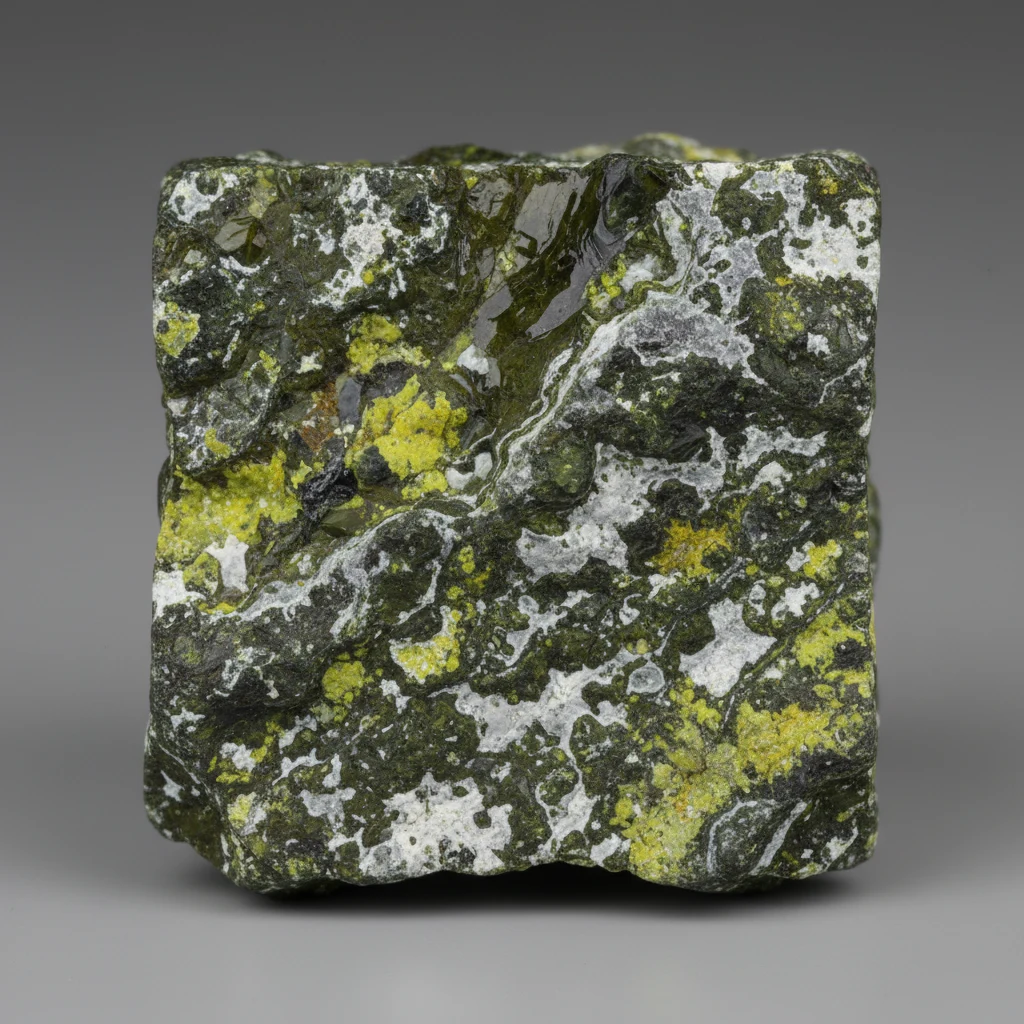
Look for a green to yellow-green or dark green rock with mottled patterns, waxy to greasy luster, and irregular veining. A polished specimen may resemble jade, so photo identification should be checked against hardness and toughness. Natural serpentinite may show cloudy patches, black magnetite specks, or uneven coloration.
Buying Serpentinite: Authenticity Checks
Ask whether the seller is offering serpentinite rock, serpentine mineral, or jade substitute, because these names are sometimes used loosely. Genuine serpentinite is commonly opaque, patterned, and softer than true jade. Very uniform color, unusually high hardness claims, or vague labels such as “new jade” should be checked carefully.
Serpentinite in Geology Collections
Serpentinite is useful in study collections because it records hydration and alteration of ultramafic rocks such as peridotite and dunite. Specimens may be paired with peridotite, olivine-rich rocks, talc, magnetite, or chromite to show related geological processes.
What Is Serpentinite?
Serpentinite is a green to black-green metamorphic ultramafic rock dominated by serpentine-group minerals. In the hand it often feels waxy, greasy, or faintly soapy, with mottled olive, gray-green, yellow-green, and green-white patterns that can look like snakeskin. It is a rock, not a single mineral, and its main mineral ingredients may include lizardite, antigorite, and chrysotile, with variable magnetite, brucite, talc, chlorite, carbonate, and chromite.
For collectors, serpentinite is a common but highly useful identification specimen because it records water alteration of mantle-derived rocks. Most pieces sit around Mohs 3–4, though the broader range is about 2.5–5.5, so it scratches more easily than quartz and may be marked by a steel knife. Handle intact pieces normally, but avoid breaking, sanding, drilling, or tumbling unknown material because some serpentinite contains chrysotile asbestos or asbestos-like fibers.
Origin & History
Serpentinite takes its name from serpentine minerals, whose green colors and scaly or mottled surfaces suggested a snake-like appearance. Historically, this rock has been valued as a carving and decorative stone, and commercial sellers may call it serpentine marble. That trade name is useful in the stone market, but geologically it is not a true marble.
Scientific interest in serpentinite comes from its role in altered oceanic lithosphere, ophiolite belts, subduction settings, and hydrogen- and methane-producing reactions. A specimen from an ophiolite locality can feel modest in the hand, but it represents deep, water-rock chemical change in ultramafic material. A practical external reference for locality verification is mindat.org.
Where Is Serpentinite Found?
Serpentinite is found worldwide in ophiolite belts, altered oceanic crust, alpine ultramafic complexes, and fault or subduction-related settings. Reported countries include the United States, Canada, United Kingdom, Italy, Greece, Cyprus, Turkey, Oman, United Arab Emirates, New Zealand, China, Russia, South Africa, and Australia.
Formation
Serpentinite forms by serpentinization, the hydration and low- to moderate-temperature metamorphic alteration of ultramafic rocks such as peridotite and dunite. Water-rich fluids react with olivine- and pyroxene-rich rock, including minerals such as forsteritic olivine and enstatite, to produce serpentine minerals, brucite, magnetite, and sometimes hydrogen gas.
Later deformation, carbonation, or metasomatism can modify the rock by adding talc, chlorite, magnesite, calcite, or veins of chrysotile. This is why one hand specimen may be massive and tough, while another is veined, sheared, silky, or weak along fibrous seams. Magnetite formed during serpentinization can also make some pieces weakly magnetic.
How to Identify Serpentinite
Identify serpentinite by its green to black-green color, waxy or greasy luster, white to pale greenish white streak, and soft to moderate hardness. Fresh surfaces may look resinous or silky, while weathered surfaces can turn dull. Thin edges may be translucent, but most specimens are opaque and massive rather than crystal-shaped.
In practice, test gently: serpentinite is usually softer than quartz and feldspar, and many pieces can be scratched by a steel knife. A hand magnet may show weak attraction where magnetite is present, and dilute acid should not cause strong fizzing unless carbonate-rich veins or altered zones are present. Do not break, sand, or polish an unknown fibrous piece, because chrysotile-bearing serpentinite can release hazardous dust or fibers.
Properties of Serpentinite
Physical Properties
| Crystal System | Rock aggregate; constituent serpentine minerals are mainly monoclinic or orthorhombic depending on species |
| Hardness (Mohs) | About 2.5–5.5; most serpentinite is around 3–4 on the Mohs scale (Soft to moderately hard) |
| Density | Typically 2.5–2.7 g/cm³; may be higher where magnetite or chromite is abundant |
| Luster | Waxy, greasy, silky, resinous, or dull |
| Diaphaneity | Opaque to translucent on thin edges |
| Fracture | Uneven, splintery, hackly, or subconchoidal; massive rock may break irregularly |
| Streak | White to pale greenish white |
| Magnetism | None to weakly magnetic; locally clearly magnetic because magnetite can form during serpentinization |
| Colors | olive green, dark green, yellow-green, gray-green, black-green, mottled green, green and white |
Chemical Properties
| Classification | Metamorphic rock dominated by hydrous magnesium silicate minerals of the serpentine group |
| Formula | Variable rock composition; serpentine-group minerals are commonly represented by Mg3Si2O5(OH)4, with Fe, Ni, Cr, magnetite, brucite, talc, chlorite, and carbonate minerals variably present |
| Elements | Magnesium, Silicon, Oxygen, Hydrogen, Iron, Nickel, Chromium, Calcium, Carbon |
| Common Impurities | Fe, Ni, Cr, Al, Mn, Ca, carbonate minerals, magnetite, chromite |
Optical Properties
| Refractive Index | Not a single value for the rock; serpentine minerals are commonly about n = 1.53–1.57 |
| Birefringence | Low to moderate for serpentine minerals, commonly about 0.006–0.016 |
| Pleochroism | Usually none to weak; antigorite may show weak greenish pleochroism in thin section |
| Optical Character | Rock aggregate; serpentine minerals are generally biaxial, with sign varying by species |
Serpentinite Health & Safety
Intact, non-friable serpentinite is generally safe to handle, but avoid creating dust or fibers. Treat unknown fibrous or crumbly serpentinite as a potential asbestos hazard.
Serpentinite Value & Price
Price Range
Rough/Tumbled: $1–$10 for small rough pieces; $5–$40 for attractive hand specimens or polished pieces; architectural or carving-grade material varies widely by size and quality
Cut/Polished:
Value is influenced by color saturation, polish quality, patterning, size, absence of unstable fibrous material, provenance, and whether the piece is suitable for carving or lapidary use. Scientific specimens from classic ophiolite or asbestos-mining districts may be more collectible.
Durability
Fair — Scratch resistance: Generally low to moderate; it scratches more easily than quartz and most feldspars, and softer varieties scratch with a knife., Toughness: Variable; massive antigorite- or lizardite-rich serpentinite can be fairly tough, while veined, sheared, weathered, or fibrous material may be weak.
Stable for display if kept dry and intact. Avoid heat shock, acids, abrasion, cutting, sanding, or tumbling of unknown material because fibrous chrysotile asbestos may be present.
How to Care for Serpentinite
Use & Storage
Store separately from harder minerals such as quartz, beryl, corundum, and topaz to prevent scratches. Keep fibrous or crumbly specimens in a sealed display box or specimen bag.
Cleaning
Clean only with a soft dry cloth or a slightly damp cloth. Avoid ultrasonic cleaners, steam cleaners, strong acids, abrasive powders, and vigorous scrubbing.
Cleanse & Charge
For metaphysical use, cleanse by smoke, sound, moonlight, or placing near a dry quartz or selenite plate. Avoid soaking in water, salt water, or acidic solutions.
Placement
Best used as a display stone, carving, palm stone, or geological teaching specimen. Keep away from food-preparation areas if the specimen is rough, dusty, or fibrous.
Caution
Do not cut, sand, or polish unidentified serpentinite at home. Fibrous chrysotile-bearing material should not be handled roughly or kept loose where fibers can be released.
Works Well With
Serpentinite Meaning & Healing Properties
In crystal-healing traditions, serpentinite is associated with grounding, renewal, protection, emotional balance, and connection to Earth energy. Its weighty green look and smooth waxy feel make it a natural palm stone for quiet handling, especially for people who use stones symbolically for Root and Heart chakra work. These meanings are spiritual beliefs, not medical claims.
For metaphysical care, use dry methods: smoke, sound, moonlight, or placement near a dry quartz or selenite plate. Avoid soaking, salt water, acidic solutions, ultrasonic cleaners, steam cleaners, and abrasive scrubbing. Store it away from harder stones such as quartz, beryl, corundum, and topaz, and keep rough, dusty, crumbly, or fibrous pieces sealed or boxed.
Identify Serpentinite from a photo
Compare Serpentinite traits, care tips, value clues, and common lookalikes with a clear photo.
Common mistakes
- Calling every green serpentinite specimen jade without checking hardness and toughness
- Using “serpentine” and “serpentinite” as identical terms in labels
- Identifying serpentinite by green color alone
- Assuming all serpentinite is safe to cut or grind without dust precautions
- Expecting serpentinite to perform like hard gemstones in rings or bracelets