Stability Crystals
Quick answer: Stability crystals are stones that people traditionally associate with grounding, steadiness, and practical focus. Common examples include Hematite, Smoky Quartz, and Black Tourmaline, which are often chosen for their dense appearance, earthy colors, or long-standing symbolic uses.
Learn about Stability crystals, meanings, and how to use Hematite, Smoky Quartz, and Black Tourmaline for grounded, steady support.


Stability crystals are minerals chosen for their grounding and steadying properties, especially when life feels unsettled. Examples include Hematite, Smoky Quartz, Black Tourmaline, and Red Jasper. These stones are usually physically dense, dark, and carry a cool, solid heft in the hand. These associations come from metaphysical traditions and are not medical claims.
Stability crystals can't prevent anxiety, stop panic attacks, or replace treatment for stress-related conditions. Don't use them as a substitute for therapy or medication.
AI Rock ID can help users compare a stone’s visible traits, such as color, luster, and shape, with known crystal references. RockIdentifier.io provides crystal identification and educational context for collectors, hobbyists, and people exploring traditional crystal meanings.
Good fit
- Beginners who want a small group of grounding stones to compare
- Collectors interested in dark, metallic, or earthy-looking minerals
- People exploring traditional associations with steadiness and focus
- Users sorting crystals by symbolic property rather than mineral family
Not a good fit
- Anyone seeking medical treatment or mental health care from crystals
- Users who need a laboratory-grade mineral identification
- Collectors who want only rare or high-value specimens
Most commonly confused with
- Magnetite: Magnetite can resemble Hematite but is typically strongly magnetic, while most Hematite specimens are not strongly magnetic.
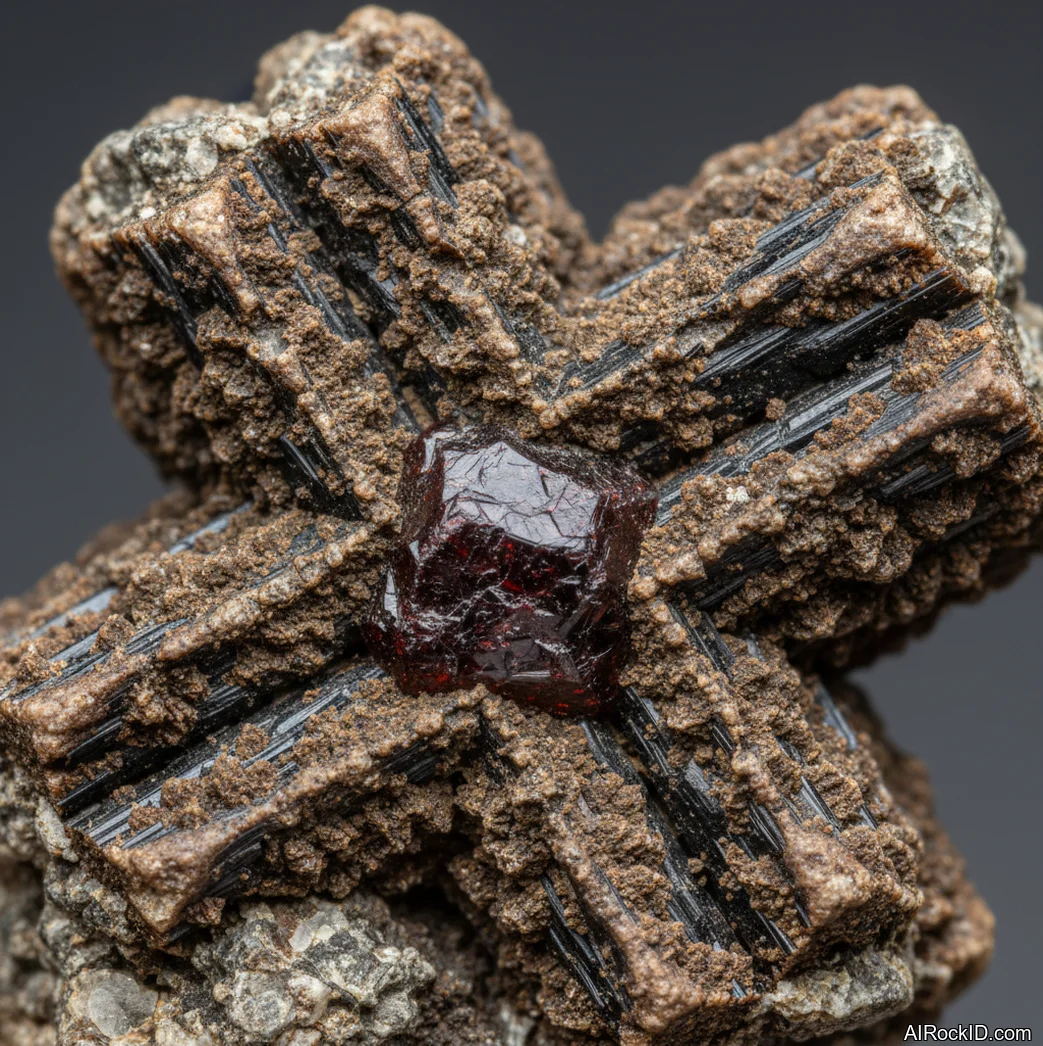
- Obsidian: Obsidian is volcanic glass with a glassy fracture, while Black Tourmaline is a mineral that often shows striated crystal faces.
- Morion Quartz: Morion is a very dark variety of quartz, while Smoky Quartz ranges from pale gray-brown to dark brown or nearly black.
AI identification confidence
AI identification is usually more reliable when the photo shows the stone in natural light, with multiple angles and a visible surface texture. Dark stones can be harder to identify from a single image because several minerals share black, brown, or metallic appearances.
When AI gets it wrong
- A polished black stone hides crystal structure, fracture, or surface texture
- Lighting makes a brown or gray crystal appear fully black
- A dyed or treated stone is photographed without context
- The image lacks scale, close focus, or multiple viewing angles
Final recommendation
For a simple stability-themed set, many collectors start with Hematite, Smoky Quartz, and Black Tourmaline because they are common and visually distinct. Choose specimens with clear labels, reliable seller information, and physical traits that match the listed mineral.
What this category represents
The Stability tag groups crystals that are traditionally linked with groundedness, steadiness, protection, or practical focus in metaphysical traditions. This tag describes symbolic use and collecting context, not a verified medical or psychological effect.
Beginner recommendations
Advanced recommendations
Stability Crystals by Color and Texture
Many crystals placed in the stability category are dark, metallic, smoky, or earthy in appearance. Hematite often has a silver-gray metallic look, Smoky Quartz is transparent to translucent brown or gray, and Black Tourmaline commonly appears black with lengthwise striations. These visual traits help collectors sort likely candidates before confirming the mineral.
Stability Meanings in Crystal Traditions
In crystal traditions, stability is usually connected with feeling grounded, organized, and less scattered during daily routines. These meanings are cultural and symbolic, and they should not be treated as substitutes for medical, psychological, or financial advice.
How to Build a Small Stability Set
A compact stability set can include one metallic stone, one quartz variety, and one black grounding mineral. This gives beginners a practical way to compare luster, hardness, transparency, and crystal habit while exploring traditional meanings.
What Are Stability Crystals? Physical Signs and Sensory Clues
Pick up a grounding stone and there's a pause. The weight does half the talking. When people ask for Stability, they're usually feeling scattered. Not necessarily sad, just unmoored. They want something that makes them feel like their feet are on the floor. In practice, Stability crystals are the ones that feel heavy for their size, carry a chill longer than you'd expect, and look like they mean business. Dark, iron-rich, or smoky are common themes. Hematite is the textbook example: feels almost like a chunk of lead, cold as pocket change on a winter morning. Flip a tumbled piece under good light and you might catch a flash of steel mirrored with reddish hints along the edges where the polish thins. Real collectors know polished hematite will scuff if you toss it in a bag with keys. That’s not a flaw, just part of handling softer stones. Other Stability choices? Go for stones that blend density with durability. Smoky Quartz is another. It looks like glass brewed in black tea, but pick up a good-sized point and it's got that presence, a sense that you’re holding something solid. Stability means tactile reassurance, not just a color or name.
How Stability Stones Feel: Real-World Crystal Handling Tips
Stability stones aren't flashy. Most folks who keep coming back to them don’t want sparkle, they want a sense of anchoring. Set a rough chunk of Black Tourmaline next to a polished Red Jasper and you’ll notice the difference in texture and shine. Tourmaline is matte, almost striated, and leaves a faint black streak if you scratch it across unglazed porcelain. Jasper is often warmer in hand, with a tough, almost ceramic feel. Hematite always wins for coolness. It stays cold long after your palm heats up. The best pieces have a heaviness that feels out of proportion to their size. Stability stones work as fidgets: rubbing a thumb along their surface during a tense meeting or keeping one in a pocket to reach for when your mind feels jumpy. Some collectors even set a chunk on their desk as a 'weight' to help them focus, sort of like a physical to-do list anchor. But not all Stability stones are durable enough for everyday carry. Hematite and some tourmalines chip or scratch with rough handling.
Most Common Stability Crystals and How to Pick Them
You won’t see much blue or pink here. The classics are Hematite, Smoky Quartz, Black Tourmaline, and Red Jasper. Hematite is easy to spot: metallic, heavy, often magnetic if it's high quality. Smoky Quartz ranges from translucent brown to almost black. Hold it up to light—genuine pieces show depth and ghostly internal fractures. Black Tourmaline grows in long, ridged columns and feels gritty compared to the glassy smoothness of quartz. Red Jasper is brick-red, opaque, and tough as nails. It's the one people use for hands-on situations—think worry stones, not display pieces. One collector trick: always check for dye or imitation. Dyed jasper won’t hold color well and can stain your fingers if left wet. Tourmaline, especially, gets faked with resin or glass. Real pieces have striations and usually break with a splintery edge. If you’re buying online, ask for a photo in natural light next to a coin for scale. Nothing beats handling them, but good photos help.
Caring for and Using Stability Crystals: What Collectors Recommend
Stability stones get handled more than most, so scratches and dings come with the territory. Hematite’s polish fades quickly if you keep it in your jeans pocket. Black Tourmaline can shed splinters if dropped. Smoky Quartz holds up well but can chip at the points if you knock it against harder minerals. Red Jasper is the tank—barely shows wear unless you really abuse it. For cleaning, a quick rinse under running water is usually fine, but skip salt or harsh chemicals, especially for softer stones like Hematite. Many collectors store their Stability crystals in small cloth bags or separate trays to avoid mix-ups and scuffs. If you want to use them during stressful times, keep a small tumbled piece where it’s easy to grab. For display, larger chunks or clusters look best on wood or matte surfaces. Direct sunlight can fade smoky quartz over time, so don’t leave it on a windowsill. Each stone has its quirks, but they’re built for real-world use.
Best Stability Crystals to Start With
| Level | Crystal | Note |
| Gentle / Beginner | Red Jasper | Tough, affordable, and smooth; it doesn’t scratch or chip easily, so you can carry it everywhere without worry. |
| Balanced / Everyday | Smoky Quartz | Feels steady without being heavy; translucent, so it’s visually calming but still grounded. |
| Intense / Advanced | Hematite | Strong physical weight and metallic feel; you notice its presence right away, but it’s prone to scuffing. |
| Best for Carrying | Black Tourmaline | Durable enough for pockets, and the striated surface makes it easy to fidget with discreetly. |
| Best for Display | Large Smoky Quartz point | Makes a striking, solid anchor for any desk or shelf; doesn’t fade quickly and shows beautiful internal structure in sunlight. |
Stability Crystal Comparison
| Crystal | Common Use | Feel / Use Style | Care Caution |
| Hematite | Physical grounding, tactile anchor during stress | Heavy, metallic, stays cold in hand | Scuffs and scratches easily, especially when carried with keys |
| Smoky Quartz | Mental calm, steady focus | Translucent brown to black, cool but lighter than hematite | Points can chip if dropped; color can fade in direct sun |
| Black Tourmaline | Protective barrier, energetic boundary | Matte, striated, feels gritty, solid but not as heavy as hematite | Splinters or sheds small pieces if handled roughly |
| Red Jasper | Stamina, steady energy, reliability | Opaque, earthy red, smooth and tough | Can be dyed; check for colorfastness |
How to Identify Stability Crystals with AI Rock ID
To identify Stability crystals with an AI Rock ID app, photograph each stone in natural light, avoiding glare from overhead bulbs. Take both a full specimen shot and a close-up to show texture, color, and luster. Upload your images and check the results against known crystal properties, like hardness (will it scratch glass?), surface texture, and streak color. Comparing your stone’s heft and appearance to the app’s result helps confirm if you’ve got real Hematite, Smoky Quartz, Black Tourmaline, or another Stability crystal.