Limonite


Quick answer: Limonite is best recognized by its yellow-brown to dark brown color, earthy or dull luster, and distinctive yellow-brown streak. Because it is usually a mixture of hydrous iron oxides rather than a single mineral species, visual identification should be treated as probable rather than definitive.
AI Rock ID can help compare limonite’s color, streak, texture, and surface habit against visually similar iron-bearing materials. RockIdentifier.io supports identification by combining image-based clues with practical field traits such as streak, hardness, and luster.
Good fit
- Collectors who want a common iron oxide material with earthy, botryoidal, or massive textures
- Beginners learning streak testing and basic mineral identification
- Geology kits focused on weathering, iron staining, or ore minerals
- Specimens where natural yellow-brown color is preferred over polished appearance
Not a good fit
- Jewelry that needs high durability or a clean polish
- Collections requiring a precisely defined single mineral species
- Environments where loose powder, staining, or friable surfaces are a concern
- Buyers seeking rare or high-value display minerals
Most commonly confused with
- Goethite: Goethite is a specific iron oxyhydroxide mineral, while limonite is commonly a mixed or poorly crystalline iron oxide material.
- Hematite: Hematite usually has a red-brown streak and may show metallic luster, unlike limonite’s typical yellow-brown streak and earthy surface.
- Jarosite: Jarosite can appear yellow-brown but is a sulfate mineral and is often associated with acidic mine environments.
- Siderite: Siderite is an iron carbonate that is usually harder, heavier, and reacts differently from limonite after weathering.
Limonite vs Similar Iron Minerals
| Material | Typical streak | Key difference | Common look |
|---|---|---|---|
| Limonite | Yellow-brown | Mixed hydrous iron oxides | Earthy, massive, botryoidal |
| Goethite | Brown to yellow-brown | Defined mineral species | Fibrous, botryoidal, stalactitic |
| Hematite | Red-brown | Often denser and more metallic | Metallic, earthy, or compact |
| Jarosite | Pale yellow to brown | Iron sulfate mineral | Crusty or powdery aggregates |
| Siderite | White to pale brown | Iron carbonate, not oxide | Rhombic crystals or massive |
AI identification confidence
AI identification of limonite is usually moderate when photos show natural color, texture, and a clear streak test result. Confidence is lower for polished pieces, iron-stained rocks, or specimens labeled only by color without supporting tests.
When AI gets it wrong
- Iron staining on quartz, sandstone, or other host rock may be mistaken for limonite.
- Goethite and limonite can be visually indistinguishable without closer mineralogical testing.
- Lighting can shift yellow-brown surfaces toward orange, red, or black in photos.
- Powdery ochre, rust, and weathered mine material may resemble limonite in image-based identification.
Final recommendation
Choose limonite when the specimen has a documented yellow-brown streak, natural earthy or botryoidal texture, and honest labeling as a hydrous iron oxide mixture. For higher confidence, prefer sellers who provide locality information, untreated photos, and basic test results rather than relying on color alone.
How to Check Limonite Authenticity
A simple streak test is one of the most useful checks for limonite because it commonly leaves a yellow-brown mark on unglazed porcelain. Natural limonite often appears earthy, dull, porous, or botryoidal rather than glassy or evenly colored. Avoid assuming every rusty brown rock is limonite, since iron staining can coat many unrelated minerals and rocks.
Buying Tips for Limonite Specimens
Look for listings that describe limonite as a hydrous iron oxide mixture or as limonite after another iron mineral, rather than as a rare gem material. Clear photos should show the surface texture, any host rock, and whether the piece is powdery, solid, or fragile. Locality information adds context, especially for specimens from iron deposits, oxidized ore zones, or classic mineral localities.
Field Clues for Limonite
Limonite commonly forms in weathered iron-rich environments, especially where other iron minerals have oxidized near the surface. Useful field clues include rusty brown coloration, yellow-brown streak, earthy fracture, and association with oxidized ore material. Hardness can vary because limonite is not a single uniform mineral species.
What Is Limonite?
Limonite isn’t one neat, single mineral. It’s a natural mix of hydrous iron oxide minerals, usually written as FeO(OH)·nH2O, and it forms when iron-bearing minerals break down during weathering.
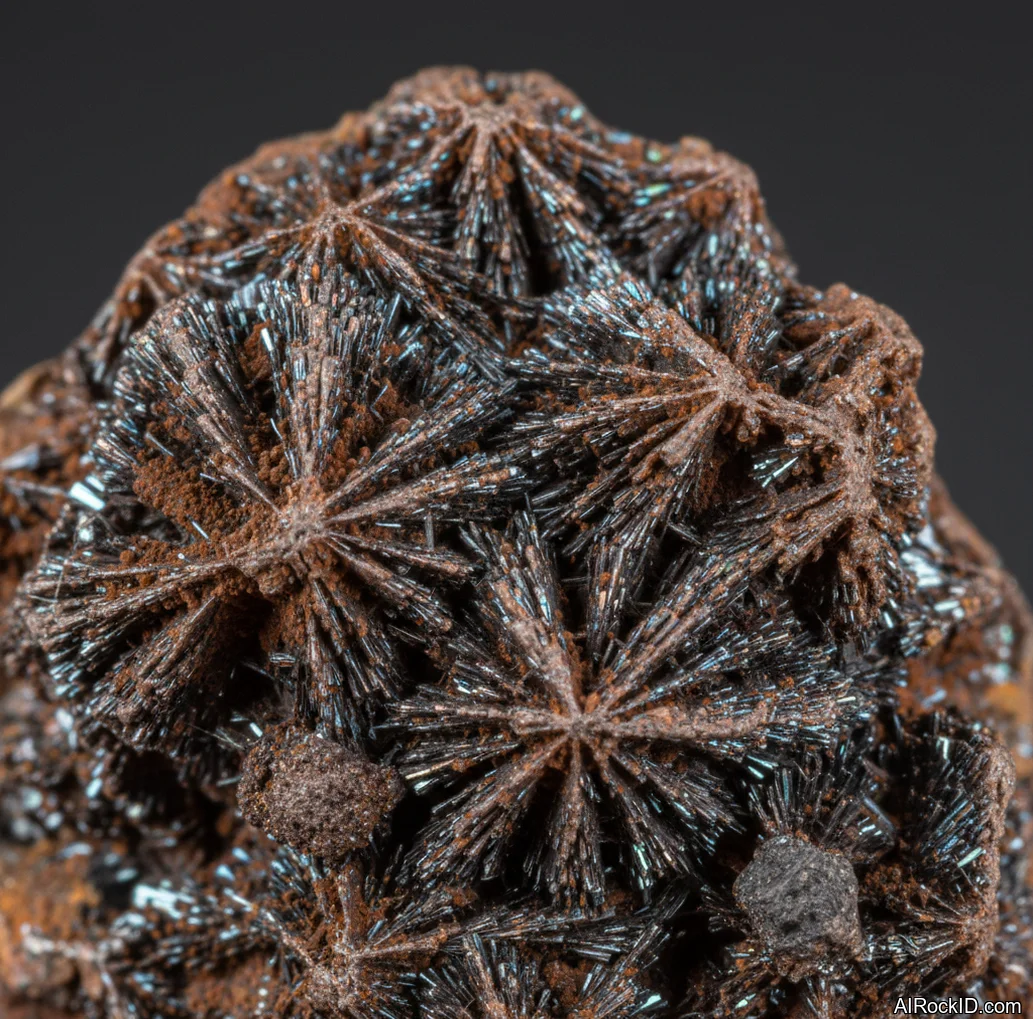
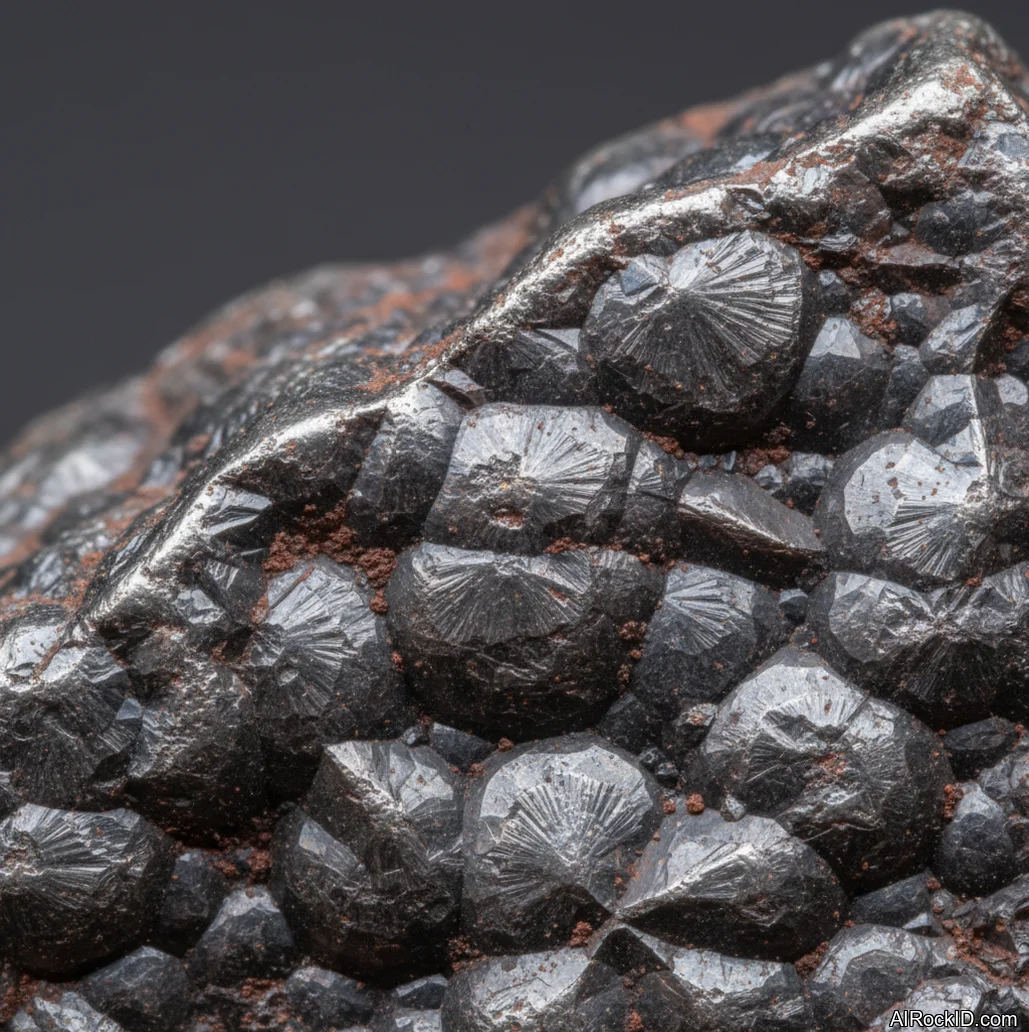
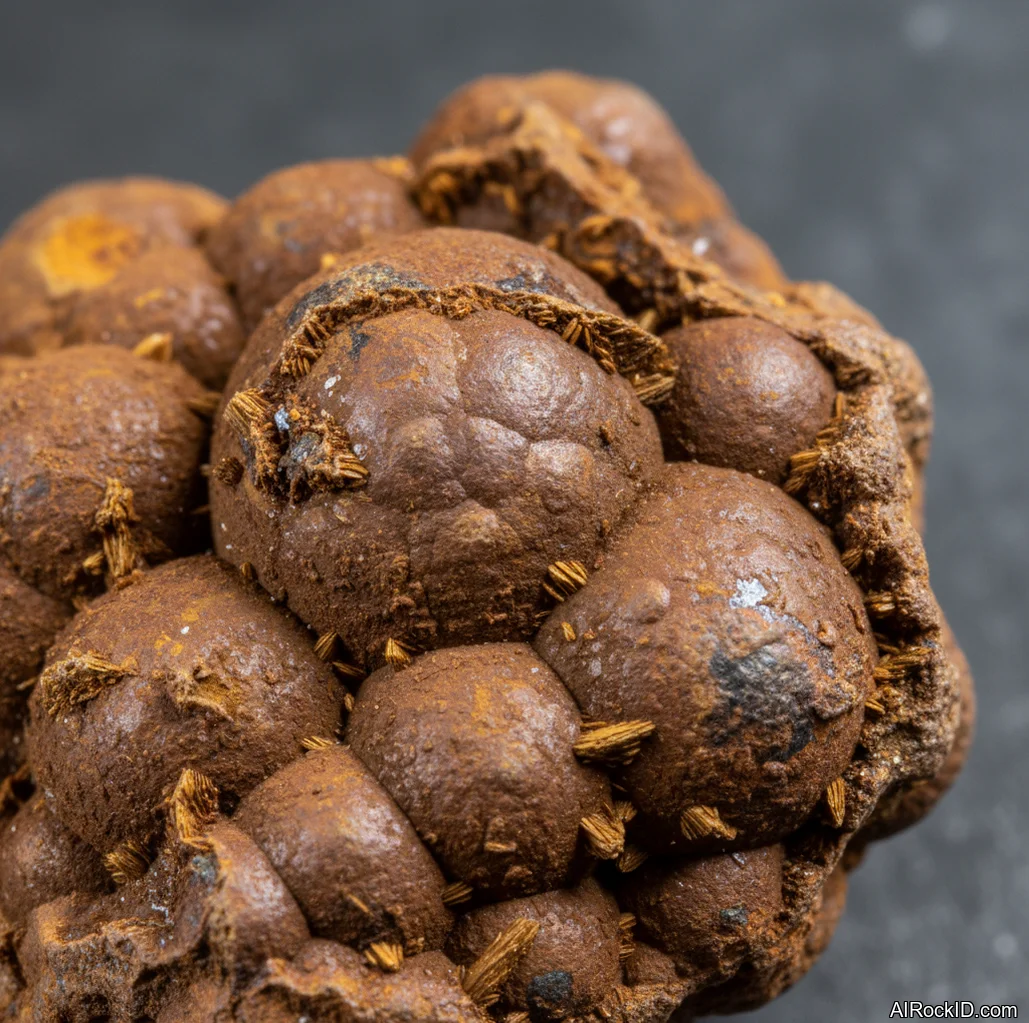
Pick up a chunk and you feel it immediately. Heavy. Weirdly heavy for something that can look like plain dried dirt. The outside can be a little dusty too, like it wants to leave a faint rusty smear on your fingertips (and it kind of does). A lot of what gets sold as “limonite” shows up botryoidal or massive, with that lumpy, grape-skin texture you can feel with your thumb, but you’ll also see crumbly, earthy pieces that look dull until you bother to do a streak.
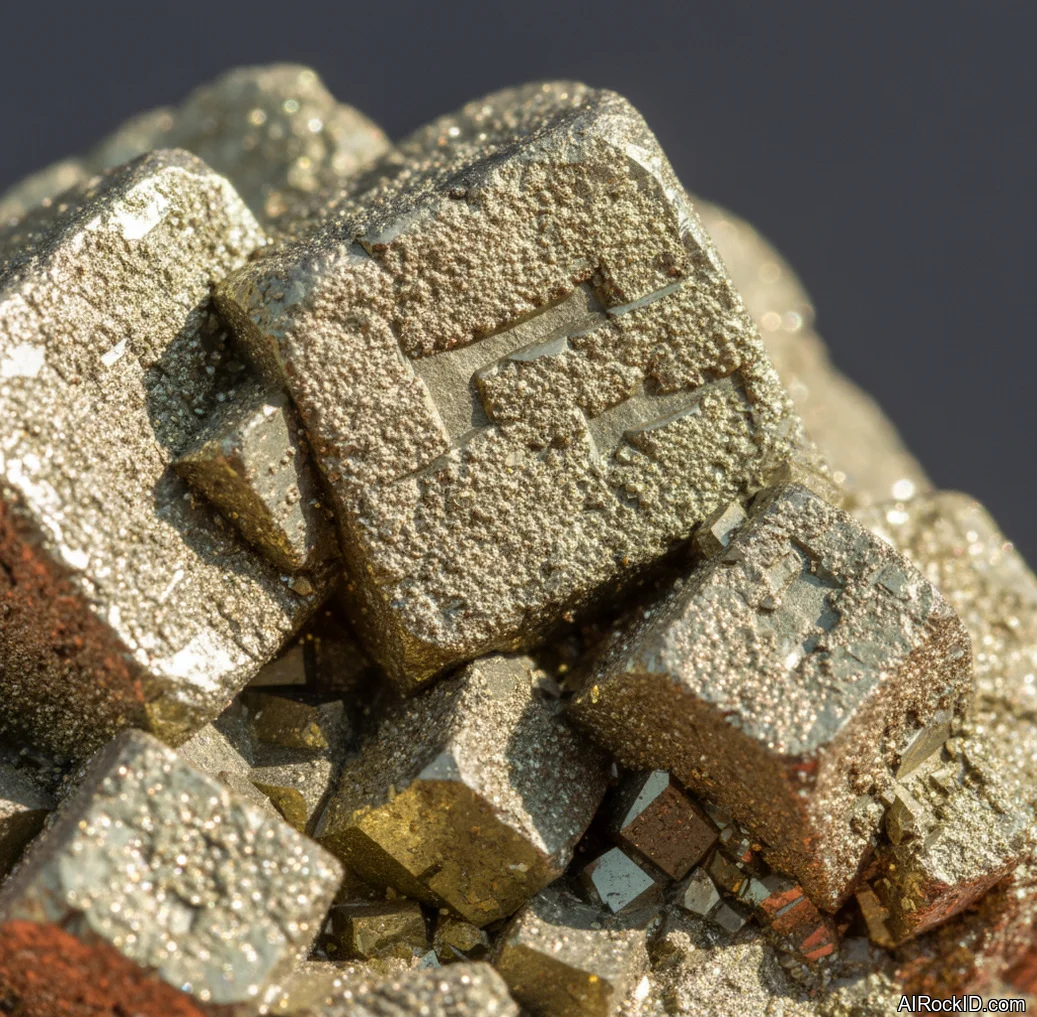
People mix it up with hematite or goethite all the time. And honestly, the labels at shows can be all over the place. Dealers often use “limonite” as a catch-all for brown iron oxides, especially when the material’s really a blend of goethite, lepidocrocite, and other iron hydroxides. That’s just how it goes out in the field. If you want to get strict about it, limonite isn’t a mineral species, it’s a mixture. But it’s still legit collector material, especially when it has a strong botryoidal texture or those pseudomorphs after pyrite.
Origin & History
Limonite got written up as a mineral name back in the early 1800s, and most people trace the term to J. F. L. Hausmann (1813) in the classic European mineral literature. It comes from the Greek “leimōn,” meaning meadow, which fits because bog and meadow iron deposits are exactly where brown iron ore can show up right near the surface.
Thing is, in old mining reports “limonite” was used the way folks toss around “iron ore” in everyday speech. You’ll see it in historic mining districts as that rusty cap over sulfide deposits. And it wasn’t just a curiosity. Those gossans were basically giant arrows that tipped miners off to deeper ore below. In pigment history, it sits in the same family as ochres, and if you’ve ever ground a decent piece down (it leaves a faint rusty smear on your fingers), you get that yellow-brown powder that’s been used as a colorant forever.
Where Is Limonite Found?
It turns up worldwide anywhere iron minerals weather, especially in gossans, laterites, and bog deposits. Many display pieces on the market come from Brazil and classic European alpine localities.
Formation
Most limonite shows up right where other iron minerals are falling apart. You start with stuff like pyrite, magnetite, siderite, or iron-rich silicates. Add oxygen and water, give it time, and you wind up with iron oxyhydroxides and gels that can dry out and shuffle around into goethite-heavy mixes we call limonite.
Look, if you stare at gossan long enough, you can basically read the chemistry off the rock. Those pyrite cubes get swapped out molecule by molecule, and what you’re left holding is a limonite pseudomorph that keeps the crisp edges but goes dull and brown. And in tropical climates, laterite profiles can pile up thick limonite zones. But here’s the catch for collectors: a lot of that stuff is porous and crumbly, and it’ll shed fine brown dust onto your fingers (and your display shelf) if you handle it too rough.
How to Identify Limonite
Color: Colors run yellow-brown to dark brown, sometimes with orange or rusty red patches where it’s more oxidized. Fresh breaks can look lighter inside, then darken a bit as the surface dries.
Luster: Luster is usually earthy to dull, though botryoidal pieces can have a soft silky to submetallic sheen in spots.
If you scratch it with a steel nail, many pieces will mark or powder instead of sparking like hard metallic minerals. The real test is the streak: drag it on unglazed porcelain and you get a yellow-brown to brown streak, not the red-brown you’d expect from a lot of hematite. And if it’s botryoidal, tilt it under a bright light and you can sometimes see that fine, satiny texture that hints there’s goethite in the mix.
Common Look-Alikes
Limonite is sometimes confused with these materials:
- Goethite (botryoidal “kidney ore” that gets sold as limonite a lot)
- Hematite (earthy red-brown “paint ore” and botryoidal pieces)
- Jarosite (yellow-brown crusts from oxidized sulfide zones, easy to mix up in photos)
- Iron-stained quartz or sandstone (brown/orange coating gets labeled “limonite quartz”)
- Bronzite or “golden sheen” tumbled stones sold as “limonite” (really pyroxene with a flash)
- Dyed howlite/magnesite or resin “golden” fakes (marketed as limonite in bead strands)
Market Cautions & Treatments
When AI Can Get This Wrong
At first glance, botryoidal limonite gets called goethite or hematite by photo AIs because all three can be brown-to-black with that grape-like surface. Yellow-brown crusty limonite also gets mis-tagged as jarosite or just “iron oxide” since cameras flatten the subtle olive and ochre tones. The real test is a quick streak and feel check: limonite usually streaks yellow-brown and leaves a rusty smear on your fingers, while hematite goes red-brown and goethite tends more brown with a slightly more metallic look on fresh breaks.
Properties of Limonite
Physical Properties
| Crystal System | Amorphous |
| Hardness (Mohs) | 4.0-5.5 (Medium (4-6)) |
| Density | 2.7-4.3 g/cm3 |
| Luster | Earthy |
| Diaphaneity | Opaque |
| Fracture | Earthy |
| Streak | yellow-brown to brown |
| Magnetism | Non-magnetic |
| Colors | yellow-brown, brown, dark brown, orange-brown, rusty red-brown |
Chemical Properties
| Classification | Oxides and hydroxides |
| Formula | FeO(OH)·nH2O |
| Elements | Fe, O, H |
| Common Impurities | Si, Al, Mn, P, Ti |
Optical Properties
| Refractive Index | 1.90-2.15 |
| Birefringence | None |
| Pleochroism | None |
| Optical Character | Isotropic |
Limonite Health & Safety
Handling it is usually safe. But the powdery surface tends to leave a rust-colored smear on your fingers and whatever it sits on, like shelves. If you’re grinding it down or brushing it hard, don’t breathe in the dust. (Seriously, it gets in the air faster than you’d think.)
Safety Tips
Rinse your hands after you handle porous, earthy pieces (the kind that leave a little dusty grit on your fingers). And don’t sand or drill it unless you’ve got a mask on and you’re working with solid ventilation.
Limonite Value & Price
Price Range
Rough/Tumbled: $3 - $60 per piece
Prices bounce around depending on what the piece actually looks and feels like in your hand. Crisp pseudomorphs after pyrite, those bubbly botryoidal skins you can feel with a fingertip, or specimens from labeled old localities usually cost more. But if it’s a soft, crumbly chunk that sheds grit and doesn’t really have a shape, that’s typically the bargain-bin stuff.
Durability
Nondurable — Scratch resistance: Fair, Toughness: Poor
It’s generally stable in normal room conditions, but porous pieces can chip, shed earthy dust, and stain other stones if they rub together.
How to Care for Limonite
Use & Storage
Store it in a box or on a tray where it won’t rub against light-colored minerals. I’ve had limonite leave a faint brown smear on white calcite after a bumpy drive home from a show.
Cleaning
1) Use a soft dry brush to knock loose dirt off the surface. 2) If it needs more, rinse quickly in plain water and pat dry right away. 3) Skip acids and harsh cleaners, and don’t soak fragile, porous pieces for long.
Cleanse & Charge
If you do energy-style care, keep it simple: a quick smoke cleanse or a few hours on a dry shelf works fine. I wouldn’t bury crumbly limonite in soil because it can come back looking worse than before.
Placement
Looks best under angled light that catches the botryoidal bumps. Keep it off white fabric or paper unless you like surprise rust stains.
Caution
Don’t hit it with saltwater or vinegar, and don’t toss it in a tumbler. If the specimen feels soft and kind of earthy, work with it over a table, because it can drop little bits of grit as you handle it (it’s messier than you’d think).
Works Well With
Limonite Meaning & Healing Properties
Next to all the sparkly rocks, limonite is the one that sits there like a weight at the bottom of the drawer. It’s quiet. Dense. When I pick up a botryoidal piece, it has that grounded, almost muddy feel in the hand, and it just doesn’t have that “light” feeling you get with clear quartz.
People who are into iron minerals tend to grab limonite when they want something earthy and steady. Not flashy. Not trying to catch the light from across the room.
If you use stones in a metaphysical way, I’d file limonite under grounding and body-awareness. Thing is, it’s an iron-rich weathering product, so the whole story is slow change, oxidation, and the surface world. That maps pretty neatly onto real-life stuff like getting back into practical routines, sticking to rehab exercises, or trying to feel normal again after a chaotic week.
But it’s not medicine. If you’ve got health stuff going on, you still do the real-world steps first. No shortcuts.
One honest downside: limonite can be messy. I’ve watched people tuck a softer piece into a pocket and end up with brown dust on their fingers, their jeans, their keys, everywhere, and then they’ll say the stone is “releasing negativity.” No. It’s just earthy iron oxide doing what it does.
So if you want it on a desk or in a pouch, go for a harder, more compact piece. Or just seal it in a display box and treat it like a look-don’t-touch specimen (because some pieces really are that crumbly).
Common mistakes
- Identifying limonite by brown color alone without checking streak
- Calling all rust-colored coatings limonite even when they are only iron stains
- Expecting limonite to have one fixed crystal form or exact hardness
- Confusing limonite with goethite when the specimen has not been tested or analyzed
- Buying polished brown stones labeled as limonite without evidence of mineral identity
- Handling powdery specimens over fabric or porous surfaces that can stain
Identify Limonite from a photo
Compare Limonite traits, care tips, value clues, and common lookalikes with a clear photo.